
In the supply and demand for U.S. dollars in Europe, who is a supplier in that market?
A) the Americans who want to invest in Europe
B) the Europeans who want to invest in the U.S.
C) the Americans who want to bring their investments back to the U.S.
D) the European who wants to invest in Europe
Assuming all excess reserves are loaned out, if the reserve ratio is 25 percent, the
money multiplier will be equal to
A) 0.5.
B) 2.5.
C) 4.
D) 5.
Suppose Japan produces only two goods, rice and electronics. If Japan has a
comparative advantage in electronics, a move toward free trade will:
A) harm electronics workers, benefit rice workers, but benefit the nation as a whole.
B) benefit electronics workers, harm rice workers, but benefit the nation as a whole.
C) harm electronics workers, harm rice workers, but benefit the nation as a whole.
D) benefit electronics workers, harm rice workers, but harm the nation as a whole.
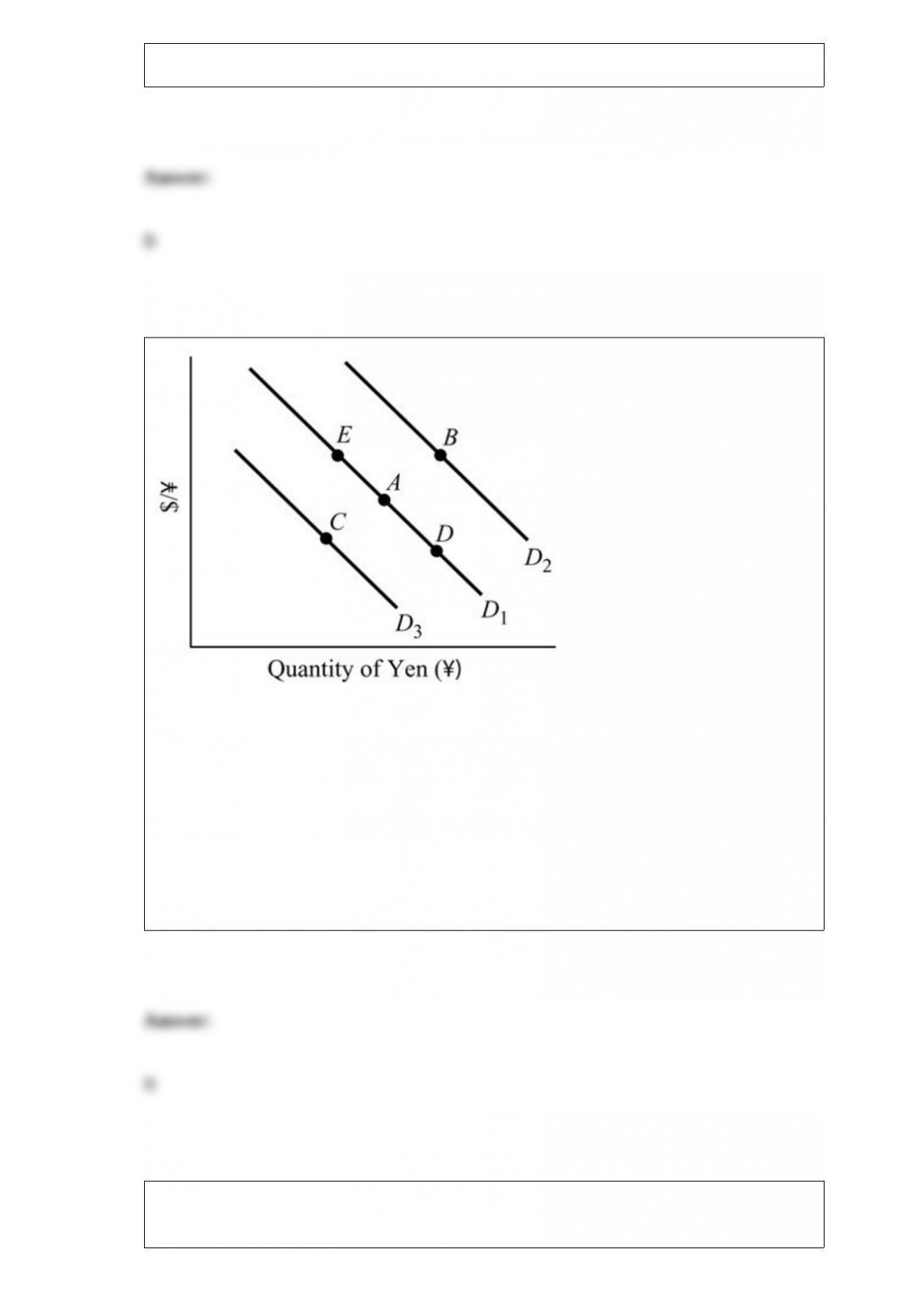
Figure 19.1 Refer to Figure 19.1. The yen is currently at Point A. An increase in interest
rates in the U.S., all else constant, will cause the yen to move to Point ________.
A) B
B) D
C) E
D) C
Recall the Application about the factors involved in causing recessions, and the causes
of recessions in the United States from 1893 to 1990 to answer the following
question(s).
According to this Application, the recession in 1991 was caused by
A) increasing oil prices which resulted in a decrease in aggregate supply.
B) the government cutting back on aggregate demand to reduce inflation.
C) an decrease in aggregate supply resulting from U.S. bank collapses.
D) massive immigration from Europe to the United States.
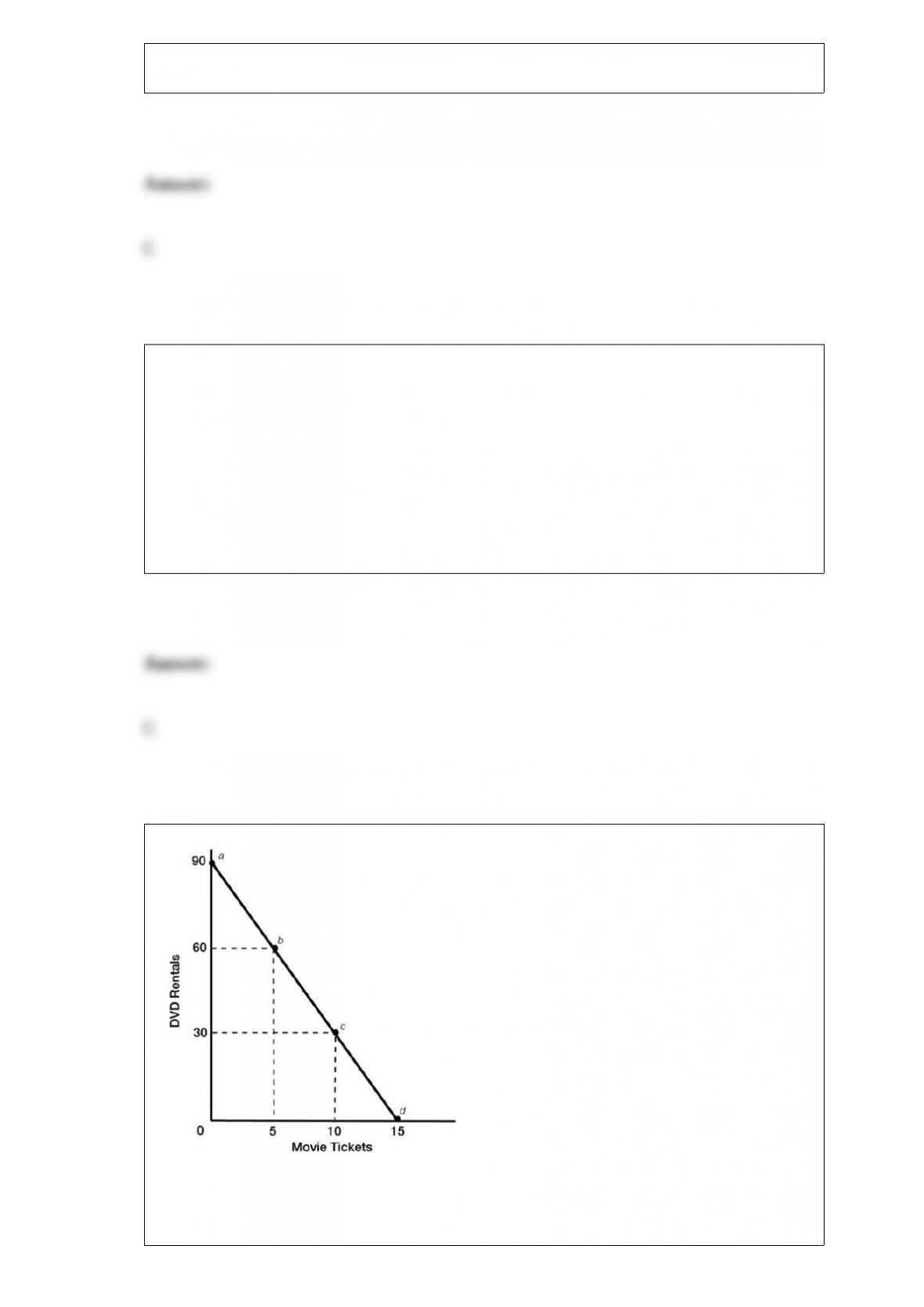
Figure 4.4 illustrates the supply of tacos. An increase in the price of ground beef, which
is used to make tacos, would most likely cause a movement from
A) point a to point .
B) point c to point .
C) S2 to S1.
D) S0 to S1.
Excess demand in the money market causes:
A) a decrease in the equilibrium interest rate.
B) an increase in the quantity demanded of money.
C) an increase in the equilibrium interest rate.
D) a decrease in the money supply.
Figure 1A.2
Refer to Figure 1A.2. If this consumer rents zero DVDs, how many movie tickets will

she purchase?
A) 0
B) 5
C) 10
D) 15
The temporary tax surcharge enacted during the early years of the Vietnam War failed
to decrease consumer spending because consumers based their spending on:
A) permanent income, not current income.
B) future income, not current income.
C) current income.
D) past income, not current income.
Which of the following is not a reason to follow protectionist trade policies?
A) to protect an infant industry from foreign competitors
B) to help firms establish a world monopoly in a particular market
C) to protect domestic workers from foreign competition
D) because buying domestic goods is a patriotic act
Which of the following illustrates a burden of the national debt?
A) A large debt decreases the amount of capital, thereby decreasing future incomes.
B) Future generations will have to pay lower taxes to finance the national debt.
C) The current generation receives a higher level of government services.
D) The current generation pays a higher level of taxes.
More abundant leisure time increases ________, but it ________ real GDP.
A) social welfare; decreases
B) economic welfare; decreases
C) nominal GDP; decreases
D) nominal GDP; leaves unchanged

If, for the United States, exports are $450, imports are $320, net income from foreign
investments is -$60, and net transfers from abroad is -$50, then the U.S. current account
has a
A) deficit of $110.
B) surplus of $20.
C) surplus of $130.
D) deficit of $430.
Any action that gives rise to a demand for foreign currency is a
A) deficit item on the current, financial or capital account.
B) deficit item on the current account and a surplus item on the financial and capital
accounts.
C) surplus item on the current, financial or capital account.
D) surplus item on the current account and a deficit item on the capital and financial
accounts.
Explain how each of the following is related to the rates of productivity and economic
growth in an economy:
(a) the level of investment spending
(b) the extent of government regulation
(c) the level of spending on research and development
(d) the saving rate
When the Fed ________ interest rates, bond prices ________.
A) raises; rise
B) lowers; rise
C) raises; do not change
D) lowers; do not change
The notion that innovation is promoted by the competitive desire to break production
monopolies is known as:
A) virtuous circle.

B) monopolist envy.
C) creative destruction.
D) endogenous growth.
If the variable on the vertical axis increases by 20 and the variable on the horizontal
axis increases by 5, the slope of the line is
A) 0.25.
B) 4.
C) 15.
D) 100.
In the Solow model, if total saving exceeds depreciation,
A) capital deepening stops.
B) gross investment is negative.
C) real wages decrease.
D) capital stock increases.
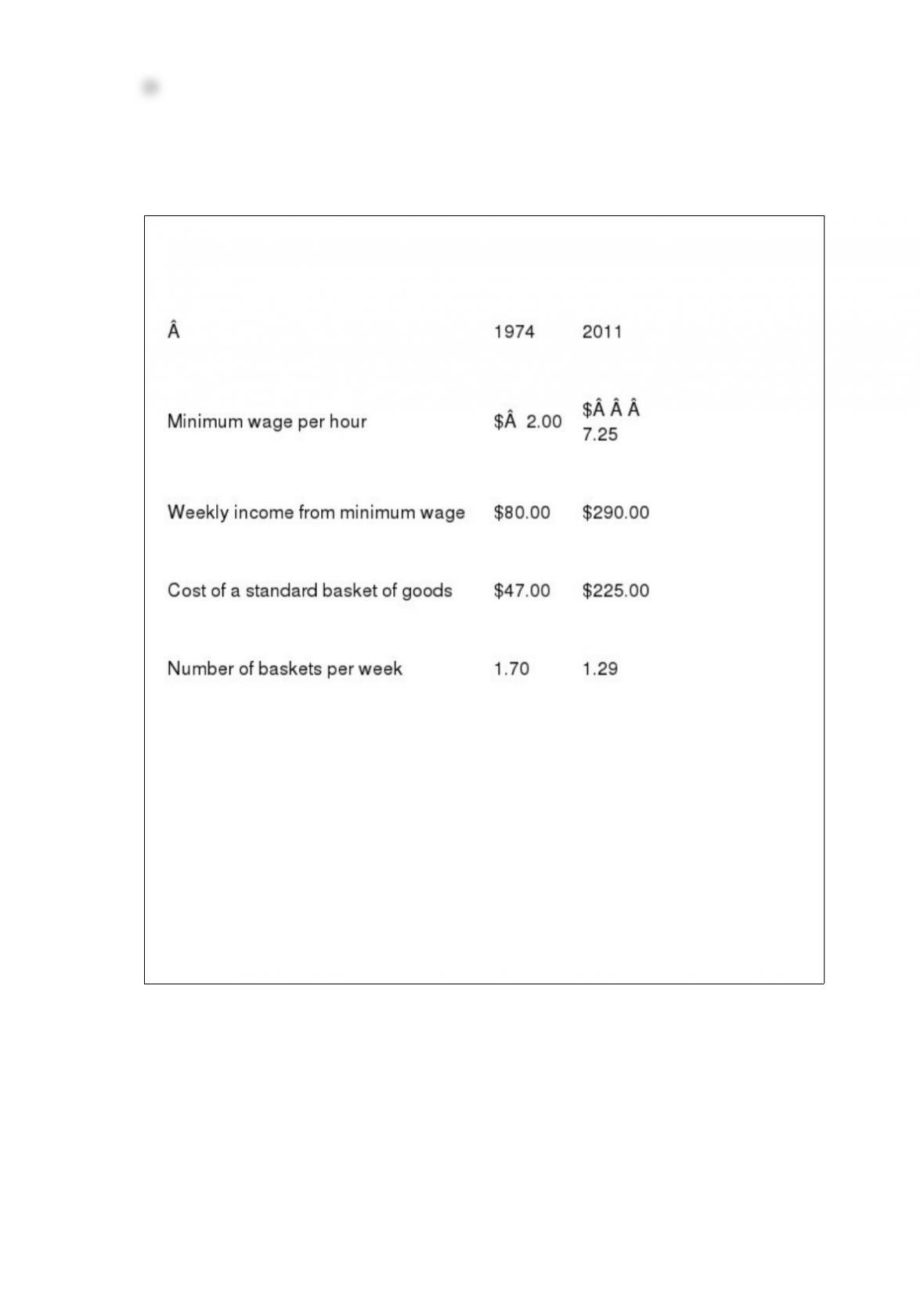
Table 2.5
Refer to the table above. Thenominal value of the minimum wage in 2011 was
A) $2.00 per hour.
B) $3.63 per hour.
C) $5.62 per hour.
D) $7.25 per hour.