1) a decrease in the import tariff will result in:
a.an increase in imports but a decrease in domestic production
b.a decrease in imports but an increase in domestic production
c.an increase in price but a decrease in quantity purchased
d.a decrease in price and a decrease in quantity purchased
2) intra-industry trade can be explained in part by:
a.adam smith’s principle of absolute advantage
b.perfect competition in product markets
c.diseconomies of large scale production
d.transportation costs between and within nations
3) assume that the united states is the only supplier of grain to china and that it levies a
partial export embargo against china. the embargo leads to increased u.s. welfare if the
resulting improvement in the u.s. terms of trade with china more than offset the costs of
the lower export volume to china.
a.true
b.false
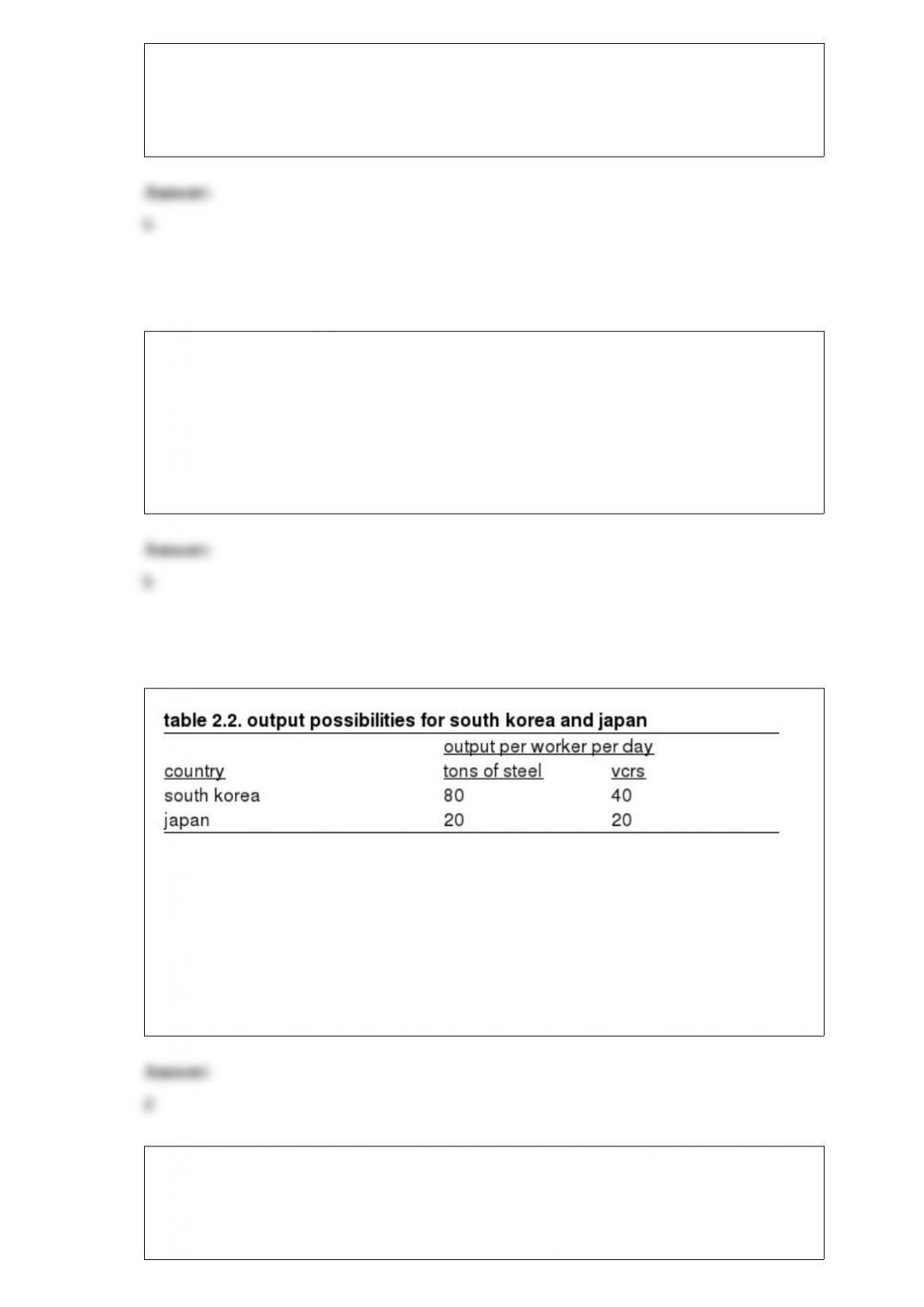
4) consider table 4.1. the nominal tariff rate on imported vcrs equals:
a.11.1 percent
b.12.5 percent
c.16.7 percent
d.50.0 percent
5) given floating exchange rates, a simultaneous decrease in the canadian demand for
british products and increase in the british desire to invest in canadian government
securities would cause a (an):
a.appreciation of the pound against the dollar
b.depreciation of the pound against the dollar
c.unchanged pound/dollar exchange rate
d.none of the above
6) refer to table 2.2. with international trade, what would be the maximum amount of
steel that south korea would be willing to export to japan in exchange for each vcr?
a.1/2 ton of steel
b.1 ton of steel
c.1-1/2 tons of steel
d.2 tons of steel
7) exhibit 4.2
in the absence of international trade, assume that the equilibrium price and quantity of
motorcycles in canada is $14,000 and 10 units respectively. assuming that canada is a
small country that is unable to affect the world price of motorcycles, suppose its market
is opened to international trade. as a result, the price of motorcycles falls to $12,000 and
the total quantity demanded rises to 14 units; out of this total, 6 units are produced in
canada while 8 units are imported. now assume that the canadian government levies an
import tariff of $1,000 on motorcycles.
refer to exhibit 4.2. as a result of the tariff, the price of imported motorcycles equals
$13,000 and imports total 4 cycles.
a.true
b.false
8) the deadweight loss of a tariff:
a.is a social loss since it promotes inefficient production
b.is a social loss since it reduces the revenue for the government
c.is not a social loss because society as a whole doesn’t pay for the loss
d.is not a social loss since only business firms suffer revenue losses
9) a depreciation of the dollar results in whirlpool dishwashers becoming less
competitive in europe.
a.true
b.false
10) regarding a common market, which of the following is true?
a.permits the free movement of goods and service among members
b.exercises common external trade restrictions against outsiders
c.represents a more complete integration of member nations than a customs union
d.all of these are true
11) once a cartel establishes its profit-maximizing price:
a.entry into the industry of new competitors will not affect the cartel’s profits
b.output changes by cartel members have no effect on the market price
c.each cartel member is tempted to cheat on the cartel price in order to add to its profit
d.all cartel members have a strong incentive to adhere to the agreed-upon price
12) a nation’s trade triangle denotes its exports, imports, and terms of trade.
a.true
b.false
13) the u.s. gold outflow that began in the late 1940s and continued through the 1960s
was due in part to:
a.crawling pegged exchange rates
b.freely floating exchange rates
c.an undervalued dollar
d.an overvalued dollar
14) figure 6.2 illustrates the calculator market for mexico, assumed to be a small nation
that is unable influence the south korean (world) price. assume the south korean price to
be $60 per calculator.
figure 6.2. effects of an export subsidy
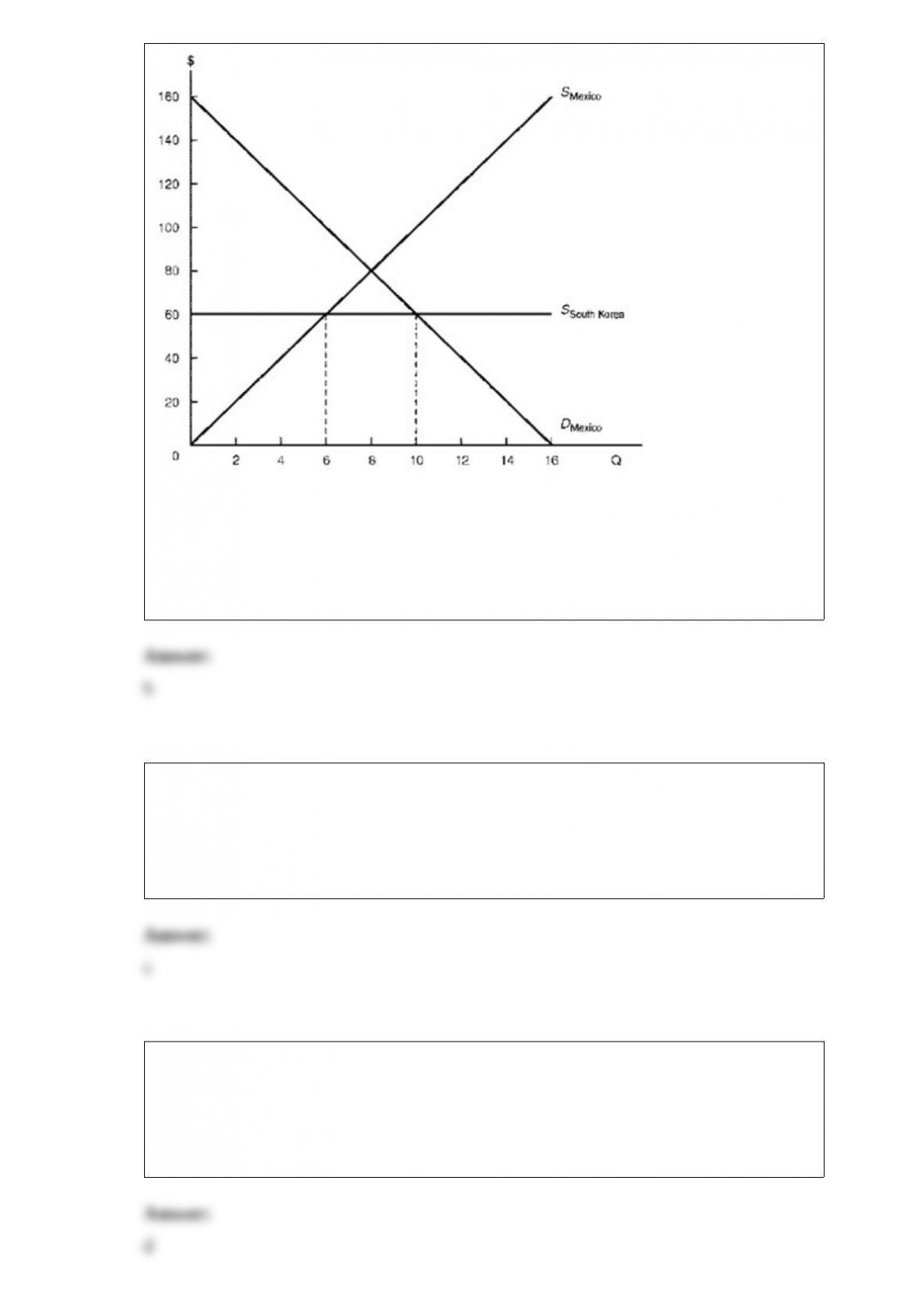
consider figure 6.2. as a result of the south korean subsidy, mexicans find their
consumer surplus:
a.rising by $160
b.rising by $220
c.falling by $160
d.falling by $220
15) in u.s. trade law, section 301 cases involve accusations of:
a.international dumping by u.s. companies
b.full-cost pricing by u.s. companies
c.unfair trade practices by foreign nations
d.trade embargoes by foreign nations
16) expanding trade or technological improvements
a.increases the demand for skilled workers in the u.s.
b.decreases the demand for unskilled workers in the u.s.
c.increases the demand for unskilled workers in the u.s.
d.both a and b.