If government sets a minimum price above the equilibrium price:
A) some consumers gain at the expense of producers and the total surplus decreases.
B) some consumers gain at the expense of producers and the total surplus increases.
C) some producers gain at the expense of consumers and the total surplus decreases.
D) some producers gain at the expense of consumers and the total surplus increases.
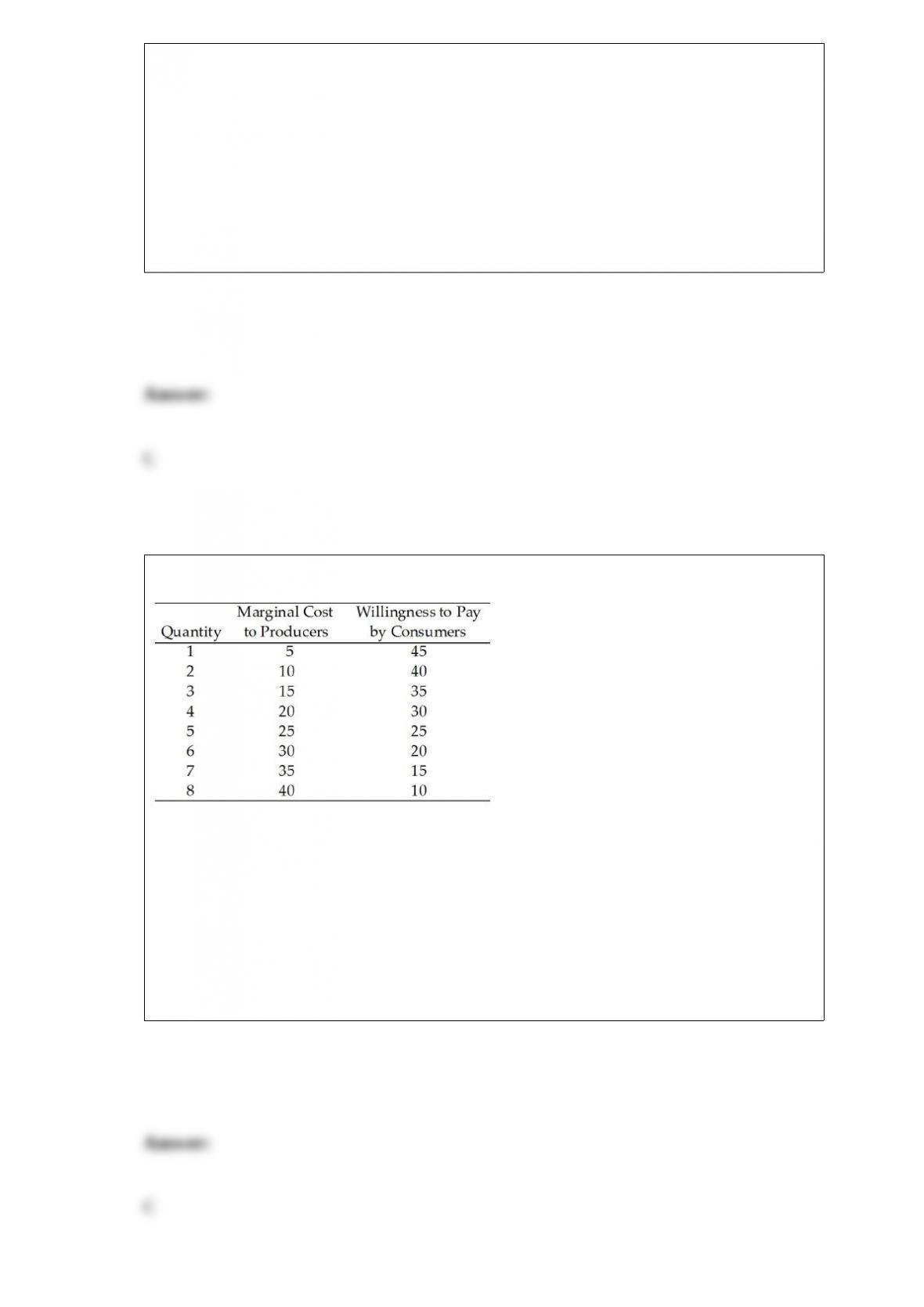
Refer to Table 6.1. When quantity = 5, this market is ________ because ________.
Table 6.1
A) inefficient; willingness to pay > marginal cost
B) inefficient; willingness to pay < marginal cost
C) efficient; willingness to pay = marginal cost
D) producing too much consumer surplus; willingness to pay > marginal cost
Once a firm is forced to consider an external cost, the price of its product will:
A) increase and output will decrease.
B) increase and output will increase.
C) decrease and output will decrease.
D) decrease and output will increase.
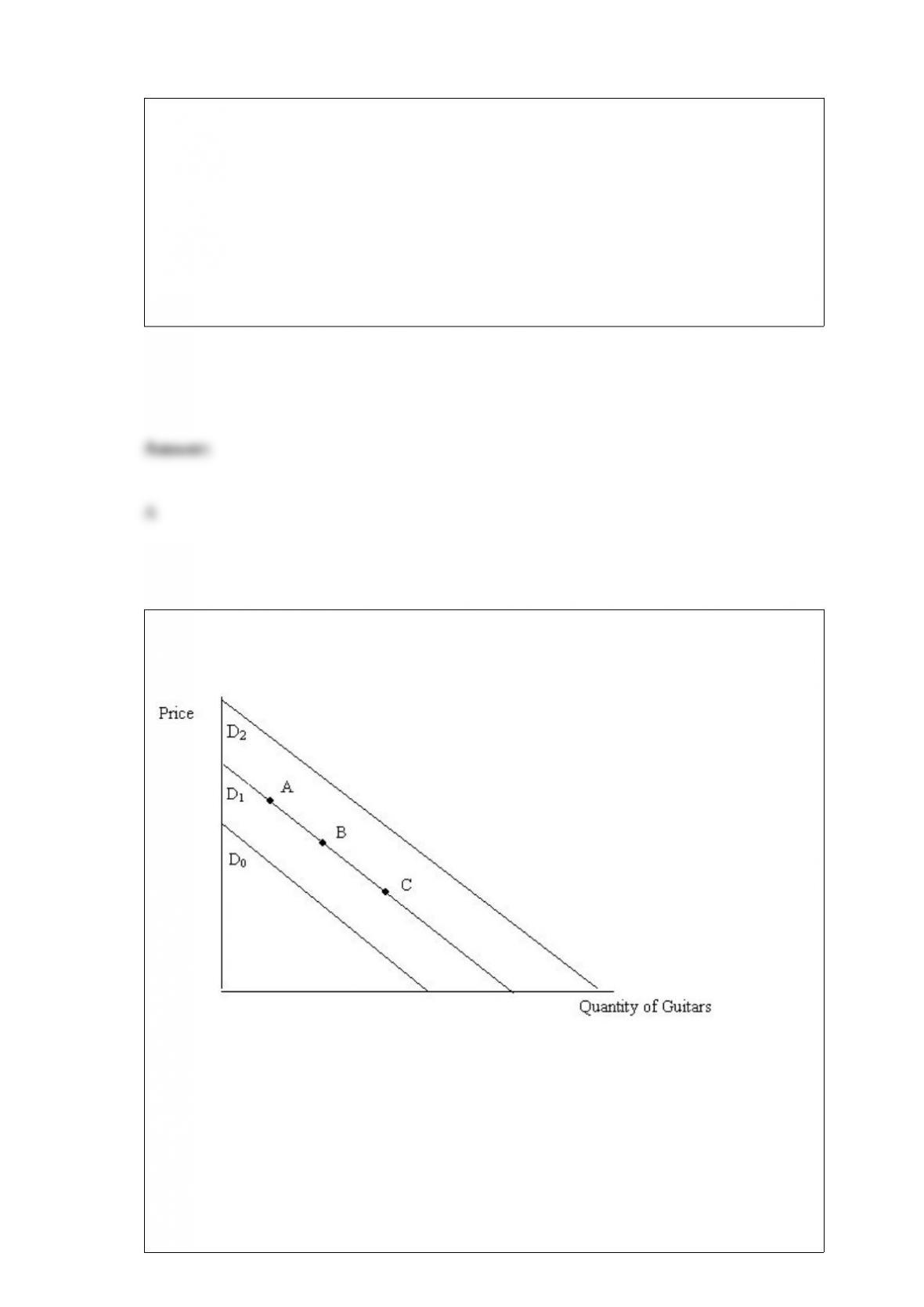
Figure 4.4 illustrates the demand for guitars. Assume that guitars and banjos are
substitutes. A decrease in the price of banjos would bring about a movement from:
Figure 4.4
A) point B to point C.
B) point B to point A.
C) D1 to D0.
D) D1 to D2.
The model of government based on small groups of people manipulating government
for their own gain is:
A) conservative ideology.
B) median-voter policy.
C) special-interest politics.
D) common resource strategy.
When we study the effect of how a beer tax may decrease the number of highway
deaths, we use microeconomics to:
A) better understand how markets work.
B) make personal or managerial decisions.
C) evaluate the merits of public officials.
D) A and C are correct.
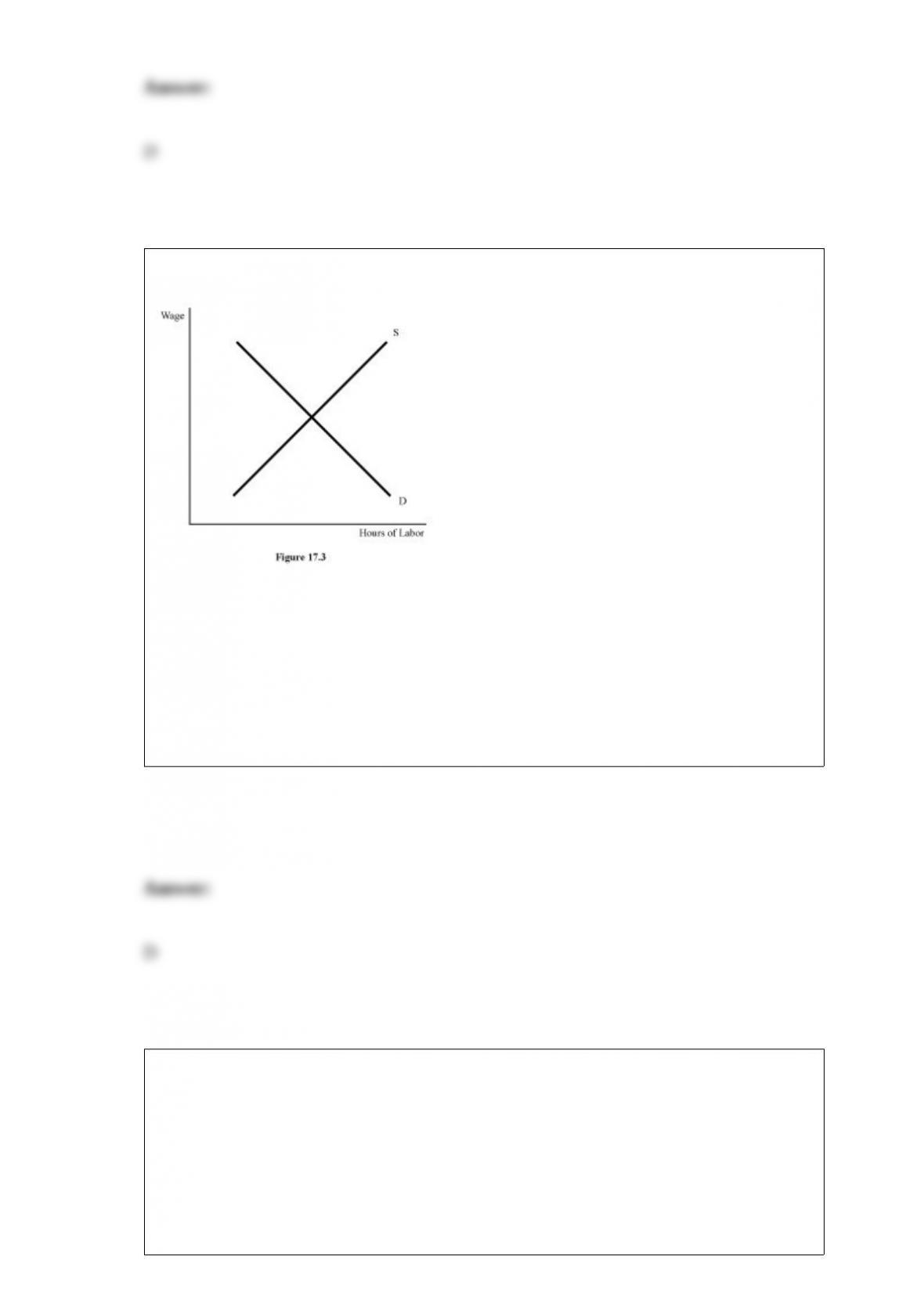
In Figure 17.3 an increase in the supply of labor will cause the equilibrium:
A) wage and hours of labor used to increase.
B) wage and hours of labor used to decrease.
C) wage to increase and hours of labor used to decrease.
D) wage to decrease and hours of labor used to increase.
If price is less than average cost in a monopolistically competitive market:
A) there is an incentive for firms to exit the market.
B) there is profit incentive for firms to enter the market.
C) the market must be in long-run equilibrium.

D) there is no incentive for the number of firms in the market to change.
A natural monopoly arises when:
A) economies of scale are so great that only one firm can exist in a market.
B) a firm acquires a patent.
C) two firms merge to become the only firm serving an entire market.
D) a single firm controls all of a natural resource.
If profits in a monopolistically competitive market are positive, we can conclude that:
A) price is equal to average cost.
B) price is greater than average cost
C) the market is in long-run equilibrium.
D) price is less than average cost.
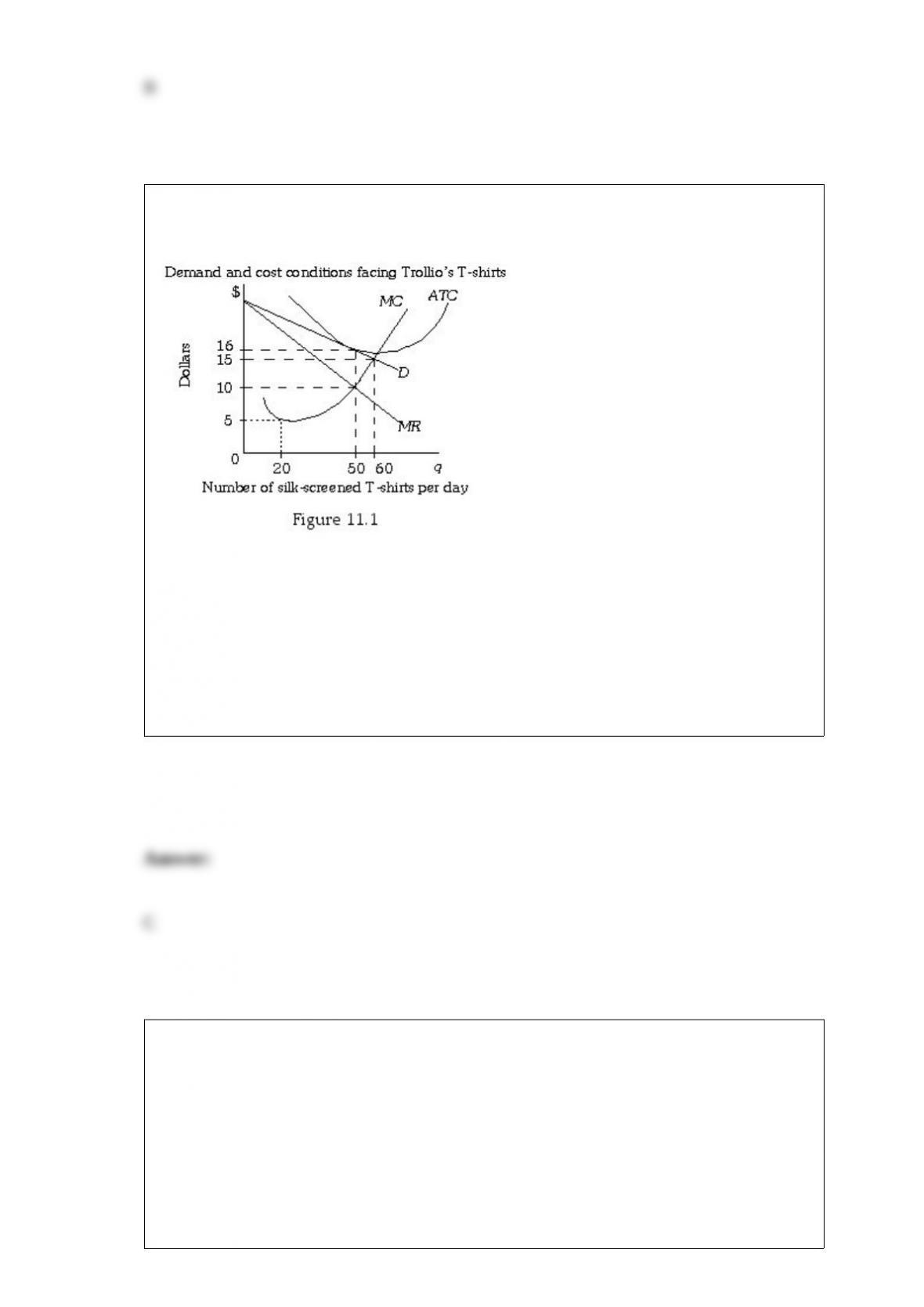
Refer to Figure 11.1. If Trollio’s T-shirts is in long-run equilibrium it is producing
________ silk-screened T-shirts and selling each T-shirt at a price of ________.
A) 20; $5
B) 50; $10
C) 50; $16
D) 60; $15
Studies have shown that differences in wages between men and women:
A) are explained in part by differences in productivity and in part by discrimination.
B) are fully explained by differences in productivity, education, and skill.
C) have disappeared in the last five years.
D) are fully explained by discrimination.

The four-firm concentration ratio for the cigarette market is 93%. This means that:
A) the four largest firms in the market produce 93% of the total market output.
B) the market is an oligopoly.
C) there is a high degree of concentration in the cigarette market.
D) all of the above
A firm charges a price below its average total cost so that it drives out its competition.
This is an example of:
A) a tie-in sale.
B) duopoly pricing.
C) price discrimination.
D) predatory pricing.
The forces of supply and demand:
A) will not provide an efficient level of public goods.
B) lead to the efficient provision of public and private goods.
C) overcome the free-rider problem.
D) lead to the provision of too many public goods.
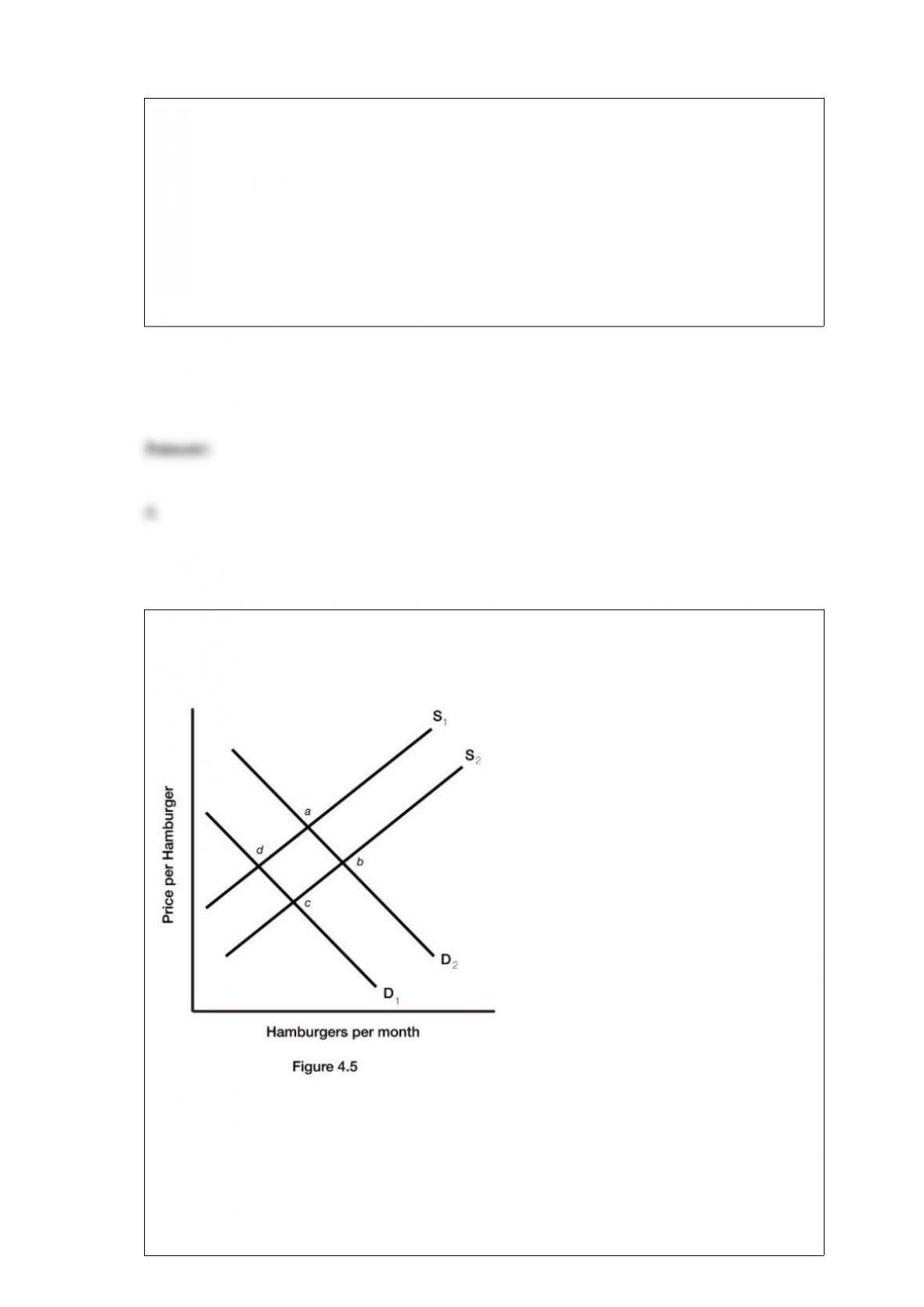
Figure 4.5 illustrates a set of supply and demand curves for hamburgers. An increase in
supply and a decrease in demand are represented by a movement from:
A) point d to point b.
B) point d to point a.
C) point a to point c.
D) point b to point d.
Self-interest theory of government is:
A) a way for the government to impose its will.
B) the power of the government to overrule its citizen without their consent.
C) explains why voters might establish implicit boundaries of government spending and
taxes.
D) explains why voters might establish explicit limits of government spending and
taxes.
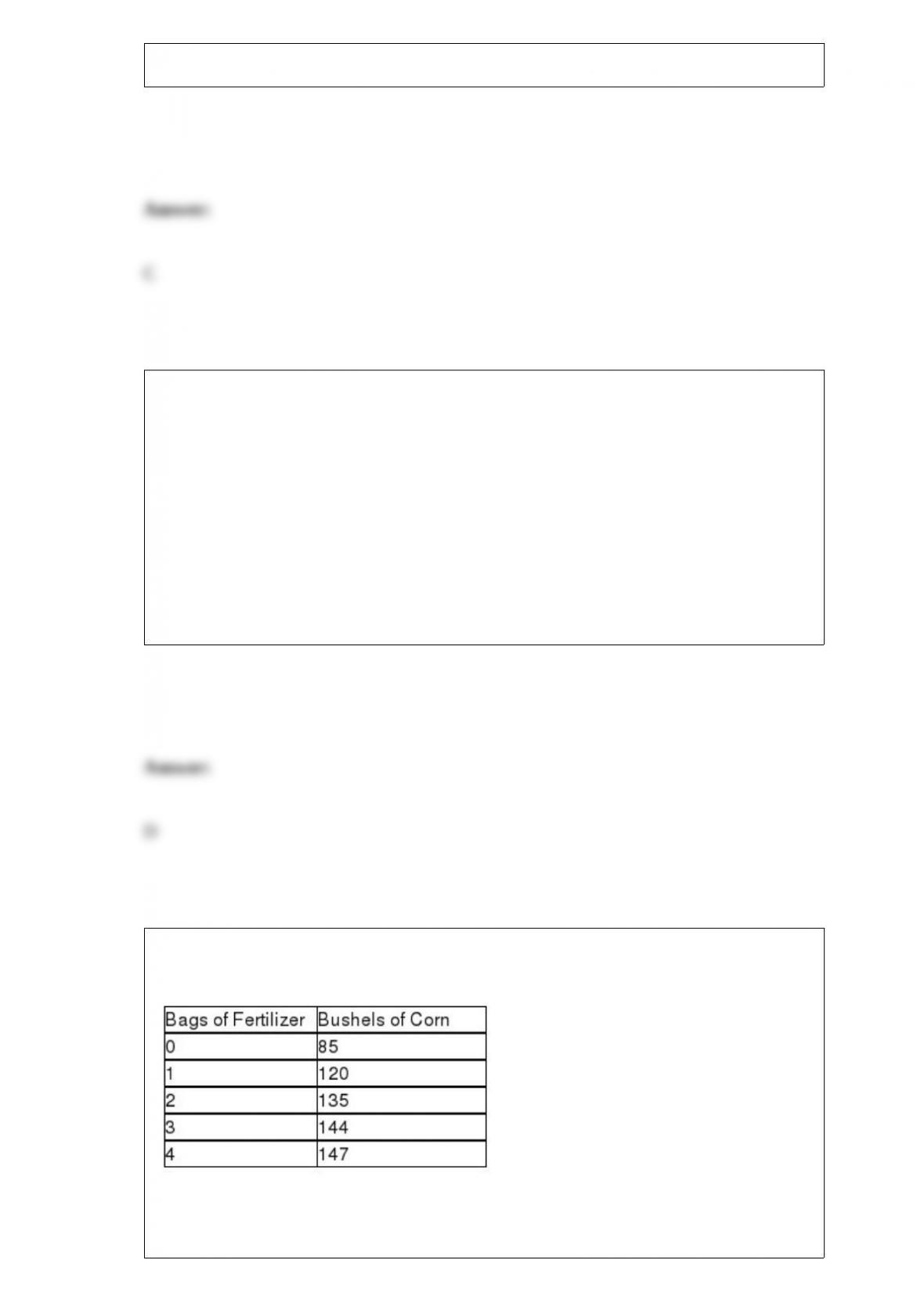
Fertilizer and Corn Yield
The farmer began to experience diminishing returns after applying how many bags of
fertilizer?

A) 1
B) 2
C) 3
D) 4
When economists use the term “marginal,” they usually refer to:
A) small, incremental change.
B) large changes.
C) no changes.
D) average change.
When a second firm enters a monopolist’s market:
A) market price will rise.
B) the quantity produced by the first firm will decrease.
C) the first firm’s profits increase.

D) All of the above will occur.
The Act which made it illegal to monopolize a market was the:
A) Sherman Act.
B) Clayton Act.
C) Robinson-Patman Act.
D) Celler-Kefauver Act.
If the demand curve faced by a firm is horizontal, then the firm is ________ and a
________.
A) perfectly competitive; price taker
B) perfectly competitive; price maker
C) a monopoly; price taker
D) monopoly; price maker
Suppose that a product benefits from a successful advertising campaign. The result is
that:
A) the demand for the product increases.
B) the demand for the product decreases.
C) the supply of the product increases.
D) the supply of the product decreases.
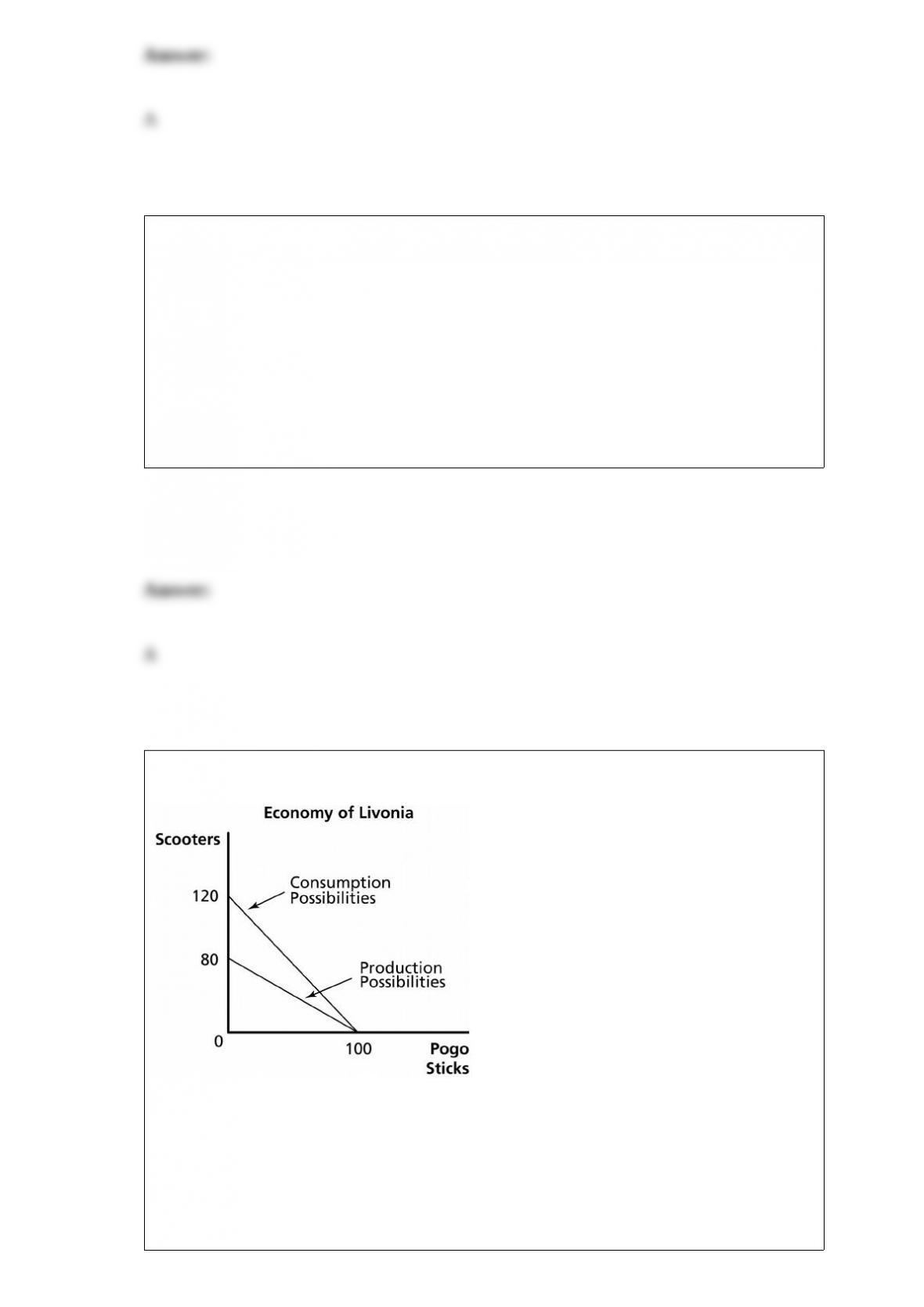
Refer to Figure 18.3. The opportunity cost of producing scooters in Livonia is:
Figure 18.3
A) 2/3 of a pogo stick.
B) 6/5 of a pogo stick.
C) 1.5 pogo sticks.
D) 1.25 pogo sticks.
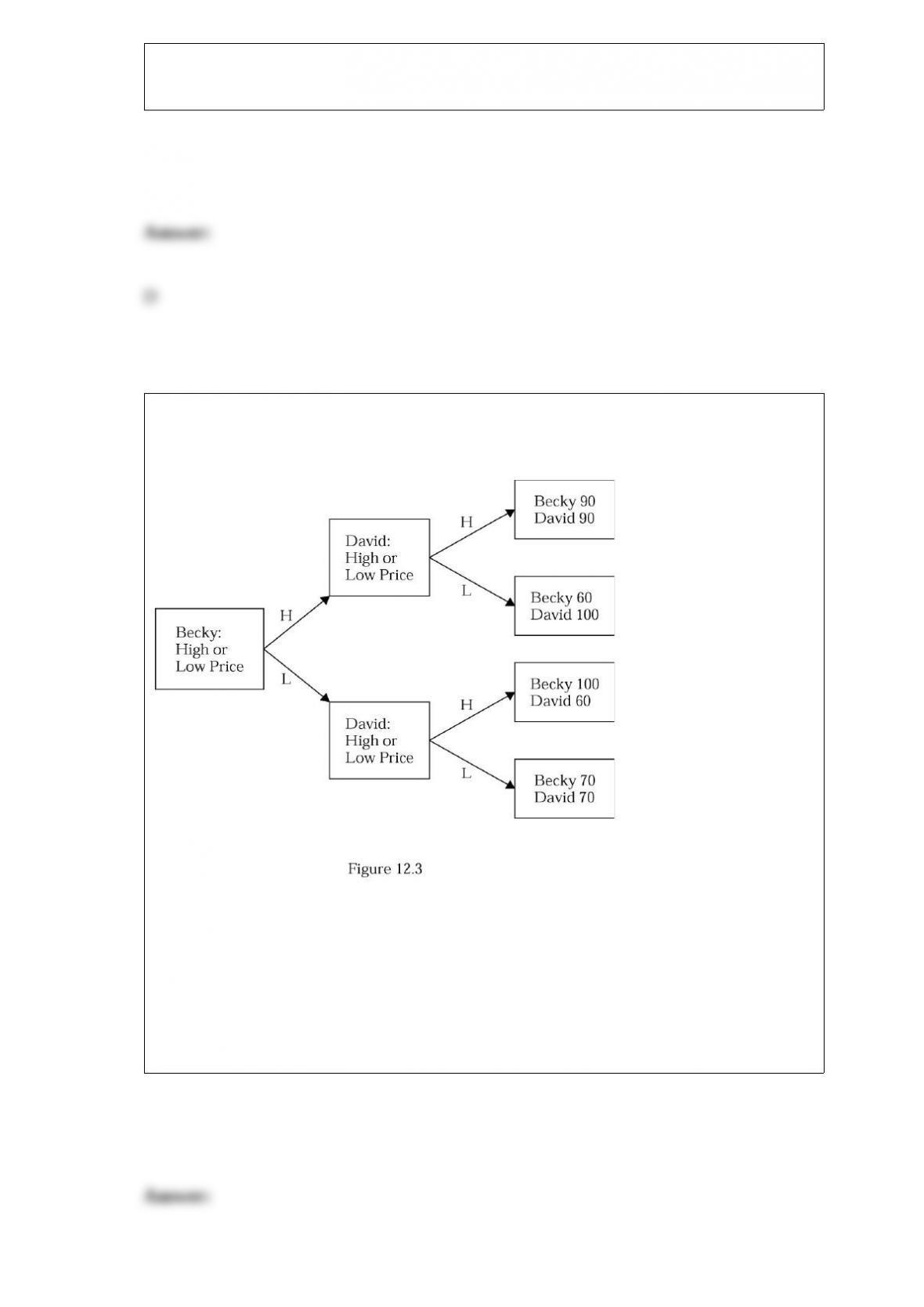
Consider Figure 12.3. Becky’s dominant strategy is ________ and David’s dominant
strategy is ________.
A) high; high
B) low; low
C) high; low
D) low; high
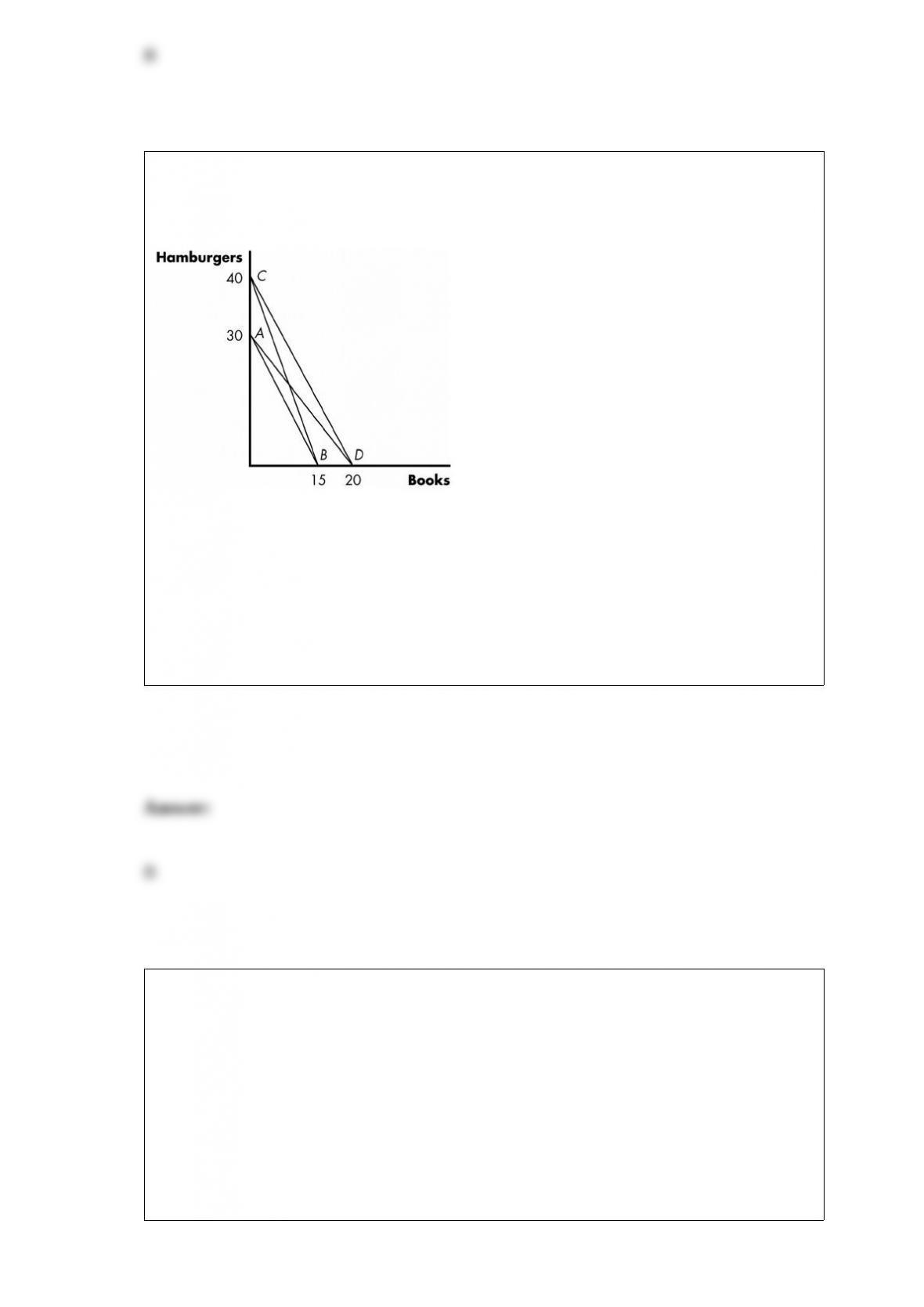
Refer to Figure 7.2. Assume that Ashley faces budget line AB with her $60 income.
Then the opportunity cost to her of a book is:
Figure 7.2
A) one hamburger.
B) two hamburgers.
C) three hamburgers.
D) four hamburgers.
Because demand for air travel from people who are traveling on vacation is more
________, the airlines offer leisure travelers lower prices than business travelers.
A) large
B) elastic
C) inelastic
D) small
The financial crisis and recession which began in 2007:
A) impacted only high-income countries.
B) was only severe in the United States.
C) had a global impact.
D) impacted only low-income countries.
Which of the following is the best example of a perfectly competitive firm?
A) DeBeers Diamond Company
B) your local cable T.V. company
C) Tino’s Italian Eatery, a local restaurant
D) Jones’s wheat farm in eastern Washington
Mike is a college student who works part time and earns $100 per week. He spends his
entire income on two goods: pepperoni pizzas and bottles of soda. The price of a
pepperoni pizza is $10 and the price of a bottle of soda is $2. Draw Mike’s budget line.
Suppose that in 2006, 8 million cars were purchased at $15,000 each, while in 2007, 10
million cars were purchased at $12,000 each. What might have caused this change?
A) The price of airplane tickets (a substitute for cars) fell.
B) The price of airplane tickets (a substitute for cars) rose.
C) There was an advance in automobile manufacturing technology.
D) There were fewer workers in automobile manufacturing.

Recall the application about a revenue-neutral gasoline tax, how would a simultaneous
increase in the gasoline tax a decrease in the income tax effect gasoline consumption?
A) Consumption will decrease.
B) Consumption will stay the same.
C) Consumption will increase.
D) None of the above are correct.
The lemons model predicts that:
A) if there are low-quality goods in the market, there will be fewer or no high-quality
items.
B) if there are high-quality goods in the market, there will be fewer or no low-quality
items.
C) the more low-quality goods there are in the market, the more high-quality goods
there will be in the market.
D) if buyers are pessimistic about the percentage of low-quality goods on the market
sellers of low-quality goods will be able to charge higher prices than if buyers had
neutral beliefs.