
According to the theory of liquidity preference, if the interest rate rises
a. people want to hold more money. This response is shown by moving to the right
along the money demand curve.
b. people want to hold more money. This response is shown by shifting the money
demand curve right.
c. people want to hold less money. This response is shown by moving to the left along
the money demand curve.
d. people want to hold less money. This response is shown by shifting the money
demand curve left.
Open-market purchases by the Fed make the money supply
a. increase, which makes the value of money increase.
b. increase, which makes the value of money decrease.
c. decrease, which makes the value of money decrease.
d. decrease, which makes the value of money increase.
If the supply of loanable funds shifts right, then the equilibrium
a. levels of net capital outflow and domestic investment decrease.

b. level of net capital outflow increases and the equilibrium level of domestic
investment decreases.
c. level of net capital outflow decreases and the equilibrium level of domestic
investment increases.
d. levels of net capital outflow and domestic investment increase.
The Fed raised interest rates in 2004 and 2005. This implies, other things the same, that
the Fed
a. increased the money supply because it was concerned about unemployment.
b. increased the money supply because it was concerned about inflation.
c. decreased the money supply because it was concerned about unemployment.
d. decreased the money supply because it was concerned about inflation.
Figure 3-5
Hosne’s Production Possibilities Frontier Merve’s Production Possibilities Frontier
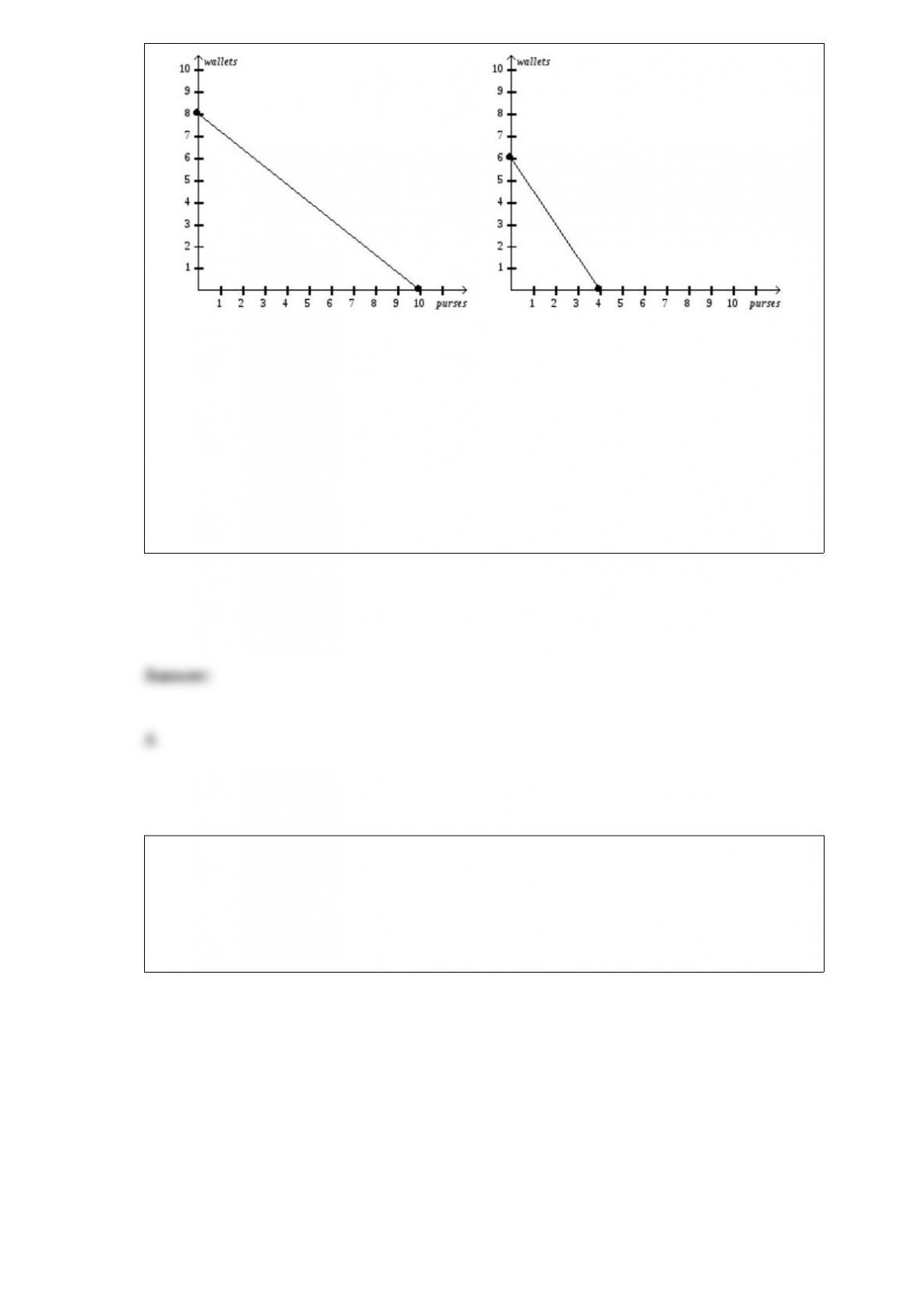
Refer to Figure 3-5. Hosne should specialize in the production of
a. purses.
b. wallets.
c. both goods.
d. neither good.
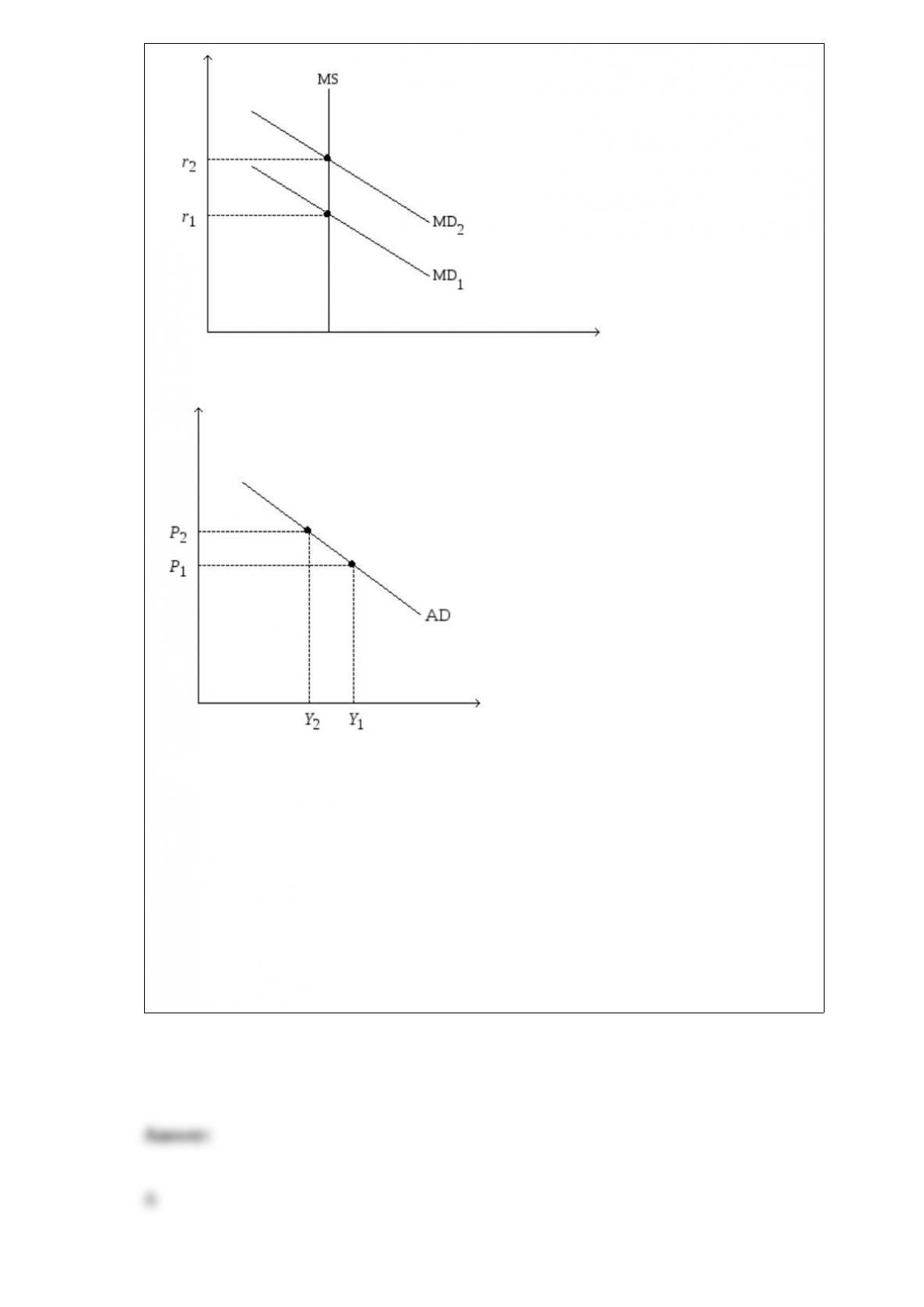
Figure 21-2. On the left-hand graph, MS represents the supply of money and MD
represents the demand for money; on the right-hand graph, AD represents aggregate
demand. The usual quantities are measured along the axes of both graphs.
.
Refer to Figure 21-2. If the money-supply curve MS on the left-hand graph were to
shift to the right, this would
a. represent an action taken by the Federal Reserve.
b. shift the AD curve to the left.
c. create, until the interest rate adjusted, an excess demand for money at the interest rate
that equilibrated the money market before the shift.
d. All of the above are correct.

The price level rises in the short run if
a. aggregate demand or aggregate supply shifts right.
b. aggregate demand shifts right or aggregate supply shifts left.
c. aggregate demand shifts left or aggregate supply shifts right.
d. aggregate demand or aggregate supply shifts right.
Almost all economists agree that local and state governments should
a. eliminate subsidies to professional sports franchises.
b. increase subsidies to professional sports franchises.
c. copy economic policy from Washington, D.C.
d. prevent companies from outsourcing work.
Keynes argued that aggregate demand is
a. stable, because the economy tends to return to its long-run equilibrium quickly after
any disturbance to aggregate demand.
b. stable, because changes in consumption are mostly offset by changes in investment
and vice versa.
c. unstable, because waves of pessimism and optimism create fluctuations in aggregate
demand.
d. unstable, because of long and variable policy lags that worsen economic fluctuations.
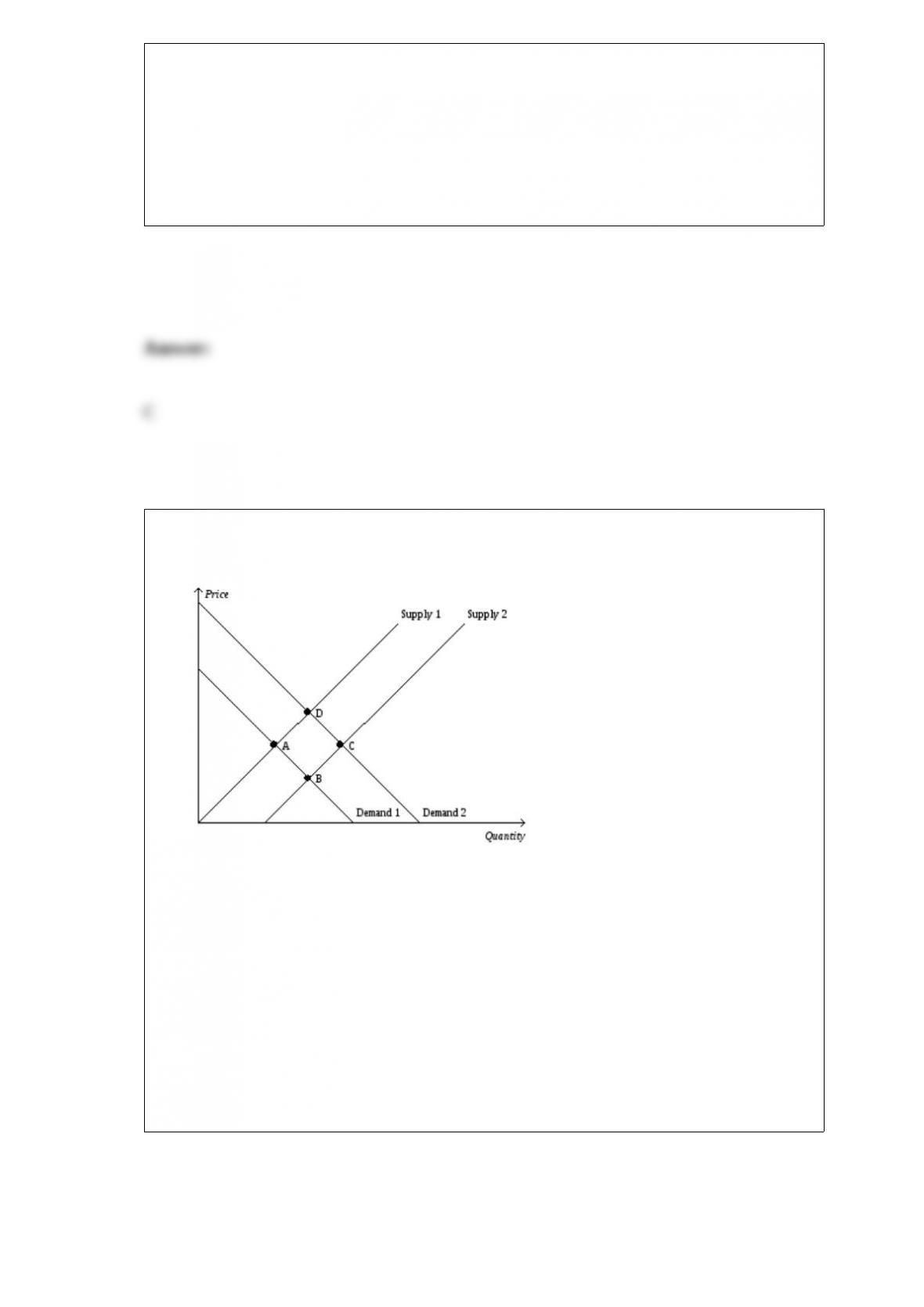
Figure 4-21
Refer to Figure 4-21. Which of the following movements would illustrate the effect in
the market for wedding cakes resulting from a decrease in the price number of pastry
chefs?
a. Point A to Point B
b. Point C to Point B
c. Point C to Point D
d. Point A to Point D
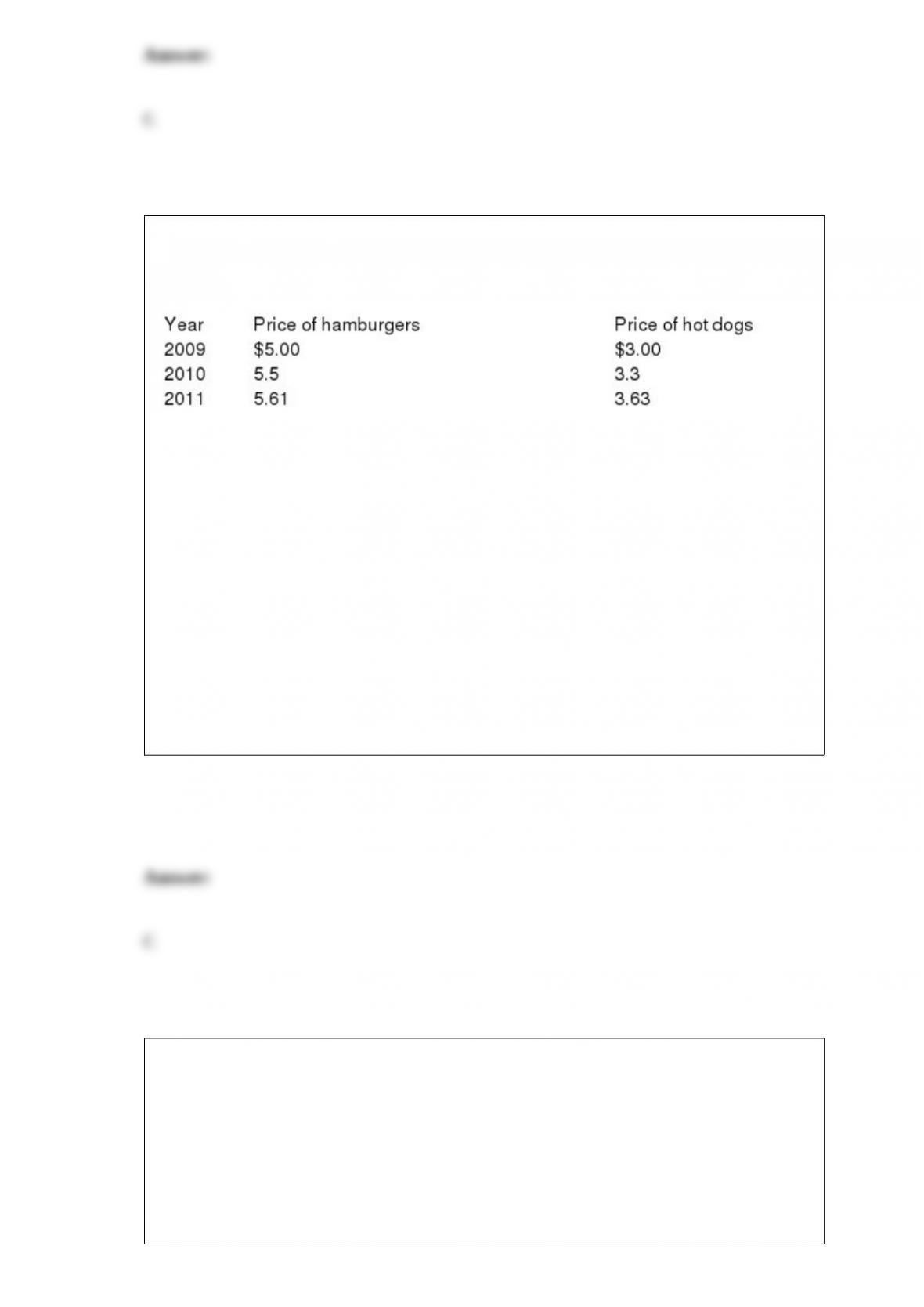
Table 11-6. The table below applies to an economy with only two goods hamburgers
and hot dogs. The fixed basket consists of 4 hamburgers and 8 hot dogs.
Refer to Table 11-6. Which of the following scenarios is consistent with this statement?
“The rate of inflation was 23.75 percent for 2011.”
a. The price of a hot dog was $2.44 rather than $3.30 in 2010, with other prices in the
table remaining fixed.
b. The price of a hot dog was $4.22 rather than $3.63 in 2011, with other prices in the
table remaining fixed..
c. The price of a hamburger was $3.80 rather than $5.50 in 2010, with other prices in
the table remaining fixed.
d. The price of a hamburger was $6.60 rather than $5.61 in 2011, with other prices in
the table remaining fixed.
In the market for loanable funds, the interaction of the demand for, and supply of,
loanable funds determines the equilibrium level of
a. the inflation rate.
b. gross domestic product.
c. the real interest rate.

d. the nominal interest rate.
The principle of monetary neutrality implies that an increase in the money supply will
a. increase real GDP and the price level.
b. increase real GDP, but not the price level.
c. increase the price level, but not real GDP.
d. increase neither the price level nor real GDP.
The incidence of a tax falls more heavily on
a. consumers than producers if demand is more inelastic than supply.
b. producers than consumers if supply is more inelastic than demand.
c. consumers than producers if supply is more elastic than demand.
d. All of the above are correct.

Disinflationis like
a. slowing a car down, whereas deflation is like putting the car into reverse gear.
b. maintaining a car’s speed, whereas deflation is like slowing the car down.
c. putting a car into reverse gear, whereas deflation is like slowing the car down.
d. maintaining a car’s speed, whereas deflation is like putting the car into reverse gear.
Which of the following is correct if the interest rate is 6 percent?
a. $215 to be received a year from today has a present value of over $200; $420 a year
from now has a present value over $400.
b. $215 to be received a year from today has a present value of over $200; $420 a year
from now has a present value under $400.
c. $215 to be received a year from today has a present value of under $200; $420 a year
from now has a present value over $400.
d. $215 to be received a year from today has a present value of under $200; $420 a year
from now has a present value under $400.
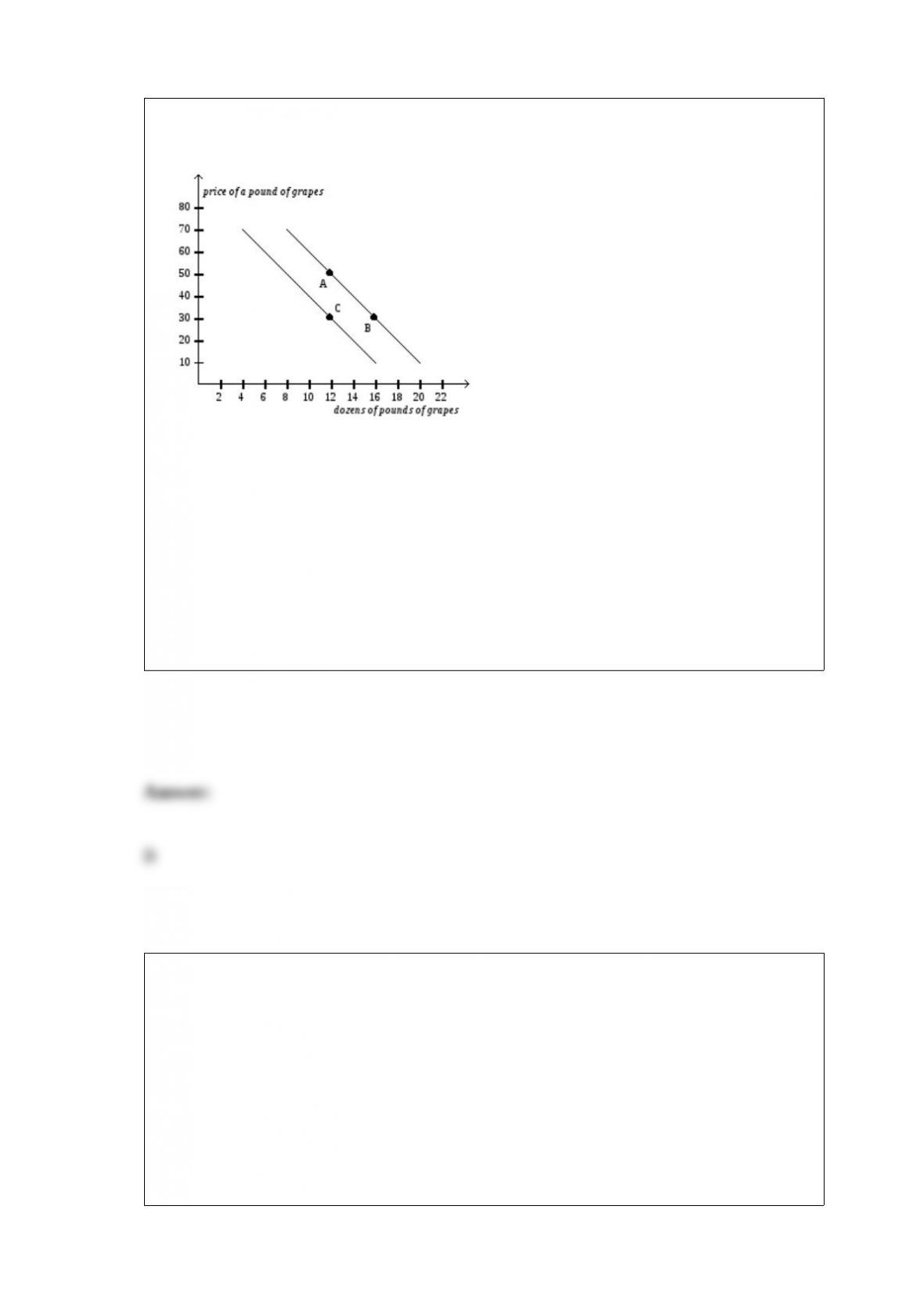
Figure 2-14
Refer to Figure 2-14. The movement from point B to point C could have been caused
by
a. inflation.
b. a change in income.
c. a change in the price of grapes.
d. a change in the cost of producing grapes.
Which of the following is not a reason the New York Federal Reserve Bank president
always gets to vote at the Federal Open Market Committee meetings?
a. New York is the traditional financial center of the U.S. economy.
b. All Fed purchases and sales of bonds go through the New York Fed’s trading desk.
c. New York has higher population than other cities in the U.S.
d. All of the above are reasons.
As the tax on a good increases from $1 per unit to $2 per unit to $3 per unit and so on,
the
a. tax revenue increases at first, but it eventually peaks and then decreases.
b. deadweight loss increases at first, but it eventually peaks and then decreases.
c. tax revenue always increases, and the deadweight loss always increases.
d. tax revenue always decreases, and the deadweight loss always increases.
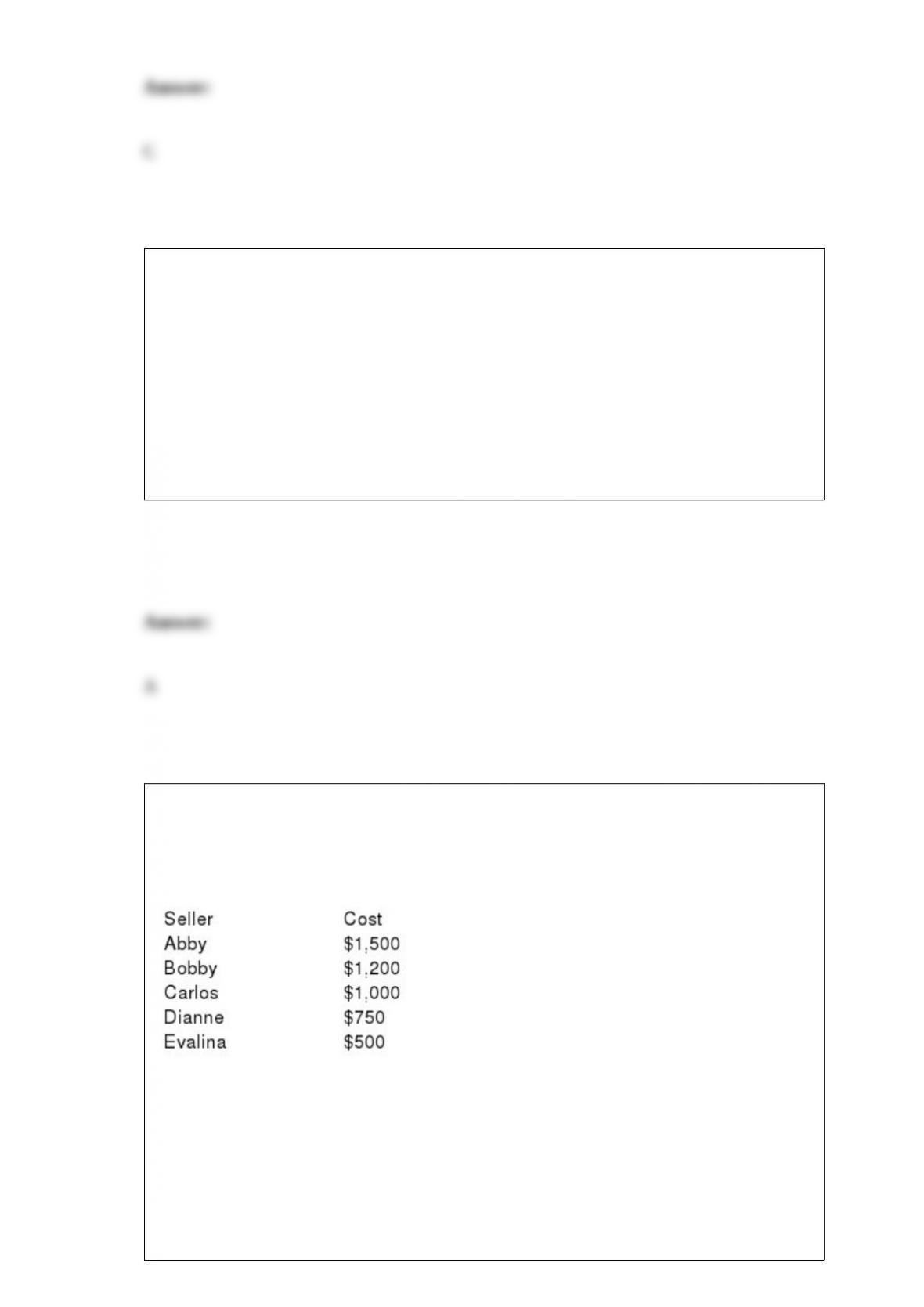
Table 7-7
The following table represents the costs of five possible sellers.
Refer to Table 7-7. Suppose each of the five sellers can supply at most one unit of the
good. The market quantity supplied is exactly 3 if the price is
a. $670.
b. $770.
c. $970.

d. $1,170.
Which of the following items is included in U.S. GDP?
a. final goods and services that are purchased by the U.S. federal government
b. intermediate goods that are produced in the U.S. but that are unsold at the end of the
GDP accounting period
c. goods and services produced by foreign citizens working in the U.S.
d. All of the above are included in U.S. GDP.
Assume the price of gasoline is $2.40 per gallon, and the equilibrium quantity of
gasoline is 12 million gallons per day with no tax on gasoline. Starting from this initial
situation, which of the following scenarios would result in the largest deadweight loss?
a. A 10 percent increase in the price of gasoline reduces the quantity of gasoline
demanded by 2 percent and it increases the quantity of gasoline supplied by 5 percent;
and the tax on gasoline amounts to $0.40 per gallon.
b. A 10 percent increase in the price of gasoline reduces the quantity of gasoline
demanded by 2 percent and it increases the quantity of gasoline supplied by 7 percent;
and the tax on gasoline amounts to $0.40 per gallon.
c. A 10 percent increase in the price of gasoline reduces the quantity of gasoline

demanded by 1 percent and it increases the quantity of gasoline supplied by 8 percent;
and the tax on gasoline amounts to $0.35 per gallon.
d. There is insufficient information to make this determination.
When an economist evaluates a positive statement, he or she is primarily
a. examining evidence.
b. evaluating values as well as facts.
c. acting as a policy adviser.
d. concerned with making a sound decision on how the world ought to be.
Figure 6-20
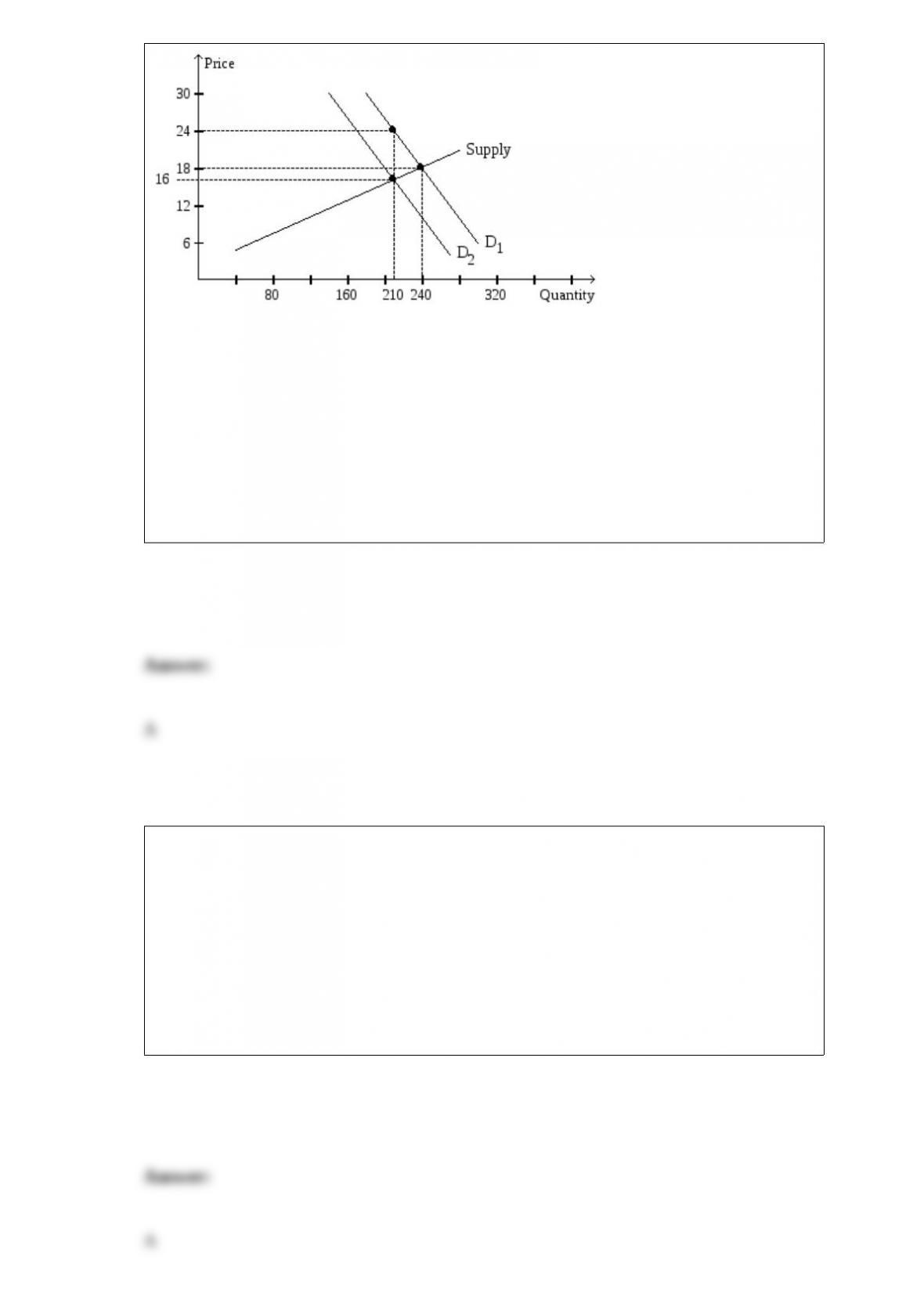
Refer to Figure 6-20. What is the amount of the tax per unit?
a. $8
b. $6
c. $4
d. $2
The demand for a good or service is determined by
a. those who buy the good or service.
b. the government.
c. those who sell the good or service.
d. both those who buy and those who sell the good or service.

Suppose you win a small lottery and you are given the following choice: You can
receive (1) an immediate payment of $10,000 or (2) two annual payments, each in the
amount of $5,200, with the first payment coming one year from now, and the second
payment coming two years from now. You would choose to take the immediate
payment of $10,000 if the interest rate is
a. 2 percent, but not if the interest rate is 1 percent.
b. 3 percent, but not if the interest rate is 2 percent.
c. 4 percent, but not if the interest rate is 3 percent.
d. 5 percent, but not if the interest rate is 4 percent.
Proponents of rational expectations argued that the sacrifice ratio
a. could be high because it was rational for people not to immediately change their
expectations.
b. could be high because people might adjust their expectations quickly if they found
anti-inflation policy credible.
c. could be low because it was rational for people not to immediately change their
expectations.
d. could be low because people might adjust their expectations quickly if they found
anti-inflation policy credible.
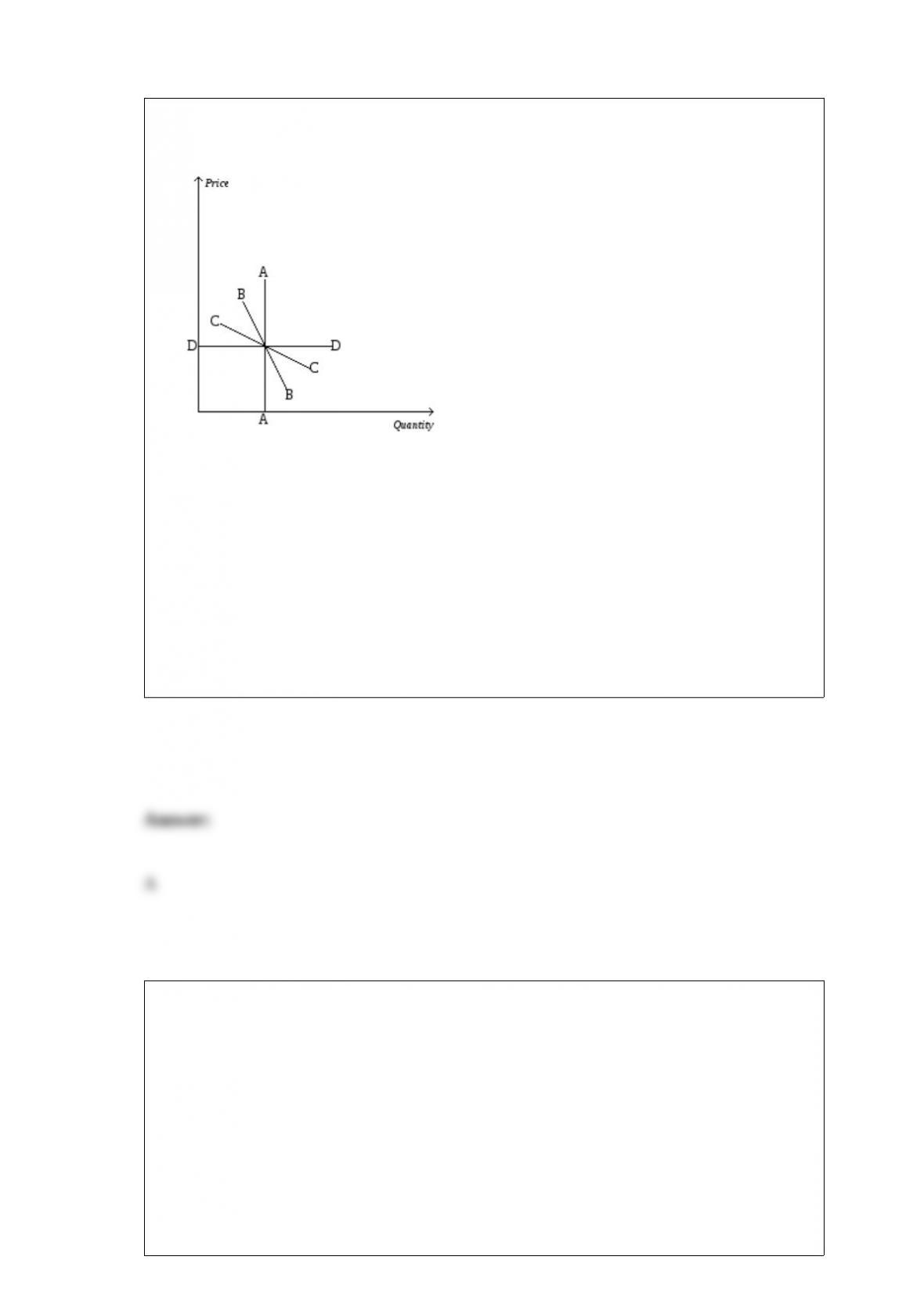
Figure 5-3
Refer to Figure 5-3. Mark says he would buy one Mt. Dew per day regardless of the
price. If this is true, then Mark’s demand for Mt. Dew is represented by demand curve
a. A.
b. B.
c. C.
d. D.
Last year, Carolyn bought 6 pairs of earrings when her income was $40,000. This year,
her income is $52,000, and she purchased 7 pairs of earrings. Holding other factors
constant, it follows that Carolyn’s income elasticity of demand is about
a. 0.59, and Carolyn regards earrings as an inferior good.
b. 0.59, and Carolyn regards earrings as a normal good.
c. 1.7, and Carolyn regards earrings as an inferior good.
d. 1.7, and Carolyn regards earrings as a normal good.
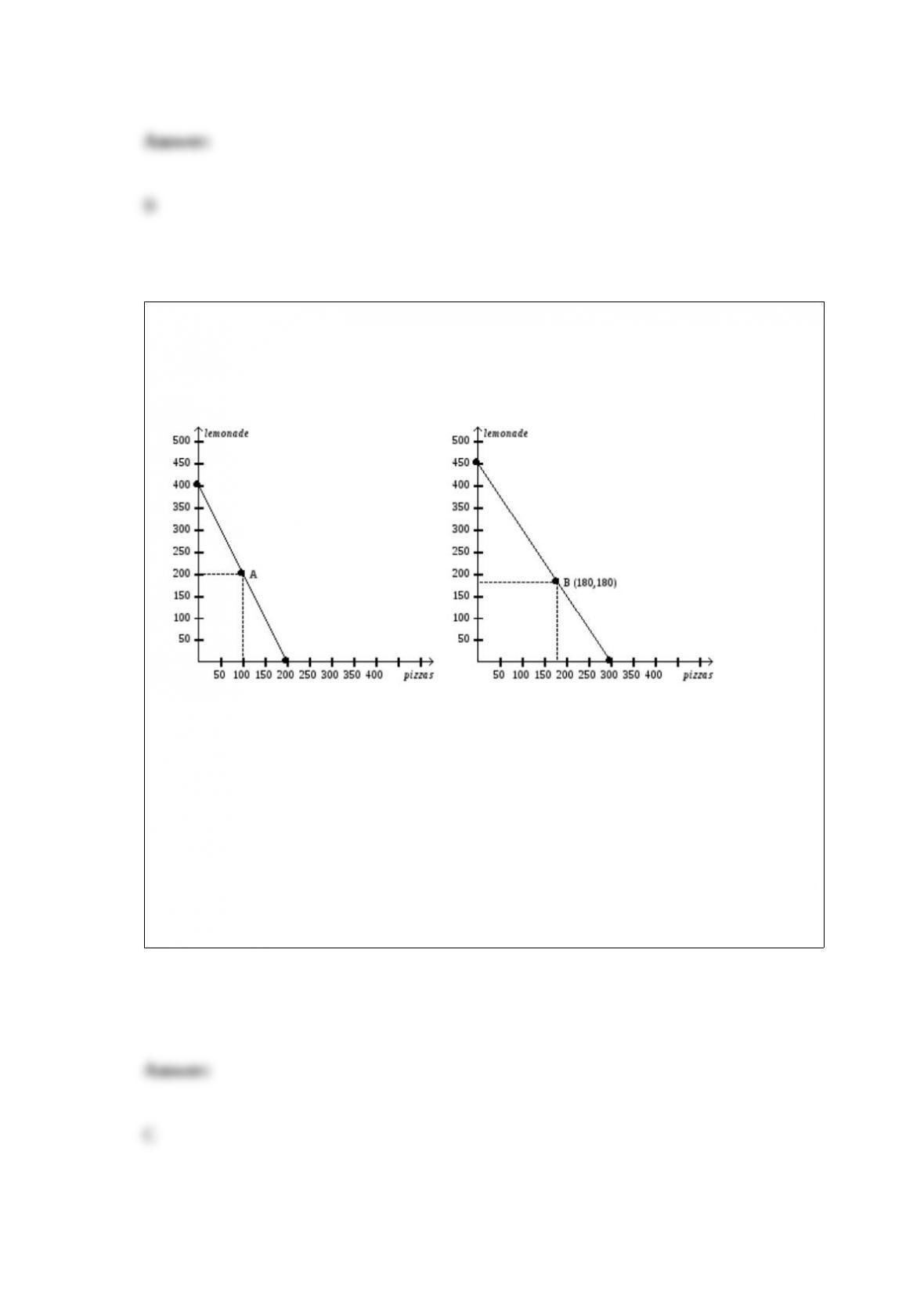
Figure 3-10
Alice and Betty’s Production Possibilities in one 8-hour day.
Alice’s Production Possibilities Frontier Betty’s Production Possibilities Frontier
Refer to Figure 3-10. Which of the following prices would result in an mutually
advantageous trade for Alice and Betty?
a. 100 pizzas for 100 pitchers of lemonade
b. 100 pizzas for 125 pitchers of lemonade
c. 100 pizzas for 180 pitchers of lemonade
d. 100 pizzas for 220 pitchers of lemonade

Suppose Brent, Callie, and Danielle each purchase a particular type of electric pencil
sharpener at a price of $20. Brent’s willingness to pay was $22, Callie’s willingness to
pay was $25, and Danielle’s willingness to pay was $30. Which of the following
statements is correct?
a. Had the price of the pencil sharpener been $24 rather than $20, only Danielle would
have been a buyer.
b. Brent’s consumer surplus is the smallest of the three individual consumer surpluses.
c. For the three individuals together, consumer surplus amounts to $60.
d. The fact that all three individuals paid $20 for the same type of pencil sharpener
indicates that each one placed the same value on that pencil sharpener.
Which of the following provide benefits to society at large and not just to the person(s)
who pursues it?
a. both technological knowledge that is a public good and education
b. technological knowledge that is a public good, but not education
c. education, but not technological knowledge that is a public good
d. neither education, nor technological knowledge that is a public good
A country has output of $700 billion, consumption of $500 billion, government

expenditures of $100 and investment of $60 million. What is its supply of loanable
funds?
a. $140 billion
b. $100 billion
c. $60 billion
d. $40 billion