
1) trade creation occurs when imports from a low-cost supplier outside of a customs
union are replaced by purchases from a higher-cost supplier within the union.
a.true
b.false
2) a nation whose imports constitute a very small portion of the world market supply is
a price taker, facing a constant world price for its import commodity.
a.true
b.false
3) international trade benefits:
a.all workers
b.most workers
c.many workers
d.none of these is correct
4) figure 13.2. australian economy under a fixed exchange rate system
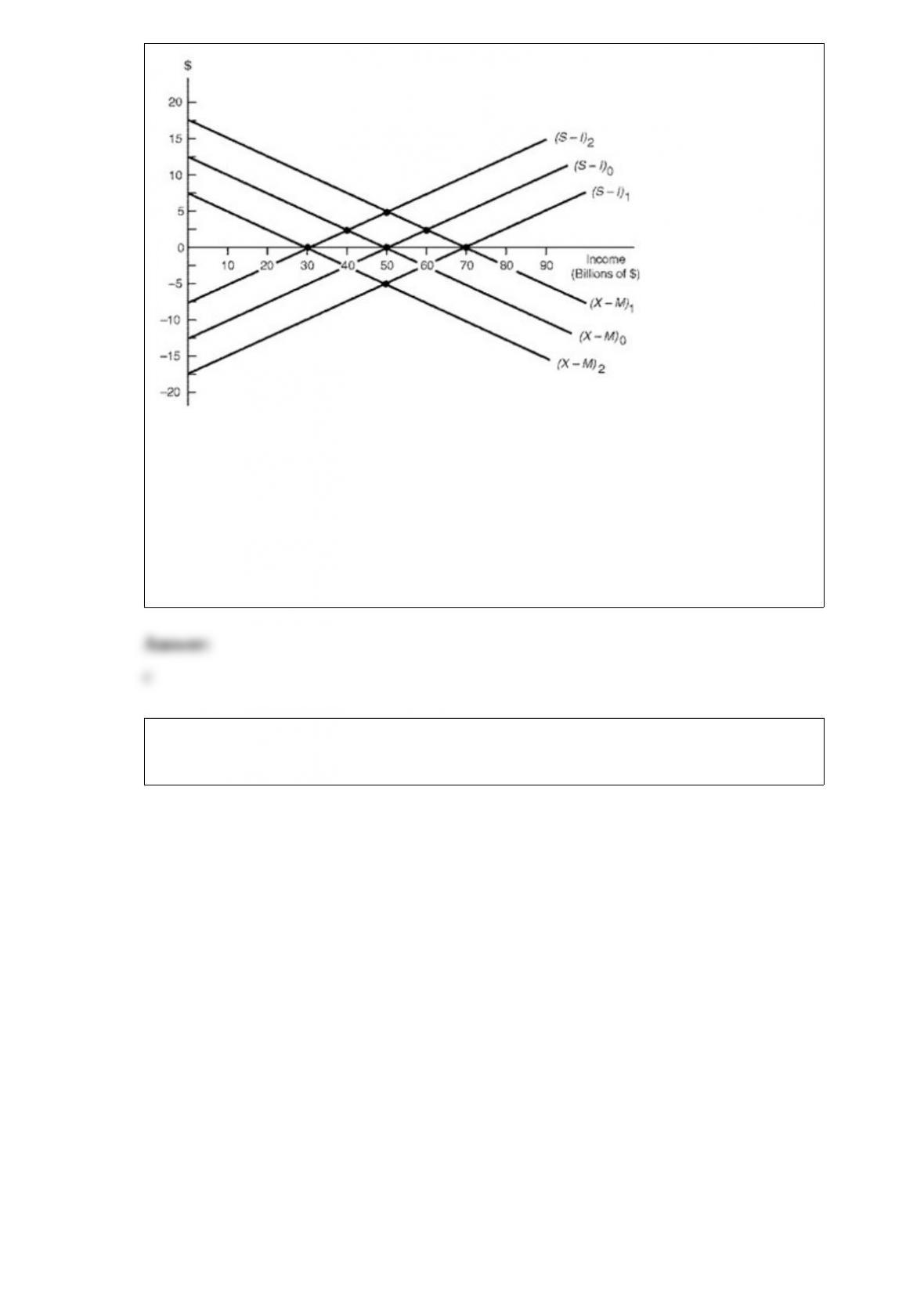
refer to figure 13.2. starting at equilibrium income $50 billion, where (s-i)0 intersects
(x-m)0, suppose that worsening profit expectations lead to an autonomous decrease in
australian investment of $5 billion. australian income thus ____ which leads to
australia’s trade account moving to a ____.
a.rises to $60 billion, deficit of $2.5 billion
b.rises to $60 billion, deficit of $5 billion
c.falls to $40 billion, surplus of $2.5 billion
d.falls to $40 billion, surplus of $5 billion
5) figure 4.3 domestic market for gasoline in the united states
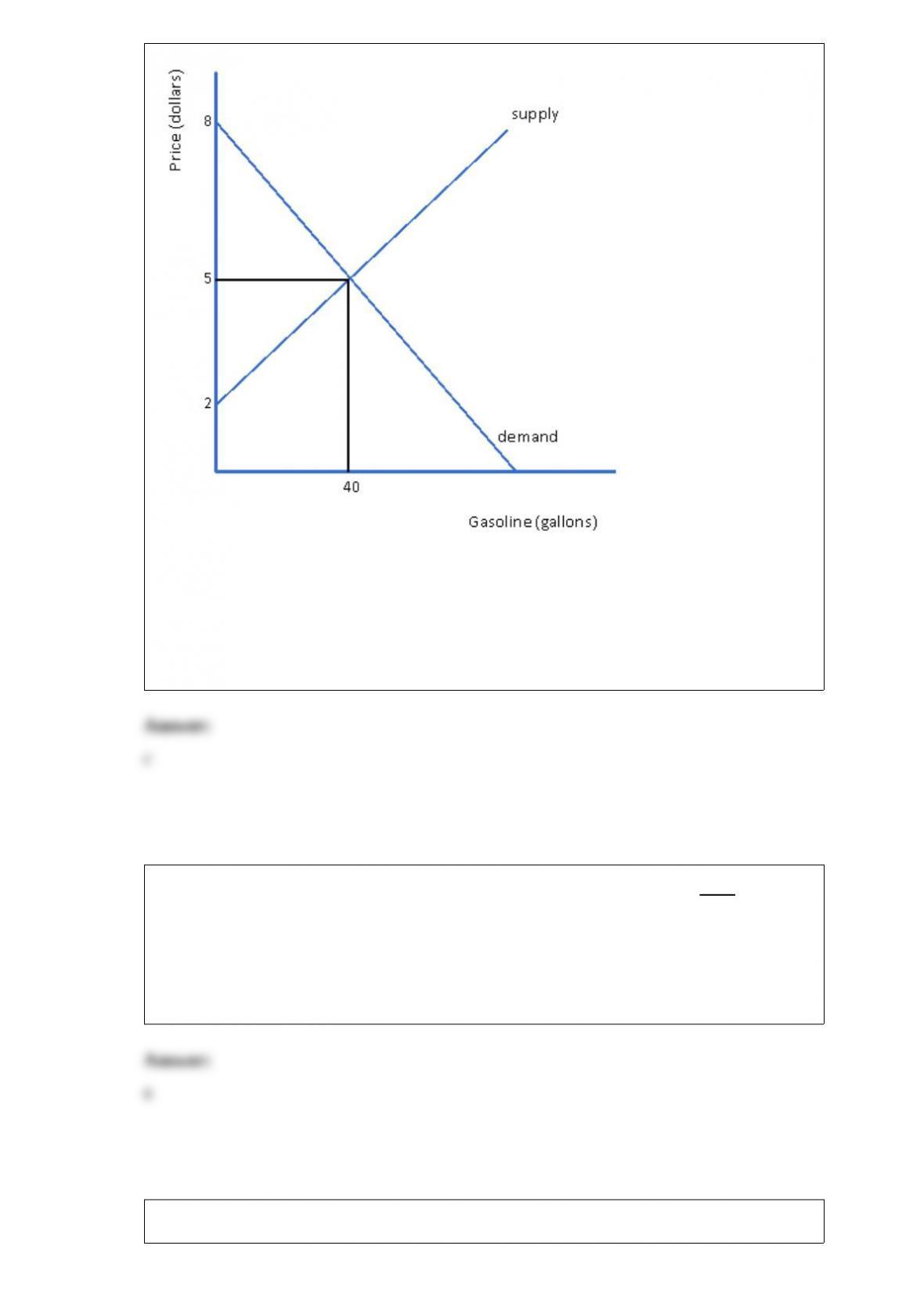
figure 4.3 represents the domestic market for gasoline in the united states.what is the
producer surplus in this market?
a.60 gallons of gasoline
b.$120
c.$60
d.$3
6) of the many arguments in favor of tariffs, the one that has enjoyed the most
significant economic justification has been the:
a.infant industry argument
b.cheap foreign labor argument
c.balance of payments argument
d.domestic living standard argument
7) industrial policy attempts to foster the development of industries that offer long-run
comparative disadvantages and which are insulated from other sectors of the economy.
a.true
b.false
8) because of the j-curve effect and partial currency pass-through, a depreciation of the
domestic currency tends to increase the size of a:
a.trade surplus in the short run
b.trade surplus in the long run
c.trade deficit in the short run
d.trade deficit in the long run
9) complete currency pass through suggests that if the dollar’s exchange value
depreciates by 10 percent, imports will become 10 percent more expensive to americans
while u.s. exports will become 10 percent cheaper to foreigners.
a.true
b.false
10) the relationship between the exchange rate and the prices of tradable goods is
known as the:
a.purchasing-power-parity theory
b.asset-markets theory
c.monetary theory
d.balance-of-payments theory
11) a $100 specific tariff provides home producers more protection from foreign
competition when:
a.the home market buys cheaper products rather than expensive products
b.it is applied to a commodity with many grade variations
c.the home demand for a good is elastic with respect to price changes
d.it is levied on manufactured goods rather than primary products
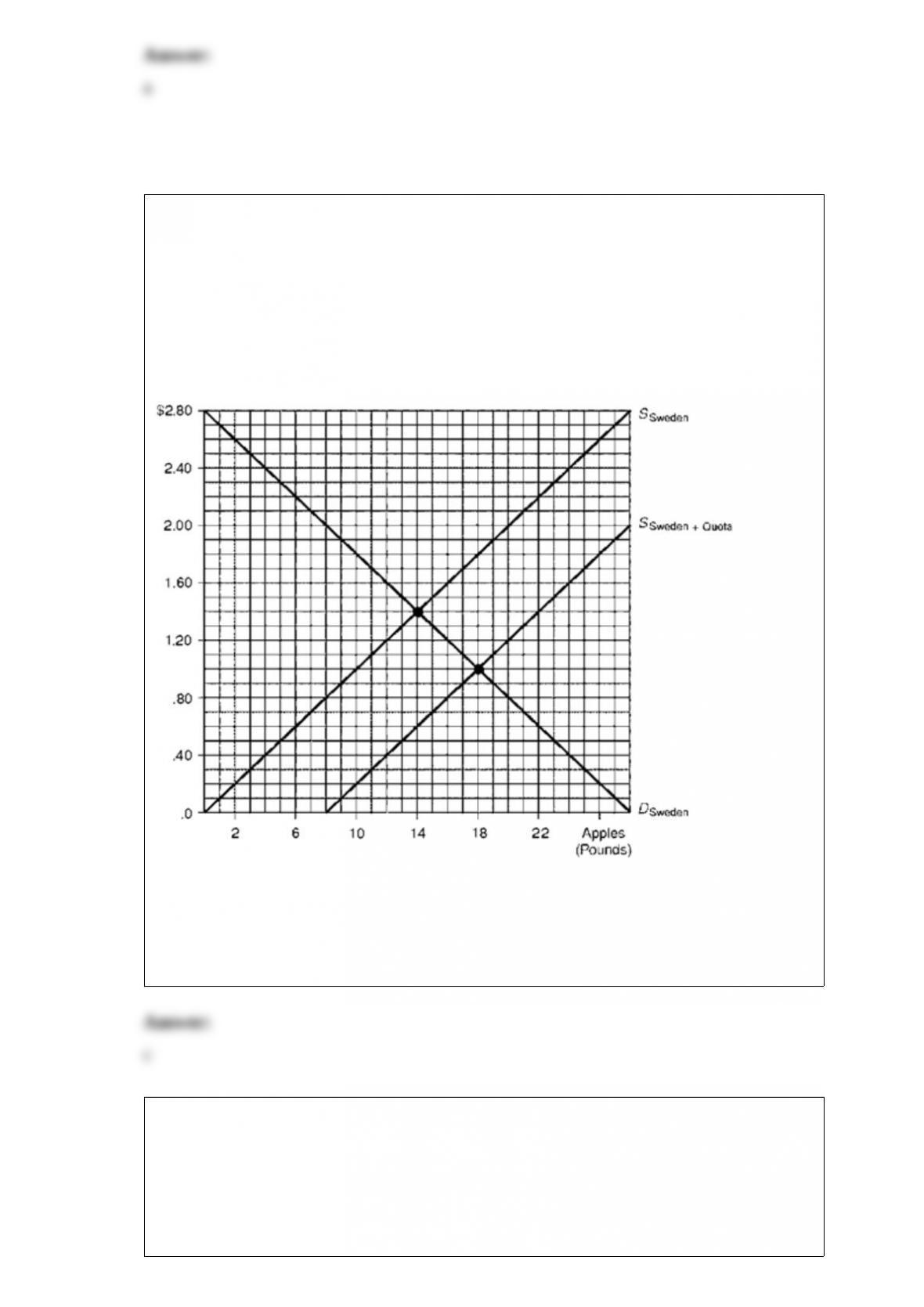
12) figure 5.3 illustrates the apple market for sweden, assumed to be a ‘small” country
that is unable to affect the world price. ssweden is the domestic supply and dsweden is
the domestic demand. ssweden+quota is sweden’s supply schedule with an import
quota.
figure 5.3. sweden’s apple market
consider figure 5.3. the quota’s revenue effect equals:
a.$1.60
b.$2.40
c.$3.20
d.$4.00
13) assume that the united states faces an 8 percent inflation rate while no (zero)
inflation exists in japan. according to the purchasing-power parity theory, the dollar
would be expected to:
a.appreciate by 8 percent against the yen
b.depreciate by 8 percent against the yen
c.remain at its existing exchange rate

d.none of the above
14) in the long run, competitiveness depends on an industry’s natural resources, its stock
of machinery and equipment, and the skill of its workers in creating goods that people
want to buy.
a.true
b.false
15) the united states exports a larger percentage of its gross domestic product than
japan, germany, and canada.
a.true
b.false
16) the success of buffer stocks is limited by the fact that stockpiles of a product may be
exhausted after prolonged sales, while funds may be exhausted after prolonged
purchases.
a.true
b.false
17) all welfare consequences of a regional trading arrangement are dynamic
a.true
b.false

18) the export-import bank provides export-credit subsidies to u.s. producers of
agricultural goods.
a.true
b.false
19) nafta is a:
a.monetary union
b.free trade area
c.common market
d.customs union
20) during the last century, the relative importance of international trade for the u.s. has:
a.significantly increased
b.slightly increased
c.significantly decreased
d.slightly decreased