1) europe’s jumbo-jet manufacturer, airbus, has justified receiving governmental
subsidies on the grounds that the subsidies prevent the united states from becoming a
monopoly in the jumbo-jet market.
a.true
b.false
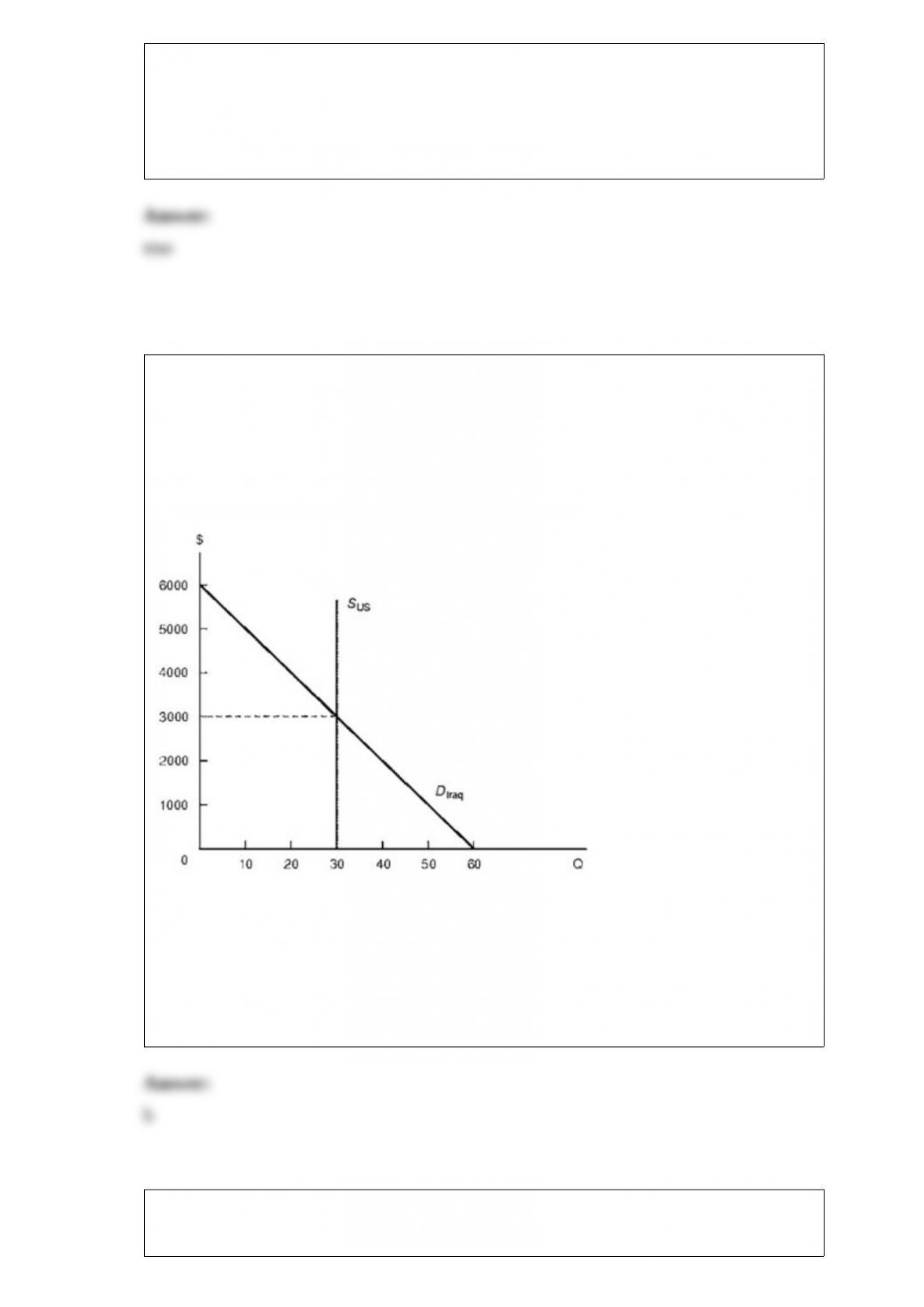
2) figure 6.3 represents the iraqi computer market. assume iraq purchases all of its
computers from the united states.
figure 6.3 iraqi computer market and economic sanctions
consider figure 6.3. of the quota-induced change in iraqi consumer surplus, the amount
of the change in iraq’s consumer surplus that is transferred to other sectors of iraq’s
economy is captured by the united states as:
a.tax revenue
b.export revenue
c.producer surplus
d.consumer surplus
3) similar to stock and commodity exchanges, the foreign exchange market is an
organized structure with a central meeting place and formal licensing requirements.
a.true
b.false
4) critics of multinational corporations maintain that they often abandon domestic
workers in order to take advantage of lower wage scales abroad.
a.true
b.false
5) if the bauxite exporting countries form a cartel to boost the price of bauxite so as to
increase sales revenue, they believe that the demand for bauxite:
a.is inelastic with respect to price changes
b.is elastic with respect to price changes
c.will increase in response to a price increase
d.will not change in response to a price change
6) figure 8.1 depicts the supply and demand schedules of calculators for greece, a
‘small” country that is unable to affect the world price. greece’s supply and demand
schedules of calculators are respectively depicted by sg and dg. assume that greece
imports calculators from either germany or france. suppose germany is the world’s
low-cost producer who can supply calculators to greece at $20 per unit, while france
can supply calculators at $30 per unit.
figure 8.1. effects of a customs union
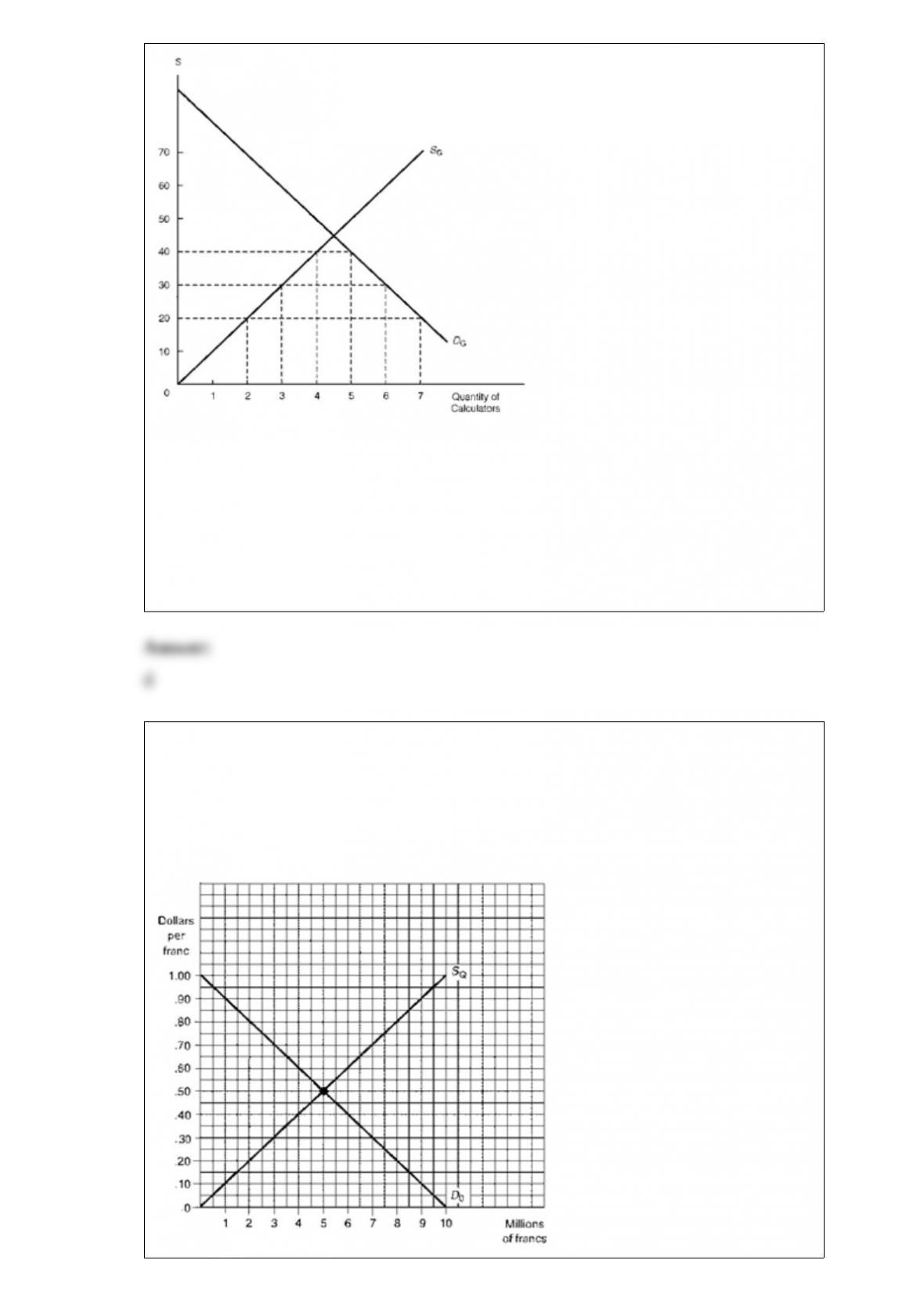
consider figure 8.1. assume greece levies a per-unit tariff of $20 on imports from both
germany and france.
as a result of the $20 tariff, greece’s consumer surplus falls by:
a.$90
b.$100
c.$110
d.$120
7) figure 11.1 illustrates the supply and demand schedules for the swiss franc. assume
that exchange rates are flexible.
figure 11.1. supply and demand schedules of francs
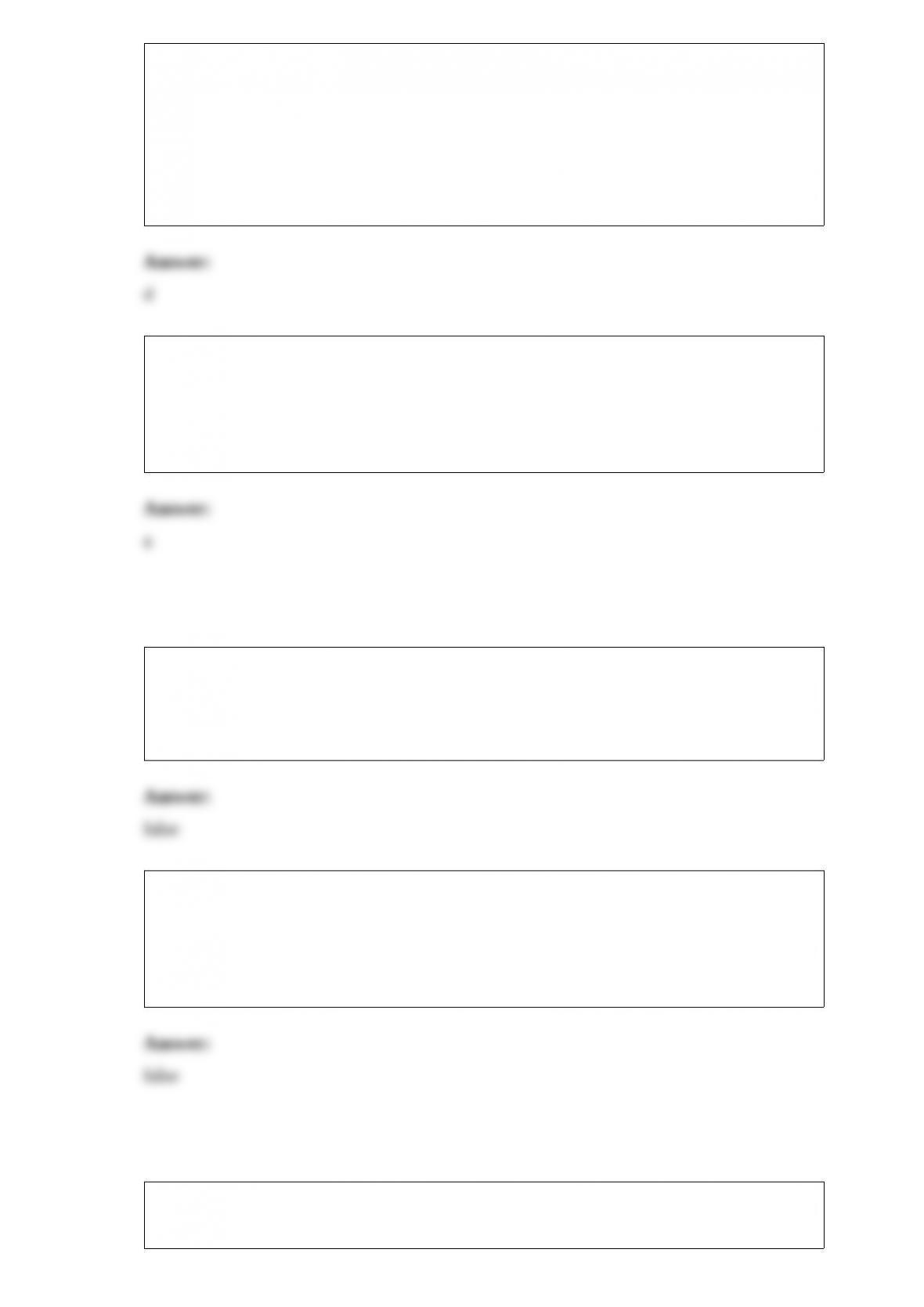
refer to figure 11.1. suppose the exchange rate is $.70 per franc. free-market forces
would lead to a (an) ____ of the dollar against the franc and a (an) ____ in u.s.
international competitiveness.
a.depreciation, improvement
b.depreciation, worsening
c.appreciation, improvement
d.appreciation, worsening
8) export-led growth tends to:
a.exploit domestic comparative advantages
b.discourage competition in the global economy
c.lead to unemployment among domestic workers
d.help firms benefit from diseconomies of large-scale production
9) unlike japan and the united states, france has refrained from forming explicit
industrial policies to enhance the competitiveness of its national champions.
a.true
b.false
10) under the generalized system of preferences program, the industrialized countries
agree to maintain lower tariffs on imports of natural resources and higher tariffs on
imports of manufactured goods.
a.true
b.false
11) in 1995 the ____ was established to administer the new global trade rules agreed in
the uruguay round of multilateral trade negotiations.
a.world trade organization
b.organization for economic cooperation and development
c.general agreement on tariffs and trade
d.united nations
12) american labor unions accuse u.s. multinational firms of all of the following except:
that such firms
a.enjoy unfair advantages in taxation
b.export jobs by shifting technology overseas
c.export jobs by shifting investment overseas
d.operate at output levels where scale economies occur
13) by joining nafta, the united states, canada, and mexico would find their short-run
welfare decreasing due to the:
a.economies of scale effect
b.business investment effect
c.trade creation effect
d.trade diversion effect
14) if hong kong and taiwan had identical labor costs but were subject to increasing
costs of production:
a.trade would depend on differences in demand conditions
b.trade would depend on economies of large-scale production
c.trade would depend on the use of different currencies
d.there would be no basis for gainful trade
15) a dollar shortage would indicate that the dollar is:
a.undervalued in international markets
b.overvalued in international markets
c.overvalued in terms of gold
d.overvalued in terms of special drawing rights

16) the theory of overlapping demands contends that international trade in
manufactured products is strongest among nations with similar income levels.
a.true
b.false