An individual firm in a competitive labor market faces a(n):
a. horizontal labor supply curve.
b. backward-bending labor supply curve.
c. downward-sloping labor supply curve.
d. upward-sloping labor supply curve.
e. vertical labor supply curve.
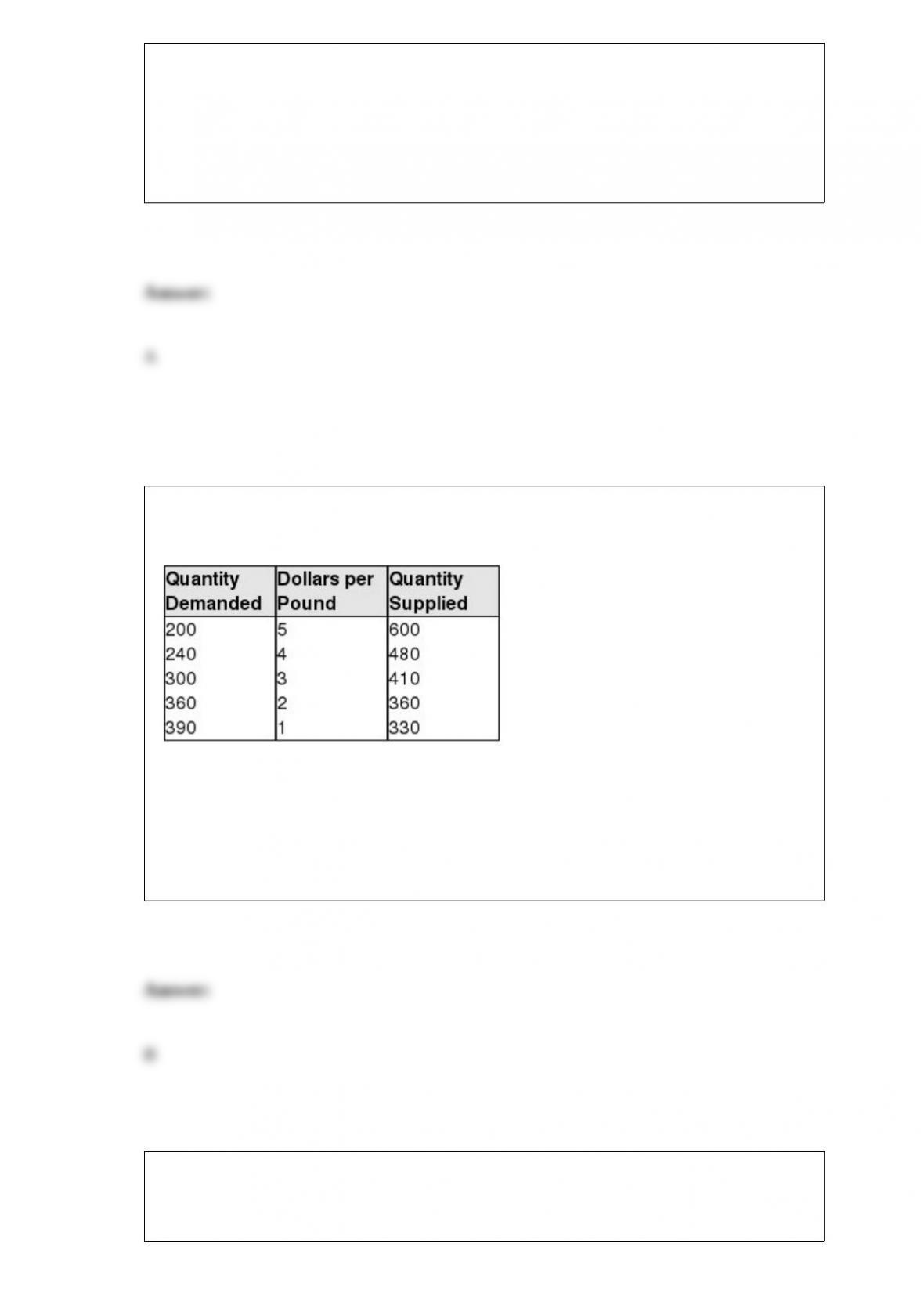
Exhibit 15-6 Dollars per British pound
In Exhibit 15-6, the exchange rate will have no tendency to change when it is equal to:
a. 4.
b. 2.
c. 5.
d. 1.
e. 3.
A favorable balance of trade occurs when:
a. exports equal imports.
b. the balance of payments balances.
c. the current and capital account in the BOP are equal.
d. the value of the exports of goods exceeds the value of the imports of goods.
e. the value of the exports of goods is less than the value of the imports of goods .
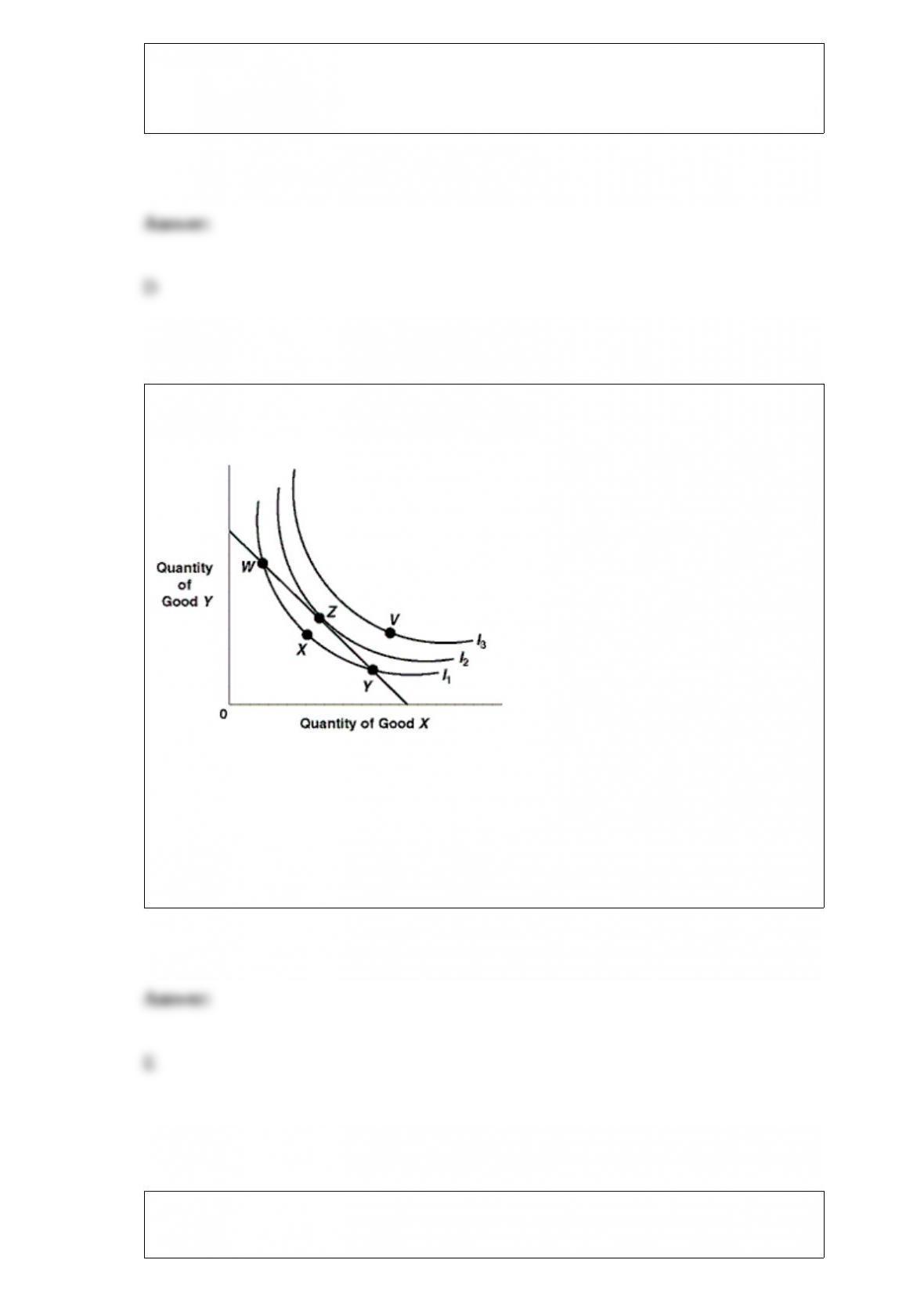
Exhibit 6A-2 Consumer equilibrium
Given the budget line and indifference curves shown in Exhibit 6A-2, consumer
equilibrium occurs at point:
a. V.
b. W.
c. X.
d. Y.
e. Z.
Exhibit 7-3 A marginal product curve
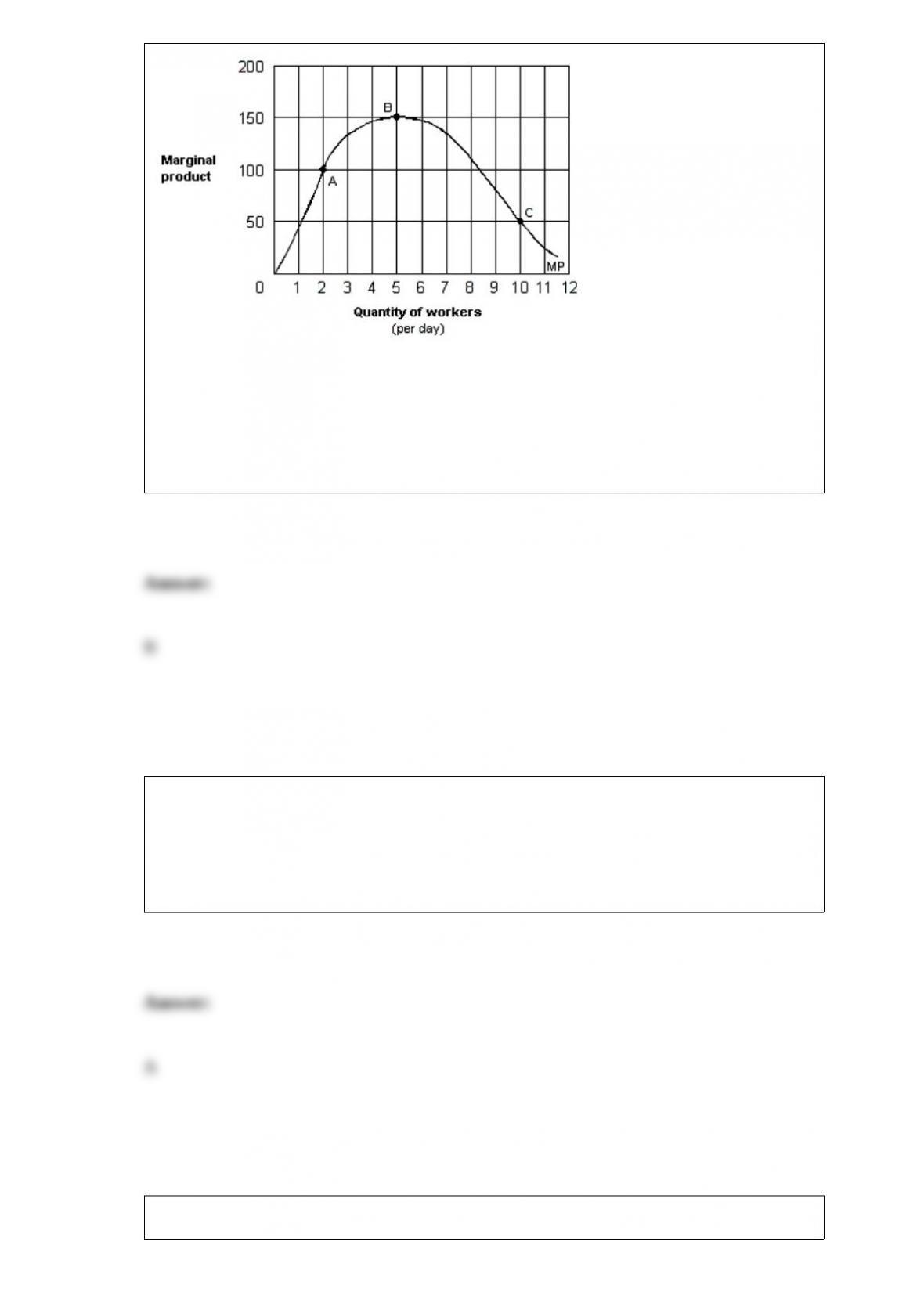
As shown in Exhibit 7-3, the marginal product of labor for the last worker hired when 2
workers are employed per day is:
a. 50.
b. 100.
c. 150.
d. 175.
If marginal cost exceeds marginal revenue, a profit-maximizing monopolist will:
a. restrict output to increase the price even higher.
b. raise price and expand output to increase profit.
c. lower price and expand output to increase profit.
d. attempt to maintain this position because it is consistent with profit maximization.
A kinked demand curve is perceived by the firm as being:

a. more elastic to the right of the kink
b. more inelastic to the right of the kink
c. more inelastic to the left of the kink
d. present when there is a monopoly
e. bowed-in or bowed-out
The law of demand refers to the:
a. inverse relationship between the price of a good and the willingness of consumers to
buy it.
b. price increase that results from an increase in demand for a good of limited supply.
c. inverse relationship between the price of a good and the quantity offered for sale.
d. increase in the quantity of a good available when its price increases.
The Japanese demand curve for dollars is downward-sloping because a:
a. higher number of yen per dollar means U.S. goods are cheaper in Japan.
b. lower number of yen per dollar means U.S. goods are cheaper in Japan.
c. lower number of yen per dollar means U.S. goods are more expensive in Japan.
d. lower number of yen per dollar means U.S. goods are less expensive in the U.S.

Which of the following is most likely to be a major source of growth in per capita
GDP?
a. A high investment / GDP ratio c. Rapid population growth
b. A high rate of inflation d. Rapid growth in the money supply
A major difference between a tariff and a quota is that a tariff:
a. will reduce imports, but a quota generally will not.
b. can easily be rescinded, but a quota cannot.
c. will reduce the ability of foreigners to obtain the purchasing power to buy a nation’s
export goods, but a quota will not affect the foreign demand for the nation’s exports.
d. typically generates tax revenue, while a quota does not.
At the long-run equilibrium level of output, the monopolist’s marginal cost will:
a. exceed price.
b. equal price.
c. be less than price.
d. be less than marginal revenue.
You are on a campus committee which sets the ticket prices for basketball games. The
committee wants to increase the total money generated from ticket sales. When should
the committee choose to lower its ticket prices?
a. Always.
b. Never.
c. When demand for basketball tickets is elastic.
d. When demand for basketball tickets is inelastic.
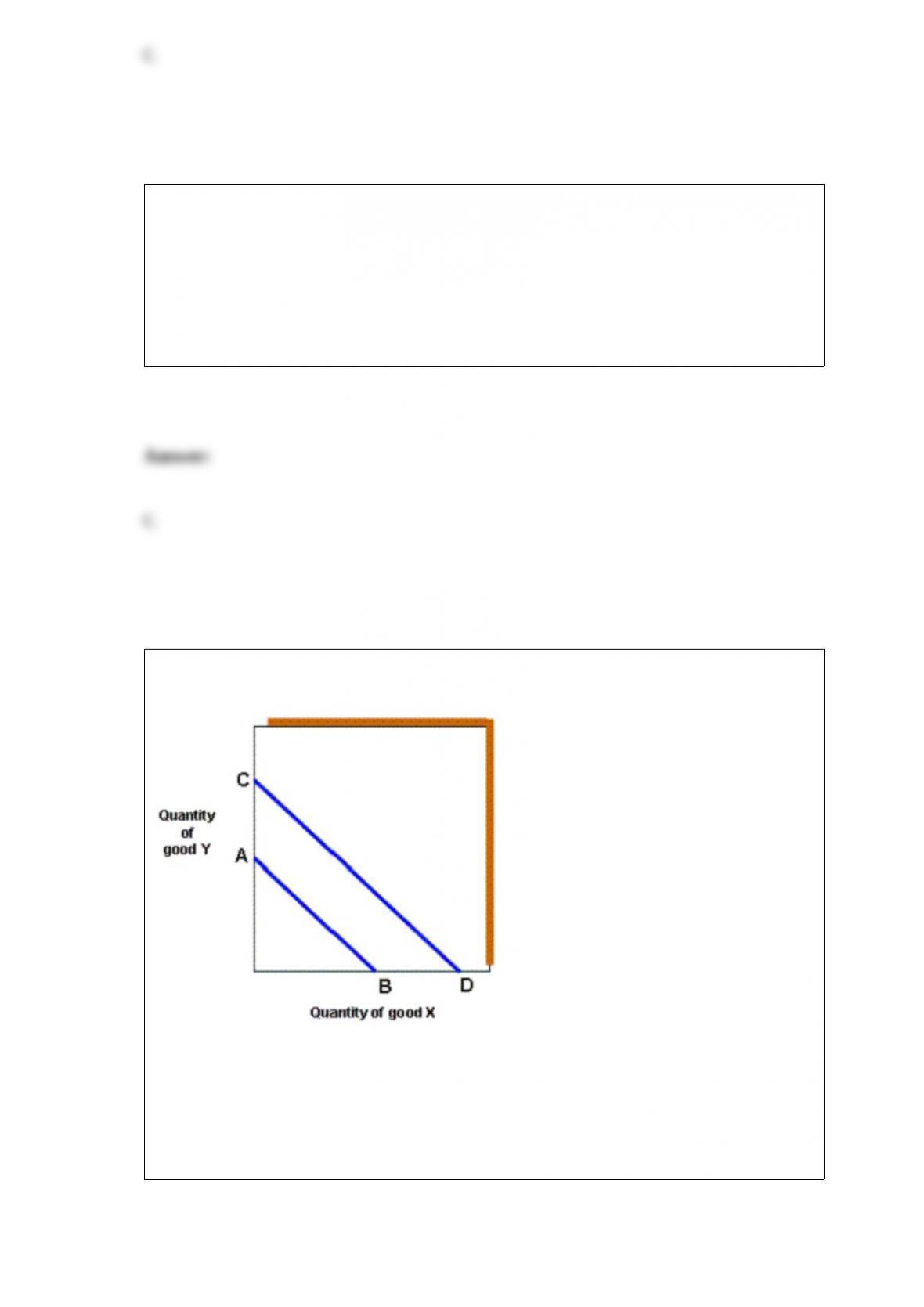
Exhibit 6A-1 Budget line
As shown in Exhibit 6A-1, a rightward shift in the budget line from AB to CD would
result from:
a. a price reduction in good X.
b. a price reduction in good Y.
c. a change in consumer preference.
d. an increase in consumer income.

At $30 each, Jack will buy 1 Blu-ray and at $25, he will purchase 2. If the price is $20,
Jack’s consumer surplus is:
a. $10.
b. $15.
c. $20.
d. $25.
One of the reasons that price elasticities of demand are always stated as positive
numbers is because:
a. the numerators and denominators of the formula are both negative.
b. the numerators and denominators of the formula are both positive.
c. price increases always lead to increases in quantity demanded.
d. price decreases always lead to decreases in quantity demanded.
e. price elasticities are always negative, so we ignore the sign.
Which statement about the total variable cost curve is true?
a. It begins at the origin and increases before decreasing again.
b. The total variable cost curve is the same at all levels of output.

c. The total variable cost curve is increasing but at a decreasing rate.
d. It begins at the origin and is always increasing.
e. There is no such thing as a total variable cost curve.
Suppose an oligopoly has a dominant firm that sets the price for the entire industry. In
this situation, the oligopoly has:
a. nonprice competition. c. price leadership.
b. a kinked demand curve. d. a cartel.
Wage discrimination means minority workers are paid unequal wages.
The law of diminishing returns causes a firm’s short-run marginal cost curve to be
s-shaped.

A monopolistic competitive firm in the long run sets price equal to the minimum point
on the long-run average cost curve.
When externalities exist, economic efficiency is achieved when marginal private benefit
equals marginal private cost.
It is not possible for a regulated public utility to earn economic profits in the short run.

In Karl Marx’s view, people under the ideal state of communism would be motivated by
the principle “from each according to his ability, to each according to his enterprise.”
Discuss the impact of demand and supply changes on market equilibrium price and
quantity. Express this graphically.
The most efficient point on the production possibilities curve is the midpoint on the
curve.
The supply curve for chicken will shift to the right, if production costs increase.