
1) economists would describe the u.s. automobile industry as:
a.purely competitive.
b.an oligopoly.
c.monopolistically competitive.
d.a pure monopoly.
2) which of the following is correct?
a.if the demand for a product is inelastic, a change in price will cause total revenue to
change in the opposite direction.
b.if the demand for a product is inelastic, a change in price will cause total revenue to
change in the same direction.
c.if the demand for a product is inelastic, a change in price may cause total revenue to
change in either the opposite or the same direction.
d.the price elasticity coefficient applies to demand, but not to supply.
3) how did apple overcome consumers’ diminishing marginal utility for ipods?
a.apple lowered the price of ipods so that previous buyers would purchase another unit.
b.apple introduced new features to entice previous buyers to purchase new models.
c.apple ignored the problem and focused solely on attracting new buyers.
d.apple was unable to overcome the problem and has faced steadily declining sales.
4) It is generally easier to prevent deforestation than fishery collapse because:
A.it is easier to establish and enforce property rights on national lands than in
international waters.
B.there is greater incentive to have sustainable forests than sustainable fisheries.
C.the demand for wood products has dropped significantly while the demand for fish
has grown significantly.
D.all of these.
5) Other things equal, a reduction in personal and business taxes can be expected to:
A.increase aggregate demand and decrease aggregate supply.
B.increase both aggregate demand and aggregate supply.
C.decrease both aggregate demand and aggregate supply.
D.decrease aggregate demand and increase aggregate supply.
6)
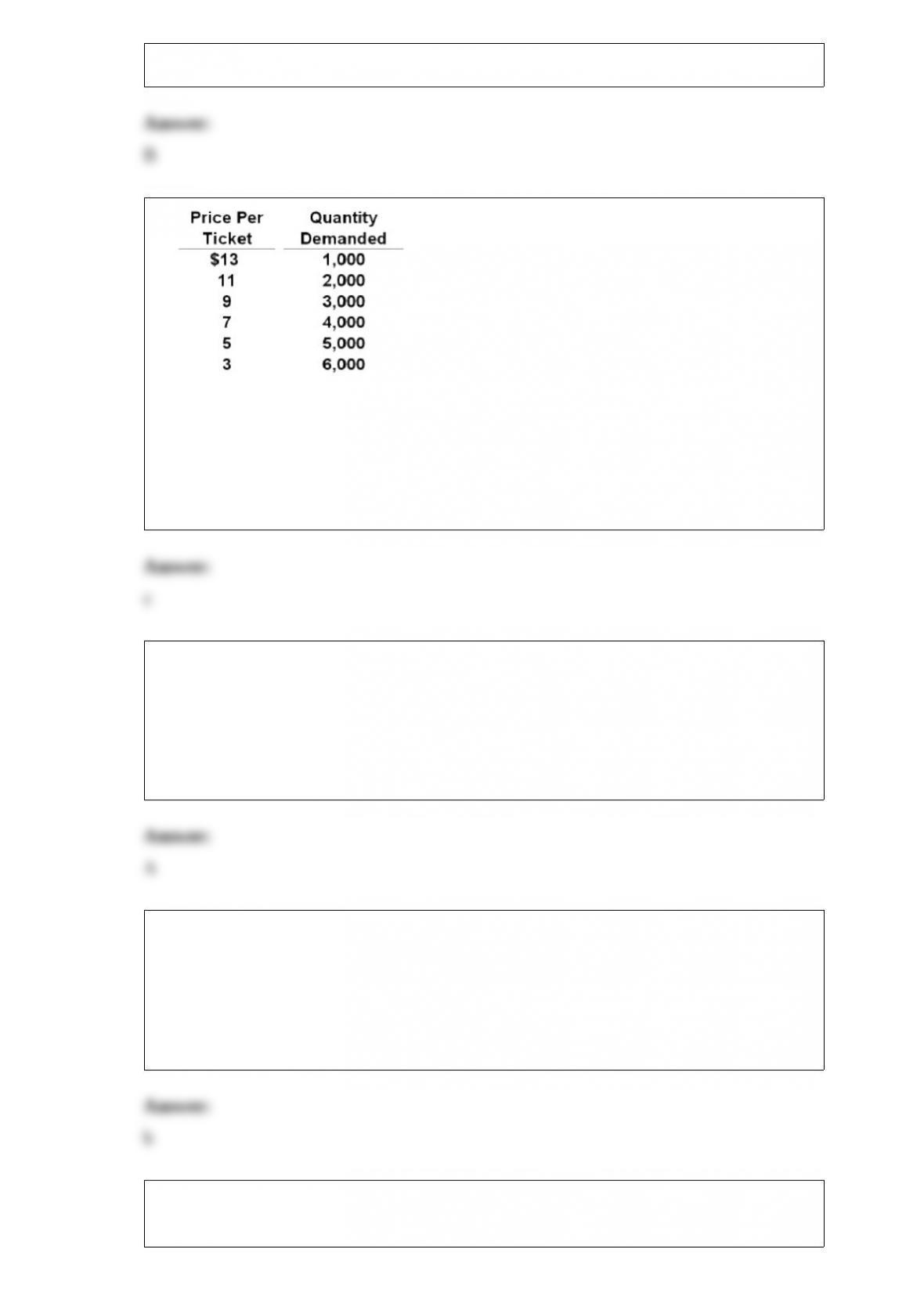
refer to the above information and assume the stadium capacity is 5,000. the supply of
seats for the game:
a.varies inversely with ticket prices.
b.varies directly with ticket prices.
c.is perfectly inelastic.
d.is perfectly elastic.
7) An excise tax on an imported good that helps shield domestic producers of the good
is called a:
A.protective tariff.
B.import quota.
C.revenue tariff.
D.voluntary export restriction.
8) which of the following represents a long-run adjustment?
a.a farmer uses an extra dose of fertilizer on his corn crop
b.unable to meet foreign competition, a u.s. watch manufacturer sells one of its branch
plants
c.a steel manufacturer cuts back on its purchases of coke and iron ore
d.a supermarket hires four additional clerks
9) Historically, many aspects of U.S. farm policies had their origins in the:
A.Agricultural Extension Service Act.
B.Agricultural Adjustment Act.
C.Homestead Act.
D.Land Grant Act.
10)
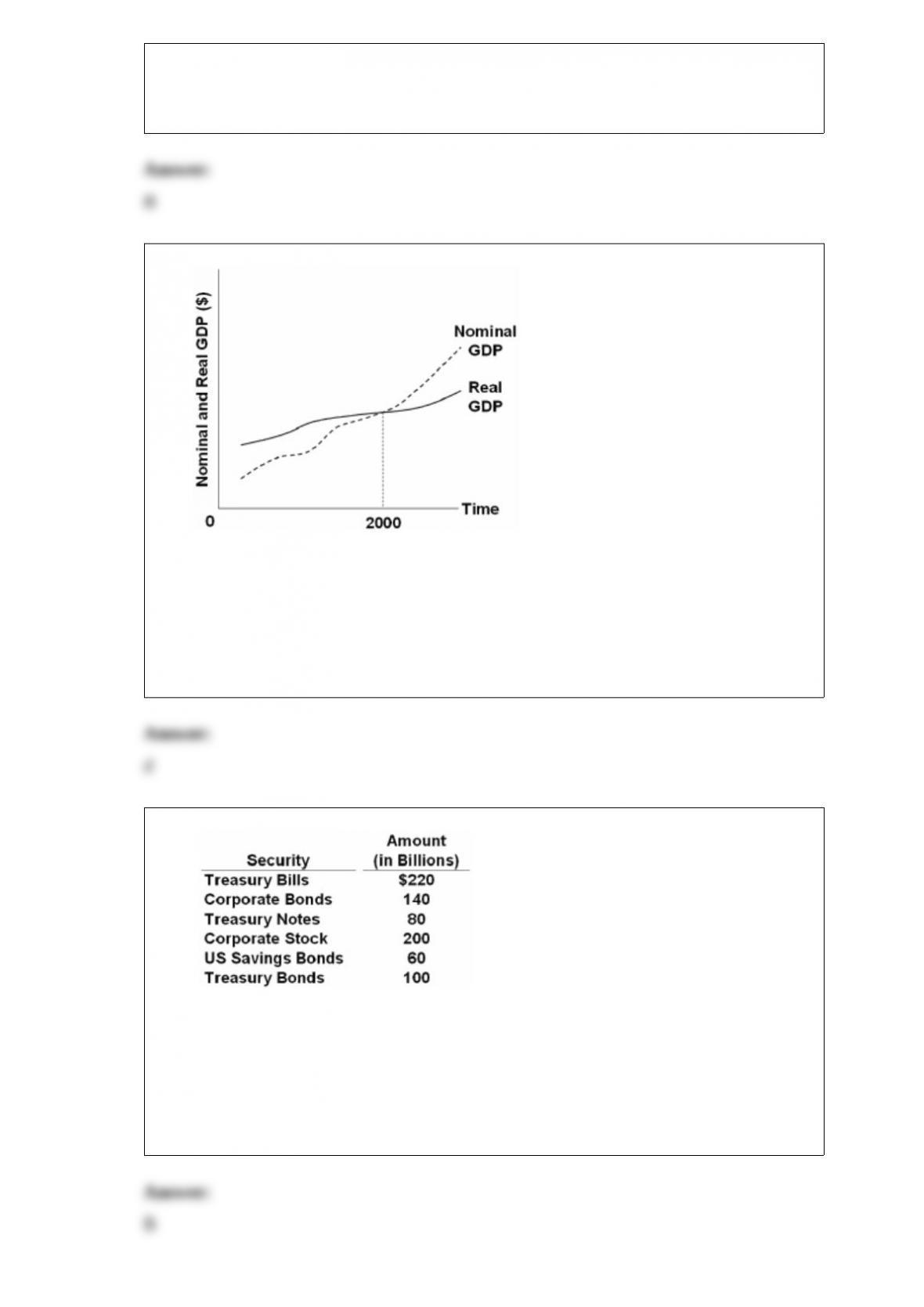
refer to the above diagram. the base year used in determining the price indices for this
economy:
a.cannot be determined from the information given.
b.is some year before 2000.
c.is more recent than 2000.
d.is 2000.
11)
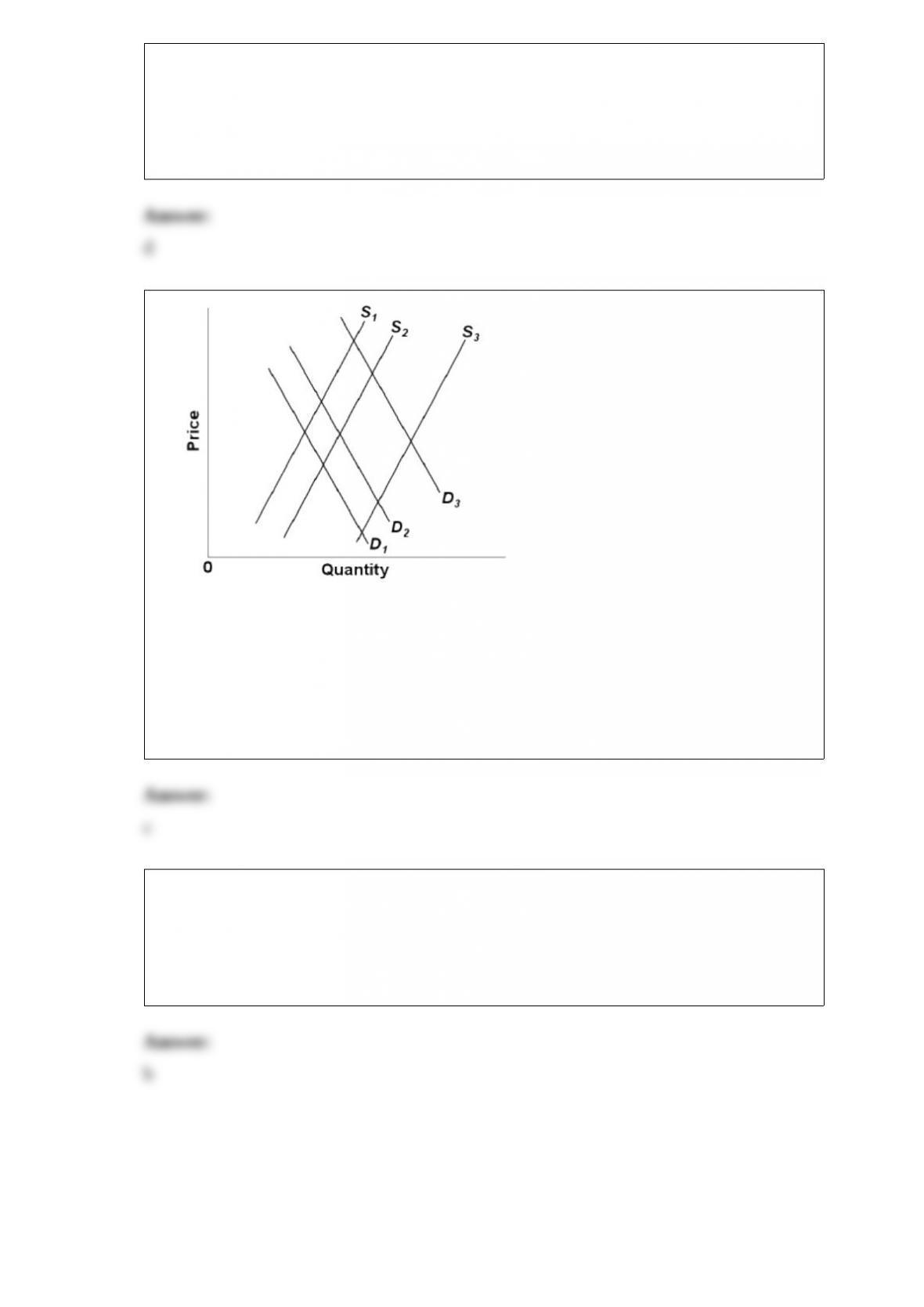
Other things equal, an increase of Treasury bonds from $100 billion to $120 billion in
the above economy would:
A.not change the size of the public debt.
B.increase the public debt from $460 billion to $480 billion.
C.increase the public debt from $400 billion to $420 billion.
D.decrease the public debt by $20 billion.
12) remittances and backflows of experienced workers:
a.reduce the efficiency gains from migration.
b.reverse wage equalization that occurred with the original migration.
c.exacerbate the problem of “brain drain” from developing nations.
d.redistribute gains toward the original emigrant nation
13)
refer to the above figure that shows the market for u.s. health care. the problem of
rapidly rising medical care costs is best illustrated by the shifts of the demand and
supply curves from d1 to:
a.d2 and s1 to s2.
b.d2 and s1 to s3.
c.d3 and s1 to s2.
d.d3 and s1 to s3.
14) an industry is best defined as a group of firms that:
a.compete for labor.
b.produce identical or similar products.
c.use identical production techniques.
d.are located in the same city or geographic area.