Economics can decide
a. the appropriate trade-off between fairness and efficiency.
b. which pricing arrangements are fair and which are unfair.
c. whether a pricing decision will impose heavy inefficiency costs on society.
d. All of the above are correct.
In macroeconomic analysis, a transfer payment is considered a
a. positive tax.
b. fixed tax.
c. negative tax.
d. variable tax.
The most important determinant of the decisions to lend or borrow is the real rate of
interest.
a. True
b. False
If income redistribution policy is based on the relative concept of poverty, the war on
poverty
a. will be won quite soon.
b. is, by definition, unwinnable.
c. has not helped at all.
d. has already been won.
The ____ is the fraction of each additional dollar of income that is paid in taxes.
a. deferred tax rate
b. cumulative tax rate
c. average tax rate
d. marginal tax rate
Taxation alters the behavior patterns of individuals.
a. True
b. False
A monopolist is a price maker who will lose some business if the price is increased.
a. True
b. False
A Detroit business advertises, “The more we sell, the lower the price, and the lower the
price, the more we sell.” This firm is experiencing
a. decreasing returns to scale.
b. constant returns to scale.
c. increasing returns to scale.
d. abnormal demand patterns.
The U.S. trade deficits of the late 1990s were due primarily to low saving rates.
a. True
b. False
A merger occurs when two previously independent firms are combined under a single
owner.
a. True
b. False
Table 7-4
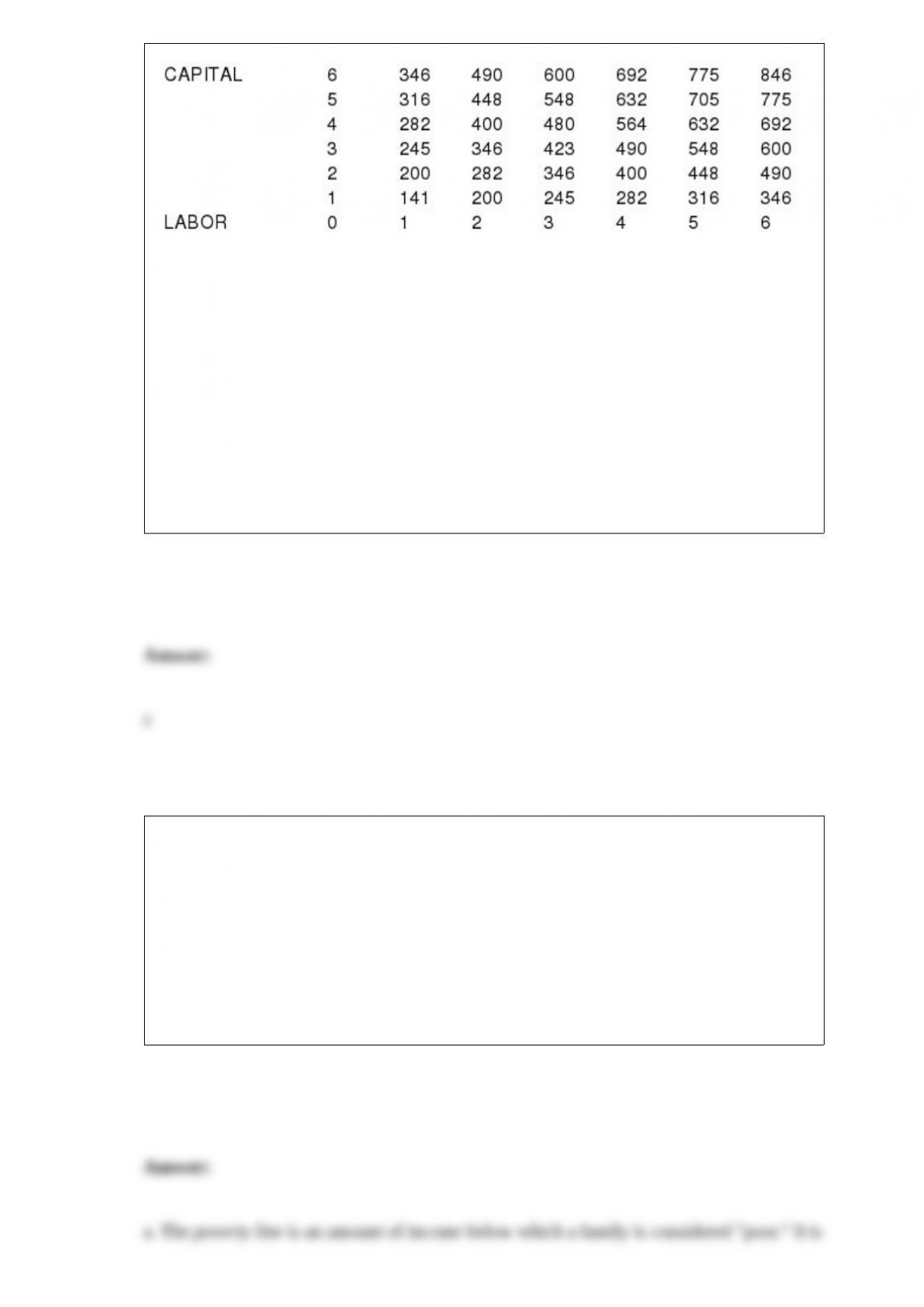
Table 7-4 shows a production relationship. Assuming the labor input is fixed at 4, what
will be the optimum capital input assuming an output price of $1 and a $90-per-day cost
for one unit of capital?
a. 1
b. 2
c. 3
d. 4
Define the following terms and explain their importance to the study of economics.
a. poverty line
b. economic discrimination
c. optimal inequality
d. negative income tax
A hostile takeover is one opposed by the firm’s existing management.
a. True
b. False
The United States has less income inequality than most other developed countries.
a. True
b. False
The marginal revenue curve for a monopolist is always below the demand curve.
a. True
b. False
Greater economic efficiency often leads to greater economic inequality.
a. True
b. False
Banking under a fractional reserve system is inherently risky, but
a. safe if banks are allowed to make profits.
b. regulation removes all danger of failures.
c. is always safely done with modern management.
d. is made safer with cautious and prudent management.
In the past, when the United States enjoyed a continuing trade surplus, wages in the
United States
a. were much lower than wages in countries that imported U.S. products.
b. were much higher than wages in countries that imported U.S. products.
c. were roughly the same as wages in countries that imported U.S. products.
d. fell throughout that period, enabling the continuing trade surplus.
e. rose throughout that period, ending the trade surplus.
All other factors held constant, if the price of game consoles rise, the demand for
gaming titles will
a. shift to the left, because they are normally used together.
b. remain constant.
c. shift to the right, because they are normally used together.
d. shift to the right, because they are substitutes.
Which of the following is an example of opportunity cost not measured by money cost?
a. the time spent eating a business lunch at a restaurant
b. the time spent preparing a meal eaten at home
c. the time spent studying to obtain an “A” in economics
d. the time spent repairing a car in one’s own garage
e. All of the above are correct.
Protectionism may reduce imports, and it will also
a. appreciate the dollar, reducing exports.
b. appreciate the dollar, increasing exports.
c. depreciate the dollar, increasing exports.
d. depreciate the dollar, reducing exports.
If U.S. consumers become more optimistic about their future income and wealth, the
consumption function will shift upward.
a. True
b. False
The sequence of events following an increase in the federal deficit would be higher
interest rates, a(n)
a. depreciating dollar, and a larger current account deficit.
b. depreciating dollar, and a smaller current account deficit.
c. appreciating dollar, and a larger current account deficit.
d. appreciating dollar, and a smaller current account deficit.
Why do price ceilings tend to cause persistent imbalances in the market?
a. Quantity demanded exceeds quantity supplied but price cannot rise to remove the
shortage.
b. Quantity demanded exceeds quantity supplied but price cannot fall to remove the
surplus.
c. Quantity supplied exceeds quantity demanded but price cannot rise to remove the
shortage.
d. Quantity supplied exceeds quantity demanded but price cannot fall to remove the
surplus.
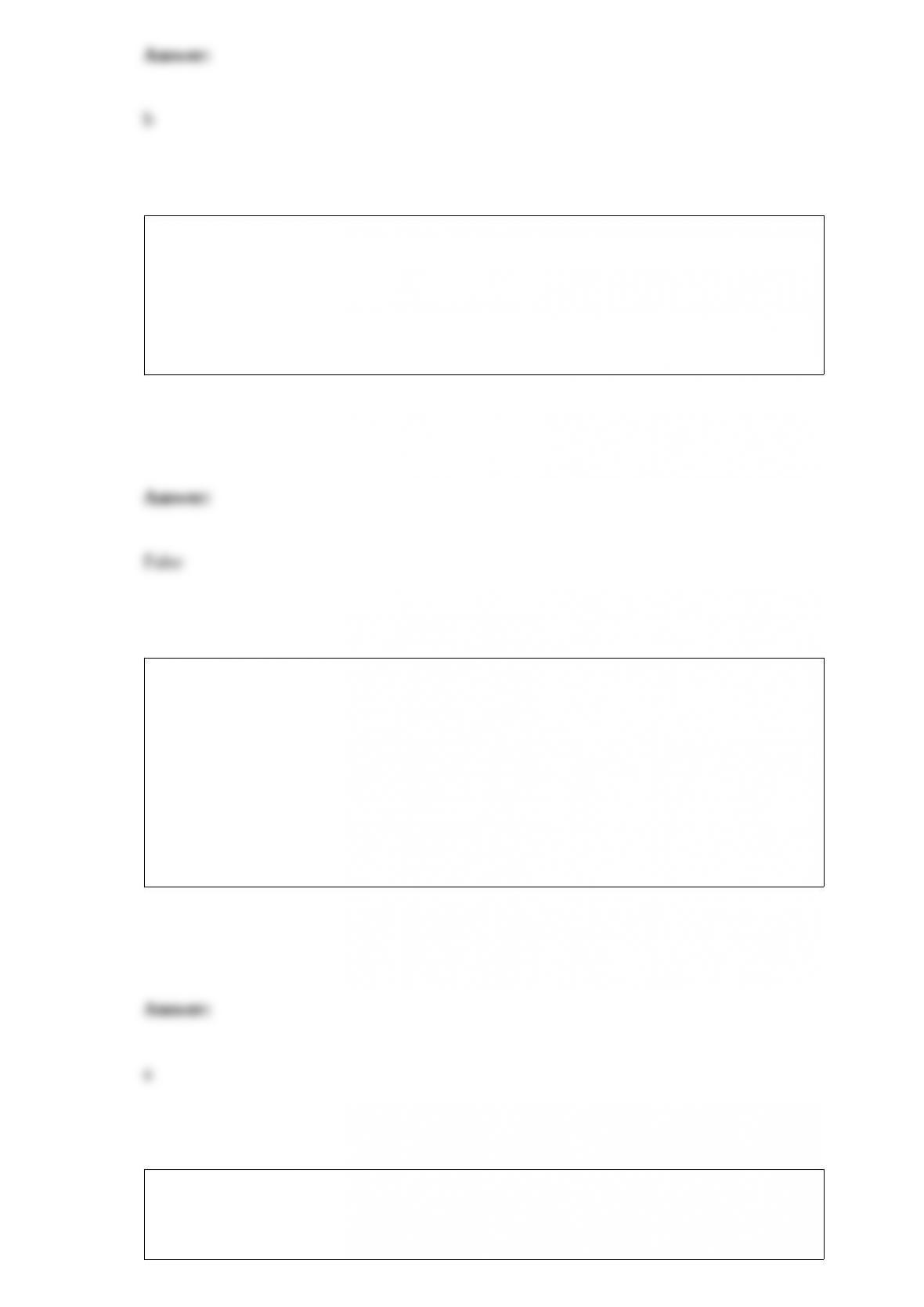
Table 5-1
Table 5-1 gives information on George’s total utility from consuming milkshakes and
sandwiches. If George’s income this week is $15, milkshakes are $3 each, and
sandwiches $2, he will maximize his utility if he buys
a. three milkshakes and two sandwiches.
b. three milkshakes and three sandwiches.
c. no milkshakes and as many sandwiches as possible.
d. two milkshakes and three sandwiches.
When the interest rate is higher, the difference between the value of money today and
tomorrow is smaller.
a. True
b. False
The average cost curve
a. is the vertical summation of the AFC and the AVC curves.
b. lies below the AVC curve.
c. lies below the AFC curve.
d. is the vertical summation of the MC and AVC curves.
In reality, decisions made by firms may not always produce maximum total profit
because some executives
a. are more motivated by altruism.
b. are more interested in market share than profits.
c. may push research and development to the point that profits decline.
d. All of the above are correct.
A decision to supply labor or not to supply it is also a decision to
a. earn the highest possible wage.
b. demand or forgo a certain amount of leisure.
c. be as productive as possible.
d. join the union.
How are the slope of a production possibilities frontier and the opportunity cost of the
goods related?
a. The slope is a graphical representation of the cost of expanding production of both
goods.
b. The slope is a graphical measure of the growth rate of the economy.
c. The slope is a graphical representation of the cost of decreasing unemployment.
d. The slope is a graphical representation of the rate of trade-off between the goods.
e. The slope is a graphical representation of the cost of economic growth in the
economy.
The use of chlorofluorocarbons in refrigerators and air conditioners is alleged to cause
the destruction of the ozone layer that surrounds the earth. This layer protects humans
from ultraviolet radiation, which causes skin cancer. Industry has been prohibited from
using these substances in aerosol cans, but the government has been reluctant to ban
their use altogether because of the serious economic consequences. Economists analyze
such problems and refer to them as
a. issues of unfairness.
b. examples of excess abstraction.
c. externalities.
d. comparative advantage issues.
e. examples of trade-offs between output and equality.
An optimal level of output is one at which marginal profit > 0.
a. True
b. False
Along a straight-line demand curve (dropping all minus signs), the price elasticity of
demand
a. gets larger as quantity demanded gets larger.
b. gets smaller as quantity demanded gets larger.
c. always equals one.
d. is constant (though not necessarily equal to one).
Even if demand for a resource grows over time, ever-rising prices of the resource that
result from its growing scarcity still discourage consumption.
a. True
b. False