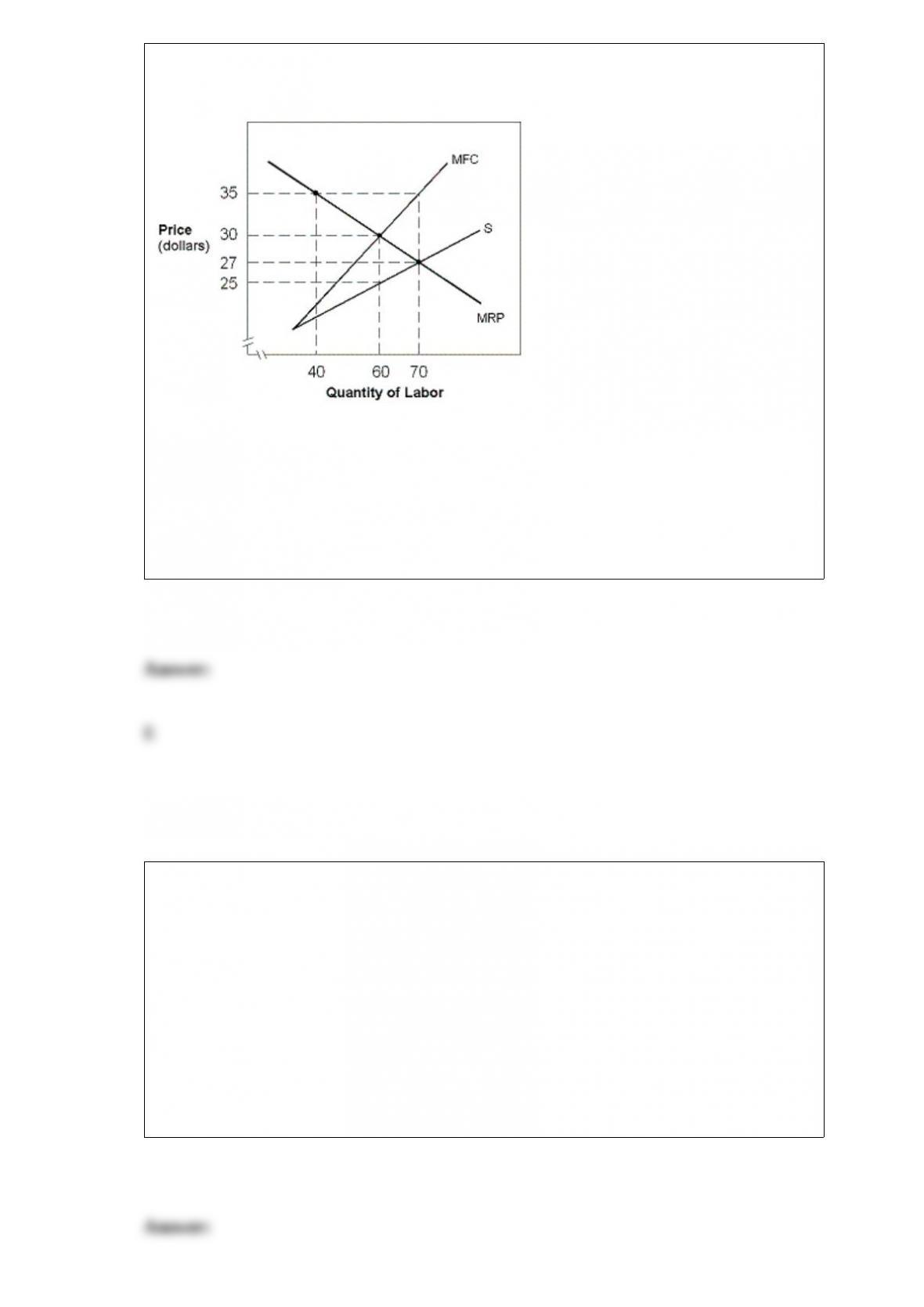
Exhibit 11-12 A monopsonist
In Exhibit 11-12, at the profit-maximizing level of employment, the firm’s MFC is
equal to ____ and the firm’s MRP is equal to ____.
a. $35; $30
b. $25; $27
c. $30; $35
d. $27; $30
e. $30; $30
If Congress decides to reduce the tax per pack paid by sellers of cigarettes, other things
being equal, the equilibrium price of cigarettes will fall. This fall in the equilibrium
price can be attributed to a(n):
a. upward movement along the supply curve for cigarettes.
b. rightward shift of the supply curve for cigarettes.
c. upward movement along the demand curve for cigarettes.
d. leftward shift of the supply curve for cigarettes.

External benefits cause the market to:
a. underallocate resources. c. set excessively high prices.
b. be more efficient. d. have persistent shortages.
Imagine you own a machine that produces perfectly authentic and legal $100 bills. You
would use this machine until:
a. the bills became worthless.
b. the total cost began to fall.
c. the marginal cost was $100.
d. the variable cost began to rise.
e. the marginal revenue began to fall.
The reason individual homeowners usually do not hire a private contractor to fill the
potholes on their street is because:
a. it costs too much.
b. the value to the neighborhood exceeds the cost of repair.
c. others who use the street will be free riders.

d. they do not trust the government.
e. there are negative externalities associated with the repair.
Ceteris paribus, if consumer tastes change so that more people are eating broccoli, then
what will happen to the market equilibrium for cabbage, a substitute good for broccoli?
a. Price will increase, and quantity will increase.
b. Price and quantity will stay the same.
c. Price will decrease, and quantity will increase.
d. Price will increase, and quantity will decrease.
e. Price will decrease, and quantity will decrease.
Exhibit 4-8 Demand and supply curves
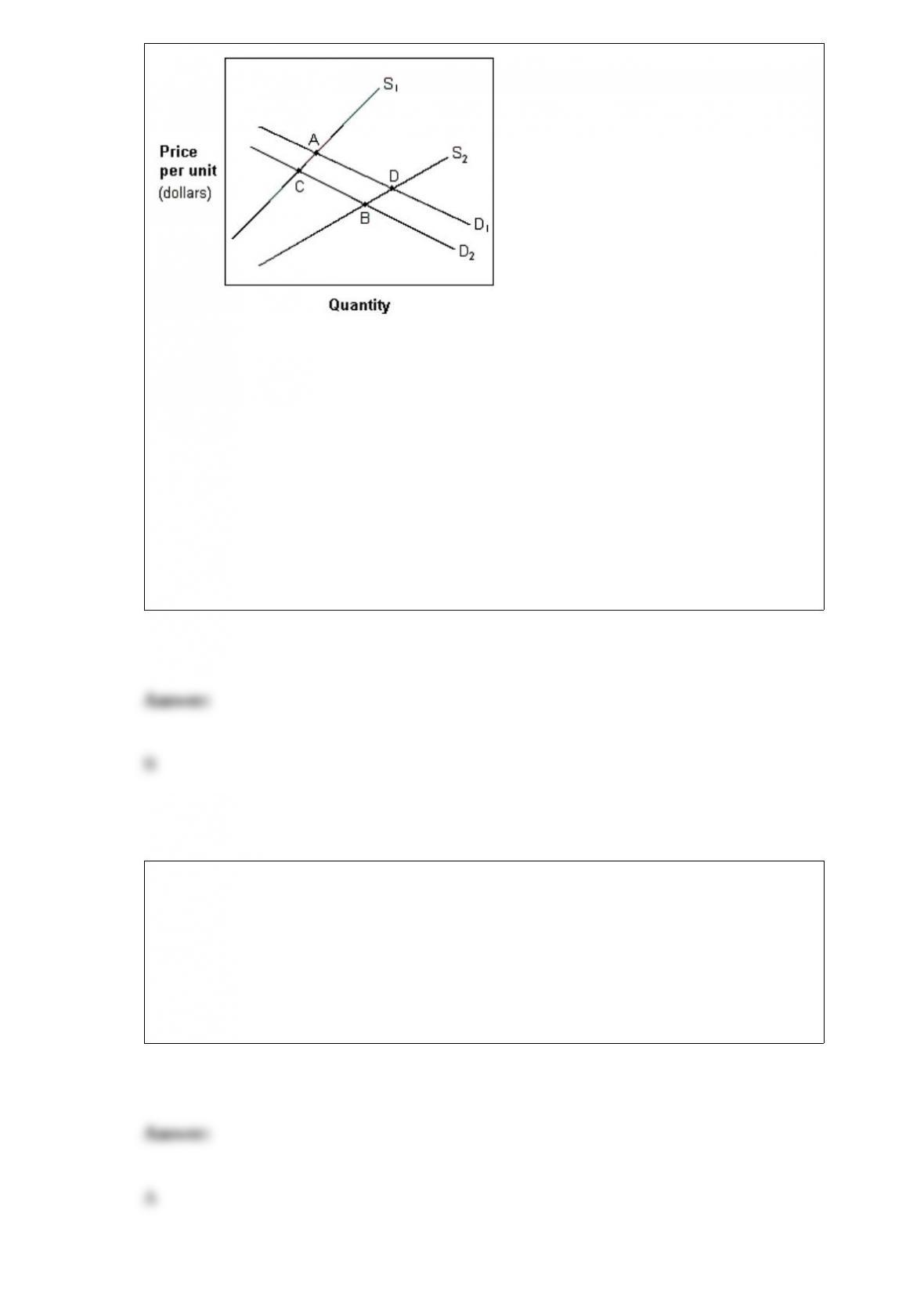
In Exhibit 4-8, a movement from A to C is best described as a(n):
a. increase in the quantity supplied and an increase in the demand.
b. decrease in the quantity supplied and a decrease in demand.
c. decrease in the quantity supplied and an increase in demand.
d. decrease in the quantity demanded and a decrease in supply.
e. decrease in both quantity demanded and quantity supplied.
The negative slope of an indifference curve means that the consumer must give up
quantity of one good as the quantity of another good increases in order for total utility
to ____.
a. remain constant.
b. increase
c. decrease
d. normalize.

The optimal number of workers to be hired by a firm operating in a competitive labor
market is where:
a. P = MRP.
b. MP = MRP.
c. MRP = w.
d. P = w.
e. TWC = w.
An increase in the supply of the product implies:
a. producers will now charge a higher price for a given quantity of output.
b. the supply curve will shift to the left.
c. some producers are dropping out of this market.
d. producers will now charge a lower price for a given quantity of output.
e. the price of this product has increased.
Which of the following is a public good?
a. Pencil. c. Light house.
b. Apple. d. Gun.
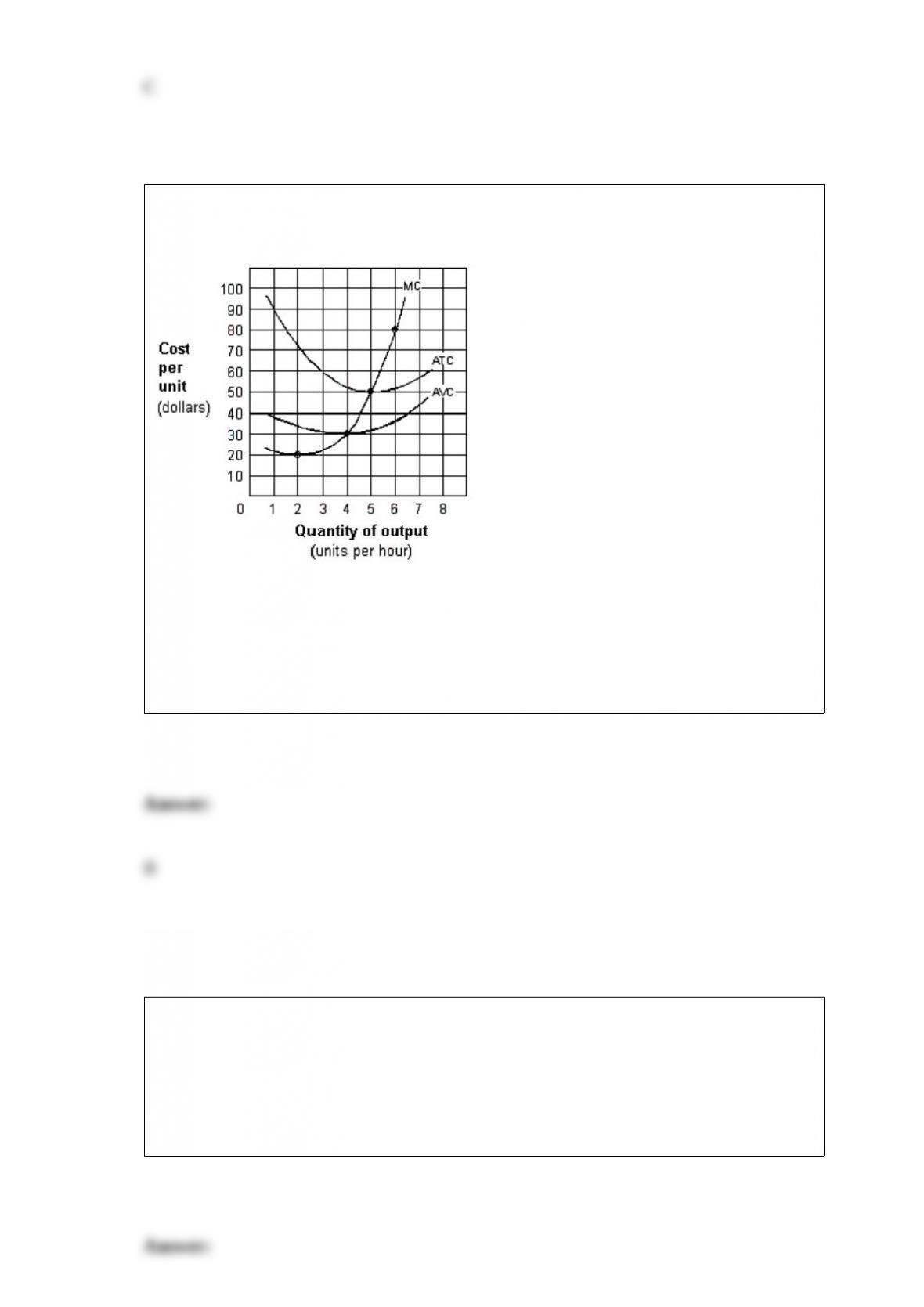
Exhibit 8-16 Short-run cost curves for a competitive firm
In Exhibit 8-16, the firm should shut down in the short run if the market price of its
product falls below:
a. $20 per unit.
b. $30 per unit.
c. $50 per unit.
d. $80 per unit.
If one software company conspired with another software company to raise prices, this
would be in violation of the:
a. Federal Trade Commission Act. c. Sherman Antitrust Act.
b. Clayton Act. d. Robinson-Patman Act.

Defenders of advertising argue that it:
a. informs buyers and broadens the market for goods.
b. enhances economic efficiency by lowering prices.
c. enables small firms to compete more effectively with large ones.
d. all of these.
When the court determines that a firm’s size alone is sufficient to find that it violated
antitrust laws, this criterion is called:
a. countervailing power.
b. economies of scale.
c. per se.
d. rule of reason.
e. natural monopoly.
When building a model, an economist must:
a. adjust for exceptional situations.
b. provide a complete description of reality.
c. make simplifying assumptions.
d. develop a set of behavioral equations.
Which of the following is true for a lower price elasticity of demand coefficient?
a. The market is broadly defined.
b. The quantity demanded is more responsive.
c. Few substitutes exist.
d. Many substitutes exist.
e. All of these.
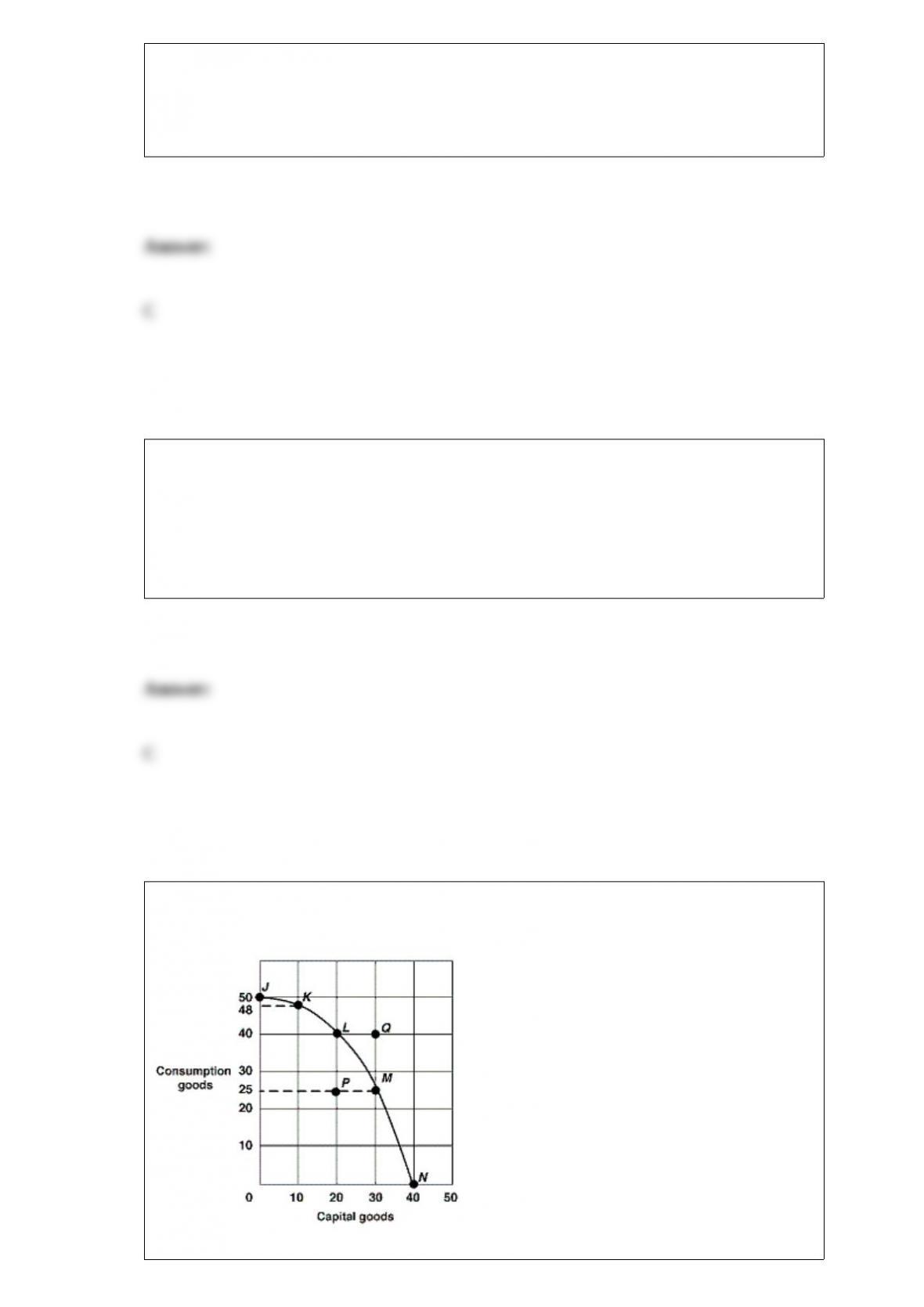
Exhibit 2-15 Production possibilities curve

In Exhibit 2-15, if the economy produces no capital goods, what is the maximum
number of consumer goods that can be produced?
a. 50.
b. 48.
c. 40.
d. 25.
e. 0.
There are three goods you are interested in purchasing, X, Y and Z. You notice that the
price of Z has fallen. Given that the cross price elasticity between Z and Y is 1.5; the
cross price elasticity between Y and X is 3.0, and the cross price elasticity between Z
and X is 0.50. It would make sense that:
a. Z and X are complements; Y and X are substitutes.
b. Y and X are substitutes; Y is complementary to Z.
c. X and Z are unrelated; Y is complementary to X.
d. X and Z are complements; Y and Z are substitutes.
Expenditures for services such as tourism, income for foreign investment, and foreign
gifts are tabulated in the:
a. current account. c. official reserve account.
b. capital account. d. goods account.

A worker’s accumulated investment in education, training, experience, and health is
called:
a. derived labor demand.
b. collective entrepreneurship.
c. seniority.
d. human capital.
The highest valued alternative that must be given up in order to choose an option is
called the:
a. opportunity cost. c. scarcity expense.
b. utility cost. d. disutility option.
Exhibit 3A-2 Comparison of Market Efficiency and Deadweight Loss
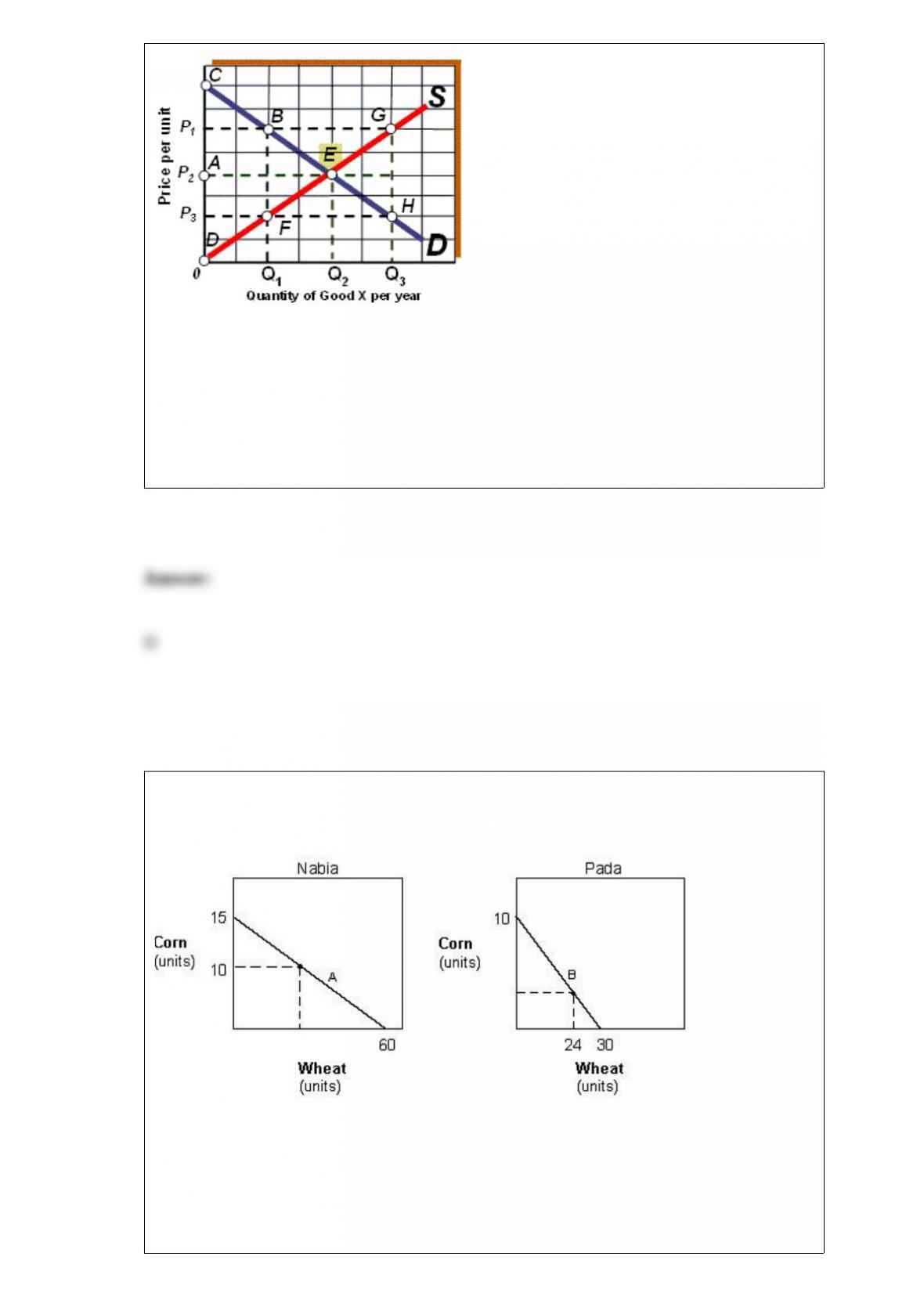
As shown in Exhibit 3A-2, if the quantity supplied of good X per year is Q1, the result
is:
a. deadweight loss.
b. inefficiency.
c. underproduction.
d. all of the above are true.
e. none of the above are true.
Exhibit 15-1 Production possibilities curves
In Exhibit 15-1, the production possibilities curves of wheat and corn for Nabia and
Pada are presented. If these two nations trade, Nabia should specialize in the production
of:
a. corn.
b. corn and wheat.
c. neither product since Pada has the comparative advantage in the production of both.

d. neither product since Pada has the absolute advantage in the production of both.
e. wheat.