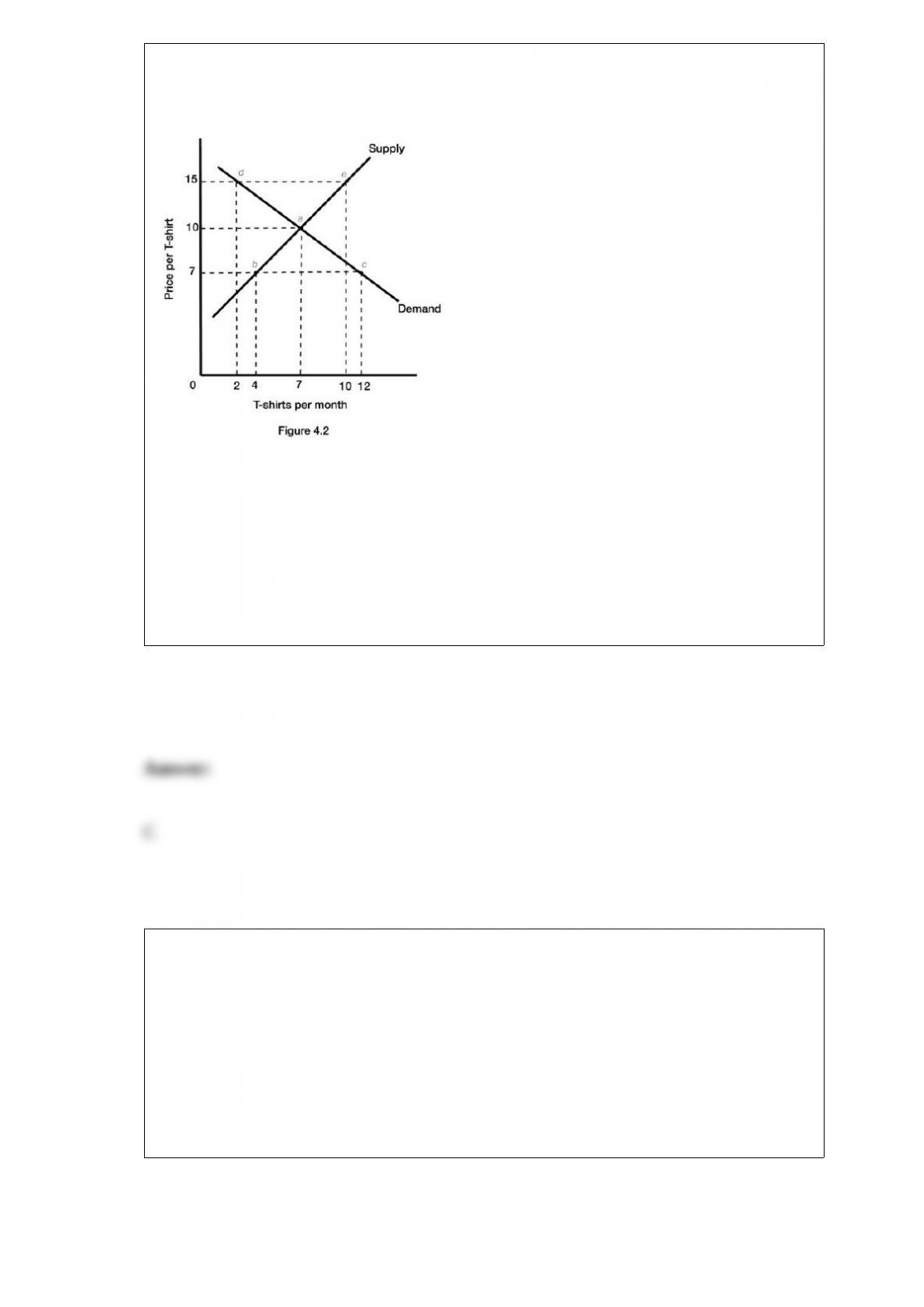
Figure 4.2 illustrates the supply and demand for t-shirts. If the actual price of t-shirts is
$7, we would expect that:
A) demand will decrease until quantity demanded equals quantity supplied.
B) supply will increase until quantity demanded equals quantity supplied.
C) price will increase until quantity demanded equals quantity supplied.
D) there will be no change in the price since the market is in equilibrium.
Which of the following is true?
A) Public goods are generally paid for by voluntary contributions.
B) Public goods are generally paid for by the government with tax revenues.
C) Private goods will not be produced in the private market.
D) none of the above
By which of the following methods could a supplier identify its good as a plum to a
skeptical buyer?
A) money-back guarantee
B) warranties and repair guarantees
C) a verbal assurance
D) both A and B
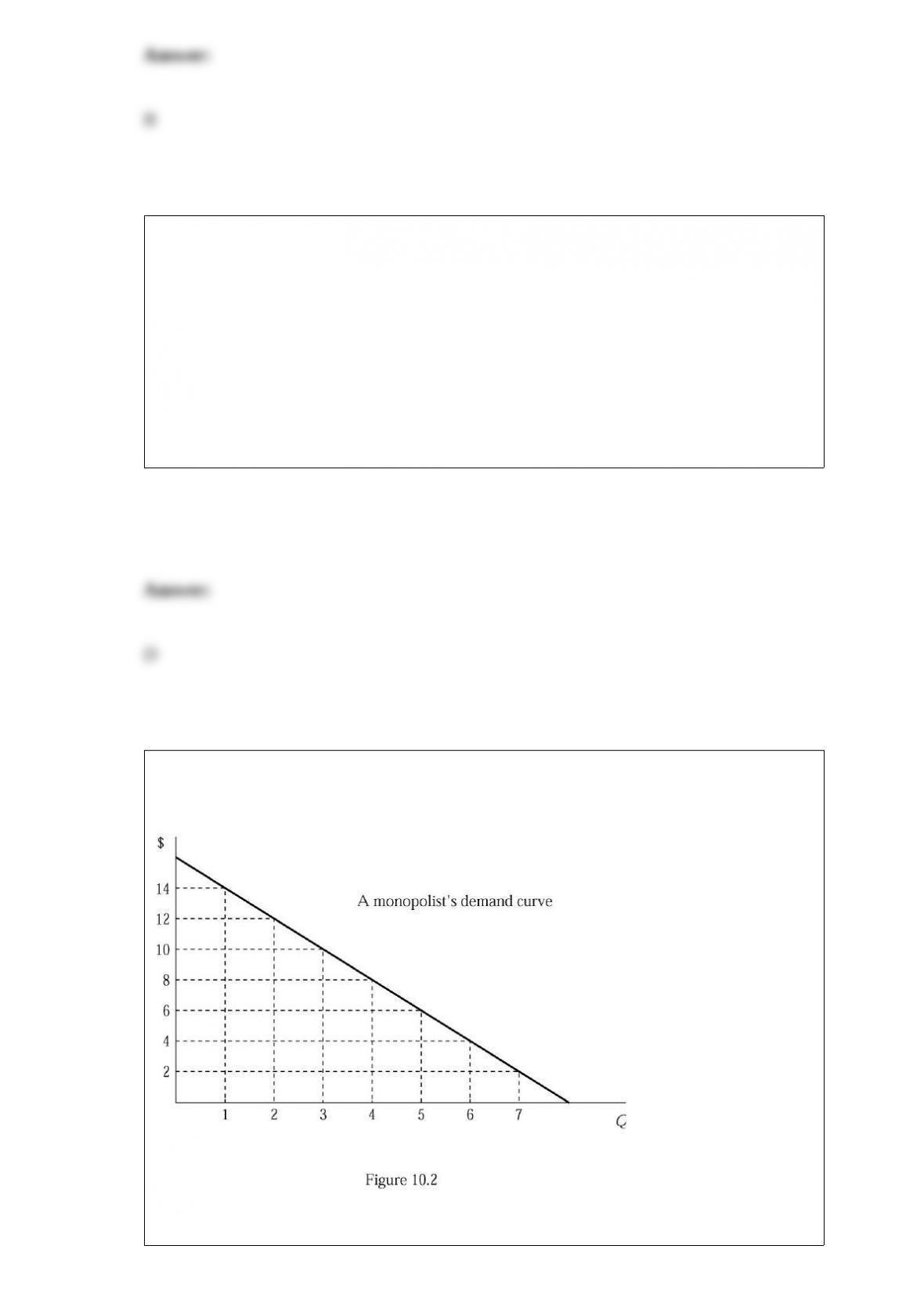
Figure 10.2 shows a monopolist’s demand curve. The marginal revenue from selling the
fourth unit is:
A) $8.

B) $6.
C) $4.
D) $2.
Additional Application
A study done by a group from the Harvard School of Public Health in 1988 indirectly
supported the relationship between the price a consumer pays and the marginal utility
the consumer receives for medical services. The study claimed that the charges for
surgery were “too high” while charges for doctor consultations and office visits were
“too low.” An hour of a doctor’s time in surgery earned a great deal more than an hour
of consultation in the office. If more prevention through consultation could result in less
need for surgery, why should the fees for corrective medical surgery be so much greater
than the fees for diagnosis and prevention of medical problems? Therefore the Harvard
group recommended higher fees for consultation and lower fees for surgery. They
determined that such changes would more accurately reflect the value of each service.
Yet consumers willingly pay more for surgery than consultation. Why? Because the
marginal utility received from an hour of surgery is determined to be much greater than
the marginal utility from an hour of consultation. Consumers allocate their expenditures
with an awareness of the ratio of the marginal utility from a good or service to its price.
“Doctors’ Fees Called Out of Balance,” The Christian Science Monitor, September 29,
1988, p. 3.
According to the group who conducted the study, the marginal value of a consultation is
________ the price being charged.
A) less than
B) greater than
C) equal to
D) unrelated to
The cost valuations for a product are gut feelings that occur:
A) after marginal thought.
B) instantaneously.
C) after careful thought.
D) after conscious weight is given to the perceived benefit of the product.
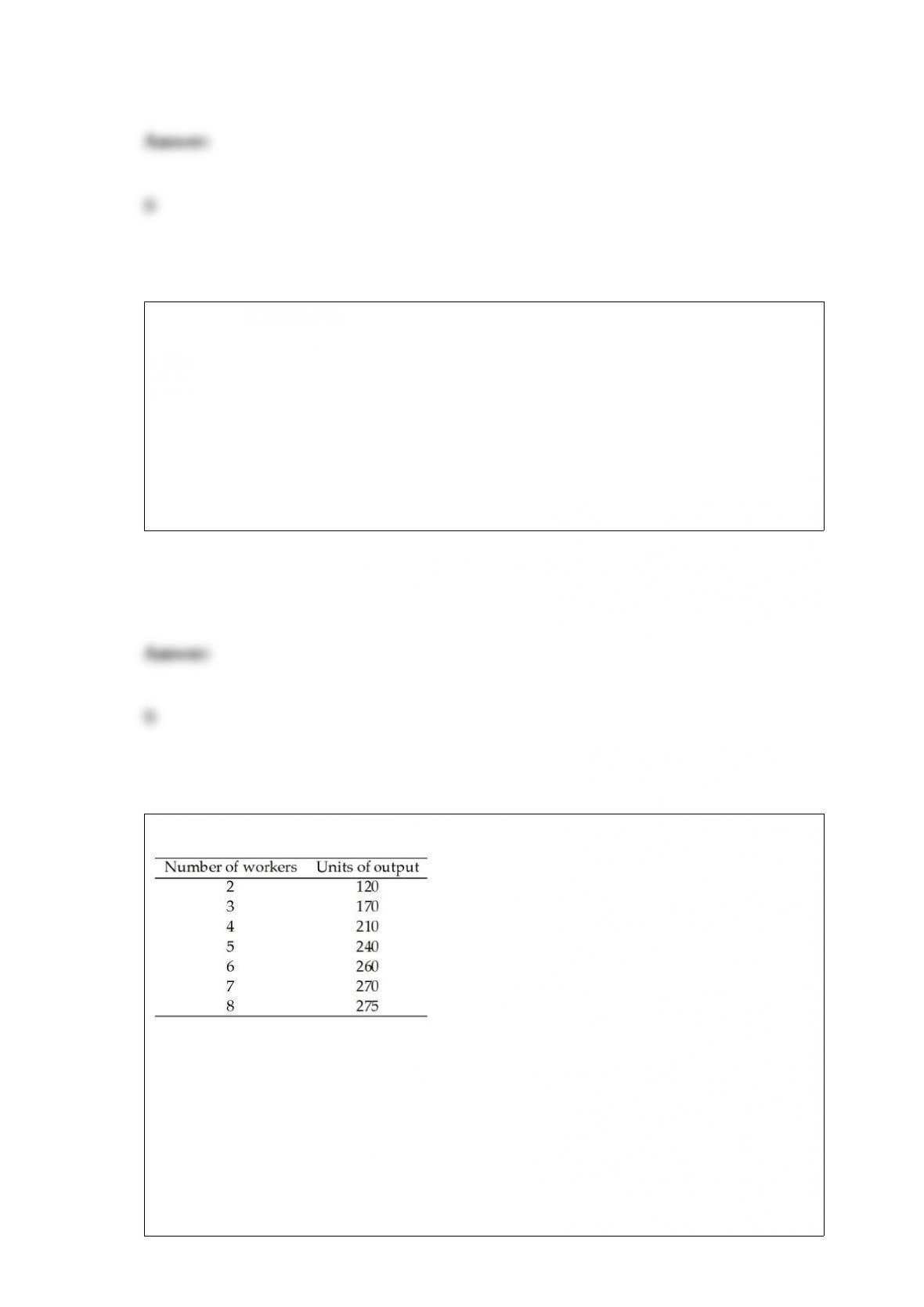
Refer to Table 17.2. The marginal product of the fifth unit of labor is:
Table 17.2
A) 50.
B) 40.
C) 30.
D) 20.
A consumer with a relatively high opportunity cost of search time will have a ________
marginal cost of search and will spend ________ time searching for lower prices.
A) lower; more
B) lower; less
C) higher; more
D) higher; less
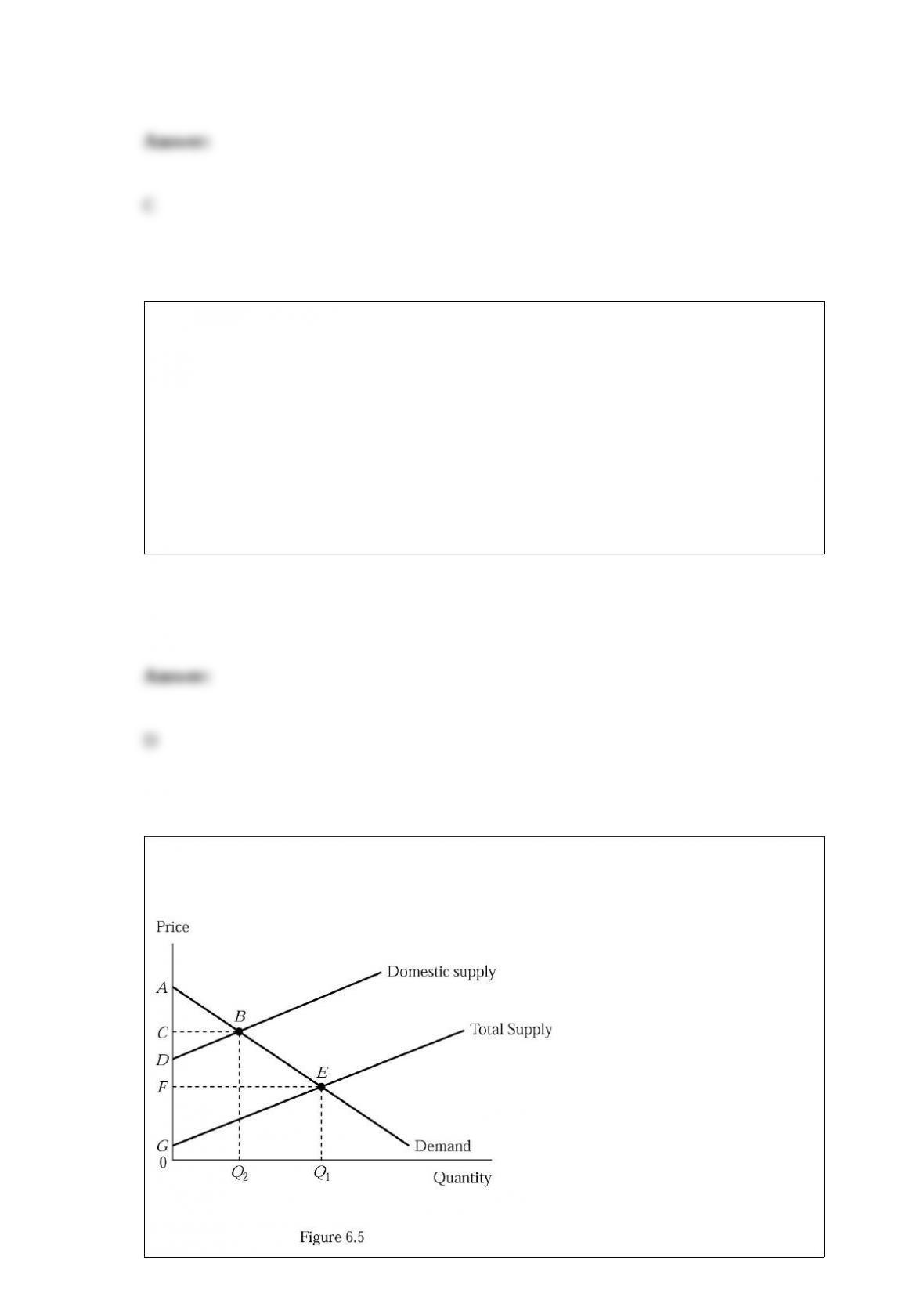
Figure 6.5 illustrates the market for sugar. With free trade, consumer surplus in the
market would be shown as area:

A) ABC.
B) AEF.
C) GEQ1.
D) ABQ20.
Suppose that the quantity supplied of pizza exceeds the quantity demanded for pizza.
We would expect that:
A) the price of pizza will increase.
B) the price of pizza will decrease.
C) the supply will decrease to meet the demand.
D) the demand will increase to meet the supply.
If supply is perfectly inelastic, the price elasticity of supply is equal to:
A) 1.
B) 0.

C) infinity.
D) a negative number between 0 and infinity.
All of the following are possible reasons for diseconomies of scale EXCEPT:
A) bureaucratic inefficiency.
B) a top-heavy management structure.
C) indivisible inputs.
D) All of the above are possible reasons for diseconomies of scale.
The market structure in which the behavior of any given firm depends on the behavior
of the other firms in the industry is:
A) perfect competition.
B) monopoly.
C) monopolistic competition.
D) oligopoly.
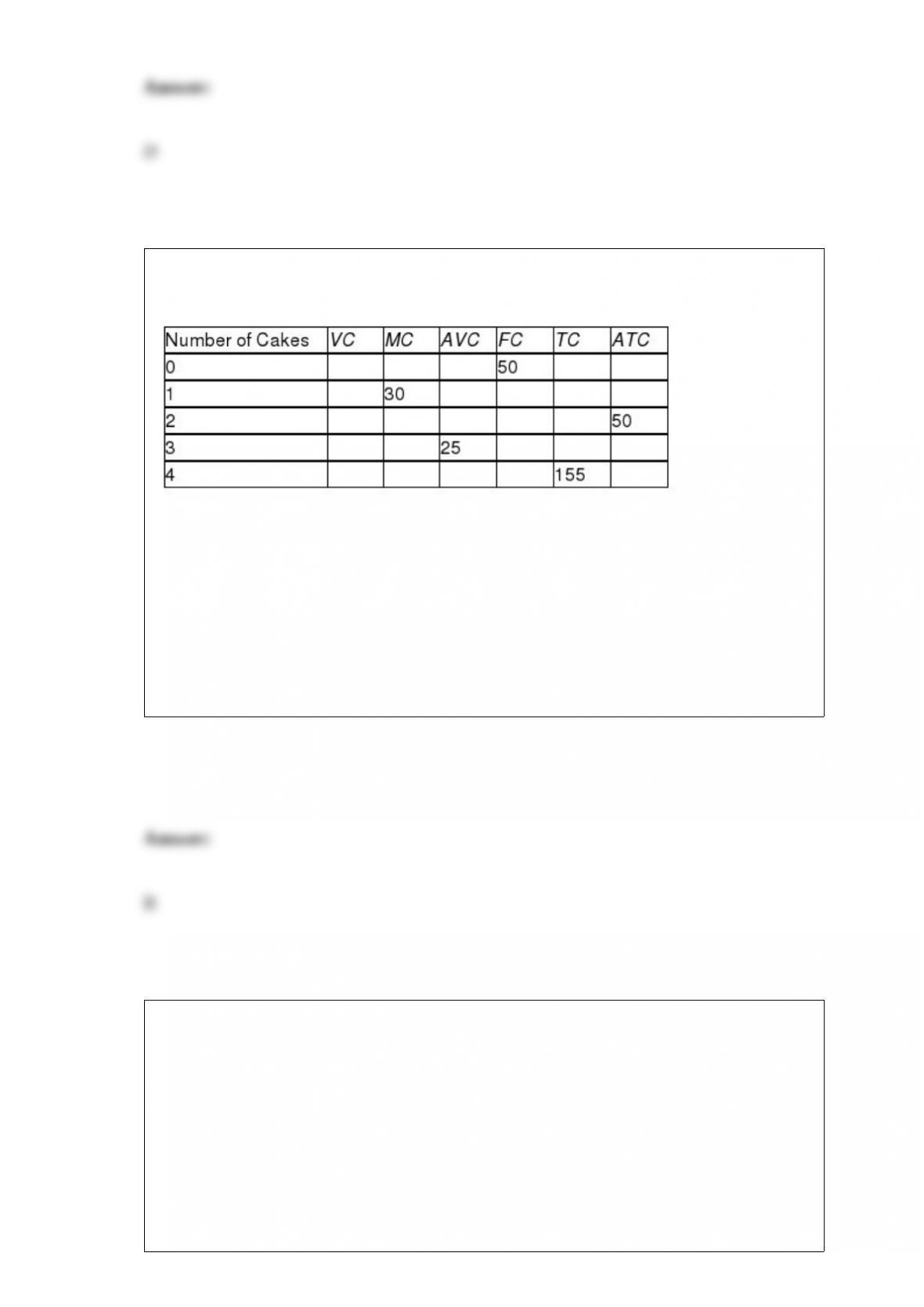
Table 8.3 presents the cost schedule for Candy’s Cakes. If Candy produces zero cake,
Candy’s total costs are:
Table 8.3
A) $0.
B) $50.
C) $100.
D) $150.
Marginal utility is the:
A) total amount of satisfaction gained by the consumption of a good or service.
B) additional satisfaction gained by the consumption or use of one more unit of
something.
C) price of a good relative to the prices of other goods and services.
D) comparison of utility between two different people.

Suppose that there are only three consumers of a product. At a price of $6 per unit, the
first consumer would buy 12 units of the product, the second consumer would buy 8
units, and the third consumer would buy 3 units of the product. If you drew a market
demand curve for this product, the quantity demanded at a price of $6 would be:
A) 23 units.
B) 20 units.
C) 12 units.
D) 11 units.
Suppose that a vehicle is invented such that it emits no pollutants into the atmosphere.
To achieve an efficient market outcome, the government must:
A) allow other vehicles that emit pollutants into the atmosphere, as long as vehicle
owners pay all the costs associated with their pollution.
B) outlaw SUV and other vehicles that pollute the environment.
C) be the sole producer of that vehicle.
D) require all auto makers to produce the vehicles that produces zero emissions.

Pepsi uses advertising to create the impression that Pepsi is superior to any other soft
drink. Pepsi is attempting to:
A) differentiate Pepsi from other types of soft drinks.
B) lower the marginal cost of producing for Pepsi.
C) sell less Pepsi so they can raise the price of Pepsi.
D) convince consumers that Pepsi is identical to other soft drinks.
A constant cost industry in the long run faces a:
A) rising average cost curve.
B) U-shaped average cost curve.
C) falling average cost curve.
D) flat average cost curve.
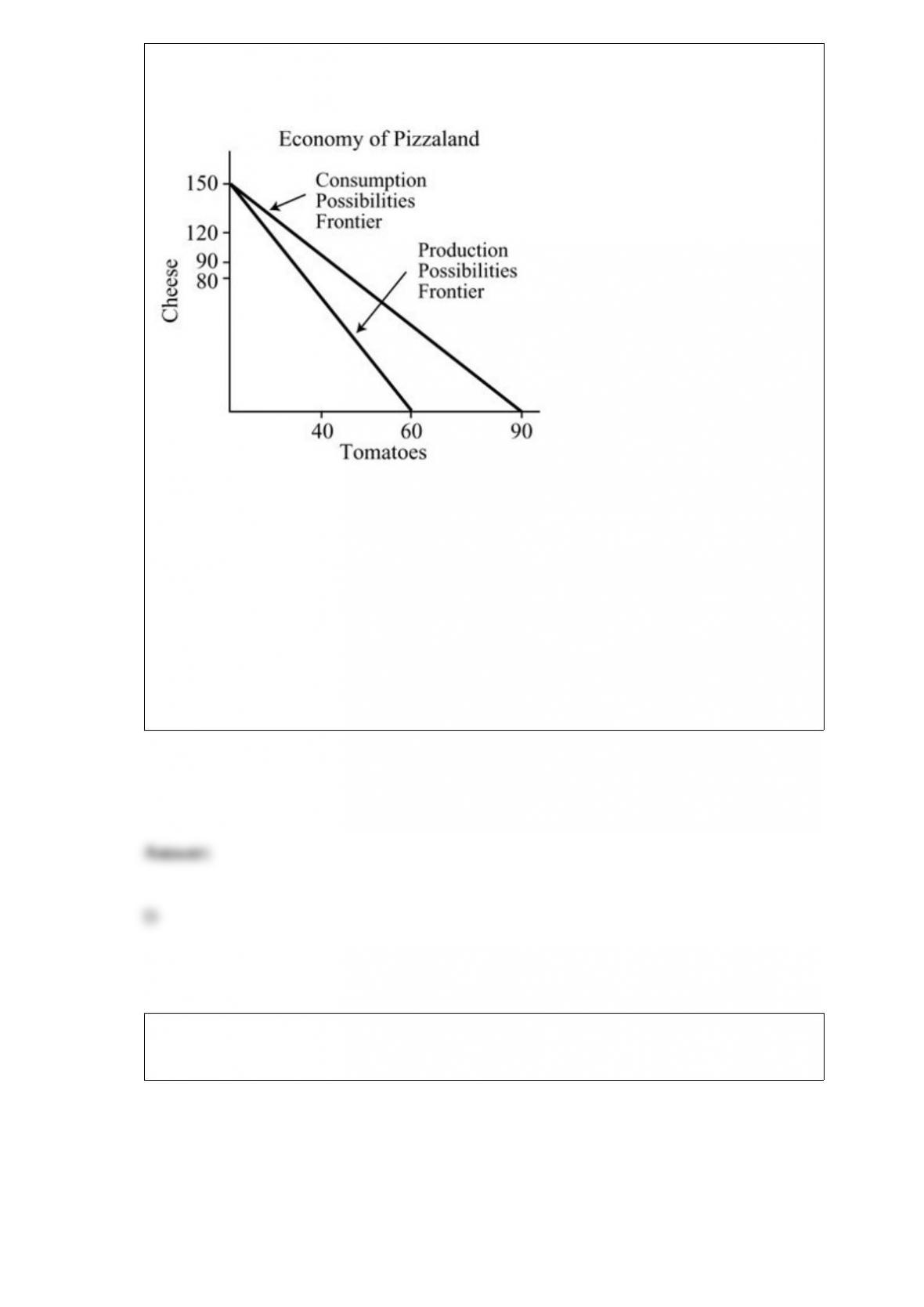
Figure 18.2
Refer to Figure 18.2. The opportunity cost of producing tomatoes in Pizzaland is:
A) 0.4 cheese.
B) 0.6 cheese.
C) 1.67 cheese.
D) 2.5 cheese.
Refer to Figure 6.6. If the government will not allow landlords to charge more than
$400 for an apartment, which of the following will happen?
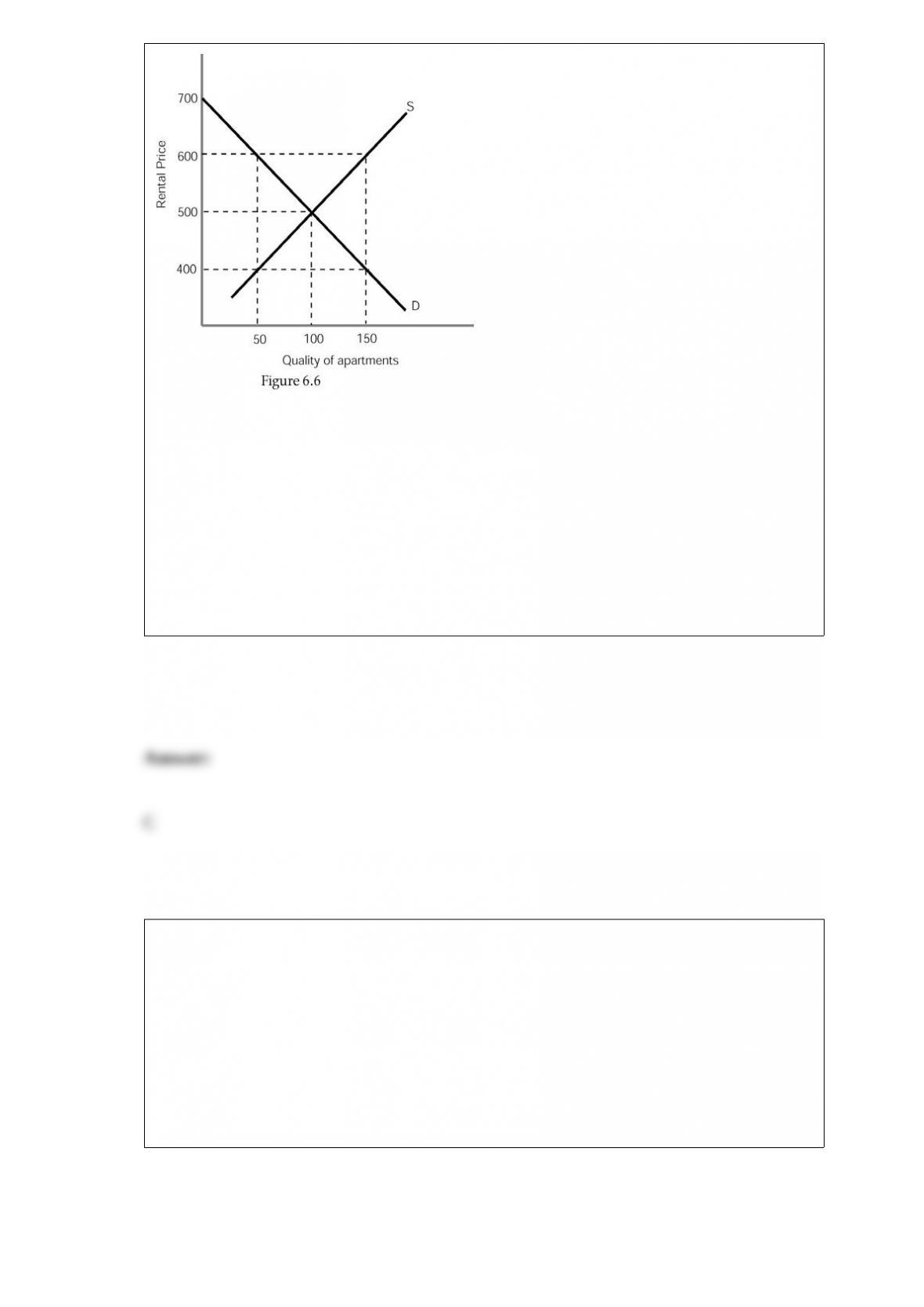
A) Demand must eventually decrease so that the market will come into equilibrium at a
price of $400.
B) Supply must eventually increase so that the market will come into equilibrium at a
price of $400.
C) There will be an excess demand for apartments.
D) The market will be in equilibrium at a price of $400.
When referring to “marginal” changes, the economic focus is on:
A) changes which affect only a few people or products.
B) large changes on the low end.
C) graduated changes on the high end.
D) small or incremental changes.
Macroeconomics is best described as the study of:
A) very large issues.
B) the choices made by individual households, firms, and governments.
C) the nation’s economy as a whole.
D) the relationship between inflation and wage inequality.
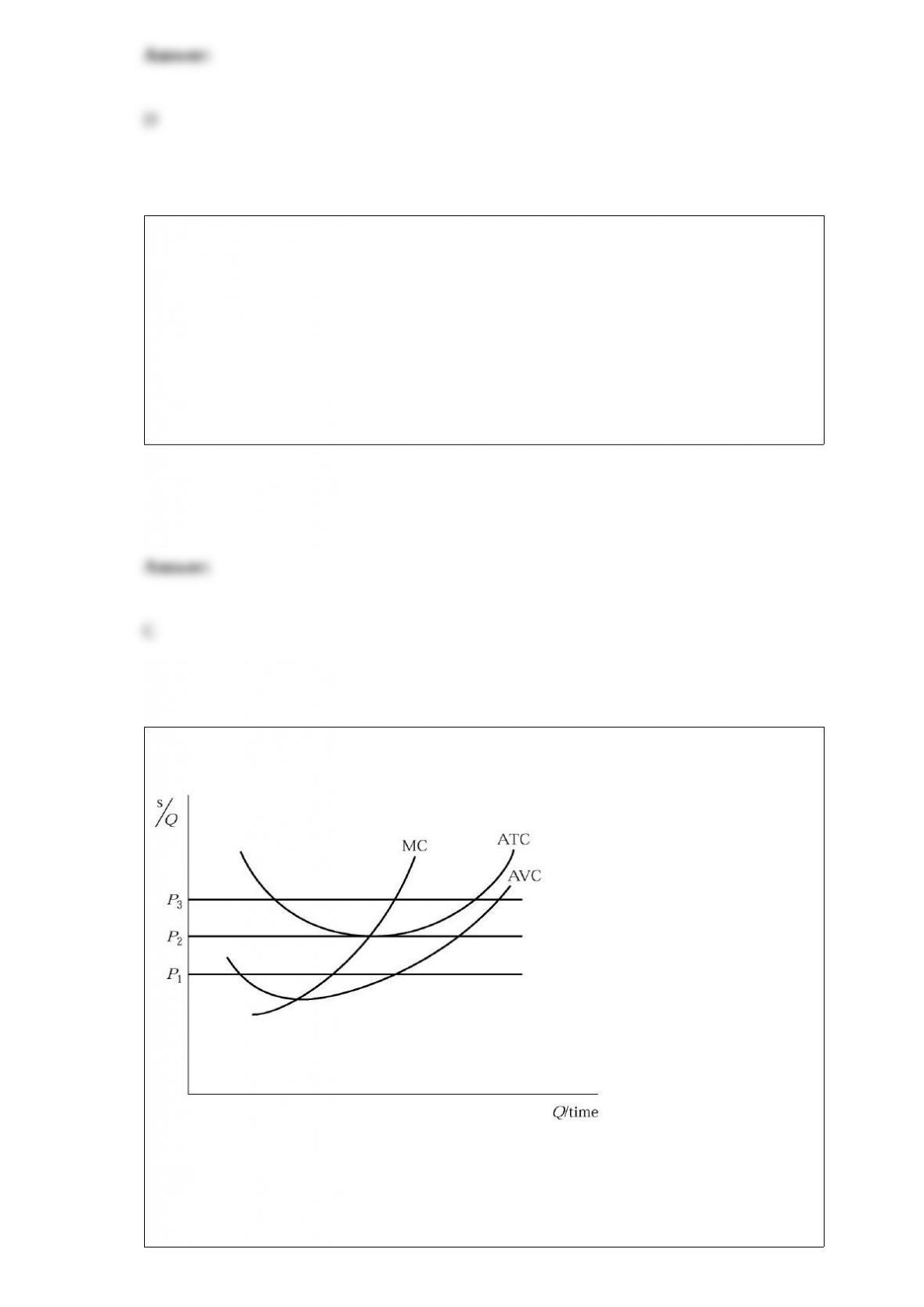
In Figure 9.6 if price is P2 then the industry will:
Figure 9.6
A) expand.

B) contract.
C) stay the same size.
D) cease to exist.
A government sometimes creates an excess supply of a product by setting a minimum
price at which the product may be sold to consumers. This is sometimes called a:
A) price ceiling.
B) price floor.
C) tax.
D) subsidy.
Figure 10.1 shows a monopolist’s demand curve. If the monopolist were to maximize its
total revenue, it would produce ________ units of output and charge a price of
________.
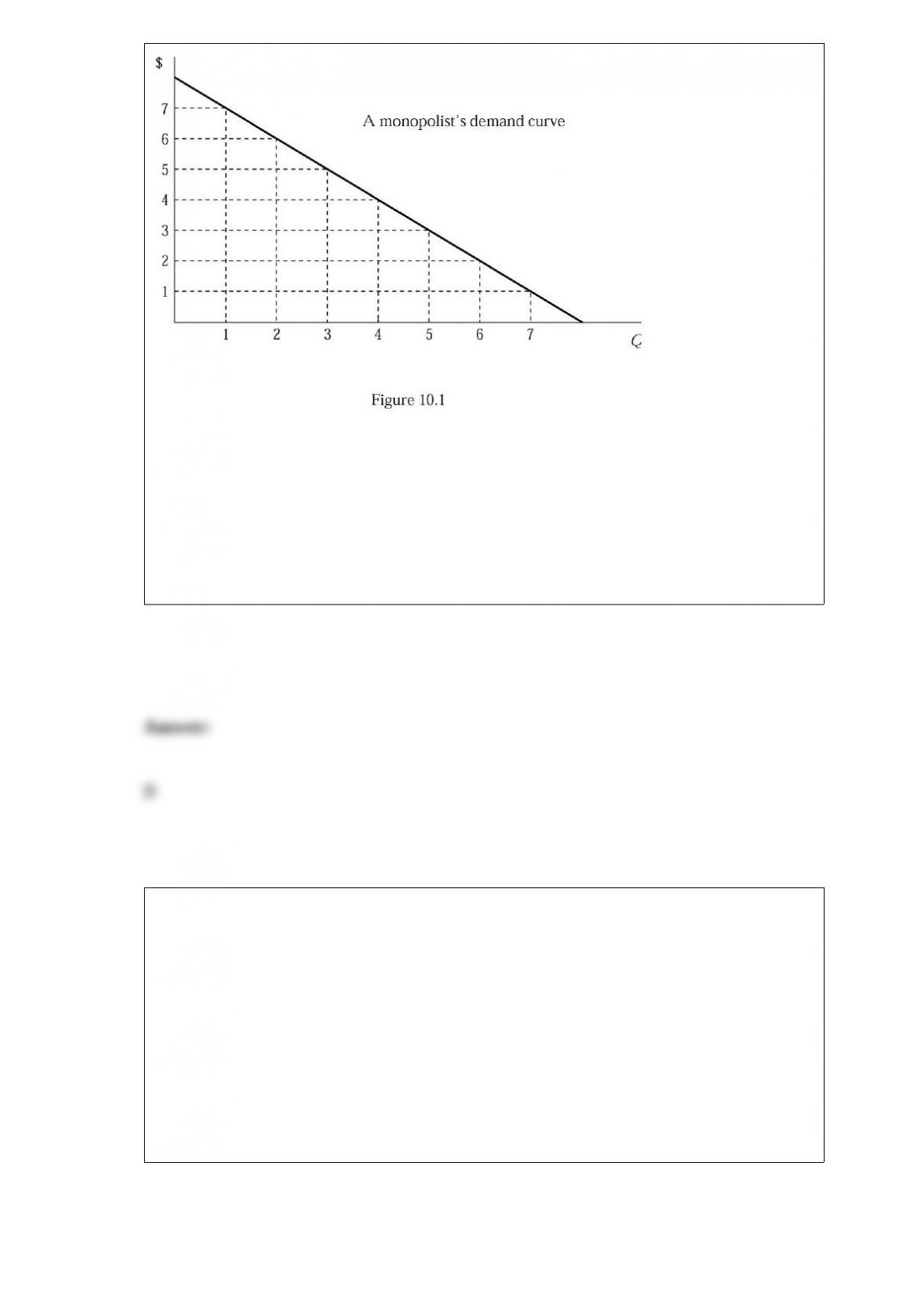
A) 3; $5
B) 4; $4
C) 5; $3
D) 6; $2
If a firm’s total fixed costs are $30, the firm’s marginal cost of producing the first unit of
output is $30, and the average total cost of producing two units of output is $42, the
marginal cost of the second unit of output is:
A) $84.
B) $54.
C) $42.
D) $24.
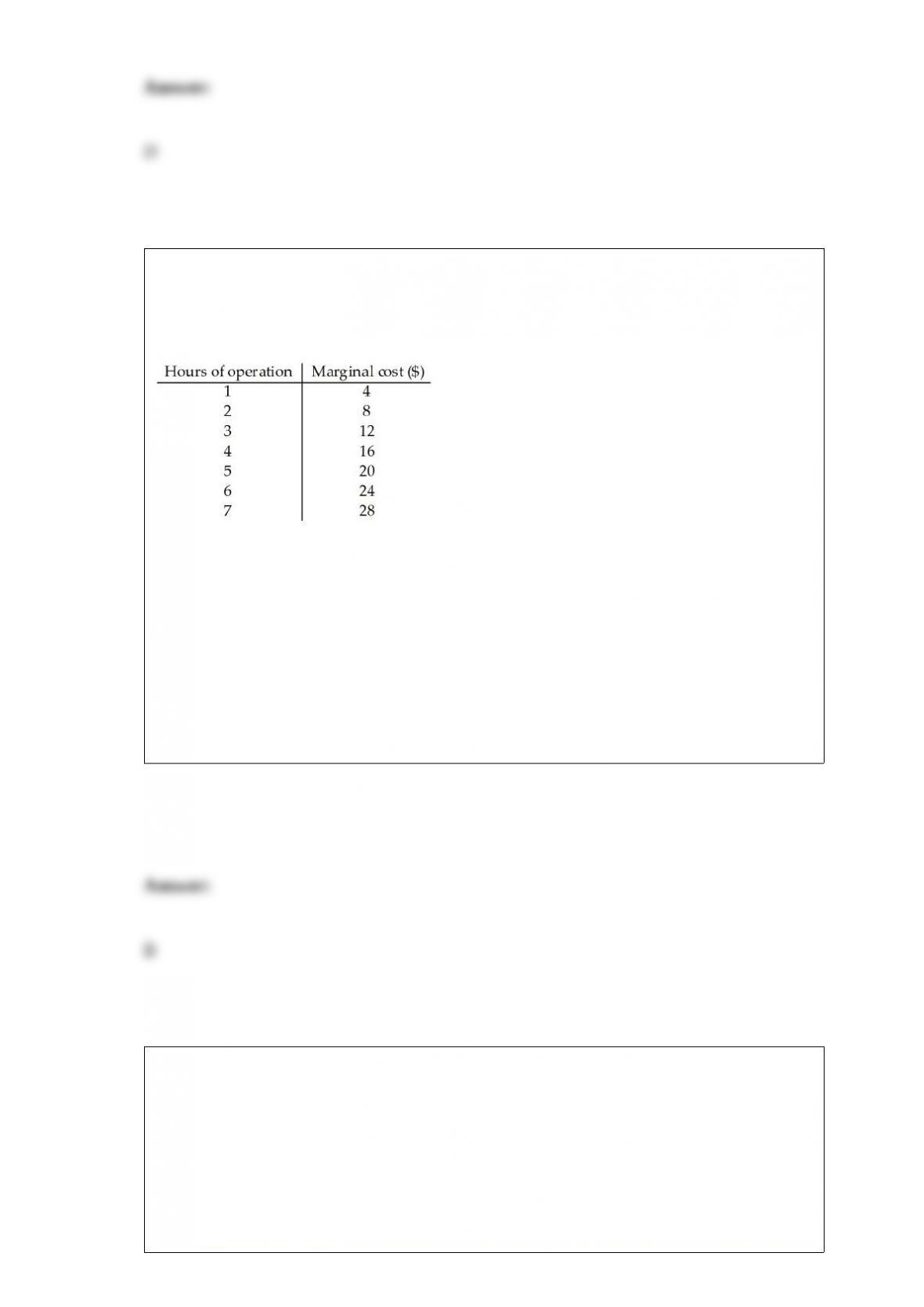
Julianne runs a business and needs to decide how many hours to stay open. Table 2.2
illustrates her marginal costs of staying open for each additional hour. Suppose that
Julianne’s marginal benefit of staying open per hour is $20. If she is following the
marginal principle, how many hours should Julianne stay open?
Table 2.2
A) 4 hours
B) 5 hours
C) 6 hours
D) 7 hours
If Nation A can produce shirts at a lower opportunity cost than any other nation, Nation
A is said to have a(n) ________ in the production of shirts.
A) autarky
B) comparative advantage
C) absolute advantage

D) comparative disadvantage
Flour is used to produce bread. If the price of flour increases:
A) the demand for bread increases.
B) the demand for bread decreases.
C) the supply of bread increases.
D) the supply of bread decreases.
Consumers’ ability to purchase a good or service is limited by:
A) their income only.
B) the prices for the goods or services only.
C) both the prices and their income.
D) their preferences.
A profit maximizing firm should hire more labor as long as:
A) the marginal product of the worker is positive.
B) the marginal revenue product of the worker is positive.
C) the marginal revenue product of the worker is greater than or equal to the wage rate.
D) the marginal revenue product of the worker is greater than or equal to the price of
the output.
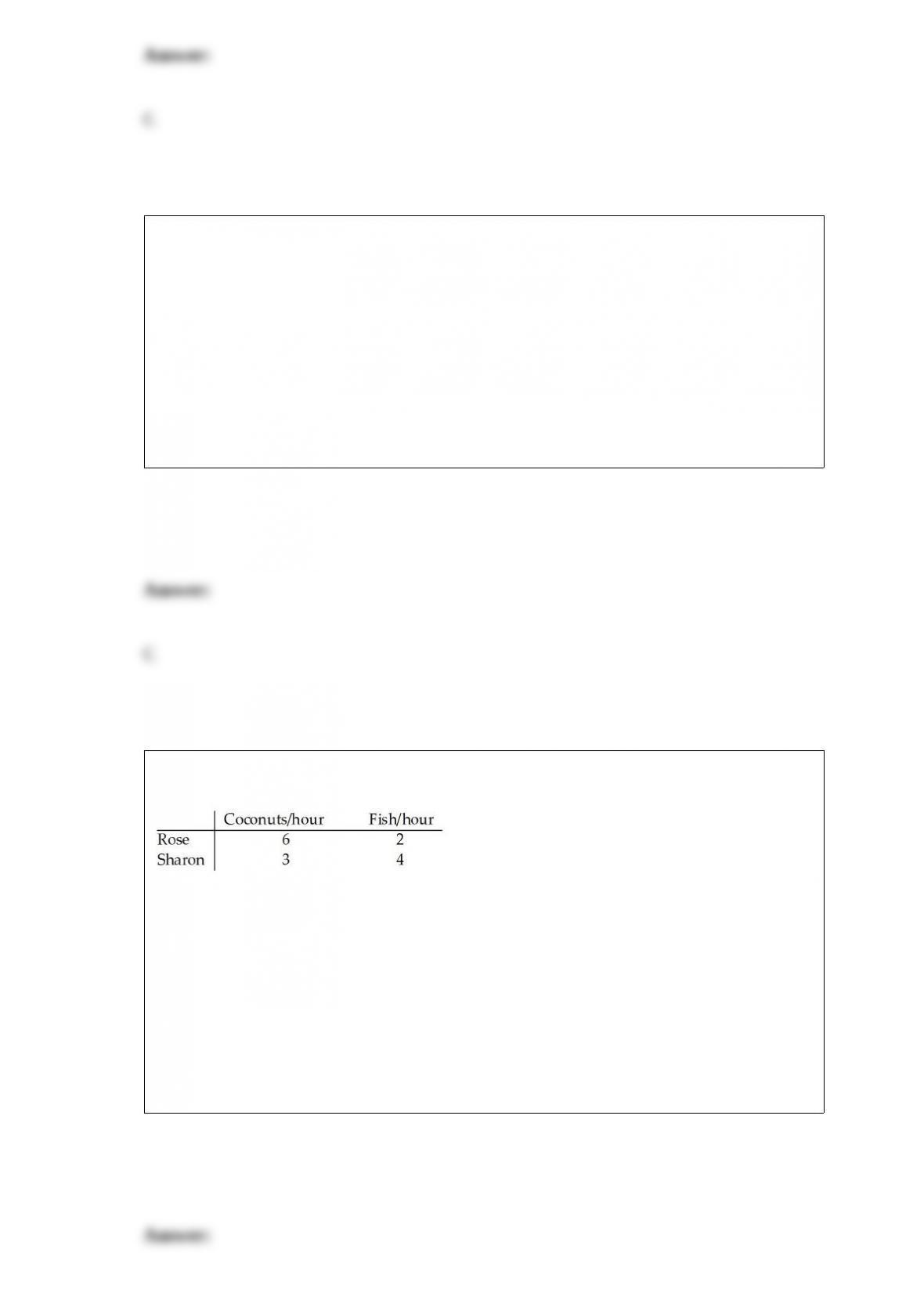
Consider two individuals, Rose and Sharon, who produce fish and coconuts. Rose and
Sharon’s hourly productivity are shown in Table 3.2. Which of the following is true?
Table 3.2
A) Sharon has an absolute advantage in producing coconuts but not fish.
B) Sharon has an absolute advantage in producing fish but not coconuts.
C) Sharon has an absolute advantage in producing both goods.
D) Sharon does not have an absolute advantage in producing either good.
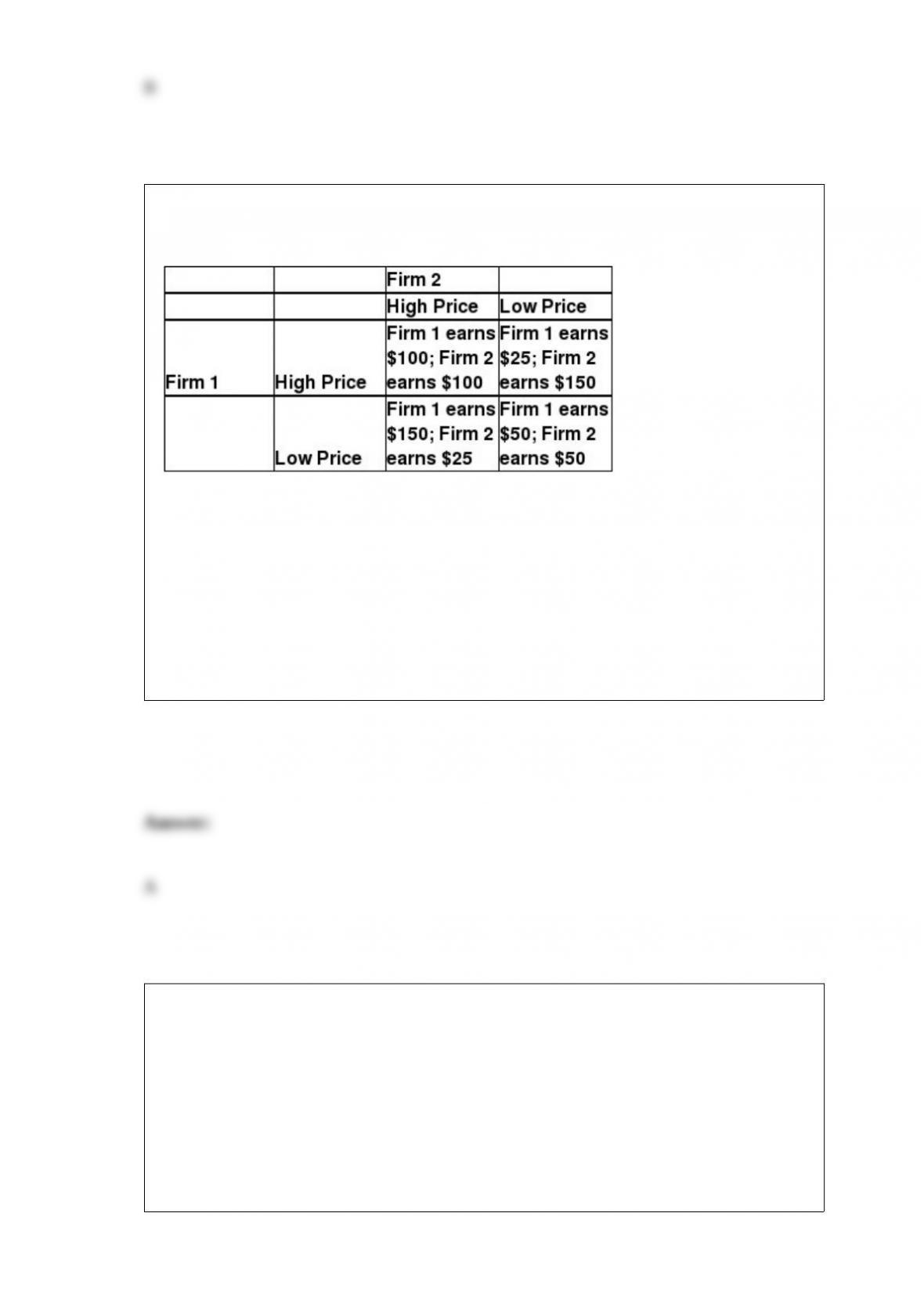
In the game shown in Table 12.2, if Firm 1 believes that Firm 2 will choose the high
price strategy, Firm 1 should:
Table 12.2
A) choose the low price strategy.
B) choose the high price strategy.
C) refuse to play the game because Firm 1 will surely lose.
D) choose a strategy at random because Firm 1 cannot control the outcome.
In a market system profits:
A) are unfair.
B) are too high.
C) signal to entrepreneur what to produce.
D) all of the above.