
In March 2008, the Fed announced that primary dealers would be eligible to receive
discount loans.
In a decreasing-cost industry, the entry of new firms lowers average cost at each level of
output.
In the long-run equilibrium, a monopolistically competitive firm earning normal profit
produces the allocatively efficient output level.
If additional units of a good could be produced at an increasing opportunity cost, the
production possibility frontier would be linear.
Raising taxes on interest and dividend income will increase the level of investment and
economic growth.
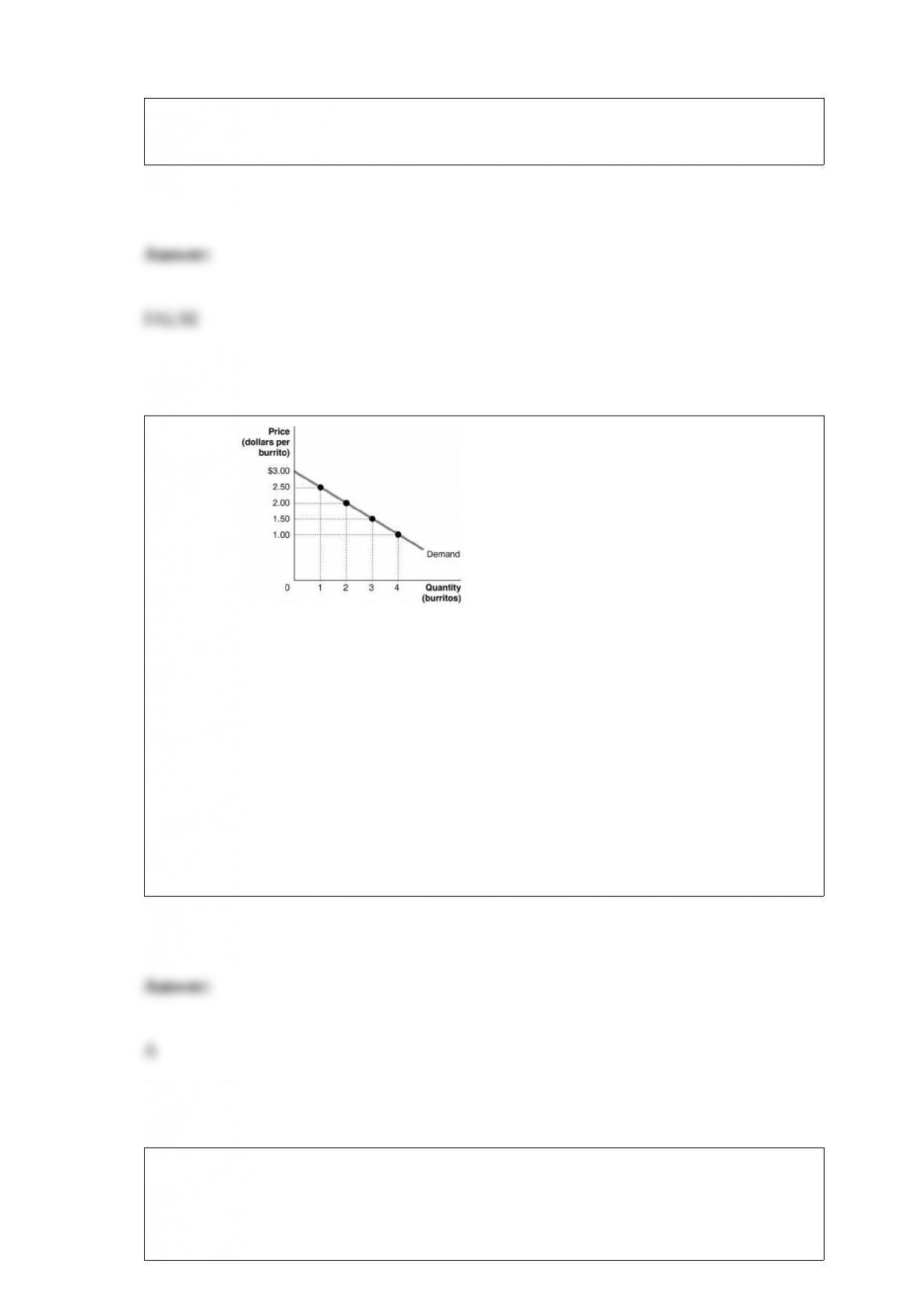
Figure 4-1 Figure 4-1 shows Arnold’s demand curve for
burritos.
If the market price is $3.00, what is the maximum number of burritos that Arnold will
buy?
A) 0
B) 2
C) 3
D) 4
How does expansionary monetary policy affect net exports?
A) Expansionary monetary policy increases exports and reduces imports.

B) Expansionary monetary policy reduces exports and increases imports.
C) Expansionary monetary policy increases exports and increases imports.
D) Expansionary monetary policy reduces exports and reduces imports.
If the marginal propensity to save is 0.1, then a $10 million decrease in disposable
income will
A) increase consumption by $9 million.
B) increase consumption by $1 million.
C) decrease consumption by $9 million.
D) decrease consumption by $1 million.
Consumers maximize total utility within their budget constraint by
A) buying the cheapest goods they can find.
B) buying whatever they like the best.
C) buying the goods with the largest marginal utility per dollar spent.
D) spending the same dollar amount for each good.

Refer to Figure 12-5. What is the amount of the firm’s fixed cost of production?
A) $5,400
B) $6,750
C) $8,100
D) It cannot be determined.
Scenario 10-1 Consider the following data for a closed economy: Y = $12 trillion
C = $8 trillion
I= $2 trillion
G = $2 trillion
TR = $2 trillion
T = $3 trillion
Based on the information above, what is the level of public saving?
A) $0
B) $1 trillion
C) $2 trillion
D) negative $1 trillion (a deficit of $1 trillion)

Which of the following statements about the price elasticity of demand iscorrect?
A) The elasticity of demand for a good in general is equal to the elasticity of demand
for a specific brand of the good.
B) The absolute value of the elasticity of demand ranges from zero to one.
C) Demand is more elastic in the long run than it is in the short run.
D) Demand is more elastic the smaller the percentage of the consumer’s budget the item
takes up.
Monetarism is a school of thought put forth by Milton Friedman. He argued that the
economy would most likely
A) be below potential GDP.
B) be at potential GDP.
C) be unstable.
D) be above potential GDP.
Banks keep ________ of checking deposits as reserves because on a typical day
withdrawals ________ deposits.
A) more than 100%; are much greater than

B) exactly 100%; are about the same as
C) less than 100%; are about the same as
D) exactly 100%; are much greater than
E) less than 100%; are much greater than
Figure 5-8
Consider a chemical plant that discharges toxic fumes over a nearby community. To
reduce the emissions of toxic fumes the firm can install pollution abatement devices.
Figure 5-8 shows the marginal benefit and the marginal cost from reducing the toxic
fumes emissions. Suppose the emissions reduction target is currently established at 8
million tons. Should society undertake to reduce an additional 1 million tons so that the
total reduction is 9 million tons?
A) No, because there is a net cost represented by the area B + C.
B) Yes, because the marginal benefit exceeds the marginal costs.
C) Yes, because toxic fumes are dangerous and must be eliminated at any cost.
D) No, because the firms will pass the additional cost on to consumers.

Which term refers to a legally established minimum price that firms may charge?
A) a price ceiling
B) a subsidy
C) a price floor
D) a tariff
Which of the following is a reason why decreases in the price level result in a rise in
aggregate expenditure?
A) Price level decreases cause firms and consumers to hold less money, which lowers
the interest rate. Lower interest rates raise consumption and planned investment
expenditures, which raises aggregate expenditure.
B) Price level decreases reduce real wealth, which causes consumption spending and
aggregate expenditure to rise.
C) As the price level falls, government spending rises, which raises aggregate
expenditure.
D) Price level decreases in the United States relative to other countries’ lower net
exports, which raises aggregate expenditure.
Based on the following information, calculate public saving, net foreign investment,
and national income. Private saving = $83 billion
Exports = $125 billion
Imports = $130 billion
Consumption = $200 billion
Private investment = $56 billion
Government purchases = $38 billion
Why do economists refer to the pricing strategies of oligopoly firms as a prisoner’s
dilemma game?
How does a negative externality in production reduce economic efficiency?
Suppose you buy a house for $250,000. One year later, the market price for the house
has fallen to $200,000. What is the return on your investment in the house if you made
a down payment of 10 percent and took out a mortgage loan for the other 90 percent?
Why are the long-run effects of an increase in aggregate demand on price and output
different from the short-run effects?
What are the advantages of setting up a corporation as opposed to a proprietorship or
partnership?
List the four broad categories of factors of production.
Which aspects of globalization help to increase growth in the world economy?

Firms in an oligopoly are said to be interdependent. What does this mean?