Rent seeking behavior, unlike profit maximizing behavior in competitive markets,
wastes society’s scarce resources.
Market equilibrium occurs where supply equals demand.
Joe Santos owns the only pizza parlor in a small town that is also home to a
McDonald’s, a Taco Bell and a Kentucky Fried Chicken. Using a broad definition of a
monopoly, Joe has a monopoly.
As output increases, the distance between average total cost and average variable cost
increases.

A bed of oysters is not an example of a factor of production but the shucked oysters
used to make oyster stew is a factor of production.
When a tax on output is imposed to internalize the external costs of pollution, the
supply curve shifts down by the amount of the tax.
Positive analysis is concerned with “what ought to be,” while normative analysis is
concerned with “what is.”

A monopolist’s demand curve is the same as the marginal revenue curve for the product.
In an increasing-cost industry the long-run supply curve is upward sloping.
The process of countries becoming more open to foreign trade and investment is known
as outsourcing.
The social benefit of a given level of a public good is the vertical sum of all private
benefits for that level.

The process a firm uses to turn inputs into outputs of goods and services is called
technology.
A supplier of paper napkins to the fast food industry is unlikely to have significant
bargaining power.
The division of the burden of a tax between buyers and sellers in a market is called tax
allocation.

If a country produces only two goods, it is possible to have a comparative advantage in
the production of both those goods.
When there are few substitutes available for a good, demand tends to be relatively
inelastic.
Trade only occurs if there are only winners, and no losers, as a result of the trade.
If voters lack an economic incentive to become informed about pending legislation,
then their preferences become a constraint on legislators voting for rent-seeking
legislation.

If there is pollution in producing a product, then the market equilibrium price is too
high and equilibrium quantity is too low.
When colleges use yield management techniques, they increase financial aid offers to
students likely to be more price sensitive and they reduce financial aid offers to students
likely to be less price sensitive.
For a person to have a comparative advantage in producing a product, she must be able
to produce that product at a lower opportunity cost than her competitors.

Scarcity is a problem that will eventually disappear as technology advances.
If the demand for a product is elastic, the quantity demanded changes by a smaller
percentage than the percentage change in price.
In the United States in 2011, over 90 percent of people without health insurance were
below the age of 34.
On a diagram of a production possibility frontier, opportunity cost is represented by the
production possibility frontier shifting outward.

For a natural monopoly, the marginal cost of producing an additional unit of its product
is relatively small.
Behavioral economics is the study of situations in which people make rational choices.
An oligopolistic industry is characterized by a few large firms acting independently.

A common mistake made by consumers is the failure to take into account the sunk costs
of their actions.
If a state requires all drivers to buy health insurance, the problem of adverse selection is
eliminated.
Suppose the government mandates the installation of certain type of pollution
abatement equipment for the leather tannery industry. For some firms in the industry,
installing this equipment may not be the most cost effective method of reducing
pollution.
The marketing of the first ballpoint by Milton Reynolds showed
A) that first-mover advantages can make it more difficult for new firms to enter a
market and compete against the first mover.

B) that being the first firm to market a new product can result in a natural monopoly.
C) that being the first firm to market a product may not lead to a long-lived advantage
over later entrants into the market.
D) how important it is to receive patent protection for a new product.
Inelastic supply occurs whenever the elasticity of supply value is
A) negative and < -1.
B) any positive number.
C) positive and > 1.
D) positive and < 1.
Figure 18-5
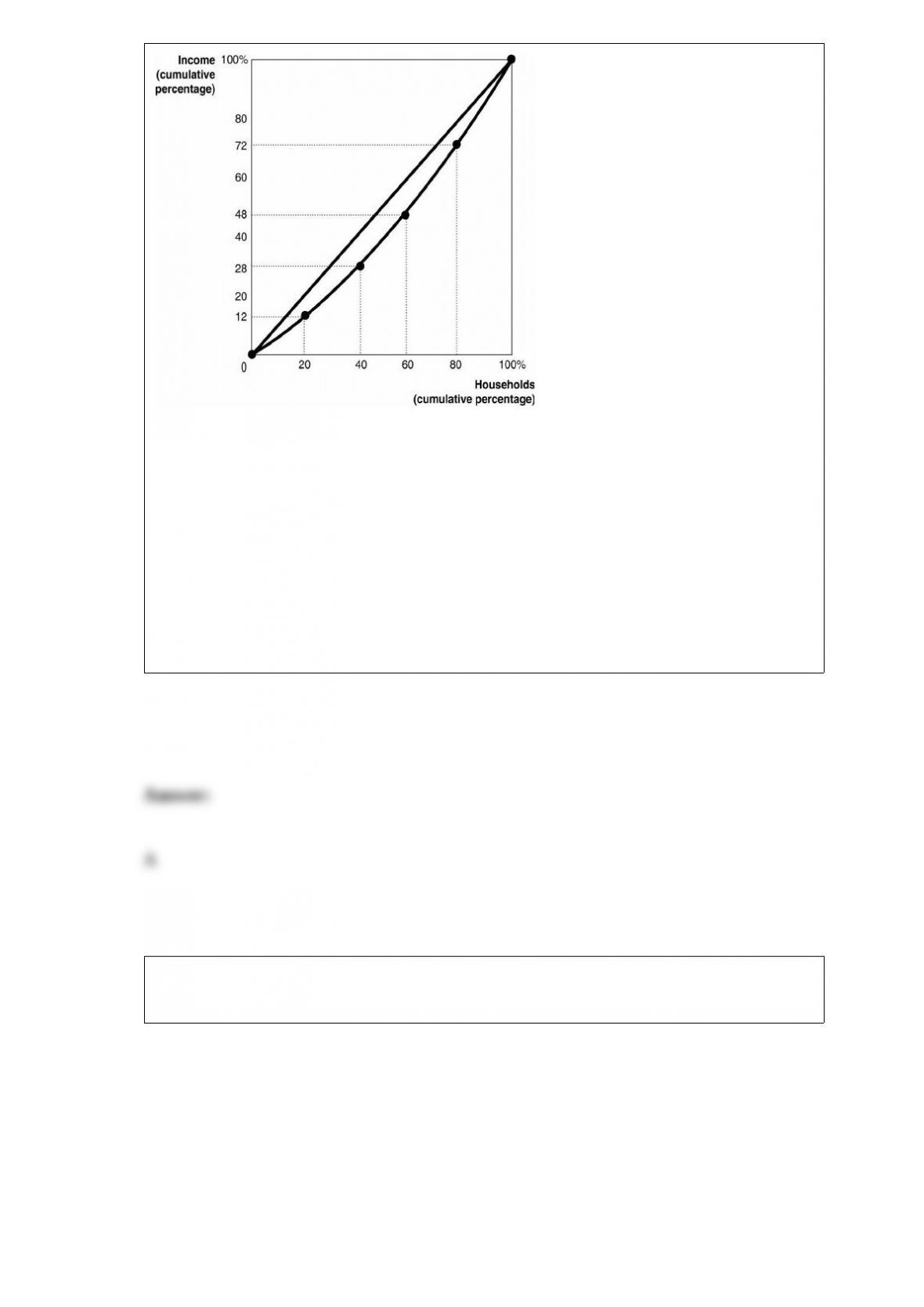
Figure 18-5 shows the Lorenz curve for a hypothetical country.
Refer to Figure 18-5. The middle 20 percent of households
A) earn 20 percent of the society’s total income.
B) earn 36 percent of the society’s total income.
C) earn 48 percent of the society’s total income.
D) earn 50 percent of the society’s total income.
Figure 11-14
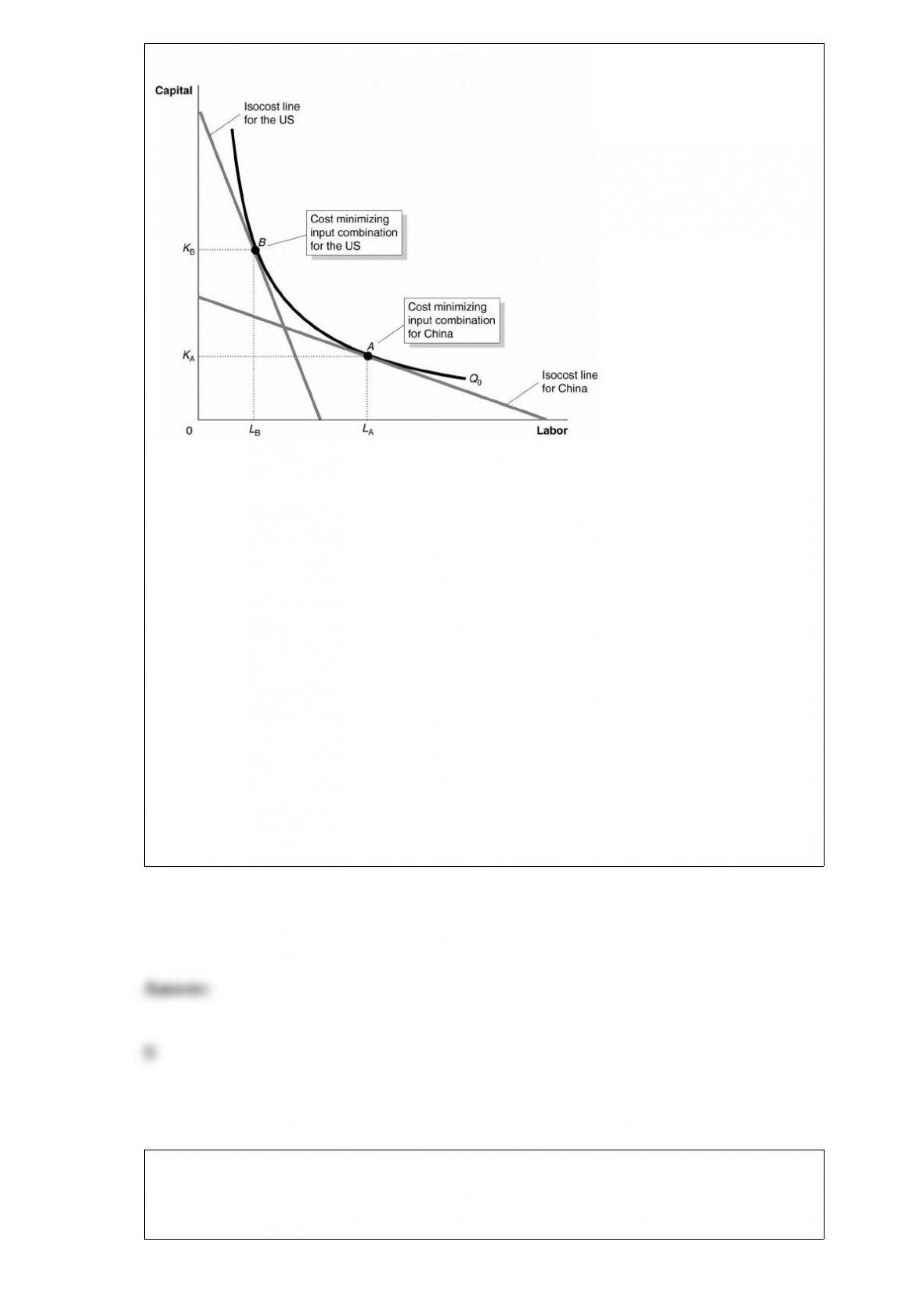
Figure 11-14 shows the optimal input combinations for the production of a given
quantity of cotton in the United States and in China.
Refer to Figure 11-14. Which of the following could explain why the United States and
China use different input combinations to produce a given quantity of cotton and yet,
each country produces that quantity at the lowest possible cost?
A) because the prices of inputs are not the same for the two countries: labor is relatively
lower-priced and capital is relatively higher priced in the United States
B) because the prices of inputs are not the same for the two countries: labor is relatively
lower-priced and capital is relatively higher priced in China
C) because the United States has more sophisticated technology and therefore is more
efficient in cotton production
D) because the marginal product per dollar spent on capital yields a higher return in the
United States than in China
Which of the following is not an advantage of starting a new business as a
proprietorship?
A) The owner has complete control over the business.
B) A proprietorship has few government rules and regulations to comply with.
C) Business profits are only taxed once, not twice.
D) A proprietorship can easily attain additional funding.
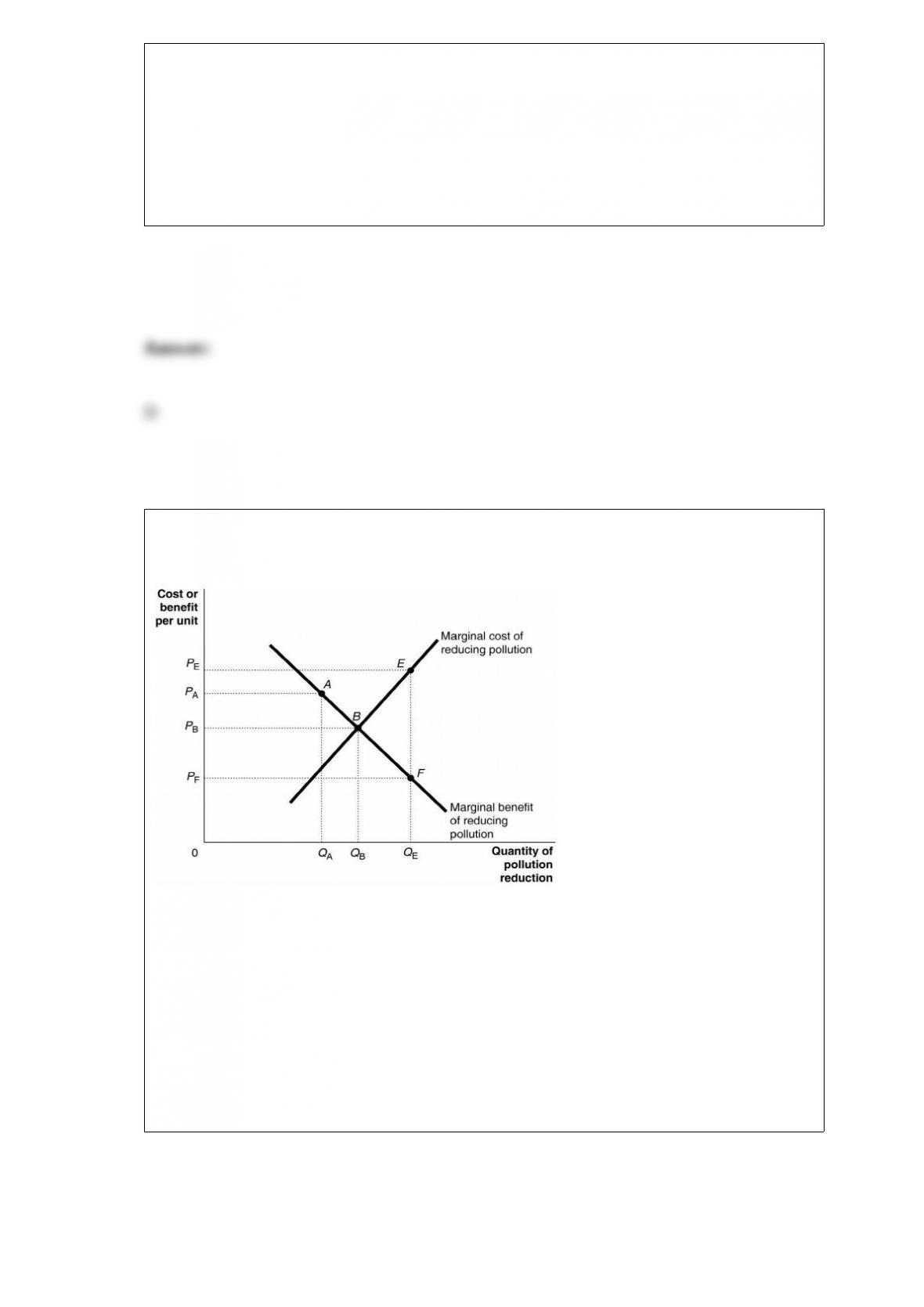
Figure 5-7
Refer to Figure 5-7. Which of the following statements is true?
A) At QE the benefits of reducing pollution outweighs the cost of pollution reduction.
B) At QB society is under allocating resources to pollution reduction.
C) The optimal quantity of pollution reduction is QB.
D) The optimal quantity of pollution reduction is QE.
The excess burden of a tax
A) measures the efficiency loss to the economy that results from a tax, causing a
reduction in the quantity of goods and services produced.
B) is measured by the administrative costs required to implement a tax system.
C) is a measure of the hardship imposed on low-income individuals in a society.
D) is a measure of the foregone consumption as a result of having to pay taxes.
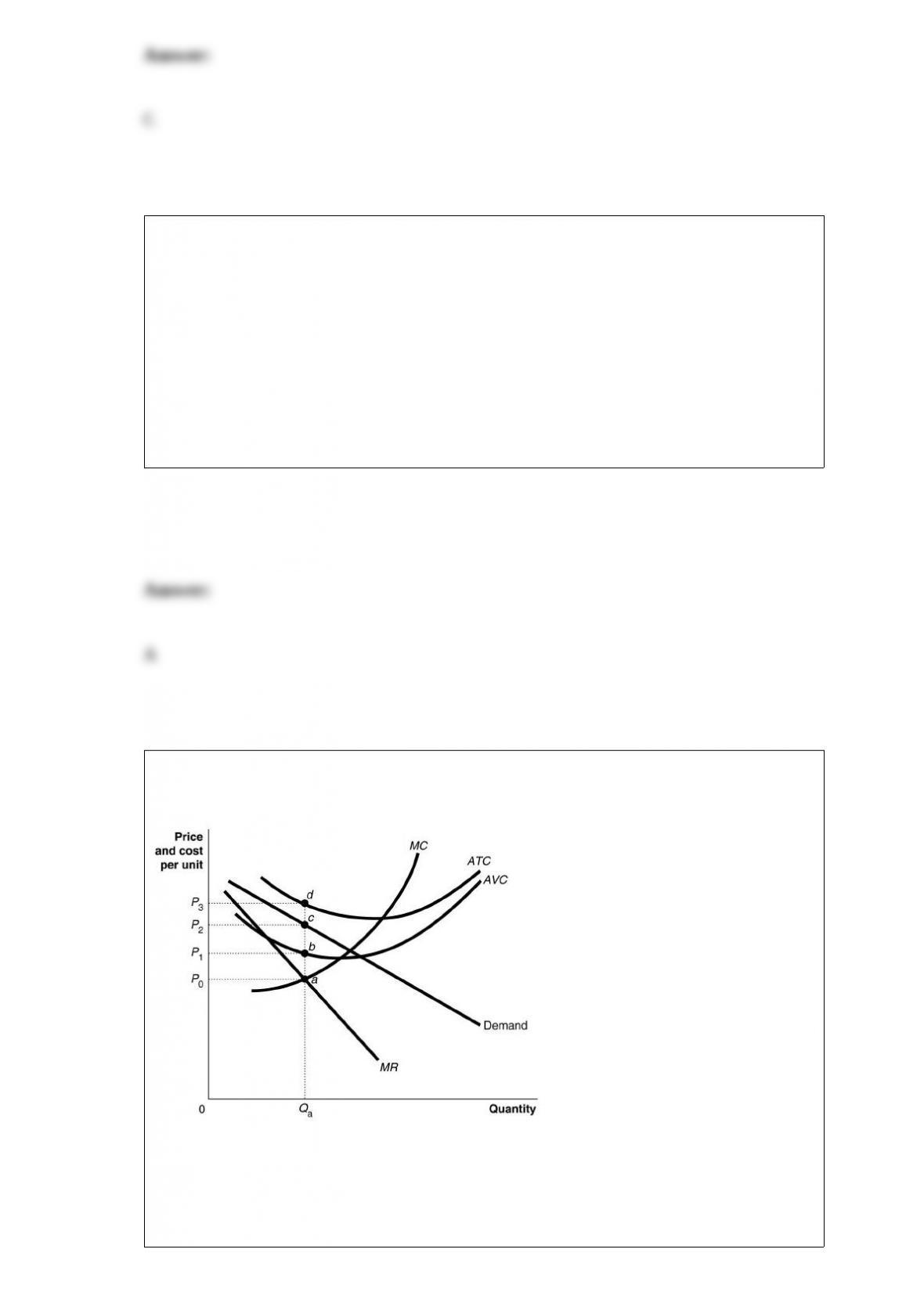
Figure 13-4
Figure 13-4 shows short-run cost and demand curves for a monopolistically competitive
firm in the market for designer watches.
Refer to Figure 13-4.What is the area that represents the total fixed cost of production?

A) 0P1aQa
B) P0adP3
C) P1bdP3
D) That information cannot be determined from the graph.
Economists have long debated whether there is a significant loss of well-being to
society in markets that are monopolistically competitive rather than perfectly
competitive. Which of the following offers the best reason why some economists
believe that monopolistically competitive markets are less efficient than perfectly
competitive markets?
A) In contrast to perfectly competitive markets, neither allocative efficiency nor
productive efficiency are achieved in monopolistically competitive markets.
B) In contrast to perfectly competitive markets, firms in monopolistically competitive
markets earn economic profits in long-run equilibrium.
C) In contrast to perfectly competitive markets, firms in monopolistically competitive
markets do not produce where price equals average total cost in long-run equilibrium.
D) In contrast to perfectly competitive markets, firms in monopolistically competitive
markets can charge a price greater than average total cost in the short run.

Figure 4-9
Refer to Figure 4-9. Suppose the market is initially in equilibrium at price P1 and now
the government imposes a tax on every unit sold. Which of the following statements
best describes the impact of the tax? For demand curve D1
A) the producer bears a greater share of the tax burden if the supply curve is S2.
B) the producer bears a greater share of the tax burden if the supply curve is S1.
C) the producer’s share of the tax burden is the same whether the supply curve is S1or
S2.
D) the producer bears the entire burden of the tax if the supply curve is S1 and the
consumer bears the entire burden of the tax if the supply curve is S2.
Economist Kenneth Arrow has shown mathematically that no system of voting will
consistently represent the underlying preferences of voters. This finding is called
A) the Arrow impossibility theorem.
B) Arrow’s median voter model.
C) Arrow’s Amendment to the public choice model.
D) Arrow’s majority vote paradox.
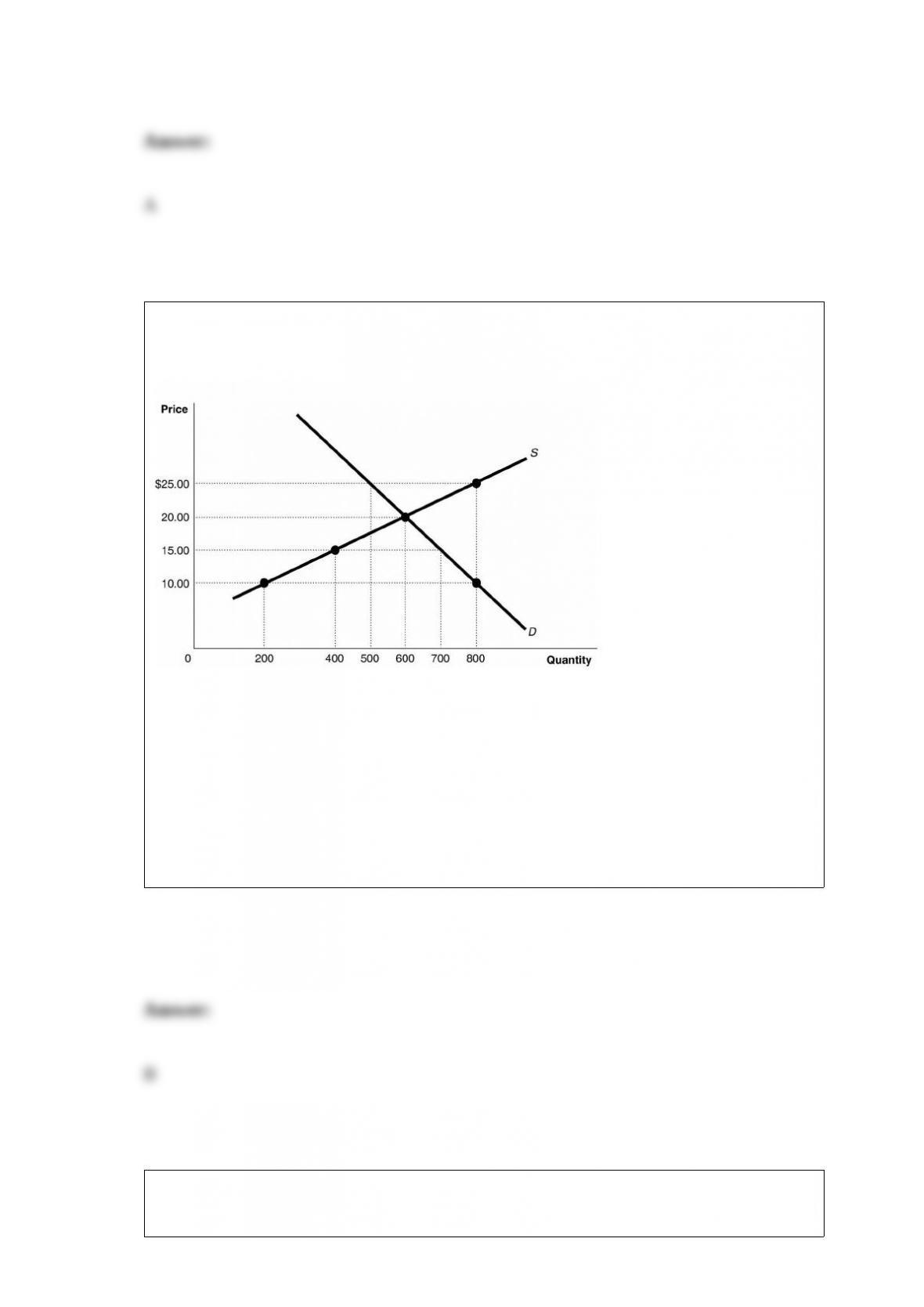
Figure 3-4
Refer to Figure 3-4. At a price of $15, how many units will be sold?
A) 300
B) 400
C) 600
D) 700
Figure 2-13
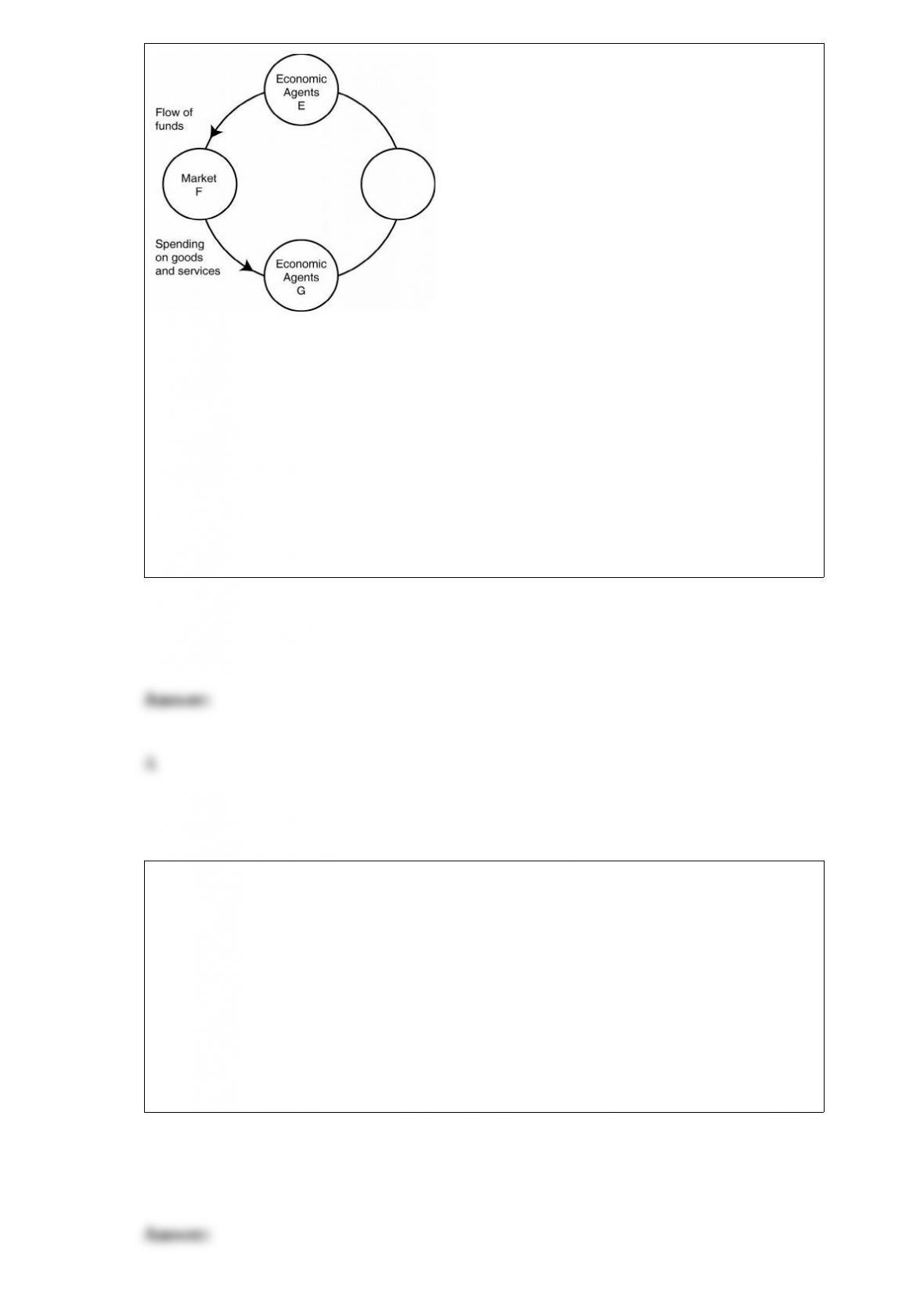
Refer to Figure 2-13. One segment of the circular flow diagram in the figure shows the
flow of funds from economic agents E to marketF. Who are economic agents E and
what is market F?
A) E = households; F = product markets
B) E = firms; F = product markets
C) E = households ; F = factor markets
D) E = firms; F = factor markets
Which of the following is not an example of an economic trade-off that a firm has to
make?
A) whether it is cheaper to produce with more machines or with more workers
B) whether it is to outsource the production of a good or service
C) whether or not consumers will buy its products
D) whether it should produce more of its product

Harvey Morris bought dishes and pitchers made of blue glass during the Great
Depression at a flea market. He later resold these items on eBay. The profits Harvey
earned from these sales are
A) subject to a retail profits tax.
B) are not economic profits because Harvey did not add value to the items but took
advantage of the buyers who were not aware of how much Harvey paid for the items.
C) the result of arbitrage.
D) accounting profits but not economic profits.
The lawsuit the Justice Department brought against Apple regarding the pricing of
e-books for its iPad is an example of attempts by the government
A) to prevent vertical mergers which would significantly reduce competition.
B) to prevent horizontal mergers which would significantly reduce competition.
C) to regulate a natural monopoly by establishing government-regulated prices.
D) to keep firms from artificially restricting competition to raise prices.

An income tax system is ________ if marginal tax rates increase as income increases.
A) progressive
B) regressive
C) efficient
D) equitable
Economies of scale occur when
A) a firm’s long-run average total costs fall as it increases the quantity of output it
produces.
B) the marginal product of labor is greater than the average product of labor.
C) short-run marginal cost falls.
D) the demand for a firm’s output increases.
Suppose the government wants to finance housing for low-income families by placing a
tax on the purchase of luxury homes. Assume the government defines a luxury home as
a home that is purchased for at least $1 million. This tax is consistent with the

A) benefits-received principle.
B) social equity principle.
C) ability-to-pay principle.
D) horizontal-equity principle.
Suppose a competitive firm pays a wage of $12 an hour and sells its product at $3 per
unit. Assume that labor is the only input. If hiring another worker would increase output
by five units per hour, then to maximize profits the firm should
A) not change the number of workers it currently hires.
B) lay off some of its workers.
C) hire the additional worker.
D) There is not enough information to answer the question.
Scenario: Topsy Turvey Toys and Ureshi Toys
Topsy Turvey Toys is a U.S.-based toy retailer that buys all its merchandise from Ureshi
Toys, a Japan-based toy manufacturer with production facilities in twelve nations.
Ureshi Toys markets its toys globally without modification.Ureshi Toys selling its
products to Topsy Turvey Toys is an example of ________.

A) outsourcing
B) insourcing
C) exporting
D) importing
For most low-wage earners
A) the income effect of a wage rate increase is likely to be larger than the substitution
effect.
B) the substitution effect of a wage rate increase is likely to equal the income effect.
C) the opportunity cost of leisure is high.
D) the substitution effect of a wage rate increase is likely to be larger than the income
effect.
An organization of producers that limits the amount of a good produced is known as a
A) free market organization.
B) guild.
C) collective.

D) co-op.
You have just opened a new Italian restaurant in your hometown where there are three
other Italian restaurants. Your restaurant is doing a brisk business and you attribute your
success to your distinctive northern Italian cuisine using locally grown organic produce.
What is likely to happen to your business in the long run?
A) Your competitors are likely to change their menus to make their products more
similar to yours.
B) Your success will invite others to open competing restaurants and ultimately your
profits will be driven to zero.
C) If your success continues, you will be likely to establish a franchise and expand your
market size.
D) If you continue to maintain consistent quality, you will be able to earn profits
indefinitely.
Figure 2-7
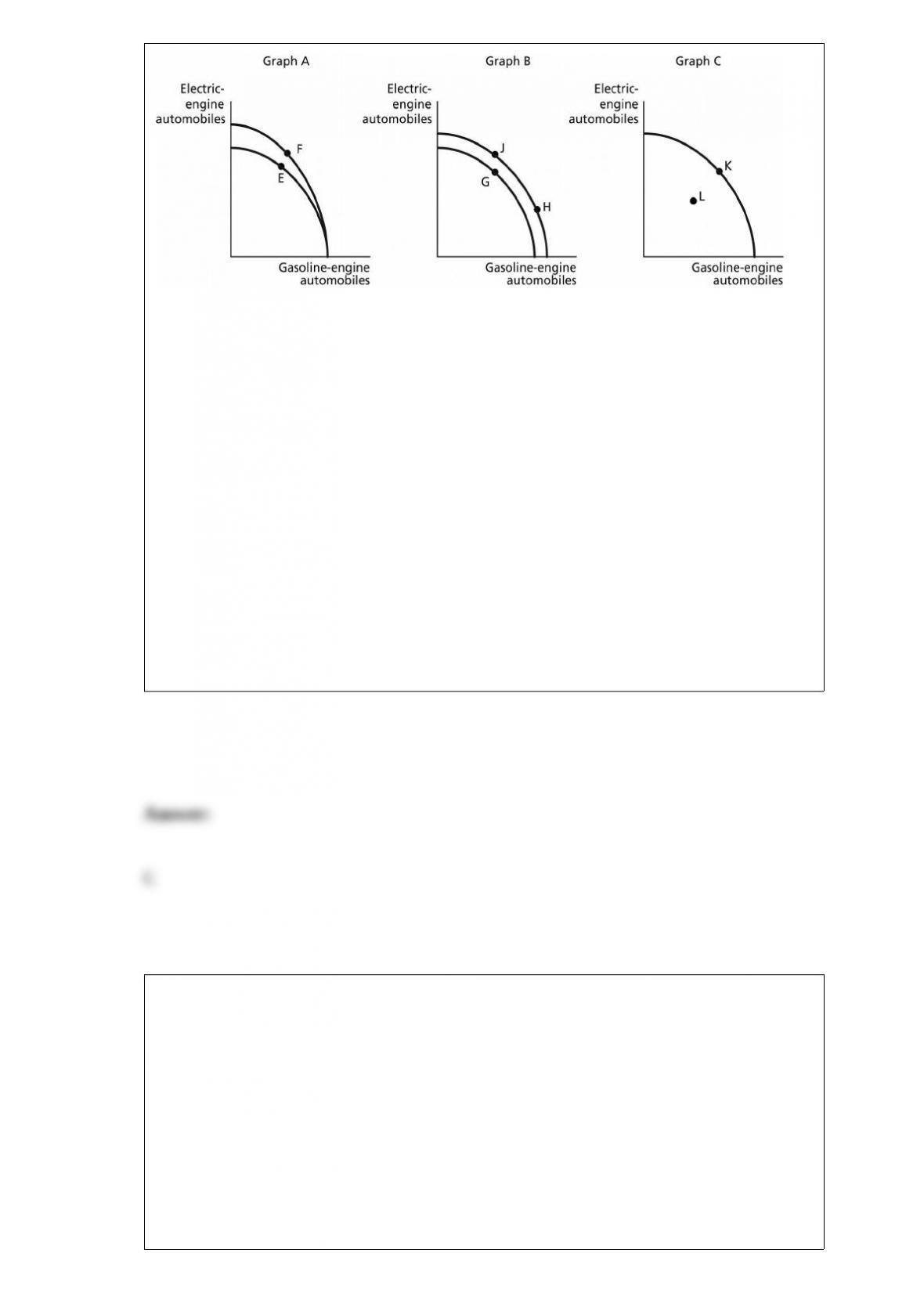
Mercedes Benz recently decided to introduce its B-class automobile in the U.S. market,
an electric car that is has designed and developed in a partnership with Tesla Motors.
Assume Mercedes Benz chooses to produce both electric-engine vehicles and
gasoline-engine vehicles. Figure 2-7 shows changes to its production possibilities
frontier in response to new developments and different strategic production decisions.
Refer to Figure 2-7. Assume that in 2014, Mercedes reopened one of its factories after
an extensive remodelling which now allows for the production of both types of
vehicles. This is best represented by the
A) movement from E to F in Graph A.
B) movement from H to J in Graph B.
C) movement from L to K in Graph C.
D) movement from J to G in Graph B.
Tom Searchinger, a senior attorney at the Environmental Defense Fund, observed that
generous farm subsidies have encouraged farmers to produce more corn and more
wheat. How does this affect the market for fertilizer?
A) The supply of fertilizer increases.
B) The supply of fertilizer decreases
C) The demand for fertilizer increases.
D) The demand for fertilizer decreases.
The cost borne by a producer in the production of a good or service is called
A) private cost.
B) public cost.
C) social cost.
D) internal cost.
Table 4-6
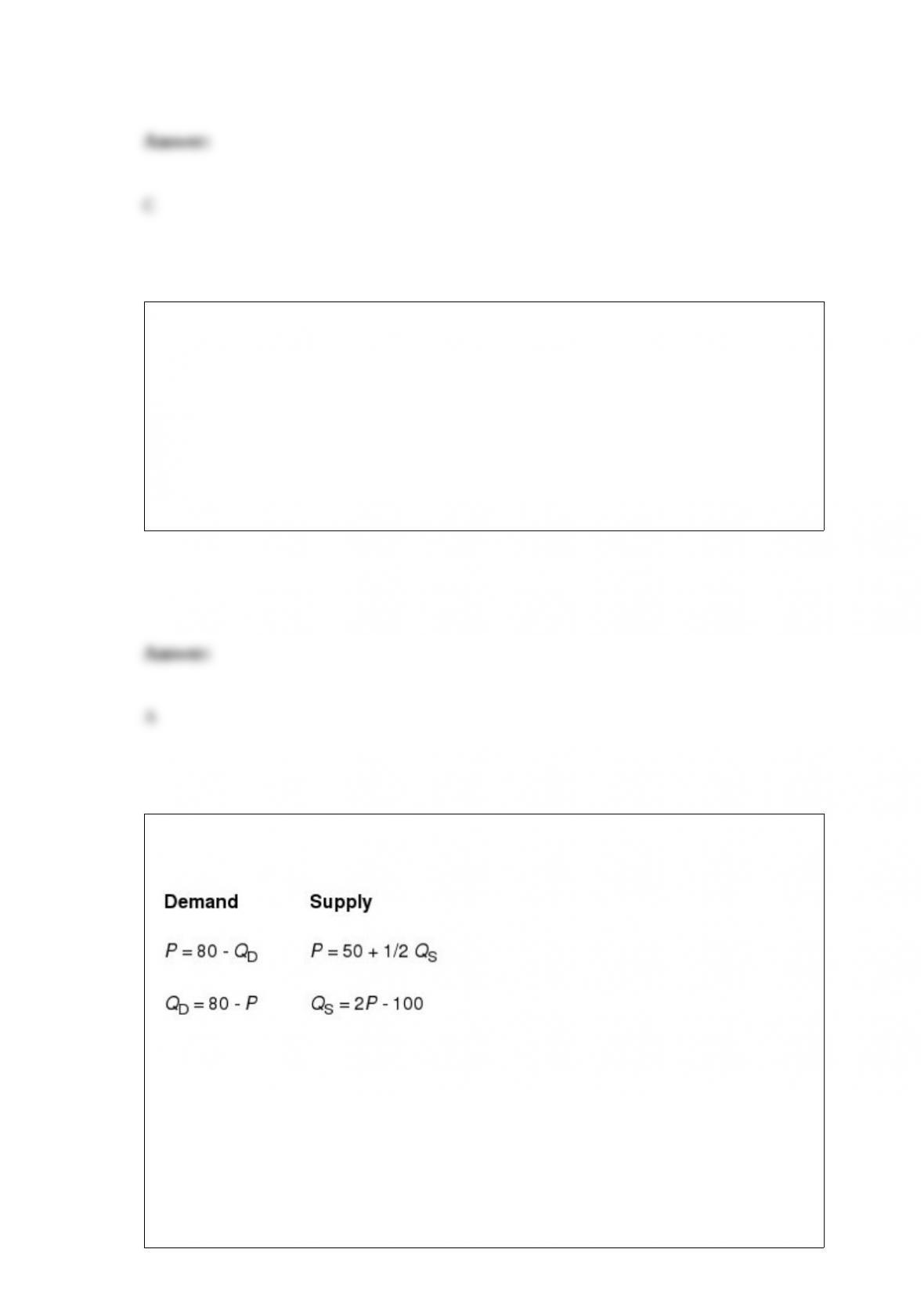
Refer to Table 4-6. The equations above describe the demand and supply for Chef
Ernie’s Sushi-on-a-Stick. The equilibrium price and quantity for Chef Ernie’s sushi are
$60 and 20 thousand units. What is the value of consumer surplus?
A) $100 thousand
B) $200 thousand
C) $600 thousand

D) $800 thousand
Baxter International, a manufacturer of hospital supplies, acquired American Hospital
Supply, a distributor of hospital supplies. This is an example of
A) a conglomerate merger.
B) a horizontal merger.
C) a vertical merger.
D) a two-dimensional merger.
In reference to the federal income tax system, a tax bracket is
A) the estimated amount of federal income tax firms withhold from their employees’
paychecks.
B) the formula the federal government uses to determine the dollar amount of the
personal exemption and the amounts taxpayers are allowed for deductions from their
incomes.
C) used to determine the average tax rate.
D) the income range within which a tax rate applies.
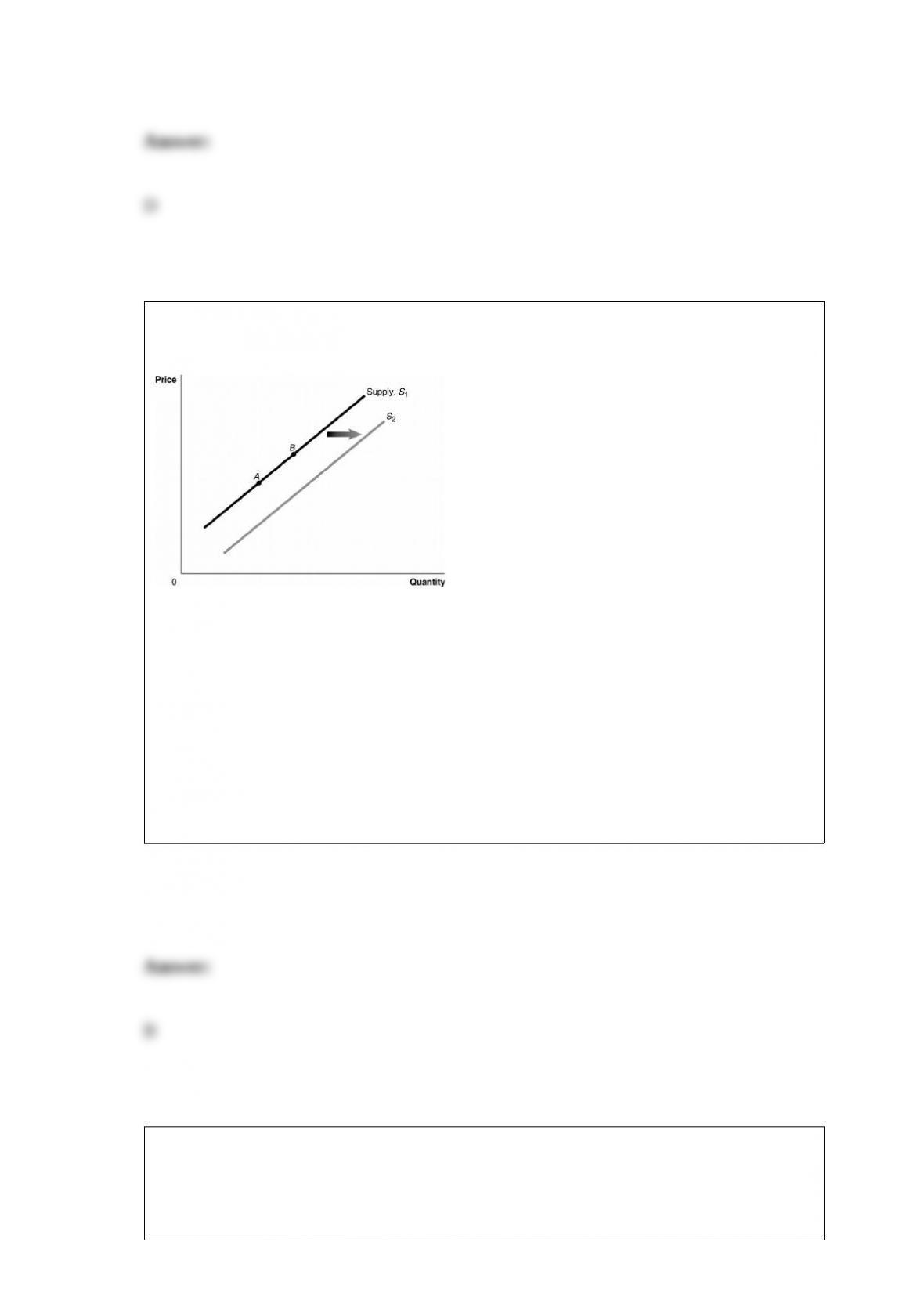
Figure 3-2
Refer to Figure 3-2. A decrease in the price of the product would be represented by a
movement from
A) A to B.
B) B to A.
C) S1 to S2.
D) S2 to S1.
The idea that two taxpayers in the same economic circumstances should pay the same
level of taxes is known as the
A) ability-to-pay principle.
B) vertical-equity principle.
C) horizontal-equity principle.
D) benefits-received principle.
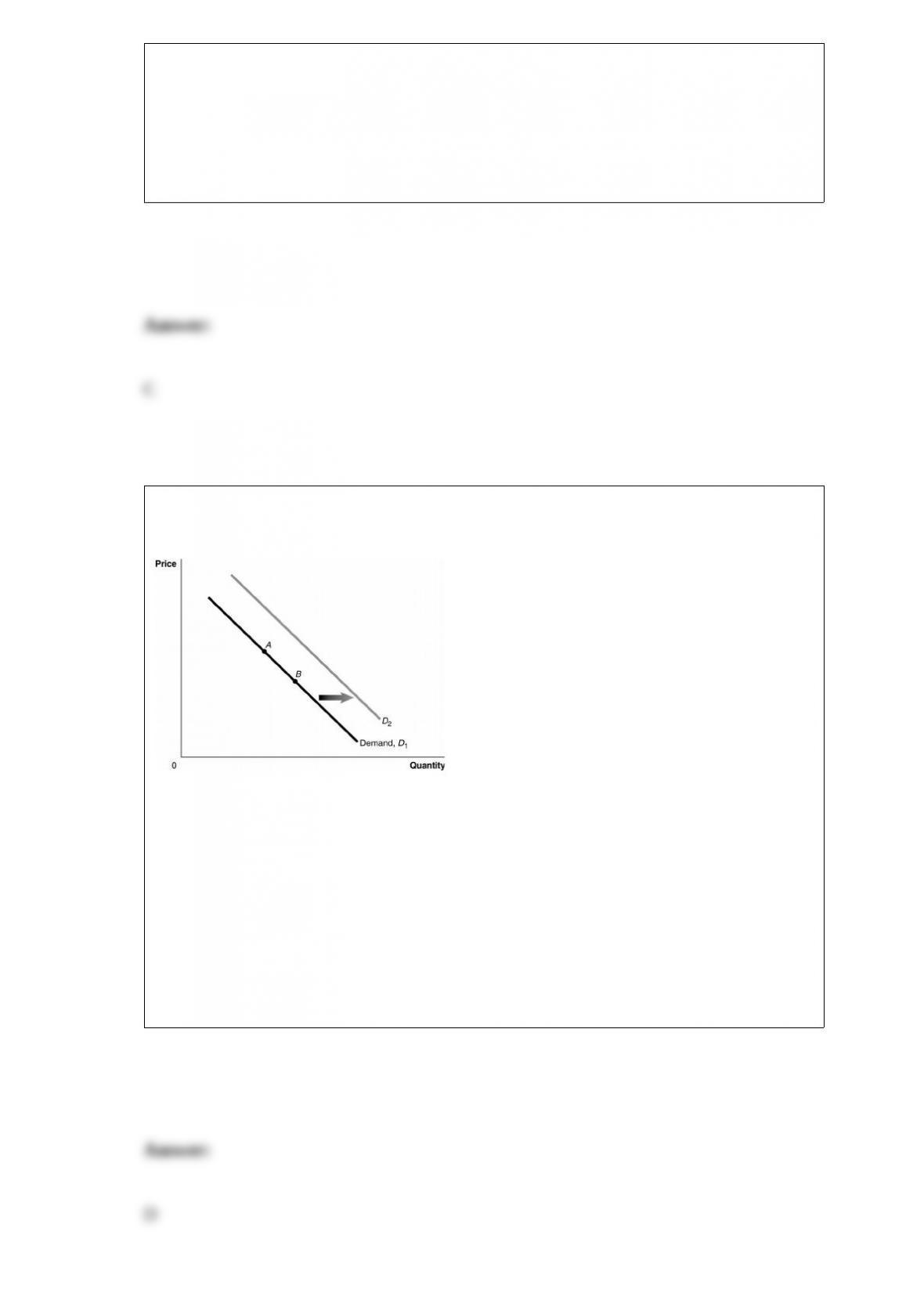
Figure 3-1
Refer to Figure 3-1. A decrease in the price of a substitute good would be represented
by a movement from
A) A to B.
B) B to A.
C) D1 to D2.
D) D2 to D1.

If 11 workers can produce a total of 54 units of a product and a 12th worker has a
marginal product of 6 units, then the average product of 12 workers is
A) 60 units.
B) 54 units.
C) 48 units.
D) 5 units.
Will equilibrium in a market always result in an outcome that is economically efficient?
Explain.
How might a company benefit from the globalization of production?
As the level of output increases, what happens to the value of average fixed cost, and
what happens to the difference between the value of average total cost and average
variable cost?
What is meant by the term “long-run competitive equilibrium?
Some online penny auctions charge a fee, such as $1, for every bid placed. Why should
these costs of $1 per bid be considered sunk costs? Would it be smart for someone who
has “already invested $5 in bidding costs” to keep bidding to “protect his or her sunk
investments”? Why or why not?
If you own a bond with a 3 percent coupon rate and new bonds are paying 8 percent,
what will happen to your bond’s market price?
Why would an organization as large as the National Football League (NFL) incur large
legal expenses to try to prevent bars and restaurants from using their trademarked term
“Super Bowl” in their advertising?
The increase in consumption of a good when its price falls is caused by two effects.
What are these two effects? Explain the difference between these effects.
A key assumption of the public choice model is that government policymakers will
pursue their own self-interests. Economists assume that consumers and firms pursue
their own self-interests when they interact in competitive markets and this interaction
results in efficient economic outcomes. Does the pursuit of self-interest by
policymakers result in efficient economic outcomes?
Define logrolling. Explain why logrolling often results in legislation that benefits the
economic interests of a few, while harming the interests of a larger group of people.
What is yield management? How is yield management being used in the airline
industry?
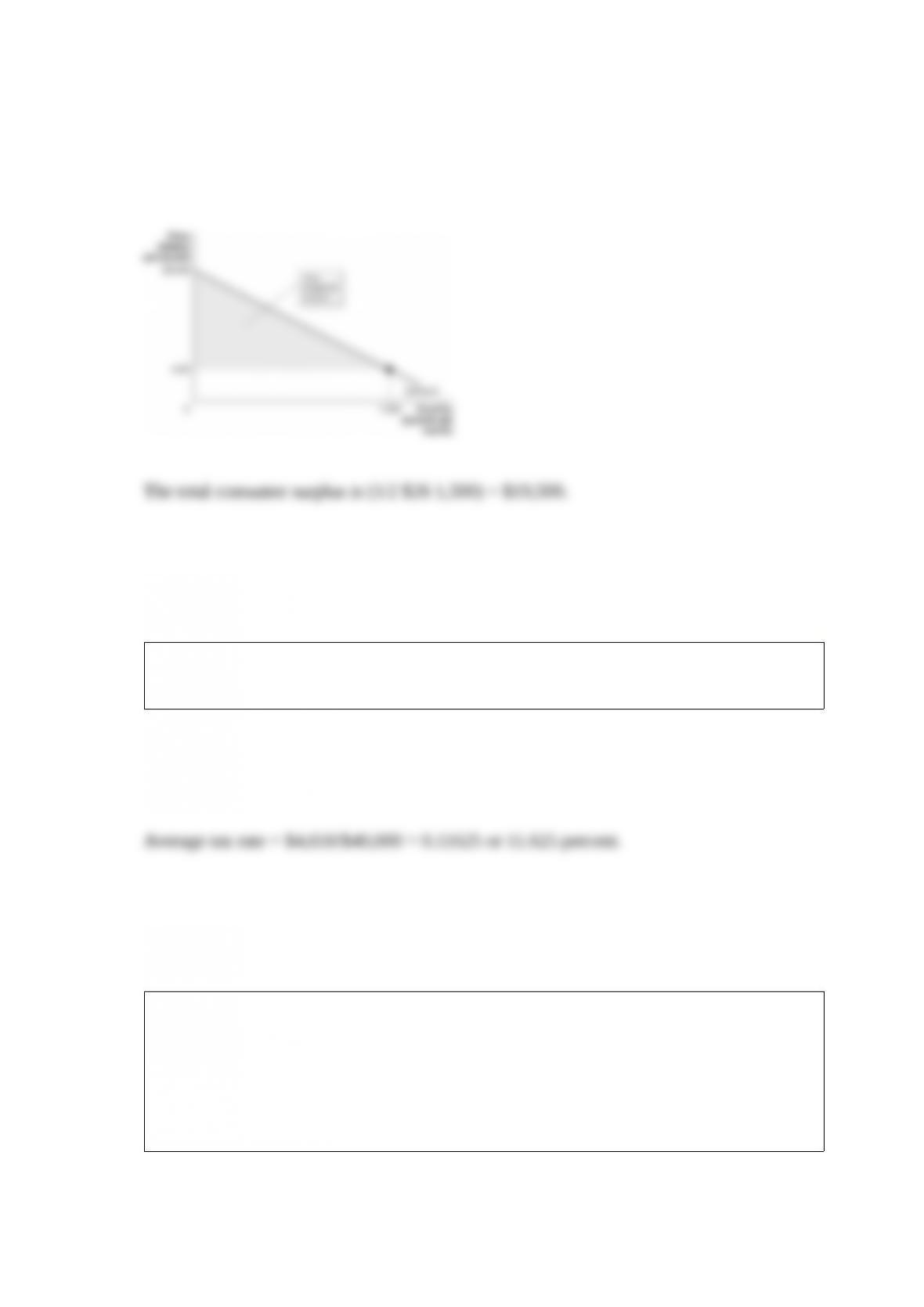
Assume the market price for lemon grass is $4.00 per pound, but most buyers are
willing to pay more than the market price. At the market price of $4.00, the quantity of
lemon grass demanded is 1,500 pounds per month, and quantity demanded does not
reach zero until the price reaches $30.00 per pound. Construct a graph showing this
data, calculate the total consumer surplus in the market for lemon grass, and show the
consumer surplus on the graph.
If your income is $40,000 and you pay taxes of $4,650, what is your average tax rate?
Show your work.
Suppose the equilibrium price and quantity of a 12-pack of Dr. Pepper are $5.00 and
10,000 12-packs, respectively, and the government decides to impose a $1.00 tax on
every 12-pack of carbonated soft drinks. Draw two supply and demand graphs, one
showing the excess burden of the tax when supply is less elastic and the other showing
the excess burden of the tax when supply is more elastic. Identify the excess burden of
the tax on each graph. On which graph is the excess burden the greatest?