A decrease in the price of a good would
a. increase the supply of the good.
b. increase the quantity demanded of the good.
c. give producers an incentive to produce more to keep profits from falling.
d. shift the supply curve for the good to the left.
Table 11-1
The table below pertains to Pieway, an economy in which the typical consumer’s basket
consists of 10 bushels of peaches and 15 bushels of pecans.
Refer to Table 11-1. If 2006 is the base year, then the CPI for 2006 was
a. 83.3.
b. 100.
c. 120.
d. 240.
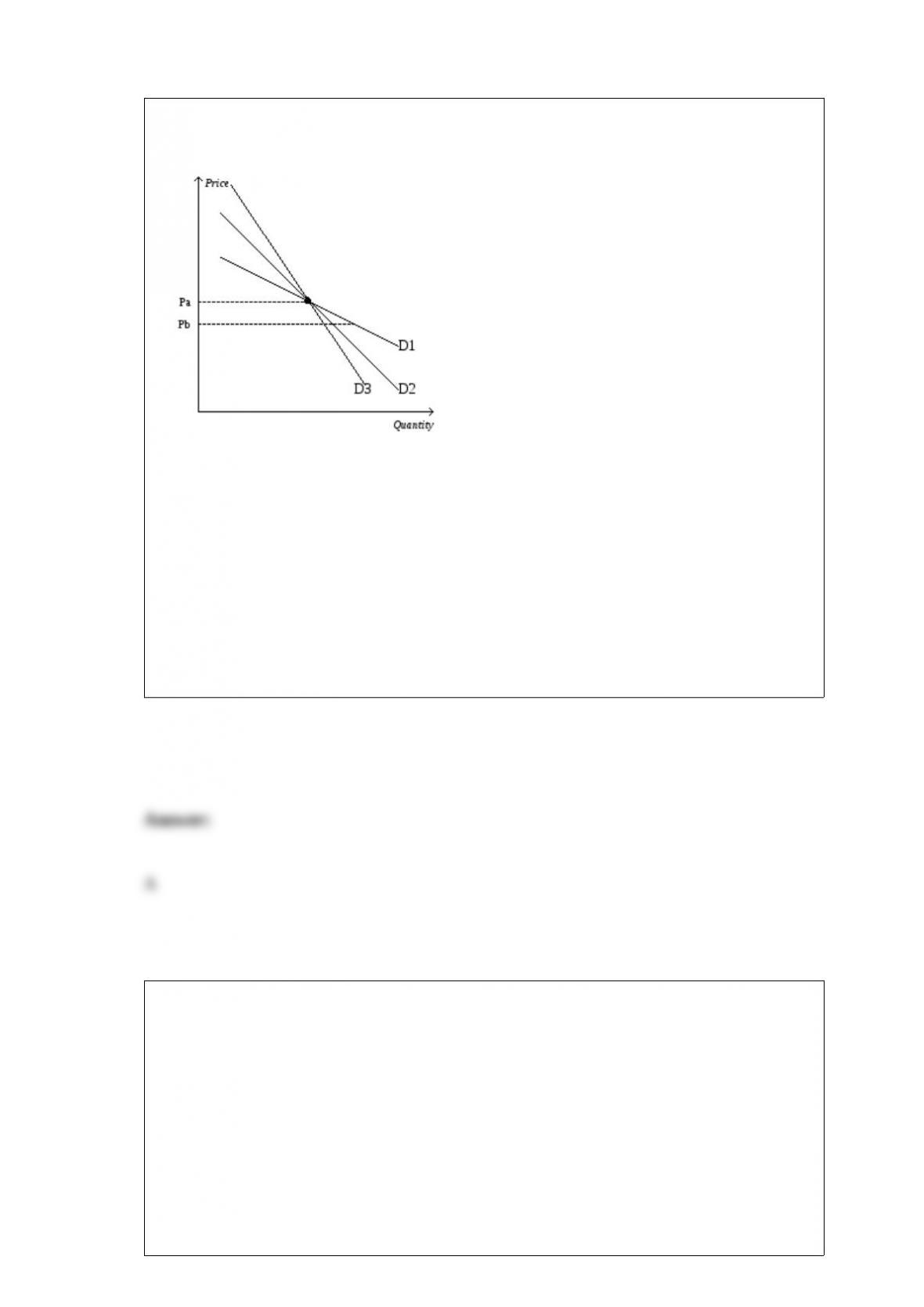
Figure 5-2
Refer to Figure 5-2. As price falls from Pa to Pb, which demand curve represents the
most elastic demand?
a. D1
b. D2
c. D3
d. All of the above are equally elastic.
If a government redesigned its unemployment insurance programs so that the
unemployed had greater incentives to quickly find appropriate jobs, then which of the
following curves would shift right?
a. the long-run Phillips curve and the long-run aggregate supply curve
b. the long-run Phillips curve but not the long-run aggregate supply curve
c. the long-run aggregate supply curve but not the long-run Phillips curve
d. neither the long-run Phillips curve nor the long-run aggregate supply curve

A shortage results when a
a. nonbinding price ceiling is imposed on a market.
b. nonbinding price ceiling is removed from a market.
c. binding price ceiling is imposed on a market.
d. binding price ceiling is removed from a market.
A certain production possibilities frontier shows production possibilities for two goods,
jewelry and clothing. Which of the following concepts cannot be illustrated by this
model?
a. the flow of dollars between sellers of jewelry and clothing and buyers of jewelry and
clothing
b. the tradeoff between production of jewelry and production of clothing
c. the opportunity cost of clothing in terms of jewelry
d. the effect of economic growth on production possibilities involving jewelry and
clothing

If U.S. citizens decide to purchase more foreign assets at each interest rate, the U.S. real
interest rate
a. increases, the real exchange rate of the dollar appreciates, and U.S. net capital
outflow decreases.
b. increases, the real exchange rate of the dollar depreciates, and U.S. net capital
outflow increases.
c. decreases, the real exchange rate of the dollar depreciates, and U.S. net capital
outflow decreases.
d. decreases, the real exchange rate of the dollar appreciates, and U.S. net capital
outflow increases.
During the recent financial crisis velocity decreased. This means that the rate at which
money changed hands
a. decreased. Other things the same, a decrease in velocity decreases the price level.
b. decreased. Other things the same, a decrease in velocity increases the price level.
c. increased. Other things the same, an increase in velocity decreases the price level.
d. increased. Other things the same, an increase in velocity increases the price level.

New oak tables are normal goods. What would happen to the equilibrium price and
quantity in the market for oak tables if the price of maple tables rises, the price of oak
wood rises, more buyers enter the market for oak tables, and the price of the glue used
in the production of the new oak tables increased?
a. Price will fall, and the effect on quantity is ambiguous.
b. Price will rise, and the effect on quantity is ambiguous.
c. Quantity will fall, and the effect on price is ambiguous.
d. Quantity will rise, and the effect on price is ambiguous.
Which of the following is a certificate of indebtedness?
a. both stocks and bonds
b. stocks but not bonds
c. bonds but not stocks
d. neither stocks nor bonds
Country A and country B are the same except country A currently has a lower level of
capital. Assuming diminishing returns, if both countries increase their capital by 100
units and other factors that determine output are unchanged, then
a. output in country A increases by more than in country B.
b. output in country A increases by the same amount as in country B.
c. output in country A increases by less than in country B.
d. None of the above is necessarily correct.
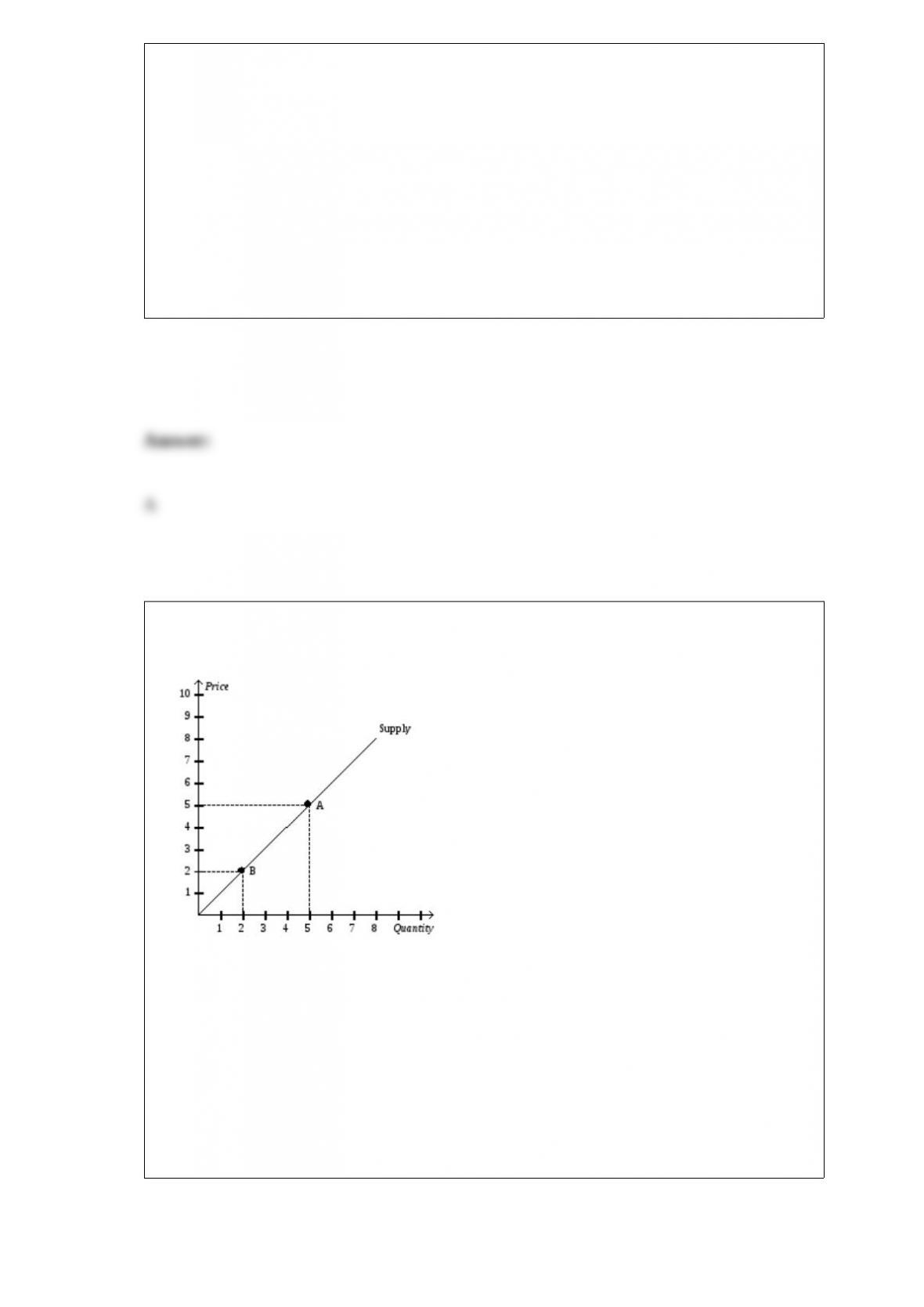
Figure 4-8
Refer to Figure 4-8. The movement from Point A to Point B represents a(n)
a. shift in the supply curve.
b. decrease in the quantity supplied.
c. increase in the quantity supplied.
d. Both a) and b) are correct.

Which of the following would both make the interest rate on a bond higher than
otherwise?
a. the interest it pays is taxed and it is long term
b. the interest it pays is taxed and it is short term
c. the interest it pays is tax exempt and it is long term
d. the interest it pays is tax exempt and it is short term
A drought in California destroys many red grapes. As a result of the drought, the
consumer surplus in the market for red grapes
a. increases, and the consumer surplus in the market for red wine increases.
b. increases, and the consumer surplus in the market for red wine decreases.
c. decreases, and the consumer surplus in the market for red wine increases.
d. decreases, and the consumer surplus in the market for red wine decreases.
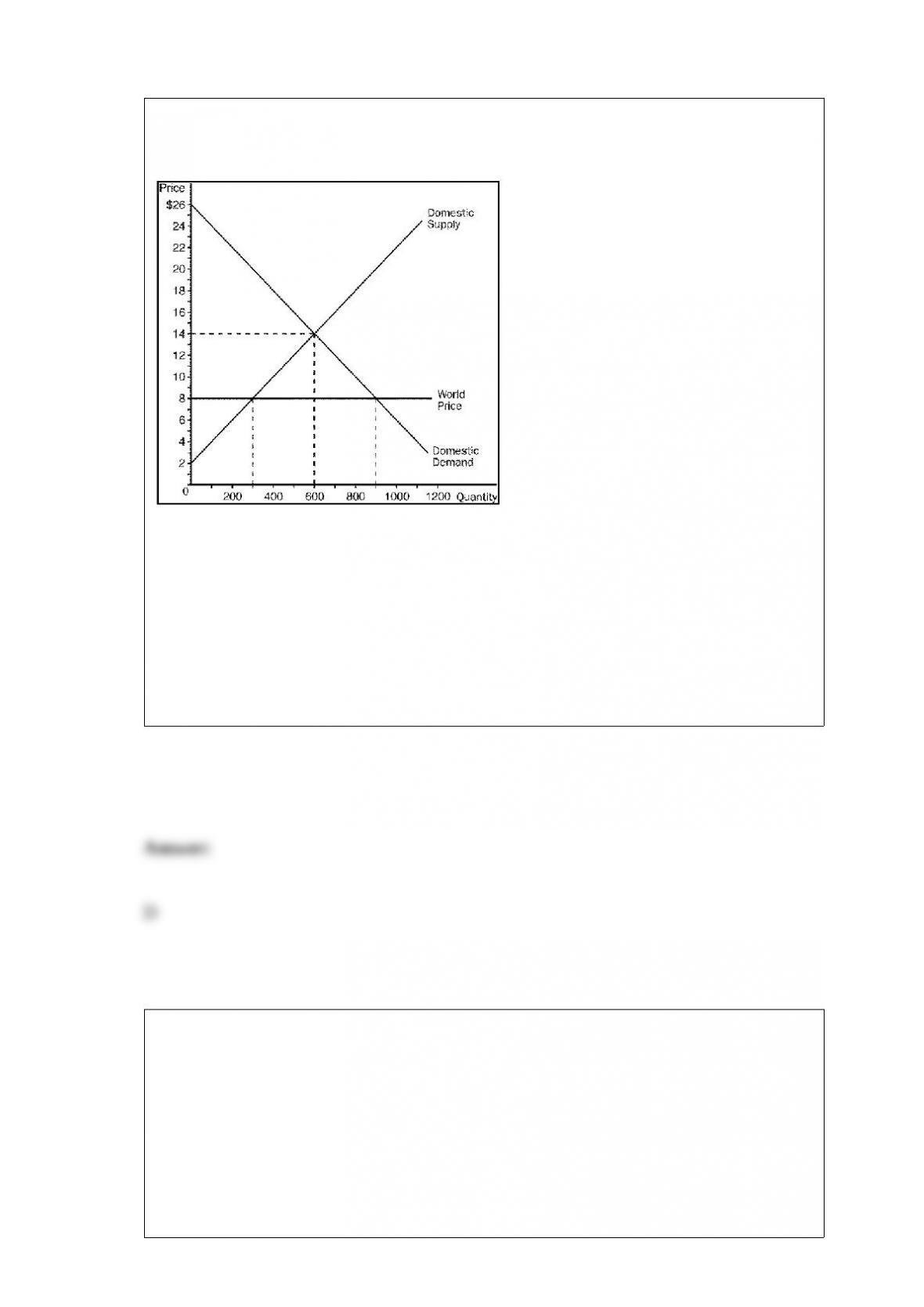
Figure 9-13
Refer to Figure 9-13. With trade, the country
a. exports 200 units of the good.
b. exports 400 units of the good.
c. imports 400 units of the good.
d. imports 600 units of the good.
A higher price for batteries would result in a(n)
a. increase in the demand for flashlights.
b. decrease in the demand for flashlights.
c. increase in the demand for batteries.
d. decrease in the demand for batteries.

In the circular-flow diagram,
a. taxes flow from households to firms, and transfer payments flow from firms to
households.
b. income payments flow from firms to households, and sales revenue flows from
households to firms.
c. resources flow from firms to households, and goods and services flow from
households to firms.
d. inputs and outputs flow in the same direction as the flow of dollars, from firms to
households.
You are in charge of the local city-owned aquatic center. You need to increase the
revenue generated by the aquatic center in order to meet expenses. The mayor advises
you to increase the price of a day pass. The city manager recommends reducing the
price of a day pass. You realize that
a. the mayor thinks demand is elastic, and the city manager thinks demand is inelastic.
b. both the mayor and the city manager think that demand is elastic.
c. both the mayor and the city manager think that demand is inelastic.
d. the mayor thinks demand is inelastic, and the city manager thinks demand is elastic.

The money supply decreases if
a. households decide to hold relatively more currency and relatively fewer deposits and
banks decide to hold relatively more excess reserves and make fewer loans.
b. households decide to hold relatively more currency and relatively fewer deposits and
banks decide to hold relatively fewer excess reserves and make more loans.
c. households decide to hold relatively less currency and relatively more deposits and
banks decide to hold relatively more excess reserves and make fewer loans.
d. households decide to hold relatively less currency and relatively more deposits and
banks decide to hold relatively less excess reserves and make more loans.
The presence of a price control in a market for a good or service usually is an indication
that
a. an insufficient quantity of the good or service was being produced in that market to
meet the public’s need.
b. the usual forces of supply and demand were not able to establish an equilibrium price
in that market.
c. policymakers believed that the price that prevailed in that market in the absence of
price controls was unfair to buyers or sellers.
d. policymakers correctly believed that price controls would generate no inequities of
their own once imposed.
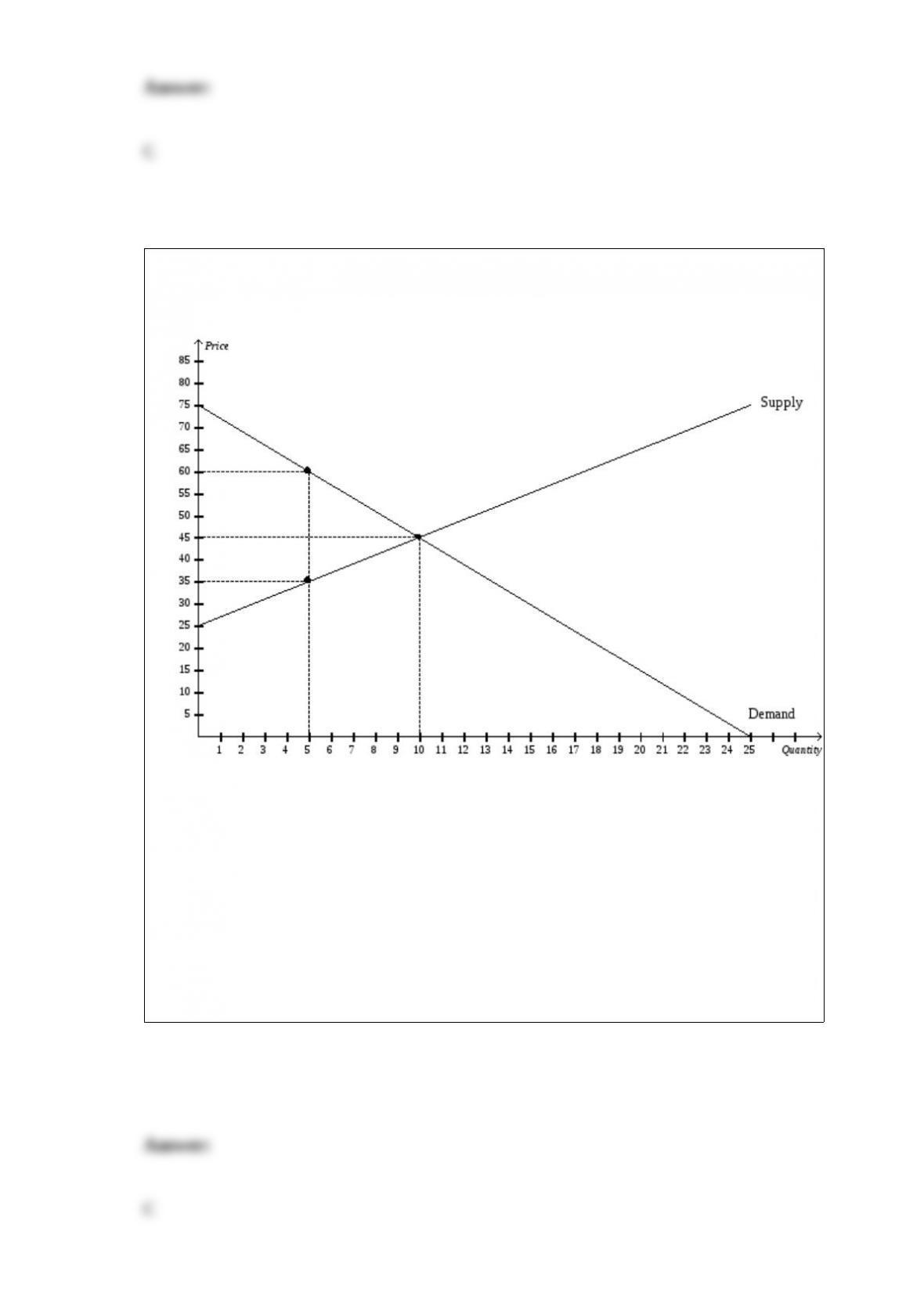
Figure 7-15
Refer to Figure 7-15. If the government imposes a price floor of $60 in this market,
then total surplus will be
a. $110.50.
b. $125.00.
c. $187.50.
d. $225.25..
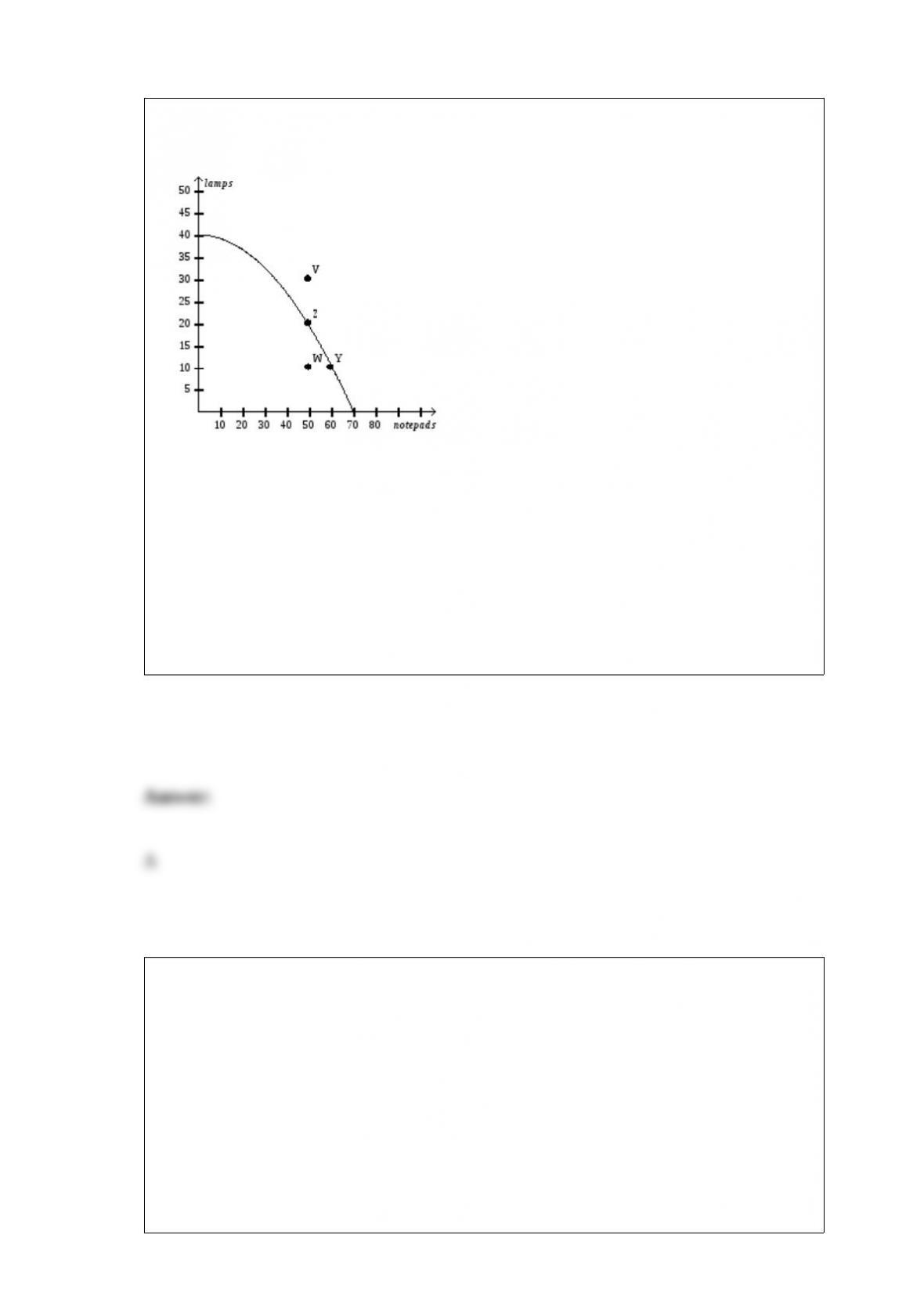
Figure 2-4
Refer to Figure 2-4. Efficient production is represented by which point(s)?
a. Y, Z
b. W, Y, Z
c. V, Y, Z
d. V
Suppose that computer factory workers and cell phone factory workers have no unions.
Now suppose that cell phone factory workers form unions. What does this do the labor
supply of and wages of workers in computer factories?
a. It increases the labor supply and wages of computer factory workers.
b. It increases the labor supply and decreases the wages of computer factory workers.
c. It decreases the labor supply and increases the wages of computer factory workers.
d. It decreases the labor supply and wages of computer factory workers.
Shane receives $100 as a birthday gift. In deciding how to spend the money, he narrows
his options down to four choices: Option A, Option B, Option C, and Option D. Each
option costs $100. Finally he decides on Option B. The opportunity cost of this decision
is
a. the value to Shane of the option he would have chosen had Option B not been
available.
b. the value to Shane of Options A, C and D combined.
c. $50.
d. $100.
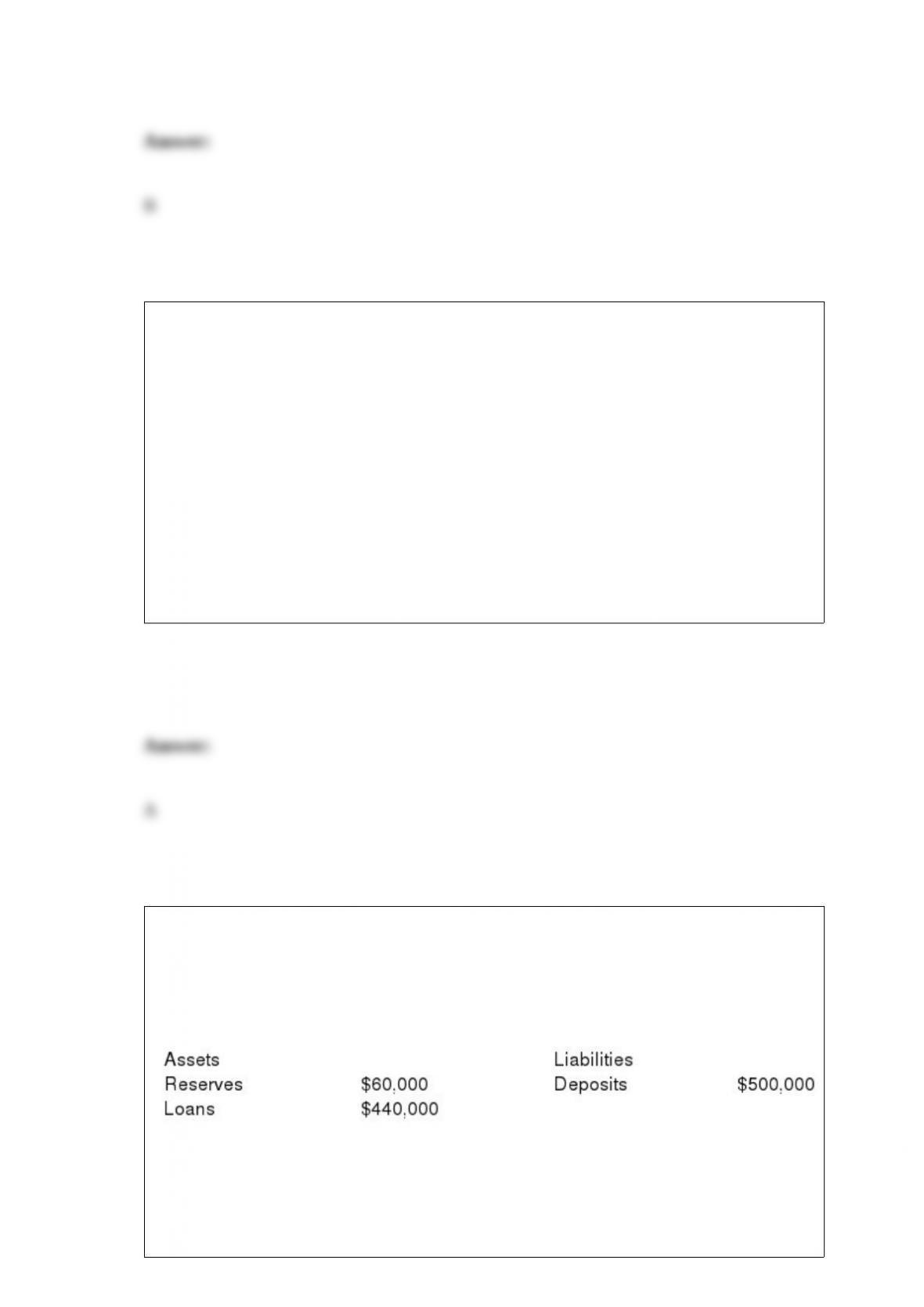
Table 16-7
Metropolis National Bank is currently holding 2% of its deposits as excess reserves.
Metropolis National Bank
Refer to Balance Sheet of Metropolis National Bank. Metropolis National Bank is
currently holding 2% of deposits as excess reserves. Assuming that all banks have the
same required reserve ratio, and then none want to hold excess reserves what is the
value of the money multiplier?
a. 8.25
b. 10
c. 12
d. 20
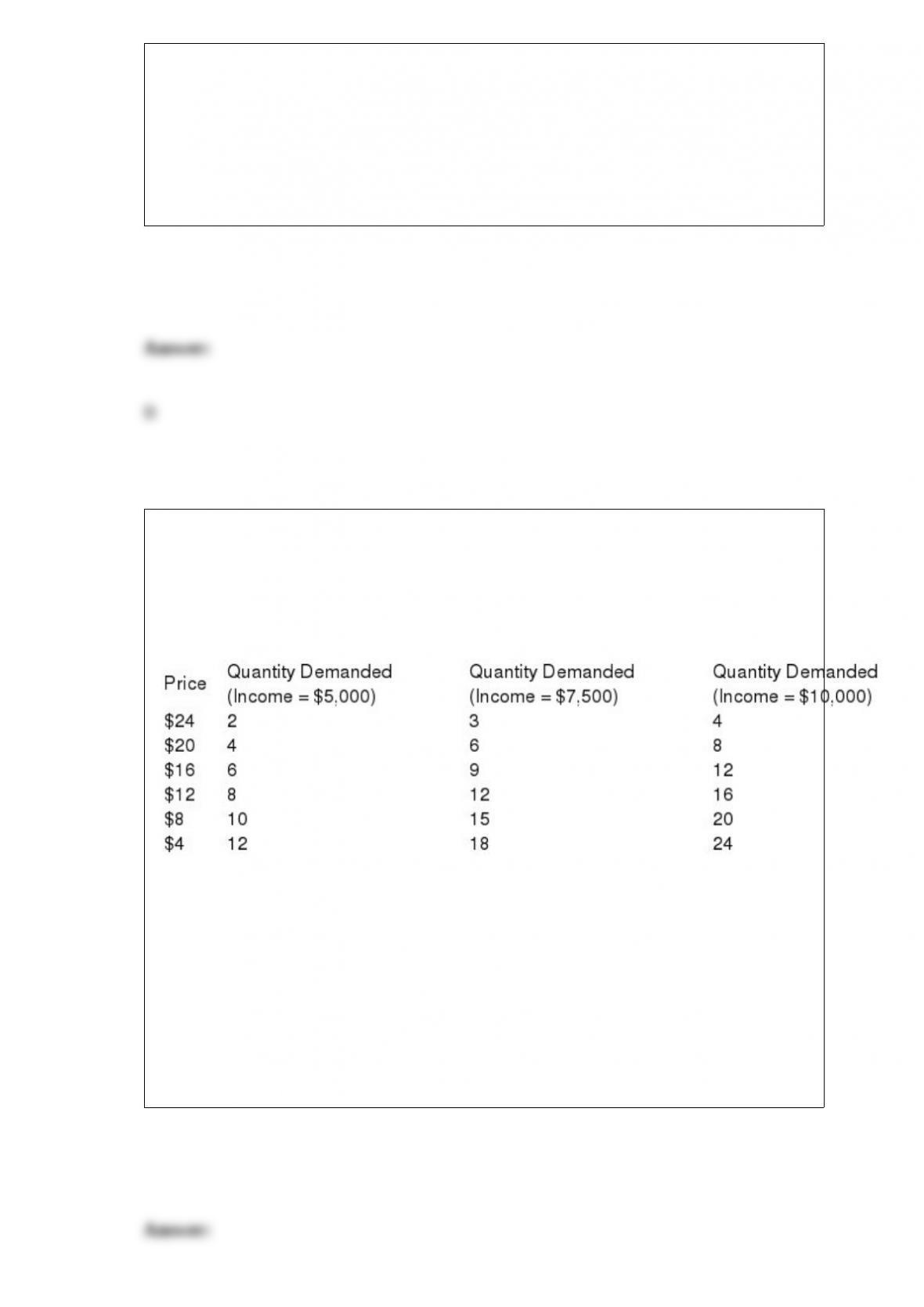
Table 5-5
The following table shows a portion of the demand schedule for a particular good at
various levels of income.
Refer to Table 5-5. Using the midpoint method, at a price of $8, what is the income
elasticity of demand when income rises from $7,500 to $10,000?
a. 0.00
b. 0.41
c. 1.00
d. 2.45

The interest rate that the Fed charges banks that borrow reserves from it is the
a. federal funds rate.
b. discount rate.
c. reserve requirement.
d. prime rate.
If the price of domestically produced power tools increases, then
a. the consumer price index and the GDP deflator will both increase.
b. the consumer price index will increase, and the GDP deflator will be unaffected.
c. the consumer price index will be unaffected, and the GDP deflator will increase.
d. the consumer price index and the GDP deflator will both be unaffected.
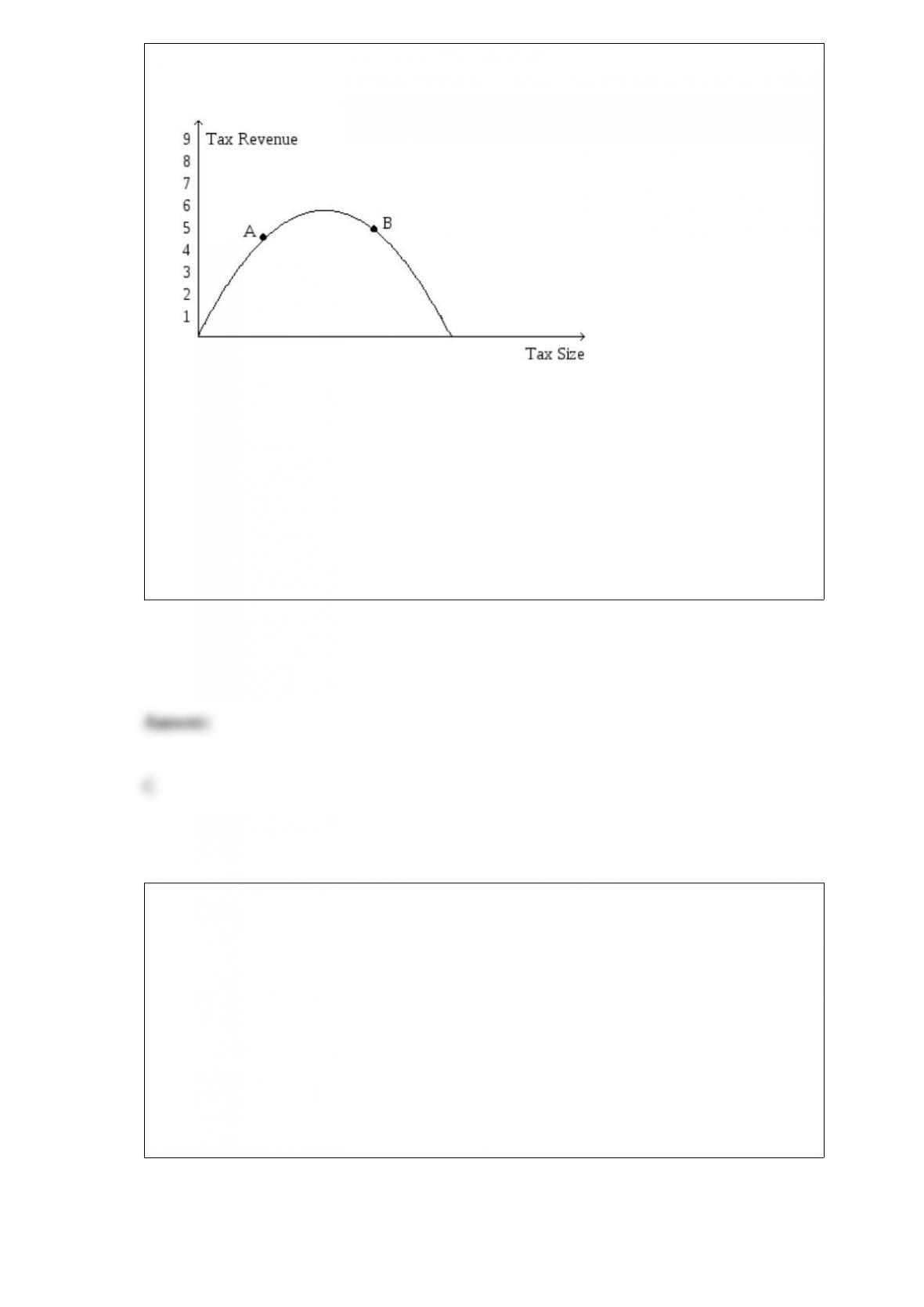
Figure 8-19. The figure represents the relationship between the size of a tax and the tax
revenue raised by that tax.
Refer to Figure 8-19. The curve that is shown on the figure is called the
a. deadweight-loss curve.
b. tax-incidence curve.
c. Laffer curve.
d. Lorenz curve.
A manufacturer produces 400 units when the market price of $10 per unit and produces
600 units when the market price is $12 per unit. Using the midpoint method, for this
range of prices, the price elasticity of supply is about
a. 0.45.
b. 2.0.
c. 2.2.
d. 200.

If the quantity of loanable funds supplied is greater than the quantity demanded, then
a. there is a shortage of loanable funds and the interest rate will fall.
b. there is a shortage of loanable funds and the interest rate will rise.
c. there is a surplus of loanable funds and the interest rate will fall.
d. there is a surplus of loanable funds and the interest rate will rise.
The variables on the vertical and horizontal axes of the aggregate demand and supply
graph are
a. the price level and real output.
b. real output and employment.
c. employment and the inflation rate.
d. the value of money and the price level.