
In the short run, a perfectly competitive firm will always shut down if, at all output
levels above zero,
a. price is less than average total cost
b. total revenue is less than total cost
c. they cannot pay variable costs with total revenue
d. variable cost is greater than fixed cost
e. price is less than fixed cost
Individual firms in a perfectly competitive market can
a. purchase all they want at the market price
b. sell all they produce at the market price
c. earn more profit if they charge a price above the market price
d. earn more profit if they charge a price below the market price
e. earn no profit in the short run
Which of the following is true of the United States?
a. It has been and continues to be a net capital exporter.
b. It is today the world’s largest debtor nation.
c. It was, until the last decade, a net capital importer.
d. It has historically been a debtor nation.

e. It is the world’s largest creditor nation.
The ability of a firm to raise the price without losing all its sales to rivals is called
a. market power
b. social regulation
c. economic regulation
d. antitrust policy
e. natural monopoly
The breakdown of the Bretton Woods system occurred because
a. the world economy was basically unhealthy
b. the collapse of world gold production undermined the operation of the system
c. the gold value of the dollar exceeded the exchange value, causing an outflow of the
gold
d. the dollar was undervalued
e. of the greed of the highly industrialized and wealthy countries of the world

The Internet has created some special problems of intellectual property. One problem is
that the
a. Internet is a monopoly, so the price of intellectual property exceeds marginal cost
b. Internet market has not yet reached equilibrium
c. property that can be downloaded, modified, and then re-sold
d. marginal cost of enforcing property rights exceeds the marginal benefit
e. price of intellectual property usually exceeds the marginal benefit
Exhibit 2-12 Maria and Hans Production Possibilities for Laundry and Typing
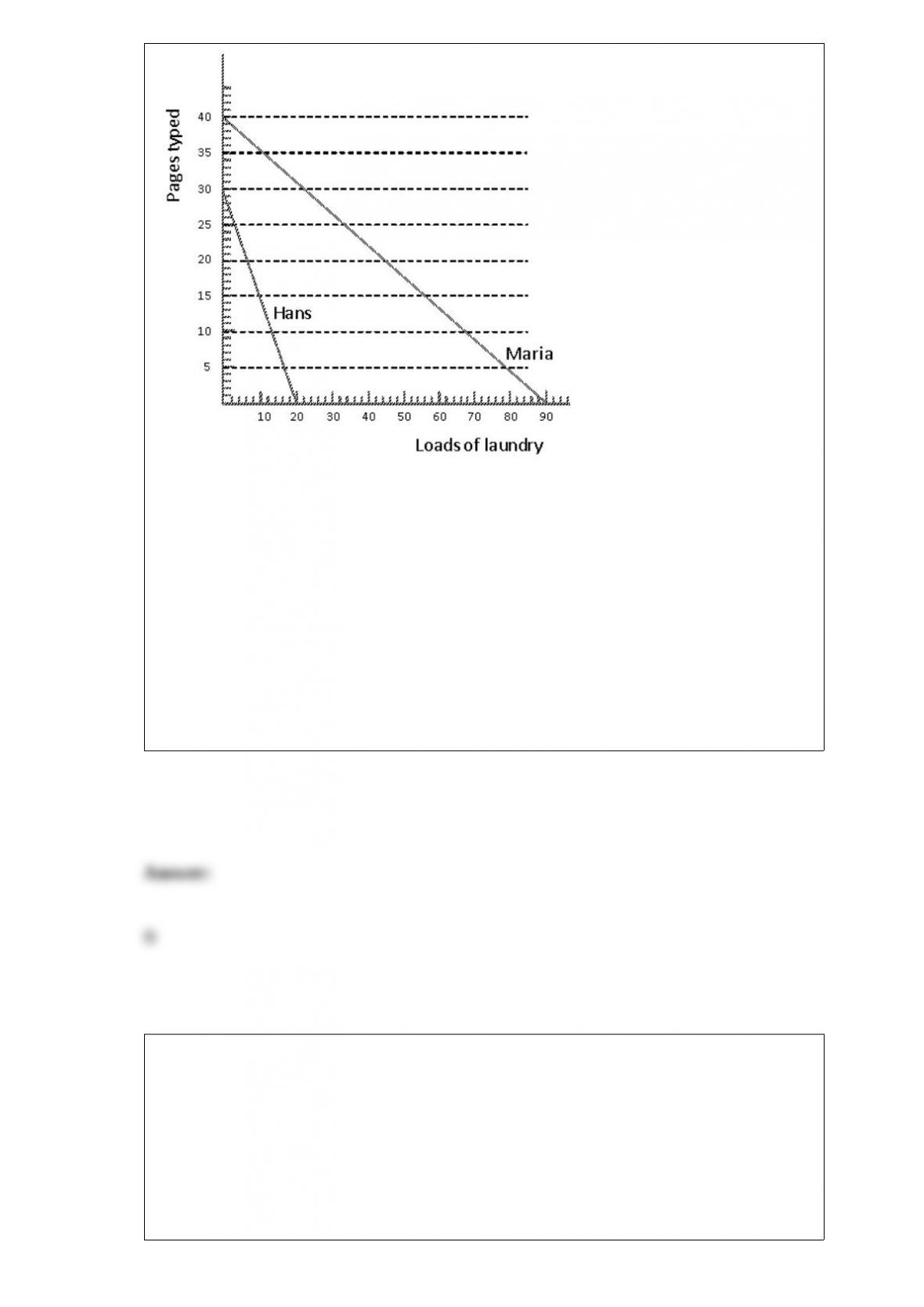
According to Exhibit 2-12, in any given amount of time,
a. Maria has an absolute and a comparative advantage in typing
b. Maria has an absolute and a comparative advantage in doing laundry
c. Maria has a comparative advantage in both typing and doing laundry
d. Hans has an absolute and a comparative advantage in typing
e. Hans has an absolute advantage in doing laundry
Industrial unions in the United States formed a national organization known as
a. the National Union
b. the Knights of Labor
c. the American Federation of Labor (AFL)

d. the Congress of Industrial Organizations (CIO)
e. the AFL-CIO
Supply curves generally slope upward because of all of the following reasons except
one. Which is the exception?
a. Producers are willing to offer more of a good at higher prices.
b. A higher price attracts resources from less-valued uses.
c. Producers must be compensated for the rising opportunity cost of additional output.
d. Producers have a greater incentive to sell more as the price increases.
e. The price of a good usually must fall to induce an increase in quantity supplied.
According to William Shepherd’s examination of competitive trends in the U.S.
economy, a tight oligopoly
a. is a single firm that controls the entire market and can block entry
b. is an industry in which the top four firms supply more than 60 percent of the market,
have stable market shares, and cooperate with each other
c. is an industry in which the top four firms supply more than 60 percent of the market,
have unstable market shares, and do not cooperate with each other

d. is an industry in which a single firm has over half the market share and no close rival
e. is an industry in which a single firm has over one-third of the entire market, the
market share is stable, and the firm cooperates with other firms in the industry
Increases in the minimum wage
a. have more support among economists than among the general public
b. raise the opportunity cost of staying in school
c. raise the opportunity cost of working
d. have no effect on the actual wages workers receive
e. raise overall employment in the economy
One reason many people make their own Hollandaise sauce rather than buy it is that
a. they can maintain control over the quality during production
b. the total cost of ingredients is the same as the price of store-bought sauce
c. firms do not make high-quality Hollandaise sauce
d. people place a high value on their time

e. firms do not produce goods that can be made at home
Who is likely to earn a higher income, dentists or dental hygienists, and why?
a. dental hygienists because their education is less costly
b. dentists because their education is less costly
c. dental hygienists because their education is more costly
d. dentists because their education is more costly
e. neither; they usually earn the same wage rate
Exhibit 9-11
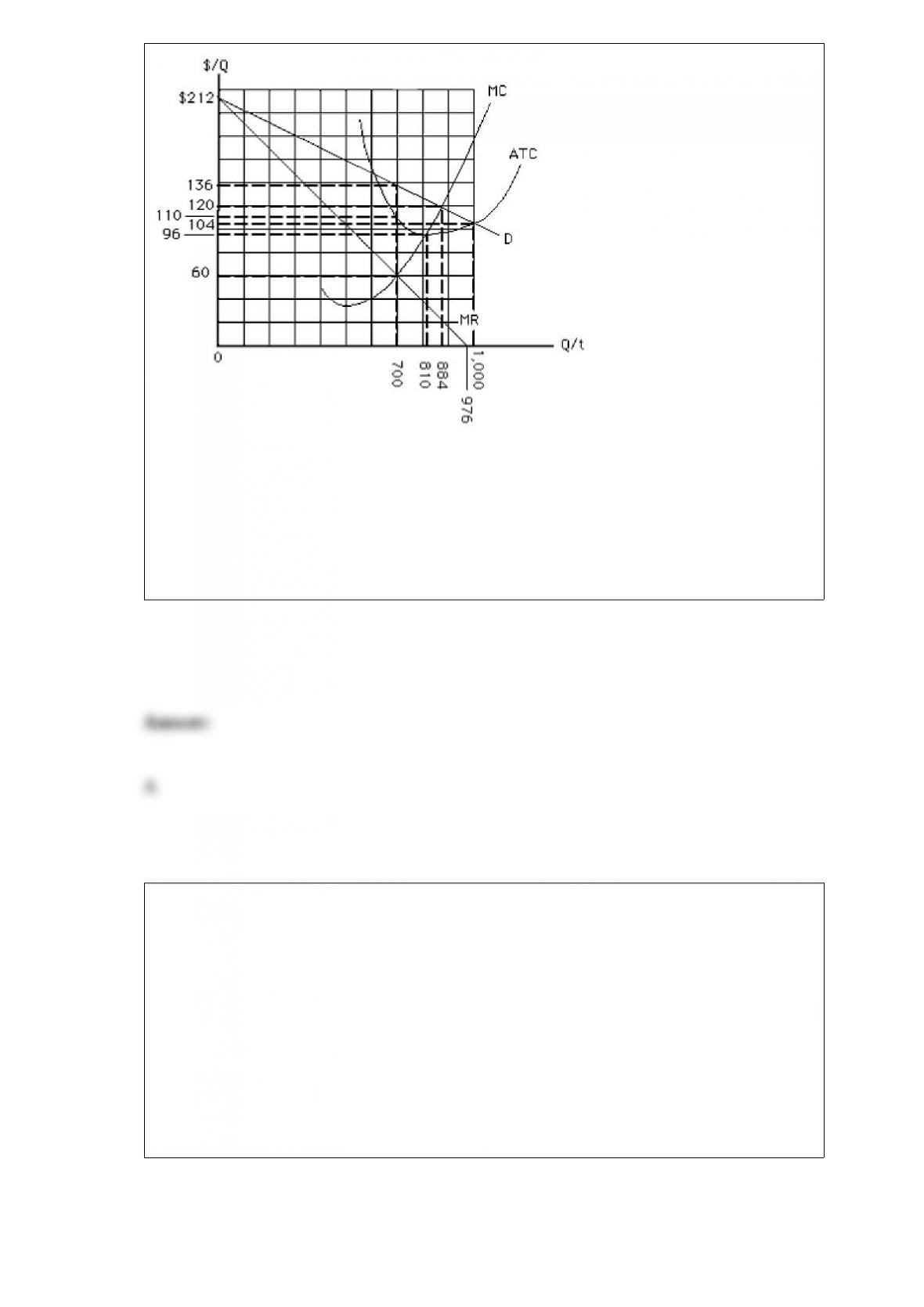
In Exhibit 9-11, which level of output maximizes profit for this nondiscriminating
monopolist?
a. 700 units
b. 810 units
c. 884 units
d. 976 units
e. 1,000 units
If a firm hires a resource in a perfectly competitive resource market,
a. it must also be a price taker in the product market
b. it must also be a monopolist in the product market
c. it faces a horizontal marginal resource cost curve
d. it faces an upward-sloping marginal resource cost curve
e. it faces a downward-sloping marginal resource cost curve

Which of the following is the most likely result when there are economies of scope?
a. outsourcing
b. vertical integration
c. natural monopoly
d. multi-product firms
e. adverse selection
The Bretton Woods agreement did all of the following except
a. set up the International Monetary Fund
b. name the U.S. dollar as the key reserve currency
c. set the price of gold at $35 per ounce
d. fix exchange rates
e. return the international monetary system to the gold standard

Mr. Thomson has a before-tax income of $20,000 and paid taxes of $2,000. Ms. Lynch
had a before-tax income of $10,000 and paid taxes of $1,500. Based on this
information, which of the following is correct?
a. The tax system is progressive.
b. The tax system is proportional.
c. The tax system is regressive.
d. The tax system is based on the benefits received.
e. There is insufficient information to answer the question.
The empirical evidence on the minimum wage
a. is mixed; some studies show employment increasing, but most do not
b. shows that employment always falls when the minimum wage is increased
c. shows that employment always rises when the minimum wage is reduced
d. suggests that most labor markets are not competitive markets
e. indicates that wages are highest in industries that are subject to the minimum wage
The band Coldplay’s funding of 10,000 mango trees in India to help sop up emissions
related to the release of their CD, A Rush of Blood to the Head, is an example of
fixed-production technology.
a. True
b. False
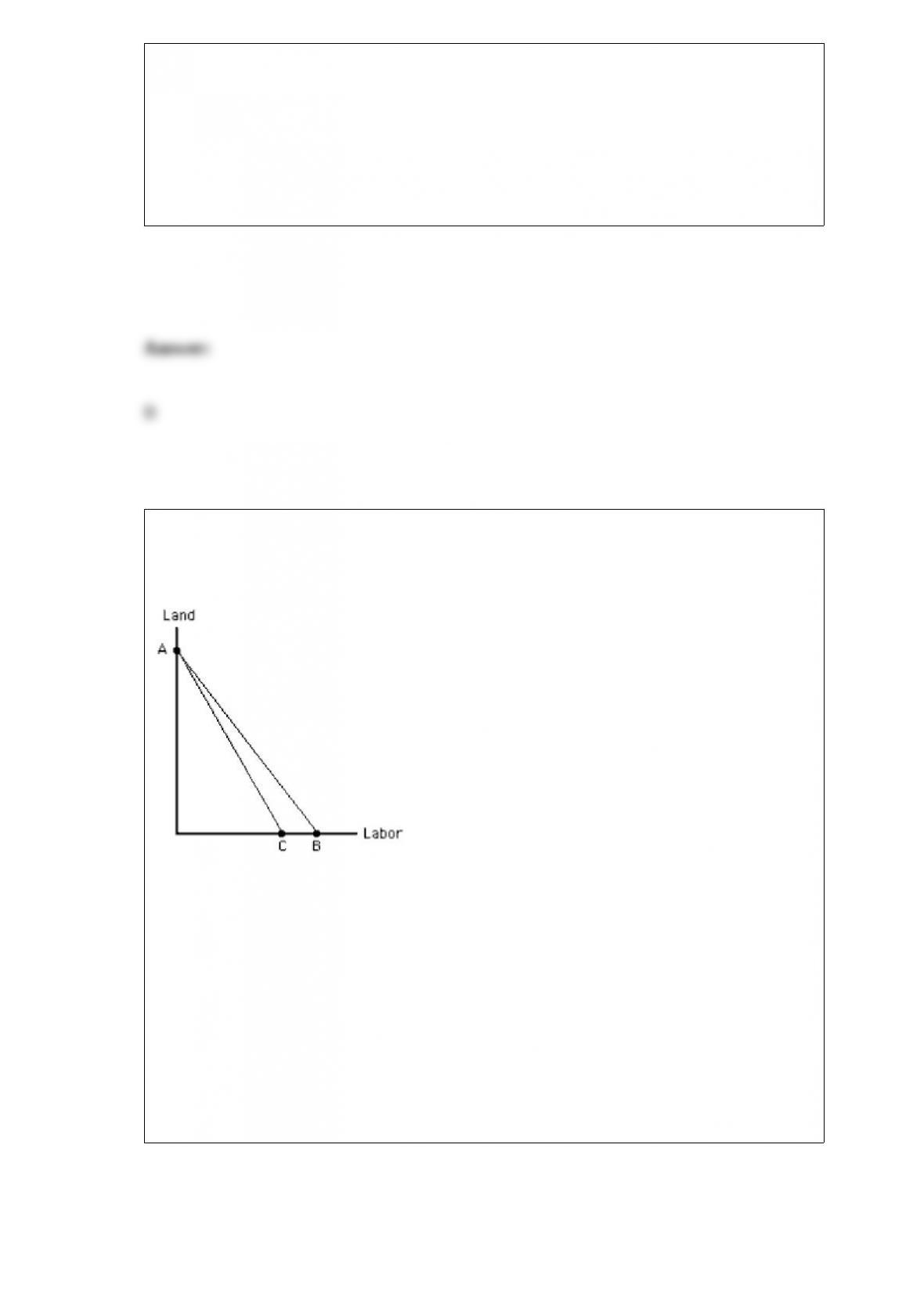
Exhibit 7-19
In Exhibit 7-19, the rotation from AC to AB reflects a(n)
a. increase in the price of labor
b. increase in the price of land
c. decrease in the price of labor
d. decrease in the price of land
e. increase in the amount the producer can spend

Competing-interest legislation is legislation that
a. imposes benefits on only a few individuals but imposes costs on many people
b. imposes both benefits and costs on relatively few individuals
c. imposes benefits on many individuals but imposes the costs on relatively few people
d. imposes both benefits and costs on many individuals
e. imposes costs only on those individuals who are rationally ignorant
Some of the nation’s best minds are occupied with devising schemes to avoid taxes and
to transfer income to favored groups at the expense of market efficiency. These
activities are called
a. rational ignorance
b. choice of the cyclical majority
c. rent seeking
d. competing interest legislation
e. a zero-sum game

If we assume perfect information, perfect mobility of resources, and no transactions
costs, then there is little need for firms.
a. True
b. False
Someone who commits the fallacy of composition is likely to assume that
a. the simplest model is the best predictor
b. event B, which follows event A, was caused by event A
c. event B, which follows event A, was not necessarily caused by event A
d. what is true for the individual is also true for the group
e. what is true for the individual is not necessarily true for the group
Exhibit 9-18
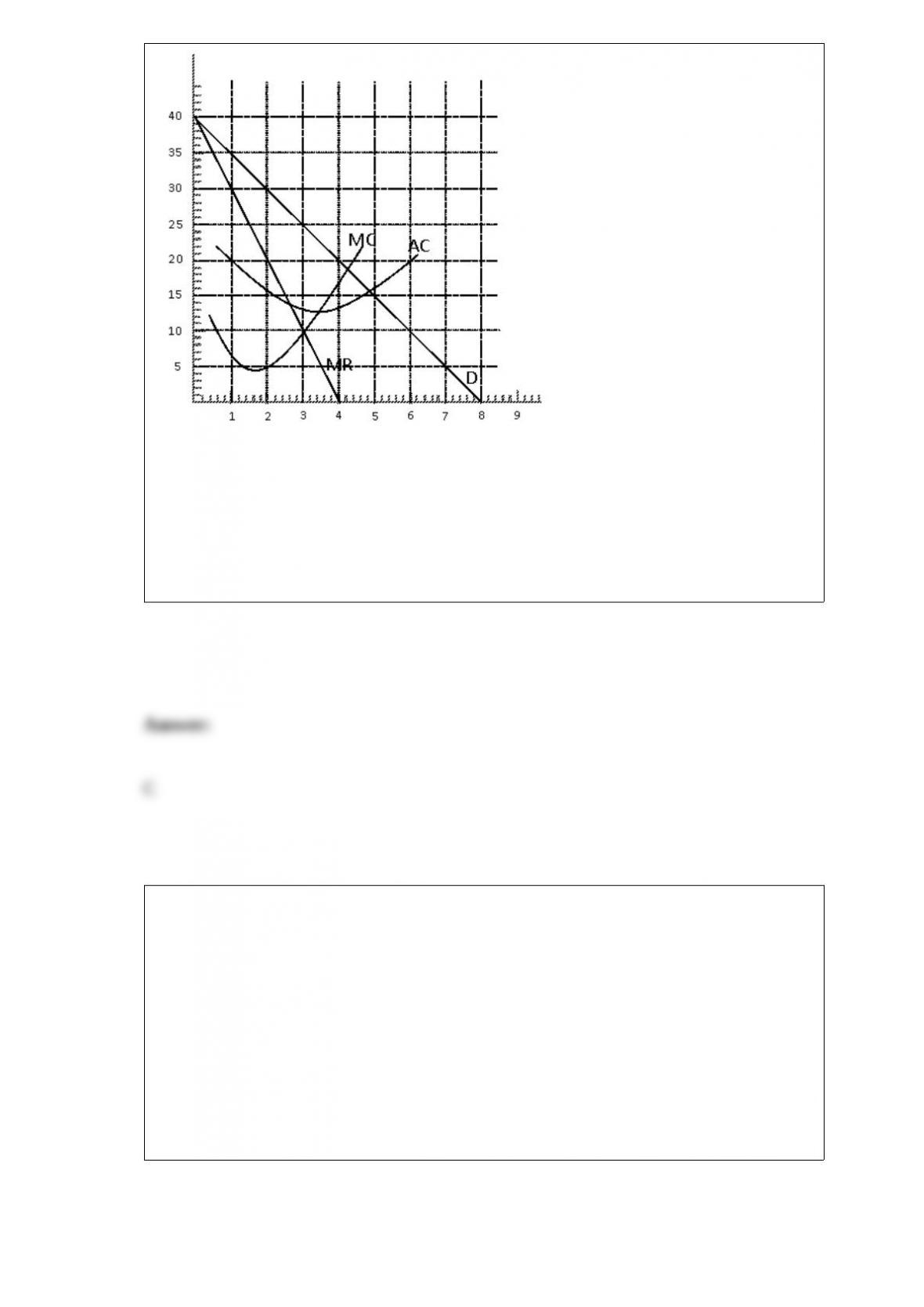
The firm in Exhibit 9-18, the monopolist who charges the same price to all customers,
will produce how many units of output?
a. 1 unit
b. 2 units
c. 3 units
d. 4 units
e. 5 units
For which of the following goods is the marginal benefit of search likely to be greatest?
a. a haircut
b. a maid
c. a jar of peanut butter
d. a heart bypass
e. a new lamp

The success of a strike depends on the union’s ability to
a. do all of the following
b. reduce the supply of labor to the firm
c. reduce the supply of scabs to the firm
d. remain unified
e. endure the strike
Rational ignorance occurs when
a. voters find the cost of understanding a specific issue is greater than the expected
benefit
b. legislation generates large benefits for a few people but imposes costs on many
people
c. the preferences of the median voter dominates public choices
d. individuals or firms attempt to obtain favorable treatment from government officials
e. people make public decisions based on emotion rather than a rational analysis

Negative marginal revenue means that
a. the firm is maximizing its economic profit
b. the firm is maximizing its total revenue
c. total revenue is increasing at an increasing rate as output increases
d. total revenue is increasing at a decreasing rate as output increases
e. total revenue is decreasing as output increases
Import restrictions usually benefit domestic producers at the expense of domestic
consumers.
a. True
b. False