One advantage that a command-and-control policy has over a pollution tax is that:
A) we will be able to accurately predict the amount of pollution that will occur.
B) it generates a lower level of pollution at a lower cost.
C) it encourages firms to use the most efficient abatement methods possible.
D) it will lower the prices of products produced by polluting firms.
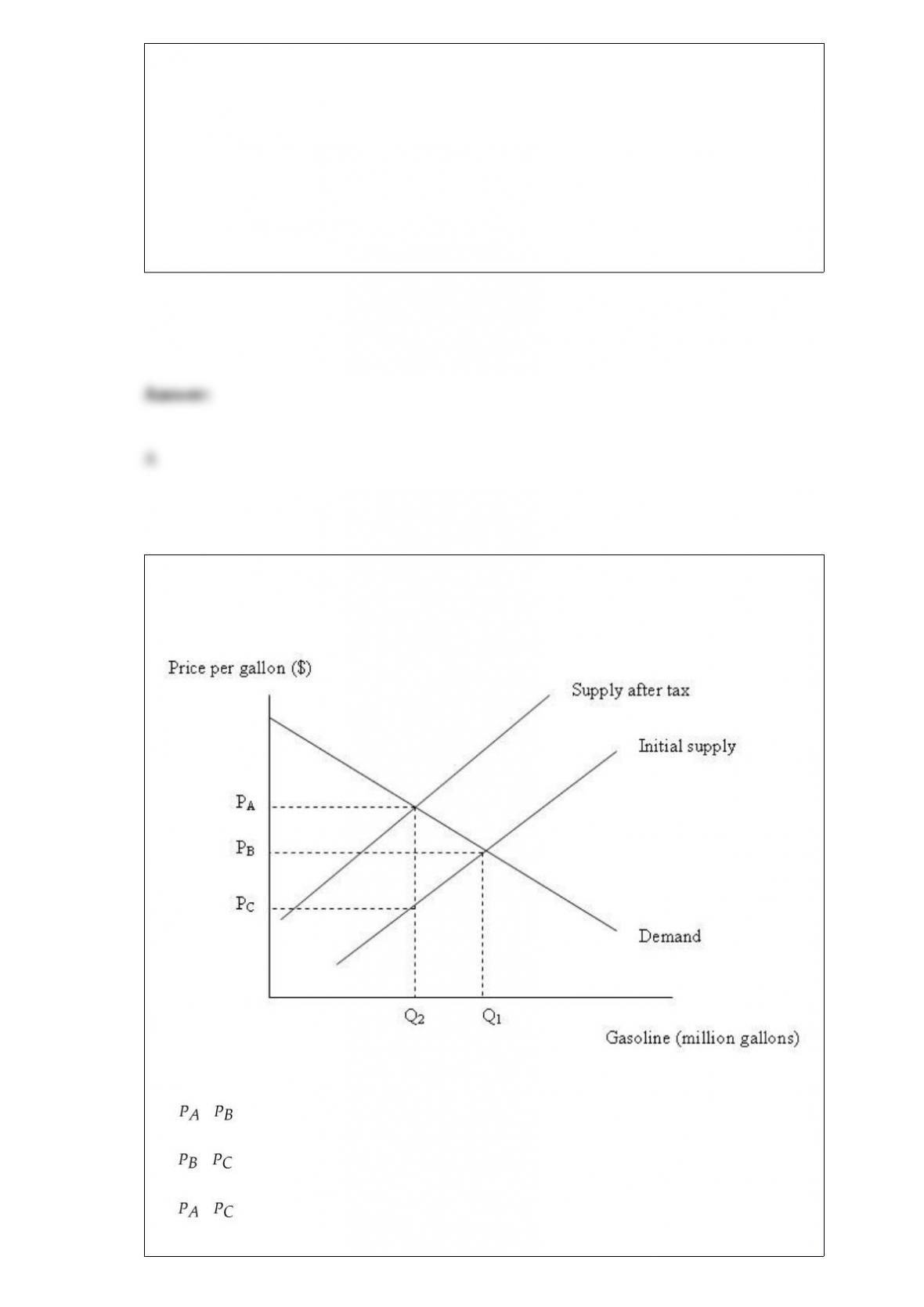
Figure 16.5 depicts the market effects of a gasoline tax. What is the amount of gasoline
tax per gallon?
Figure 16.5
A) –
B) –
C) –
D) There is not sufficient information.
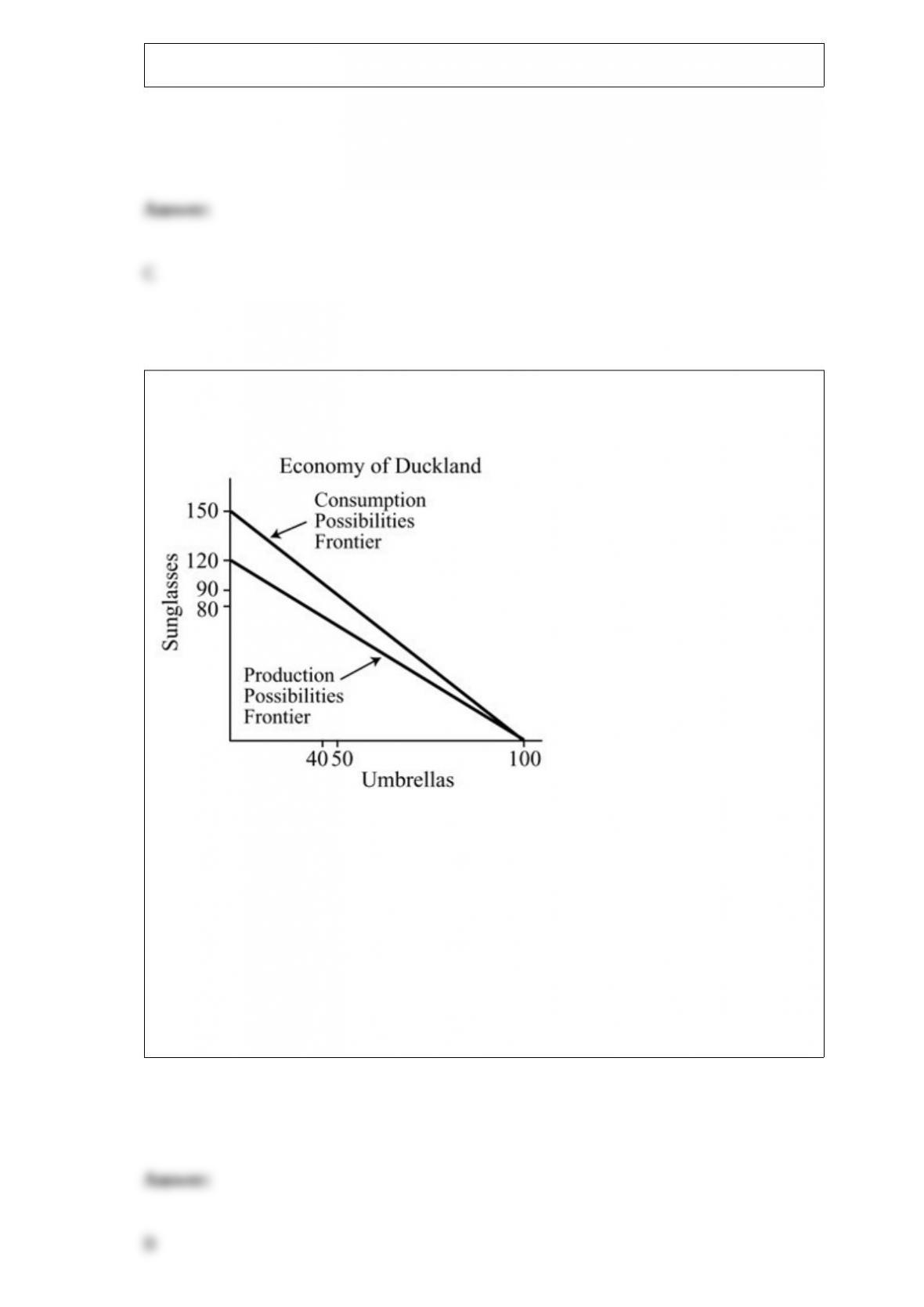
Figure 18.1
Refer to Figure 18.1. Duckland has a comparative advantage in the production of:
A) sunglasses.
B) umbrellas.
C) both umbrellas and sunglasses.
D) neither umbrellas nor sunglasses.
If individual firms face a horizontal demand curve at a given market price:
A) price is equal to average total cost.
B) price is equal to marginal cost.
C) price is equal to marginal revenue.
D) price is equal to average variable cost.
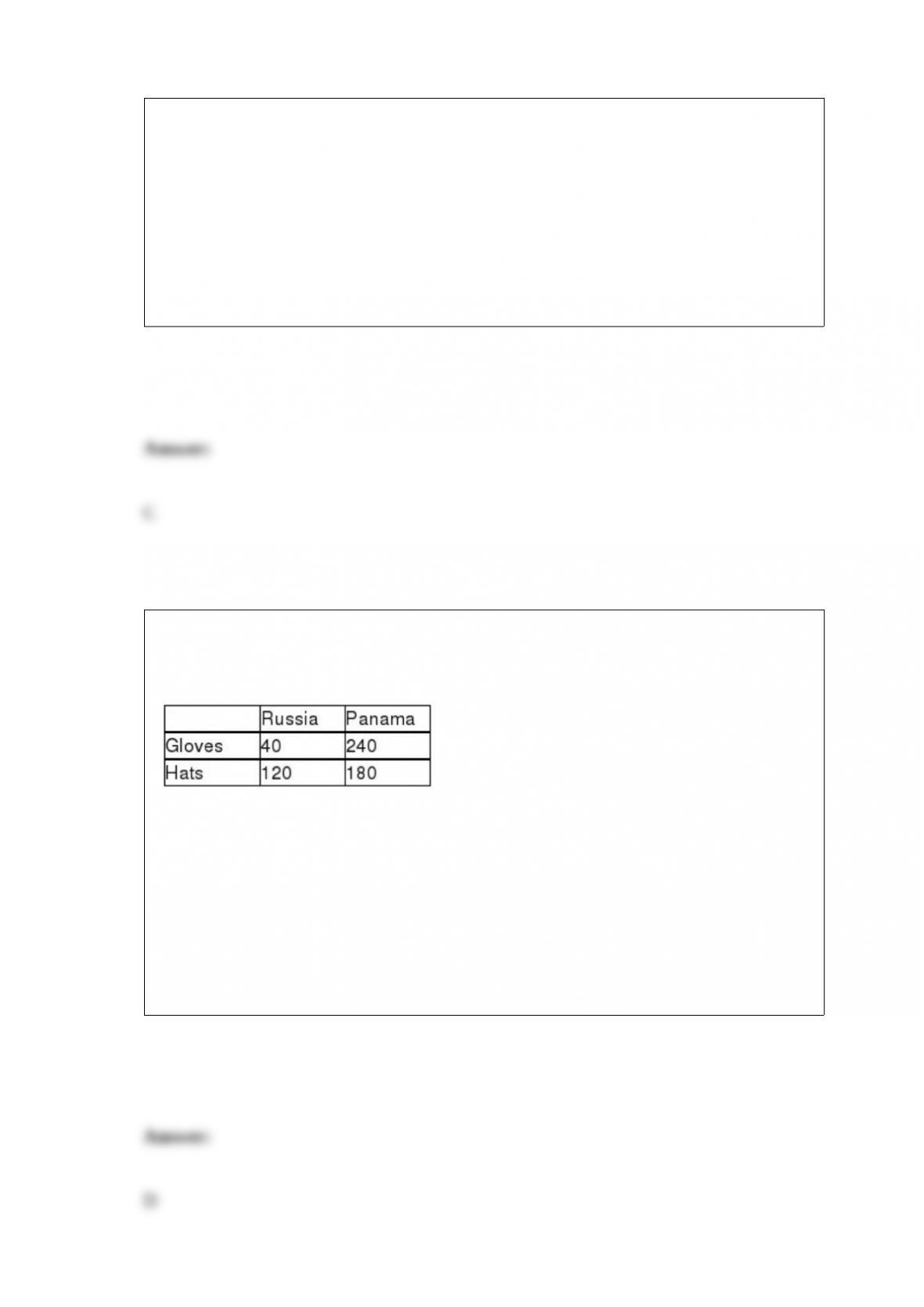
Refer to Table 18.1. Mutually beneficial terms of trade between Russia and Panama are:
Daily Output of Russia and Panama
Table 18.1
A) 1 hat for 2 gloves.
B) 1 glove for 6 hats.
C) 5 gloves for 3 hats.
D) 1 hat for 1 glove.

Assume firms in an increasing-cost industry are currently making profits. Which of the
following statements describes what will happen in the long run?
A) More firms will enter this industry, causing the industry supply schedule to shift to
the right and the firms’ LRAC to shift down.
B) More firms will enter this industry, causing the industry supply schedule to shift to
the right and the firms’ LRAC curve to shift up.
C) Firms will exit this industry, causing the industry supply schedule to shift to the right
and the firms’ LRAC curve to shift down.
D) Firms will exit this industry, causing the industry supply schedule to shift to the left
and the firms’ LRAC curve to shift down.
Recall the Application. If you spend the money to become a Dunkin’ Donuts franchise
and it is in a monopolistically competitive market, you would expect in the long run to
earn zero economic profits because:
A) barriers to entering the donut business are small.
B) you must compete against other donut shops, bakeries, coffee shops and grocery
stores.
C) franchise fees make sellers of brand names have higher costs than other sellers.
D) all of the above
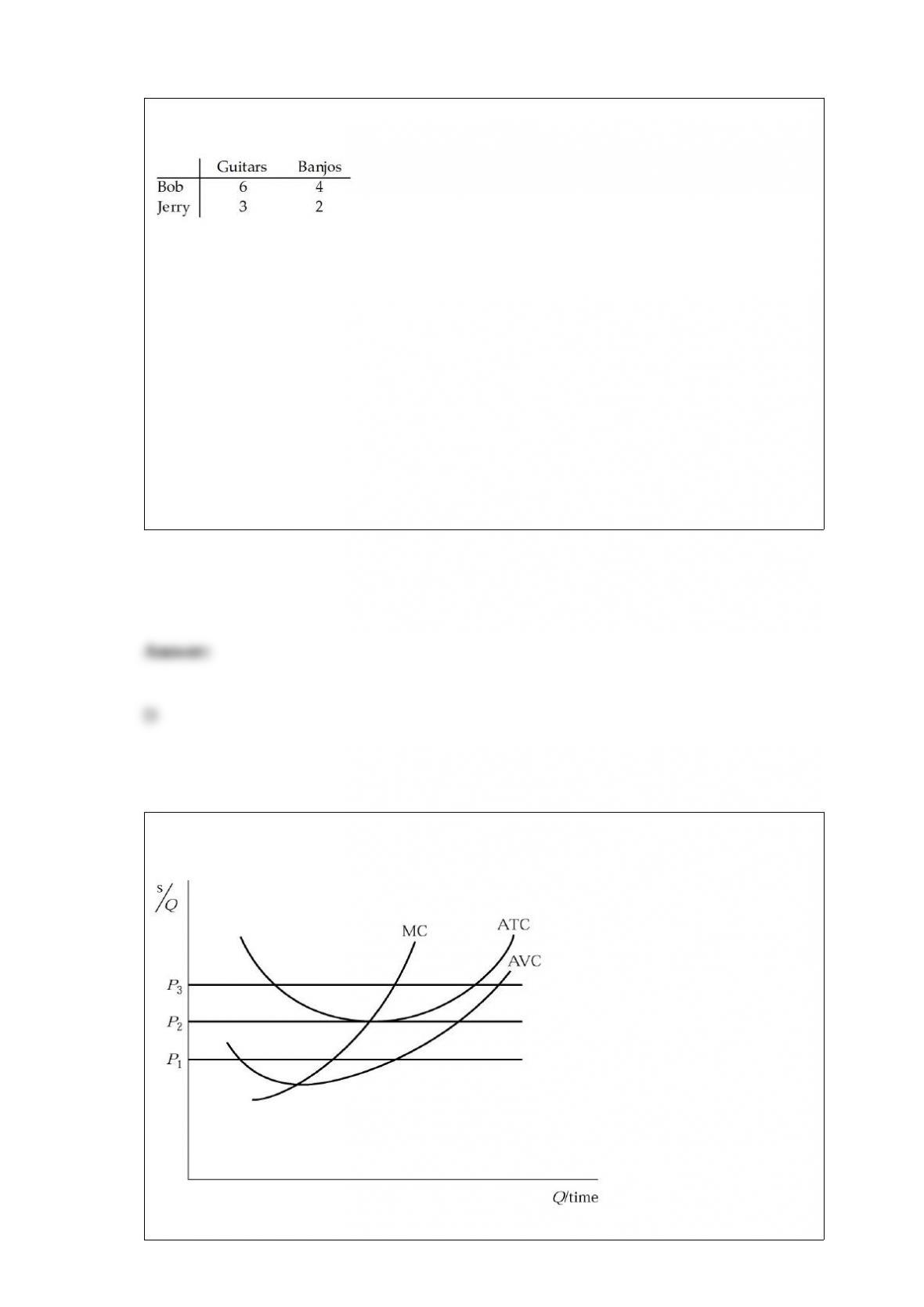
Consider two individuals, Bob and Jerry, who produce guitars and banjos. Bob and
Jerry’s weekly productivity are shown in Table 3.3. Which of the following is true?
Table 3.3
A) Bob has an absolute advantage in producing both goods, and a comparative
advantage in producing guitars.
B) Bob has an absolute advantage in producing both goods, and a comparative
advantage in producing banjos.
C) Bob has an absolute and a comparative advantage in producing both goods.
D) Bob has an absolute advantage in producing both goods, but no one has a
comparative advantage in producing either good.
In figure 9.6 if price is P3 then the industry will:
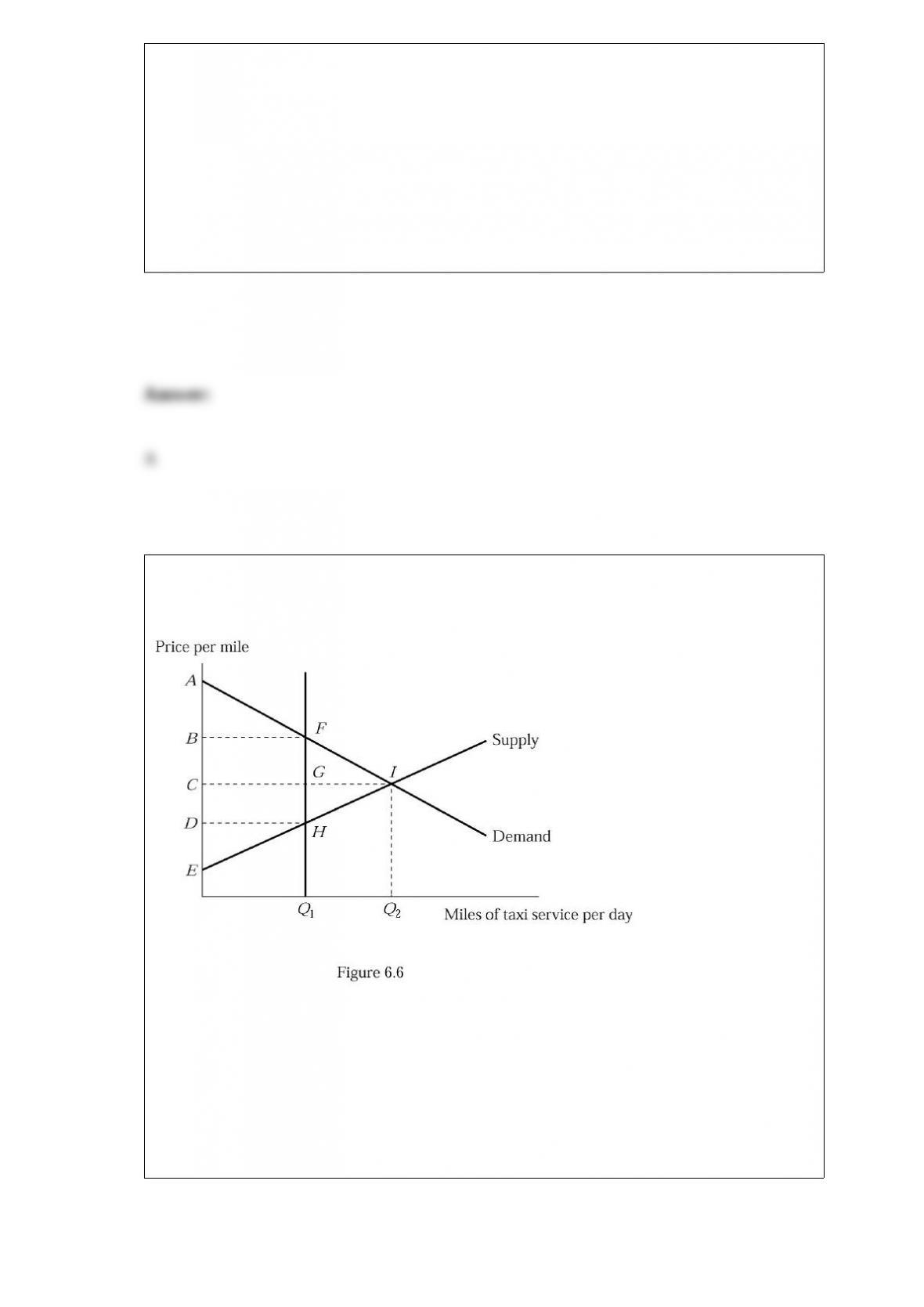
Figure 9.6
A) expand.
B) contract.
C) stay the same size.
D) cease to exist.
Refer to Figure 6.6, which shows a market for taxi medallions. Without any limit to the
number of medallions (taxi licenses), the producer surplus is represented by:
A) area ABF.
B) area ACI.
C) area DEH.
D) area CEI.

An input is indivisible if:
A) it cannot be increased to produce a larger quantity of output.
B) it cannot be used as a substitute for other inputs in the production process.
C) it is sufficiently inexpensive to purchase that firms will want to buy as much as they
can.
D) it cannot be scaled down to produce a smaller quantity of output.
One way that insurance companies can reduce the moral hazard problem is to:
A) make insurance customers pay a deductible before the company pays on a claim.
B) engage in genetic testing to determine who is more likely to be high risk.
C) eliminate copayments on insurance claims.
D) insure only customers with good morals.

The degree to which a gasoline tax is effective at reducing gasoline purchased would
depend on the:
A) price elasticity of demand for gasoline.
B) elasticity of supply of gasoline.
C) use of the tax revenues by the government.
D) the pollution control equipment installed.
Suppose nation A produces only two goods, apples and oranges. If nation A produces
only apples, it can make 12 apples per day. If nation A produces only oranges, it can
make 36 oranges per day. If the country has a constant production trade-off between
apples and oranges, then the opportunity cost of one orange in nation A is:
A) 0.33 apples.
B) 3 apples.
C) 36 apples.
D) 12 apples.
First Choice Cracker company needs to increase the price of crackers by 5%, based on a
substantial increase in input costs such as flour. The price elasticity of demand for
crackers is 0.4. The company can expect the consumption of cereal to:

A) decrease by 1.5%.
B) increase by 1.5%.
C) decrease by 2.0%.
D) increase by 2.0%.
One reason that college graduates earn higher wages than non-graduates is because
college graduates:
A) acquire additional skills to allow them to work in more industries than
non-graduates.
B) always work in more dangerous jobs than non-graduates.
C) are always more intelligent than non-graduates.
D) are less equipped to deal with technological change, as their skills are
technology-specific.
When marginal costs are increasing:
A) a firm is experiencing diminishing returns.
B) average cost is always increasing.
C) average cost is always decreasing.
D) marginal costs are always greater than average costs.
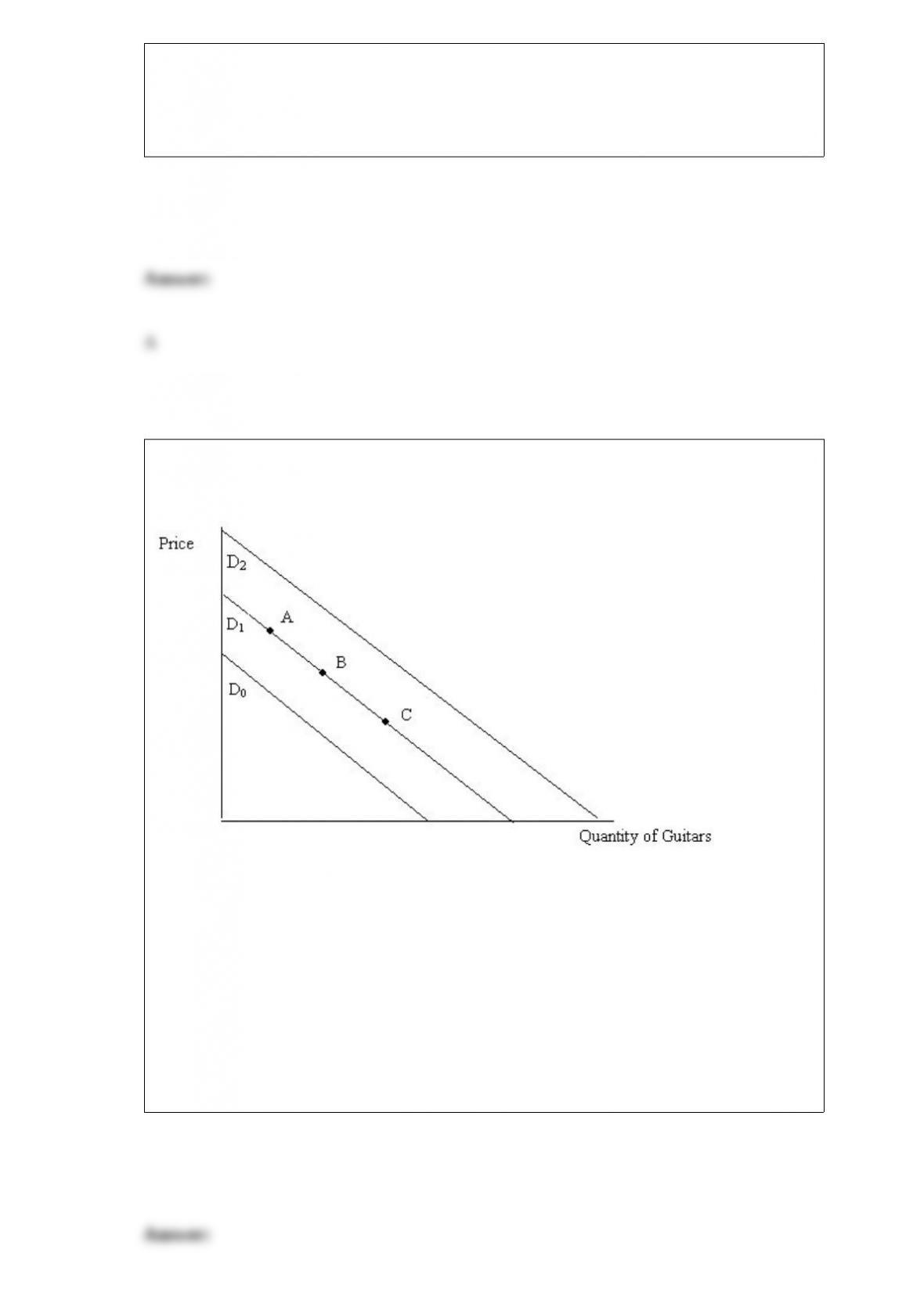
Figure 4.4 illustrates the demand for guitars. A decrease in price of guitars would bring
about a movement from:
Figure 4.4
A) point B to point C.
B) point B to point A.
C) D1 to D0.
D) D1 to D2.
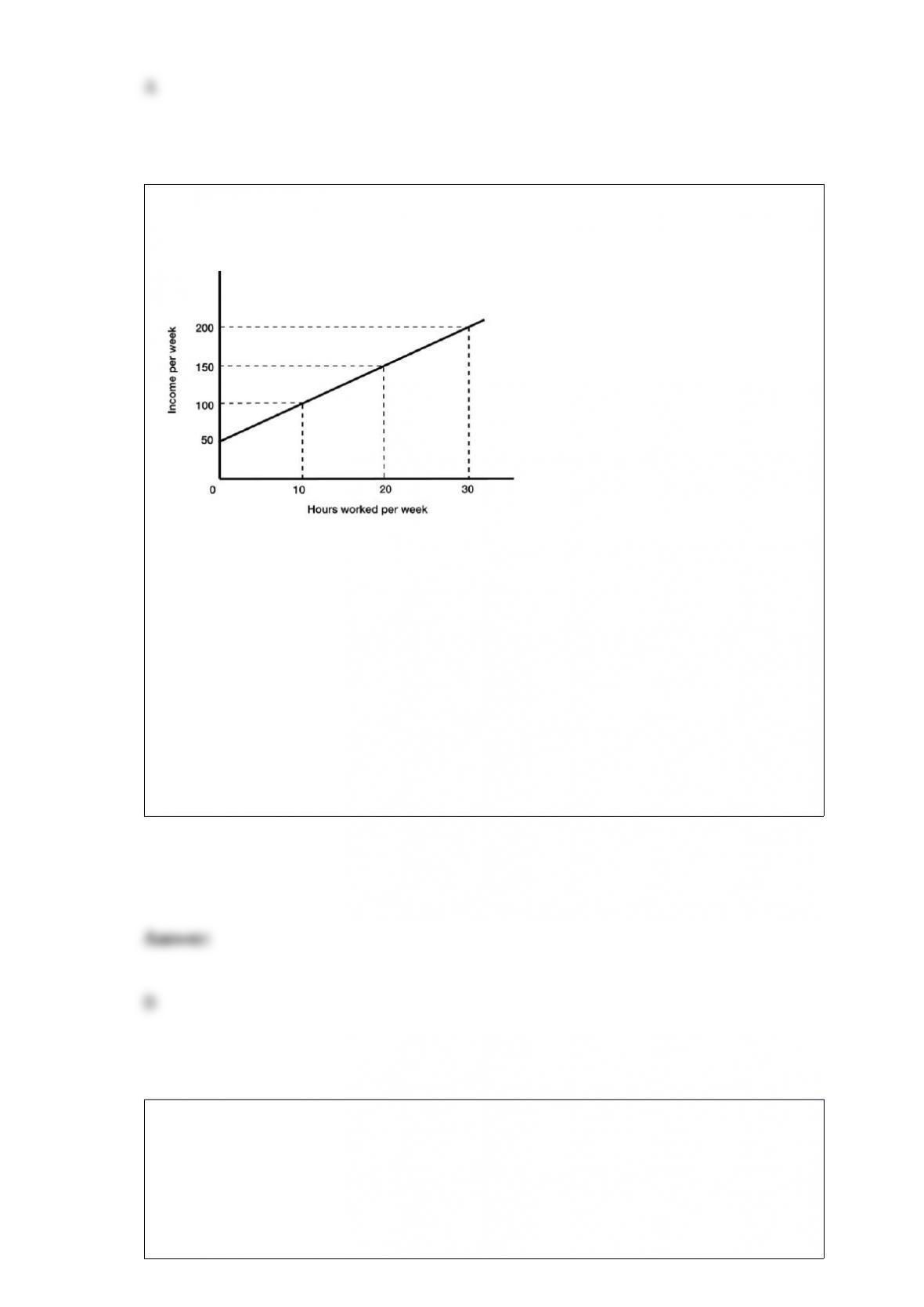
Figure 1A.1
The slope of the line between the points where hours worked per week are 20 and hours
worked per week are 30 is:
A) 0.2.
B) 5.
C) 10.
D) 50.
The Herfindahl-Hirschman Index measures:
A) the degree of concentration in a market.
B) the percentage of market share held by the four largest firms in a market.

C) the percentage of market share held by the largest firm in a market.
D) the market share held by the largest firm in a market divided by the market share
held by all other firms in the market.
Which of the following statements about featherbedding is correct?
A) It could increase production costs, resulting in higher prices for products.
B) The quantity of labor demanded by firms could actually decrease.
C) It could lead to a lower wage and smaller employment in the long run.
D) all of the above
Under a policy of average-cost pricing, a monopolist must charge the price at which its
________ cost curve intersects its ________ curve.
A) marginal; demand
B) average variable; demand
C) marginal; marginal revenue
D) average; demand

Assume that the demand for insulin is relatively more inelastic than the demand for
aspirin. All else equal, a tax on aspirin:
A) will lead to a larger deadweight loss than a tax on insulin.
B) will have the same deadweight loss as a tax on insulin.
C) will lead to a smaller change in quantity demanded than a tax on insulin.
D) both A and C
A perfectly inelastic demand curve is shown as a:
A) horizontal line.
B) vertical line.
C) positively sloped line.
D) negatively sloped line.

Kim’s demand curve for sodas:
A) assumes that the only variables that change are the price of sodas and the quantity of
sodas demanded by Kim.
B) shows the quantity of sodas Kim consumes as her preference for sodas change.
C) makes no assumptions about Kim’s preference for sodas.
D) assumes that the only variable that changes is Kim’s income.
Additional Application
For the first seven months of 2006 Stockholm, Sweden has been testing a possible
solution to the city’s traffic congestion. It is called “congestion pricing” and their system
includes ‘small transponder boxes, laser detectors and a network of cameras to track the
path of every car” They want to reduce problems associated with smog and gridlock
and, in turn, improve the quality of life.
The experiment recorded each car’s registration, the date and time of day, as it passed
through specific electronic tolls and calculated a fee that was charged to the car’s owner.
During the rush hour the fee could be as high as $2.75. But in the evenings the toll
would be zero. The expectation is that people will respond to these varying tolls, change
their driving habits to be more efficient, and take more public transportation.
The next step is to put a referendum to the voters to decide whether this system will
become a permanent feature in the life of Stockholm drivers.
Leila Abboud and Jenny Clevstrom, “Stockholm’s Syndrome: Hostages to Traffic,
Swedes Will Vote on High-Tech Plan To Untangle Snarls With Tolls,” Wall Street
Journal, August 29, 2006, http://infoweb.newsbank.com, accessed 11/22/06.
By imposing tolls on the drivers that drive during the busiest times, the government is
attempting to:
A) internalize an externality.
B) institute a progressive tax.

C) externalize an internality.
D) make Stockholm a famous pedestrian city.
Monopolistically competitive markets are different from perfectly competitive markets
because in monopolistically competitive markets firms:
A) have some control over price, while in perfectly competitive markets firms have no
control over price.
B) face substantial barriers to entry, while in perfectly competitive markets firms face
no significant barriers to entry.
C) have no control over price, while in perfectly competitive markets firms have some
control over price.
D) sell a standardized product, while in perfectly competitive markets firms sell a
differentiated product.
Which of the following is a way to measure income?
A) available income
B) market income
C) taxable income

D) all of the above
The demand for a product is:
A) more elastic if there are few substitutes for product.
B) more elastic if there are many substitutes for product.
C) more elastic if the product represents a small portion of the individual’s budget.
D) B and C are correct.
The Sherman Act:
A) was passed in 1890.
B) declared monopoly and trade restraints legal.
C) contained clear language.
D) all of the above