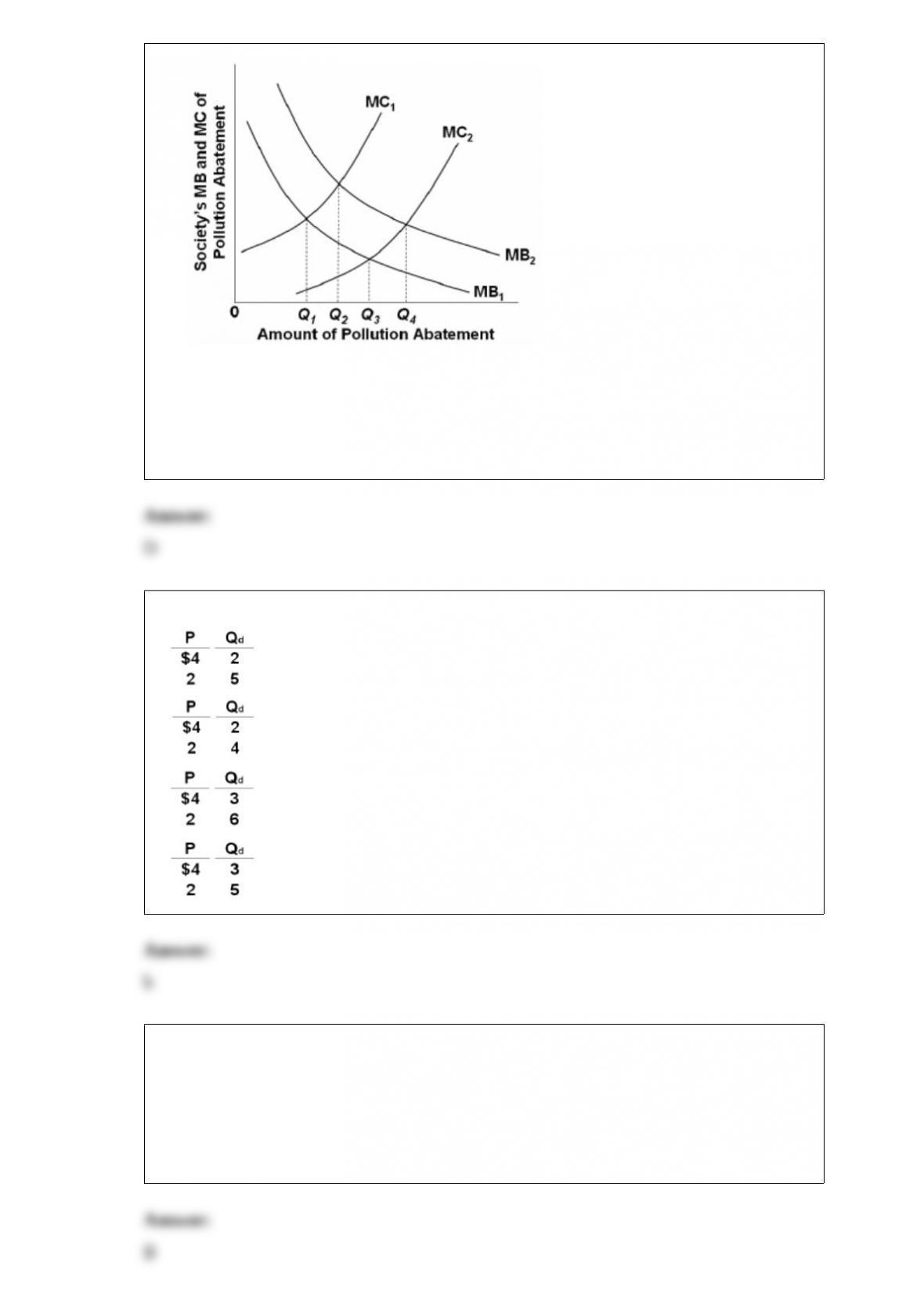
1)
The MC curves in the above diagram slope upward because of the law of:
A.demand.
B.conservation of matter and energy.
C.diminishing marginal utility.
D.diminishing returns.
2) refer to the above data. which of the following represents the demand schedule for x?
a.
b.
c.
d.
3) At the present time the largest percentage of the national incomes of the low-income
DVCs is used for:
A.imports of the finished products of foreign industries.
B.food.
C.infrastructure.
D.industrial development.
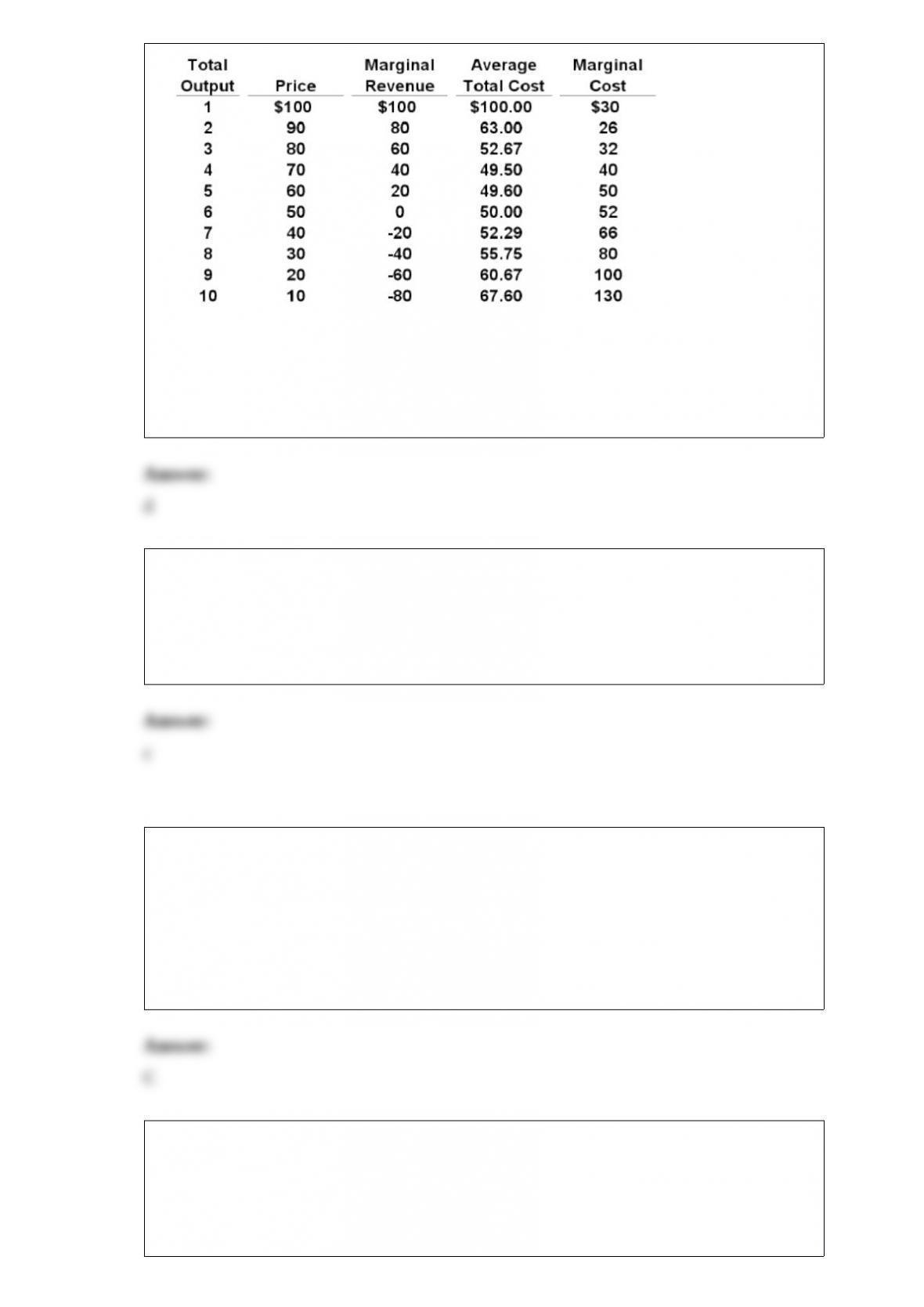
4)
refer to the above data. at its profit-maximizing output, this firm’s total revenue will be:
a.$300.
b.$198.
c.$180.
d.$280.
5) the demand curve shows the relationship between:
a.money income and quantity demanded.
b.price and production costs.
c.price and quantity demanded.
d.consumer tastes and the quantity demanded.
6) The aggregate supply curve:
A.is explained by the interest rate, real-balances, and foreign purchases effects.
B.gets steeper as the economy moves from the top of the curve to the bottom of the
curve.
C.shows the various amounts of real output that businesses will produce at each price
level.
D.is downsloping because real purchasing power increases as the price level falls.
7) (Consider This) The story about economist Irving Fisher’s conversation with his
masseuse illustrates that:
A.other things equal, interest rates are higher on smaller loans than on larger loans.
B.interest is a payment required for someone to give up the present use of their money.
C.other things equal, longer term loans have lower interest rates than shorter-term
loans.
D.real interest rates differ from nominal interest rates.
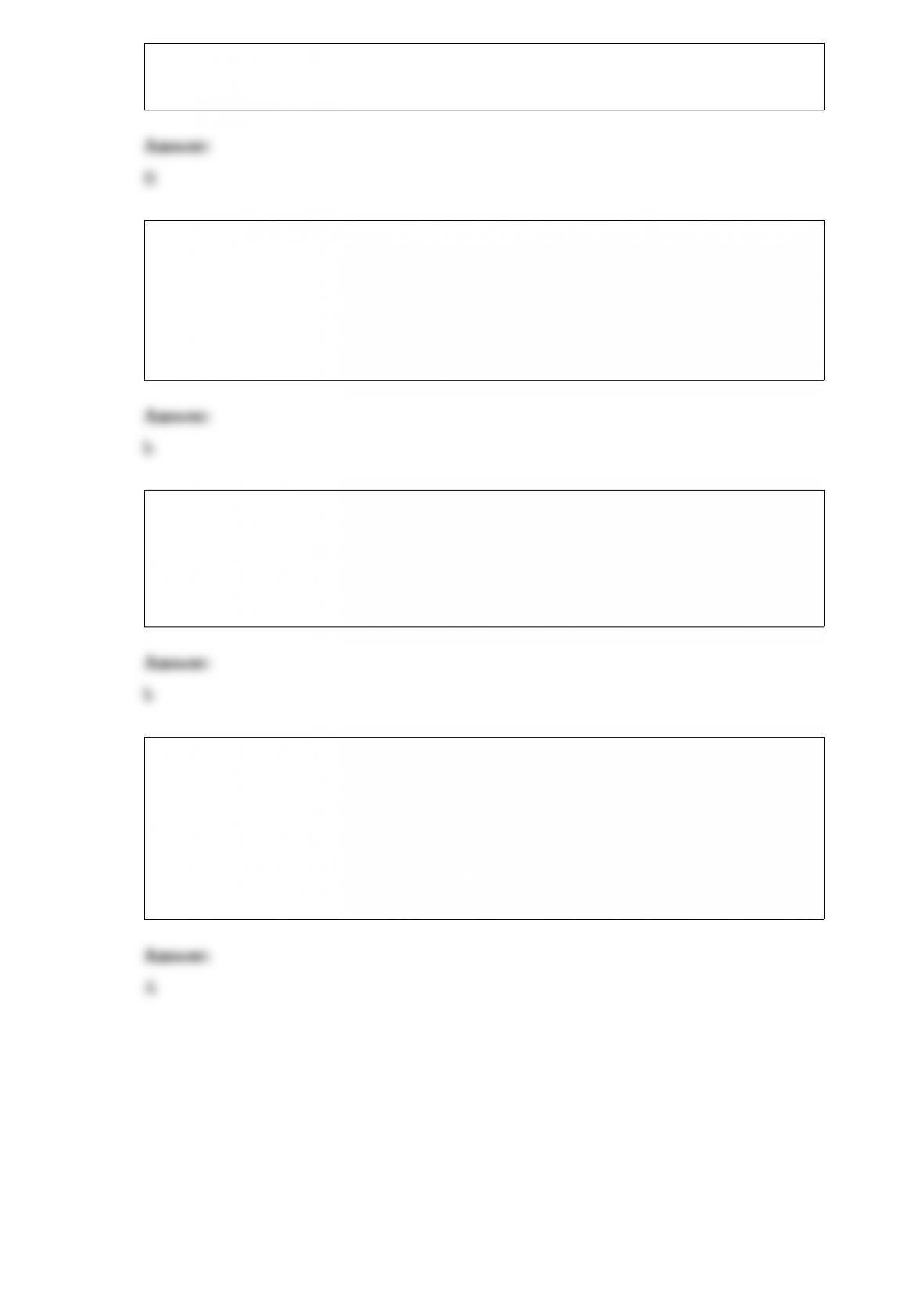
8) the economy characterized by the above data is:
a.experiencing inflation because disposable income exceeds personal income.
b.experiencing declining production capacity because net investment is negative.
c.in a depression because personal income exceeds disposable income.
d.experiencing expanding production capacity because net private domestic investment
is positive.
9) the price elasticity of demand for health care is:
a.perfectly inelastic.
b.relatively inelastic.
c.relatively elastic.
d.perfectly elastic.
10) (Consider This) Brinley puts on an art show in a public space, asking for donations
based on how much people enjoy his work. Economists would expect that:
A.people will understate their enjoyment of the art in order to “free ride.”
B.people will overstate their enjoyment of the art, attempting to substitute praise for
money.
C.people will accurately state their level of enjoyment and pay accordingly.
D.Brinley will reap significant economic profits from the event.
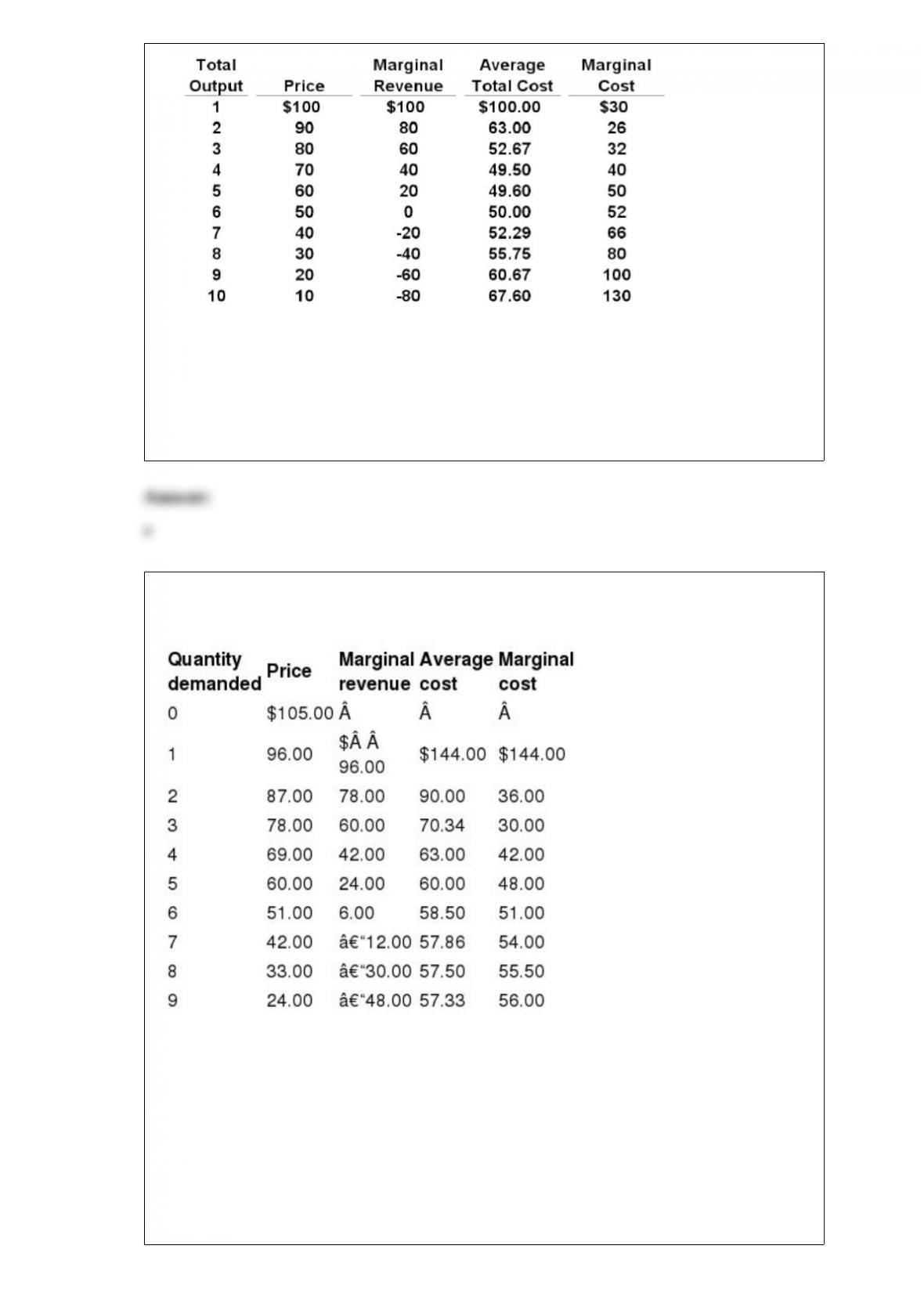
11)
refer to the above data for a nondiscriminating monopolist. at its profit-maximizing
output, this firm’s total profit will be:
a.$82.
b.zero.
c.$54.
d.$27.
12) In the table below are cost and demand data for a pure monopolist.
(a)What is the level of price, output, and amount of profit for an unregulated
monopolist?
(b)Using the data in the table, what are the price, output, and profit for a regulated
monopolist that sets price equal to marginal cost compared with an unregulated
monopolist?
(c)Using the data in the table, what are the price, output, and profit for a regulated
monopolist that charges a fair-return price compared with an unregulated monopolist?
(d)Analyze the effect of regulation on the allocation of resources. Which situation is
most efficient? Which situation is most likely to be chosen by government? Why?
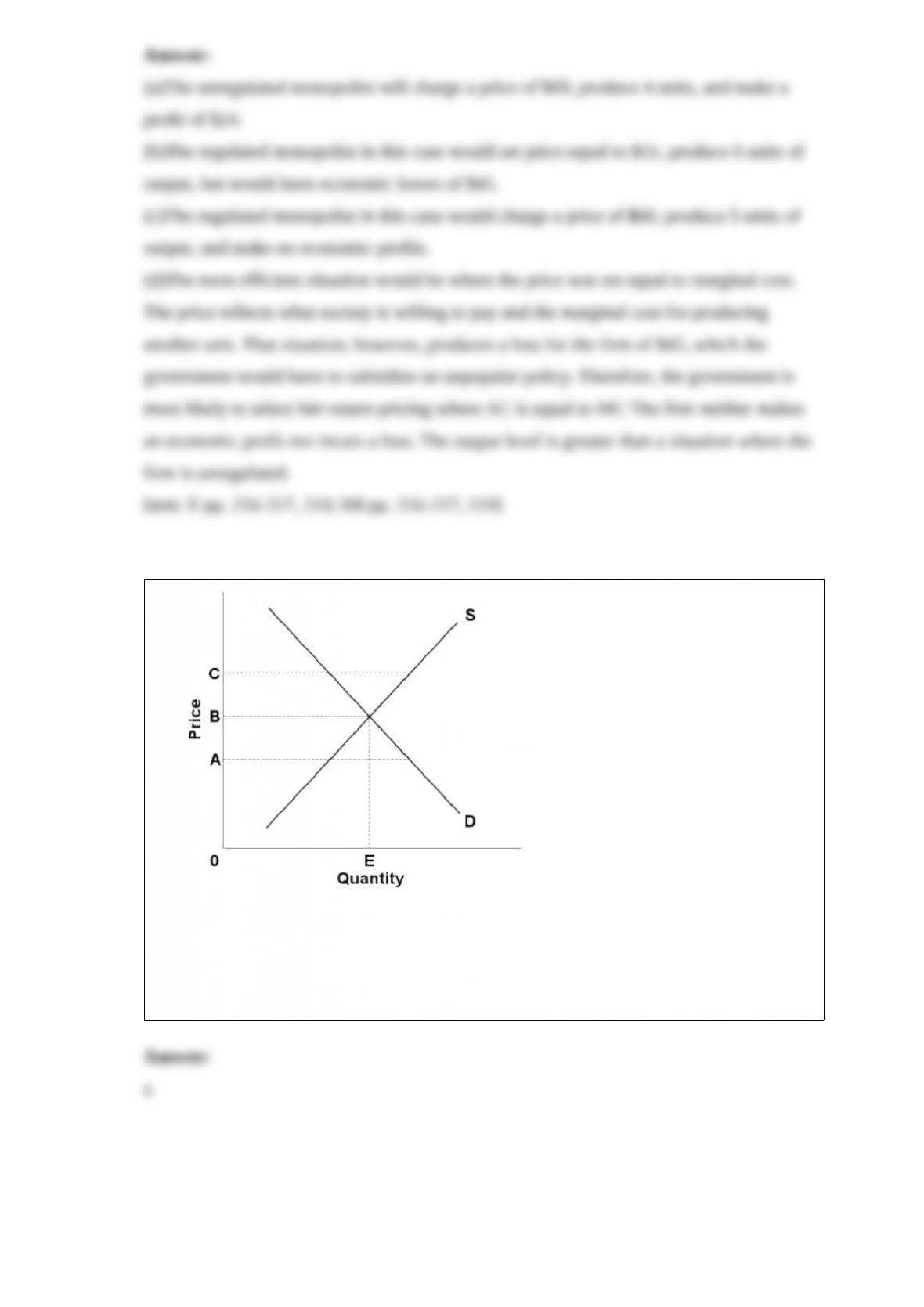
13)
refer to the above diagram. a government-set price ceiling is best illustrated by:
a.price a.
b.quantity e.
c.price c.
d.price b.