
If the government breaks up a constant-cost, nondiscriminating monopoly into a
perfectly competitive industry, what would we expect with regard to output and price?
a. Output and price will decrease.
b. Output will increase and price will decrease.
c. Output and price will increase.
d. Output will decrease and price will increase.
e. No change.
As the real wage increases, the opportunity cost of working outside the home increases.
a. True
b. False
The opportunity cost of producing one car in Germany is 2,000 bushels of wheat, and
the opportunity cost of producing one car in Canada is 1,200 bushels of wheat. The two
countries can realize mutual gains from trade if they agree on terms of trade that are
a. greater than 2,000 bushels of wheat per car
b. less than 1,200 bushels of wheat per car
c. greater than 1,200 bushels of wheat per car and less than 2,000 bushels of wheat per
car, and Germany produces wheat
d. greater than 1,200 bushels of wheat per car and less than 2,000 bushels of wheat per

car, and Germany produces cars
e. greater than 1,200 bushels of wheat per car and less than 2,000 bushels of wheat per
car, and each country produces both goods
Because of easy entry, monopolistically competitive firms will
a. produce at the lowest average total cost
b. charge a price equal to marginal cost
c. earn no economic profit in the long run
d. take advantage of all economies of scale
e. earn no economic profit in the short run
Exhibit 13-5
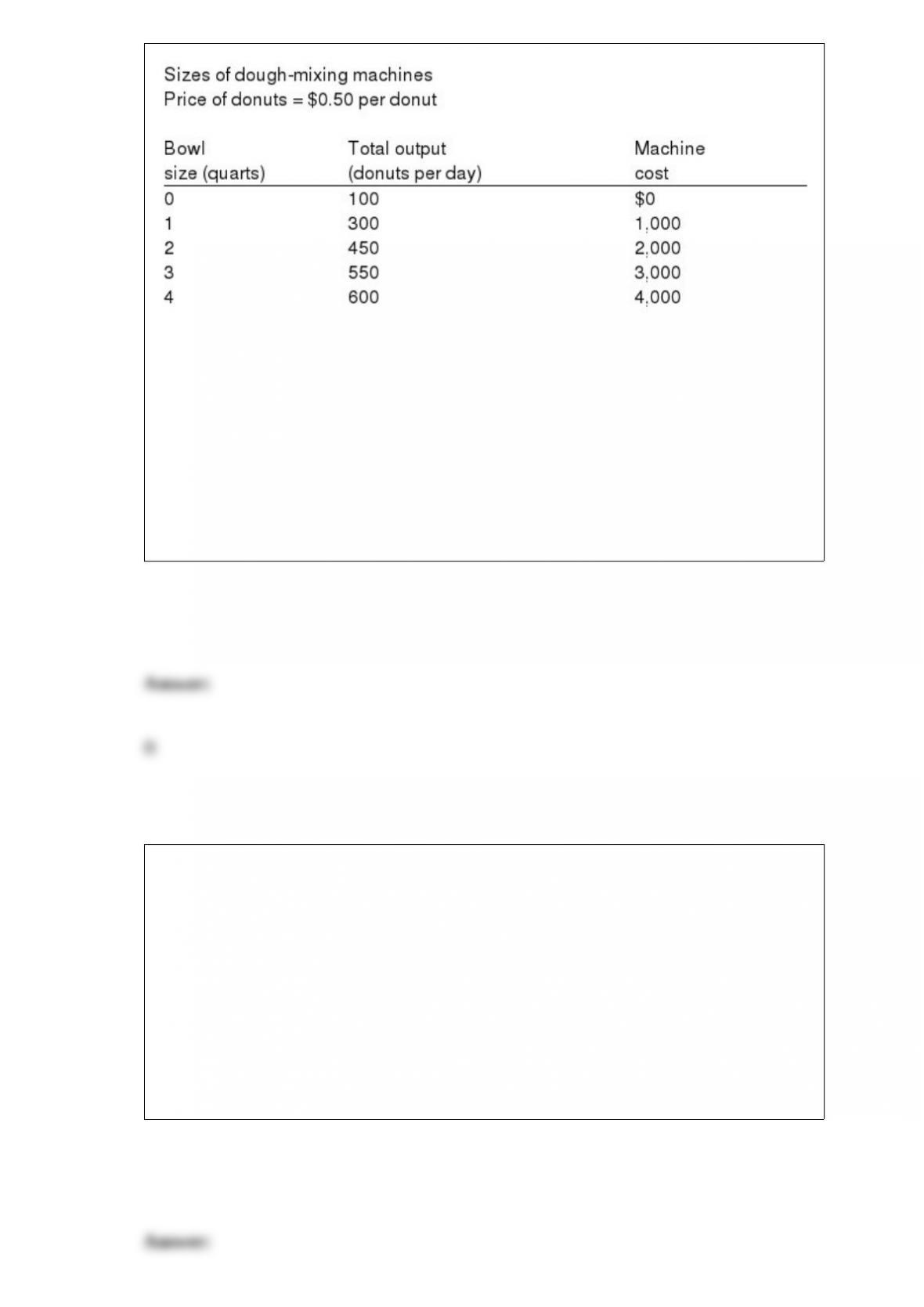
Exhibit 13-5 shows data on the various dough-mixing machines that a donut shop is
considering buying. Assume that any dough-mixing machine is expected to last
indefinitely, that operating expenses are negligible, and that the price of donuts is
expected to remain constant in the future. The marginal rate of return on the machine
with the three-quart bowl is
a. 1 percent
b. 5 percent
c. 10 percent
d. 20 percent
e. 55 percent
For inferior goods, a rise in price causes
a. negative income and substitution effects
b. positive income and substitution effects
c. a negative income effect and a positive substitution effect
d. a positive income effect and a negative substitution effect
e. a positive income effect but no substitution effect

A rightward shift of a supply curve
a. represents a decrease in supply
b. might be caused by an increase in demand
c. might be caused by a price ceiling
d. would cause an excess quantity supplied at the previous equilibrium price
e. might be caused by a decrease in demand
In recent years defense expenditures has fallen as a share of federal government
outlays.
a. True
b. False
Which of the following describes the market structure of monopoly?

a. many firms with some control over price, and considerable product differentiation
b. many firms with no control over price, producing identical products with no
differentiation
c. a few firms with some control over price, producing similar products which are close
substitutes
d. a few firms with no control over price, producing highly differentiated products
e. a single firm producing all of the output for the industry
Which of the following is the best example of substitutes?
a. coffee and cream
b. videotapes and VCRs
c. money and biscuits
d. tortillas and salsa
e. hiking boots and athletic shoes
If the benefits to society of students attending college exceed benefits to the students,
a. higher education should be strictly regulated
b. higher education should be taxed
c. higher education provides a positive externality

d. higher education is overproduced at the privately determined equilibrium
e. in time, no higher education will be produced
Suppose you own a proprietorship that is in serious financial difficulty. The assets of the
company are $100,000, but liabilities are $175,000. You also have, however, stock in
General Motors worth $200,000. If you file bankruptcy, what amount of personal assets
do you stand to lose?
a. $100,000
b. $75,000
c. $200,000
d. $275,000
e. $375,000
The economic behavior of individual decision makers and the determination of price
and output in specific markets are both studied in
a. microeconomics
b. macroeconomics
c. positive economics
d. normative economics
e. disequilibrium economics
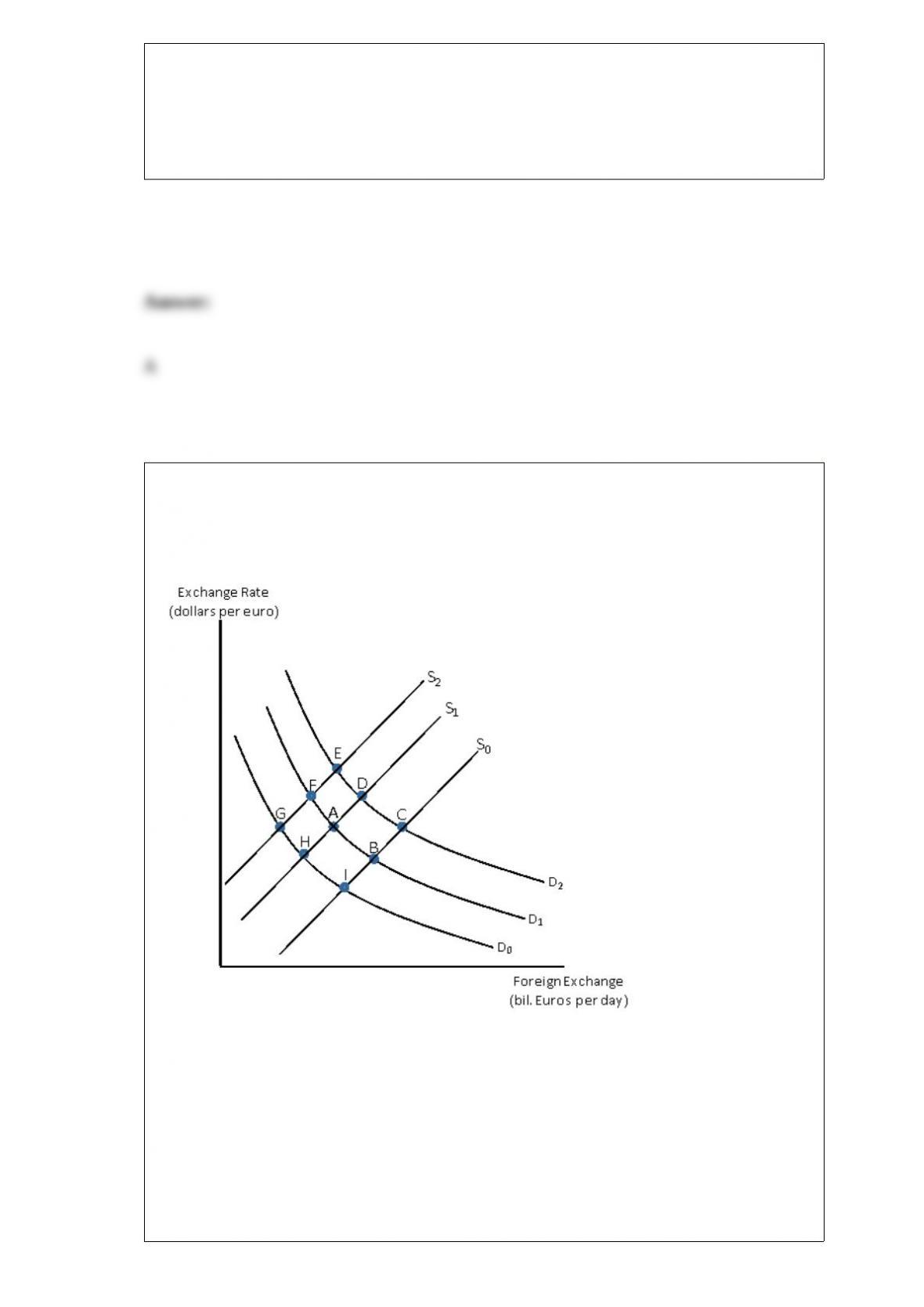
Exhibit 20-8
Exhibit 20-8 shows the market for euros in the US. Initially the demand for euros is
represented by D1 and the supply of euros is represented by S1. Equilibrium in the
market for euros is at point A. In response to an increase in the income of US
consumers the equilibrium moves to point D and the euro ________.
a. appreciates in value
b. depreciates in value

c. is devalued
d. is revalued
e. accommodates
In order to ensure allocative efficiency on the part of a natural monopoly, regulators
would set price equal to marginal cost.
a. True
b. False
The U.S. economy is best characterized as
a. pure capitalism
b. a command economy
c. socialism
d. a mixed capitalist economy
e. market socialism

A labor union is a group of workers and business owners who join together to improve
working conditions.
a. True
b. False
Nationalizationis the process of turning government enterprises into private enterprises
in transitional economies.
a. True
b. False
Exhibit 9-14
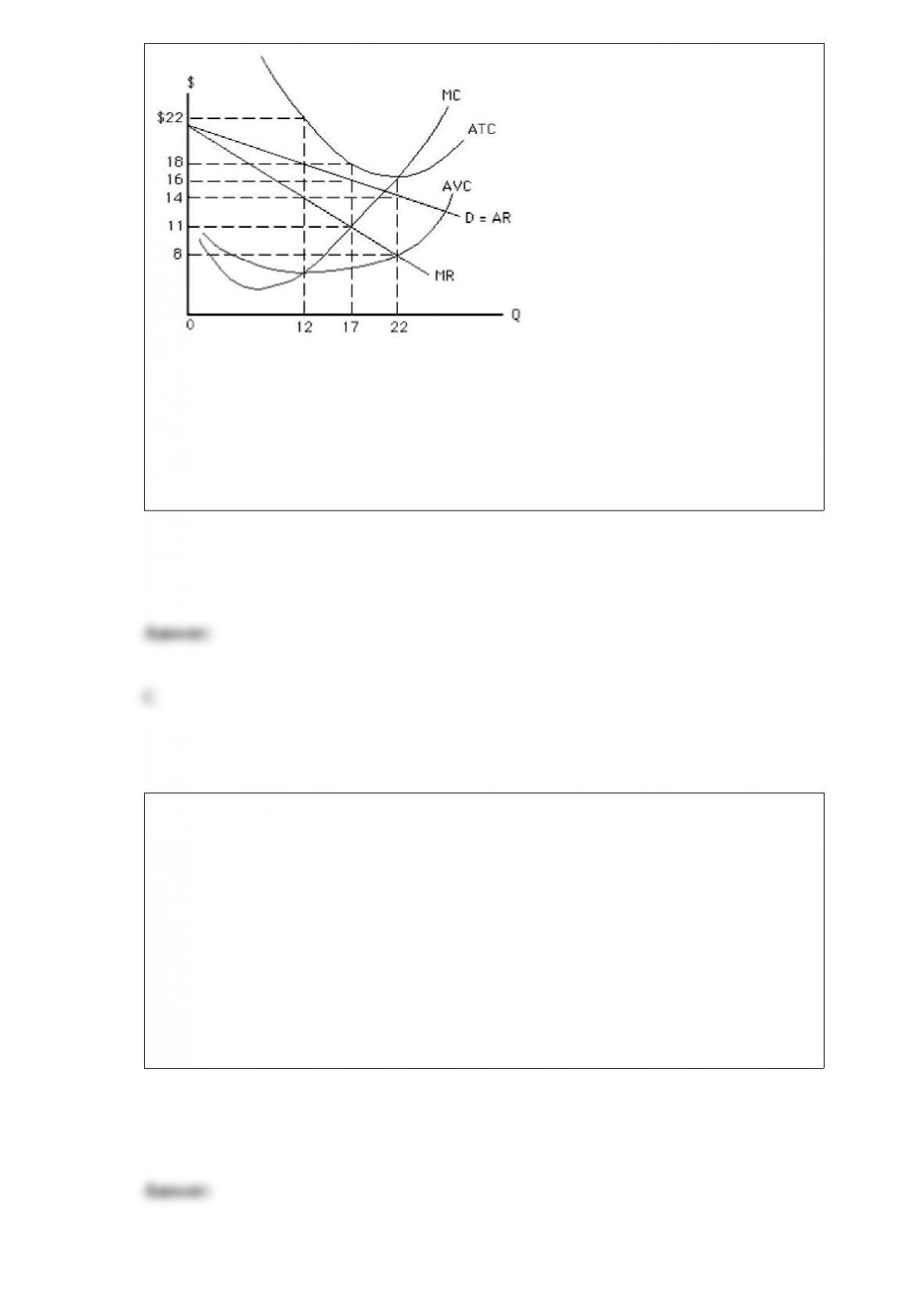
The profit-maximizing (or loss-minimizing) price the monopoly will charge in Exhibit
9-14 is
a. irrelevant since the firm should shut down
b. $11
c. $16
d. $18
e. $22
Other things equal, the supply of labor will be lower to a job that
a. offers more prestige
b. offers valuable on-the-job training
c. requires advanced skills or education
d. provides a climate-controlled work environment
e. allows for flexible work schedules

Most water pollution in the United States comes from manufacturing sites.
a. True
b. False
The payment made to an owner of a resource in excess of the opportunity cost of the
resource is
a. economic rent
b. economic profit
c. wages
d. interest
e. opportunity cost
Exports account for what percent of GDP in the United States?
a. 2 percent

b. 5 percent
c. 11 percent
d. 15 percent
e. 20 percent
When using the traditional command-and-control approach to environmental regulation,
the government attempts to
a. set a minimum requirement and then allows the firm to determine the most efficient
method for achieving this requirement
b. determine the most efficient method for different industries
c. make allowances for differences across industries and between firms
d. set engineering standards that are applicable to all situations and does not recognize
unique circumstances
e. set a maximum requirement and they allows the individual firm the latitude of
choosing the most efficient method
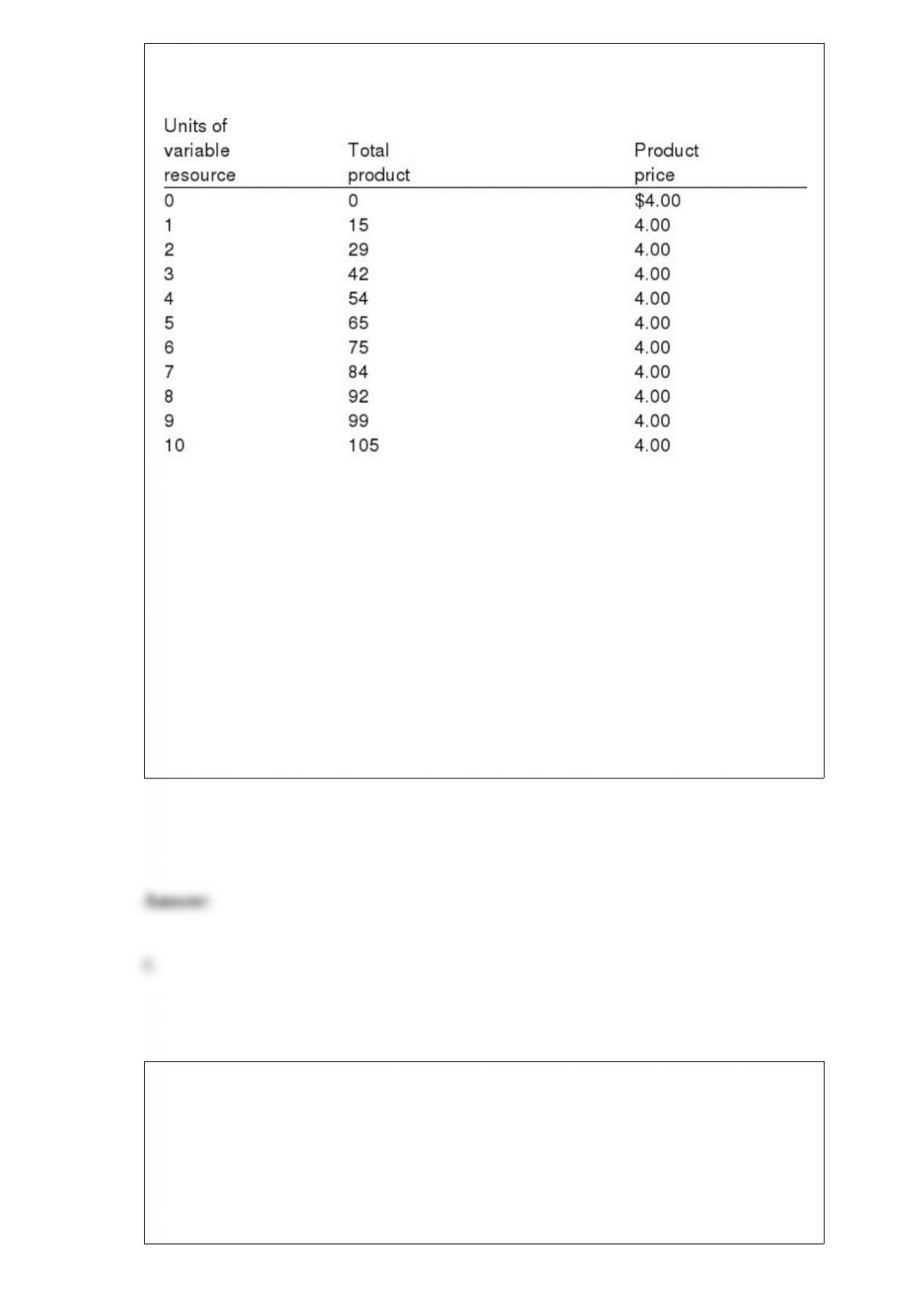
Exhibit 11-9
In Exhibit 11-9, if the wage rate is $44 and does not vary, how many workers will be
hired?
a. two
b. three
c. five
d. seven
e. nine
In order to prove that Coca Cola and 7-Up are substitutes, one should test the
__________ and get a __________.
a. price elasticity of demand; number less than negative 1
b. income elasticity; positive number

c. cross-price elasticity; negative number
d. price elasticity of demand; number greater than negative 1
e. cross-price elasticity; positive number
As new monopolistically competitive firms enter the market, the demand facing each
firm __________, causing the price charged by each firm to __________. In the long
run, each firm will earn a __________ profit.
a. falls; rise; positive
b. rises; fall; positive
c. falls; rise; normal
d. rises; fall; normal
e. falls; fall; normal
According to the purchasing power parity theory, in the long run
a. the exchange rate between any two currencies should be equal all over the world
b. the value of the dollar should equal the value of the pound which should equal the
value of the yen

c. inflation rates should equalize around the world
d. interest rates should equalize around the world
e. the exchange rate between the Canadian dollar and the British pound should reflect
differences in price levels between Canada and Britain
Chris had a before-tax income of $20,000 and paid taxes of $3,000. Pat had a before-tax
income of $10,000 and paid taxes of $1,000. Based on this information, which of the
following is correct?
a. the tax system is regressive
b. the tax system is proportional
c. the tax system is progressive
d. the tax system is based on the benefits received
e. there is insufficient information to answer the question
Exhibit 6-24
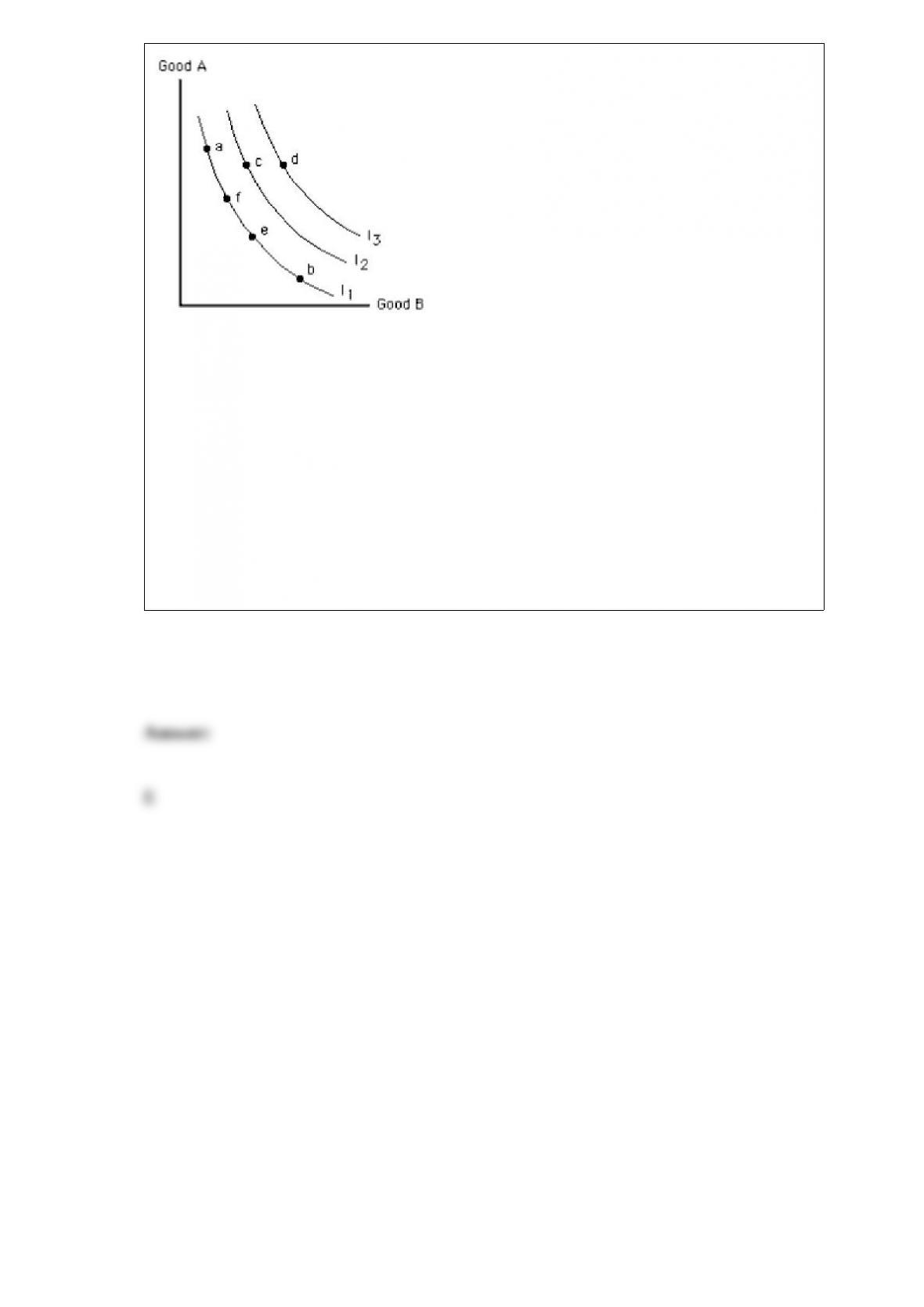
Along indifference curve I1 in Exhibit 6-24 which point would an individual prefer?
a. point a
b. point b
c. point e
d. point f
e. prefers all equally