1) The broken window fallacy
a.explains why inflation is so high.
b.is a justification for the government to print more money.
c.is illustrated when a government program is justified not on its merits but on the
number of jobs it will create.
d.has nothing to do with public policy.
2) If the for a good is 0.5, then a 5 percent increase in price results in a
a.0.1 percent decrease in the quantity demanded.
b.1 percent decrease in the quantity demanded.
c.2.5 percent decrease in the quantity demanded.
d.10 percent decrease in the quantity demanded.
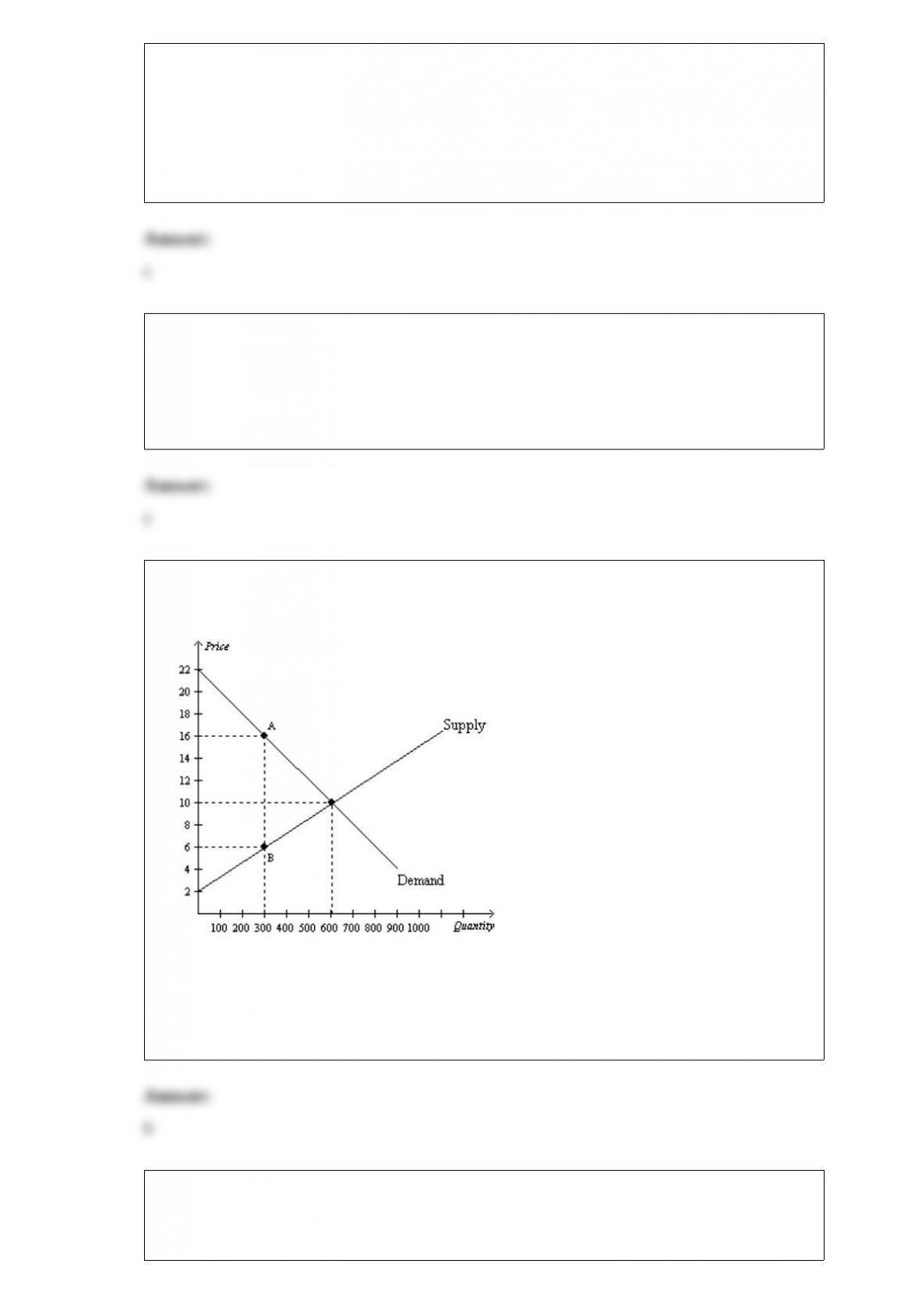
3) Figure 8-6
The vertical distance between points A and B represents a tax in the market.
Without a tax, producer surplus in this market is a. $1,500.
b. $2,400.
c. $3,000.
d. $3,600.
4) Economic policy that appears to be ideal in an economics textbook may not be the
final policy that is approved by elected politicians because
a.sometimes a politician’s self interest may conflict with the national interest.
b.economics professors have a notoriously low voting rate.
c.only policies advocated by the President’s Council of Economic Advisors receive
enough national attention to interest politicians.
d.Economists cannot explain why politicians do not implement the ideas from their
textbooks.
5) The deadweight loss from a $3 tax will be largest in a market with
a.inelastic supply and elastic demand.
b.inelastic supply and inelastic demand.
c.elastic supply and elastic demand.
d.elastic supply and inelastic demand.
6) The forces that make market economies work are
a.work and leisure.
b.politics and religion.
c.supply and demand.
d.taxes and government spending.
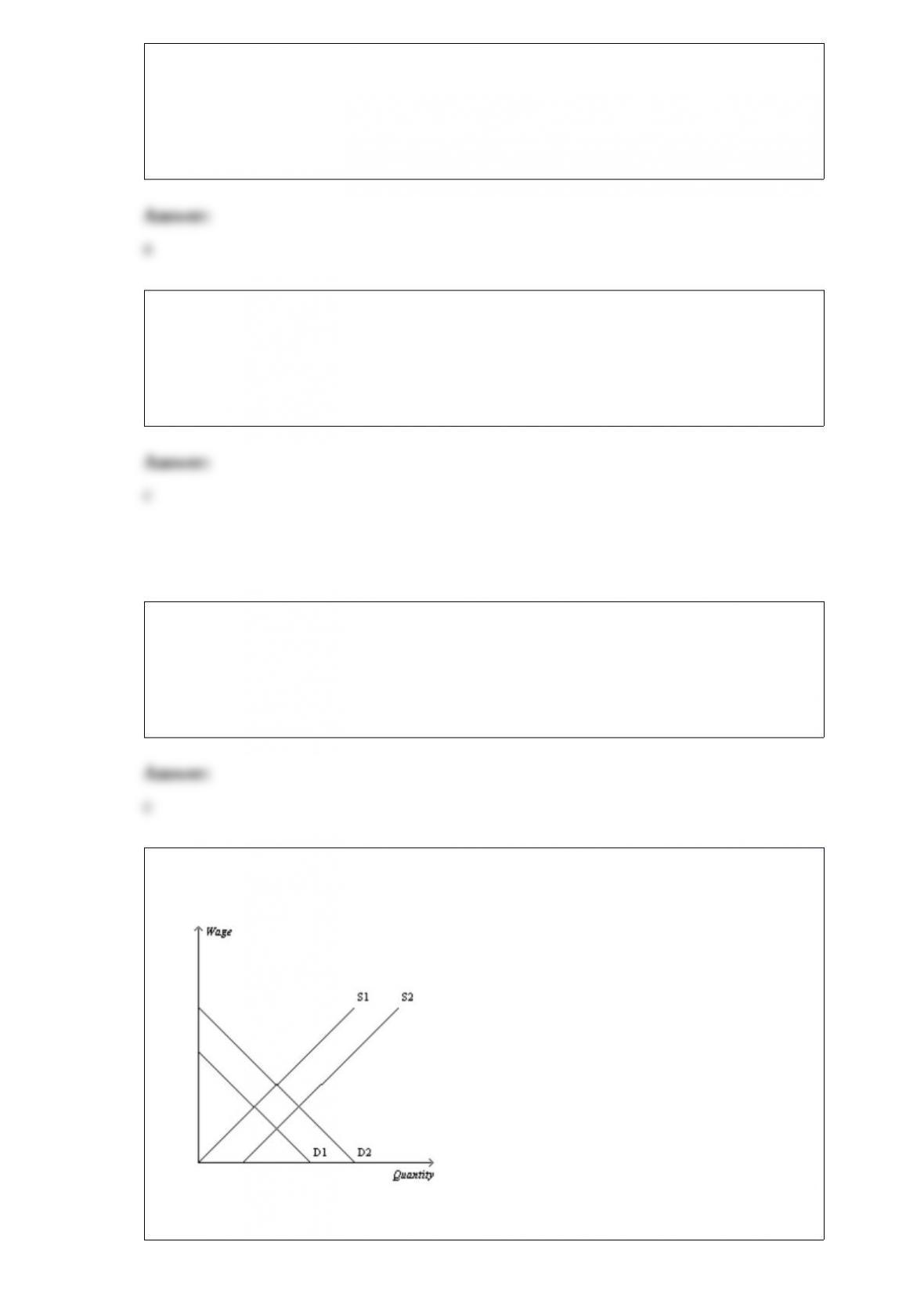
7) Figure 18-4
The graph below illustrates the market for nurses who work in doctors’ offices.
Refer to Figure 18-4. If the supply of medical supplies that nurses use when
performing sports physicals increases, what happens in the market for nurses?
a.Demand increases from D1 to D2.
b.Demand decreases from D2 to D1.
c.Supply increases from S1 to S2.
d.Supply decreases from S2 to S1.
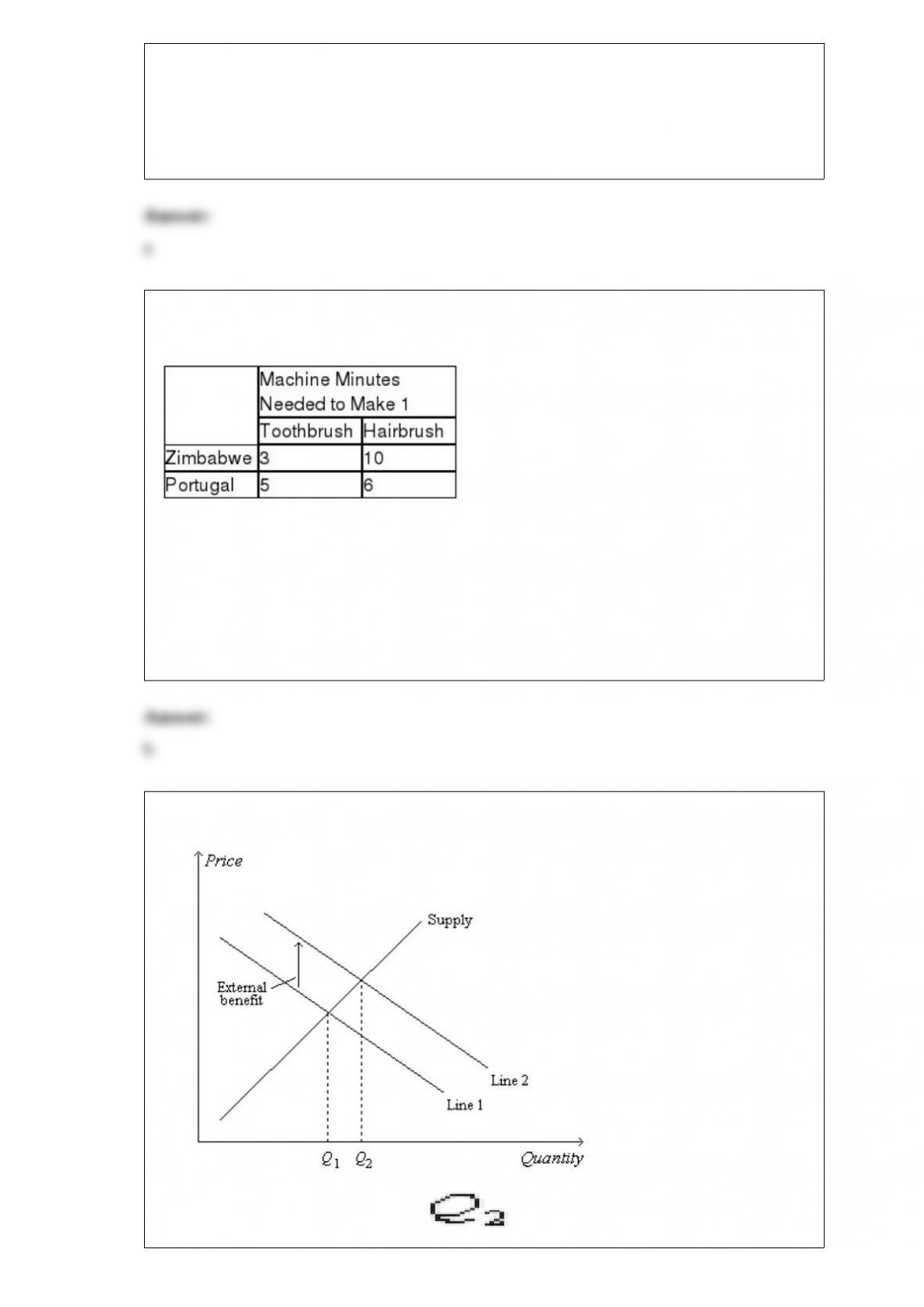
8) Assume that Zimbabwe and Portugal can switch between producing toothbrushes and
producing hairbrushes at a constant rate.
Zimbabwe and Portugal would not be able to gain from trade if Zimbabwe’s opportunity
cost of one toothbrush changed to
a.0 hairbrushes.
b.5/6 hairbrushes.
c.6/5 hairbrushes.
d.Zimbabwe and Portugal can always gain from trade regardless of their opportunity
costs.
9) Figure 10-12
An alternative label for the quantity would be
a. .
b. .
c. .
d. .
10) A natural monopoly has economies of scale for most if not all of its range of output.
a.True
b.False
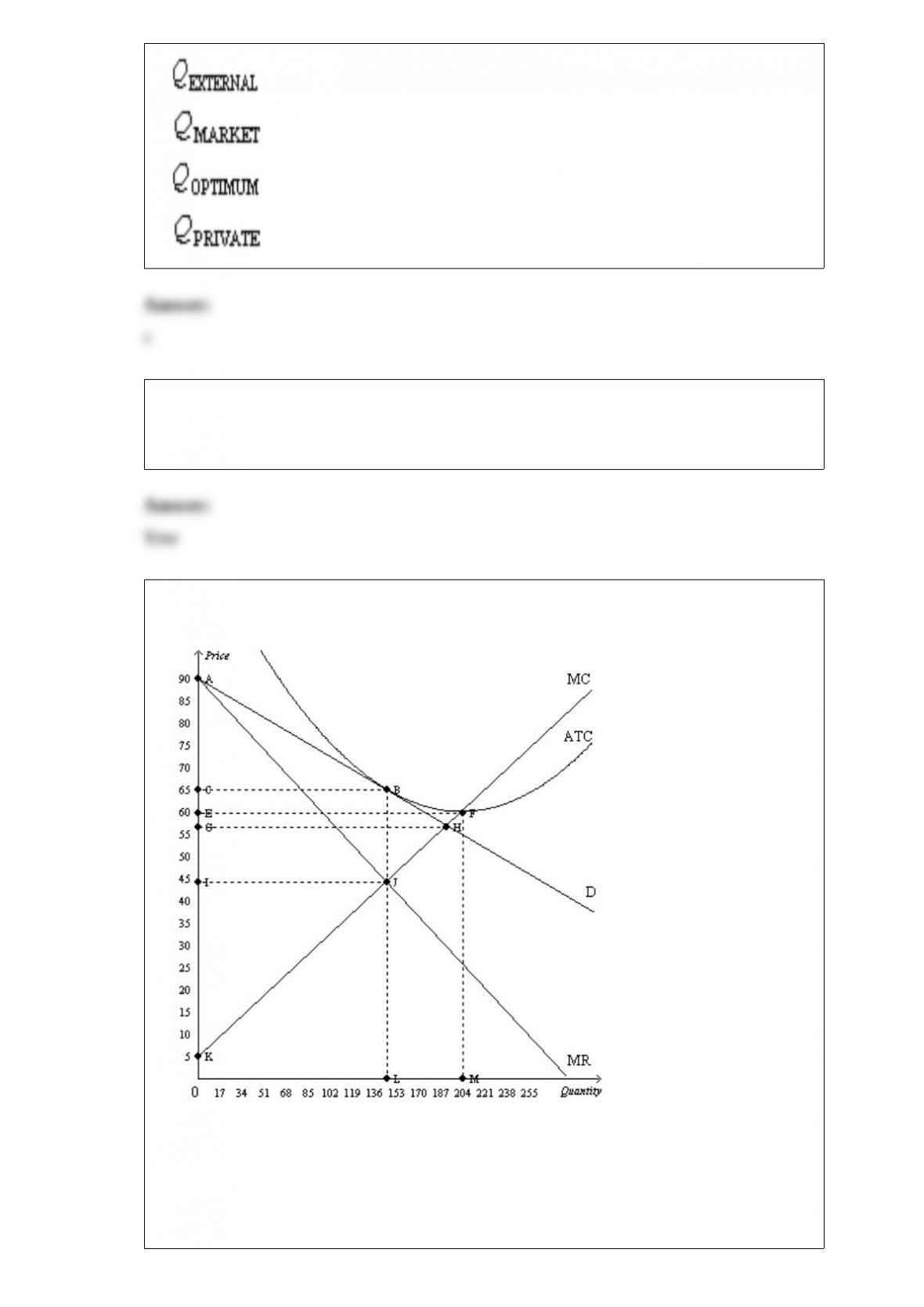
11) Figure 16-14
The deadweight loss from production for this firm is represented by which of the
following areas?
a.ABC
b.IJK
c.BHJ

d.BCIJ