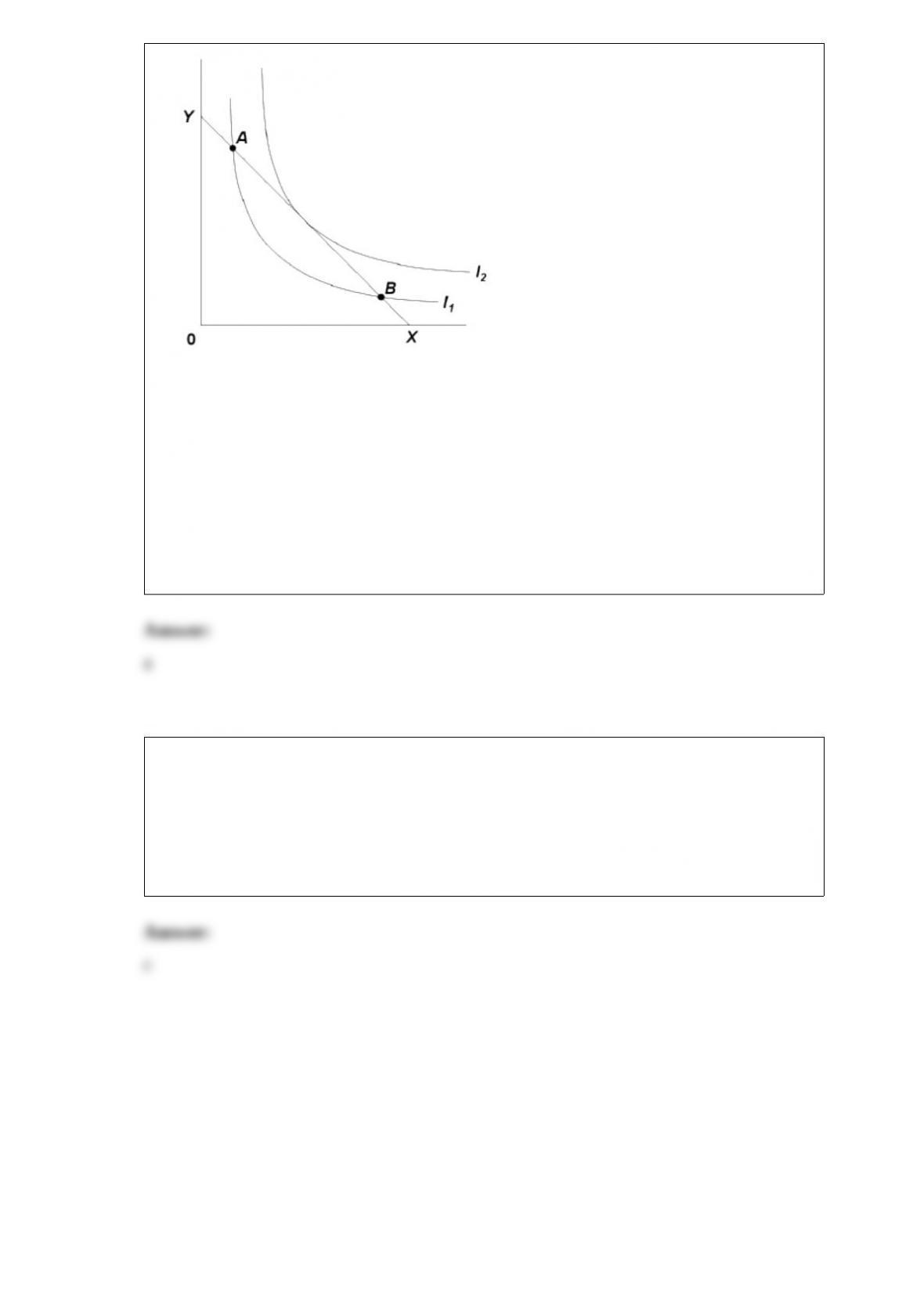
1)
in the above diagram:
a.the consumer is indifferent between points a and b, but neither point maximizes his
utility.
b.the consumer is indifferent between points a and b and either point will maximize his
utility.
c.any combination of x and y entailing more of y and less of x than shown at b would
be preferred.
d.any combination of x and y entailing more of x and less of y than shown at a would
be preferred.
2) a competitive firm in the short run can determine the profit-maximizing (or
loss-minimizing) output by equating:
a.price and average total cost.
b.price and average fixed cost.
c.marginal revenue and marginal cost.
d.price and marginal revenue.
3)
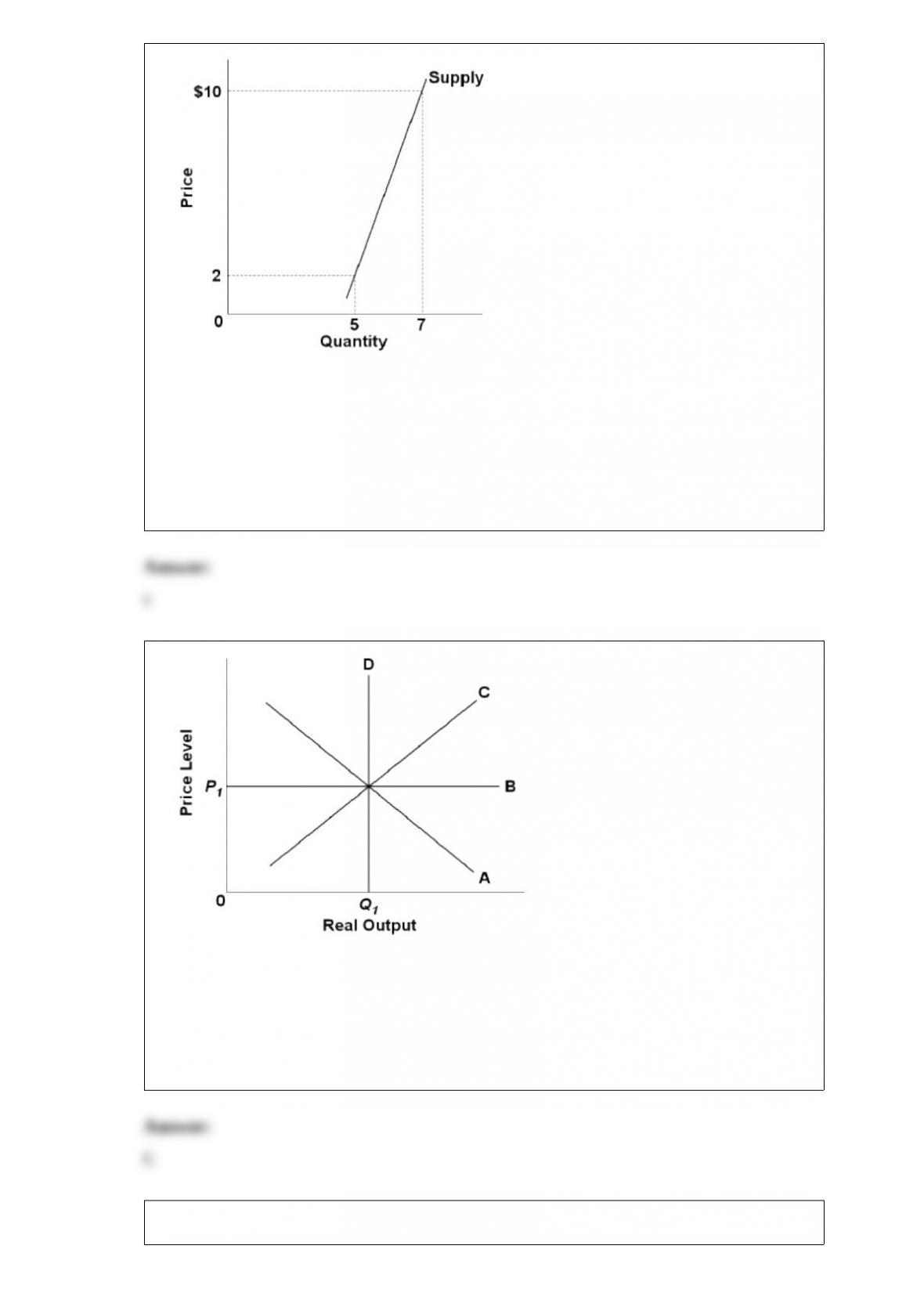
refer to the above diagram and assume that price increases from $2 to $10. the
coefficient of the price elasticity of supply (midpoints formula) relating to this price
change is about:
a.5 and supply is elastic.
b.1 and supply is unit elastic.
c..25 and supply is inelastic.
d.2.5 and supply is elastic.
4)
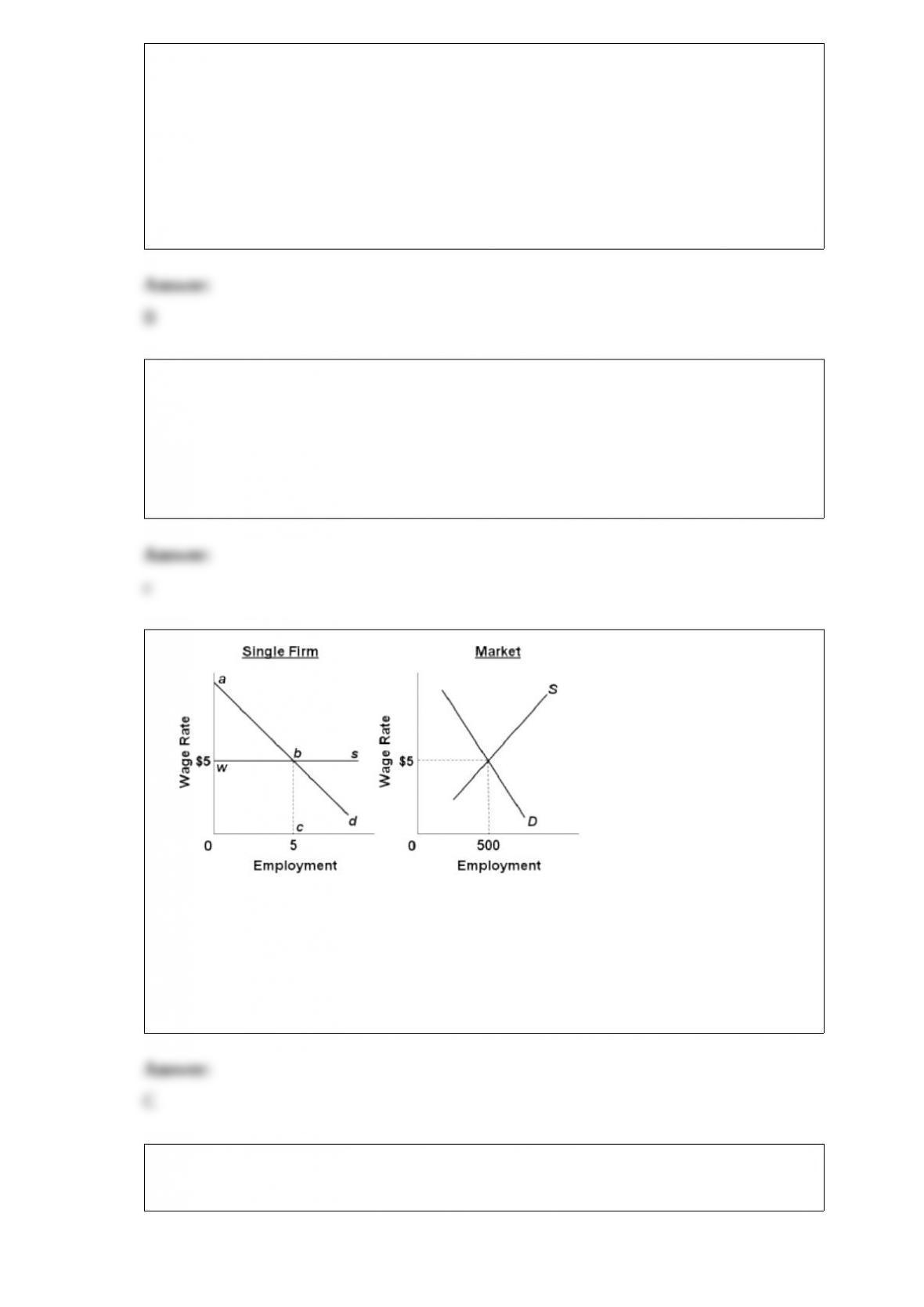
Refer to the above diagram and assume that prices and wages are flexible both upward
and downward in the economy. In the extended AD-AS model:
A.demand-pull inflation would involve a shift of curve D to the right.
B.cost-push inflation would involve a shift of curve B downward.
C.recession would involve a leftward shift of curve A.
D.frictional unemployment would be zero in the long run.
5) According to monetarists, an expansionary fiscal policy is a weak stabilization tool
because:
A.the asset demand for money varies inversely with the rate of interest.
B.government borrowing to finance a deficit will raise the interest rate and reduce
private investment.
C.government borrowing will reduce the supply of money in circulation and depress the
GDP.
D.government borrowing to finance a deficit will lower interest rates, increase money
balances, and lower velocity.
6) if the nominal interest rate is 5 percent and the real interest rate is 2 percent, then the
inflation premium is:
a.8 percent.
b.5 percent.
c.3 percent.
d.2 percent.
7)
Refer to the above diagrams. At the profit-maximizing level of employment for this
firm, the amount available to pay to nonlabor resources:
A.is 0abc.
B.is 0wbc.
C.is wab.
D.cannot be determined.
8) the following cost data for a firm that is selling in a purely competitive market:
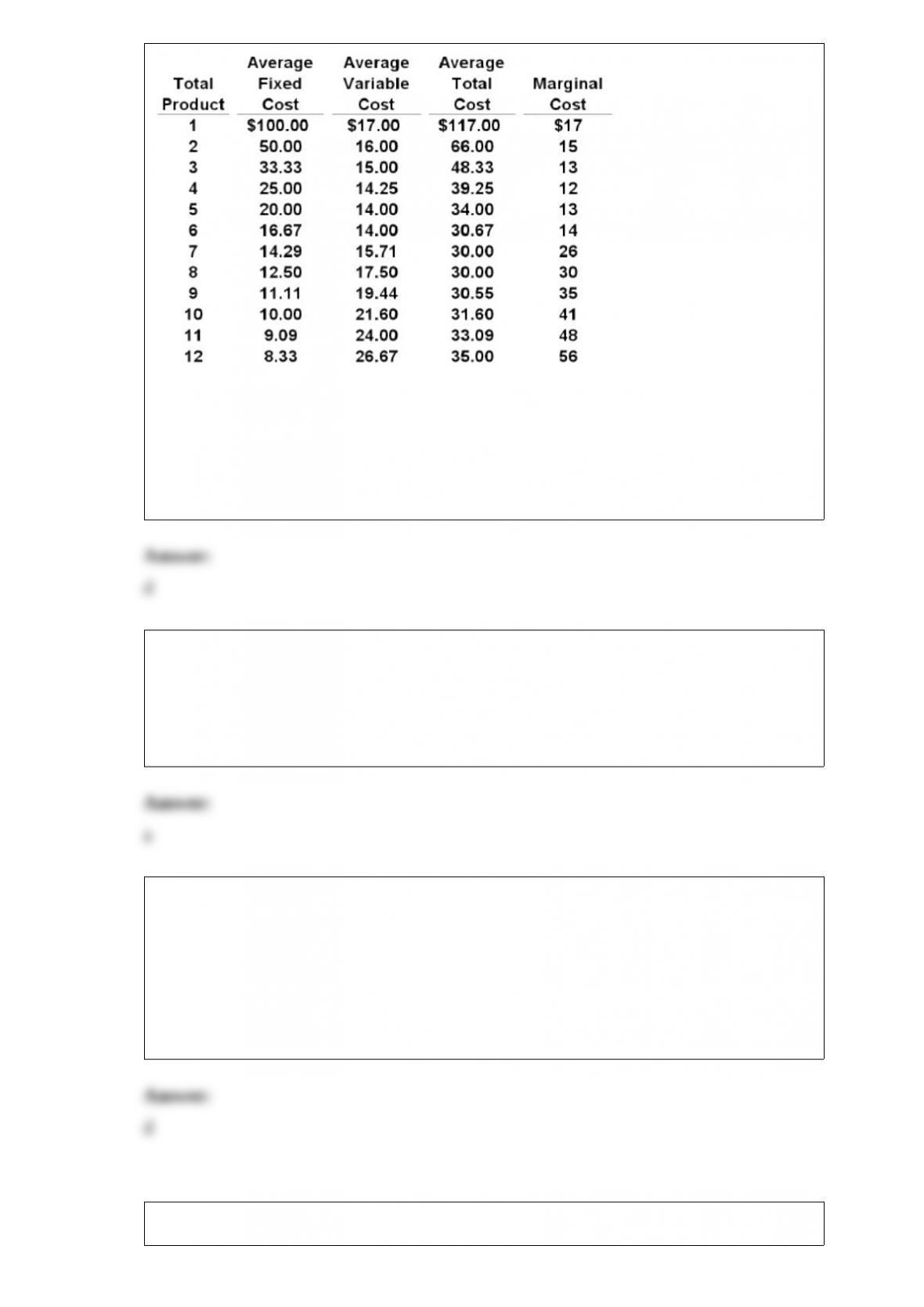
refer to the above data. if the market price for the firm’s product is $12, the competitive
firm will produce:
a.4 units at a loss of $109.
b.4 units at an economic profit of $31.75.
c.8 units at a loss of $48.80.
d.zero units at a loss of $100.
9) the terms of trade:
a.show the ratio at which nations will exchange two goods.
b.show how the gains from trade can be equally shared.
c.show the value of one nation’s currency in terms of another nation’s currency.
d.compare the volume of a nation’s exports and imports.
10) if you leave a football game at the end of the third quarter, you will avoid traffic and
get home more quickly. therefore, everyone should leave the game early. this assertion
illustrates the:
a.moral hazard problem.
b.adverse selection problem.
c.fallacy of limited decisions.
d.fallacy of composition.
11) Creative destruction is:
A.the process by which large firms buy up small firms.
B.the process by which new firms and new products replace existing dominant firms
and products.
C.a term coined many years ago by Adam Smith.
D.is applicable to planned economies, but not to market economies.
12)
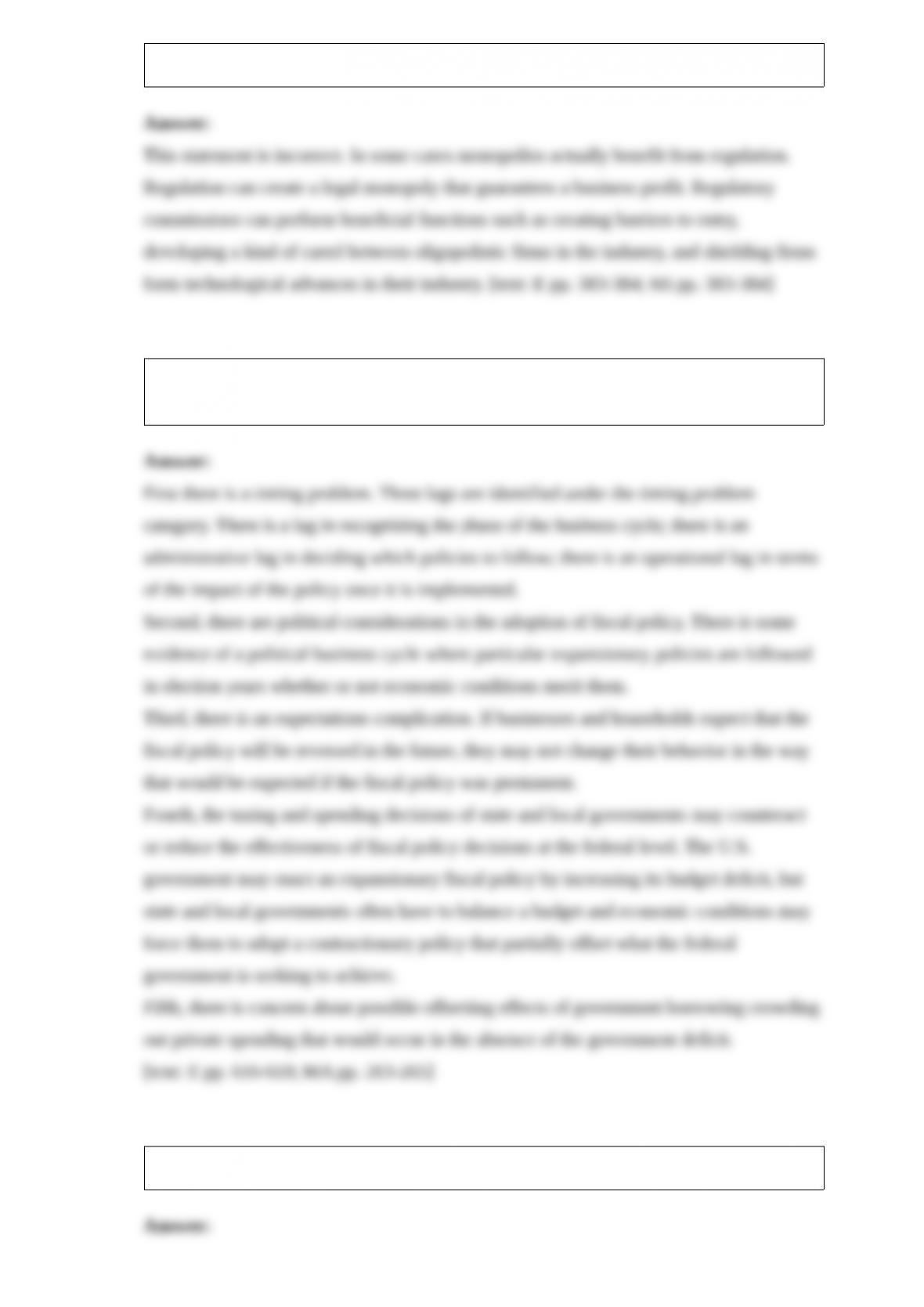
Refer to the above table, in which investment is in billions. Suppose the Fed reduces the
interest rate from 6 percent to 5 percent. Given columns (1) and (2), investment will:
A.decline by $20 billion.
B.increase by $20 billion.
C.decline by $10 billion.
D.increase by $10 billion.
13) Why is land reform of significant concern for developing countries and what
restricts its implementation?
14) Monopolistic firms will always be against regulation. Evaluate.
15) Explain the five problems, criticisms, or complications that arise in the
implementation of fiscal policy.
16) What are the major arguments in the case for income inequality?
17) Discrimination based on gender may cause a regrettable redistribution of income in
favor of males and at the expense of females, but it entails no loss to society as a whole.
Evaluate.
18) Explain how the Gini ratio is measured and what it means.
19) How does the invisible hand work in a competitive market system?
20) Why is there a supply curve in pure competition but no supply curve in pure
monopoly?