Both a perfectly competitive firm and a monopolist find that:
A. price and marginal revenue are the same.
B. they can sell as many units of output as they want at the market price.
C. it is best to expand production until the benefit and the cost of the last unit produced
are equal.
D. price is less than marginal revenue.
The pattern in which insurance is purchased more frequently by those who are the most
costly for companies to insure is referred to as:
A. adverse selection.
B. statistical discrimination.
C. risk aversion.
D. moral hazard.

The decision about whether to change prices frequently or infrequently is an application
of the:
A. principle of comparative advantage.
B. scarcity principle.
C. principle of increasing opportunity cost.
D. cost-benefit principle.
John is trying to decide how to divide his time between his job as a stocker in the local
grocery store, which pays $7 per hour for as many hours as he chooses to work, and
cleaning windows for the businesses downtown. He makes $2 for every window he
cleans. John is indifferent between the two tasks, and the number of windows he can
clean depends on how many hours he spends cleaning in a day, as shown in the table
below:
What is the lowest price per window that John would be willing to accept to spend 4
hours per day cleaning windows?
A. $7
B. $2
C. $3.50
D. $11
Which of the following would be classified as a final good?
A. New computer software sold to a computer manufacturer for installation in new
computers
B. The services provided by lawyers to a computer manufacturer
C. Computer chips sold to a computer manufacturer for installation in new computers
D. A new computer sold to a business firm.
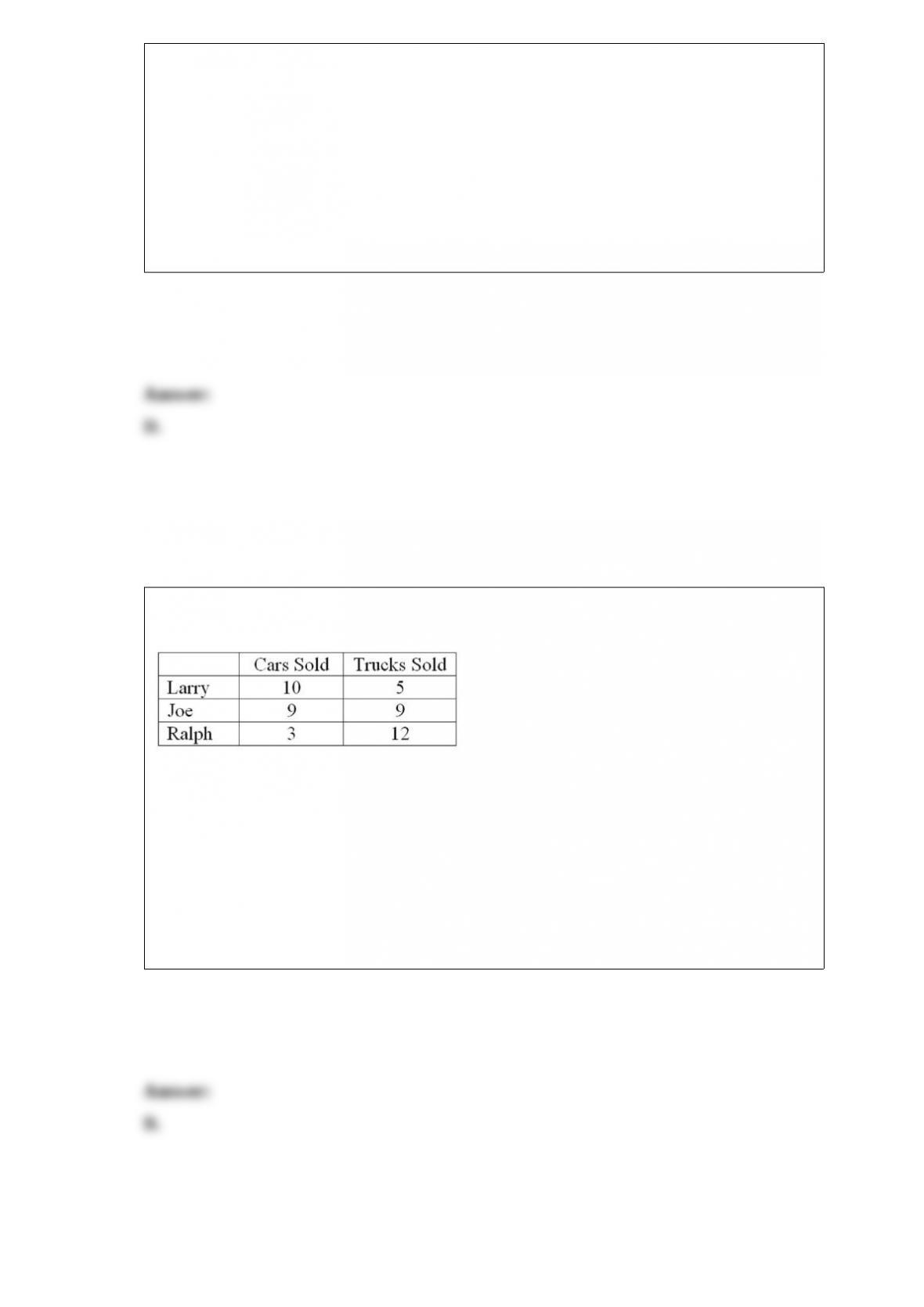
Dent ‘n’ Scratch Used Cars and Trucks employs 3 salesmen. Data for their sales last
month are shown in this table:
Based on last month’s data, Joe’s opportunity cost of selling a truck is selling:
A. 9 cars.
B. 1 car.
C. 4 cars.
D. 1/3 of a car.
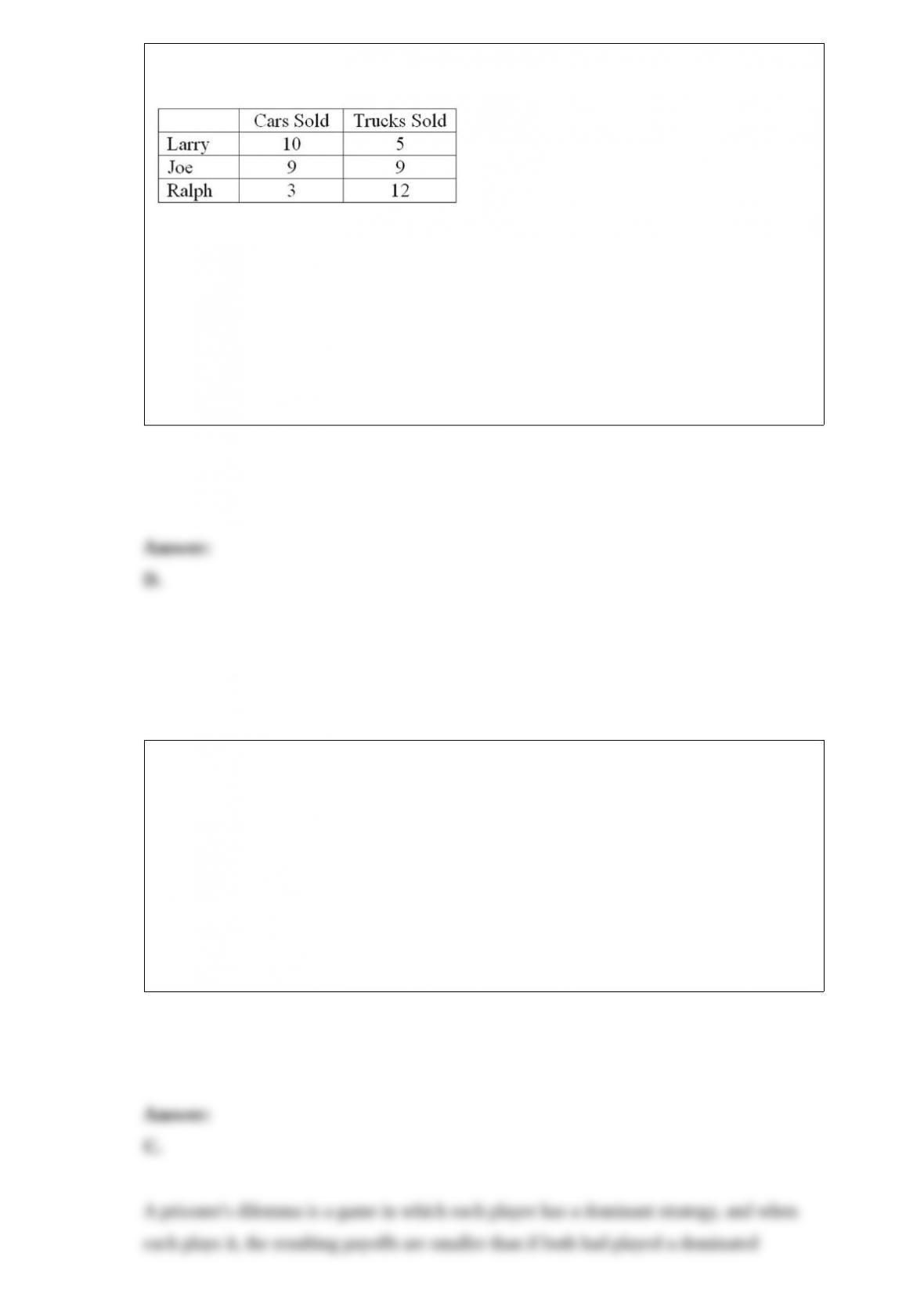
Dent ‘n’ Scratch Used Cars and Trucks employs 3 salesmen. Data for their sales last
month are shown in this table:
Based on last month’s data, Larry’s opportunity cost of selling a truck is selling:
A. 10 cars.
B. 1/2 of a car.
C. 1 car.
D. 2 cars.
A prisoner’s dilemma is a game in which:
A. neither player has a dominant strategy.
B. one player has a dominant strategy and the other does not.
C. the players’ payoffs are smaller when both play their dominant strategy compared to
when both play a dominated strategy.
D. the players’ payoffs are larger when both play their dominant strategy compared to
when both play a dominated strategy.
Emotions like guilt and sympathy:
A. are irrelevant to economic decision-making.
B. reduce the likelihood that a transaction will maximize total economic surplus.
C. can solve commitment problems.
D. can solve commitment problems, but generally reduce players’ payoffs.
Holding other factors constant, if terrorist attacks increase the desire for precautionary
saving, then the real interest rate will ______ and the equilibrium quantity of saving and
investment will _______.
A. increase; increase
B. decrease; decrease
C. increase; decrease
D. decrease; increase
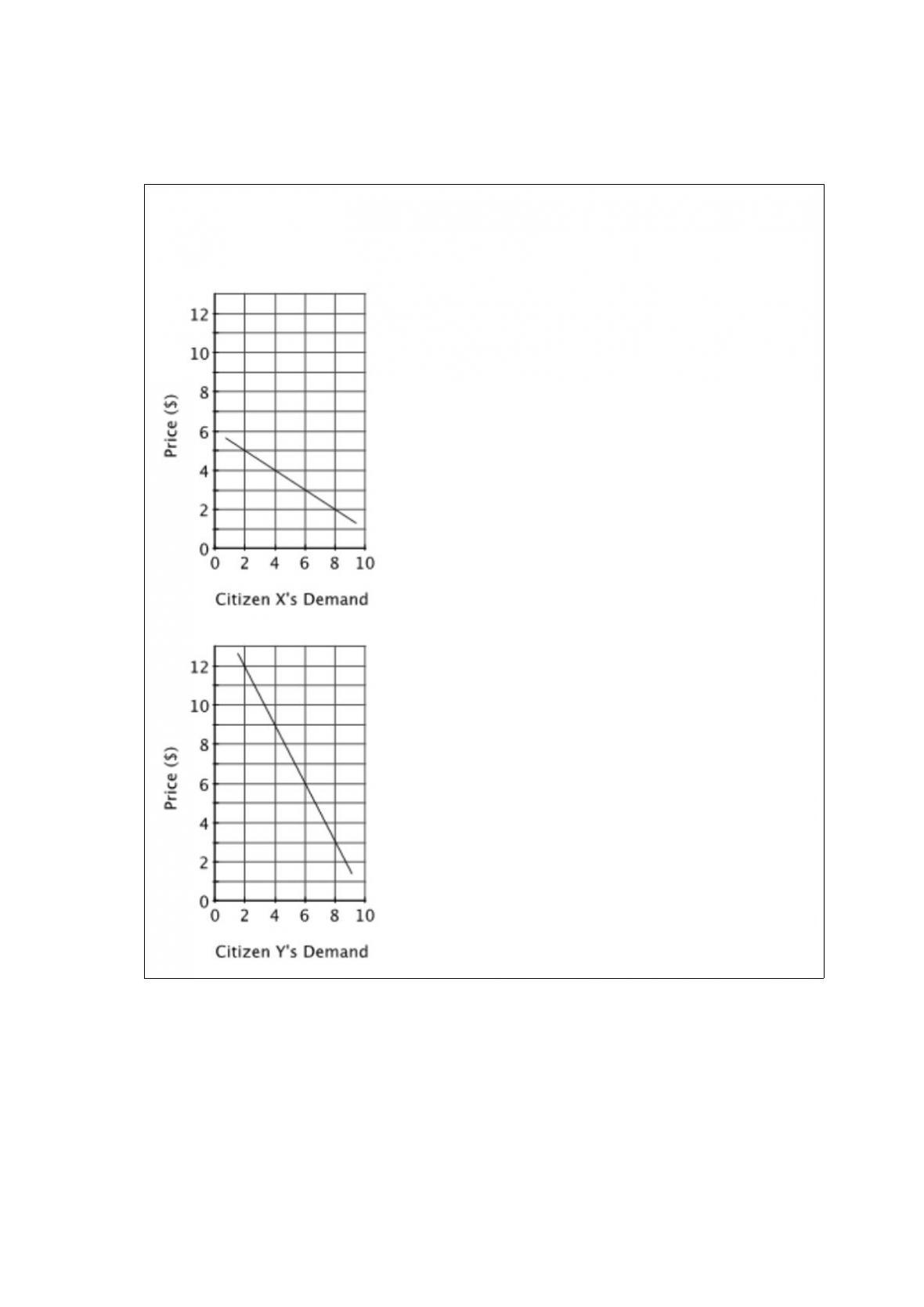
Consider a town with three residents. The residents’ demand curves for various acres of
a public park are shown below.
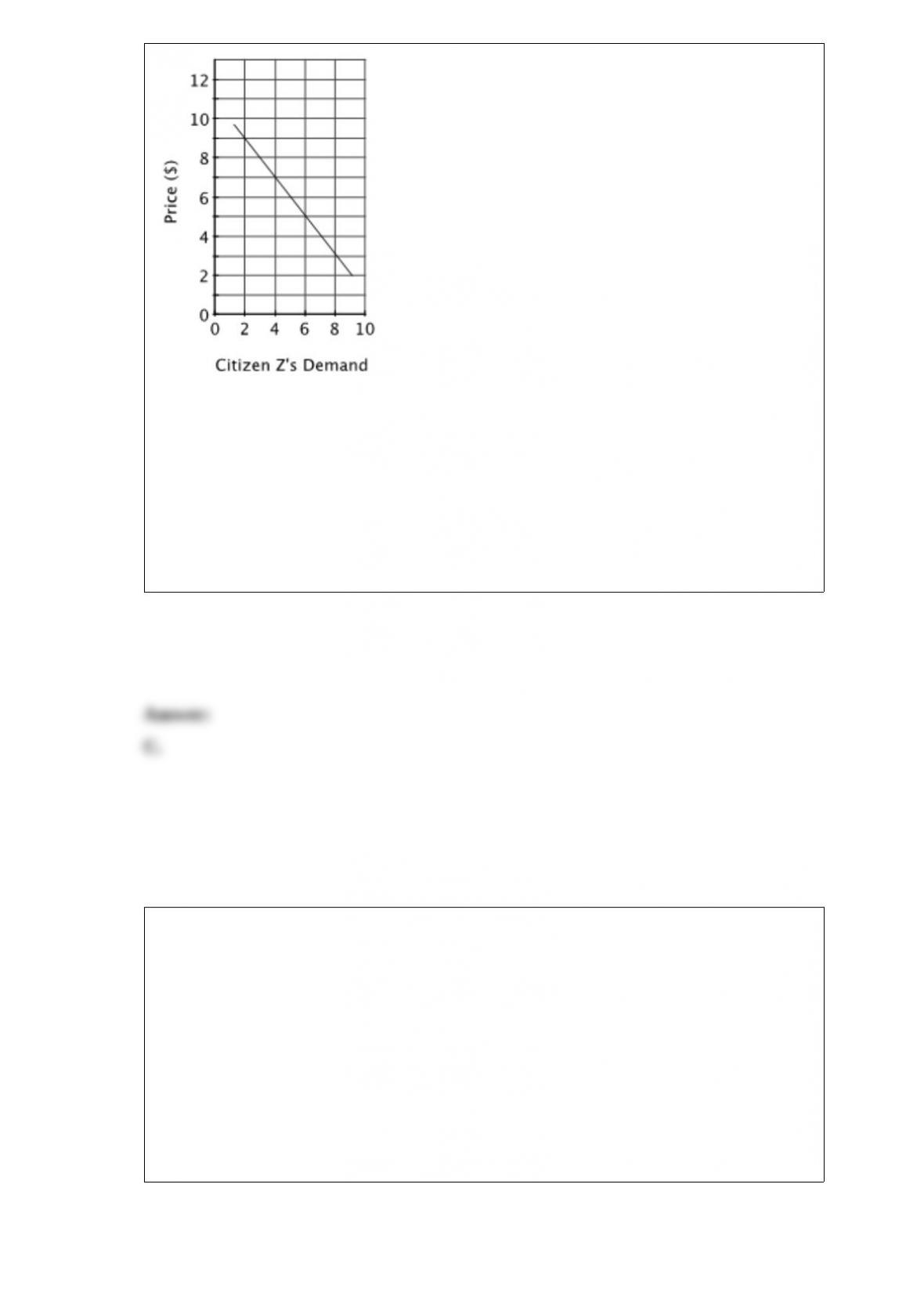
The public is willing to pay $14 for the _____ acre of parkland.
A. 2nd
B. 4th
C. 6th
D. 8th
In Macroland, autonomous consumption equals 100, the marginal propensity to
consume equals 0.75, net taxes are fixed at 40, planned investment is fixed at 50,
government purchases are fixed at 150, and net exports are fixed at 20. Induced
expenditure equals:
A. 0.25Y.
B. 320 + 0.25Y.
C. 0.75Y.
D. 290 + 0.75Y.
Three equivalent ways to measure GDP are total _____, total _____, and total ______.
A. profits; production; saving
B. expenditure; income; profits
C. investment; consumption; saving
D. production; income; expenditure
A pure monopoly exists when:
A. many firms produce a good with no close substitutes.
B. a single firm produces a good with no close substitutes.
C. only a single firm is present in the market.
D. a single firm produces a good with many close substitutes.
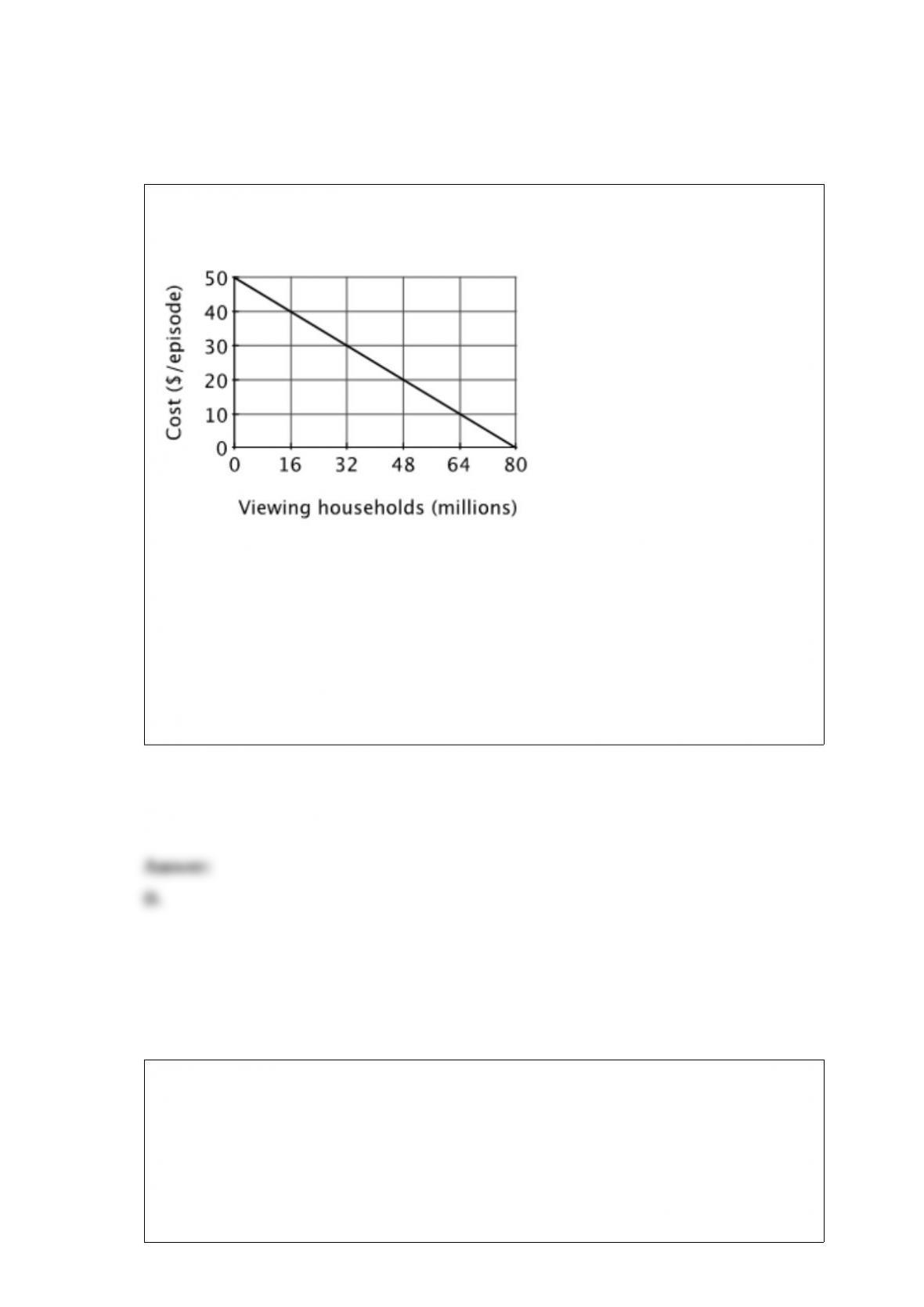
If the popular television show The Bachelor is shown on pay-per-view television every
Monday at 9pm, then the demand curve for each episode is given below.
Given that the marginal cost of showing an episode to an additional household is $0:
A. the pay-per-view channel’s economic profit will be zero.
B. the pay-per-view channel will maximize its profit by charging $0 for each episode.
C. more than the socially optimal number of households will watch each episode
D. fewer than the socially optimal number of households will watch each episode.
The self-correcting property of the economy means that output gaps are eventually
eliminated by:
A. rising or falling prices.
B. falling prices only.
C. increasing or decreasing potential output.

D. government policy.
You have two options for how to spend the afternoon. You can either go see a movie
with your roommate or work as a tutor for the Math Department. From experience, you
know that going to see a movie gives you $20 worth of enjoyment, and with your
student discount, a movie ticket only costs $12. If you spend the afternoon working as a
math tutor, you will get paid $45. On a typical day, you wouldn’t be willing to spend the
afternoon working as a math tutor for less than $35. What is your economic surplus
from working as a math tutor instead of going to the movies?
A. $8
B. $12
C. $22
D. $57
Several web sites, like Pricewatch.com, allow consumers to input the name of a
product, and the site then returns a list of suppliers with their respective prices for the
product. This:
A. increases the benefit of search.
B. increases the free-rider problem.
C. reduces the benefit of search.
D. reduces the cost of search.
An inflation hawk is someone who:
A. puts equal weight on maintaining output at potential and keeping prices stable.
B. is committed to maintaining low inflation even at the cost of reduced output and
employment.
C. is committed to maintaining output at potential even at the cost of high inflation.
D. encourages policy accommodation.
Suppose a monopolist faces the demand curve shown below:
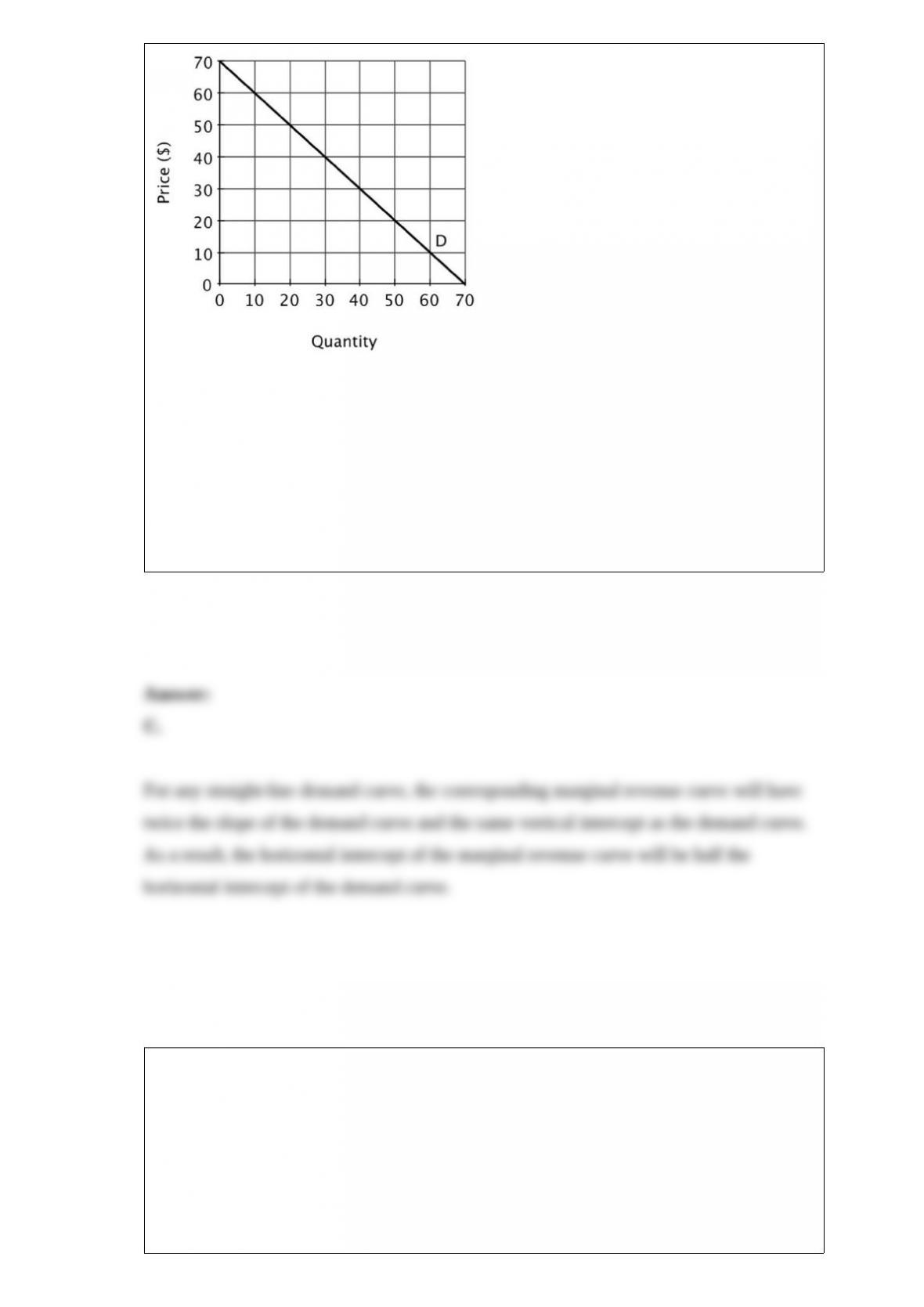
If you were to draw the monopolist’s marginal revenue curve, it would:
A. lie on top of the demand curve.
B. intersect the vertical axis at $35.
C. intersect the horizontal axis at 35.
D. have a slope equal to the reciprocal of the slope of the demand curve.
The stock of wealth increases more rapidly the faster the flow of ______.
A. income
B. saving
C. money
D. assets
The benefits to specialization are even greater when two trading partners have:
A. absolute advantages in producing the same goods.
B. similar consumption preferences.
C. very similar opportunity costs.
D. large differences in opportunity costs.
Suppose that firms that had high rates of injury had to pay more for workers’
compensation than did firms with lower rates of injury. This change would:
A. unfairly penalize innovative firms.
B. provide an incentive for firms to reduce risk of injury.
C. provide an incentive for firms to reduce expenditures on safety equipment.
D. reduce efficiency in labor markets.
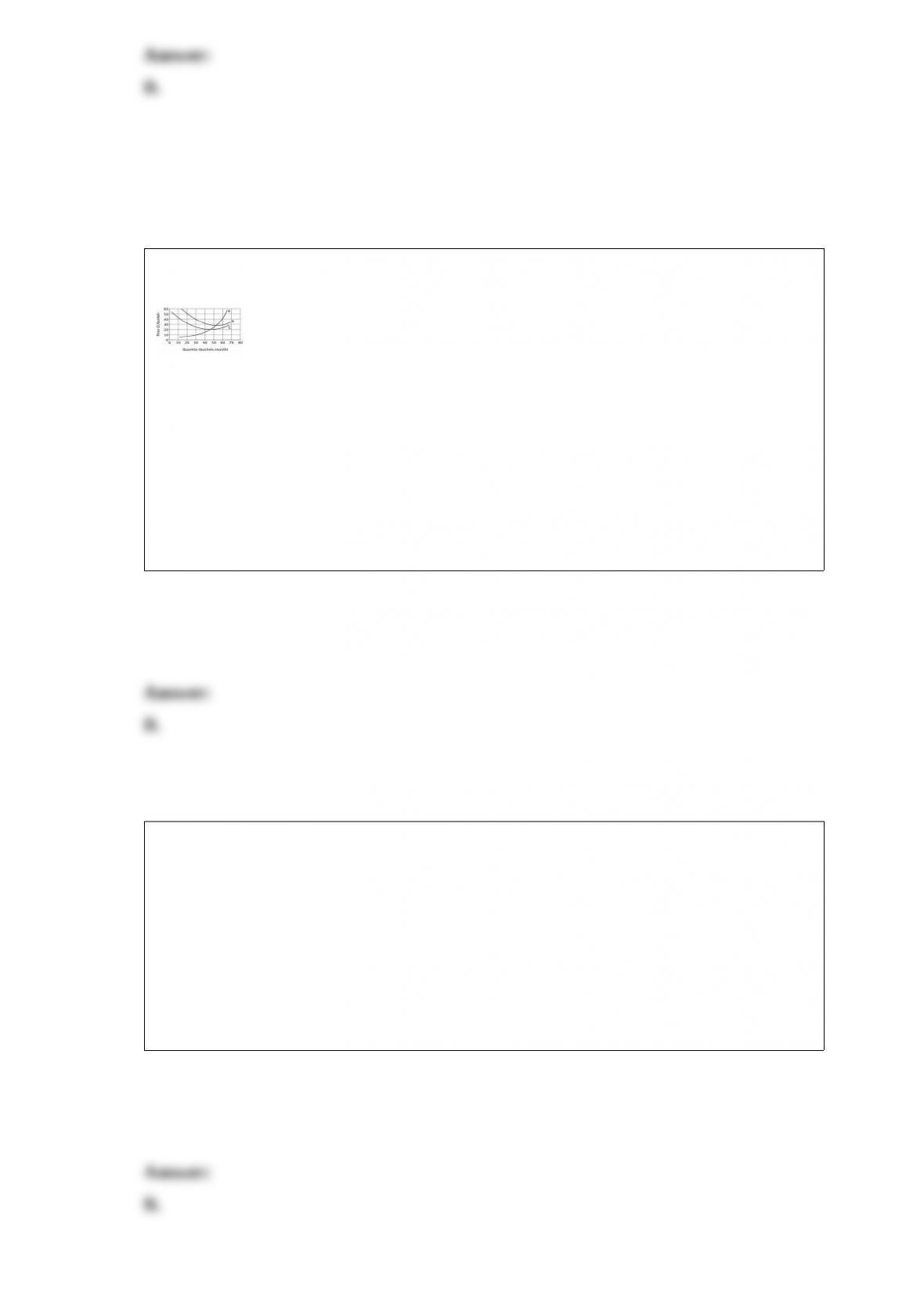
This graph shows the cost curves for Moe’s mushroom gathering business, which is
perfectly competitive.
The curve labeled A is upward sloping because:
A. of high fixed costs.
B. of diminishing returns to Moe’s variable factors of production.
C. an increase in the demand for mushrooms increases the supply of mushrooms.
D. variable costs increase as output increases.
Consider a graph of a production possibilities curve. If a producer is operating at an
inefficient point, then that producer:
A. cannot produce more of one good without giving up some of the other good.
B. can produce more of one good without producing less of the other good.
C. must be at an unattainable point on the production possibilities curve.
D. must be specializing in activities for which it has a comparative advantage.
In an economy of 100 people in the labor force, if 10 people are unemployed for 4
weeks during the year, and 30 people are unemployed for 8 weeks during the year, and
the rest are employed continuously throughout the year, then the average duration of
unemployment in this economy is:
A. 5 weeks.
B. 6 weeks.
C. 7 weeks.
D. 8 weeks.
Refer to the figure below.
The dominant strategy for Row Resorts is to _____, and the dominant strategy for
Column Cruises is to ______.
A. keep rates high; keep rates high
B. offer reduced rates; offer reduced rates
C. keep rates high; offer reduced rates
D. offer reduced rates; keep rates high
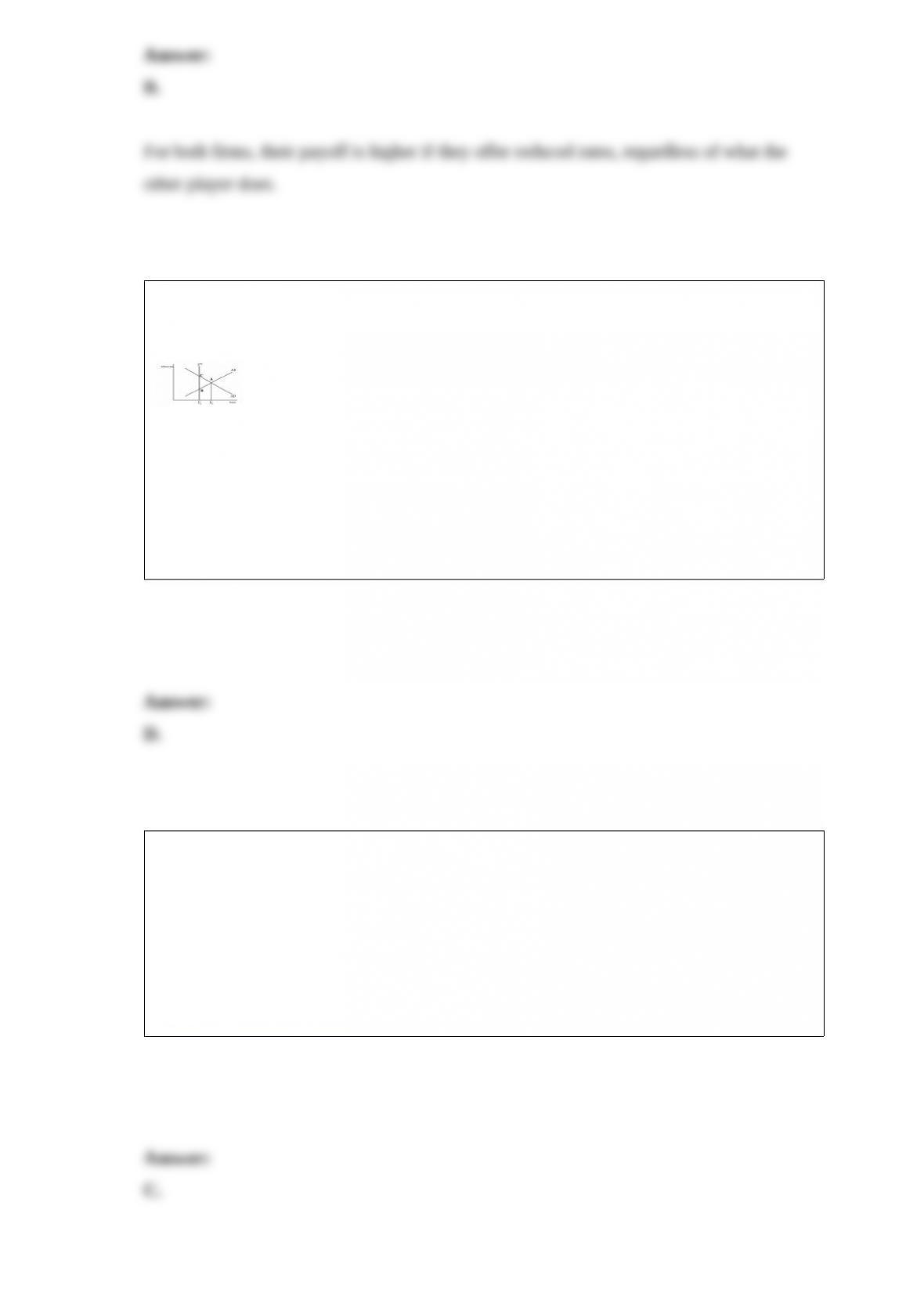
Refer to the figure below. The economy pictured in the figure has a(n) ______ gap with
a short-run equilibrium combination of the price level and output indicated by point
___.
A. recessionary; A
B. recessionary; B
C. expansionary; C
D. expansionary; A
For any horizontal demand curve, the price elasticity of demand is:
A. 0.
B. 1.
C. infinite.
D. equal to the price of the good.
If consumers completely cease purchasing a product when its price increases by any
amount, then demand is:
A. inelastic.
B. perfectly inelastic.
C. unit elastic.
D. perfectly elastic.