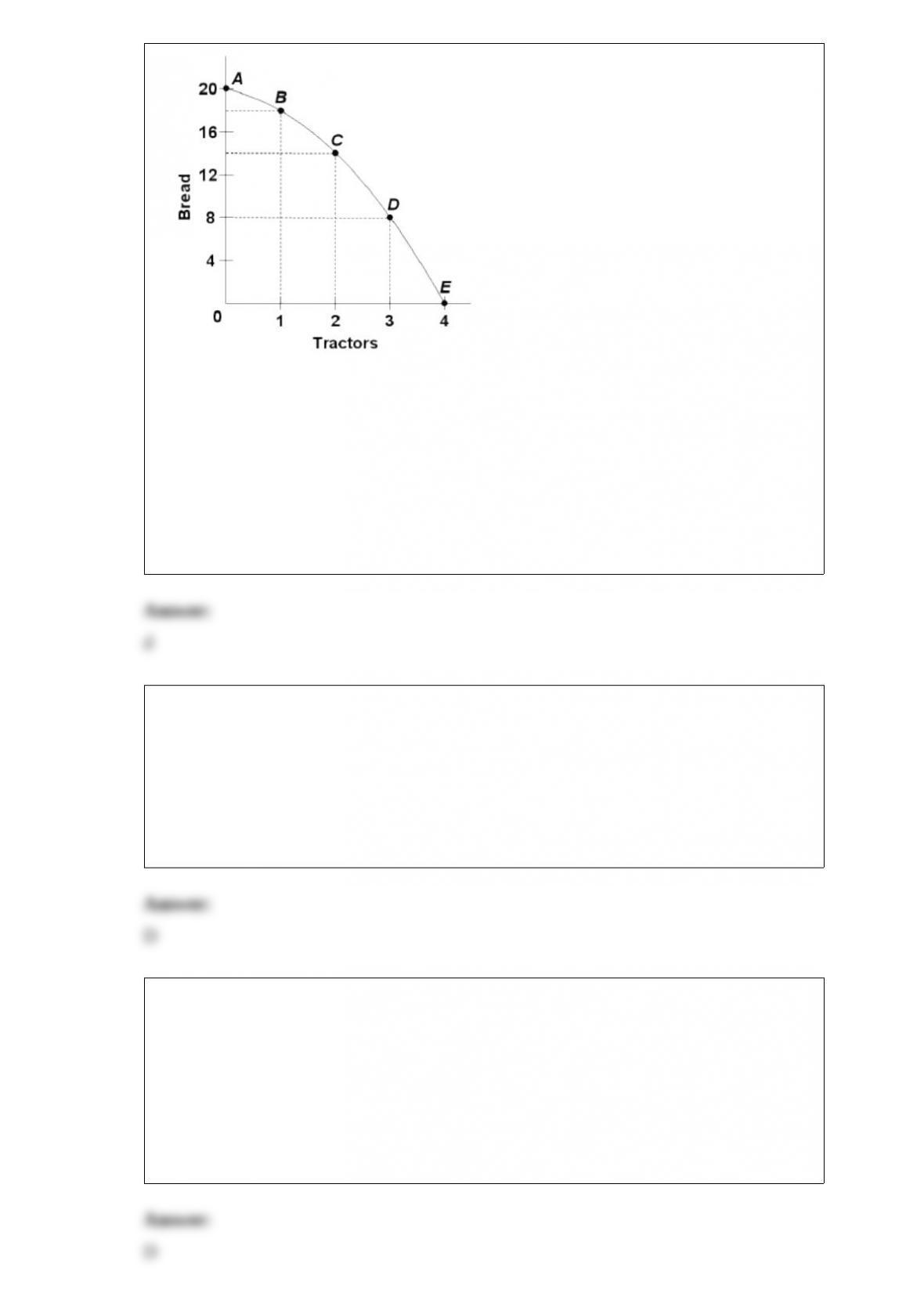
1)
refer to the above diagram. which of the following is a positive statement?
a.a point inside the production possibilities curve is superior to a point on the curve
because the former requires less work effort.
b.because any society should stress economic growth as its major goal, point d is
superior to point c.
c.point b is preferable to point c because the ultimate goal of economic activity is to
maximize consumption.
d.given its resources and technology, this society is incapable of simultaneously
producing 3 units of tractors and 15 units of bread.
2) In the inverted-U theory of R&D:
A.process innovation and product innovation are inversely related.
B.technological change is inversely related to scientific discovery.
C.R&D expenditures rise continuously as a percentage of firms’ sales as industry
concentration rises.
D.R&D expenditures first rise as a percentage of firms’ sales as industry concentration
increases, but then fall as higher industry concentration occurs.
3) The Federal budget surplus is found by:
A.subtracting government revenue plus government borrowing from government
spending in a particular year.
B.cumulating the difference between government spending and tax revenues over all
years since the nation’s founding.
C.subtracting government revenues from government spending on noninvestment goods
in a particular year.
D.subtracting government spending from government tax revenue in a particular year.
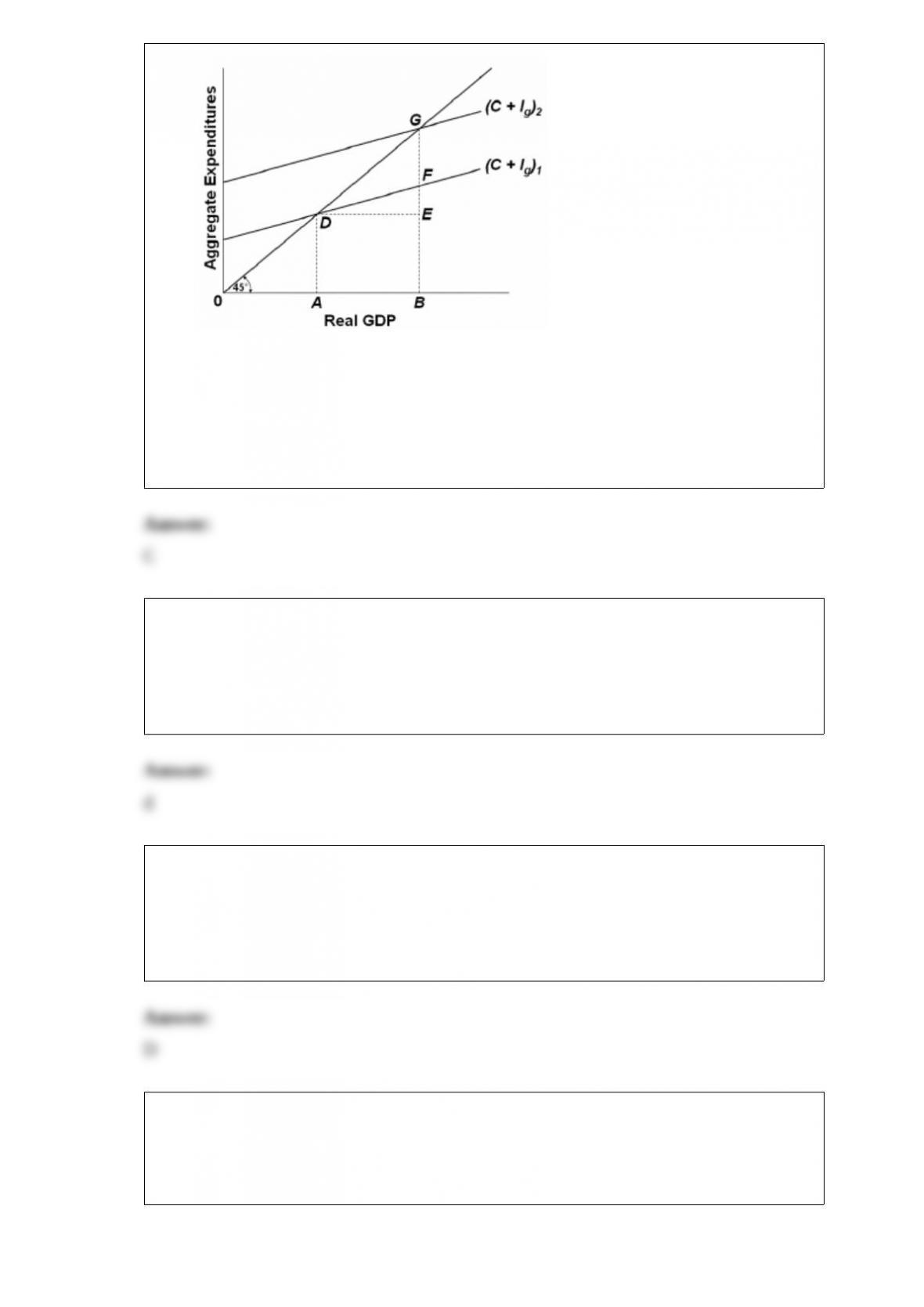
4)
Refer to the above diagram for a private closed economy. The marginal propensity to
consume is:
A.GF/GB.
B.DA/GB.
C.FE/DE.
D.FB/0B.
5) the long run is characterized by:
a.the relevance of the law of diminishing returns.
b.at least one fixed input.
c.insufficient time for firms to enter or leave the industry.
d.the ability of the firm to change its plant size.
6) Changes in the discount rate are:
A.the most powerful and useful tool of monetary policy.
B.less frequent than changes in the reserve requirement.
C.more important than open-market operations.
D.less important than open-market operations in implementing monetary policy.
7) Imagine that a state government is considering the construction of a new state office
building to consolidate state operations. Its estimate of the total costs and the total
benefits of building a 4- 6-, 8-, or 10-story building is shown in the table below. (All
figures are in millions of dollars.)
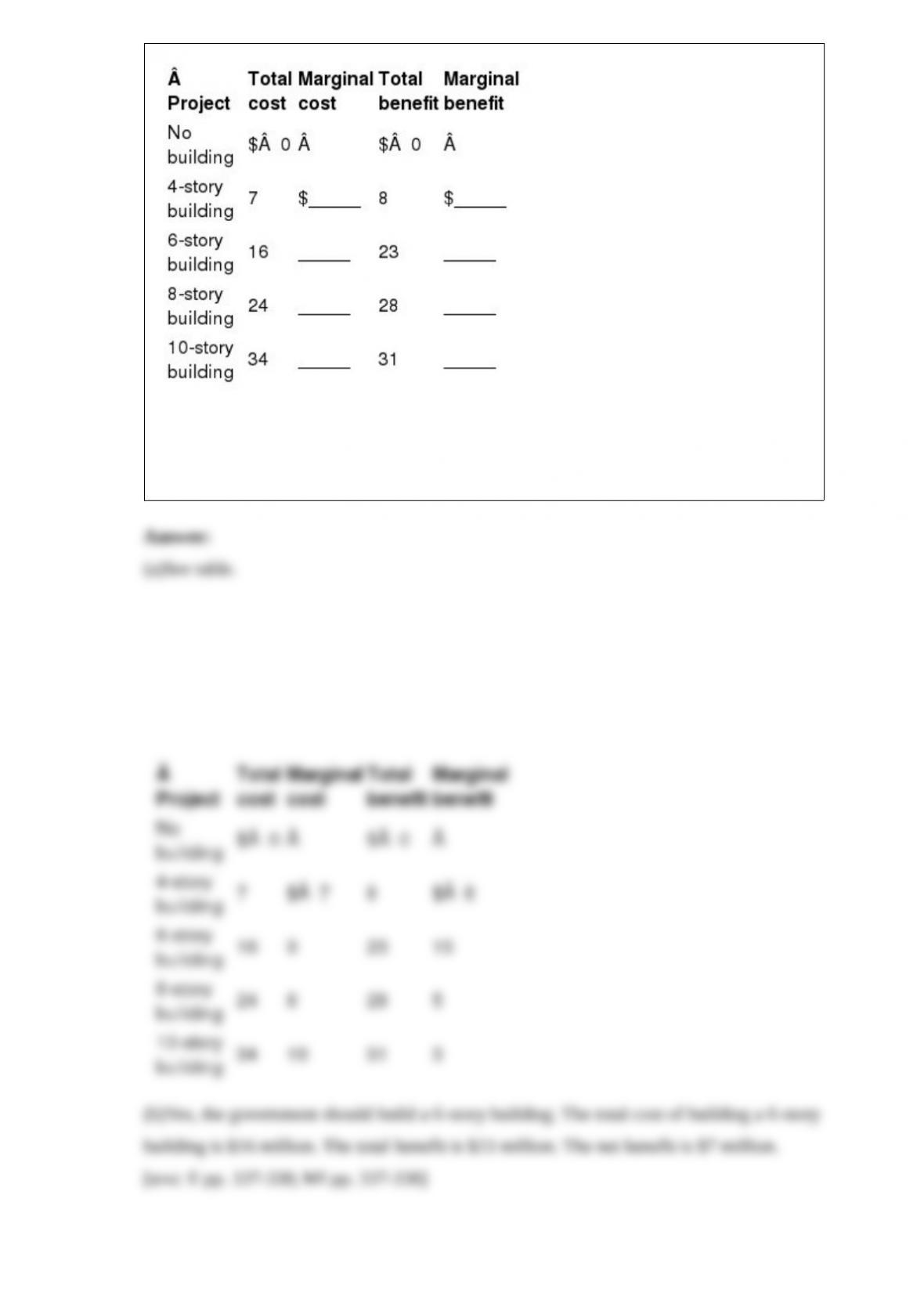
(a)Compute the marginal cost and the marginal benefit of the 4-, 6-, 8-, and 10-story
buildings.
(b)Should the state build a new office building? If so, what size building and what will
be the total benefit, total cost, and net benefit to society?
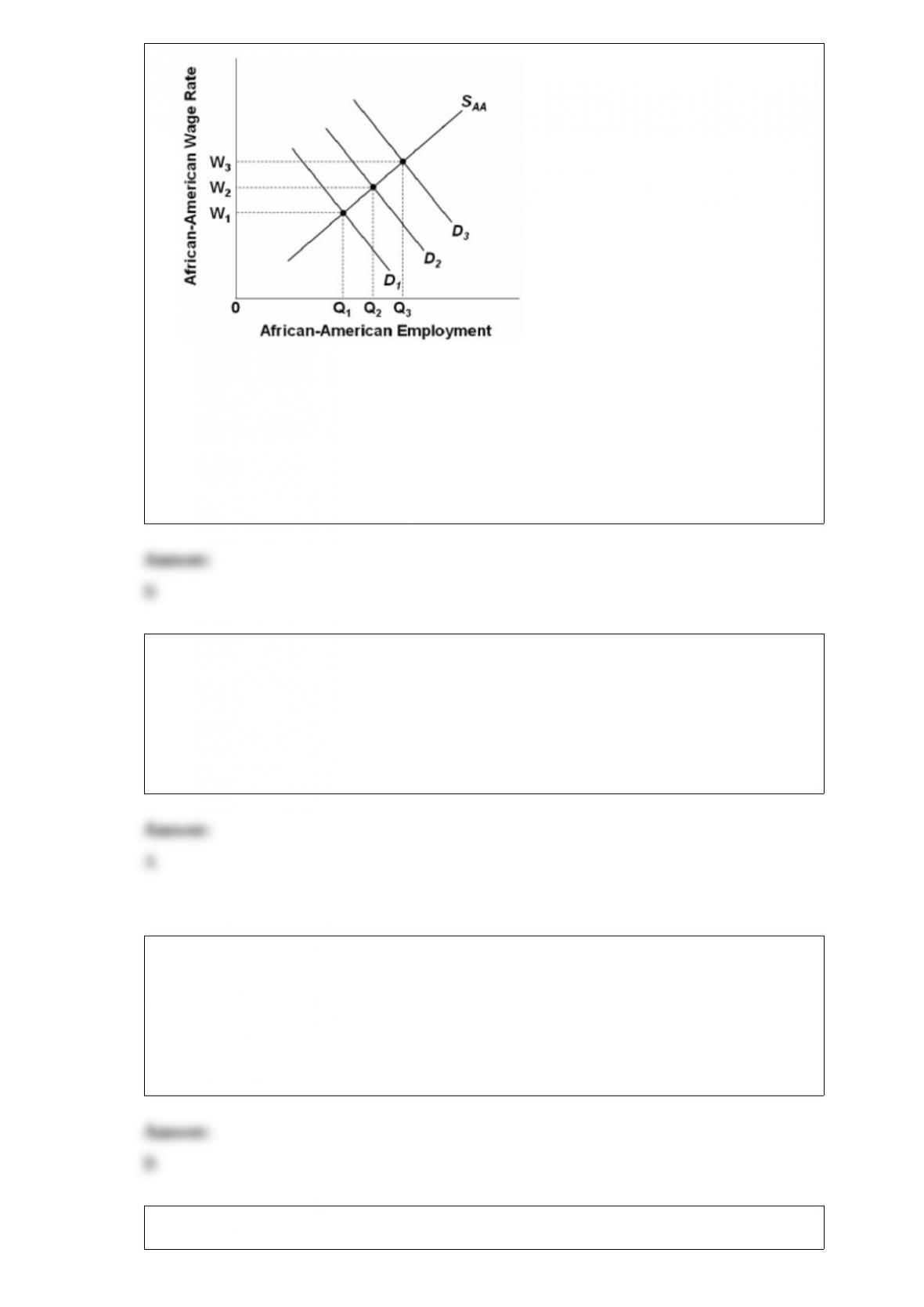
8)
Refer to the above diagram. Which of the following would be consistent with a
decrease in racial prejudice against African-Americans and thus in the discrimination
coefficients of employers, taken as a group?
A.a shift in the labor demand curve from D3 to D2.
B.an increase in the African-American wage rate from W1 to W2.
C.a reduction in African-American employment from Q3 to Q2.
D.a decrease in the African-American wage rate from W2 to W1.
9) A high tariff on imported good X might reduce domestic employment in industry Y
if:
A.X is an input used domestically in producing Y.
B.X and Y are substitute goods.
C.X is an inferior good.
D.Y is an inferior good.
10) The marginal revenue product (MRP) of land declines as more land is brought into
production because:
A.land is a “free and nonreproducible gift of nature.”
B.of diminishing returns.
C.land rent has no incentive function.
D.the supply of land is fixed.
11) immigrants tend to choose countries closer to their country of origin because:

a.bordering countries always have high wage rates.
b.there are fewer beaten paths to nearby countries, and therefore better prospects of
finding a good job.
c.neighboring countries usually speak the same language.
d.migration costs tend to be directly related to distance from the country of origin.