
1) leader countries tend to have higher growth rates than follower countries.
2) The aggregate expenditures schedule in the mixed open economy has a negative
slope.
3) If the demand for agricultural products is inelastic, a relatively small increase in
supply will cause farm prices and incomes to decline.
4) The greater the upward slope of the AS curve, the larger is the realized multiplier
effect of a change in investment spending.
5) in the short run a pure monopolist will charge the highest price the market will bear
for its product.
6) In the absence of enforceable property rights, there is little incentive to preserve
resources for future use.
7) About one-half of U.S. electricity is generated using petroleum.

8) when a consumer is maximizing total utility, he or she cannot increase total utility by
reallocating expenditures among different products.
9) If C + Ig exceeds GDP in a private closed economy, GDP will decline.
10) if the nominal interest rate is 8 percent and the real interest rate is 5 percent, then
the inflation premium is 13 percent.
11) Between 1994 and 2000, annual budget deficits gave way to annual budget
surpluses.
12) The World Trade Organization is comprised of 25 European nations and dedicated
to abolishing trade barriers and integrating their economies.
13) Because majority voting fails to incorporate the strength of the preferences of
individual voters, it:
A.creates negative externalities.
B.produces economically inefficient outcomes under some circumstances.
C.leads to market failure.
D.leads to politics dominated by special interest groups.
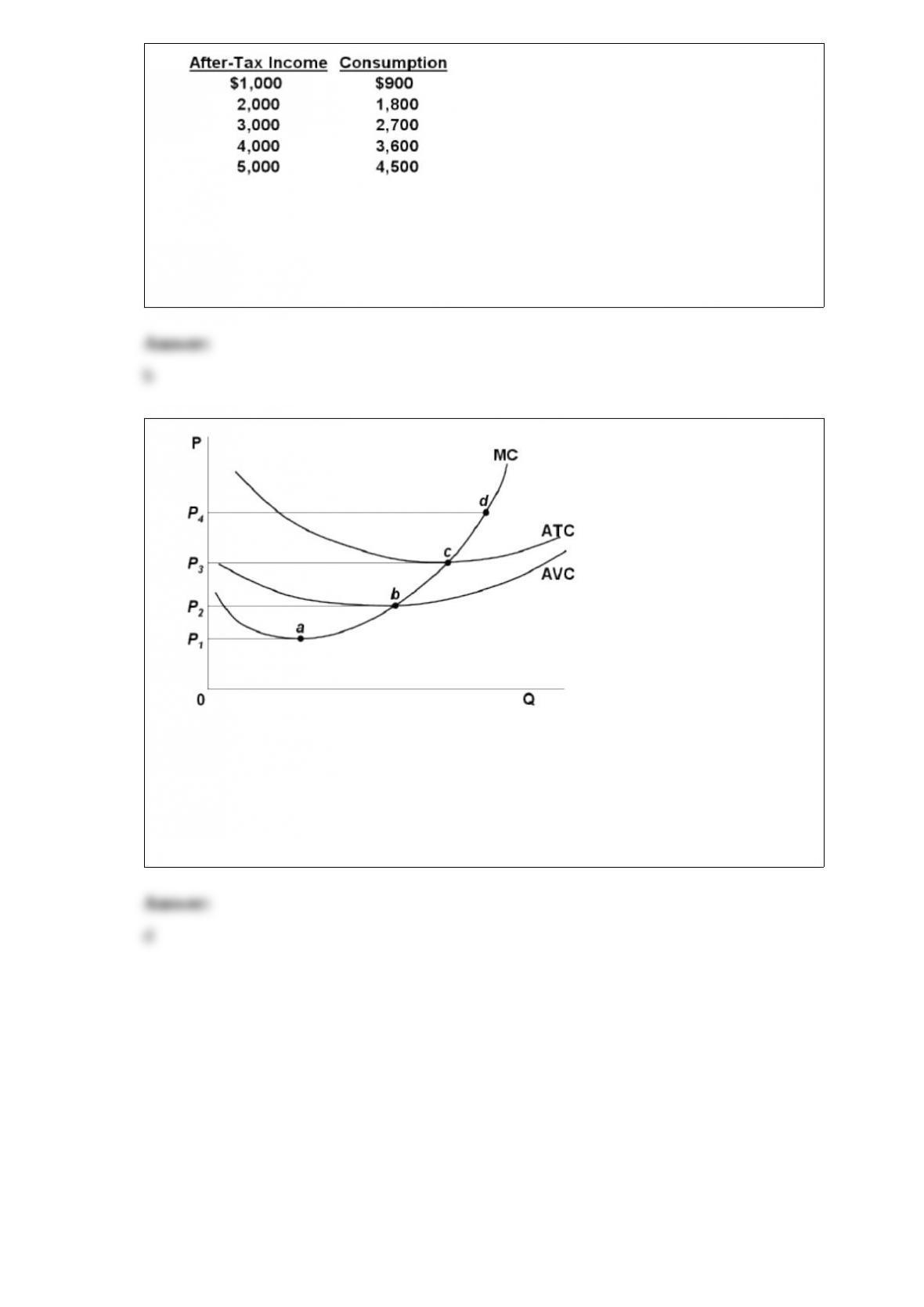
14)
the above data indicate that:
a.consumers spend 80 percent of their after-tax incomes.
b.consumers spend 90 percent of their after-tax incomes.
c.a tax reduction will reduce consumption.
d.the relationship between consumption and after-tax income is random.
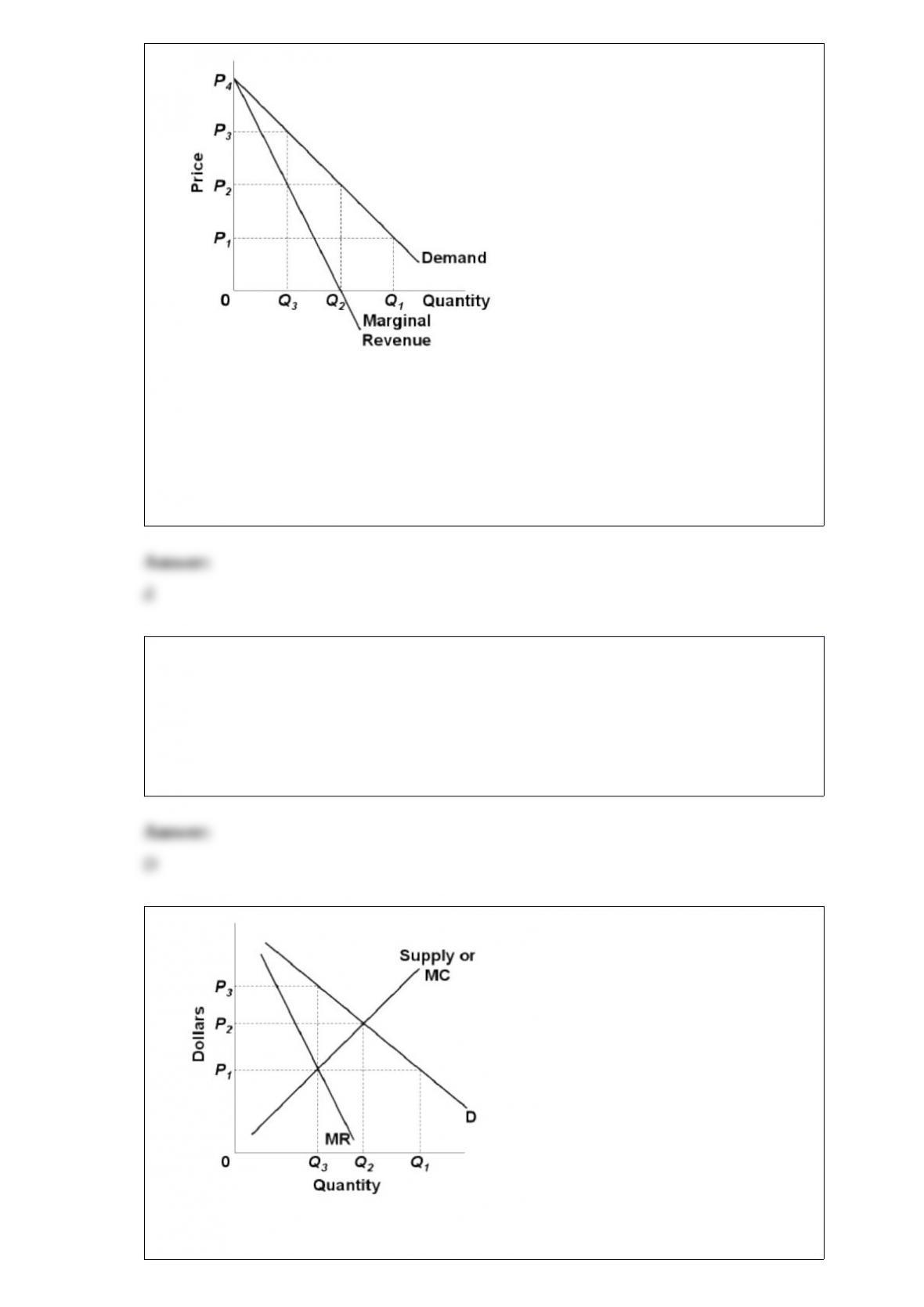
15)
refer to the above diagram for a purely competitive producer. the firm will produce at a
loss at all prices:
a.above p1.
b.above p3.
c.above p4.
d.between p2 and p3.
16)
refer to the above diagram. if this somehow was a costless product (that is, the total cost
of any level of output was zero), the firm would maximize profits by:
a.selling the product at the highest possible price at which a positive quantity will be
demanded.
b.producing q1 units and charging a price of p1.
c.producing q3 units and charging a price of p3.
d.producing q2 units and charging a price of p2.
17) Which of the following made monopoly and restraints of trade criminal offenses
against the Federal government?
A.Celler-Kefauver Act of 1950
B.Wheeler-Lea Act of 1938
C.Clayton Act of 1914
D.Sherman Act of 1890
18)
refer to the above diagram. if this industry is purely competitive, the profit-maximizing
price and quantity will be:
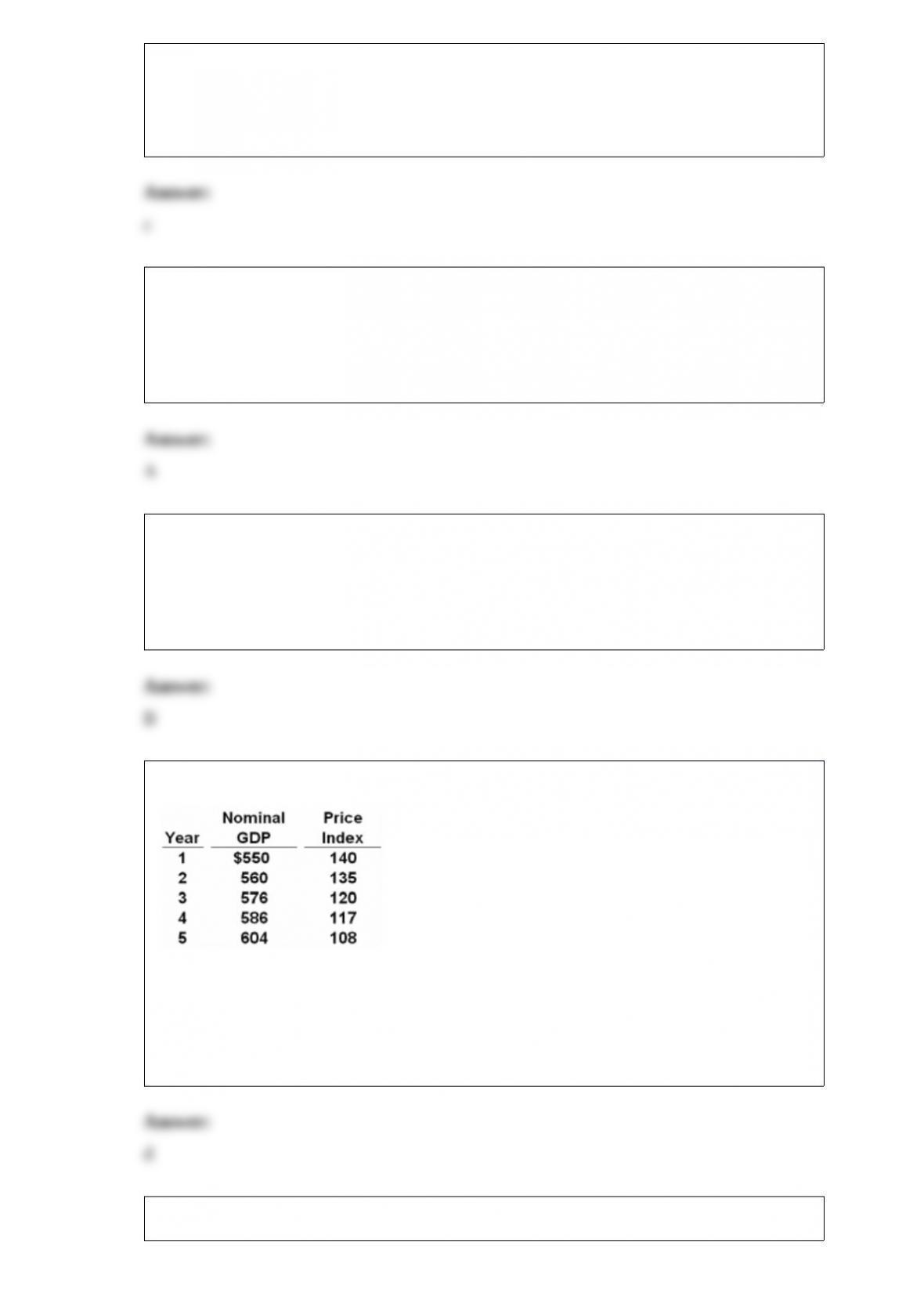
a.p3 and q3
b.p1 and q1
c.p2 and q2
d.indeterminate on the basis of the information given
19) Bilateral monopoly occurs where:
A.a monopsonistic employer bargains with an inclusive union.
B.a monopsonistic employer bargains with an exclusive union.
C.a craft union bargains with a purely competitive employer.
D.an industrial union bargains with a purely competitive employer.
20) Which of the following best reflects the ability-to-pay philosophy of taxation?
A.a tax on residential property
B.a progressive income tax
C.an excise tax on gasoline
D.an excise tax on coffee
21) answer the next question(s) on the basis of the following information:
the economy above has experienced a:
a.a declining nominal gdp.
b.a rising price level.
c.a declining real gdp.
d.a rising real gdp.
22) assuming conventional supply and demand curves, changes in the determinants of
supply and demand will:
a.in all likelihood alter both equilibrium price and quantity.
b.alter equilibrium quantity, but not equilibrium price.
c.alter equilibrium price, but not equilibrium quantity.
d.have no effect on equilibrium price or quantity.
23) economies and diseconomies of scale explain:
a.the profit-maximizing level of production.
b.why the firm’s long-run average total cost curve is u-shaped.
c.why the firm’s short-run marginal cost curve cuts the short-run average variable cost
curve at its minimum point.
d.the distinction between fixed and variable costs.
24) When deriving the aggregate demand (AD) curve from the aggregate expenditure
model, an increase in U.S. product prices would cause an increase in:
A.the value of household wealth and lower consumption expenditures.
B.interest rates and lower investment expenditures.
C.exports and imports.
D.U.S. resource prices and an increase in aggregate supply.
25) The following production possibilities tables for two countries, Latalia and
Trombonia:
Refer to the above tables. Which of the following would be feasible terms for trade
between Latalia and Trombonia?
A.1 ton of beans for 1 ton of pork
B.2 tons of beans for 1 ton of pork
C.6 tons of beans for 1 ton of pork
D.4 tons of beans for 1 ton of pork
26) if a firm increases all of its inputs by 10 percent and its output increases by 15
percent, then:
a.it is encountering diseconomies of scale.
b.it is encountering economies of scale.
c.the law of diminishing returns is taking hold.
d.the firm’s long-run atc curve will be rising.
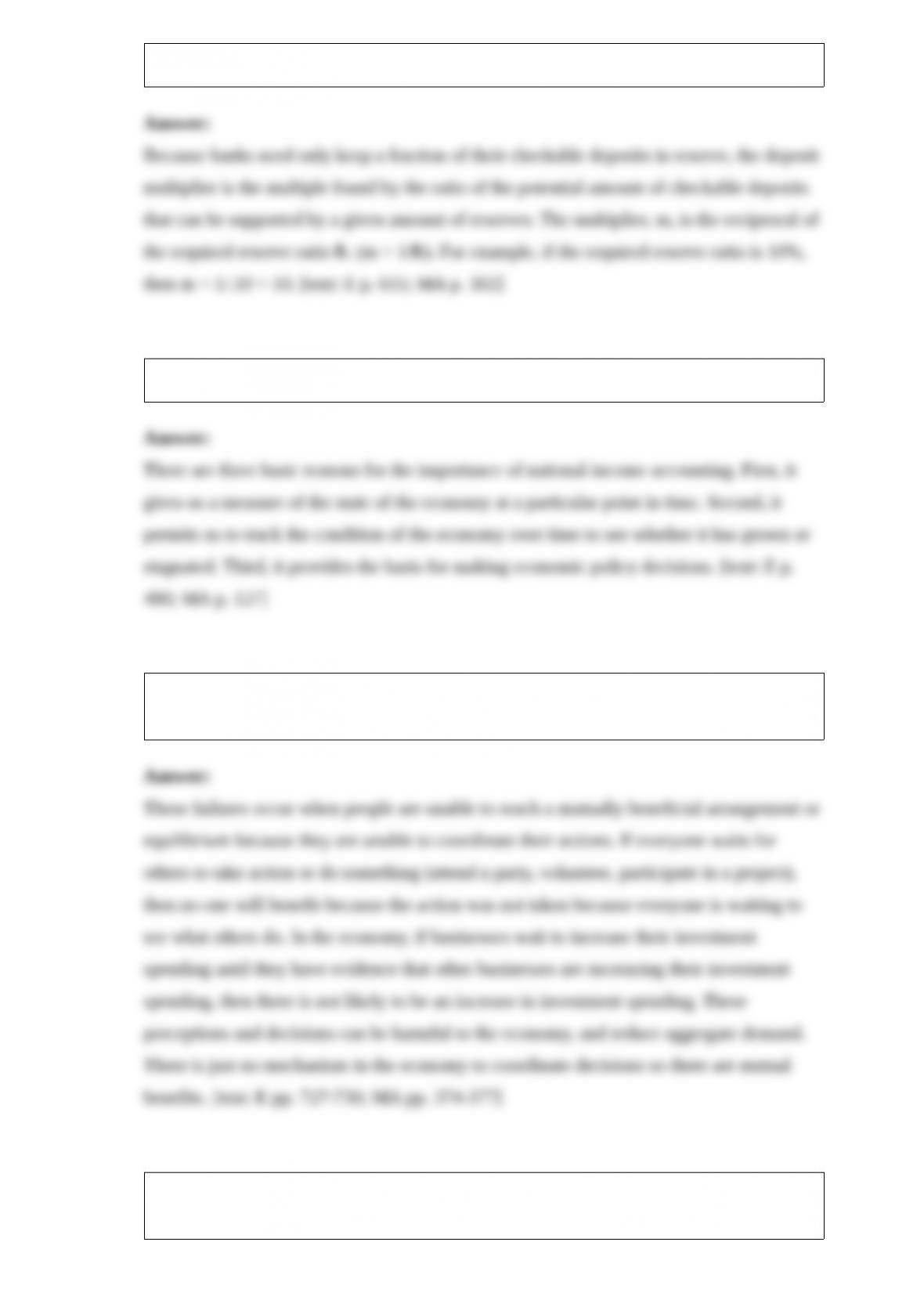
27)
Refer to the above diagram for a private closed economy. Gross investment:
A.is positively related to the level of GDP.
B.is negatively related to the level of GDP.
C.is independent of the level of GDP.
D.must be subtracted from consumption to determine aggregate expenditures.
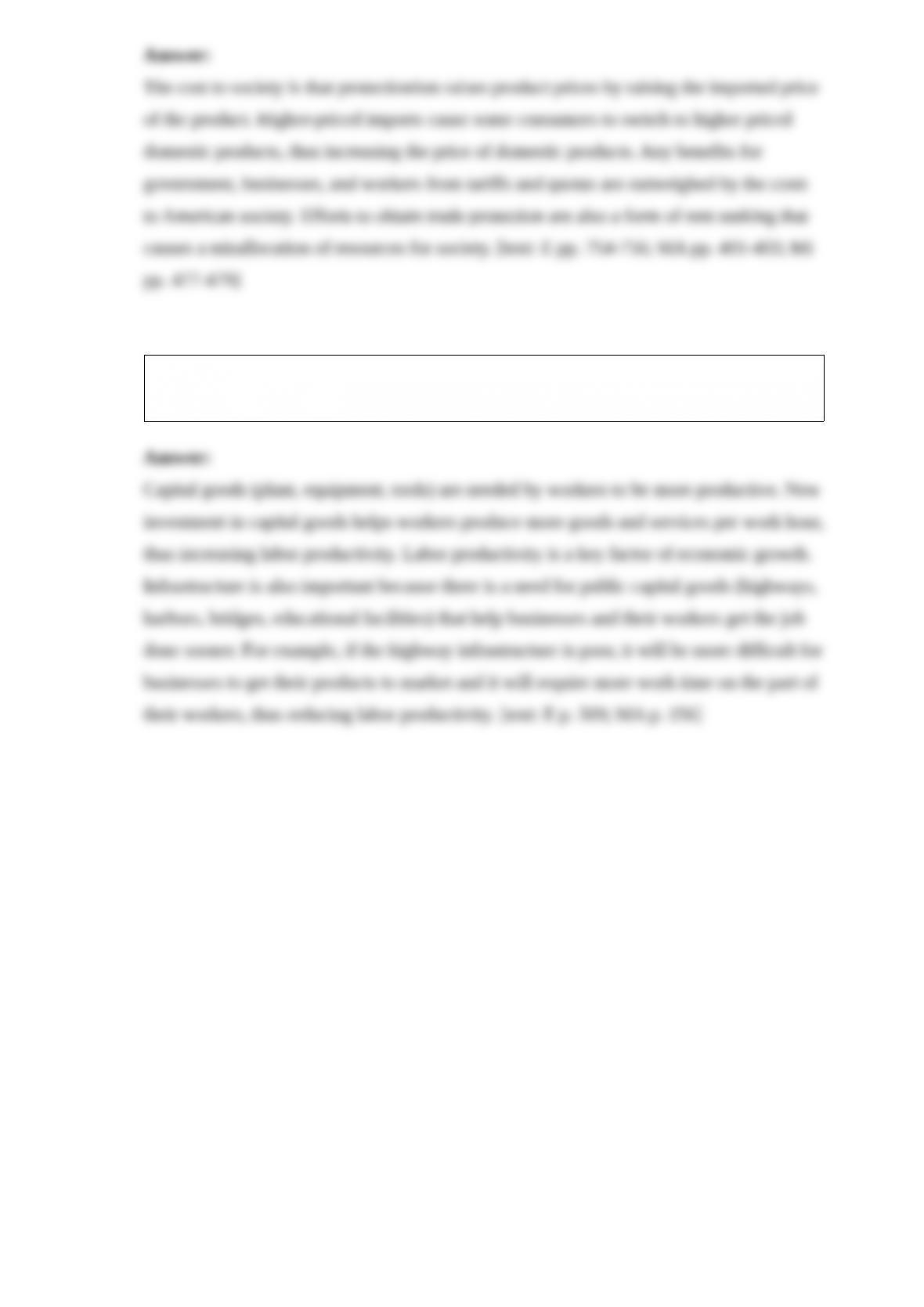
28)

Refer to the above diagram, where Sd and Dd are the domestic supply and demand for a
product and Pc is the world price of that product. With a PcPt per unit tariff, the
quantities sold by foreign and domestic producers respectively will be:
A.xz and x
B.xv and xz
C.x and xz
D.wy and w
29) In monopolistically competitive markets neither allocative nor productive efficiency
is realized. Explain.
30) What explains differences in the economic rent charged for two plots of 500 acres
of land that are used for growing corn and located in the same county of a state?
31) Define the monetary multiplier.
32) Of what use is national income accounting to economists and to policy makers?
33) What are coordination failures and why are they important for interpreting the
macro economy?
34) What are the net costs of tariffs and quotas on consumption and income
distribution?
35) How does investment in capital goods and infrastructure contribute to economic
growth?