
1) which of the following constitute(s) the largest component of the world’s
international reserves?
a.gold
b.special drawing rights
c.imf drawings
d.foreign currencies
2) both economic theory and empirical studies support the notion that foreign direct
investment is conducted in anticipation of future profits.
a.true
b.false
3) assume a system of floating exchange rates. due to a high savings rate, suppose the
level of savings in japan is in excess of domestic investment needs. if japanese residents
invest abroad, the yen’s exchange value will ____ and the japanese trade balance will
move toward ____.
a.appreciate, deficit
b.appreciate, surplus
c.depreciate, deficit
d.depreciate, surplus
4) the supply of foreign currency may be:
a.upward-sloping
b.backward-sloping
c.vertical
d.none of the above
5) multilateral trade negotiations have led to
a.continued trade liberalization
b.financial liberalization
c.increased investment
d.all of the above
6) the time period that it takes for companies to increase output of commodities for
which demand has increased due to currency depreciation is known as the:
a.recognition lag
b.decision lag
c.replacement lag
d.production lag
7) assume that germany has higher labor productivity and higher wage levels than
france. germany can produce a commodity more cheaply than france if its productivity
differential more than offsets its wage differential.
a.true
b.false
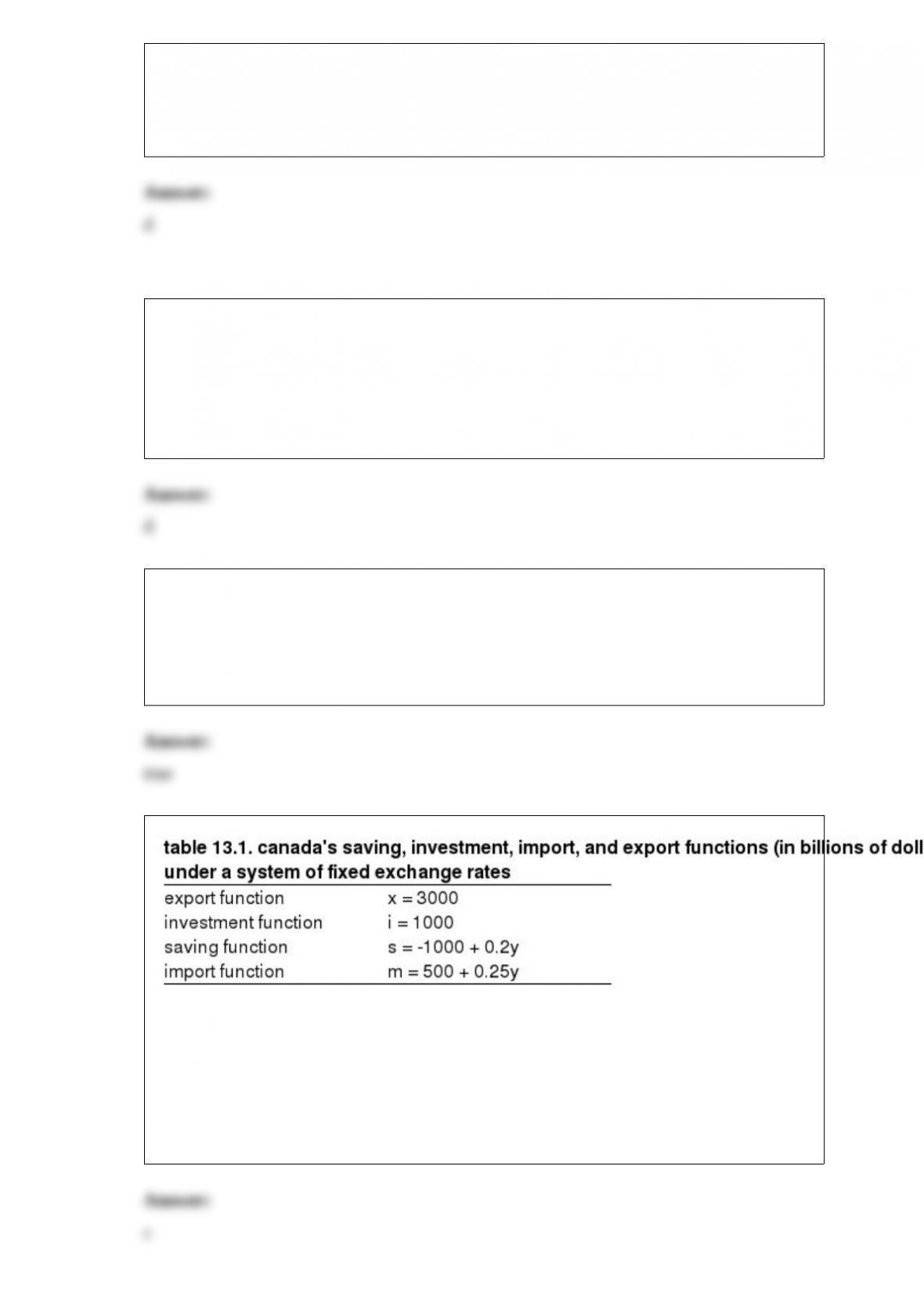
8) referring to table 13.1, canada’s foreign trade multiplier equals:
a.1.75
b.2.05
c.2.22
d.2.64
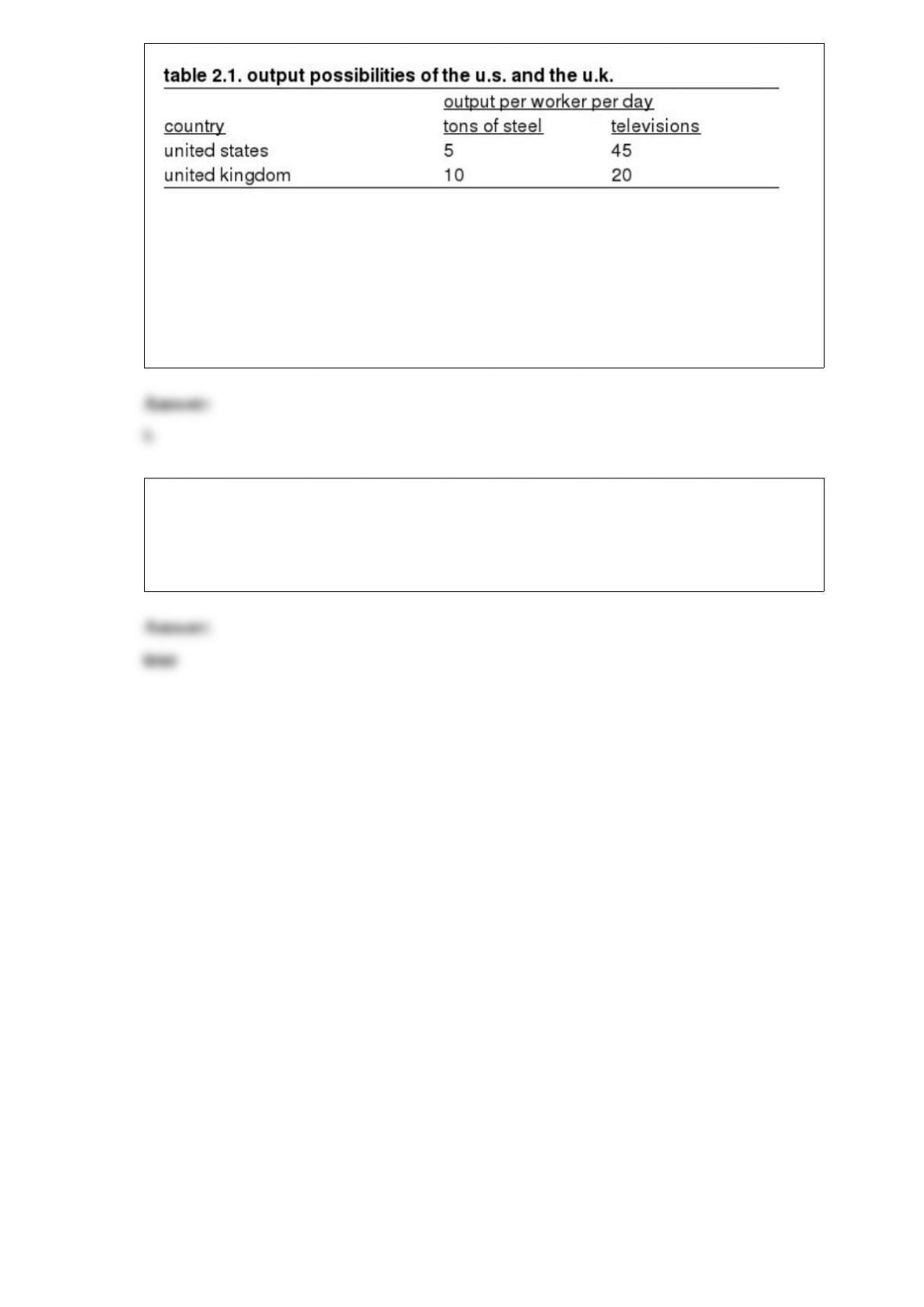
9) referring to table 2.1, the united kingdom gains most from trade if:
a.1 ton of steel trades for 2 televisions
b.1 ton of steel trades for 3 televisions
c.2 tons of steel trade for 4 televisions
d.2 tons of steel trade for 5 televisions
10) important trading partners of the united states include canada, mexico, japan, and
china.
a.true
b.false