1) Some countries win in international trade, while other countries lose.
a.True
b.False
2) For a given country, comparing the world price of aluminum and the domestic price
of aluminum before trade indicates whether that country’s demand for aluminum
exceeds the demand for aluminum in other countries.
a.True
b.False
3) The long-run supply curve for a competitive industry
a.may be horizontal if entry into the industry lowers average total cost.
b.may be upward-sloping if higher-cost firms enter the industry.
c.will be horizontal if there is free entry into the industry.
d.will be upward-sloping if there are barriers to entry into the industry.
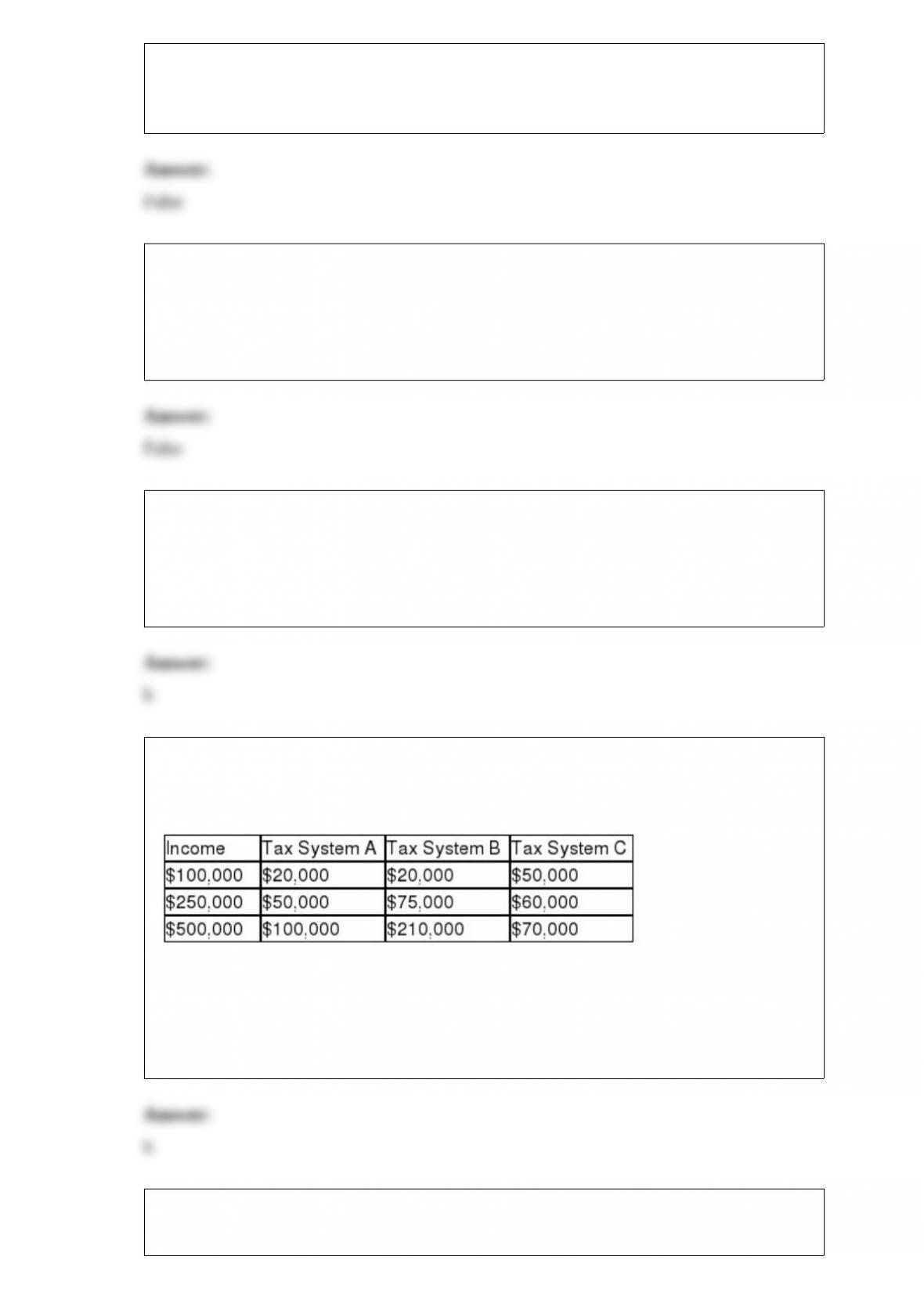
4) Table 12-23
The dollar amounts in the last three columns are the taxes owed under the three
different tax systems.
Which of the three tax systems is progressive?
a.Tax System A
b.Tax System B
c.Tax System C
d.None of the systems are progressive.
5) Figure 9-5
The figure illustrates the market for tricycles in a country.
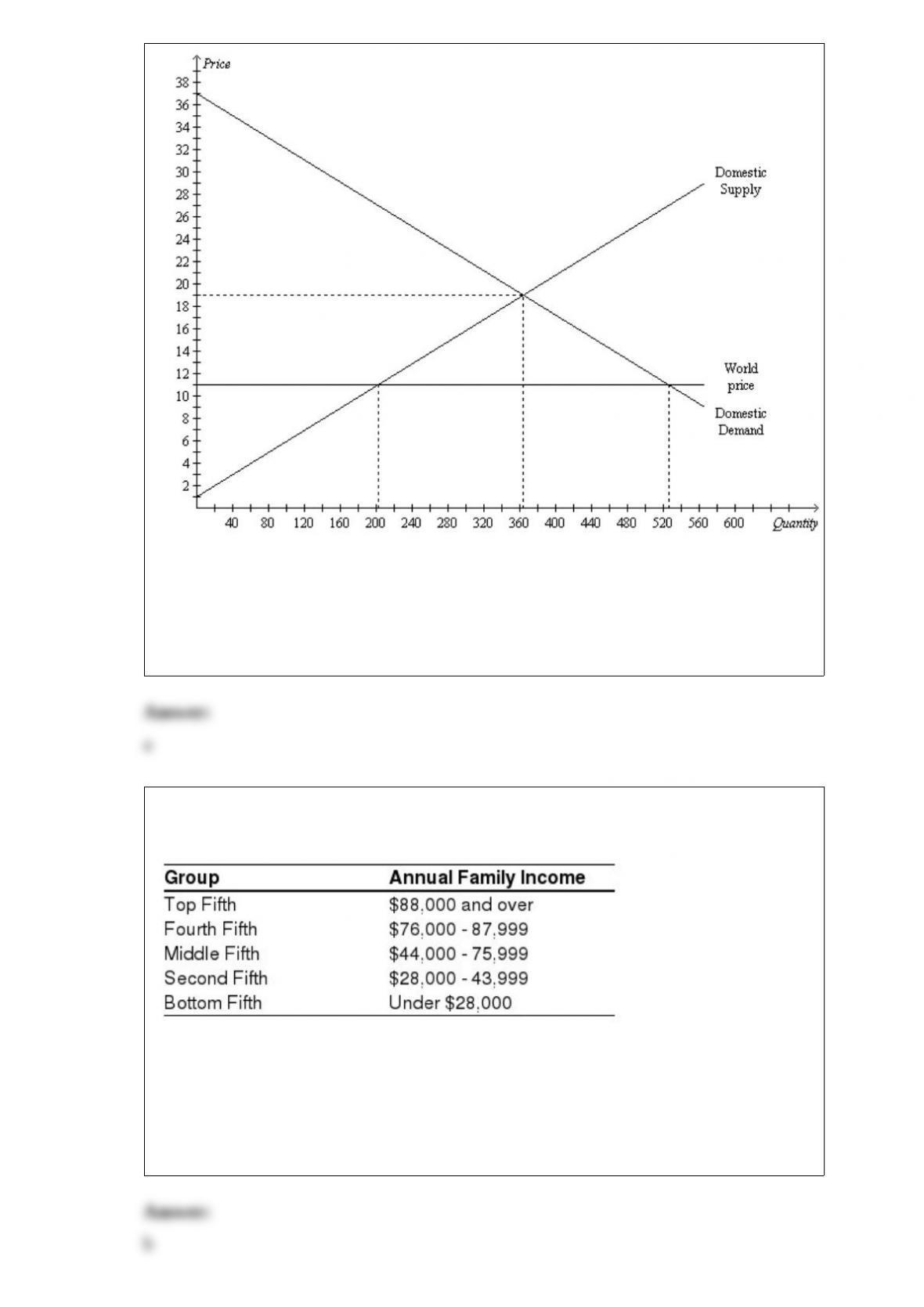
If this country allows free trade in tricycles,
a.consumers will gain more than producers will lose.
b.producers will gain more than consumers will lose.
c.producers and consumers will both gain equally.
d.producers and consumers will both lose equally.
6) Table 20-3
The Distribution of Income in Edgerton
Refer to Table 20-3. Where would the government in Edgerton set the poverty line to
have a poverty rate of 40 percent?
a.$28,000
b.$44,000
c.$76,000
d.$88,000
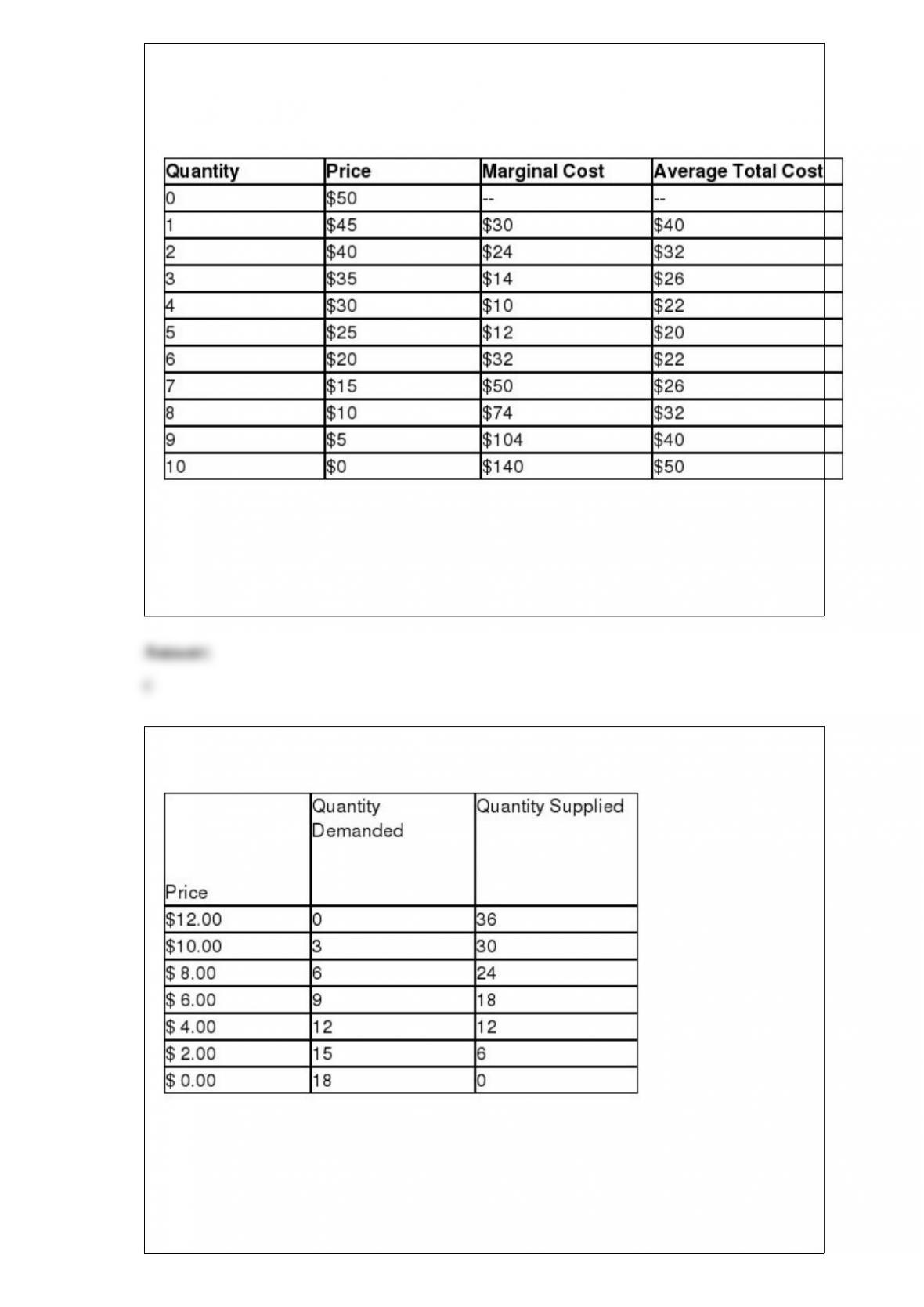
7) Table 16-4
This table shows the demand schedule, marginal cost, and average total cost for a
monopolistically competitive firm.
What is this firm’s profitmaximizing level of output?
a.0 units of output
b.3 units of output
c.4 units of output
d.5 units of output
8) Table 7-17
Both the demand curve and the supply curve are straight lines. If the price is $4 but
only 6 units are bought and sold, total surplus will be
a.$42.
b.$48.
c.$54.
d.$60.
9) In a dictator game, player A must divide $100 between player A and player B. In this
game, player B does not have the opportunity to reject an offer € he or she goes home
with whatever player A offers. Experiments have observed that when player A splits the
$100, he or she consistently offers over $10 to player B. Which of the following
comments fits best.
a.Although player A is acting as economic theory usually assumes, he or she makes
such offers because they seem more fair.
b.Although player A is acting as economic theory usually assumes, he or she makes
such offers although they are not fair.
c.Although player A is not acting as economic theory usually assumes, he or she makes
such offers because they seem more fair.
d.Although player A is not acting as economic theory usually assumes, he or she makes
such offers because they are not fair.
10) Which of the following is not a public good?
a.national defense
b.patented technological knowledge
c.general knowledge
d.the elimination of poverty
11) A firm in a competitive market currently produces and sells 500 doorknobs for a
price of $10 per doorknob. Which of the following events would decrease the firm‘s
average revenue?
a.The firm increases its output above 500 doorknobs.
b.The firm decreases its output below 500 doorknobs.
c.The market price of doorknobs rises above $10.
d.The market price of doorknobs falls below $10.
12) The Hicks family owns a blueberry farm in Maine. The Ward family owns a
blueberry farm in Massachusetts. A drought in Massachusetts destroys half of the Ward
family’s harvest for one year. For the Ward family, their
a.transitory income for the year of the drought likely exceeds their permanent income.
b.permanent income likely exceeds their transitory income for the year of the drought.
c.transitory income likely will be affected but the permanent income of the Hicks
family will increase.
d.permanent income likely will be affected but the permanent income of the Hicks
family will not be affected.
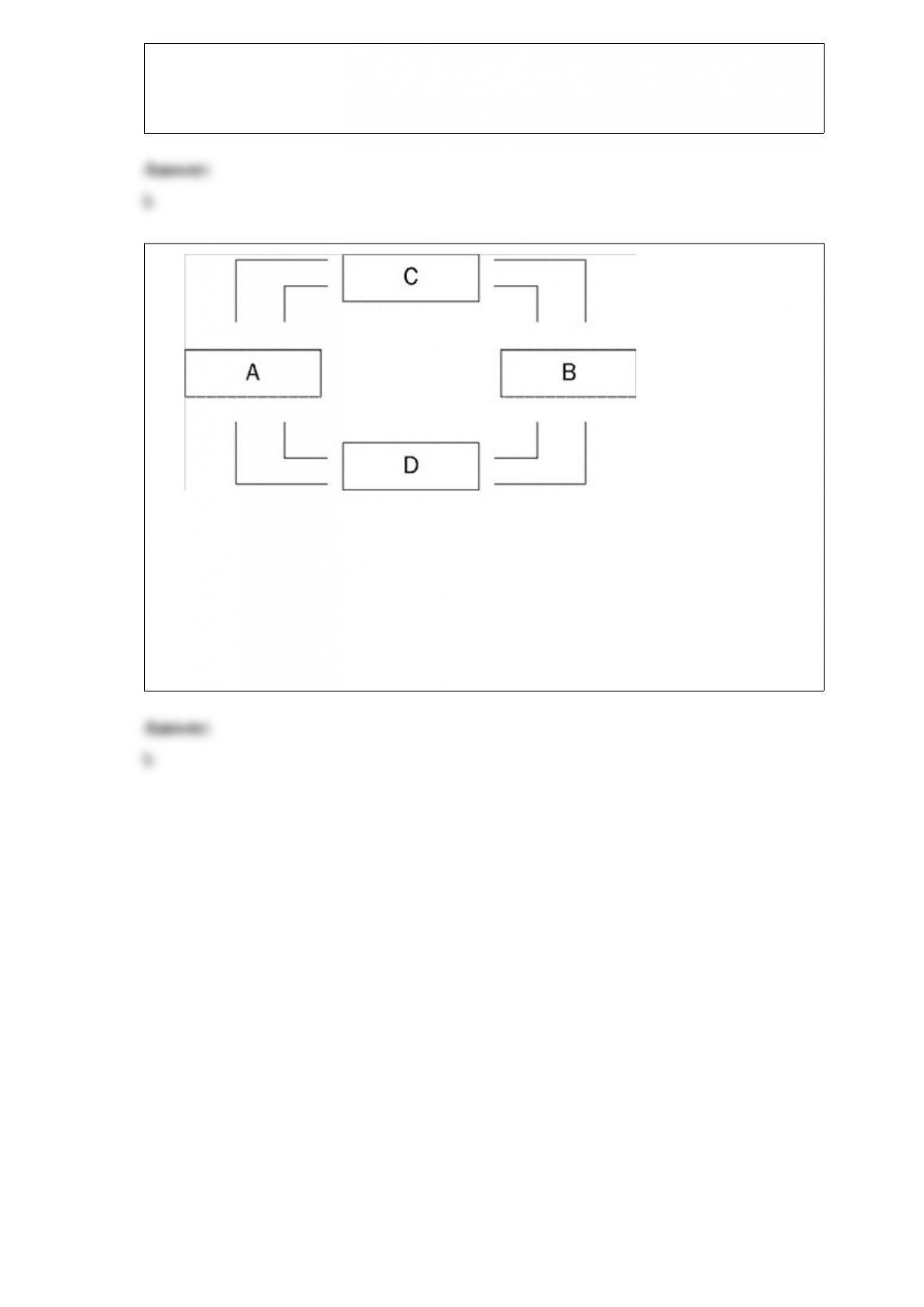
13) Carla regularly buys
fruits and vegetables at a grocery store. Roberto regularly pays a lawn- care company to
mow his lawn. If the flow of fruits and vegetables from the grocery store to Carla is
represented by an arrow from Box C to Box B of this circular-flow diagram, then the
money paid by Roberto to the lawn-care company is represented by an arrow
a.from Box A to Box D.
b.from Box B to Box C.
c.from Box C to Box B.
d.from Box D to Box A.