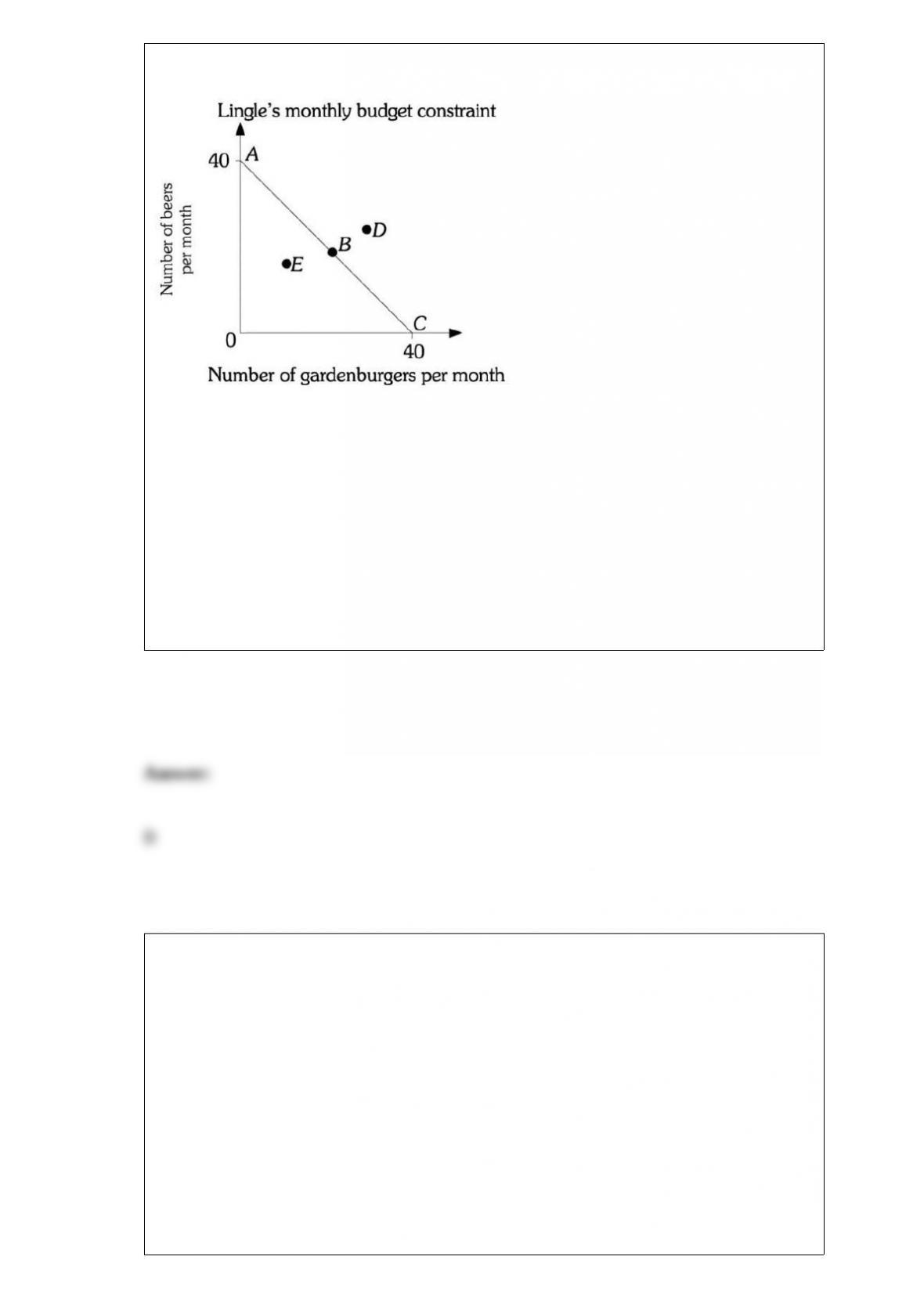
Figure 6.2
Refer to Figure 6.2. Along budget constraint AC, the opportunity cost of one beer is
A) 1/4 of a gardenburger.
B) 1 gardenburger.
C) 2 gardenburgers.
D) changing as Mr. Lingle moves down his budget constraint.
If the United States increases the tariff on imported salmon, this will
A) reduce the amount of salmon imported into the United States and reduce production
of salmon in the United States.
B) increase the amount of salmon imported in the United States and increase the
production of salmon in the United States.
C) reduce the amount of salmon imported in the United States and increase the
production of salmon in the United States.
D) increase the amount of salmon imported in the United States and reduce the
production of salmon in the United States.
A monopolistically competitive firm can minimize its losses by producing where
________ as long as ________.
A) MR = MC; P > AVC
B) P = MC; P > ATC
C) P = ATC; P > MR
D) P = MR; P > AFC
Relating to the Economics in Practice on page 361: Which of the following is an
example of an advertisement in which the fact that something is NOT mentioned
indicates that the product is unlikely to be desirable?
A) an advertisement for hot dogs that mentions that it meets certain religious dietary
requirements but fails to explain those requirements in a way that would be understood
by most people
B) an advertisement for a sneaker that mentions the endorsement of one sports star but
fails to mention the sports stars that have endorsed competing products
C) an advertisement for a 30-year old lawn tractor that mentions the color of its paint
and the number of cup holders it has but makes no mention of the condition of its
engine
D) an advertisement for ice cream that describes the variety of flavors available and the
way it tastes but makes no mention of the ice cream’s nutritional content

A firm is producing output less than the output associated with the minimum point on
the firm’s short run average variable cost curve. At this level of output the firm uses its
fixed capital input ________ and its variable labor input ________.
A) at the lowest average cost; at the lowest average cost
B) at the lowest average cost; at a level higher than the lowest average cost
C) at a level higher than the lowest average cost; at the lowest average cost
D) at a level higher than the lowest average cost; at a level higher than the lowest
average cost
The case for advertising includes the fact that
A) it wastes society’s scarce resources.
B) firms spend large sums of money to create meaningless differences among products.
C) it provides consumers with valuable information about product availability, quality,
and price.
D) it creates wants that otherwise would not have existed.
The demand for inputs is a derived demand because
A) it does not come from competitive markets.
B) it depends on the demand for outputs.
C) it is derived from nature.
D) it is derived from production.
Attempts to bypass price rationing in the market
A) are costly.
B) are easily administered.
C) are efficient.
D) are an effective tool for aiding low-income households.
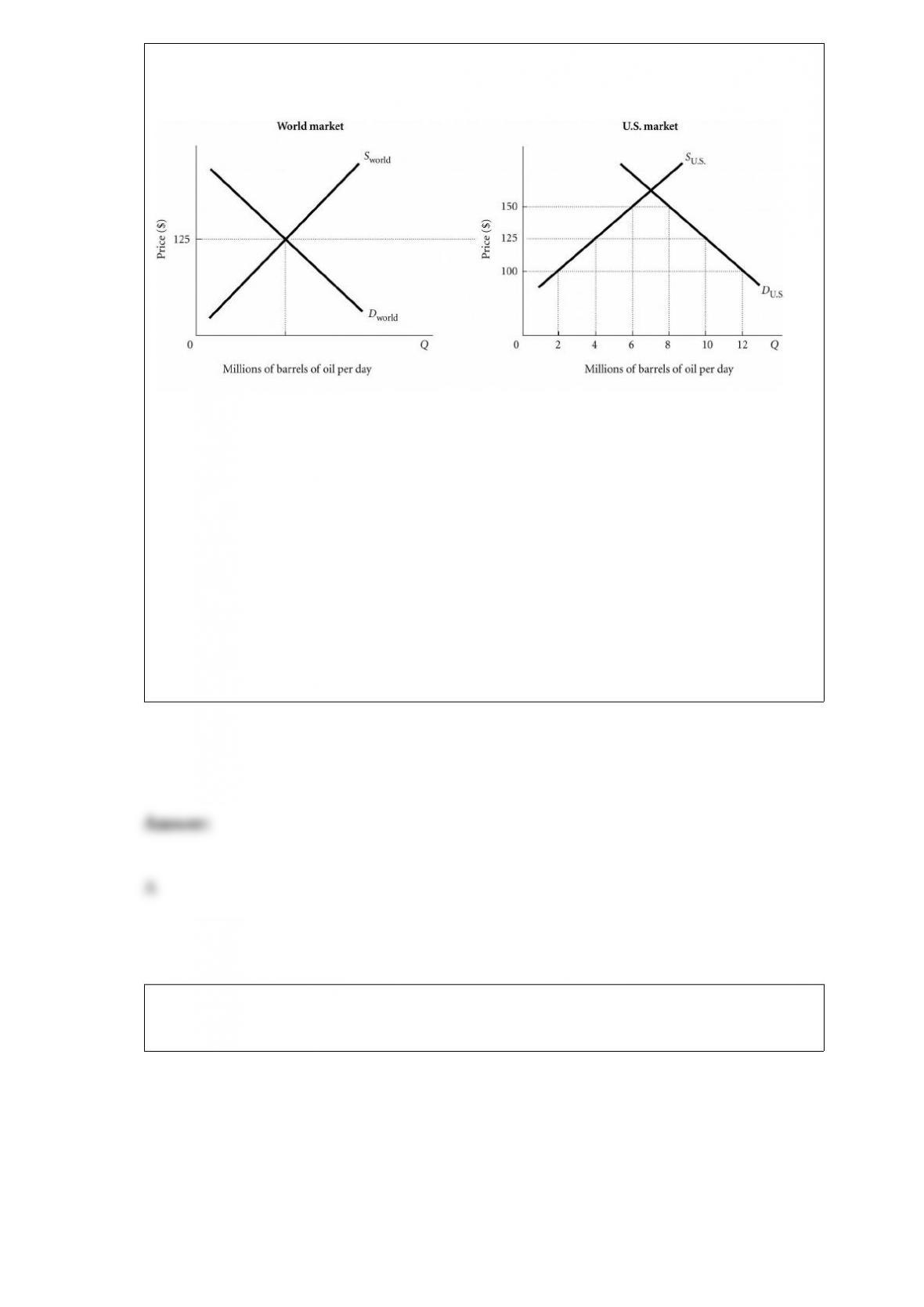
Figure 4.4
Refer to Figure 4.4. The price of oil in the United States would be $125 per barrel, and
the United States would import 6 million barrels of oil per day if the United States
levies ________ per barrel tax on imported oil.
A) no
B) a $25
C) a $50
D) a $100
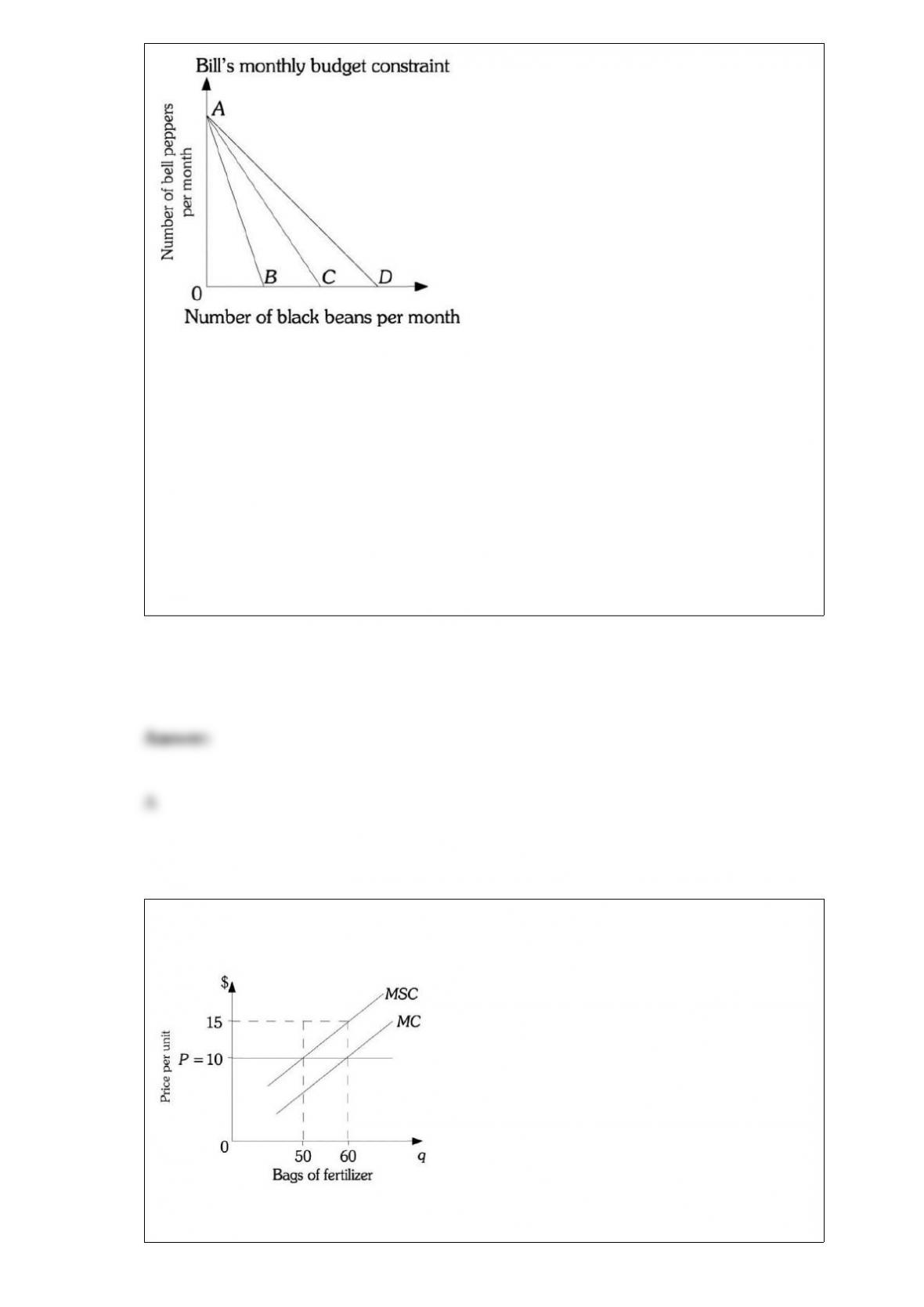
Figure 6.4
Refer to Figure 6.4. Bill’s budget constraint is AC. His budget constraint would shift to
AB if the price of
A) black beans increased.
B) black beans decreased.
C) bell peppers increased.
D) bell peppers decreased.
Figure 16.1
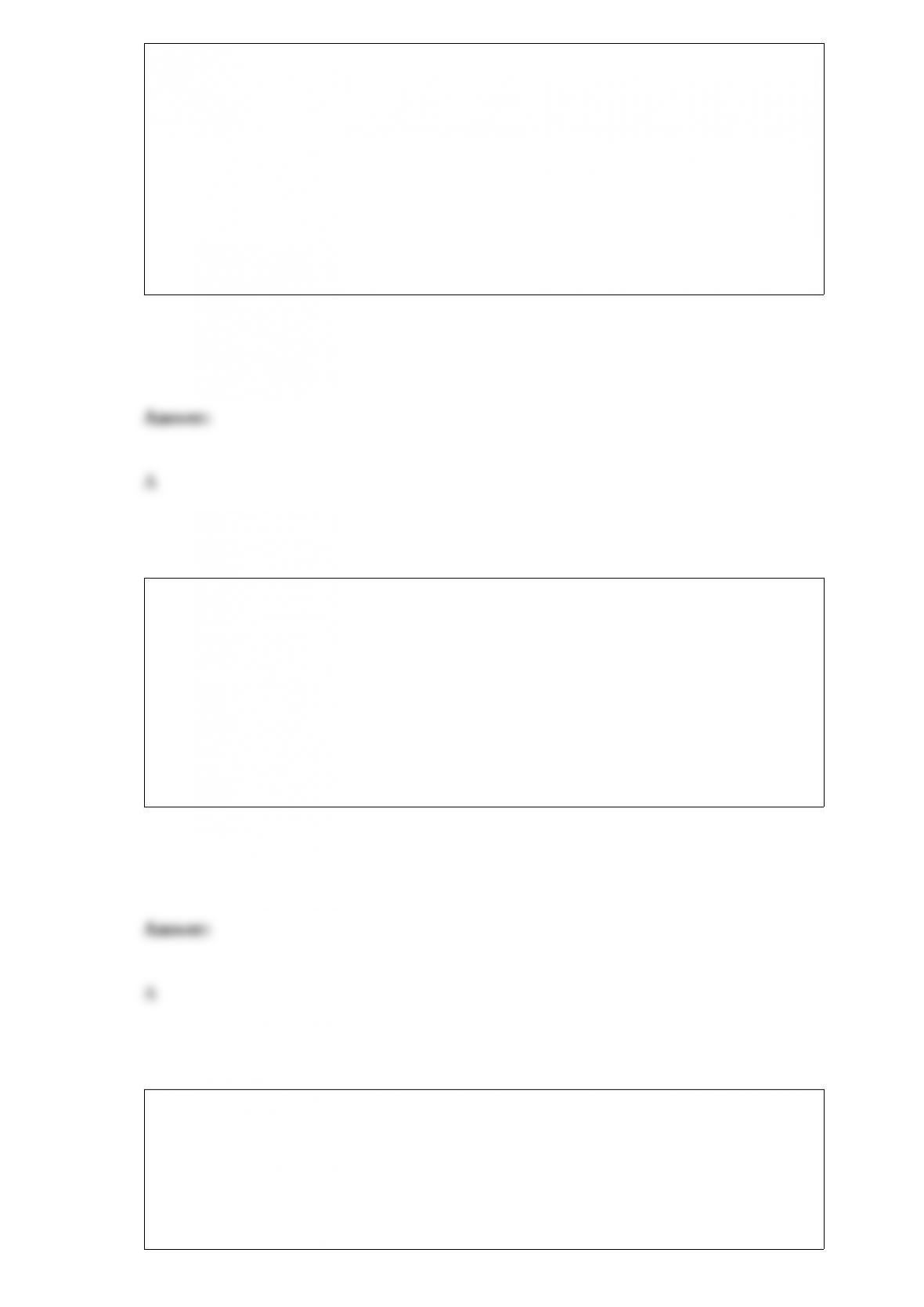
Refer to Figure 16.1. The ________ imposed as a result of producing fertilizer is $5.00
per bag of fertilizer.
A) marginal damage cost
B) total damage
C) marginal private cost
D) total cost
Firms with market power must decide all of the following EXCEPT
A) how much to supply in each input market.
B) how much to produce.
C) how to produce it.
D) what price to charge for their output.
An economist wants to understand the relationship between minimum wages and the
level of teenage unemployment. The economist collects data on the values of the
minimum wage and the levels of teenage unemployment over time. The economist
concludes that a 1% increase in minimum wage causes a 0.2% increase in teenage
unemployment. From this information he concludes that the minimum wage is harmful
to teenagers and should be reduced or eliminated to increase employment among

teenagers.
A graph of the value of the minimum wage on one axis and the level of teenage
unemployment on the other axis is an example of
A) an economic theory.
B) an economic model.
C) inductive reasoning.
D) a variable theory.
Freely functioning markets
A) always produce an efficient allocation of resources.
B) may be unfair due to significant income disparities that result.
C) have no need for government intervention.
D) All of the above are correct.
The notion of ________ is that through income redistribution, the rich sacrifice a little
and the poor gain a lot.
A) utilitarian justice

B) distributional justice
C) Rawlsian justice
D) labor value
With random experiments, outcomes of specific interventions are are determined by
using the intervention in a(n) ________ subset of a sample and then comparing
outcomes from the exposed and control group.
A) previously tested
B) randomly selected
C) unrelated
D) predetermined
The hand soap industry is an example of a(n) ________ industry.
A) perfectly competitive
B) monopolistic
C) monopolistically competitive

D) oligopolistic
The return to any factor of production that is in ________ is pure rent.
A) variable supply
B) fixed supply
C) fixed demand
D) variable demand
A soybean farmer sells soybeans in a perfectly competitive market and hires labor in a
perfectly competitive market. The market price of soybeans is $1 a bushel, the wage
rate is $12, the farmer employs six workers and the marginal product of the sixth
worker is 10. What would you advise this farmer to do?
A) Do nothing because the wage rate and the marginal product of the last worker hired
are equal.
B) Reduce employment because the wage paid is greater than the marginal revenue
product.
C) Increase employment because the wage paid is less than the marginal revenue
product.
D) Reduce the product price so that the wage and marginal revenue product will be

equal.
Attempts to bypass price rationing in the market
A) are efficient.
B) are easily administered.
C) are costly.
D) always fail.
If it is possible to make person A worse off only by making person B better off, then the
distribution of goods must be
A) efficient.
B) inefficient.
C) equitable.
D) inequitable.

Scientists find that eating corn three times a day will prolong life. This leads to a shift in
preferences away from wheat and toward corn. As we move from one equilibrium to
another, we can predict that
A) all input markets are affected.
B) all input markets except land are affected because both products use land as an input.
C) labor markets are not affected because the wheat industry and the corn industry use
laborers to drive tractors.
D) even if they use different technologies, no input markets are affected because they
use the same inputs.
Voting as a mechanism for public choice is associated with a number of problems
including
A) majority rule voting can lead to contradictory and inconsistent results.
B) logrolling.
C) disengaged voters with very little incentive to inform themselves of the issues.
D) all of the above

A soybean farmer sells soybeans in a perfectly competitive market and hires labor in a
perfectly competitive market. The market price of soybeans is $6 a bushel, the wage
rate is $30, the farmer employs eight workers and the marginal product of the eighth
worker is 7 bushels. What would you advise this farmer to do?
A) Do nothing because the wage rate and the marginal product of the last worker hired
are equal.
B) Reduce employment because the wage paid is less than the marginal revenue
product.
C) Increase employment because the wage paid is less than the marginal revenue
product.
D) Reduce the product price so that the wage and marginal revenue product will be
equal.
If we assume that labor is the only variable input, the slope of the total product curve in
the short run
A) has no economic significance.
B) measures the average product of labor.
C) measures the marginal product of labor.
D) measures both the marginal and average product at all points on the total product
curve.
Total revenue decreases if price ________ and demand is ________.
A) falls; elastic
B) falls; inelastic
C) rises; inelastic
D) rises; unit elastic
Figure 15.5
Refer to Figure 15.5. Assume the Custom Sweater Shop has fixed costs of $275 and is a
monopolistically competitive firm. To maximize profits in the short run, this firm
should produce ________ personalized sweaters.
A) 0
B) 50

C) 75
D) 100
For most families, a majority of their property comes from
A) redistribution programs.
B) inheritance.
C) savings.
D) transfer payments.
As new firms enter a monopolistically competitive industry, the demand curve facing
each existing firm will
A) shift to the left and become more elastic because there are now more substitutes for
its product.
B) shift to the left and become less elastic because there are now more substitutes for its
product.
C) not be affected because the new firms do not produce a perfect substitute for its
product.
D) shift to the left, but the elasticity of demand will not be affected.
A firm is better off operating than shutting down when price adequately covers
A) marginal cost.
B) average fixed cost.
C) average variable cost.
D) marginal revenue.
Related to the Economics in Practice on page 88: When acquiring a ticket for a play
takes a significant amount of time, the true economic cost of that ticket would include
all of the following factors EXCEPT
A) the amount of time spent acquiring the ticket.
B) the utility provided by seeing the play.
C) the earning power of the person acquiring the ticket.
D) the purchase price of the ticket.
For a monopolist, if total revenue increases as output decreases, then marginal revenue
is
A) equal to price.
B) zero.
C) positive.
D) negative.
Why is the demand for an input considered a derived demand?
Dick has a dog (Spot) that likes to bark at night. Jane, who lives next door to Dick, must
be at work every morning by six o’clock. Suppose that there is no noise ordinance that
requires Dick to keep his dog quiet. Is there any Coase solution to this problem?
Explain.
How can a consumer’s demand for a good be derived using indifference curve analysis?
Give an example of a negative externality.
Define public goods. Give an example of a public good. Explain why private firms will
not generally produce public goods.
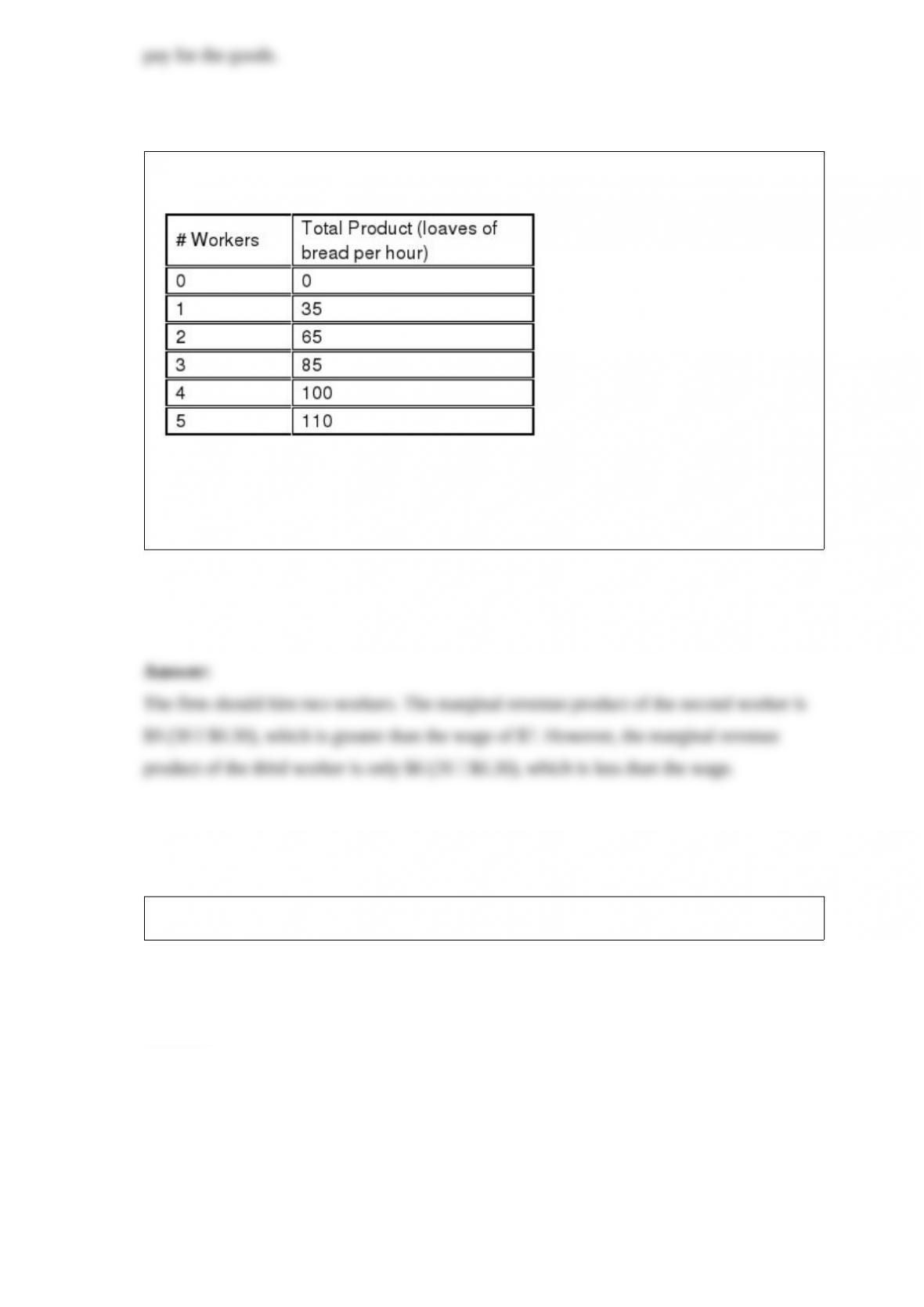
A bakery producing bread reports the following production information:
The bread sells in a competitive market at a price of $0.30 each. The firm hires workers
in a competitive labor market at a wage of $7 per hour. How many workers should the
firm hire? Explain your answer.
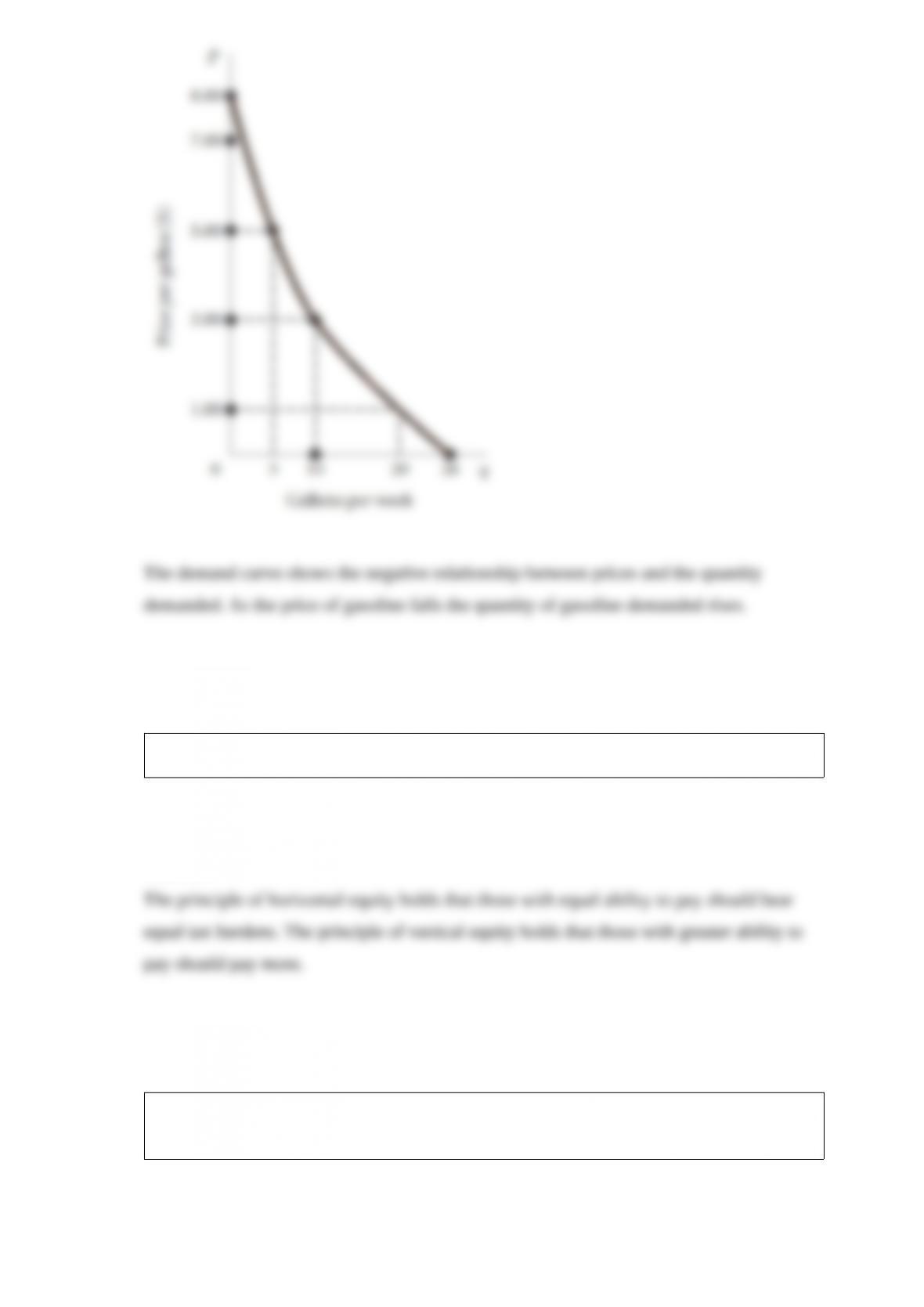
Draw a hypothetical example of the demand curve for gasoline and explain it.
Compare and contrast horizontal and vertical equity.
What happens in the long run if firms in a monopolistically competitive industry are
earning positive economic profits? Explain.
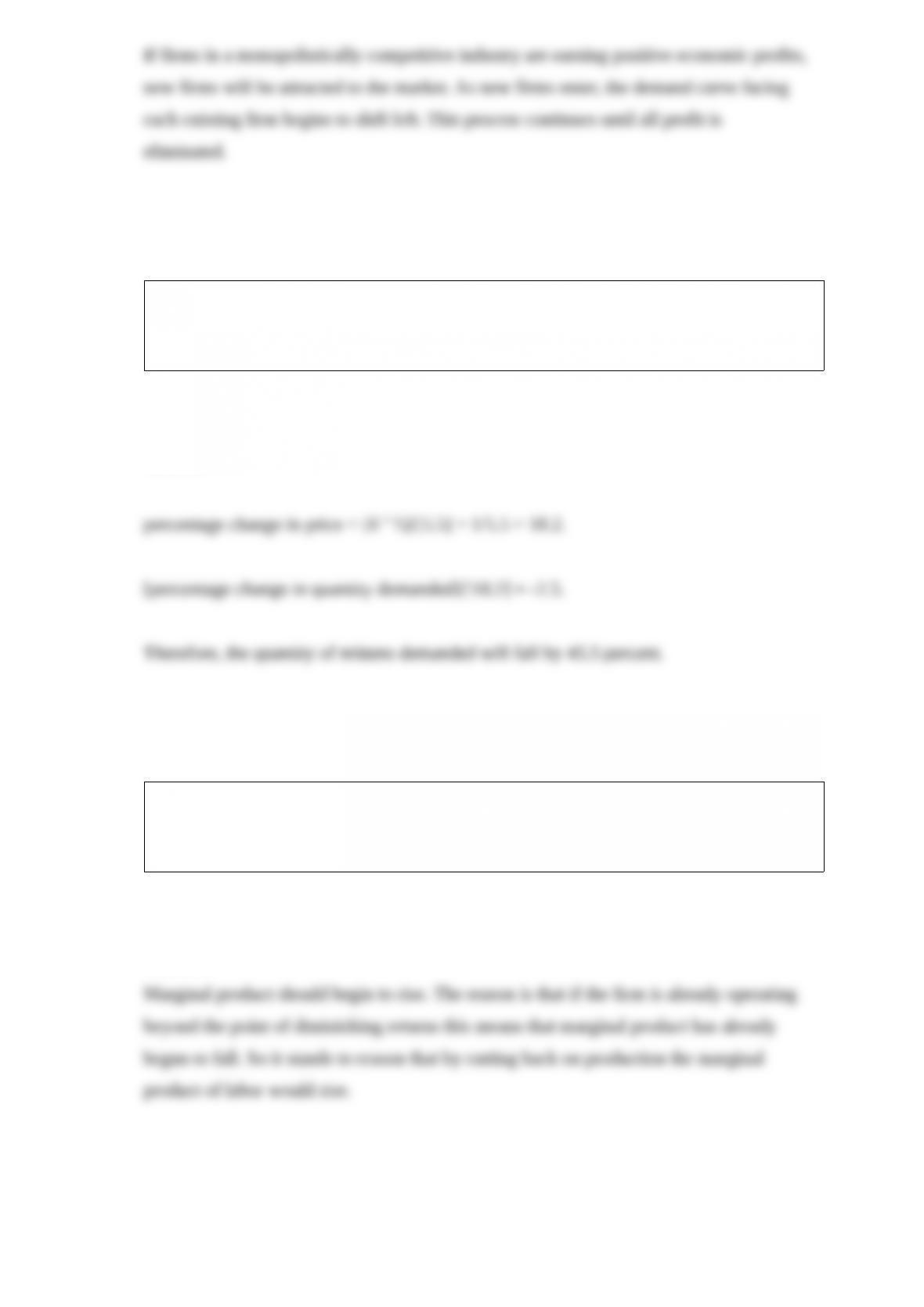
Suppose that the price elasticity of demand for mittens is “2.5. What would happen to
the quantity of mittens demanded if the price of mittens rose from $5 to $6? Use the
midpoint formula in your calculations.
Assume that a company is producing at a point beyond where diminishing returns has
already set in. If the firm cuts back on production what would you expect should
happen to the marginal product of labor and why?
Compare and contrast absolute advantage and comparative advantage.
What would be the economic rationale for homeowners associations to host “yard of the
month” awards?
Define the exchange rate.
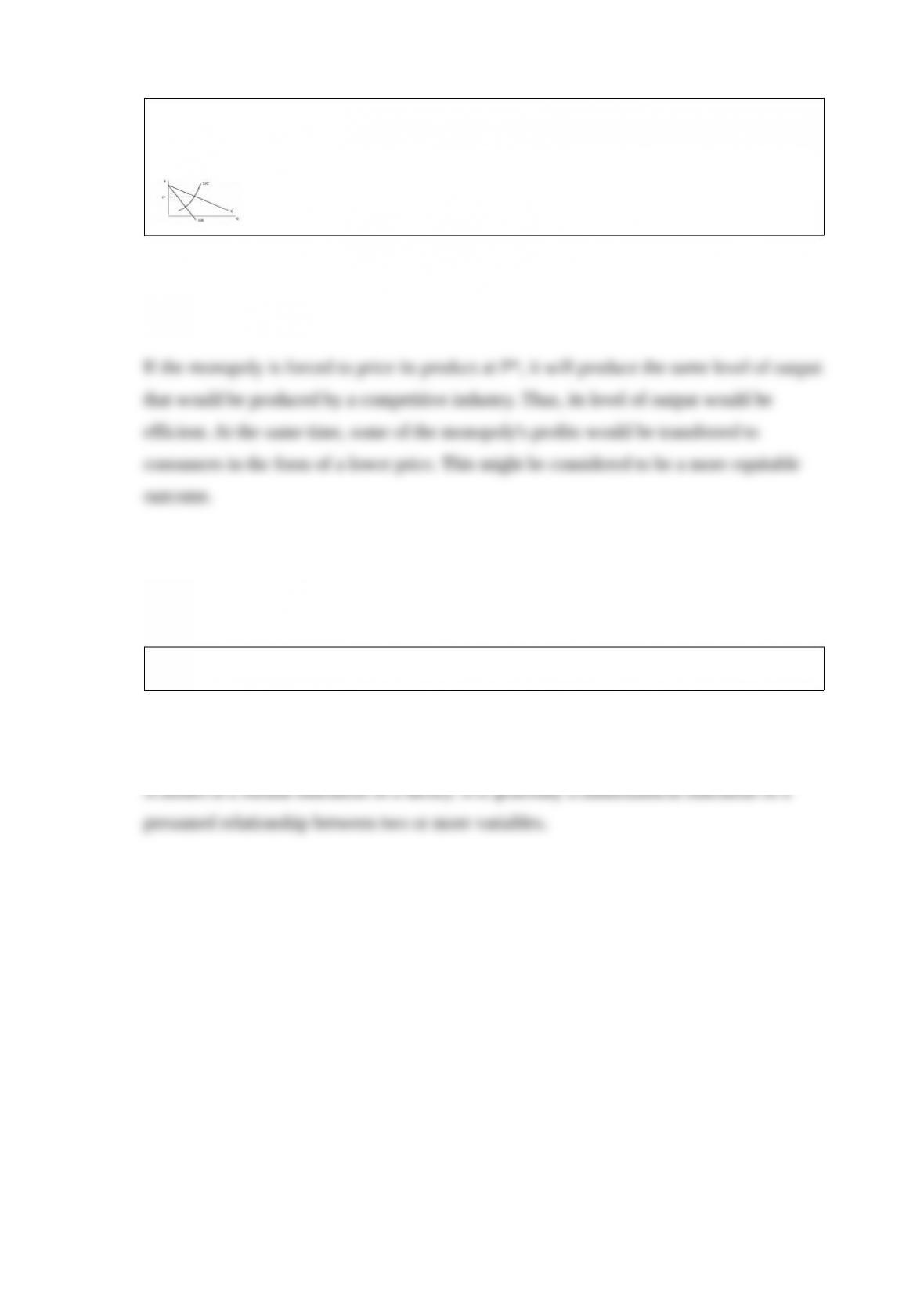
XYZ Corporation faces the demand, marginal revenue, and marginal cost curves shown
below. The government requires the firm to sell its product at a price no higher than P*.
Describe the impact of this regulation in terms of both efficiency and equity.
Explain what a model is.