
1) The law of increasing opportunity costs:
A.applies to land-intensive commodities, but not to labor-intensive or capital-intensive
commodities.
B.results in straight-line production possibilities curves rather than curves that are
bowed outward from the origin.
C.refutes the principle of comparative advantage.
D.may limit the extent to which a nation specializes in producing a particular product.
2) Which of the following is incorrect?
A.As the U.S. price level rises, U.S. goods become relatively more expensive so that
U.S. exports fall and U.S. imports rise.
B.As the price level falls, the demand for money declines, the interest rate declines, and
interest-rate sensitive spending increases.
C.When the price level increases, real balances increase, businesses and households
find themselves wealthier and therefore increase their spending.
D.Given aggregate demand, an increase in aggregate supply increases real output and,
assuming downward flexible prices, reduces the price level.
3) Under an agency shop agreement, firms can hire:
A.only union workers.
B.nonunion workers, but these workers must join the union within a specified period,
say, 30 days.
C.nonunion workers, but these workers must join the union within a specified period,
pay union dues, or donate an equivalent amount to charity.
D.only nonunion workers.
4) In the United States:
A.whites have higher unionization rates than African-Americans.
B.men have higher unionization rates than women.
C.managers have higher unionization rates than transportation workers.
D.workers in mining have higher unionization rates than workers in government.
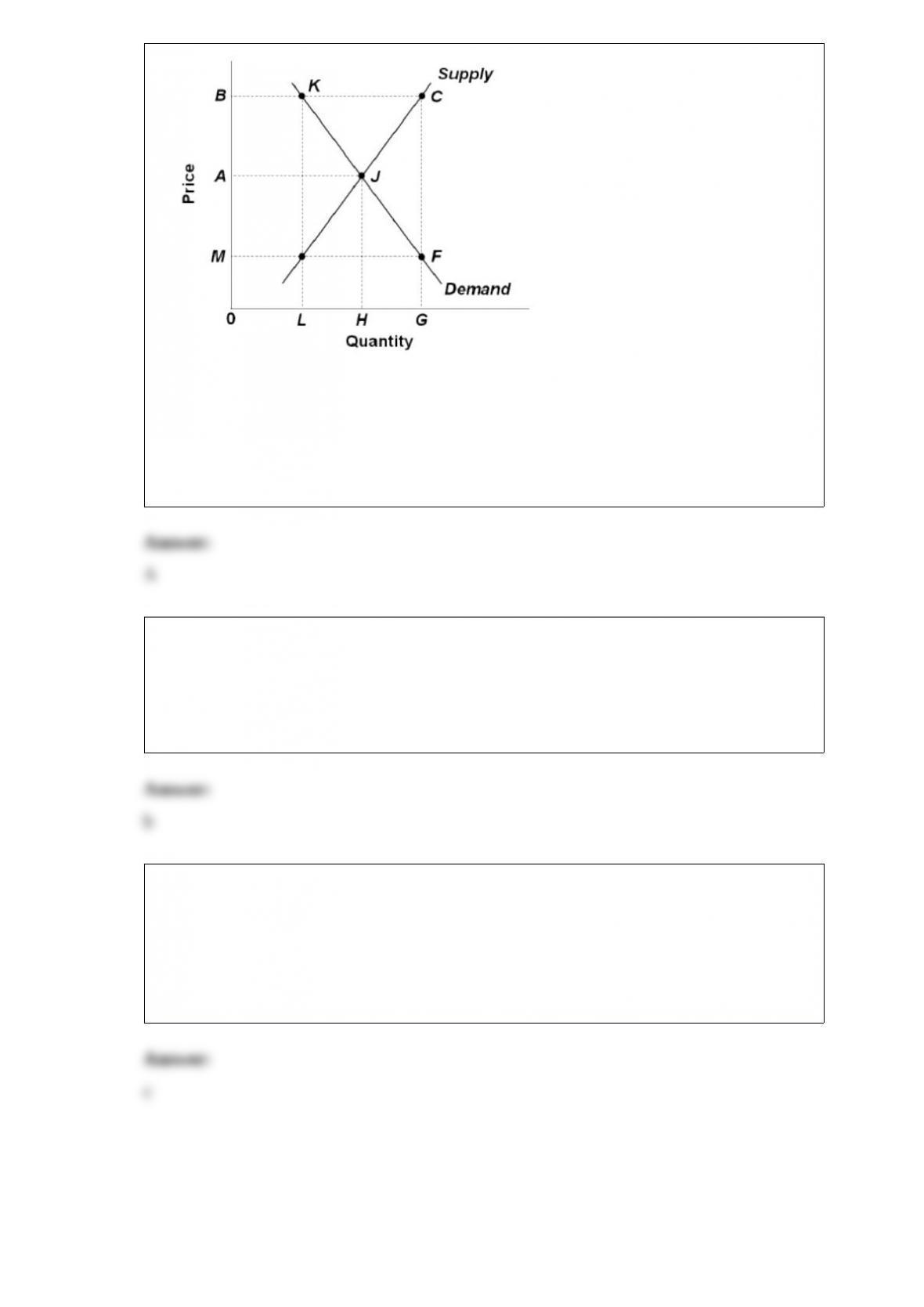
5)
Refer to the above diagram for the corn market. As the result of a supported corn price
of B:
A.a surplus of LG will result.
B.a surplus of LH will result.
C.a surplus of HG will result.
D.a shortage of LG will result.
6) other things equal, a price discriminating monopolist will:
a.realize a smaller economic profit than a nondiscriminating monopolist.
b.produce a larger output than a nondiscriminating monopolist.
c.produce the same output as a nondiscriminating monopolist.
d.produce a smaller output than a nondiscriminating monopolist.
7) which of the following would not be classified as an economic resource by
economists?
a.a professional soccer player
b.water in a town’s reservoir
c.money in a business checking account
d.the manager of the local hamburger restaurant
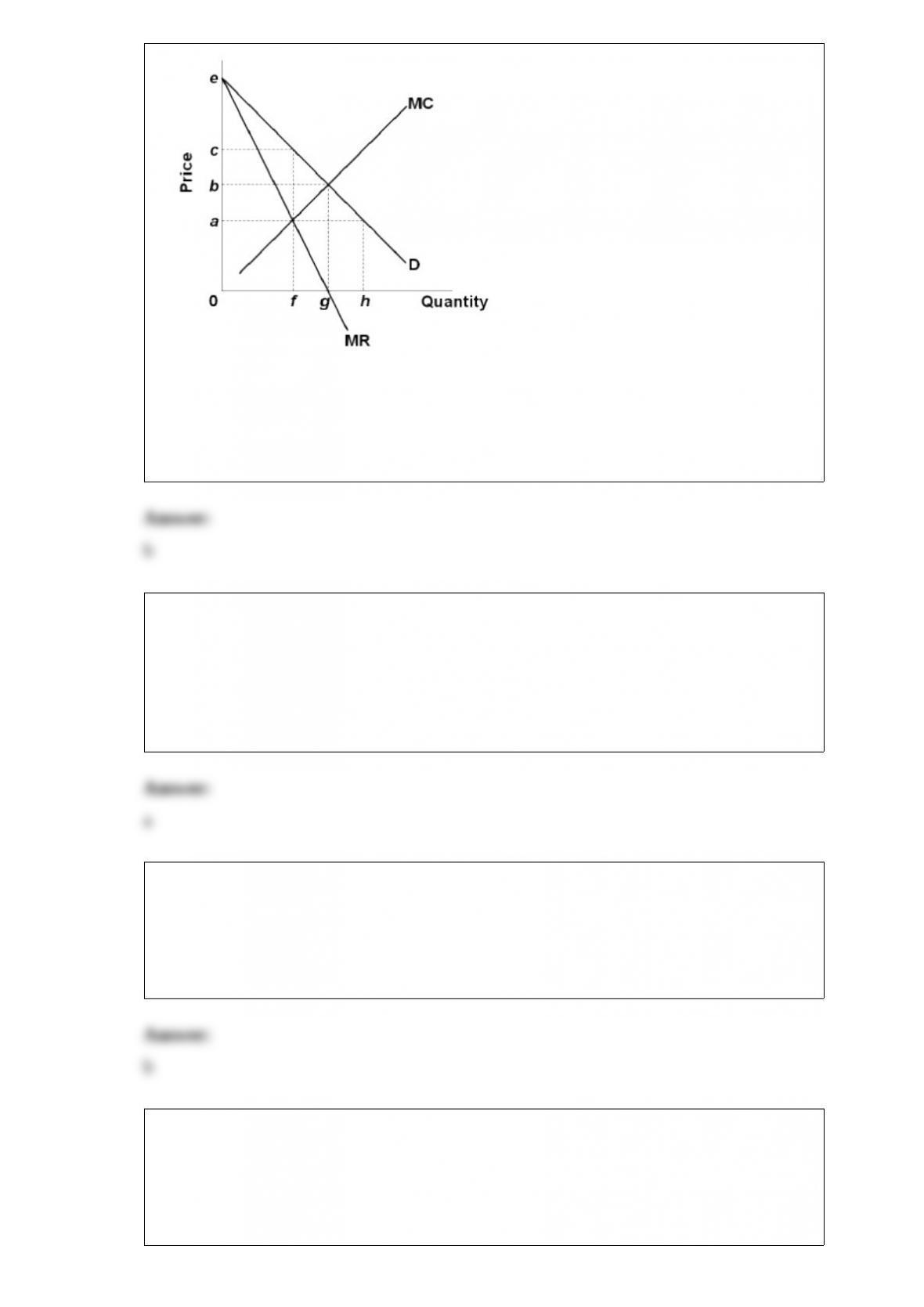
8)
refer to the above diagram for a pure monopolist. monopoly price will be:
a.e
b.c
c.b
d.a
9) if actual gdp is $500 billion and there is a negative gdp gap of $10 billion, potential
gdp is:
a.$510 billion.
b.$490 billion.
c.$10 billion.
d.$990 billion.
10) total cost minus total variable cost equals:
a.average fixed cost.
b.total fixed cost.
c.average variable cost.
d.marginal cost.
11) The MRP curve is the resource demand curve for:
A.neither the purely competitive nor the imperfectly competitive seller.
B.the imperfectly competitive seller, but not the purely competitive seller.
C.the purely competitive seller, but not the imperfectly competitive seller.
D.both the purely competitive and imperfectly competitive seller.
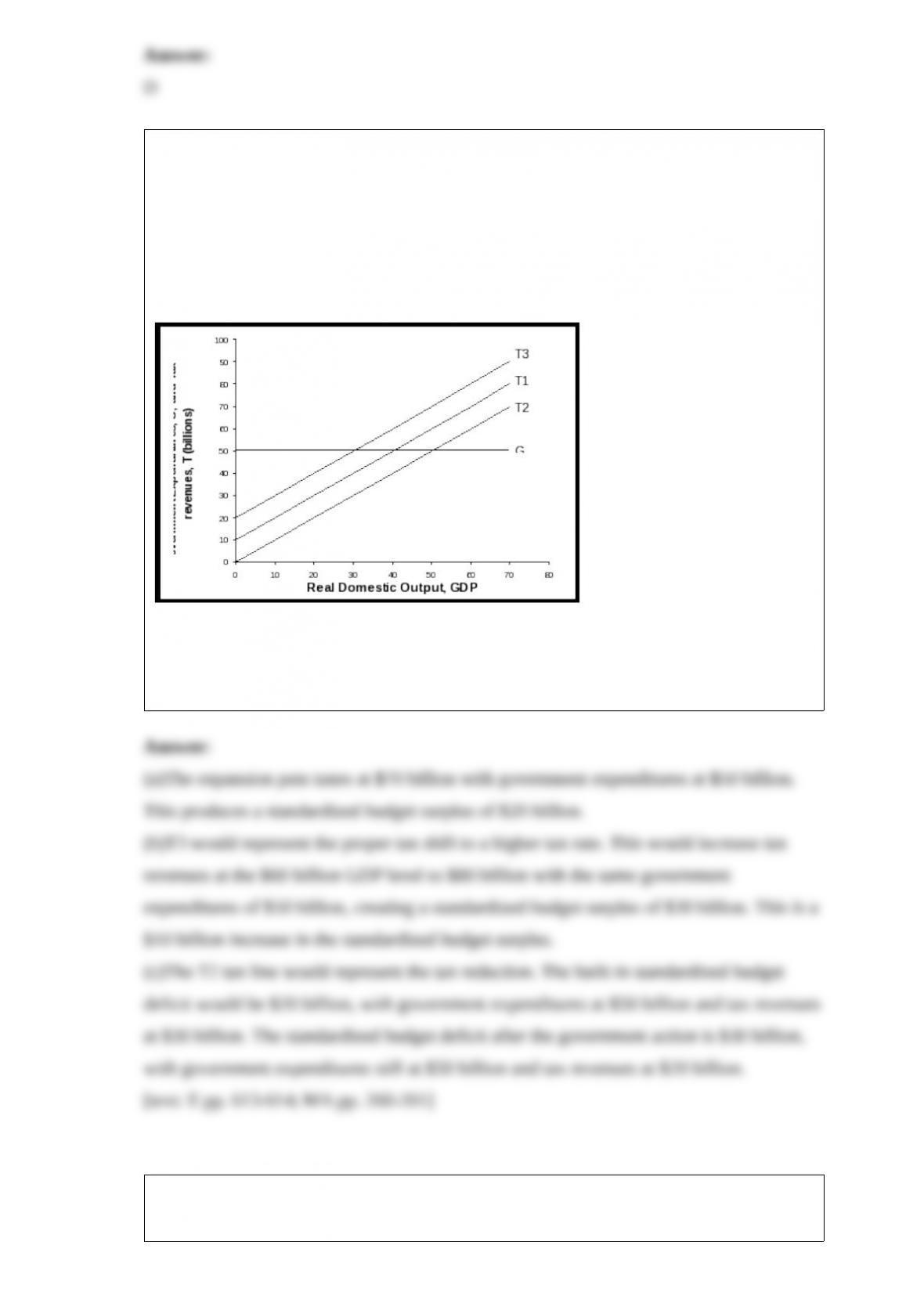
12) Use the graph below to analyze the following questions. Assume the economy starts
at full-employment GDP at $40 billion.
(a)Suppose the economy suddenly faces an expansion in output and GDP grows to $60
billion. What is the standardized budget surplus at this output?
(b)Suppose the government is afraid of rampant demand-pull inflation and decides to
increase taxes to control the expansion. Which tax line (T2 or T3) would represent this
increase in taxes and how much would the budget surplus grow by?
(c)Suppose the economy
comes into a recession and GDP falls to $20 billion. To promote growth the government
reduces taxes. Which tax line (T2 or T3) would reflect the proper tax shift? What is the
built-in standardized budget deficit and what is the deficit as a result of the government
action?
13) Other things equal, if the national incomes of the major trading partners of the
United States were to rise, the U.S.:
A.aggregate demand curve would shift to the right.
B.aggregate supply curve would shift to the left.
C.aggregate supply curve would shift to the right.
D.aggregate demand curve would shift to the left.
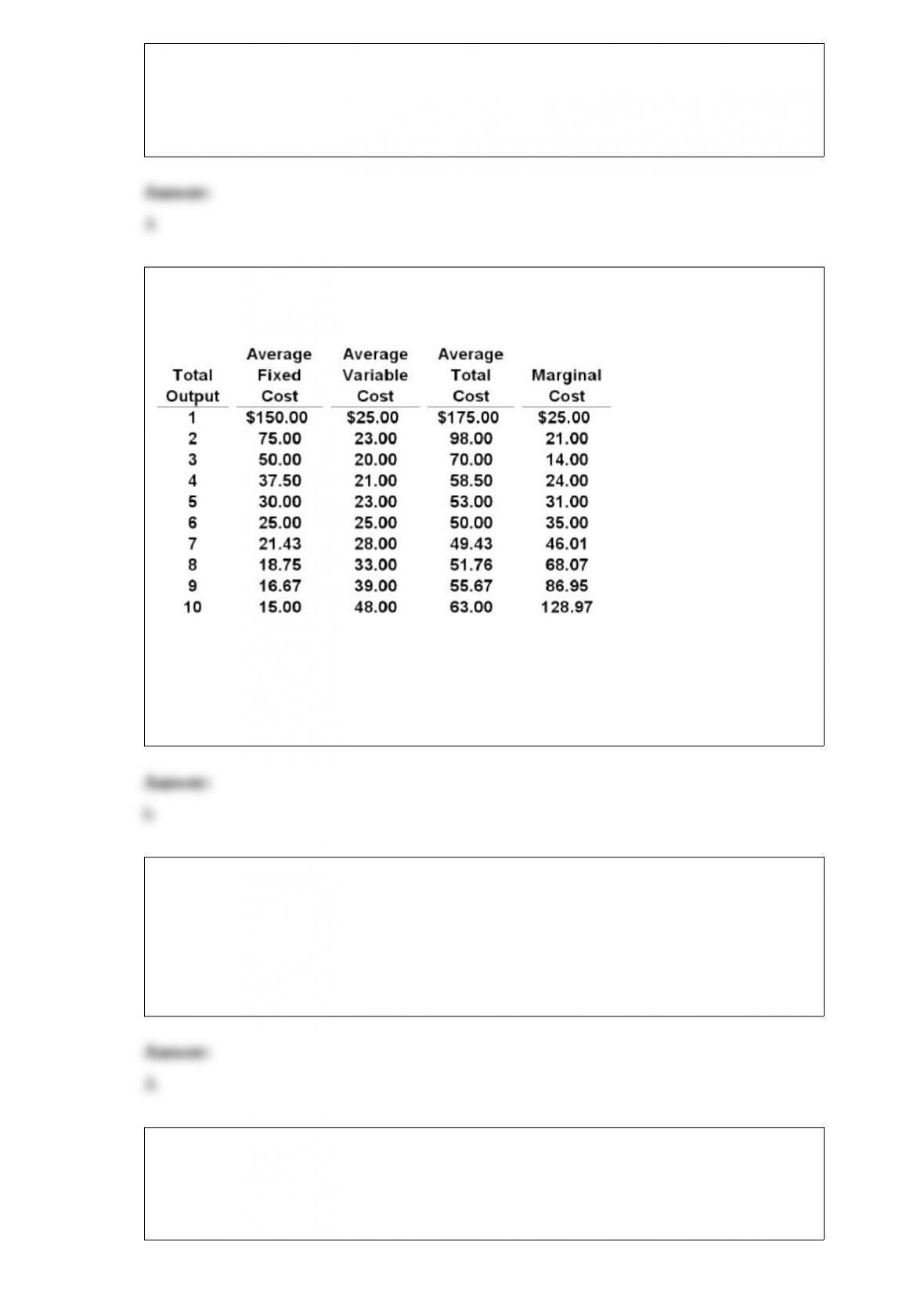
14) the following cost data for a firm that is selling in a purely competitive market.
refer to the above data. if the market price for this firm’s product is $35, it will produce:
a.6 units at a loss of $150.
b.6 units at a loss of $90.
c.9 units at an economic profit of $281.52.
d.8 units at an economic profit of $130.48.
15) If personal taxes were decreased and resource productivity increased
simultaneously, the equilibrium:
A.output would rise.
B.output would fall.
C.price level would necessarily fall.
D.price level would necessarily rise.
16) Suppose that wages for African-American and white workers of equal productivity
are $12 and $13 an hour, respectively. If a particular firm hires only whites, its
discrimination coefficient must be:
A.greater than $1.
B.less than $1.
C.zero.
D.infinity.
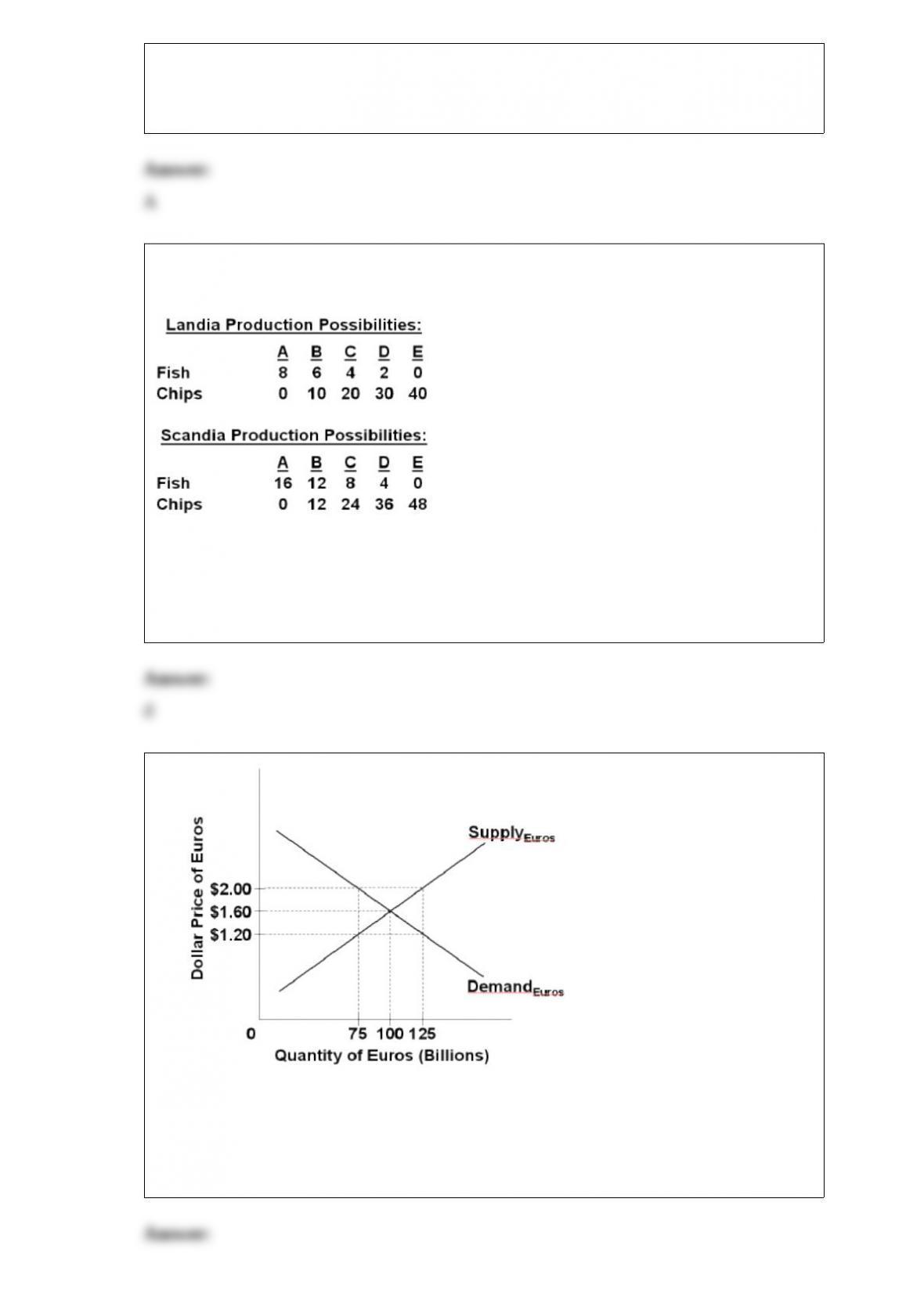
17) the following production possibilities data for landia and scandia:
refer to the above data. the domestic opportunity cost of 1 fish in landia is:
a.10 chips.
b.2 chips.
c.4 chips.
d.5 chips.
18)
refer to the above diagram. the equilibrium dollar price of euros is:
a.$0.625.
b.$1.20.
c.$1.60.
d.$2.00.

19) The Food, Conservation, and Energy Act of 2008 does not address the fundamental
problem of agricultural subsidies, which is that those subsidies:
A.reduce work incentive for farmers, thus reducing agricultural production.
B.slow the exodus of resources from agriculture, increase production of agricultural
products, and reduce crop prices and market incomes.
C.increase the exodus of resources from agriculture and reduce investments by farmers
in land and equipment.
D.are based on past agricultural production and not on current agricultural production.
20) under which of the following situations would a monopolist increase profits by
lowering price (and increasing output):
a.if it discovered that it was producing where mc = mr
b.if it discovered that it was producing where its mc curve intersects its demand curve
c.if it discovered that it was producing where mc < mr
d.under none of these circumstances because a monopolist would never lower price