Two economists from Northwestern University estimated the benefit households
received from subscribing to broadband Internet service. The economists found that
A) the consumer surplus from dial-up Internet service exceeded the consumer surplus
from broadband Internet service.
B) the average consumer of broadband Internet service received a marginal benefit
equal to $36.
C) most consumers of broadband Internet service were not willing to pay more than $36
per month.
D) one month’s benefit to consumers who subscribe to broadband Internet service is
about $890 million.
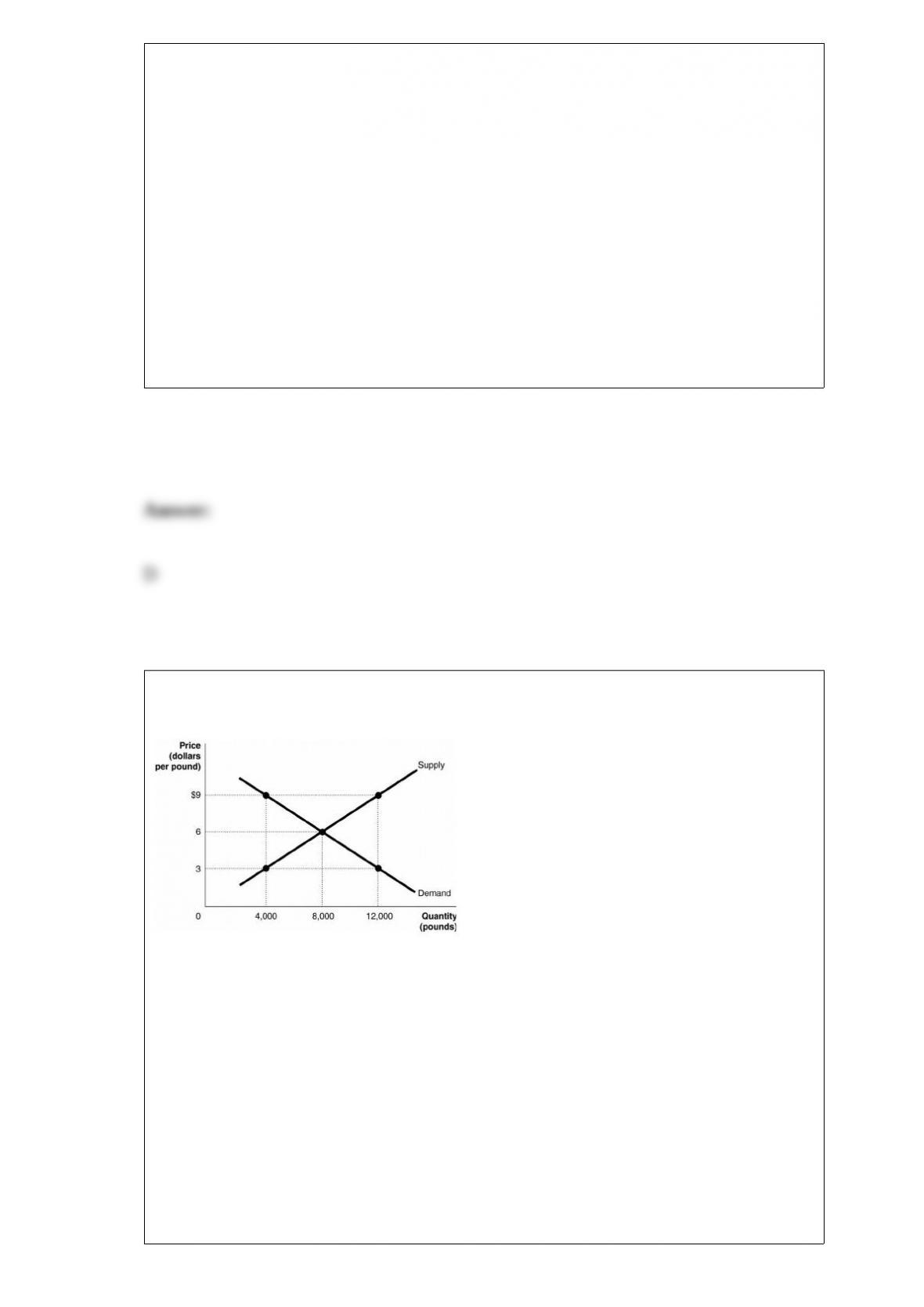
Figure 4-4
Refer to Figure 4-4. The figure above represents the market for pecans. Assume that
this is a competitive market. If the price of pecans is $3, what changes in the market
would result in an economically efficient output?
A) The price would increase, the quantity supplied would decrease, and the quantity
demanded would increase.
B) The quantity supplied would increase, the quantity demanded would decrease and
the equilibrium price would increase.
C) The price would increase, the demand would decrease and the supply would
increase.

D) The price would increase, the quantity demanded would decrease and the quantity
supplied would increase.
Total utility
A) cannot decrease as a person consumes more and more of a good.
B) has a constant rate of increase as a person consumes more and more of a good.
C) is equal to the sum of the marginal utilities of all units consumed.
D) is negative when marginal utility is declining.
The primary purpose of labor unions is to
A) ensure that workers receive adequate safety training.
B) ensure that all members earn identical incomes.
C) negotiate with employers about wages and working conditions.
D) endorse candidates and donate money to them.
Each ________ is composed of unique cultural, political, legal, and economic
characteristics that define business activity within that nation’s borders.
A) capital market
B) national business environment
C) international bond market
D) operational center
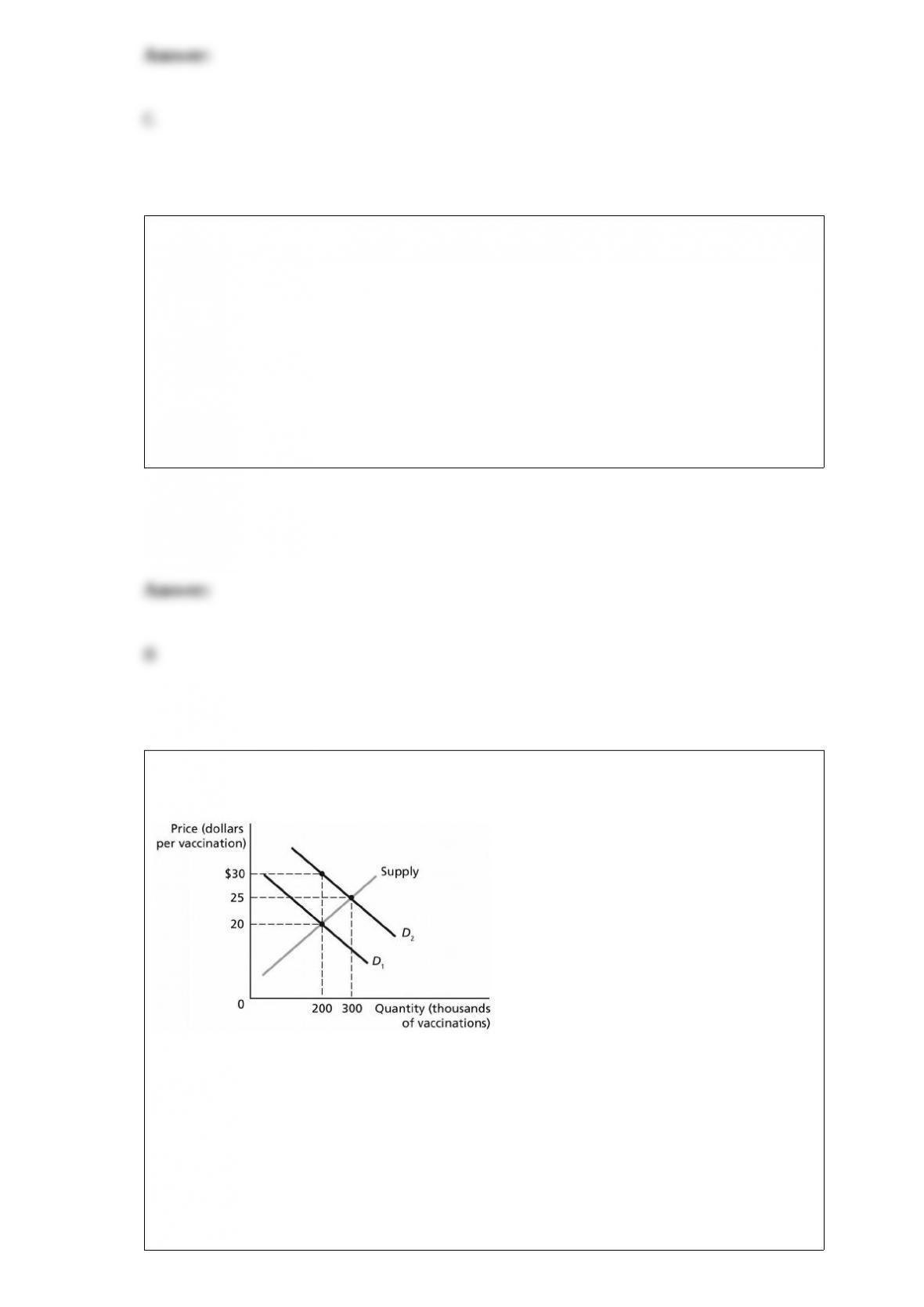
Figure 7-1
Figure 7-1 represents the market for vaccinations. Vaccinations are considered a benefit
to society, and the figure shows both the marginal private benefit and the marginal
social benefit from vaccinations.
Refer to Figure 7-1. At the efficient equilibrium
A) economic surplus is maximized.
B) economic surplus is minimized.

C) economic surplus is zero.
D) economic surplus is negative.
The present value of $475 received 3 years in the future would be calculated as which
of the following when the interest rate is 6 percent?
A) 475/(1.6)3
B) 475/(1.06)3
C) 475 1.6 3
D) 3.06/475
Figure 3-3
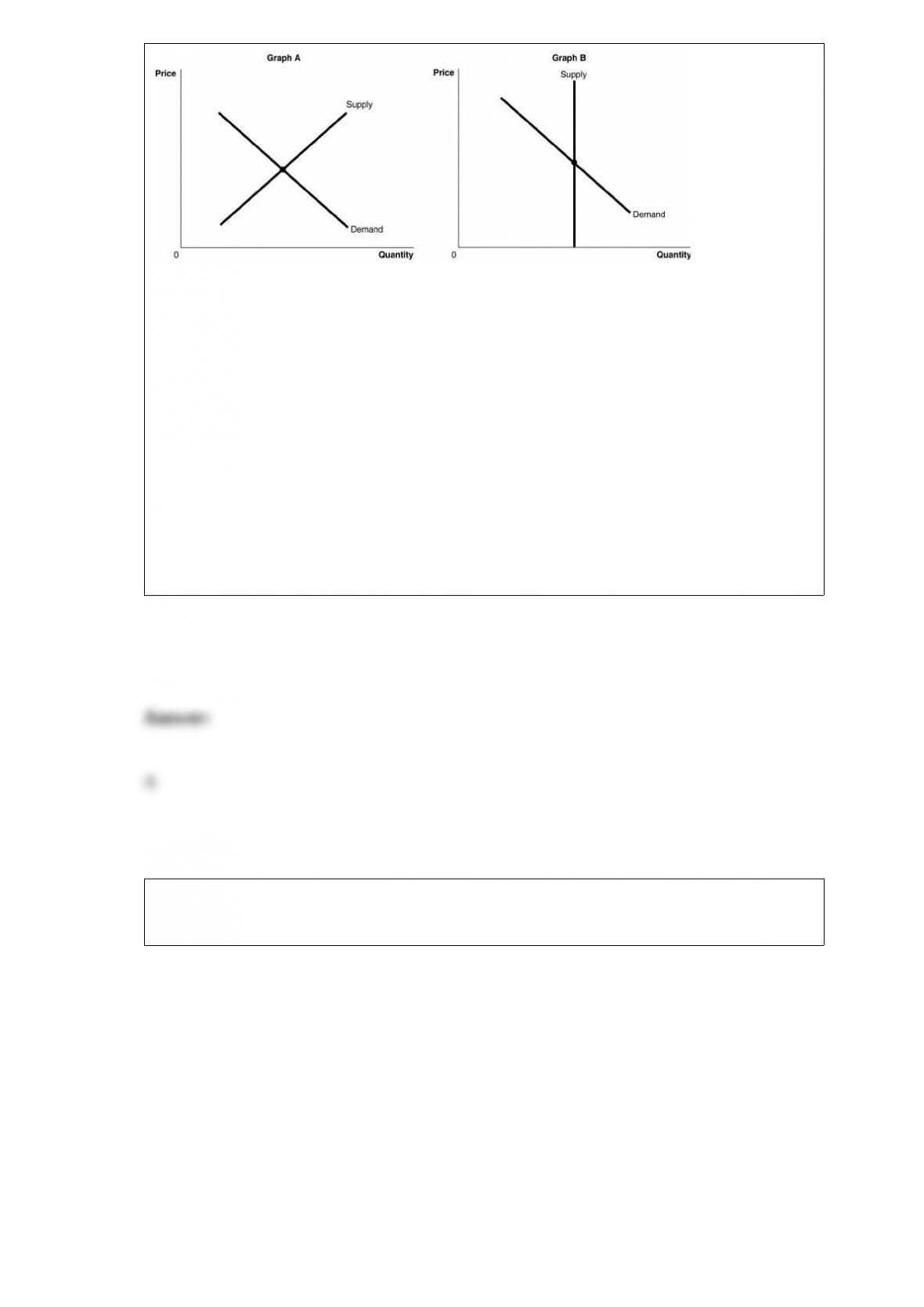
Refer to Figure 3-3. The figure above shows the supply and demand curves for two
markets: the market for original Picasso paintings and the market for designer jeans.
Which graph most likely represents which market?
A) Graph B represents the market for original Picasso paintings and Graph A represents
the market for designer jeans.
B) Graph A represents the market for original Picasso paintings and Graph B represents
the market for designer jeans.
C) Graph A represents both the market for original Picasso paintings and designer jeans.
D) Graph B represents both the market for original Picasso paintings and designer
jeans.
Figure 11-17
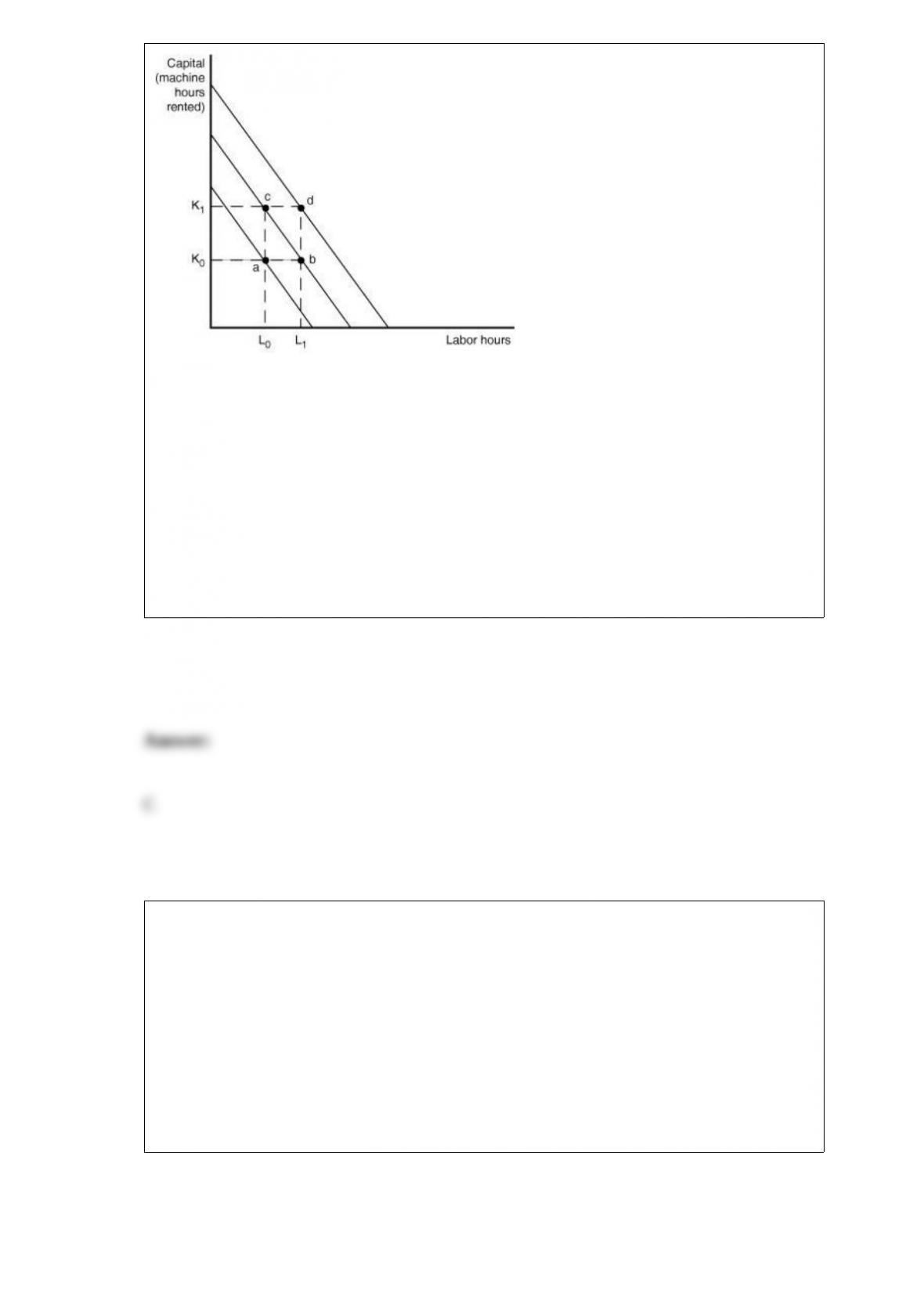
Refer to Figure 11-17. Assume that production isoquants are convex. Total cost and
output produced must increase for each of the following movements except one. Which
movement is the exception?
A) point a to point b
B) point a to point c
C) point b to point c
D) point b to point d
Suppose a 4 percent increase in price results in a 2 percent increase in the quantity
supplied of a good. Calculate the price elasticity of supply and characterize the product.
A) 2; The product is elastic.
B) 0.2; The product is inelastic.
C) 0.5; The product is inelastic.
D) 50%; The product is inelastic.

If the market price is $25 in a perfectly competitive market, the marginal revenue from
selling the fifth unit is
A) $5.
B) $12.50.
C) $25.
D) $125.
Using a broad definition, a firm would have a monopoly if
A) it produced a product that has no close substitutes.
B) it does not have to collude with any other producer to earn an economic profit.
C) there is no other firm selling a substitute for its product close enough that its
economic profits are competed away in the long run.
D) it can make decisions regarding price and output without violating antitrust laws.
Which of the following statements is true?
A) A long-run competitive equilibrium can only be achieved in constant-cost industries.
B) When an industry achieves a long-run competitive equilibrium, industry output will
not change in the future.
C) A long-run competitive equilibrium outcome is not economically efficient.
D) When an industry reaches a long-run competitive equilibrium, the typical firm in the
industry breaks even.
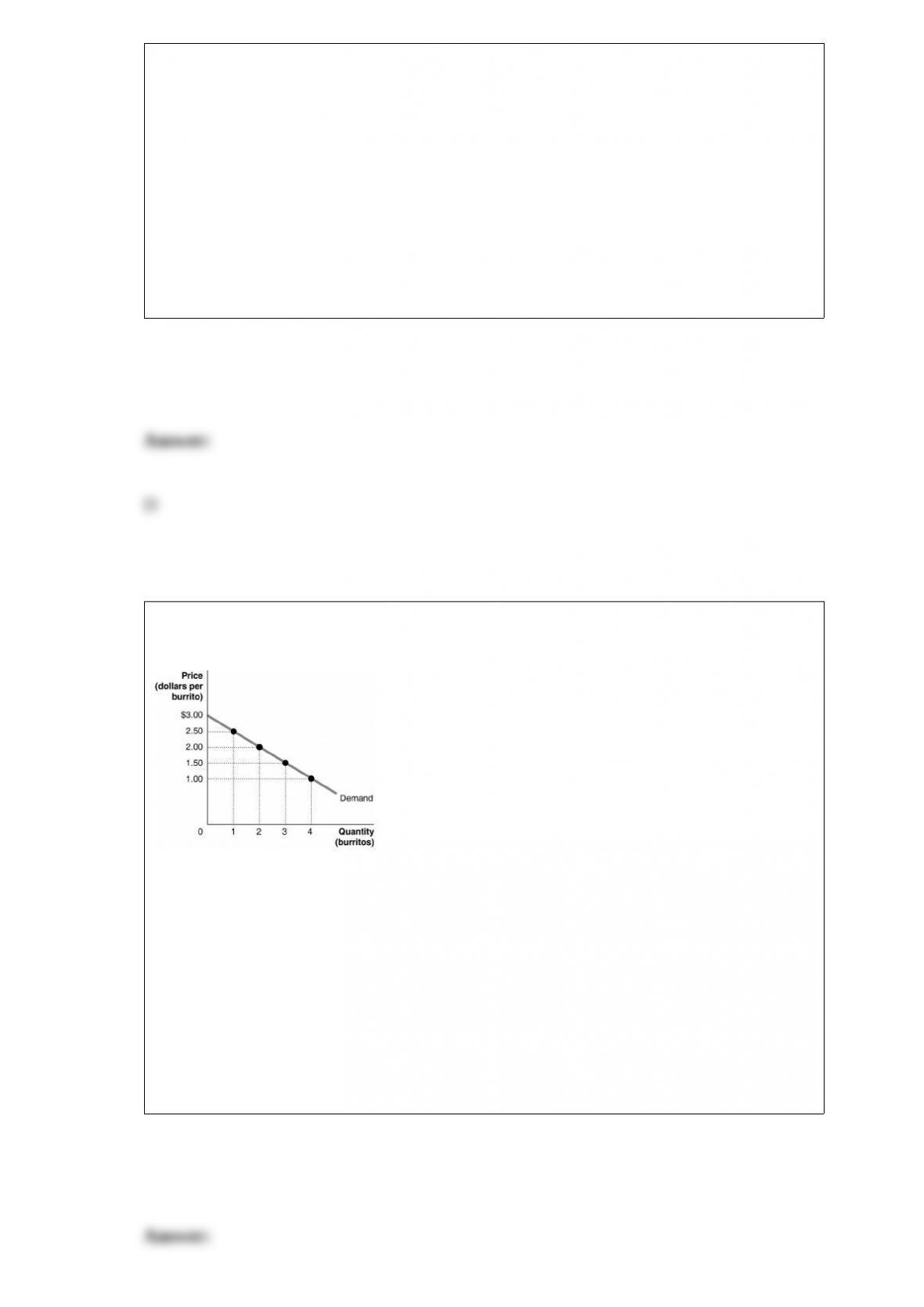
Figure 4-1
Figure 4-1 shows Arnold’s demand curve for burritos.
Refer to Figure 4-1. If the market price is $1.50, what is Arnold’s consumer surplus?
A) $1.50
B) $2.25
C) $3.00
D) $4.75
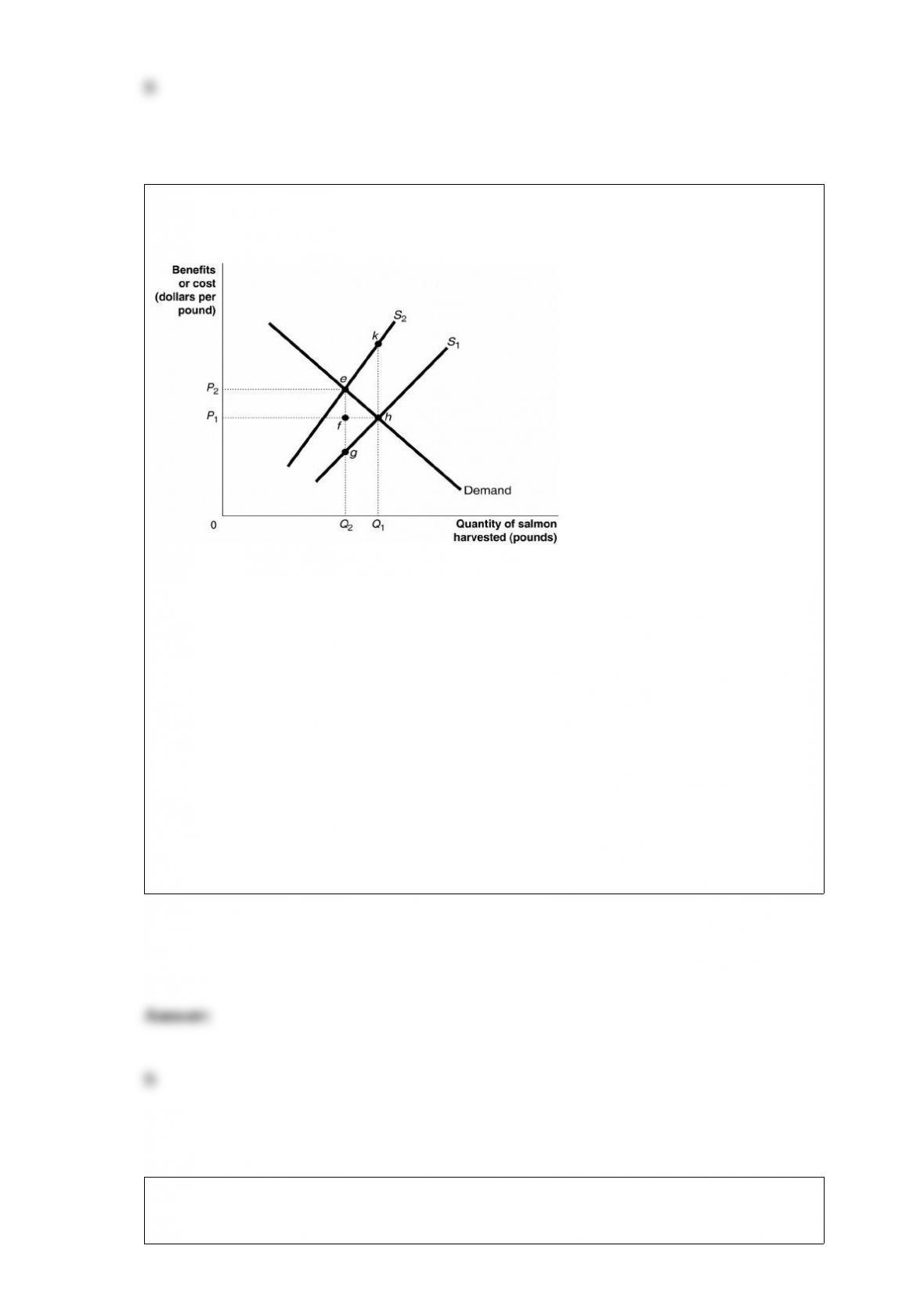
Figure 5-15
Figure 5-15 shows the market for Atlantic salmon, a common resource. The current
market equilibrium output of Q1 is not the economically efficient output. The
economically efficient output is Q2.
Refer to Figure 5-15. Identify the area that shows the deadweight loss from
overfishing.
A) egh
B) ekh
C) efh
D) eghk
Both individual buyers and sellers in perfect competition

A) can influence the market price by their own individual actions.
B) can influence the market price by joining with a few of their competitors.
C) have to take the market price as a given.
D) have the market price dictated to them by government.
Which of the following describes the difference between the market demand curve for a
perfectly competitive industry and the demand curve for a firm in this industry?
A) The market demand curve is a horizontal line; the firm’s demand curve is
downward-sloping.
B) The market demand curve is downward-sloping; the firm’s demand curve is a
vertical line.
C) The market demand curve can not have a constant slope; the firm’s demand curve
has a slope equal to zero.
D) The market demand curve is downward-sloping; the firm’s demand curve is a
horizontal line.
Scenario: Topsy Turvey Toys and Ureshi Toys
Topsy Turvey Toys is a U.S.-based toy retailer that buys all its merchandise from Ureshi
Toys, a Japan-based toy manufacturer with production facilities in twelve nations.

Ureshi Toys markets its toys globally without modification.The products that Ureshi
Toys manufactures are examples of ________.
A) global products
B) niche products
C) intangible products
D) customized products
A monopolistically competitive firm will
A) charge the same price as its competitors do.
B) always produce at the minimum efficient scale of production.
C) have some control over its price because its product is differentiated.
D) produce an output level that is productively and allocatively efficient.
Figure 9-1
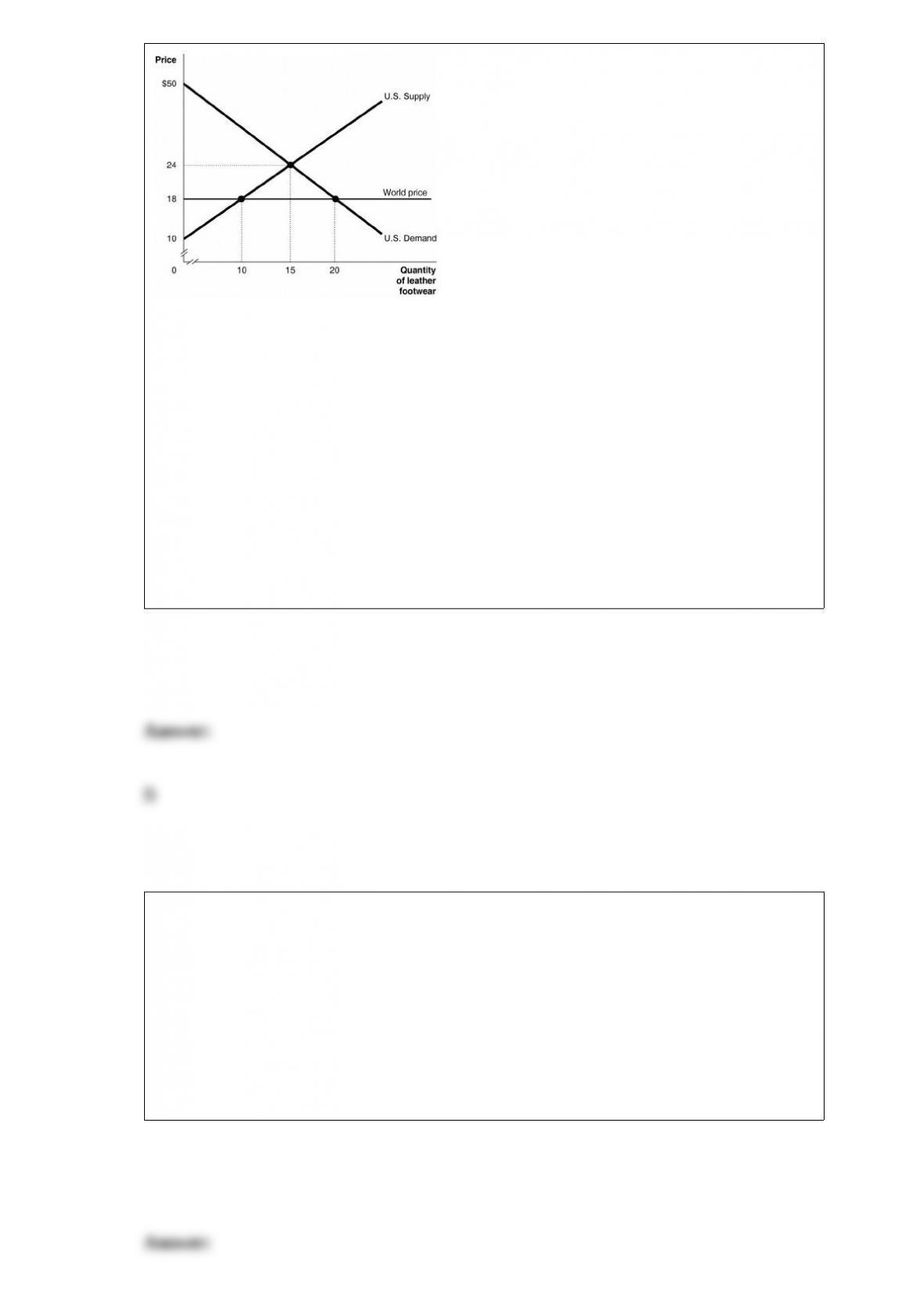
Figure 9-1 shows the U.S. demand and supply for leather footwear.
Refer to Figure 9-1. Suppose the government allows imports of leather footwear into
the United States. The market price falls to $18. What is the value of domestic producer
surplus?
A) $0.
B) $40.
C) $320.
D) $360.
Rent control is an example of
A) a subsidy for low-skilled workers.
B) a price floor.
C) a price ceiling.
D) a black market.
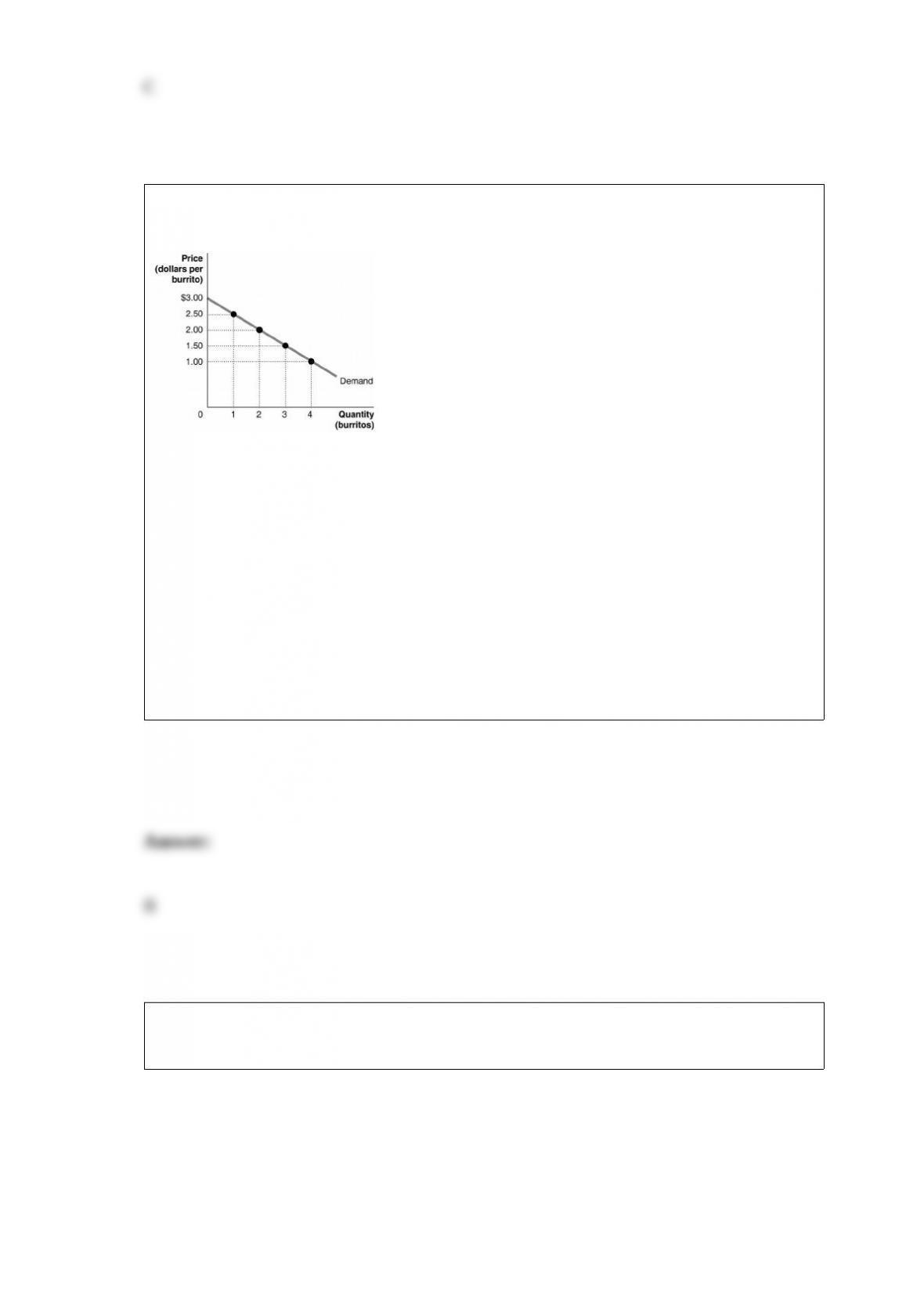
Figure 4-1
Figure 4-1 shows Arnold’s demand curve for burritos.
Refer to Figure 4-1. What is the total amount that Arnold is willing to pay for 2
burritos?
A) $2.00
B) $4.50
C) $7.50
D) $10.00
Figure 2-4
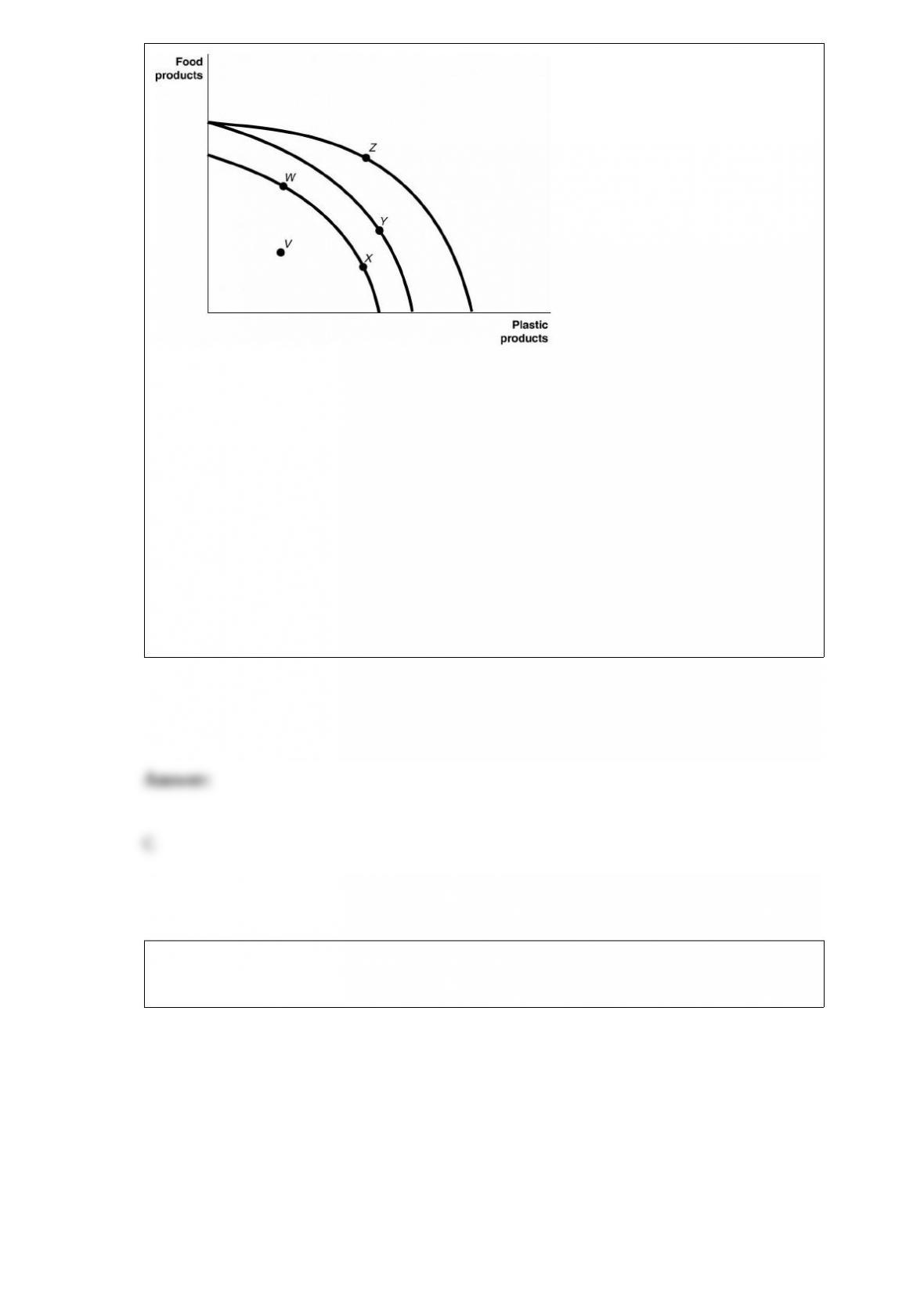
Figure 2-4 shows various points on three different production possibilities frontiers for
a nation.
Refer to Figure 2-4. A movement from ________ could occur because of an influx of
immigrant labor.
A) W to V
B) X to W
C) W to Z
D) Y to W
Figure 5-5
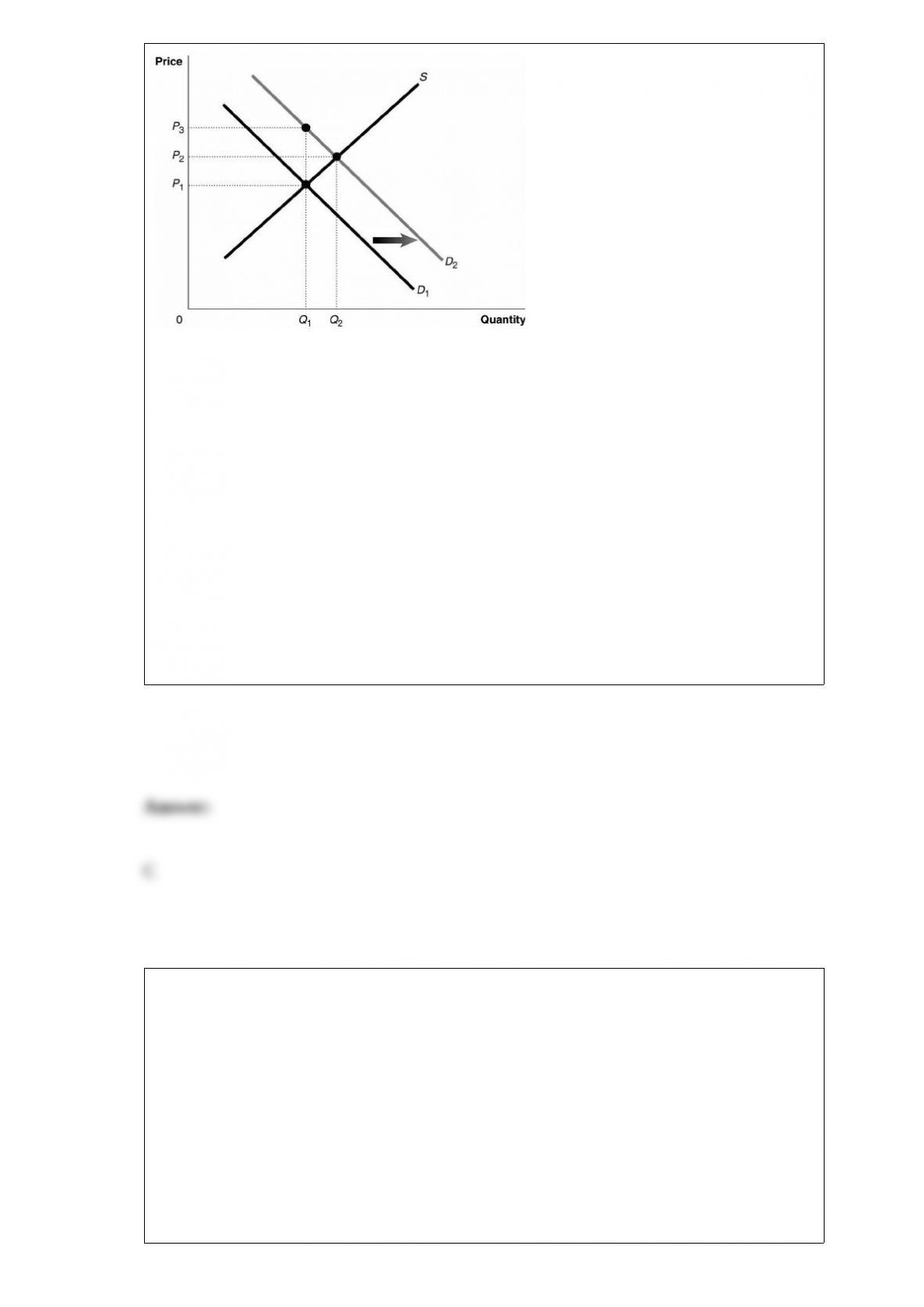
Figure 5-5 shows a market with an externality. The current market equilibrium output of
Q1 is not the economically efficient output. The economically efficient output is Q2.
Refer to Figure 5-5. Suppose the current market equilibrium output of Q1 is not the
economically efficient output because of an externality. The economically efficient
output is Q2. In that case, diagram shows
A) the effect of a subsidy granted to producers of a good.
B) the effect of an excess demand in a market.
C) the effect of a positive externality in the consumption of a good.
D) the effect of a negative externality in the consumption of a good.
In which of the following cartels is total cartel profit likely to be the highest?
A) a cartel made up of equal sized firms each producing different quantities of a
differentiated product
B) a cartel made up of firms of various sizes each producing different quantities of a
homogeneous product
C) a cartel made up of firms of various sizes each producing the same quantity of a
differentiated product

D) a cartel made up of identical firms each producing the same quantity of a
homogeneous product
In evaluating the degree of economic efficiency in a market, we can state that the size
of the deadweight loss in a market will be smaller
A) the greater the difference between marginal cost and price.
B) the smaller the difference between marginal cost and average total cost.
C) the smaller the difference between marginal cost and price.
D) the greater the difference between marginal cost and average revenue.
An article in the Wall Street Journal in early 2001 noted two developments in the
market for laser eye surgery. The first development concerned side effects from the
surgery, including blurred vision. The second development was that the companies
renting eye-surgery machinery to doctors had reduced their charges. In the market for
laser eye surgeries, these two developments
A) decreased demand and decreased supply, resulting in a decrease in the equilibrium
quantity and an increase in the equilibrium price of laser eye surgeries.
B) decreased demand and increased supply resulting in an increase in both the
equilibrium quantity and the equilibrium price of laser eye surgeries.
C) decreased demand and increased supply, resulting in a decrease in the equilibrium

price and an uncertain effect on the equilibrium quantity of laser eye surgeries.
D) decreased demand and increased supply, resulting in a decrease in both the
equilibrium price and the equilibrium quantity of laser eye surgeries.
If a producer is not able to expand its plant capacity immediately, it is
A) bankrupt.
B) operating in the long run.
C) operating in the short run.
D) losing money.
In October, market analysts predict that the price of platinum will fall in November.
What happens in the platinum market in October, holding everything else constant?
A) The supply curve shifts to the right.
B) The supply curve shifts to the left.
C) The quantity demanded and the quantity supplied of platinum increase.
D) The demand curve shifts to the right.

Which of the following statements is true?
A) Individuals who have never been the best at doing anything cannot have a
comparative advantage in producing any product.
B) Individuals who have never been the best at doing anything can still have a
comparative advantage in producing some product.
C) Individuals who have never been the best at doing anything perform all tasks at a
higher opportunity cost than others.
D) Individuals who have never been the best at doing anything must have an absolute
advantage in at least ones task.
Table 2-9
Table 2-9 shows the number of labor hours required to produce a canoe and a sailboat in
Guatemala and Honduras.
Refer to Table 2-9. What is Guatemala’s opportunity cost of producing one sailboat?
A) 1/6 of a canoe
B) 2/3 of a canoe
C) 3 canoes

D) 6 canoes
Economists argue that the corporate income tax is an example of a tax with a high
deadweight loss because
A) some of the burden of the tax is passed on to consumers in the form of higher prices.
B) it discourages corporations from undertaking capital investments to enhance market
competitiveness.
C) taxing a corporation’s income amounts to double taxing the earnings on individual
shareholders’ investments in corporations.
D) it encourages corporations to seek ways to evade taxes.
Table 2-7
Table 2-7 shows the output per month of two people, Fred and Barney. They can either
devote their time to making pogo sticks or making unicycles.
Refer to Table 2-7. What is Fred’s opportunity cost of making a pogo stick?

A) 1/3 unicycle
B) 3 unicycles
C) 6/7 pogo stick
D) 1/2 unicycle
Economists refer to the conflict between the interests of shareholders and the interests
of top management as
A) a stock-equity problem.
B) a liability problem.
C) a principal-agent problem.
D) a financial intermediary problem.