Consumers tend to maximize:
a. marginal utility.
b. marginal utility per dollar.
c. total utility.
d. money holdings.
e. consumer surplus.
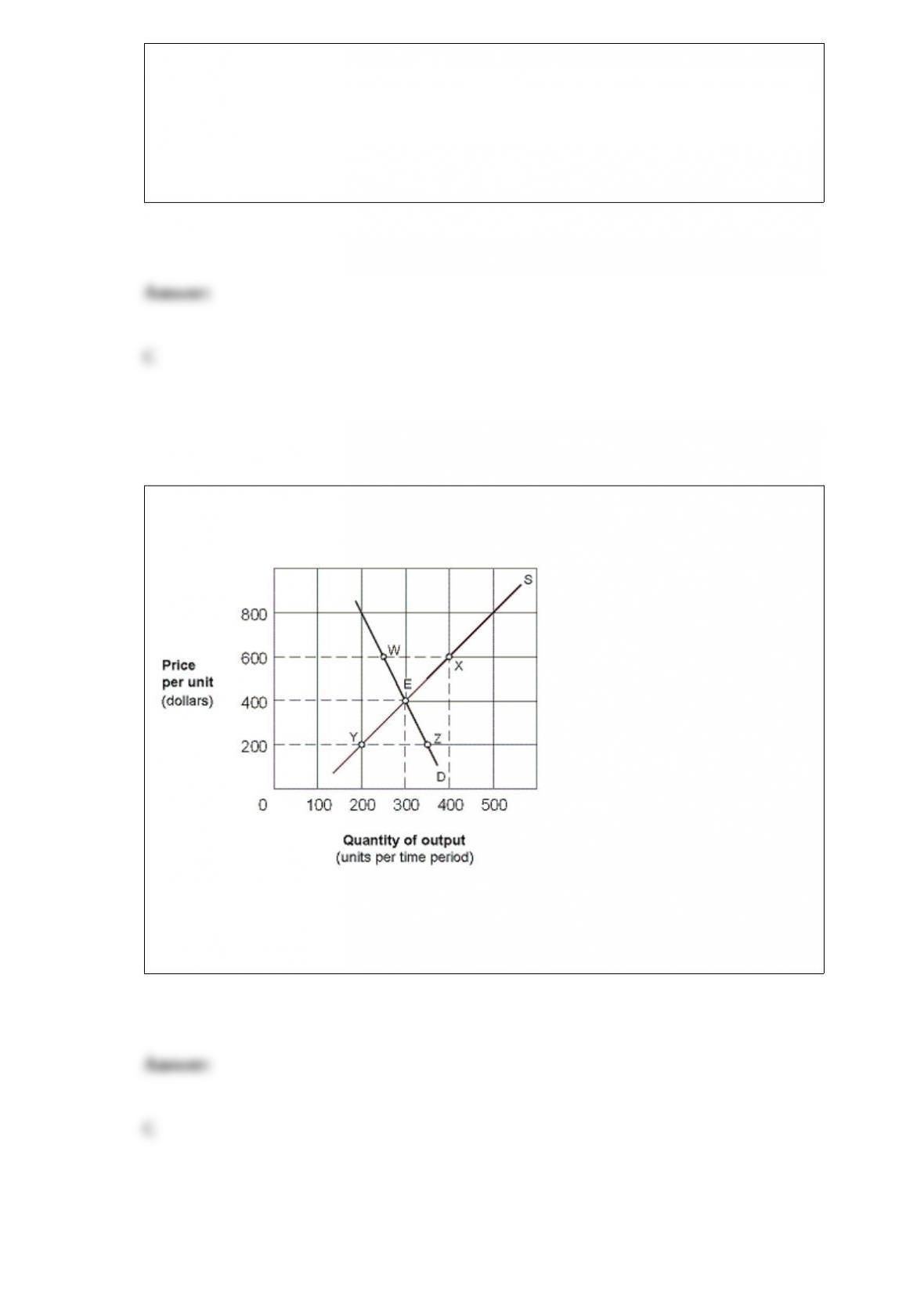
Exhibit 5-8 Supply and demand curves for good X
As shown in Exhibit 5-8, assuming goods X and Y are substitutes, a decrease in the
price of Y, other factors held constant, will move the equilibrium from point E to point:
a. W. c. Y.
b. X. d. Z.

Suppose product price is fixed at $24; MR = MC at Q = 200; AFC = $6; AVC = $16.
What do you advise this firm to do?
a. Increase output.
b. Decrease output.
c. Shut down operations.
d. Stay at the current output; the firm is earning a profit of $400.
e. Stay at the current output; the firm is losing $200.
Which of the following factors would be most likely to encourage investment and
capital formation in a less-developed nation?
a. High and variable rates of inflation.
b. Tariffs and quotas that restrict international trade.
c. A legal system that provides for secure property rights and evenhanded enforcement
of contracts.
d. High marginal tax rates.
Exhibit 3-3 Demand curves
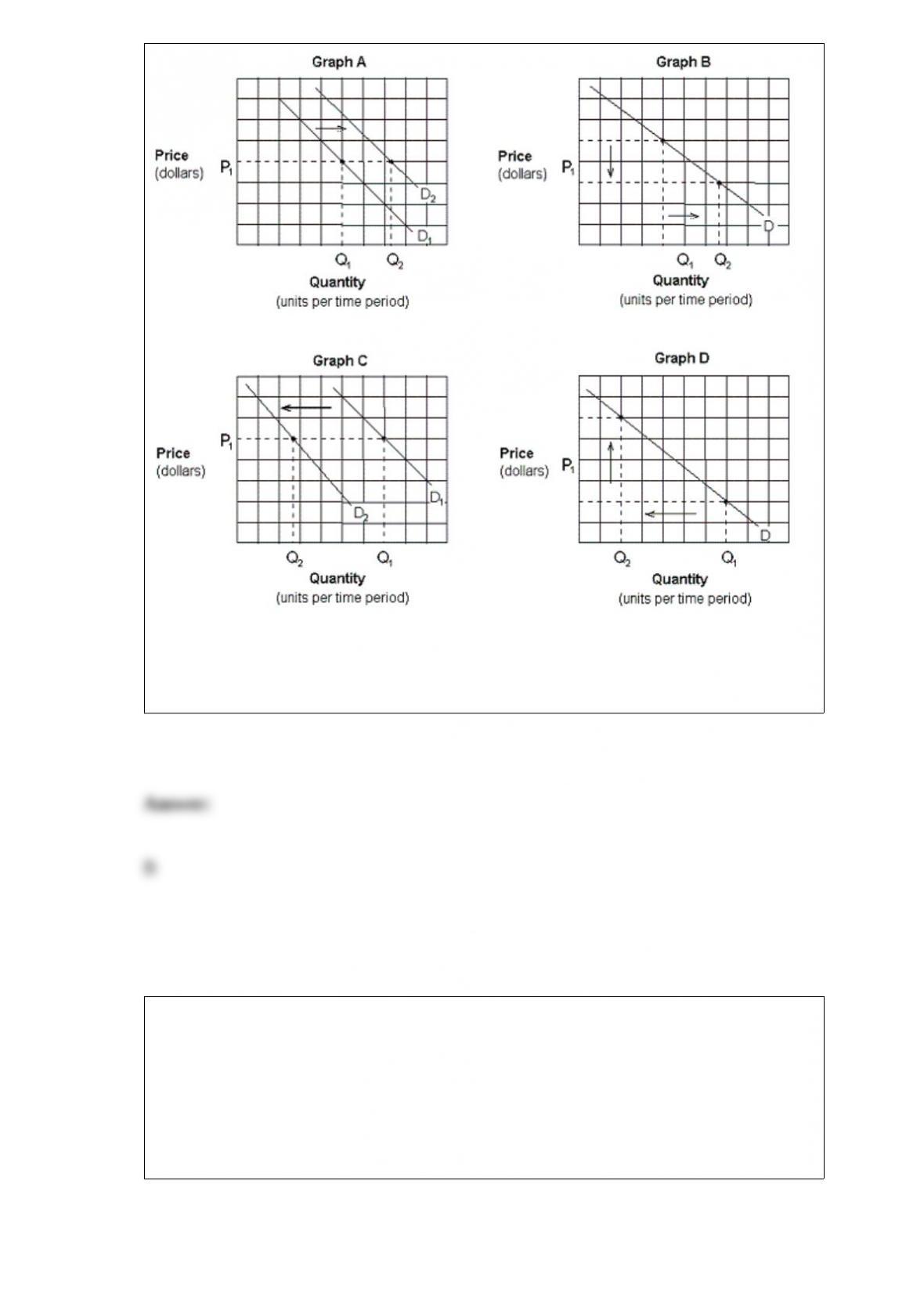
Which of the graphs in Exhibit 3-3 depicts the effect of a decrease in the price of pizza
on the demand curve for pizza?
a. Graph A. c. Graph C.
b. Graph B d. Graph D.
Generally speaking, as more of a particular good is purchased, a consumer’s marginal
utility ____ and total utility ____.
a. increases; decreases
b. decreases; increases
c. increases; increases
d. decreases; decreases
e. generalizations cannot be made

Movement along an indifference curve causes the loss in marginal utility (MU) of one
good to ____ the marginal utility (MU) gained from another good.
a. exceed
b. reduce
c. equal
d. maximize
When Pepsi is considering a price hike, it needs to consider how Coke may react. This
situation is called:
a. mutual interdependence. c. collusion.
b. price leadership. d. monopolistic competition.
Exhibit 7-14 Cost curves
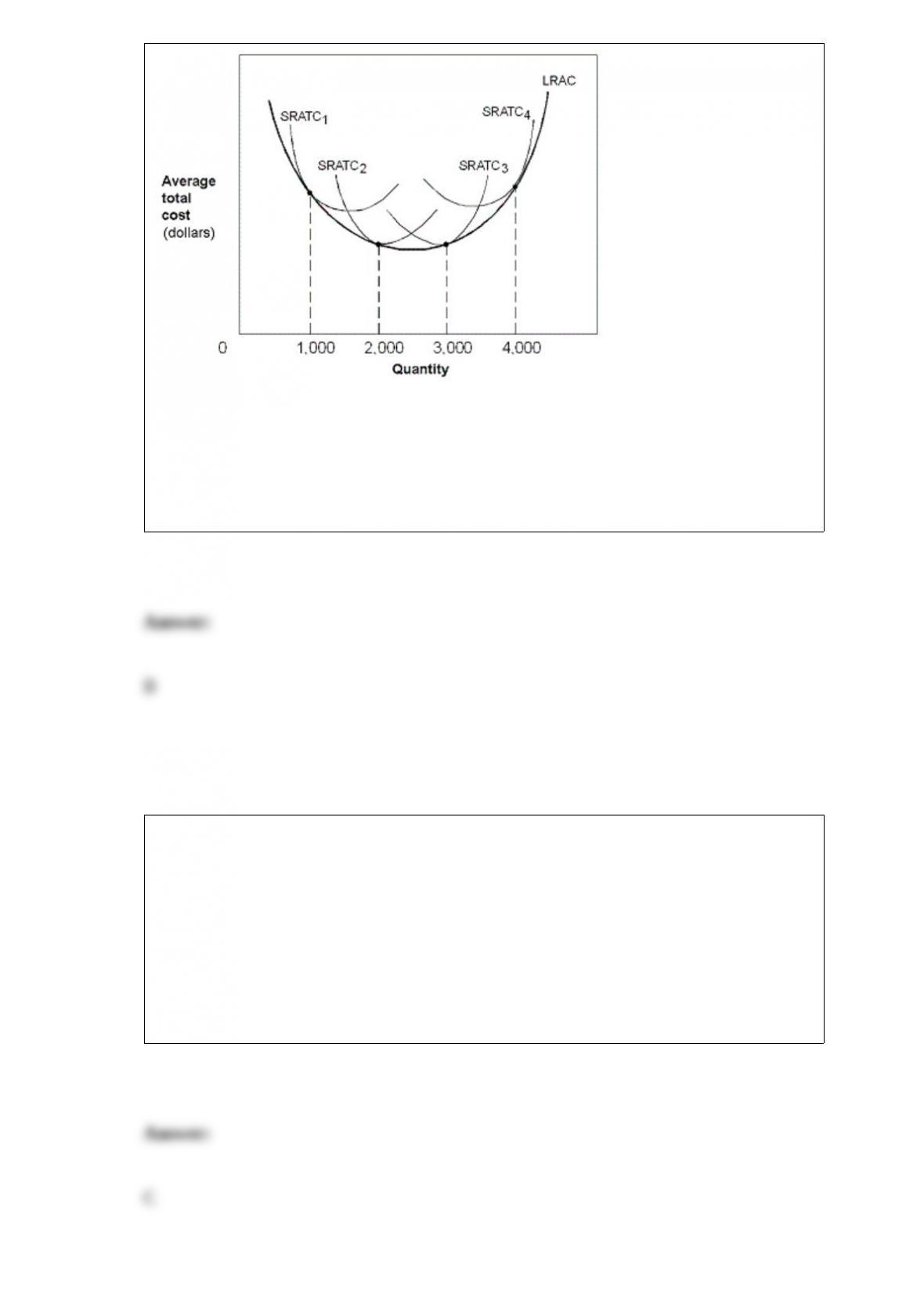
In Exhibit 7-14, economies of scale only exist for output levels up to:
a. 1,000.
b. 2,000.
c. 3,000.
d. 4,000.
e. greater than 4,000.
Which of the following is a property of a public good?
a. It is established by legislation.
b. Free riders are excluded.
c. Users collectively consume benefits.
d. It is determined by positive economics.

The opportunity costs associated with the use of resources owned by a firm are:
a. externalities.
b. implicit costs.
c. explicit costs.
d. sunk costs.
If the quantity of tickets to the fair sold decreases by 10 percent when the price
increases by 5 percent, the price elasticity of demand over this range of the demand
curve is:
a. price elastic. c. perfectly inelastic.
b. price inelastic. d. unitary elastic.
Which of the following does not hinder economic development?
a. Lack of education
b. Poor agricultural productivity
c. Low investment in human capital
d. Lack of technology
e. Good nutrition
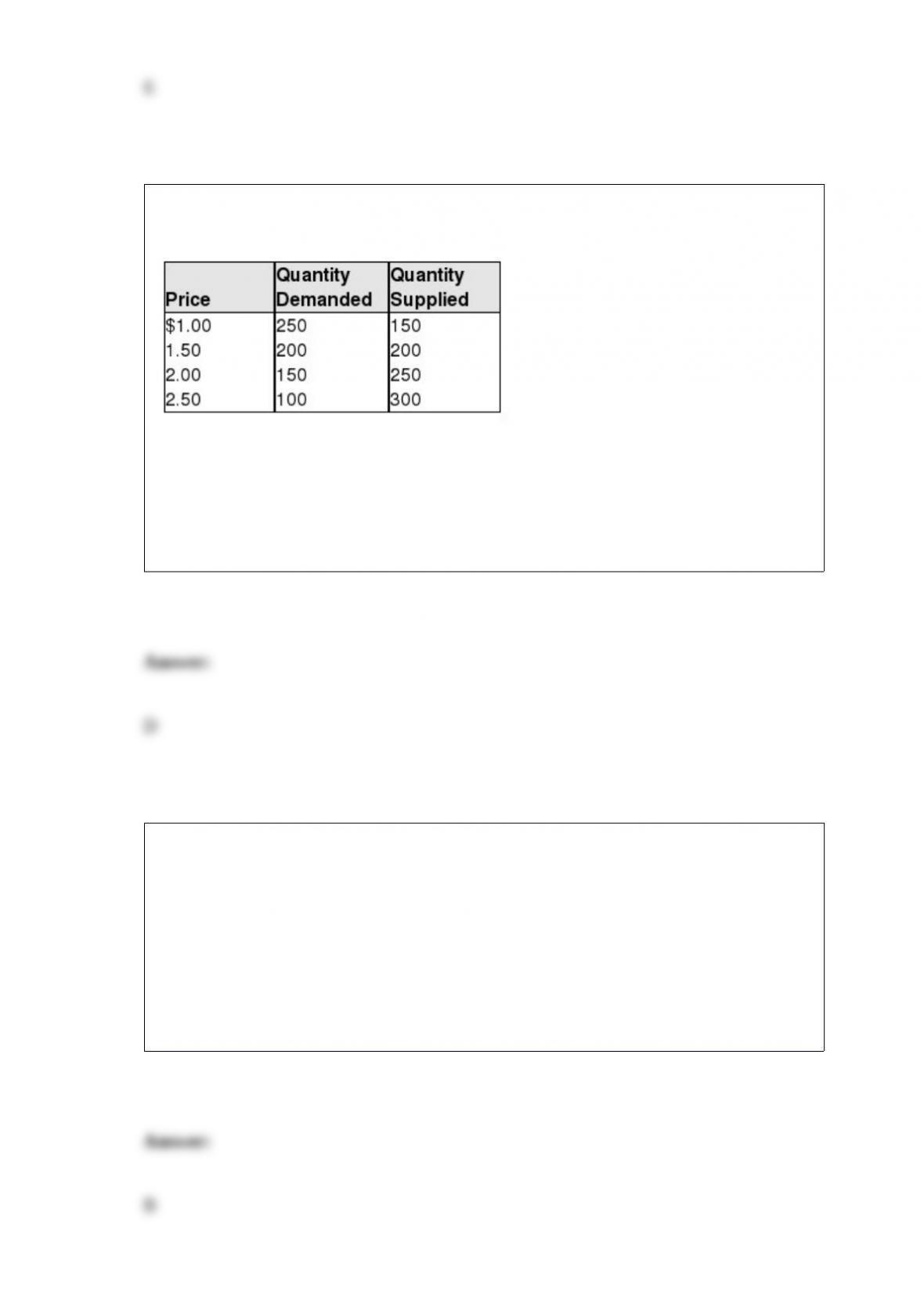
Exhibit 3-12 Supply and demand data
In Exhibit 3-12 the equilibrium price and quantity in the market are:
a. $1.00, 200. c. $2.00, 100.
b. $1.50, 400. d. $1.50, 200.
In order for an economy to shift its production possibilities curve rightward, it must:
a. suffer resource unemployment.
b. experience an increase in its resources and/or an improvement in its technology.
c. use its resources more efficiently than at points along the curve.
d. all of these.

If a country’s population growth rate exceeds the growth rate in its GDP, which of the
following is true?
a. Per capita GDP is rising.
b. Per capita GDP is not changing.
c. Per capita GDP is falling.
d. None of the above.
If real interest rates in the United States are higher than those of our trading partners,
what will tend to happen to the foreign exchange value of the dollar and the U.S.
current account deficit or surplus?
a. The dollar will depreciate; the current account will move toward a deficit.
b. The dollar will depreciate; the current account will move toward a surplus.
c. The dollar will appreciate; the current account will move toward a deficit.
d. The dollar will appreciate; the current account will move toward a surplus.
Assuming the demand curve is more elastic (flatter) than the supply curve, which of the
following is true?
a. The full tax is always passed to the consumer no matter how flat (elastic) the demand
curve is.
b. The full tax is always passed to the seller no matter how flat (elastic) the demand
curve is.
c. The smaller the portion of a sales tax that is passed to the consumer.
d. It does not make any difference how flat (elastic) the demand curve is; the tax is
always split evenly between buyer and seller.
Which of the following will most likely cause a nation’s currency to appreciate on the
foreign exchange market?
a. A decrease in domestic interest rates
b. An increase in foreign interest rates
c. Domestic inflation of 10 percent while the nation’s trading partners are experiencing
stable prices
d. Stable domestic prices while the nation’s trading partners are experiencing 10 percent
inflation
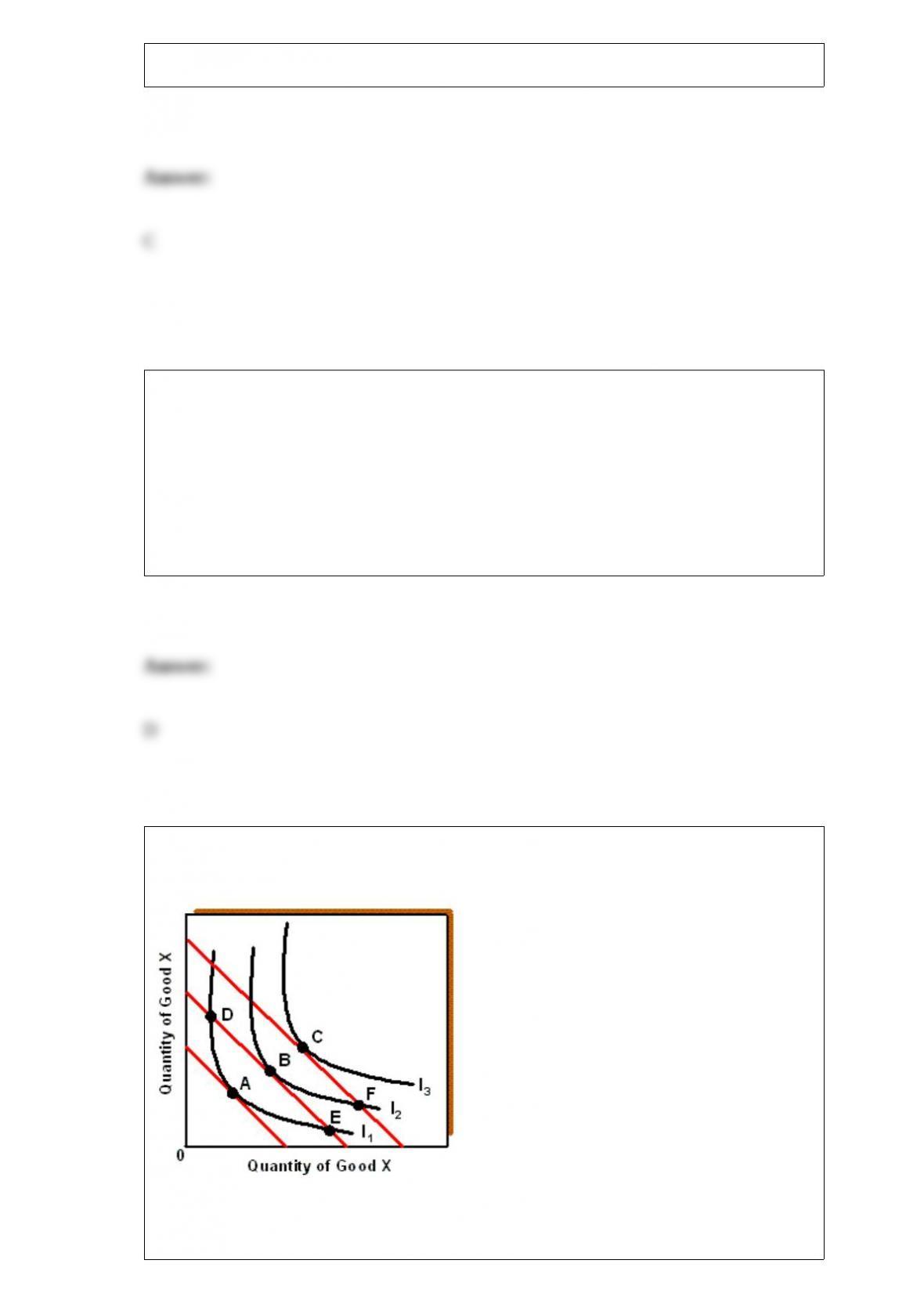
Exhibit 6A-1 Consumer Equilibrium
Given the budget lines and indifference curves shown in Exhibit 6A-1, point B yields:
a. more total utility than point F.
b. more total utility than points A and C.

c. less total utility than point F.
d. equal total utility to point F.
Which of the following is not evidence of the lower standard of living among
less-developed countries?
a. High per capita real GDP.
b. High percentage of households headed by females.
c. High infant mortality rate.
d. Low life expectancy.
e. High birth rate.
Assume that an individual consumes only hotdogs and colas and that the last hotdog
consumed yields 15 utils and the last cola 10 utils. If the price of a hotdog is $1 and the
price of a cola is $.50, we can conclude that the:
a. consumer should consume more hotdogs and less cola.
b. price of hotdogs is too high.
c. consumer should consume fewer hotdogs and more cola.
d. consumer is in equilibrium.

Assume the short-run average total cost for a perfectly competitive industry increases as
the output of the industry expands. In the long run, the industry supply curve will:
a. have a positive slope.
b. have a negative slope.
c. be perfectly horizontal.
d. be perfectly vertical.