
If a firm decreases its plant size and finds that its long-run average costs have
decreased, then
A) its labor is more productive in a smaller plant.
B) its diseconomies of scale are less.
C) the firm should reduce its plant size even more.
D) the firm is now profitable.
Studies have shown that drinking one glass of red wine per day may help prevent heart
disease. Assume this is true, and favorable weather has increased the grape harvest of
California vineyards. In the market for red wine, these two developments would
A) increase demand and decrease supply, resulting in an increase in the equilibrium
quantity and a decrease in the equilibrium price of red wine.
B) increase demand and increase supply resulting in an increase in the equilibrium
quantity and an uncertain effect on the equilibrium price of red wine.
C) increase demand and increase supply, resulting in an increase in the equilibrium
price and an uncertain effect on the equilibrium quantity of red wine.
D) increase demand and increase supply, resulting in an increase in both the equilibrium
price and the equilibrium quantity of red wine.
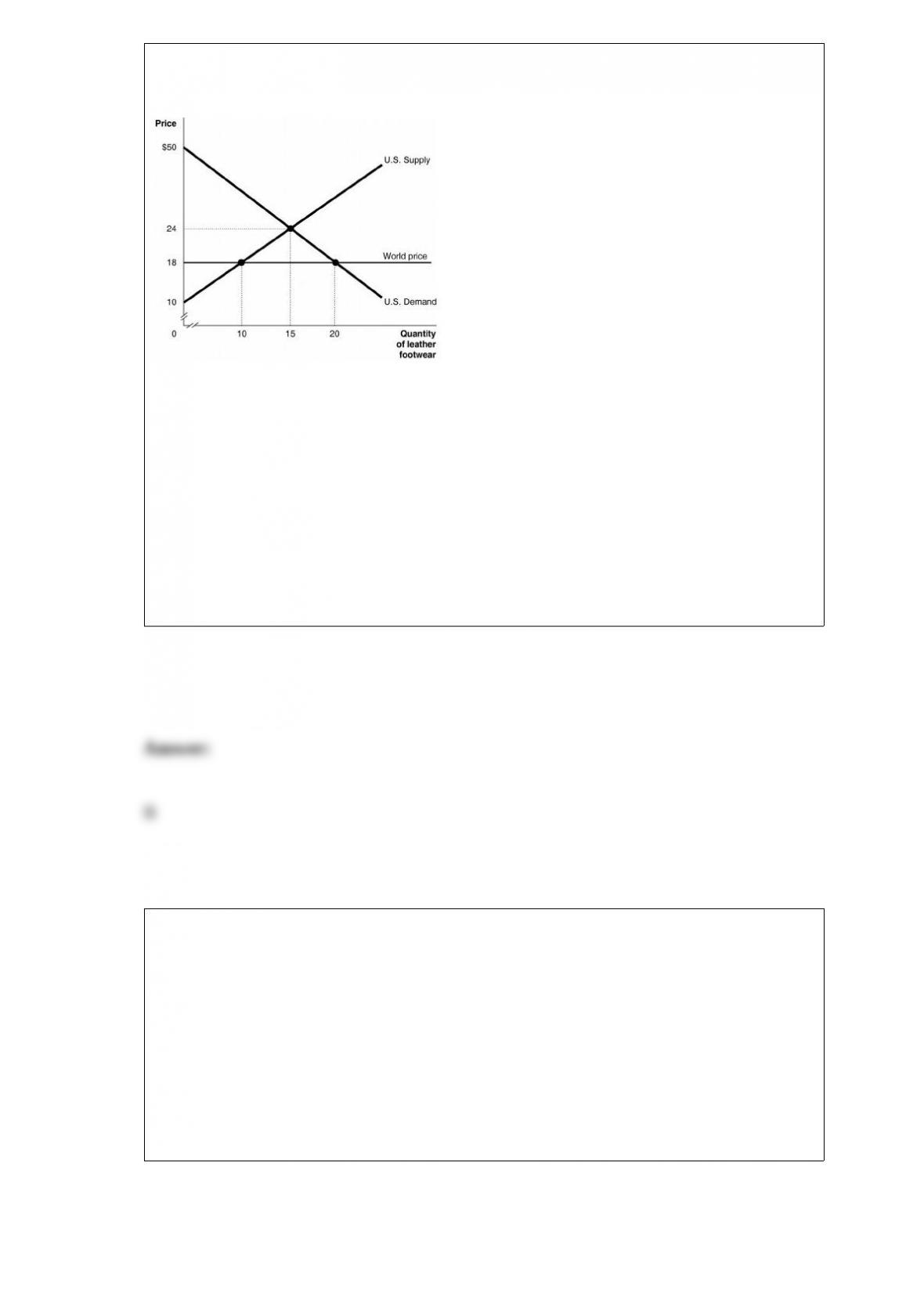
Figure 9-1
Figure 9-1 shows the U.S. demand and supply for leather footwear.
Refer to Figure 9-1. Under autarky, the producer surplus is
A) $40
B) $105
C) $195
D) $285
If a fire insurance company requires firms buying fire insurance to install automatic
sprinkler systems, the insurance company is trying to reduce
A) the problem of adverse selection.
B) the moral hazard problem.
C) sunk costs.
D) asymmetric information.
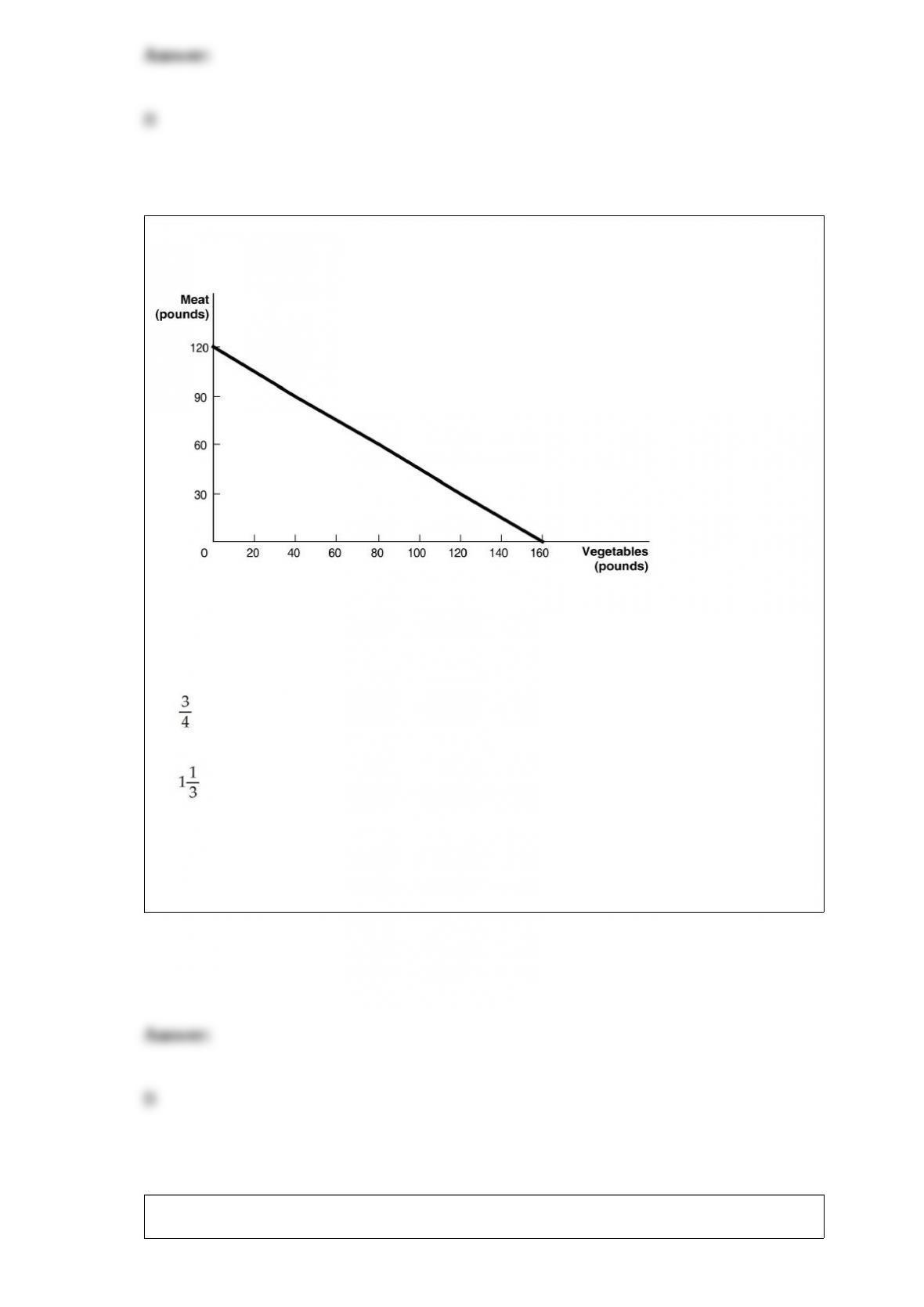
Figure 2-2
Figure 2-2 above shows the production possibilities frontier for Mendonca, an agrarian
nation that produces two goods, meat and vegetables.
Refer to Figure 2-2. What is the opportunity cost of one pound of meat?
A) pound of vegetables
B) pounds of vegetables
C) 1.6 pounds of vegetables
D) 16 pounds of vegetables
Cost-price pricing typically does not result in profit-maximization. As a result,

economists have two views of cost-plus pricing. One of these views is
A) cost-plus pricing is more likely to lead to profit-maximization for large firms than
for small firms.
B) cost-plus pricing is a good way to approximate the profit-maximizing price when
marginal revenue or marginal cost is difficult to determine.
C) cost-plus pricing is more likely to lead to profit-maximization for monopolistically
competitive firms than for oligopoly firms.
D) cost-plus pricing is more likely to result in profit-maximization the more elastic the
firm’s demand curve is.
Of the different types of businesses, a corporation has the ________ government rules
and the ________ government regulations affecting it.
A) least; least
B) least; most
C) most; least
D) most; most
Bringing oil to the market is a relatively long and costly process. The whole process
from exploration to pumping significant amounts of oil can take years. What does this
indicate about the price elasticity of supply for oil?
A) The elasticity coefficient is likely to be very high and supply is inelastic.
B) The elasticity coefficient is likely to be close to zero and supply is perfectly elastic.
C) The elasticity coefficient is likely to be low and supply is highly inelastic.
D) The elasticity coefficient is likely to be low and supply is highly elastic.
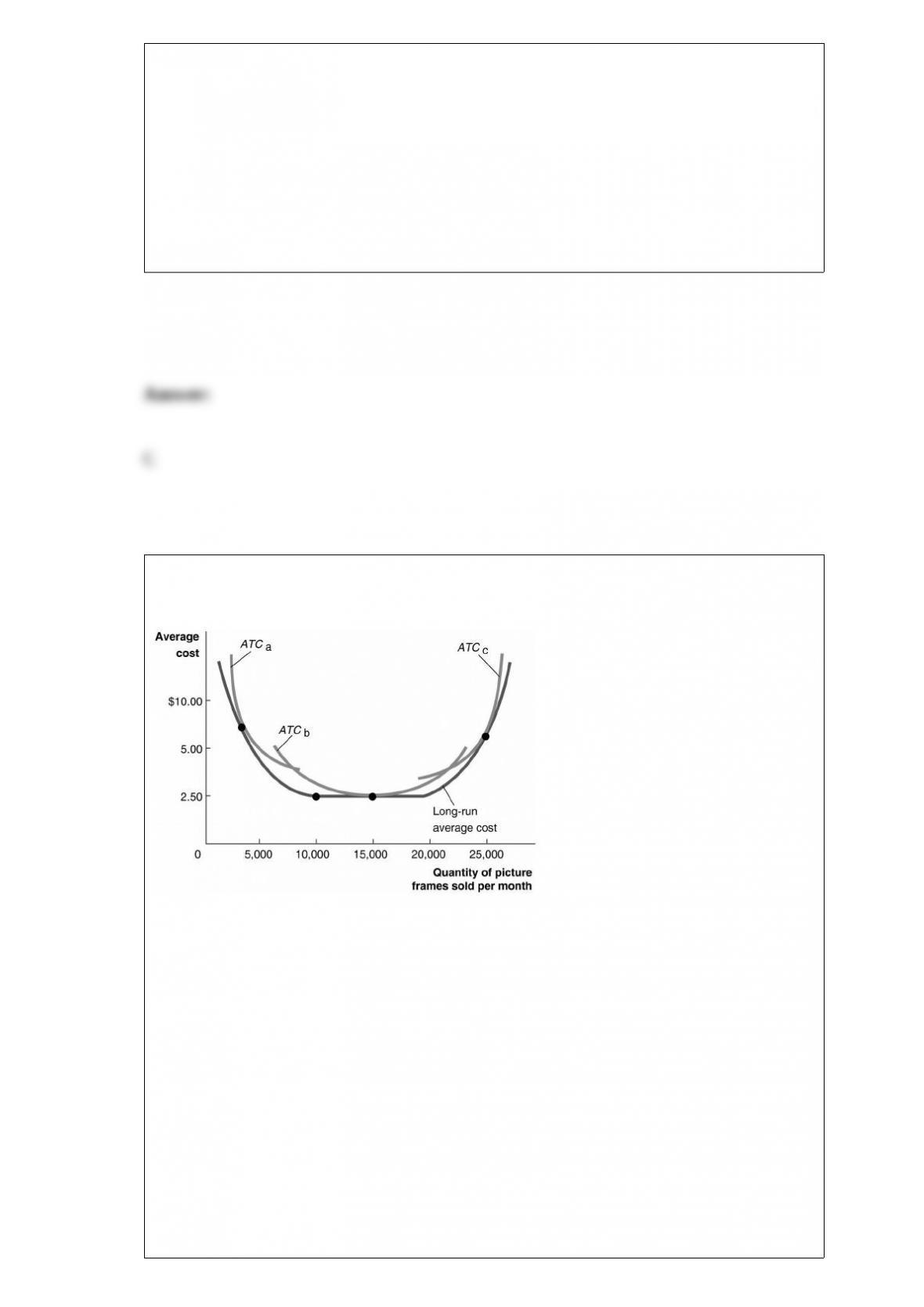
Figure 11-11
Figure 11-11 illustrates the long-run average cost curve for a firm that produces picture
frames. The graph also includes short-run average cost curves for three firm sizes:
ATCa, ATCb and ATCc.
Refer to Figure 11-11. For output rates greater than 20,000 picture frames per month
A) the firm will not make a profit because the average cost of production will be too
high.
B) the firm will experience diseconomies of scale.
C) the firm will experience diminishing returns.
D) the short-run average total cost will equal the long-run average total cost of
production.
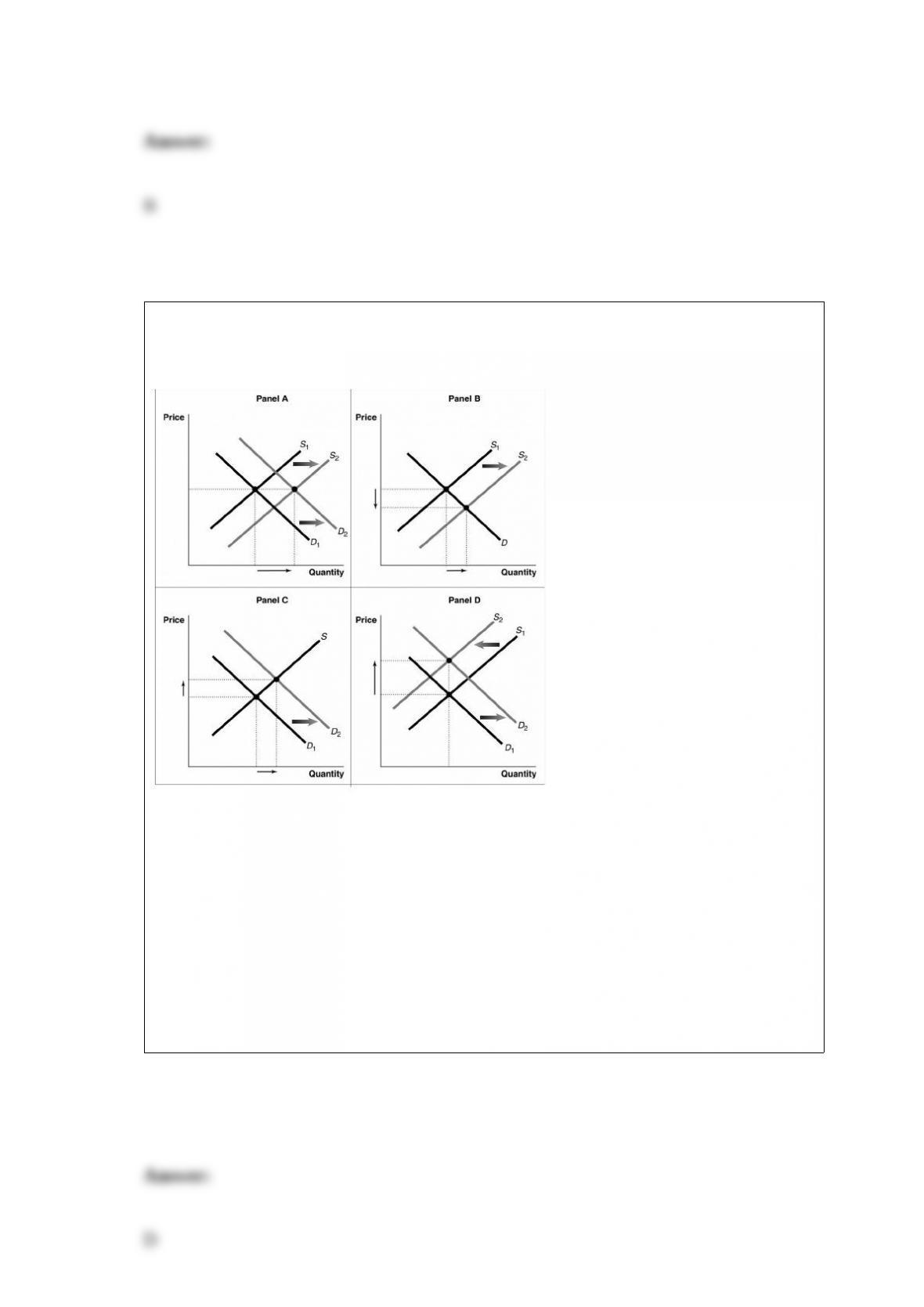
Figure 12-16
Refer to Figure 12-16. Which panel best represents the perfectly competitive organic
produce market in which some firms are experiencing short-run losses, and consumers
are displaying an increased preference for organic produce?
A) Panel A
B) Panel B
C) Panel C
D) Panel D

According to the benefits-received principle of taxation
A) individuals who receive the benefits from a government program should pay the
taxes that support the program.
B) because high income individuals receive the most benefits from government
programs, they should pay more taxes than lower income individuals.
C) people in the same economic situation should bear an equal share of the tax burden.
D) the benefits of government programs such as national defense are shared equally by
all people; therefore, the burden of paying for these programs should be shared equally.
What is the common feature displayed by the following items?
a. eating in a newly opened “fusion” cuisine restaurant
b. attending a Red Sox game in Fenway Park
c. wearing Lucky Brand designer jeans
A) They are all highly inelastic goods.
B) The consumption of these goods takes place privately.
C) The consumption of these goods takes place publicly.
D) They tend to be consumed by better educated people.
Which of the following would cause an increase in the equilibrium price and an
increase in the equilibrium quantity of watermelons?
A) an increase in demand and an increase in supply
B) an increase in supply
C) an increase in supply and an increase in demand greater than the increase in supply
D) a decrease in demand and an increase in supply
Figure 14-7
Refer to Figure 14-7. Uniguest, Inc. is a company that provides PCs with internet
access and touch-sensitive screens to hotels. Suppose the Hard Rock Hotel and Casino
in Las Vegas informs Uniguest that it is considering installing these systems in its hotel
rooms. The Hard Rock expects to be able to charge higher prices for these rooms if it
installs Uniguest’s systems in its rooms. The two companies begin bargaining over what
price the Hard Rock will pay Uniguest for its systems, and the decision tree shown
above illustrates this bargaining game. Note that the profit figures listed in the decision
tree are additional profits for the Hard Rock and total profits for Uniguest.
a. Suppose the Hard Rock offers Uniguest $1,200 per system. Will Uniguest accept or
reject this offer? Why?
b. Suppose the Hard Rock offers Uniguest $800 per system. Will Uniguest accept or
reject this offer? Why?
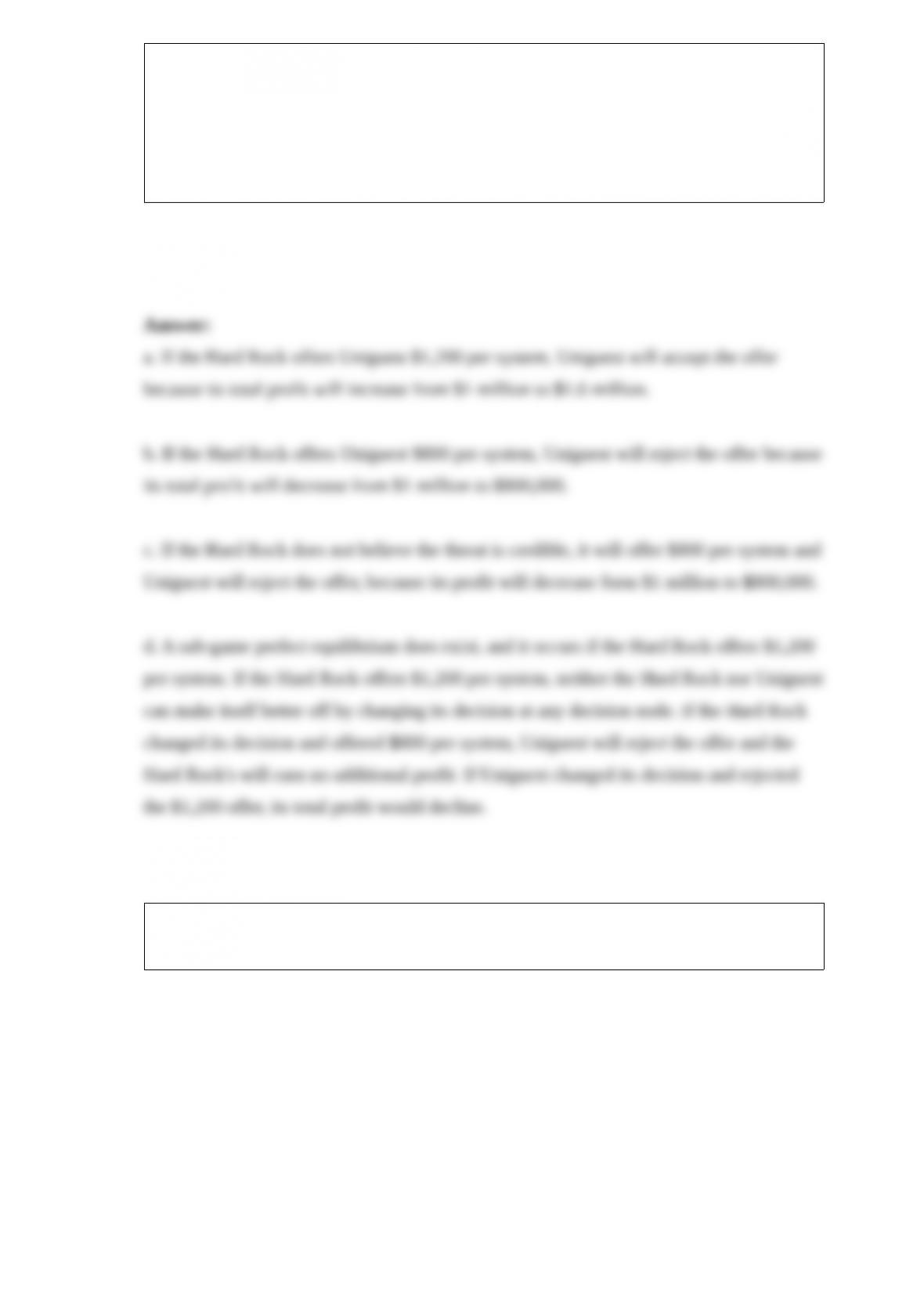
c. Suppose Uniguest attempts to obtain a favorable outcome from the bargaining by
telling the Hard Rock it will reject an $800-per-system offer. If the Hard Rock does not
believe the threat is credible, what will it do? Why? What will Uniguest do? Why?
d. Is there a sub-game perfect equilibrium in this situation? Explain.
Figure 13-11
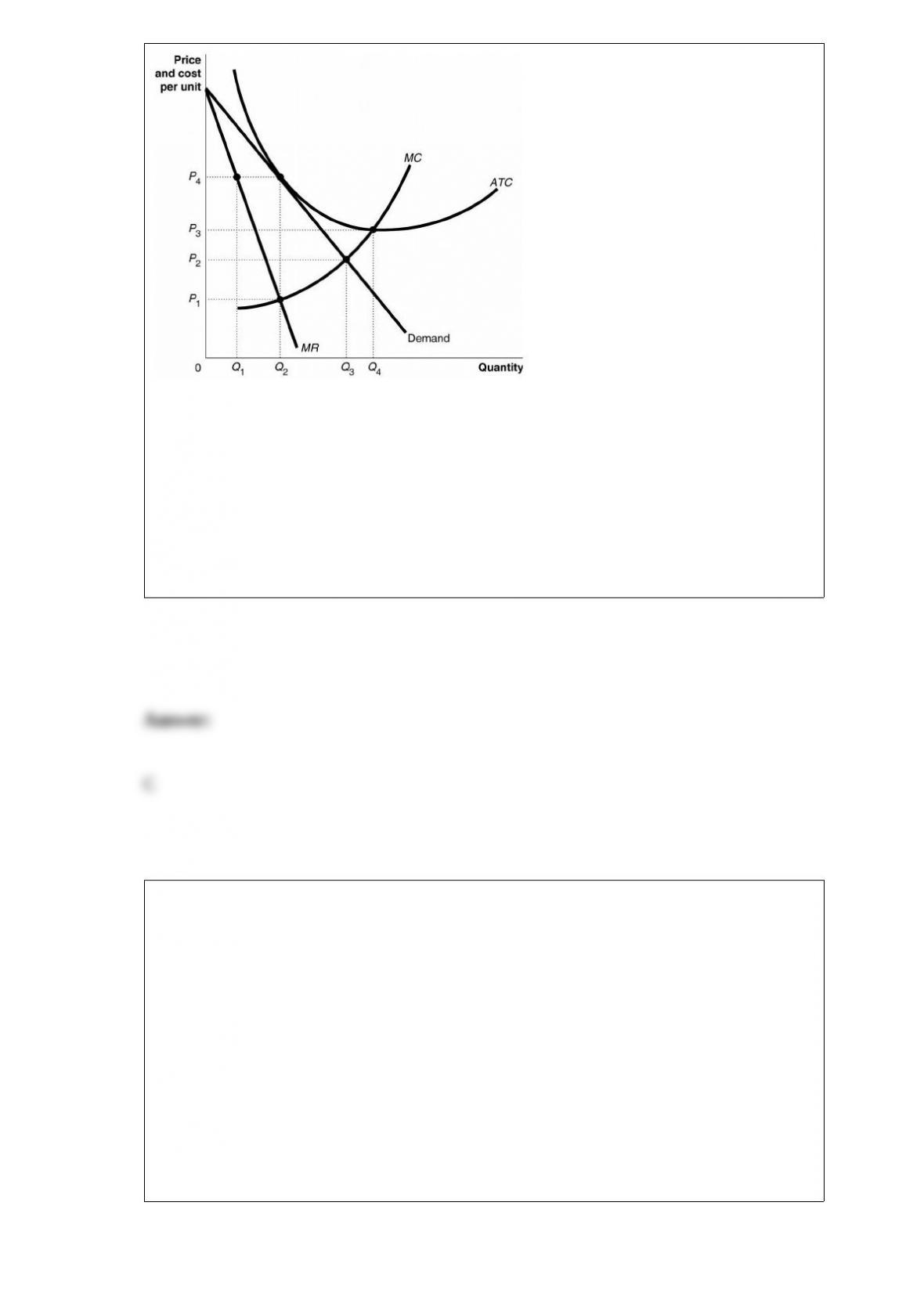
Refer to Figure 13-11. The diagram depicts a firm
A) in a constant cost industry.
B) in an increasing cost industry.
C) in long run equilibrium.
D) that is making short run losses.
The process involved in bringing oil to world markets can take years. Substitutes for
oil-based products such as gasoline are limited. As a result
A) the supply of oil is very elastic and the demand for oil is very elastic over short
periods of time.
B) the supply of oil is very inelastic and the demand for gasoline is inelastic over short
periods of time.
C) the supply of oil and the demand for oil shift to the right over short periods of time.
D) the supply of oil and the demand for oil are both perfectly elastic over short periods
of time.

Anything owed by a person or a firm is
A) an asset.
B) a liability.
C) a bond.
D) equity.
Which of the following is typically considered a fixed cost by academic book
publishers but a variable cost by companies that print books?
A) postage and supplies
B) travel
C) rent
D) wages and salaries
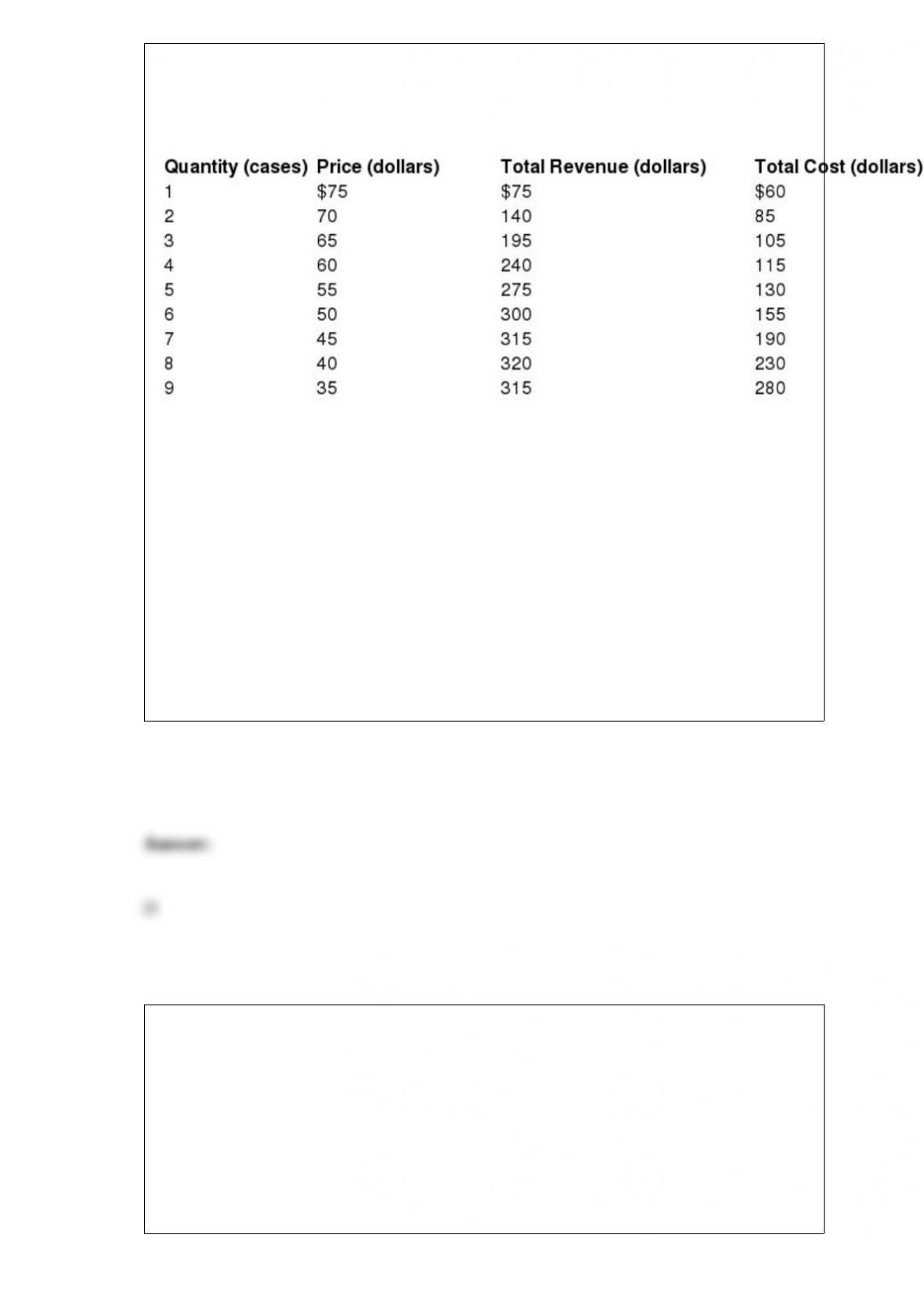
Table 13-2
Eco Energy is a monopolistically competitive producer of a sports beverage called
Power On. Table 13-2 shows the firm’s demand and cost schedules.
Refer to Table 13-2. What is the marginal profit from producing and selling the 5th
case?
A) $275
B) $145
C) $35
D) $20
A United States government patent lasts
A) forever.
B) 50 years.
C) 20 years.
D) 7 years.
The law of one price
A) states that consumers can only buy one good or service at a time.
B) is a law passed by Congress that prohibits firms from selling a product at two
different prices in the same market at the same time.
C) states that consumers will pay any price for a product that has a perfectly inelastic
demand curve.
D) states that identical products should sell for the same price everywhere.
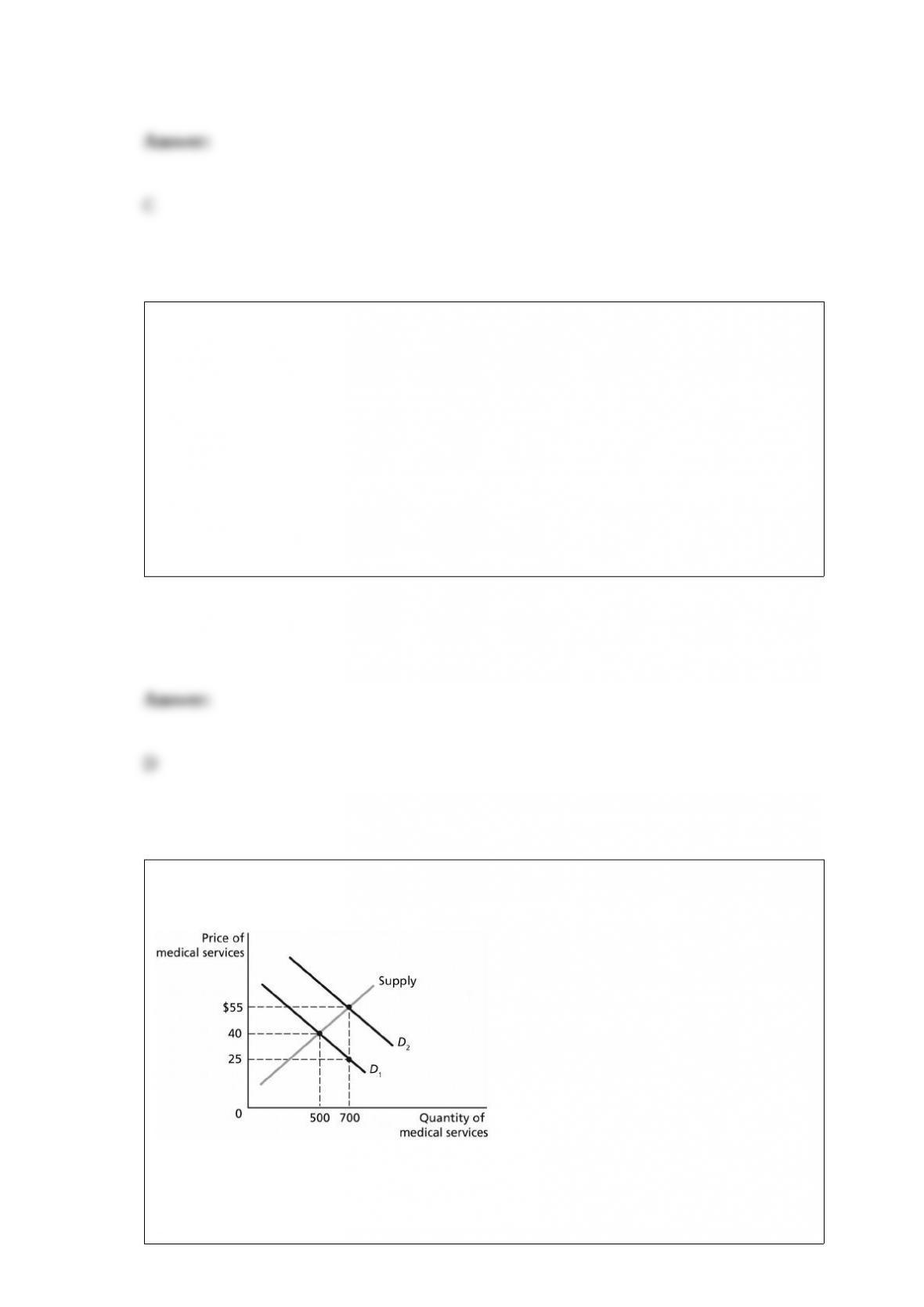
Figure 7-2
Figure 7-2 represents the market for medical services with and without insurance, and
the effect of a third-party payer system on the demand for medical services.
Refer to Figure 7-2. With insurance and a third-party payer system, what price do

doctors receive for medical services?
A) $25
B) $40
C) $55
D) >$55
Shifts in the supply of oil have caused large changes in price since the 1970s because
A) the supply of oil is very inelastic while the demand for oil is very elastic over short
periods of time.
B) the supply of oil is very elastic while the demand for oil is inelastic over short
periods of time.
C) both the supply of oil and the demand for oil are inelastic over short periods of time.
D) the supply of oil and the demand for oil are perfectly elastic over short periods of
time.
Figure 10-6
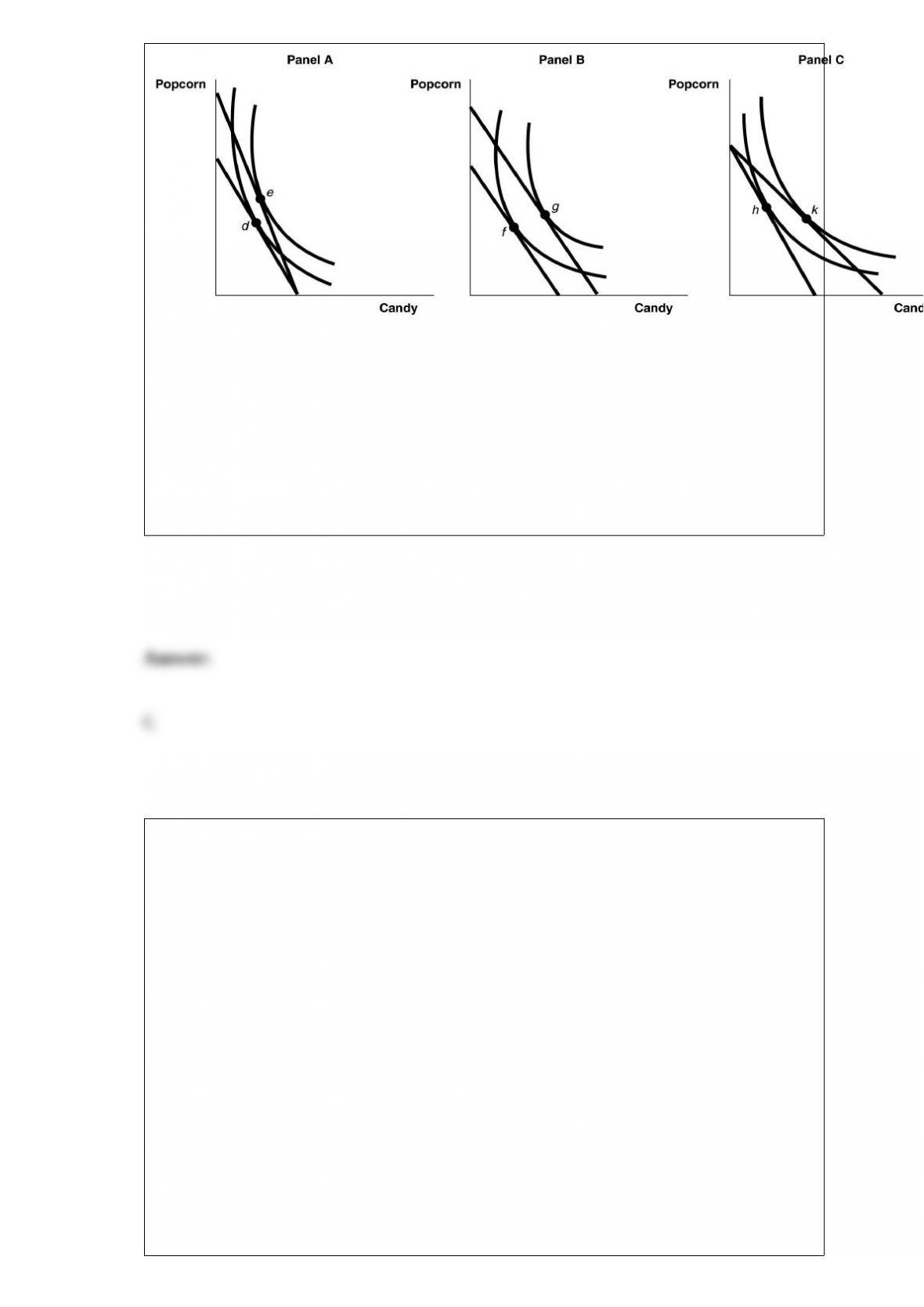
Refer to Figure 10-6. A change in the price of candy only is shown in
A) Panel A.
B) Panel B.
C) Panel C.
D) none of the above panels.
The Walt Disney Company is in a position to use a two-part tariff policy in setting
prices for admission and rides at Disney World. If this strategy resulted in maximum
profit, Disney would convert all consumer surplus into profit. Which of the following
explains why Disney does not maximize its profits from admission and rides?
A) To maximize its profits, Disney would have to know the demand curves of each of
its customers. Since this is not possible, Disney is not able to convert all consumer
surplus into profit.
B) Disney purposely charges less than the profit-maximizing price for admission to
Disney World because it does not want to risk alienating its customers.
C) Disney purposely charges less than the profit-maximizing price for admission to
Disney World in order to earn more profit from sales of food, lodging and other related
services.
D) Disney does not charge the profit-maximizing price for admission because it wants
to keep admission affordable for children who will be more likely to visit Disney World

when they become parents.
Consider the stock of ocean tuna which is massively overfished. It is rational for an
individual to exploit the resource rather than to conserve the stock because
A) the private benefit of harvesting tuna is higher than the social benefit of harvesting
it.
B) the private benefit of harvesting tuna is lower than the social benefit of harvesting it.
C) the social cost of harvesting the fish is lower than the private cost.
D) the private cost of harvesting the fish is lower than the social cost.
Figure 9-3
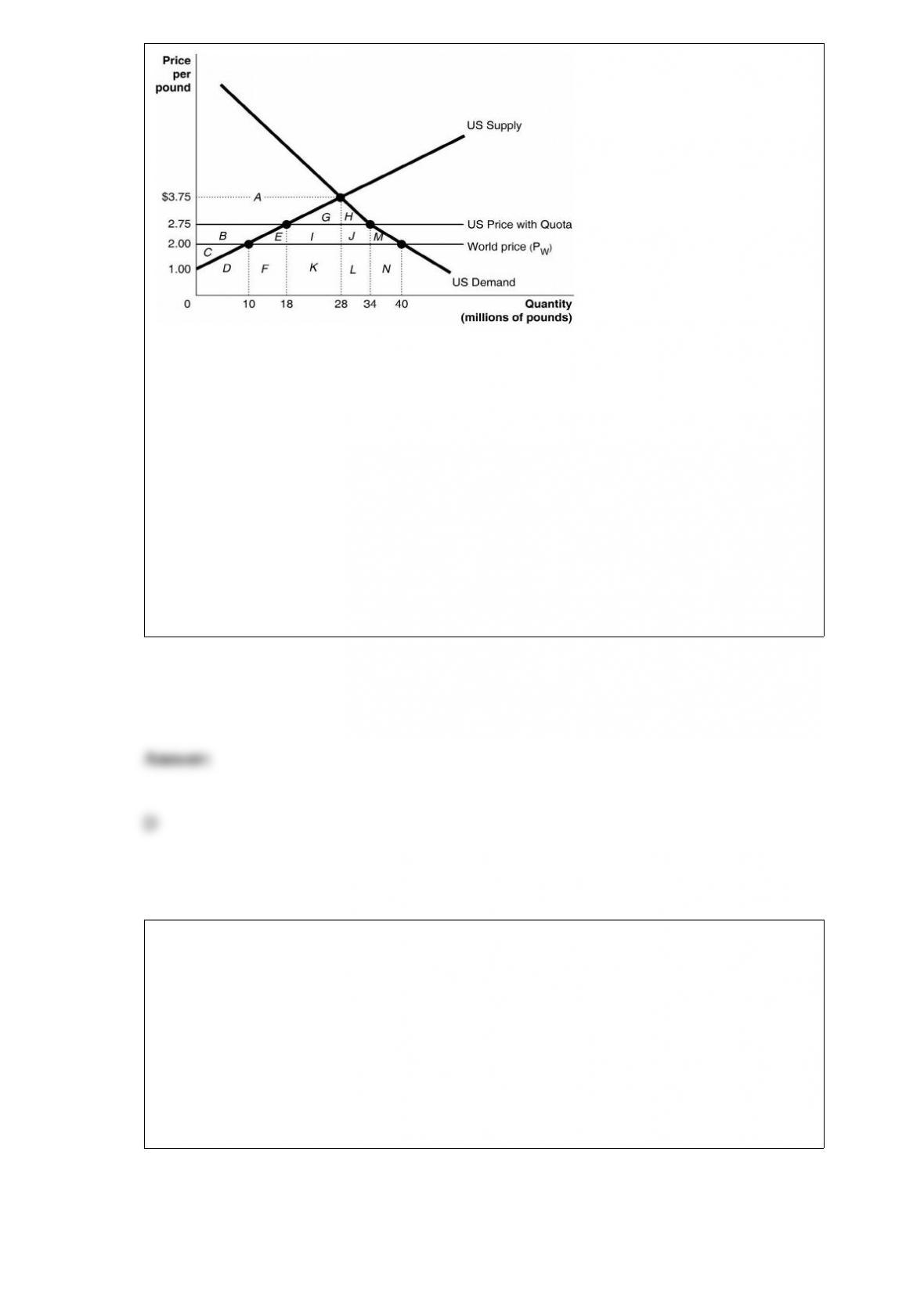
Since 1953 the United States has imposed a quota to limit the imports of peanuts.
Figure 9-3 illustrates the impact of the quota.
Refer to Figure 9-3. If there was no quota, how many pounds of peanuts would
domestic consumers purchase?
A) 10 million
B) 28 million
C) 34 million
D) 40 million
The total amount of producer surplus in a market is equal to
A) the difference between quantity supplied and quantity demanded.
B) the area above the market supply curve and below the market price.
C) the area above the market supply curve.
D) the area between the demand curve and the supply curve below the market price.

An agreement negotiated by two countries that places a numerical limit on the quantity
of a good that can be imported by one country from another country is called
A) a non-tariff trade barrier.
B) an export quota.
C) an import quota.
D) a voluntary export restraint.
Wage differences among workers of different races and gender could be due to all of the
following except
A) differences in preferences for jobs.
B) differences in work experience.
C) differences in education.
D) labor unions.
The relationship between the inputs employed by a firm and the maximum output that it
can produce with those inputs is the firm’s
A) production function.
B) supply curve, or supply schedule.
C) marginal product of labor.
D) average product of labor.
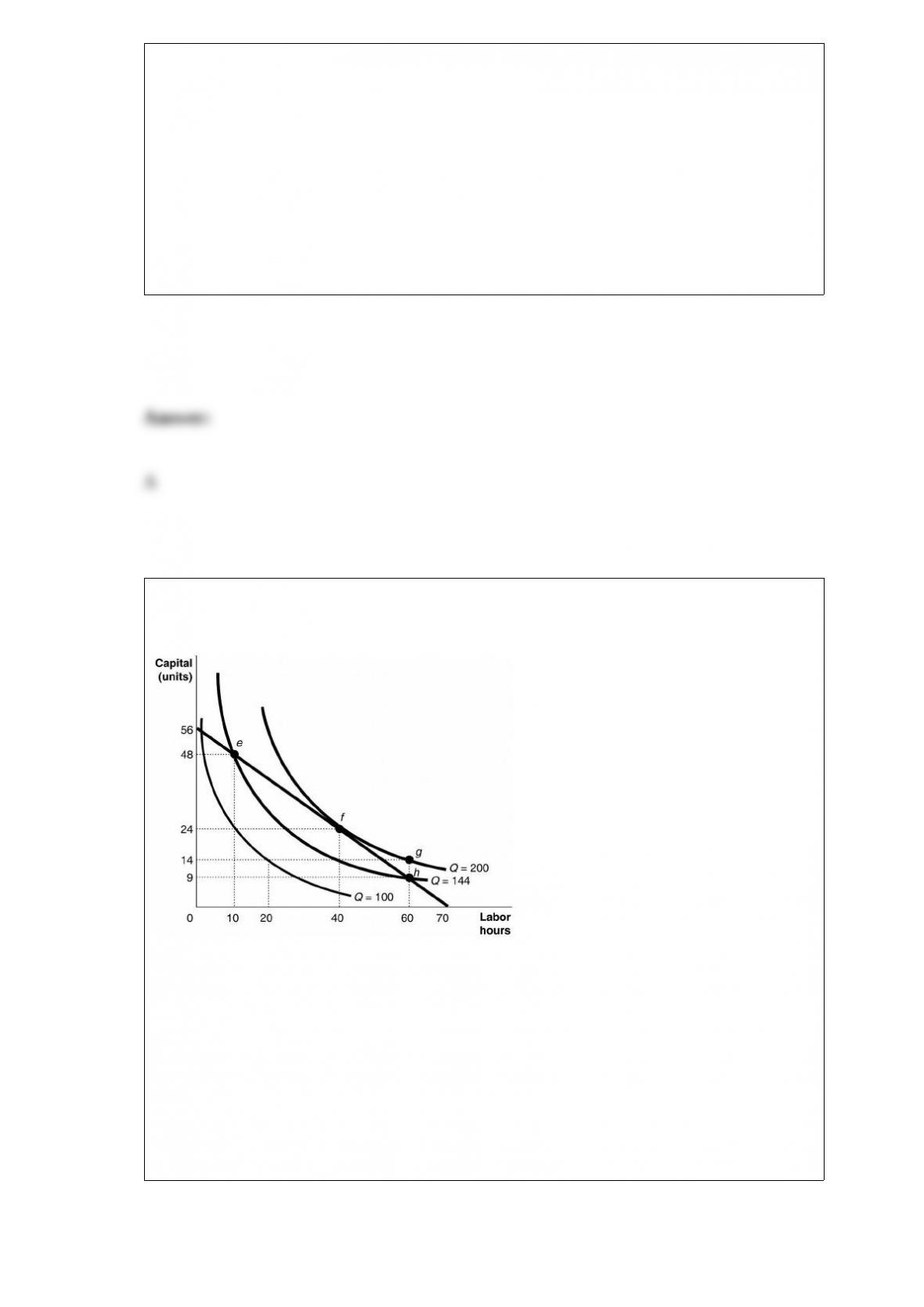
Figure 11-15
Refer to Figure 11-15. Suppose Hilda hires labor at $8 per hour and capital costs $10
per unit. What is the minimum cost of producing 200 gooseberry pies?
A) $3,600
B) $1,120
C) $592
D) $560

Consider three pricing strategies that the firm can pursue:
a. optimal two-part tariff pricing;
b. perfect price discrimination
c. single-price monopoly pricing
Of these three strategies, which is most beneficial to society as a whole?
A) Both perfect price discrimination and a two-part tariff pricing are equally beneficial
in that the marginal benefit of the last unit sold equals the marginal cost of producing
that unit.
B) only perfect price discrimination because this pricing method eliminates deadweight
loss
C) single-price monopoly pricing because consumers enjoy at least some consumer
surplus
D) only two-part tariff pricing because the per-unit portion of the price is set equal to
marginal cost
If you want to know the present value of a future payment received in one year, what
formula can you use?
A) Present value equals future payment times the current market rate of interest.
B) Present value equals future payment divided by one plus the rate of interest.

C) Present value equals one plus the rate of interest in decimals divided by future
payment.
D) Present value equals future payments times one plus the rate of interest.