1) A positive externality or spillover benefit occurs when:
A.product differentiation increases the variety of products available to consumers.
B.the benefits associated with a product exceed those accruing to people who consume
it.
C.a firm produces at the P = MC output.
D.economic profits are zero in the long run.
2) the public decision to build the interstate highway system is an example of:
a.the allocative function of government.
b.the redistributional function of government.
c.public provision of a suitable legal framework for the market system.
d.the stabilization function of government.
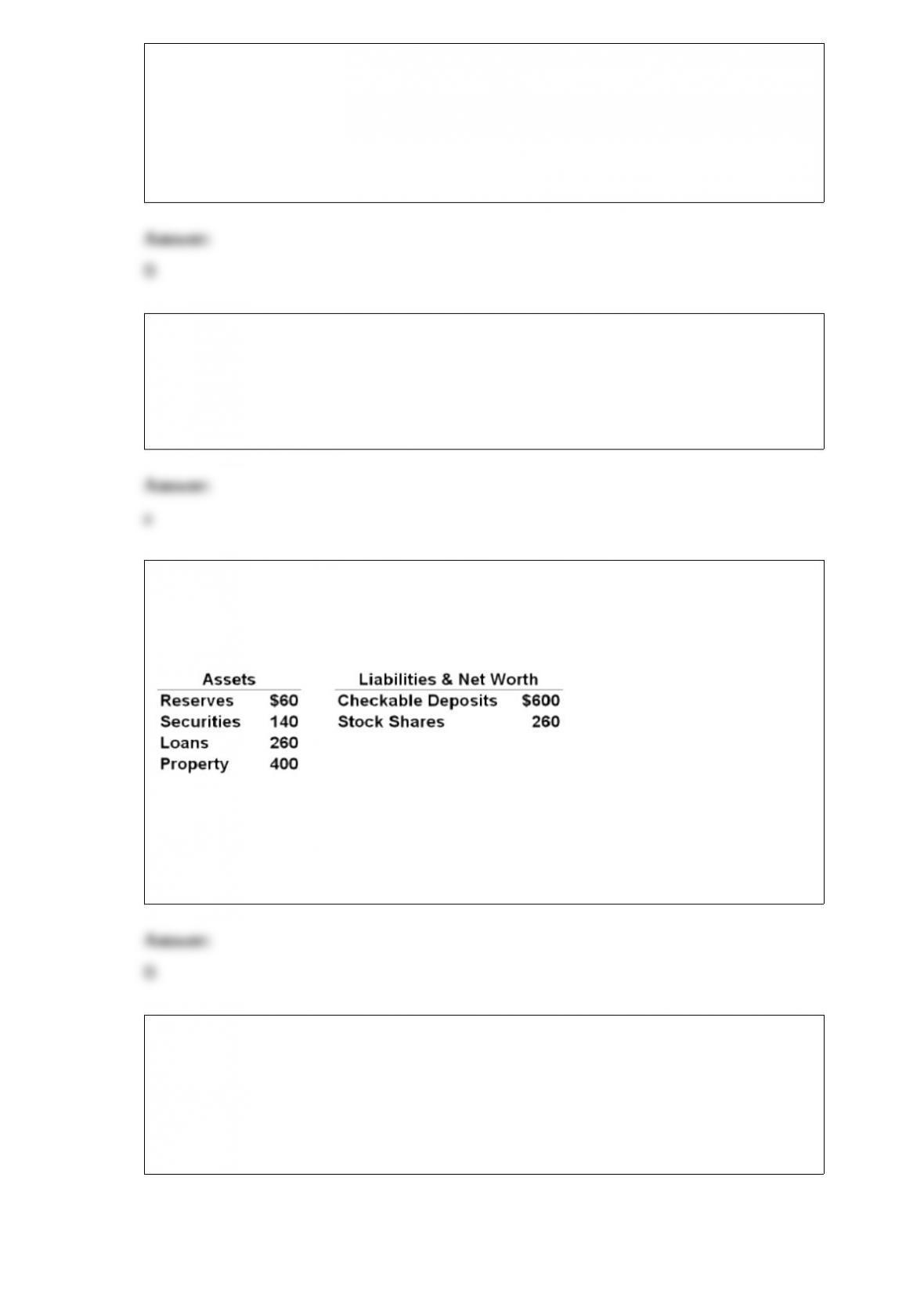
3) The following consolidated balance sheet of the commercial banking system.
Assume that the reserve requirement is 10 percent. All figures are in billions and each
question should be answered independently of changes specified in any preceding ones.
Refer to the above data. The monetary multiplier for the commercial banking system is:
A.5.
B.10.
C.12.5.
D.20.
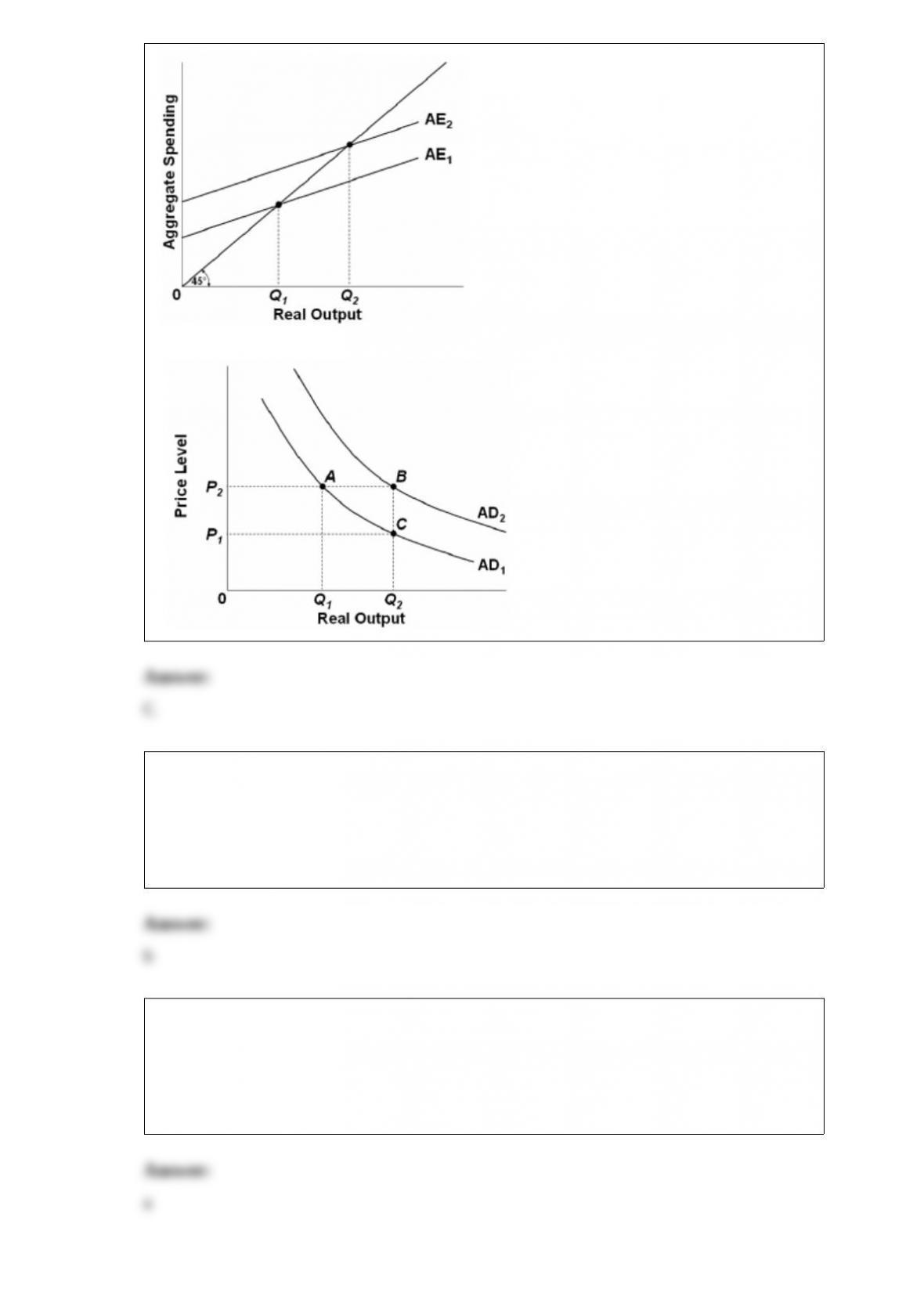
4) An increase in aggregate expenditures resulting from a decrease in the price level is
equivalent to a:
A.rightward shift of the aggregate demand curve.
B.leftward shift of the aggregate demand curve.
C.movement downward along a fixed aggregate demand curve.
D.decrease in aggregate supply.
5) transfer payments are included in:
a.ni.
b.pi.
c.gdp.
d.ndp.
6) the nondiscriminating monopolist’s demand curve:
a.is less elastic than a purely competitive firm’s demand curve.
b.is perfectly elastic.
c.coincides with its marginal revenue curve.
d.is perfectly inelastic.
7) as it relates to a public good, nonrivalry means that:
a.the public sector is able to provide the good profitably.
b.there is no need or demand for the good.
c.either the public sector or the public sector can produce the good, but not both.
d.one person’s benefit from the good does not reduce the benefit available to others.
8) Wealth:
A.is a flow concept.
B.refers to accumulated financial assets only.
C.refers to accumulated real assets only.
D.refers to accumulated financial and real assets.
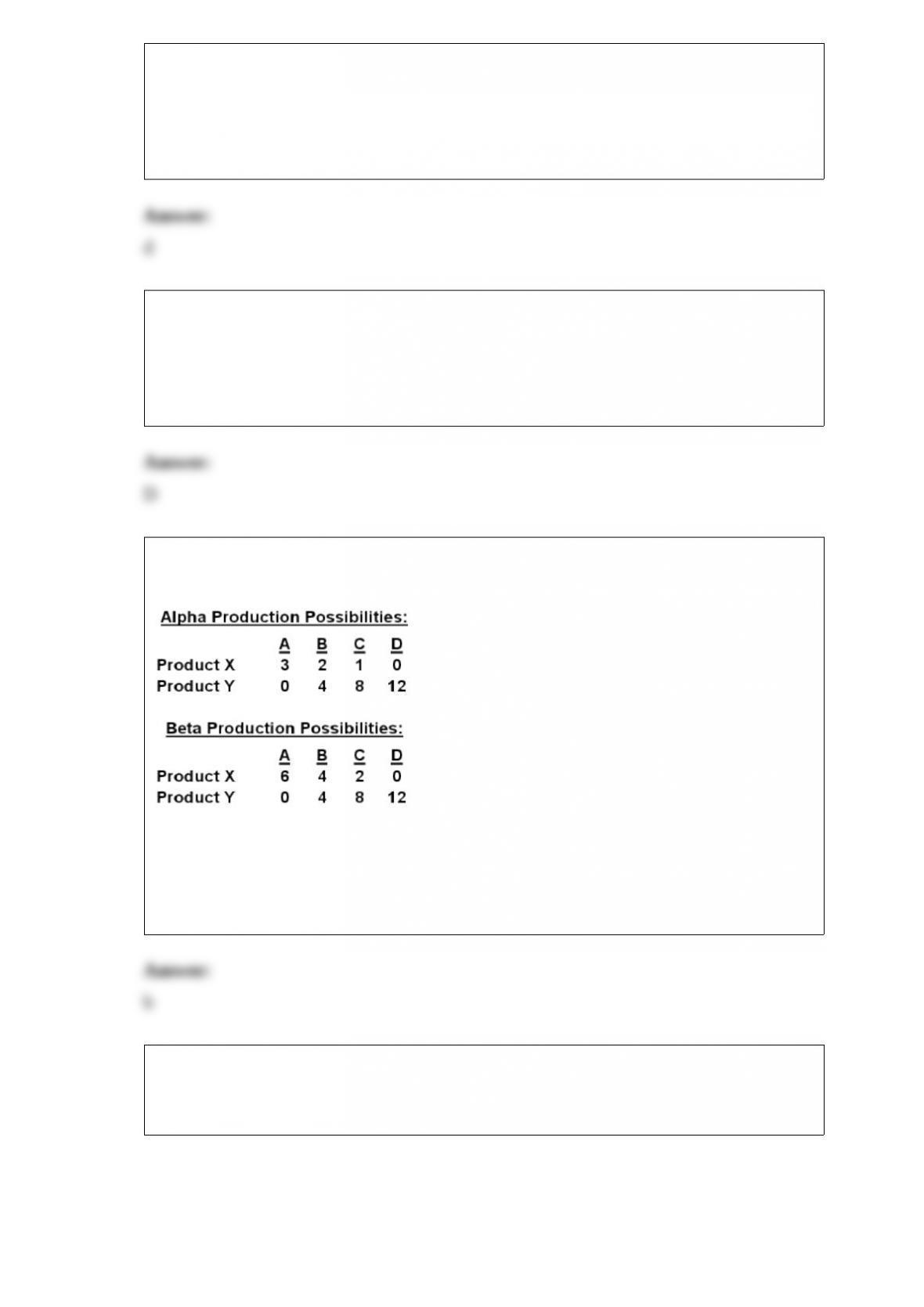
9) the following production possibilities tables for countries alpha and beta:
refer to the above tables. the domestic opportunity cost of one unit of x in alpha is:
a.2 units of y
b.4 units of y
c.1 unit of y
d.3 units of y
10) Use the table below for the next set of questions. Column 1 shows the interest rate,
column 2 shows the demand for money, and columns 35 show the supply of money. All
quantities are in millions ($).
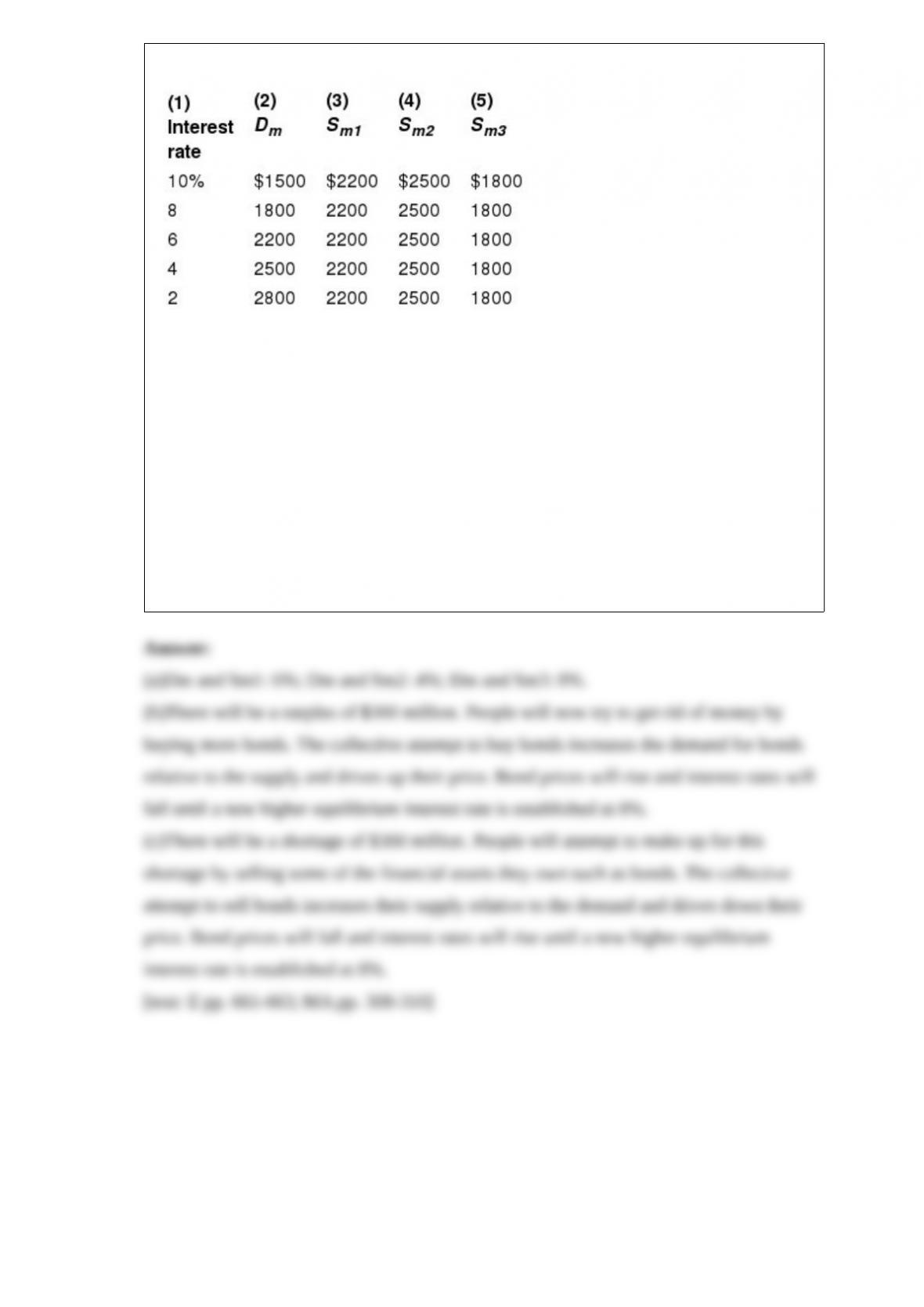
(a)Given the demand for money, what will the equilibrium interest rate be for each of
the different supply of money schedules?
(b)Assume the economy was in equilibrium at Dm and Sm1. If the FED decides to
change the money supply to Sm2 and the interest rate stays the same, how much of a
shortage or surplus in the money supply will there be? Describe what will happen in the
money market and the bond market to eliminate the surplus or shortage and restore a
new equilibrium interest rate.
(c)Assume the economy was in equilibrium at Dm and Sm1. If the FED decides to
change the money supply to Sm3 and the interest rate stays the same, how much of a
shortage or surplus in the money supply will there be? Describe what will happen in
this money market and the bond market to eliminate the surplus or shortage of money
and restore a new equilibrium interest rate.
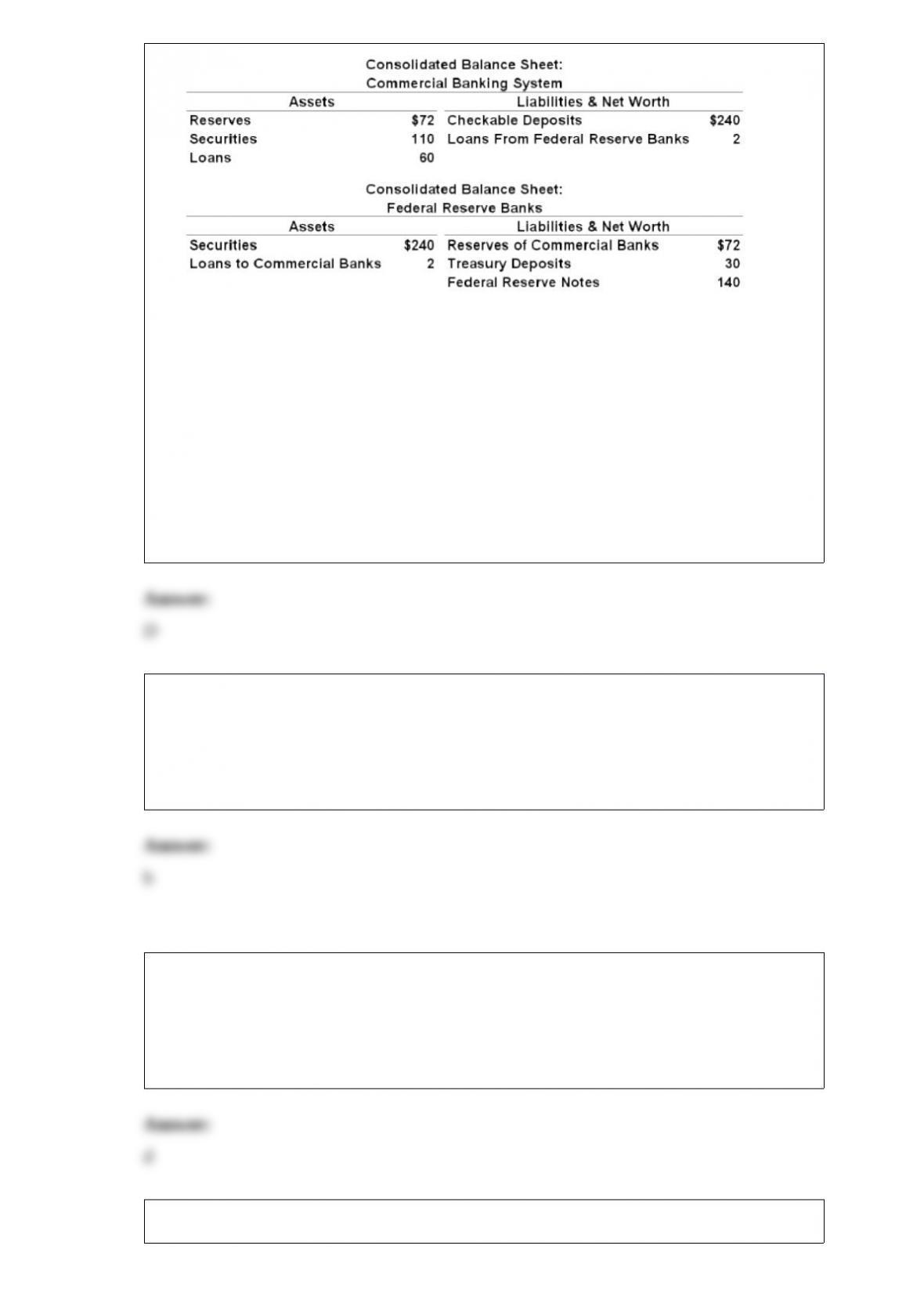
11)
Refer to the above balance sheets and assume the reserve ratio is 25%. Suppose the
Federal Reserve Banks buy $2 in securities from the public, which deposits this amount
into checking accounts. As a result of these transactions, the supply of money will:
A.be unaffected but the money-creating potential of the commercial banking system
will increase by $6.
B.directly decrease by $2 and the money-creating potential of the commercial banking
system will be unaffected.
C.directly increase by $8 and the money-creating potential of the commercial banking
system will increase by an additional $32.
D.directly increase by $2 and the money-creating potential of the commercial banking
system will increase by an additional $6.
12) because the monopolist’s demand curve is downsloping:
a.mr will equal price.
b.price must be lowered to sell more output.
c.the elasticity coefficient will increase as price is lowered.
d.its supply curve will also be downsloping.
13) an inferior good is:
a.one whose demand curve will shift rightward as incomes rise.
b.one whose price and quantity demanded vary directly.
c.one which has not been approved by the federal food and drug administration.
d.not accurately defined by any of the above statements.
14) What effect, if any, will each of the following have upon the elasticity or the
location of the demand curve for resource J that is being used in the production of
commodity X? If there is uncertainty as to the precise effect, explain the sources of that
uncertainty.
(a)A decline in the demand for product X.
(b)An increase in the price of Y, a substitute product for X.
(c)A decline in the price of substitute resource K.
(d)A decline in the number of available resources that are substitutable for J in the
production of X.
(e)An increase in the price of complementary resource L.
(f)An increase in the elasticity of demand for product X due to an increase in the
number of sellers in the market.
15) If property rights are weak or uncertain, resource extraction will tend to:
A.occur faster than the rate that would maximize the long-run stream of profits.
B.occur slower than the rate that would maximize the long-run stream of profits.
C.occur at the rate that would maximize the long-run stream of profits.
D.stop.
16) What are the basic characteristics of oligopoly? How does oligopoly compare with
the other market structures?
17) What are four significant reasons for studying resource pricing?
18) A firm combines two resources, X and Y, to produce an output level Q in a purely
competitive market. The cost of a unit of X is $15 and the cost of a unit of Y is $8. The
marginal product of X is 30 units and the marginal product of Y is currently 24 units at
output level Q. What would you recommend that the firm do given this resource
combination?
19) Suppose Frank is considering purchasing an asset that will have a future value of
$1000 in 7 years. The interest rate is 6% and the price of the asset is $600. Should
Frank buy the asset? Why or why not?
20) What is an individual transferable quota (ITQ)? How can it be used with the total
allowable catch (TAC) for making fishing more efficient and sustainable?
21) Suppose an economic advisor to the President recommended a personal income tax

increase. Indicate the expected effects on aggregate demand and on aggregate supply.