1) Rapid population growth since 1800 has occurred primarily because of:
A.a significant increase in total fertility rates as living standards have risen.
B.a significant reduction in death rates as living standards have risen.
C.a significant increase in replacement rates as living standards have risen.
D.all of these.
2) Open-market operations change:
A.the size of the monetary multiplier, but not commercial bank reserves.
B.commercial bank reserves, but not the size of the monetary multiplier.
C.neither commercial bank reserves nor the size of the monetary multiplier.
D.both commercial bank reserves and the size of the monetary multiplier.
3)
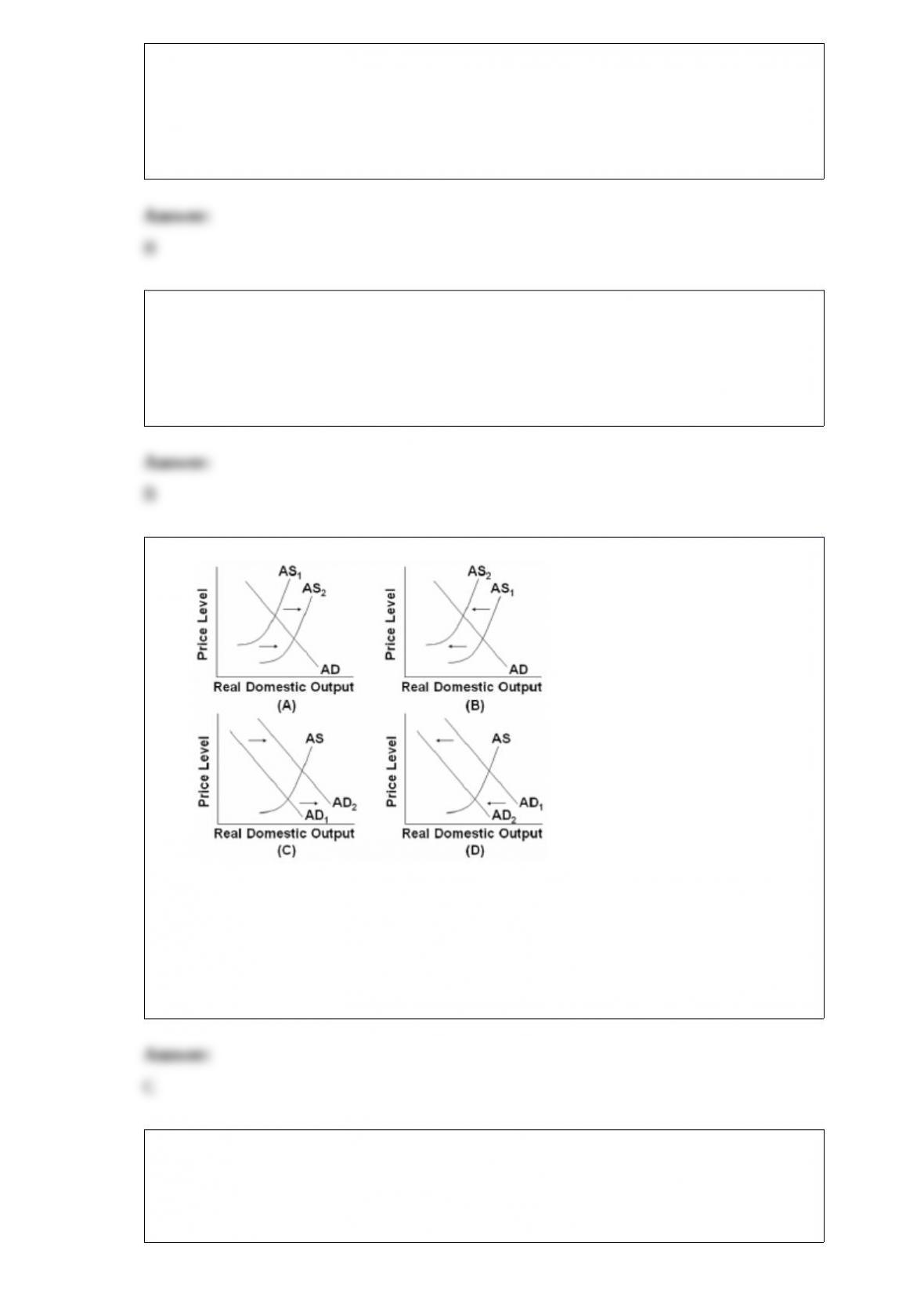
Which of the above diagrams best portrays the effects of an increase in foreign
spending on U.S. products?
A.A
B.B
C.C
D.D
4) a leftward shift in the supply curve of product x will increase equilibrium price to a
greater extent the:
a.more elastic the supply curve.
b.larger the elasticity of demand coefficient.
c.more elastic the demand for the product.
d.more inelastic the demand for the product.
5) In the aggregate expenditures model, equilibrium GDP in a private closed economy
is indicated by:
A.the equality of saving and planned investment.
B.the intersection of aggregate expenditures and the 45-degree line.
C.the absence of unplanned changes in inventories.
D.all of these.
6) assume a drought in the great plains reduces the supply of wheat. noting that wheat is
a basic ingredient in the production of bread and that potatoes are a consumer substitute
for bread, we would expect the price of wheat to:
a.rise, the supply of bread to increase, and the demand for potatoes to increase.
b.rise, the supply of bread to decrease, and the demand for potatoes to increase.
c.rise, the supply of bread to decrease, and the demand for potatoes to decrease.
d.fall, the supply of bread to increase, and the demand for potatoes to increase.
7)
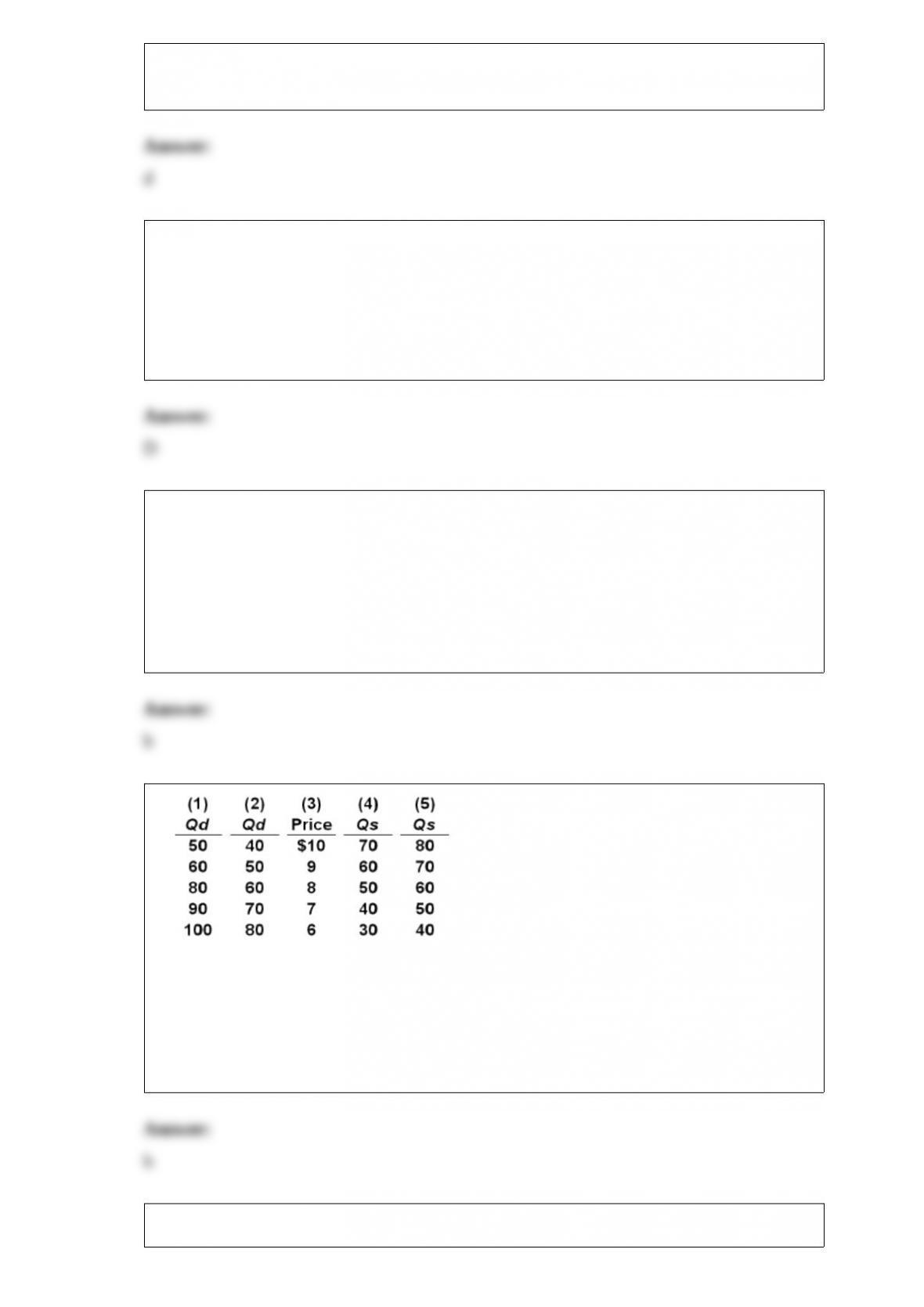
refer to the above table. if demand is represented by columns (3) and (1) and supply is
represented by columns (3) and (4), equilibrium price and quantity will be:
a.$10 and 60 units.
b.$9 and 60 units.
c.$8 and 80 units.
d.$7 and 30 units.
8) Largely because of large current account deficits, the United States:
A.is the leading exporting nation in the world.
B.has the world’s largest external debt.
C.has the world’s highest saving rate.
D.is experiencing an increase in its net inflow of investment income.
9)
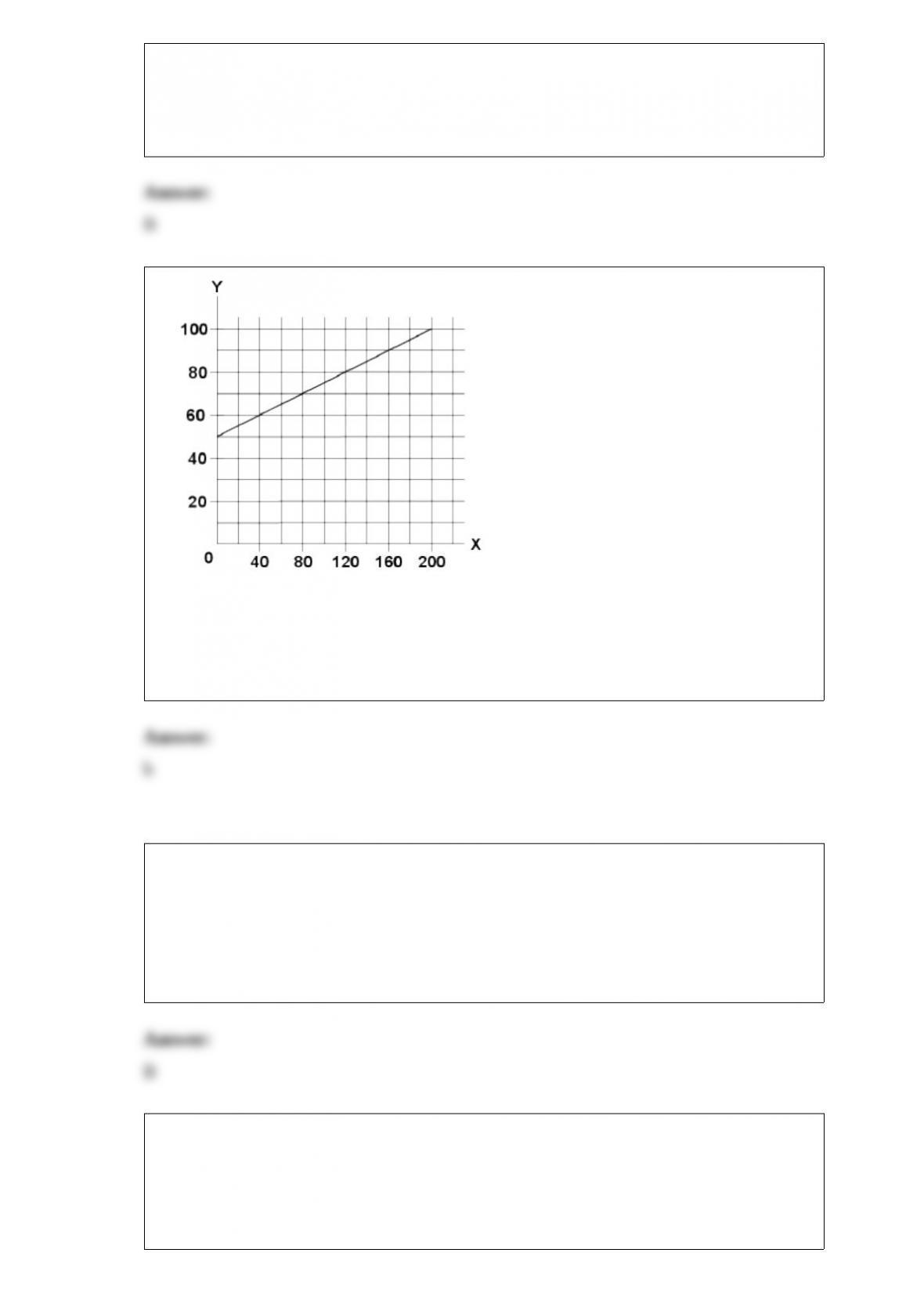
refer to the above diagram. the variables x and y are:
a.inversely related.
b.directly related.
c.unrelated.
d.negatively related.
10) If government uses its stabilization policies to maintain full employment under
conditions of cost-push inflation:
A.a deflationary spiral is likely to occur.
B.an inflationary spiral is likely to occur.
C.stagflation is likely to occur.
D.the Phillips Curve is likely to shift inward.
11) Money market deposit accounts are included in:
A.M1 only.
B.M2 only.
C.neither M1 nor M2.
D.both M1 and M2.
12) suppose that at 500 units of output marginal revenue is equal to marginal cost. the
firm is selling its output at $5 per unit and average total cost at 500 units of output is $6.
on the basis of this information we:
a.can say that the firm should close down in the short run.
b.can say that the firm can produce and realize an economic profit in the short run.
c.cannot determine whether the firm should produce or shut down in the short run.
d.can assume the firm is not using the most efficient technology.
13) which of the following will not produce an outward shift of the production
possibilities curve?
a.an upgrading of the quality of a nation’s human resources
b.the reduction of unemployment
c.an increase in the quantity of a society’s labor force
d.the improvement of a society’s technological knowledge
14) rapidly rising u.s. health care costs have:
a.reduced the ability of many americans to afford health care.
b.slowed the growth of real wages.
c.caused federal and state governments to restrict spending on nonhealth budget items.
d.done all of these.
15)
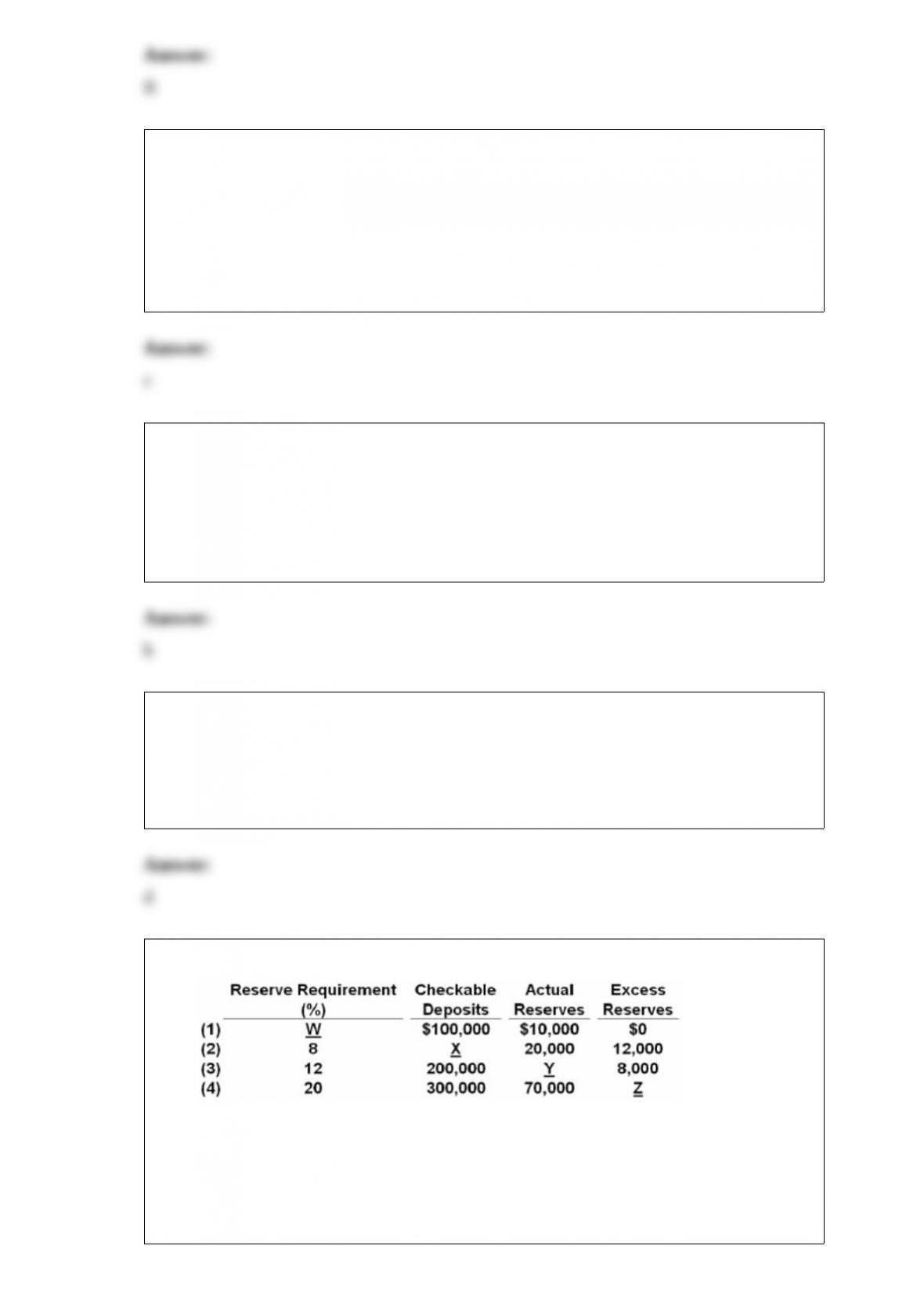
Refer to row 3 in the above table. The number appropriate for space Y is:
A.$24,000.
B.$32,000.
C.$48,000.
D.$96,000.
16)
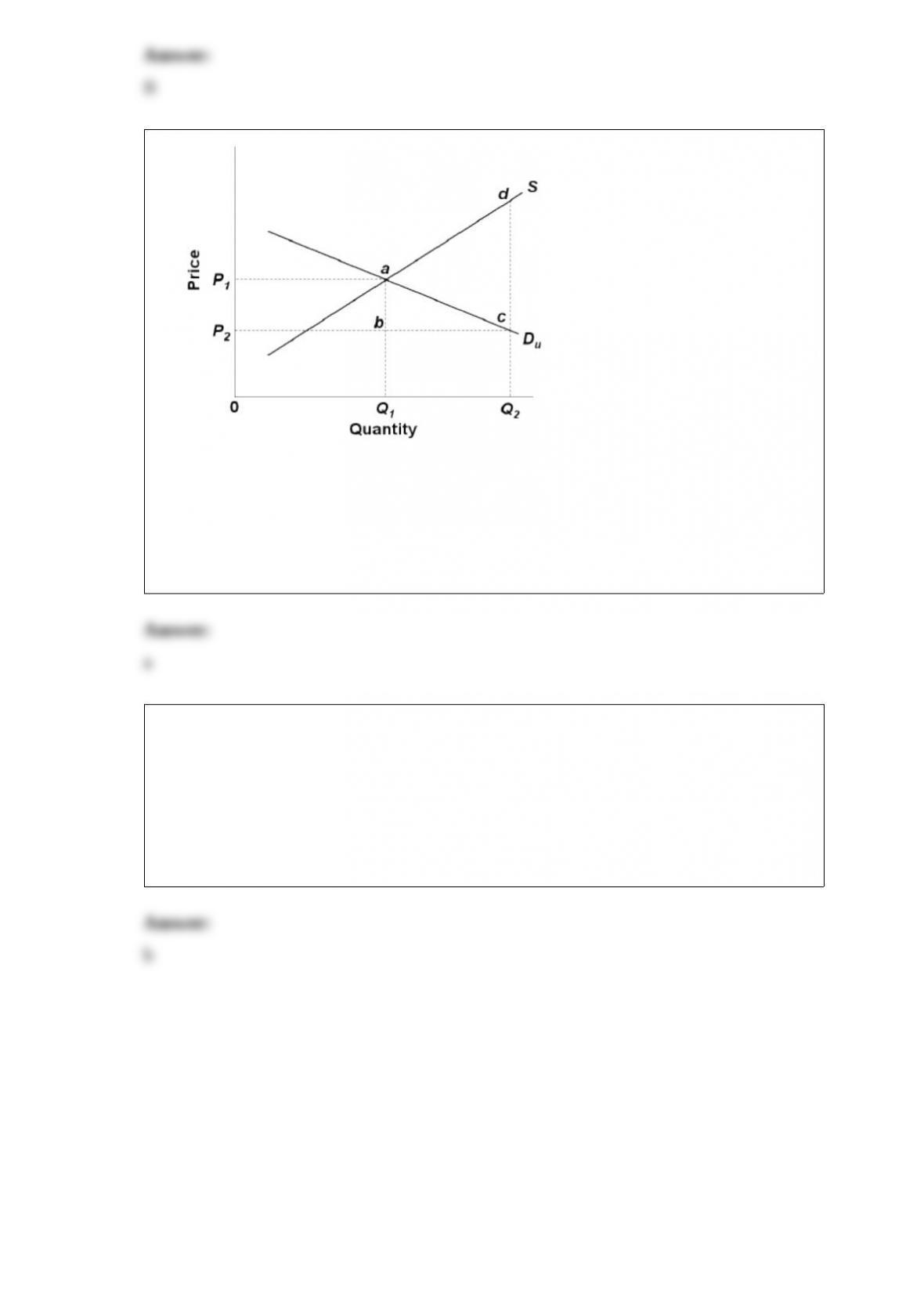
refer to the above demand and supply diagram that relates to the health care market.
without health insurance the equilibrium price and quantity of health care would be:
a.p1 and q1.
b.p1 and q2.
c.p2 and q2.
d.p2 and q1.
17) which of the following would be most likely to shift the production possibilities
curve to the right?
a.a sudden and substantial expansion of consumer wants
b.an improvement in the literacy level and general level of education
c.a decline in the size of the population and labor force
d.shifting resources from the production of capital goods to the production of consumer
goods
18)
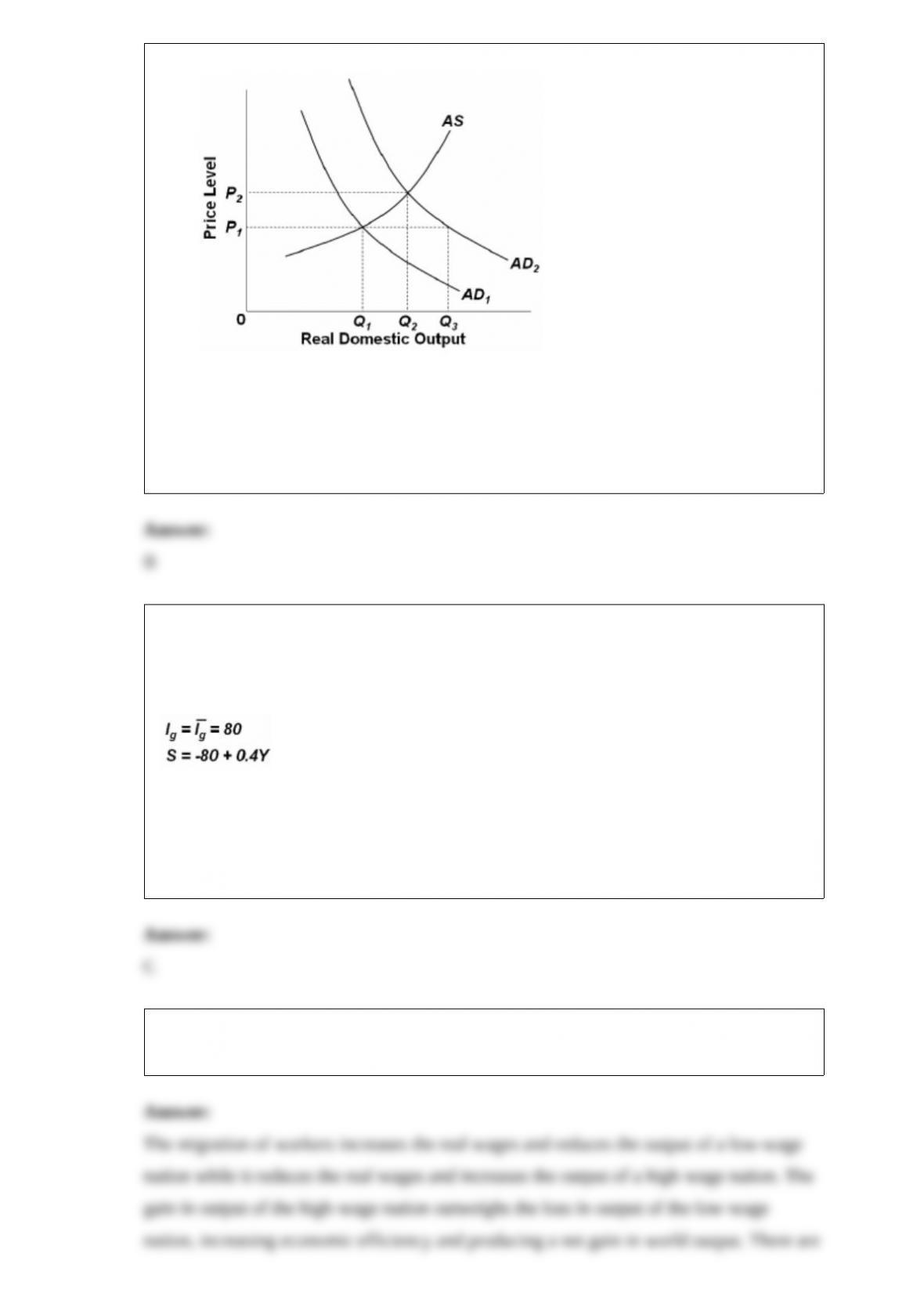
Refer to the above diagram. At the equilibrium price and quantity:
A.aggregate demand exceeds aggregate supply.
B.the amount of real output demanded and supplied are equal.
C.aggregate demand equals aggregate supply.
D.aggregate supply exceeds aggregate demand.
19) (Advanced analysis) Answer the next question(s) on the basis of the following
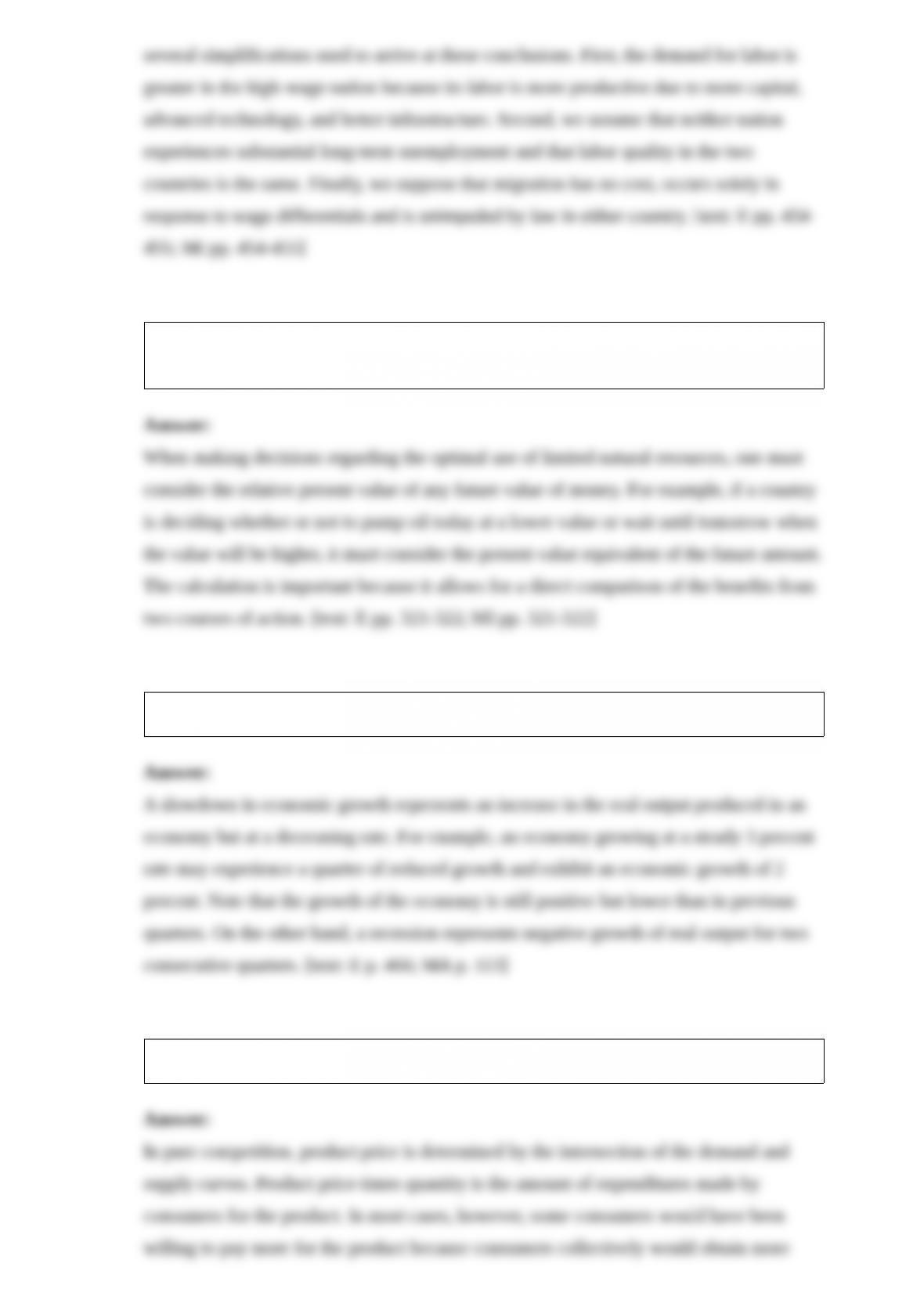
information for a private closed economy, where Ig is gross investment, S is saving, and
Y is gross domestic product (GDP).
Refer to the above information. In equilibrium consumption will be:
A.$400.
B.$280.
C.$320.
D.$360.
20) What are the effects of migration on the real wages and output of a low-wage nation
and a high-wage nation? What are the simplifications used to analyze these effects?
21) Give an example of the use of the time value of money in the study of natural
resource economics.
22) What is the difference between a slowdown in economic growth and a recession?
23) Why does pure competition provide consumers with the largest utility surplus?

24) Explain what is and what is not included in government purchases in GDP.
25) If two countries are growing at the same rate, the income gap between the two
countries should remain the same. Evaluate this statement.
26) Which types of industries are hit hardest by a recession? Explain.

27) Explain why some economists think the recent productivity acceleration will
continue in the United States.
28) (Consider This) Are credit cards money? Explain.