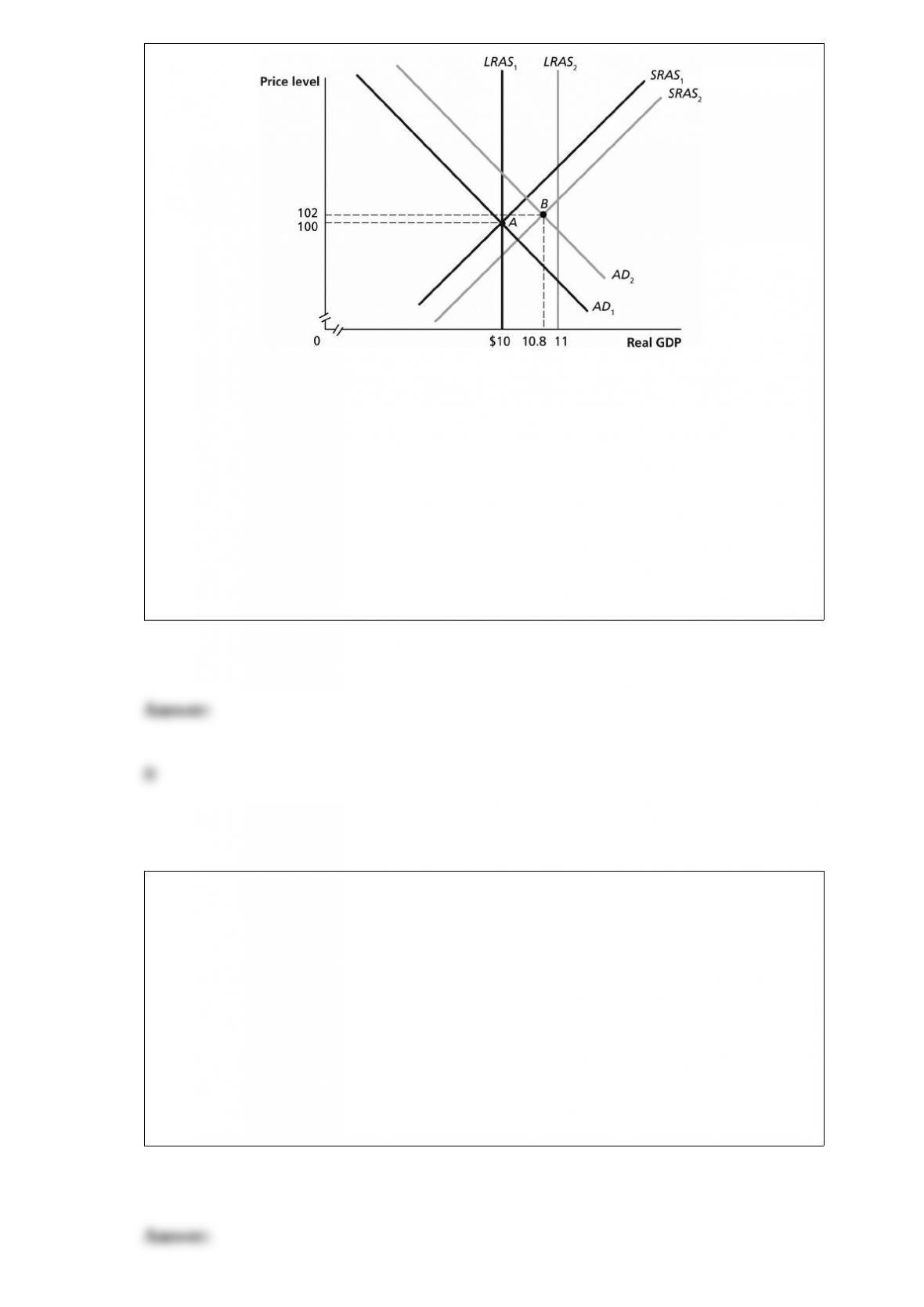
Figure 26-11
In the dynamic model of AD–AS in the figure above, if the economy is at point A in year
1 and is expected to go to point B in year 2, the Federal Reserve would most likely
A) increase interest rates.
B) decrease interest rates.
C) not change interest rates.
D) decrease the inflation rate.
Suppose the economy is at full employment and firms become more optimistic about
the future profitability of new investment. Which of the following will happen in the
short run?
A) Output will decline.
B) Prices will decline.
C) Unemployment will decline.
D) The aggregate demand curve will shift to the left.
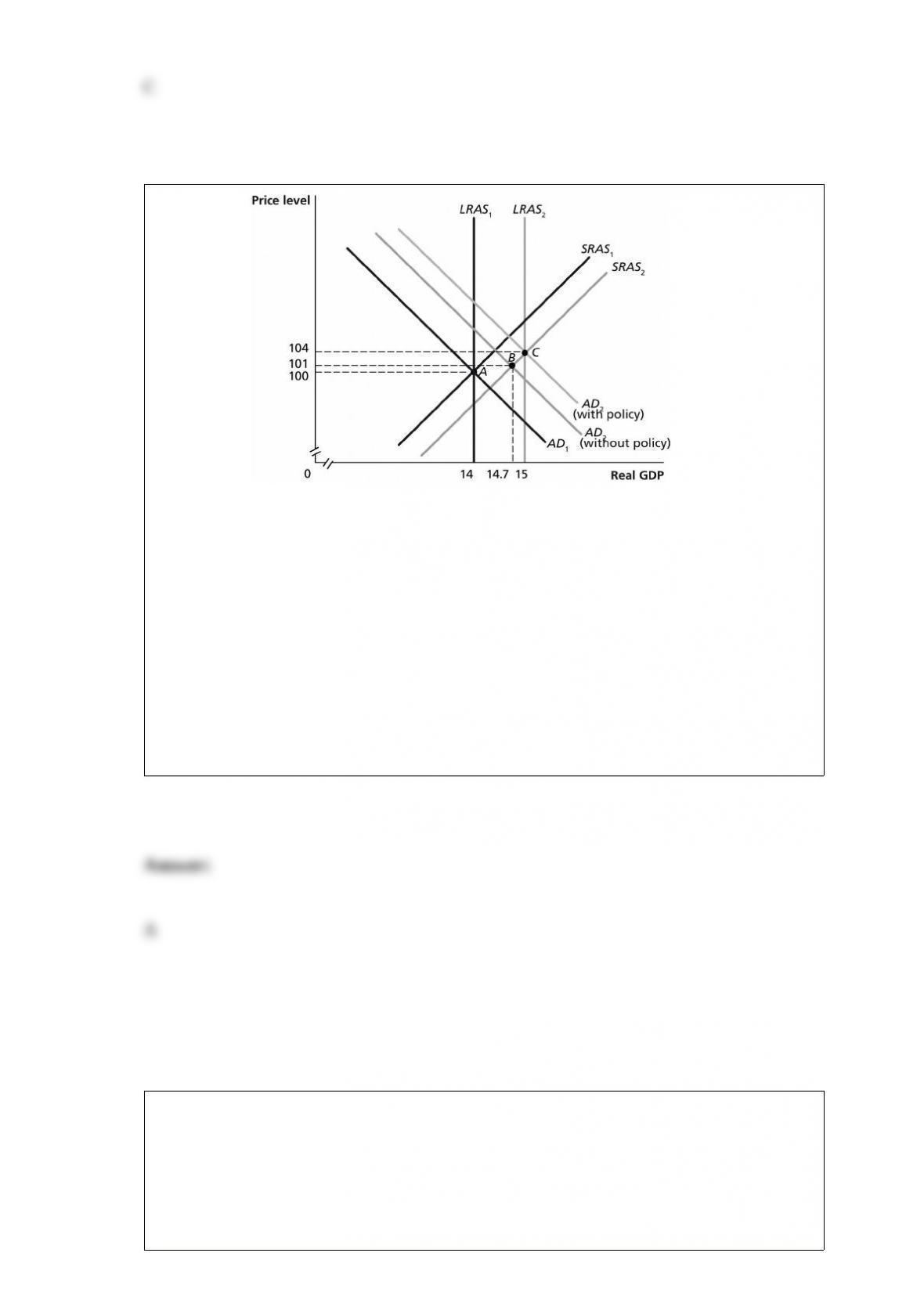
Figure 27-8
In the graph above, suppose the economy in Year 1 is at point A and expected in Year 2
to be at point B. Which of the following policies could the Congress and the president
use to move the economy to point C?
A) increase government purchases
B) decrease government purchases
C) increase income taxes
D) sell Treasury bills
Elvira decreased her consumption of bananas when the price of peanut butter increased.
For Elvira, peanut butter and bananas are
A) substitutes in consumption.
B) both inferior goods.
C) complements in consumption.
D) both luxury goods.
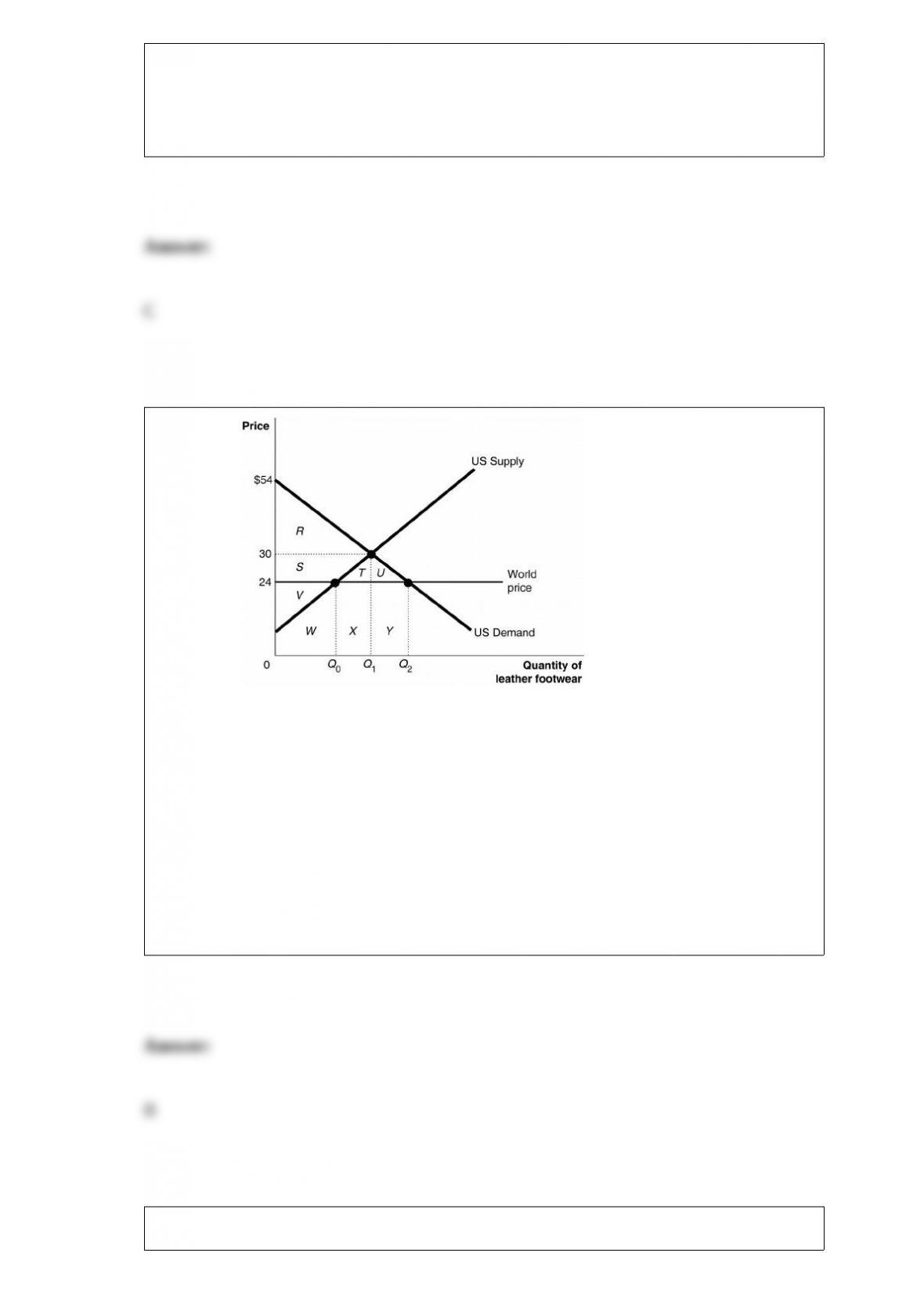
Figure 7-1
Suppose the government allows imports of leather footwear into the United States. The
market price falls to $24. What area represents domestic producer surplus?
A) T + U
B) V
C) V + W + X + Y
D) W + X + Y
What is the government purchases multiplier if the tax rate is 0.1 and the marginal

propensity to consume is 0.9? Assume the economy is closed.
A) 5.3
B) 10
C) 11.1
D) 100
Wage differentials between occupations can be explained by all of the following except
A) the fact that some occupations require higher levels of human capital than others.
B) the fact that some occupations are more desirable than others.
C) the market power of different employers.
D) the relative differences between demand and supply in various occupations
If the production possibilities frontier is ________, then opportunity costs are constant
as more of one good is produced.
A) bowed out
B) bowed in
C) non-linear
D) linear

Consider the following T-account for National City Bank:
If the required reserve ratio is lowered to 8 percent, how much can National City loan
out?
A) $10,000
B) $8,000
C) $2,000
D) $0
In which market structure is it not possible to practice price discrimination?
A) perfect competition
B) monopolistic competition
C) oligopoly
D) monopoly

Human capital refers to
A) the money people have.
B) the machines workers have to work with.
C) the accumulated skills and training workers have.
D) the wealth people have.