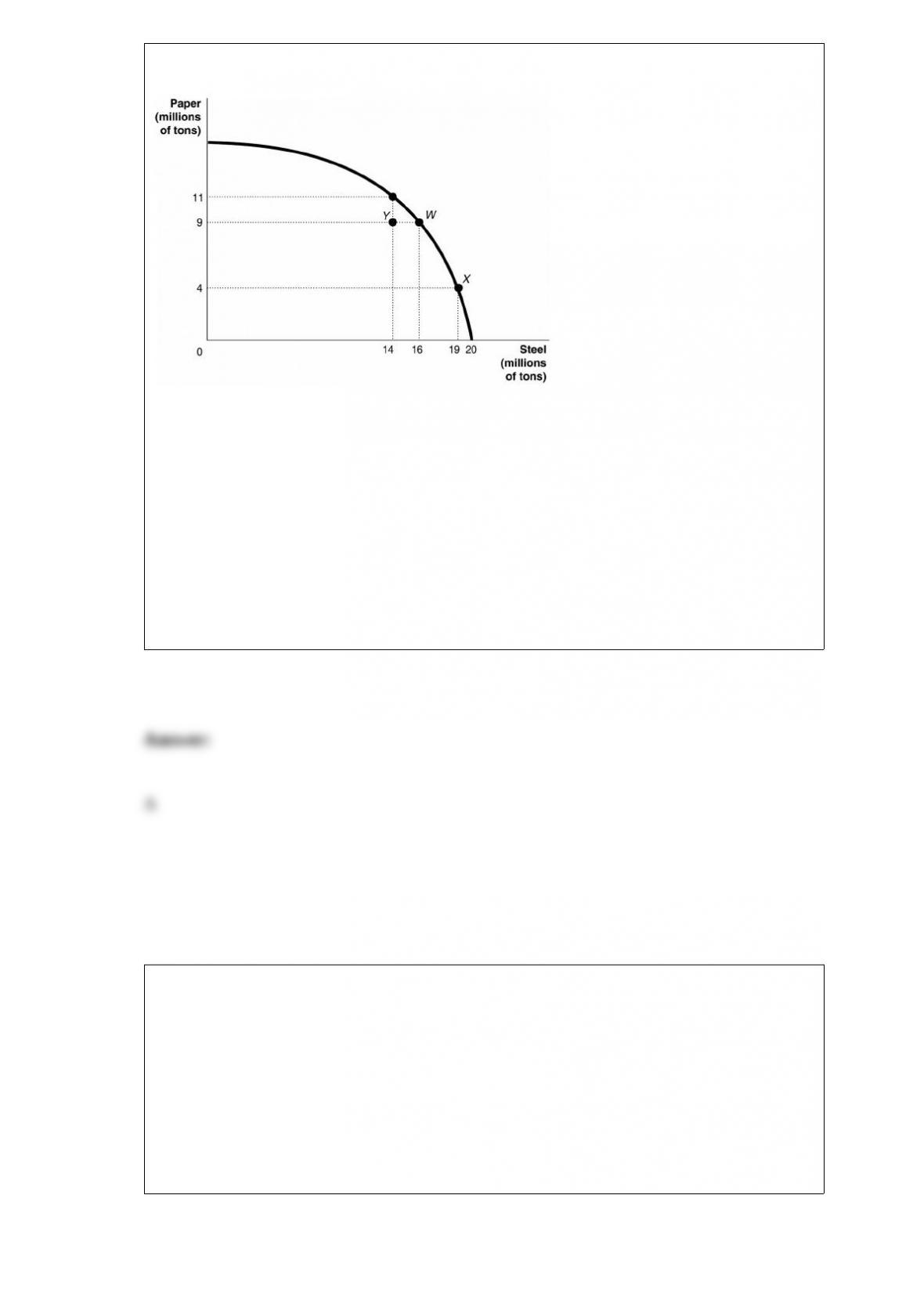
Figure 2-5
If the economy is currently producing at point X, what is the opportunity cost of moving
to point Y?
A) 5 million tons of steel
B) 9 million tons of paper
C) 5 million tons of paper
D) 14 million tons of steel
If the economy experiences a(n) ________, inflation will rise and real GDP will fall.
A) negative supply shock
B) positive supply shock
C) increase in short-run aggregate supply
D) decrease in aggregate demand
Marginal utility is the
A) total satisfaction received from consuming a given number of units of a product.
B) average satisfaction received from consuming a product.
C) extra satisfaction received from consuming one more unit of a product.
D) satisfaction achieved when a consumer has had enough of a product.
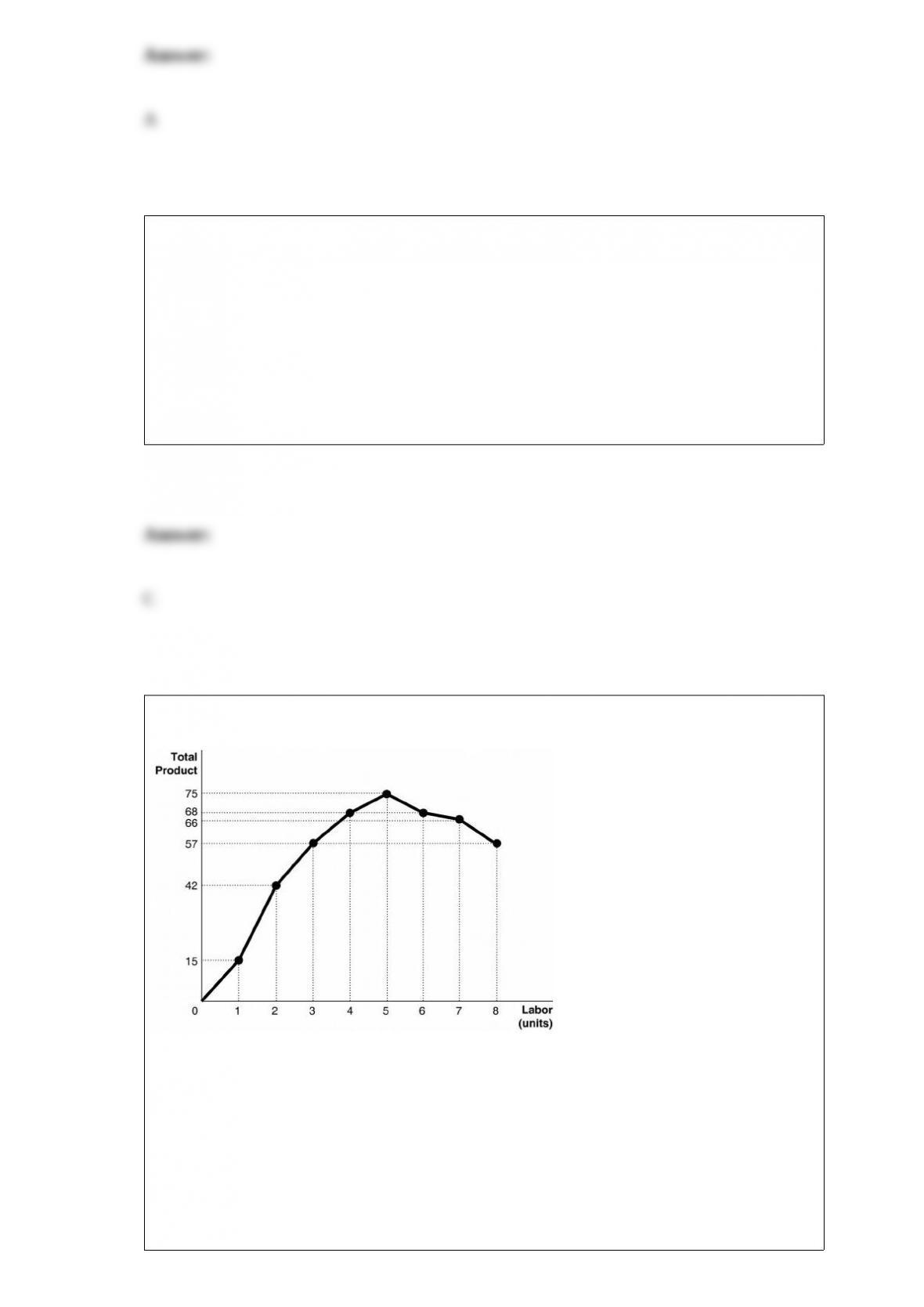
Figure 11-1
The average product of the 4th worker
A) is 68.
B) is 17.
C) is 11.

D) cannot be determined.
How does an increase in the relative price of a country’s goods in terms of foreign
goods, or real exchange rate, affect its balance of trade?
A) An increase in the real exchange rate raises imports, reduces exports, and reduces
the balance of trade.
B) An increase in the real exchange rate reduces imports, raises exports, and reduces the
balance of trade.
C) An increase in the real exchange rate reduces imports, raises exports, and increases
the balance of trade.
D) An increase in the real exchange rate raises imports, reduces exports, and increases
the balance of trade.
Figure 16-1
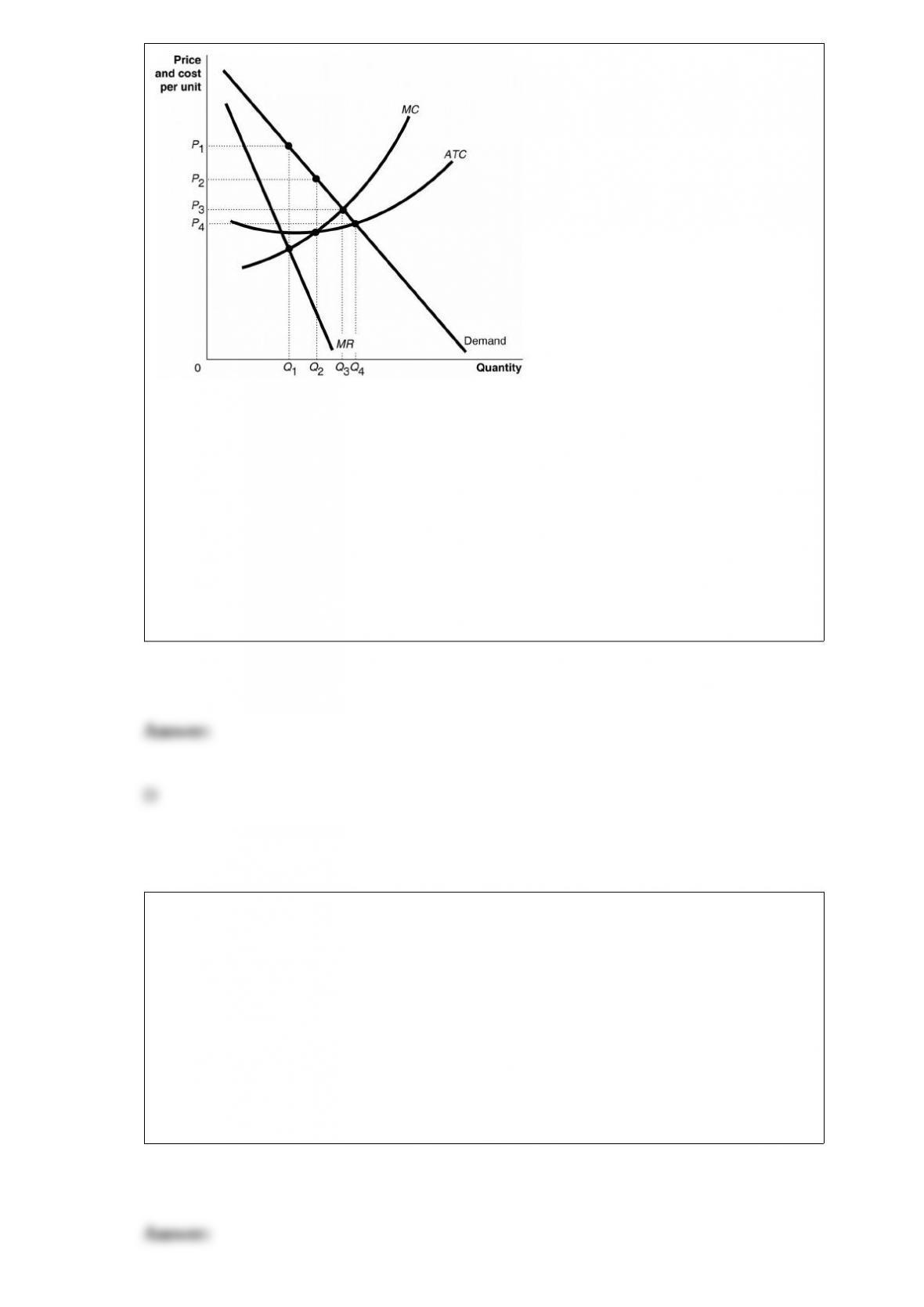
What is the consumer surplus received under perfect price discrimination?
A) the area under the demand curve above P1
B) the area under the demand curve above P3
C) the area under the demand curve above P4
D) zero
The money market model is concerned with ________ and the loanable funds market
model is concerned with ________.
A) short-term real interest rates; long-term nominal interest rates
B) short-term nominal interest rates; long-term nominal interest rates
C) short-term real interest rates; long-term real interest rates
D) short-term nominal interest rates; long-term real interest rates
In an attempt to bring lenders and borrowers together following the financial crisis of
2008, the Federal Reserve made a large amount of new funds available to financial
markets. The Fed expected this to increase in the money supply and the total amount of
lending because of the multiplier effect, in which a given amount of new reserves
results in a multiple increase in
A) stockholders’ equity.
B) bank deposits.
C) long-term debt.
D) required reserves.
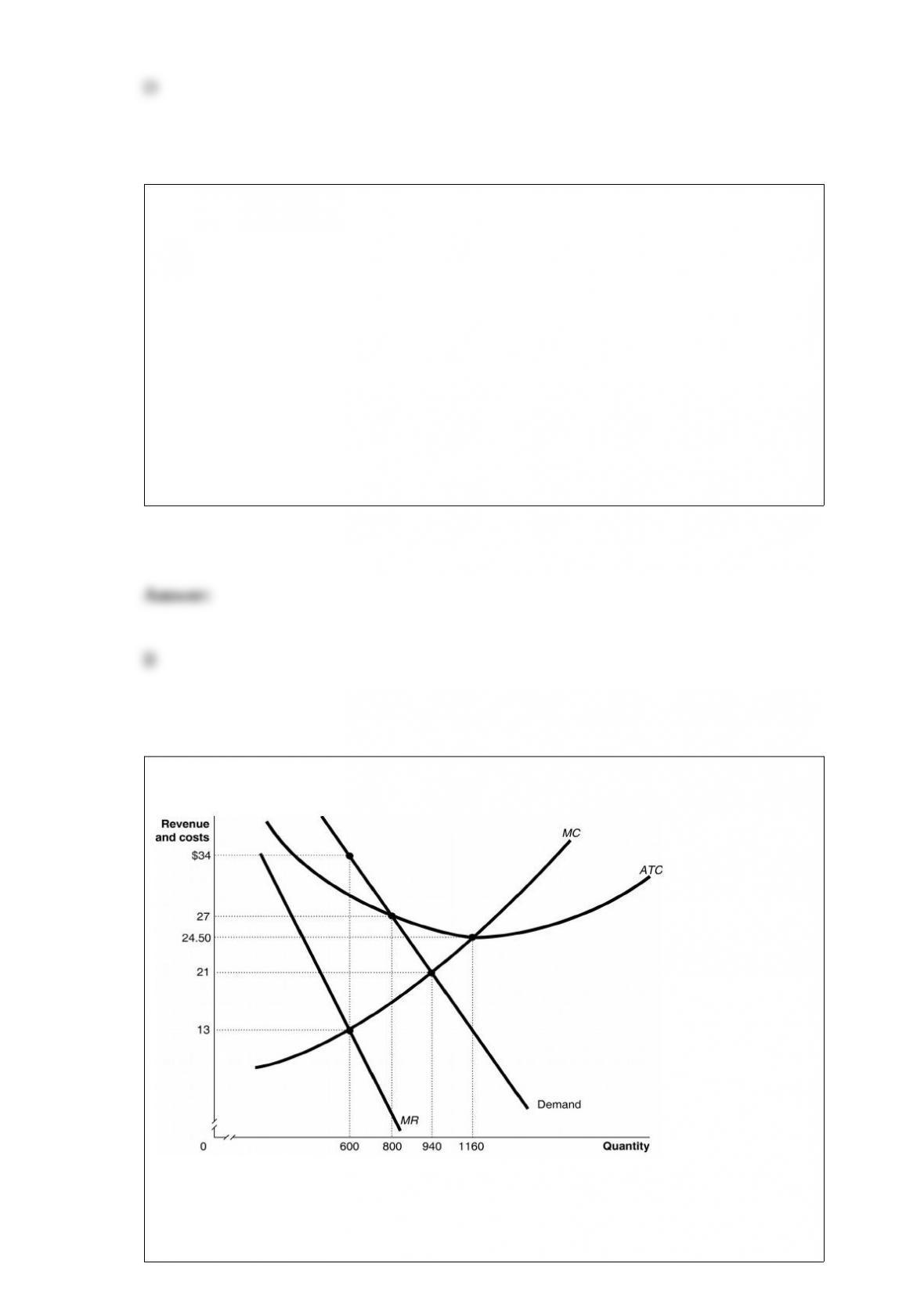
Figure 15-9
Figure 15-9 shows
the demand and cost curves for a monopolist. At the profit-maximizing quantity, what is
the difference between the monopoly’s price and the marginal cost of production?
A) $8

B) $11.50
C) $21
D) There is no difference.
A car that is produced in 2013 is not sold until 2014. According to the definition of
GDP, in which year’s GDP should it be counted?
A) 2013
B) 2014
C) Half of the sales price will count as part of 2013 GDP and half will count as part of
2014 GDP.
D) The production cost will count as part of 2013 GDP while the sales price will count
as part of 2014 GDP.
The present value of $475 received 3 years in the future would be calculated as which
of the following when the interest rate is 6 percent?
A) 475/(1.6)3
B) 475/(1.06)3
C) 475 1.6 3
D) 3.06/475
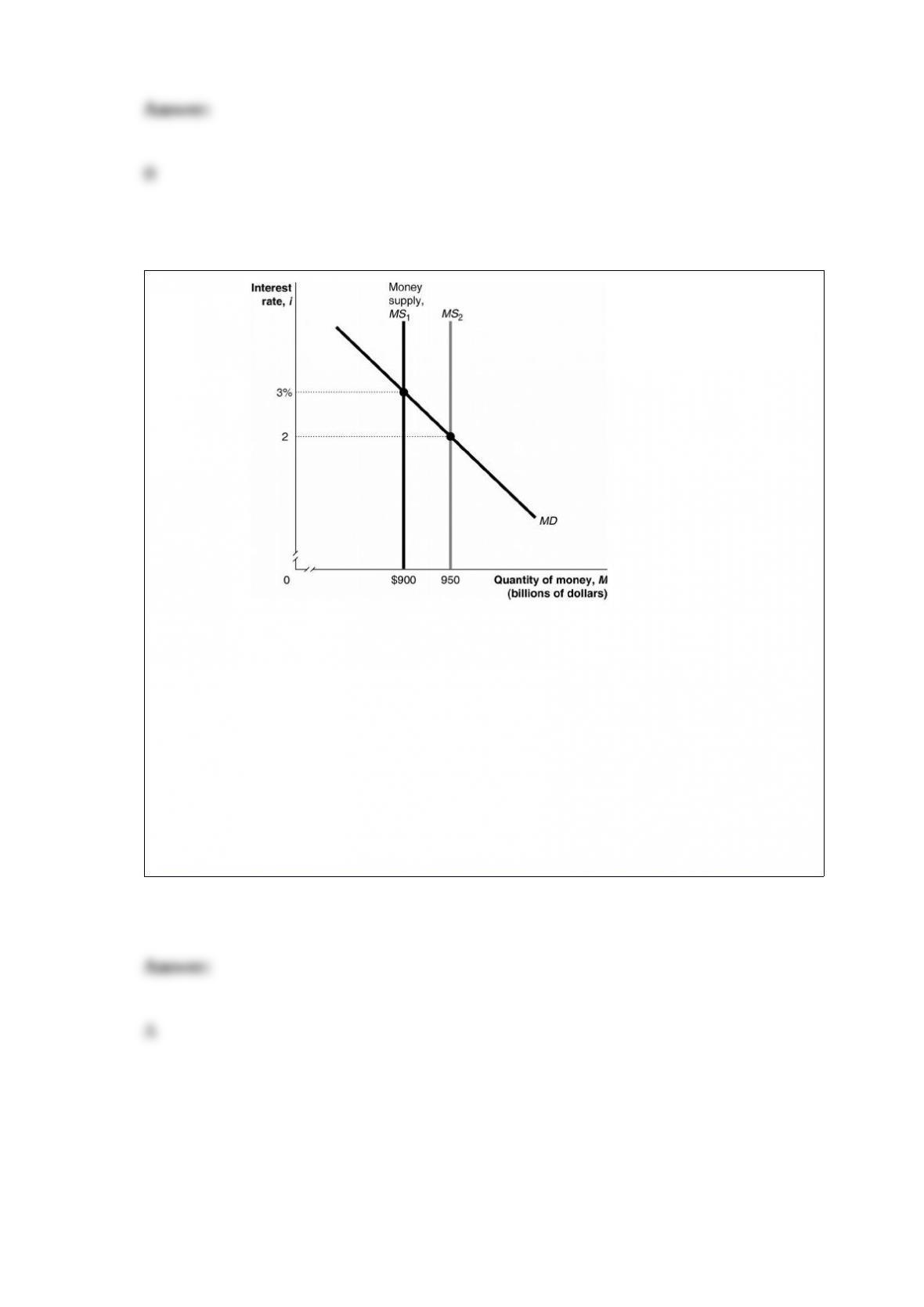
Figure 15-3
In the figure above, when the money supply shifts from MS1 to MS2, at the interest rate
of 3 percent households and firms will
A) buy Treasury bills.
B) sell Treasury bills.
C) neither buy nor sell Treasury bills.
D) want to hold more money.