Which of the following is part of an economic model?
A) preferences of economic agents
B) data
C) norms
D) opinions
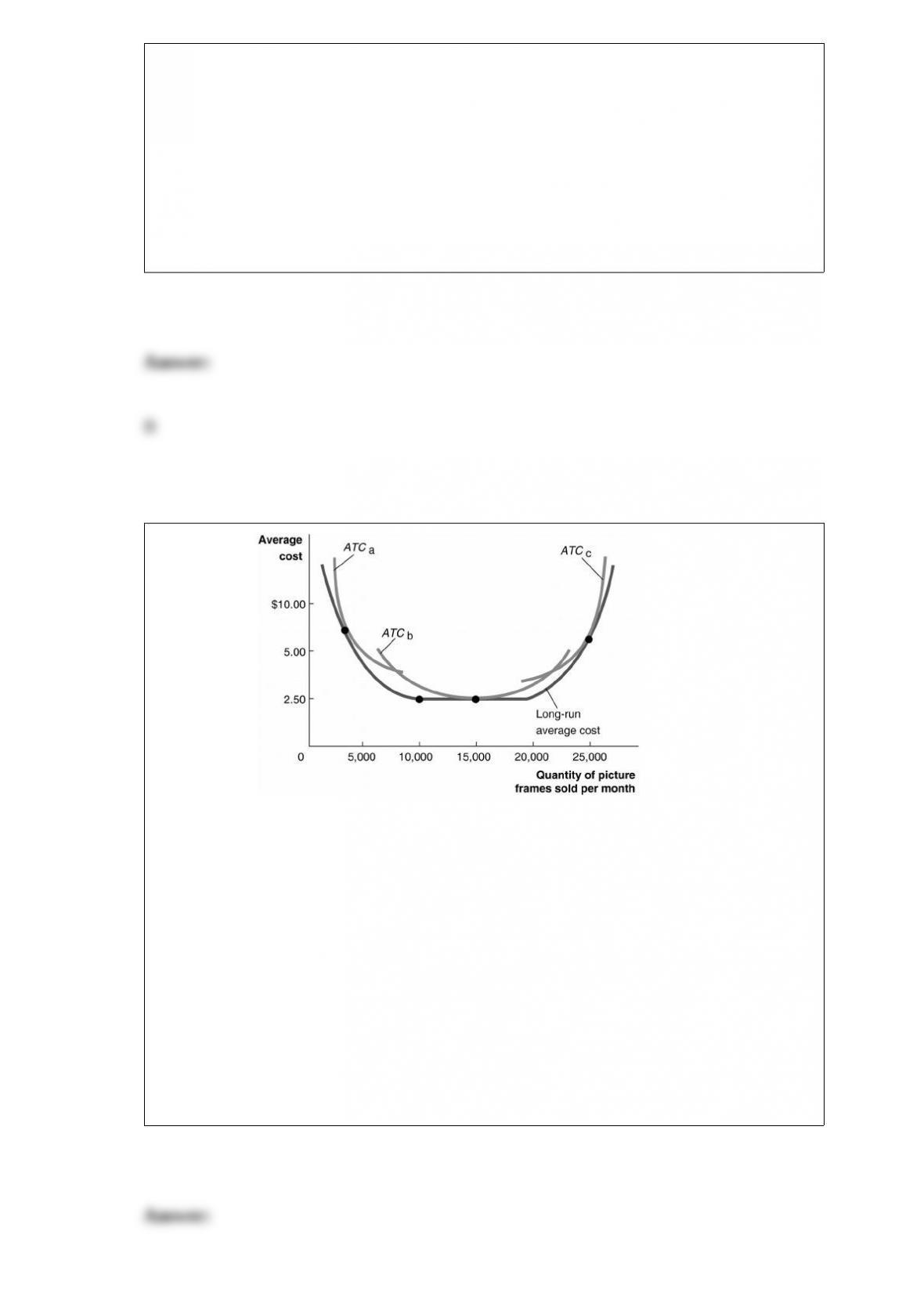
Figure 11-11 Figure 11-11
illustrates the long-run average cost curve for a firm that produces picture frames. The
graph also includes short-run average cost curves for three firm sizes: ATCa, ATC and
ATCc.
The minimum efficient scale of output is reached at what rate of output?
A) 10,000 workers
B) 5,000 picture frames
C) 20,000 picture frames
D) 10,000 picture frames

Economic models do all of the following except
A) answer economic questions.
B) portray reality in all its minute details.
C) make economic ideas explicit and concrete for use by decision makers.
D) simplify some aspect of economic life.
If the long-run aggregate supply curve is vertical,
A) the economy stays at the natural rate of inflation in the long run.
B) the short-run Phillips curve must be vertical.
C) unemployment and inflation are positively related in the long run.
D) the trade-off between unemployment and inflation cannot be permanent.
Table 10-7
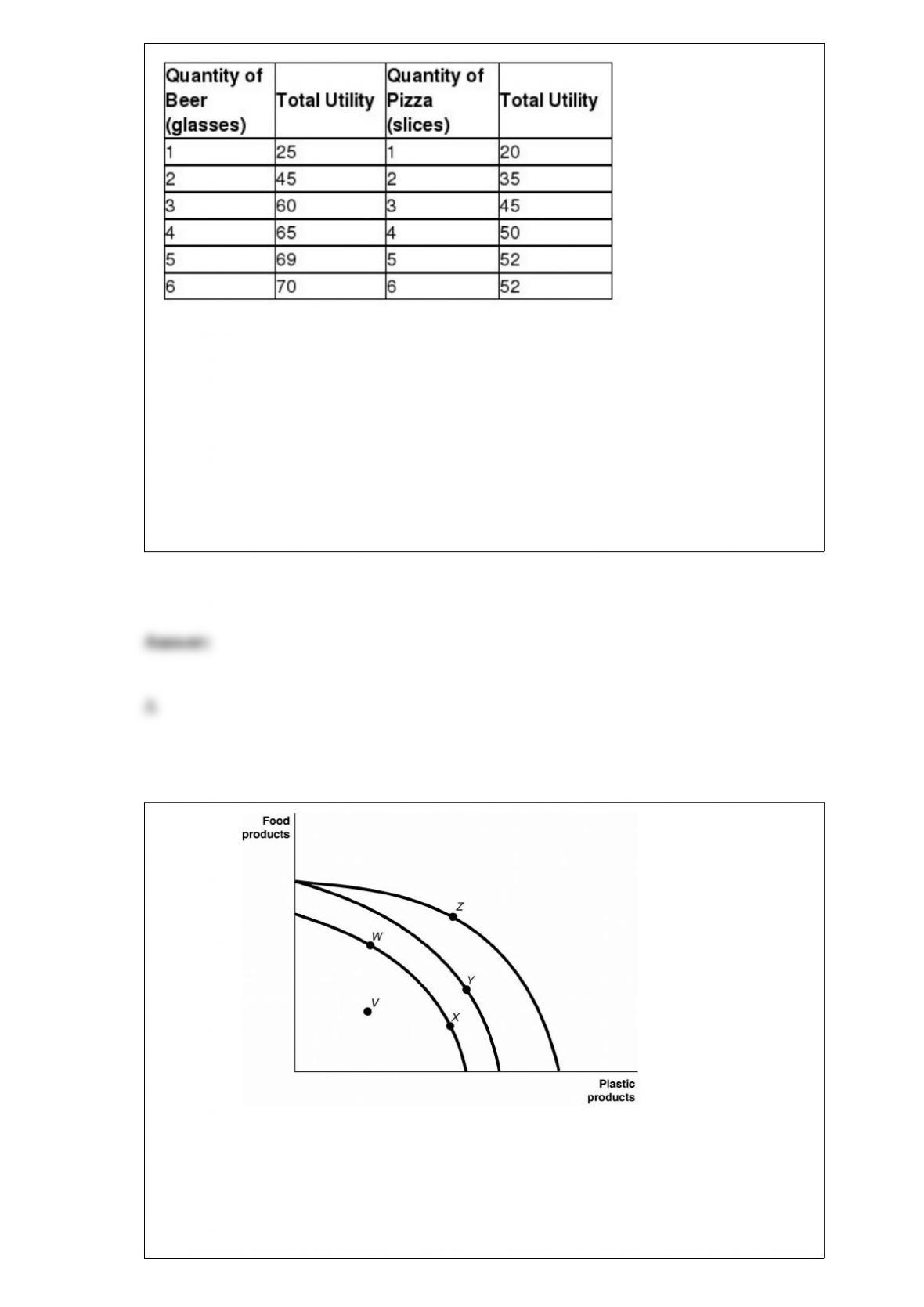
Table 10-7 shows Antonio’s utility from beer and pizza. What is Antonio’s marginal
utility from consuming the fifth beer?
A) 4 utils
B) 13.6 utils
C) 69 utils
D) 134 utils
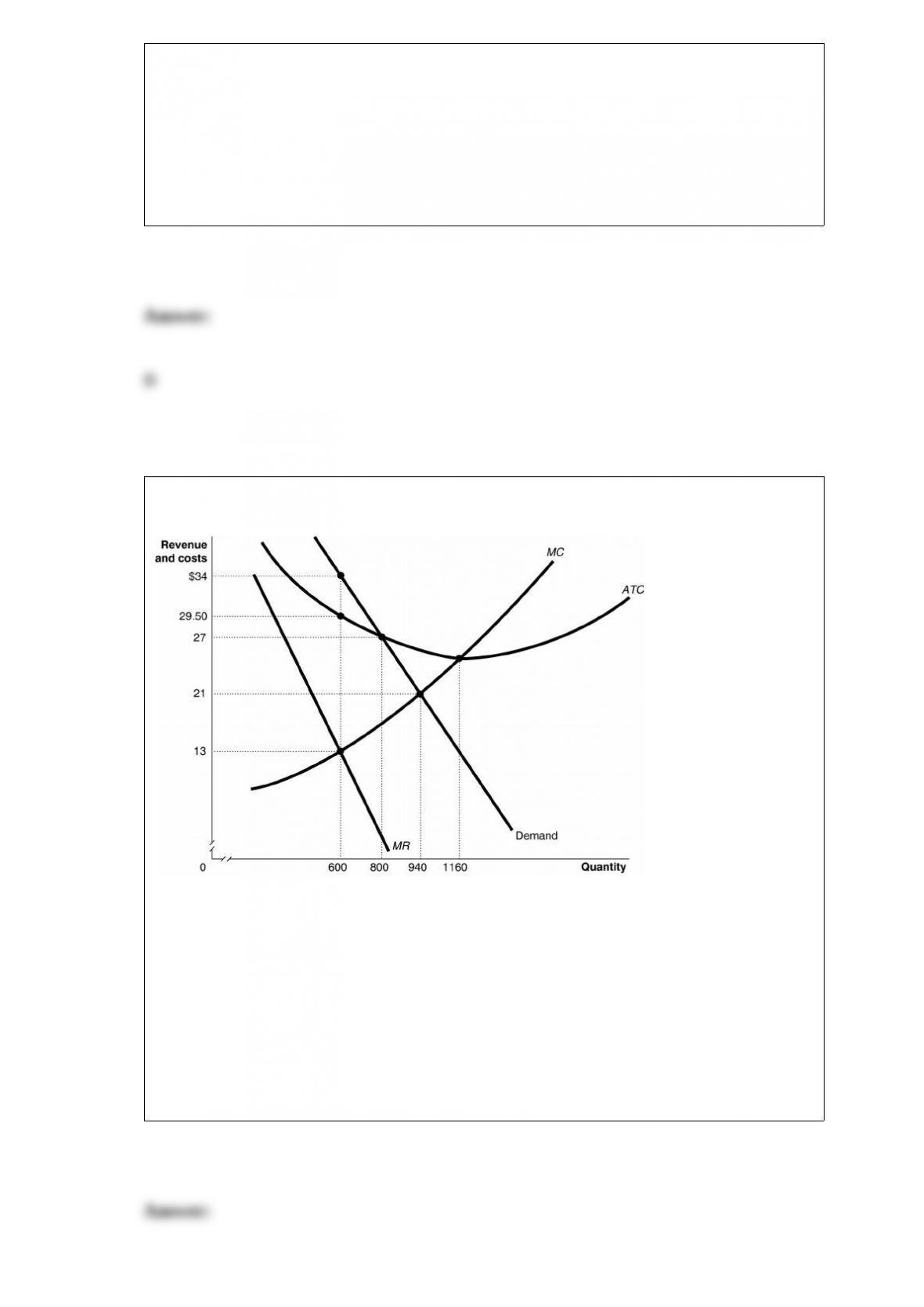
Figure 2-4
Figure 2-4 shows various points on three Different production possibilities frontiers for
a nation.
A movement from ________ could occur because of an influx of immigrant labor.
A) X to W
B) X to Y
C) W to V
D) W to X
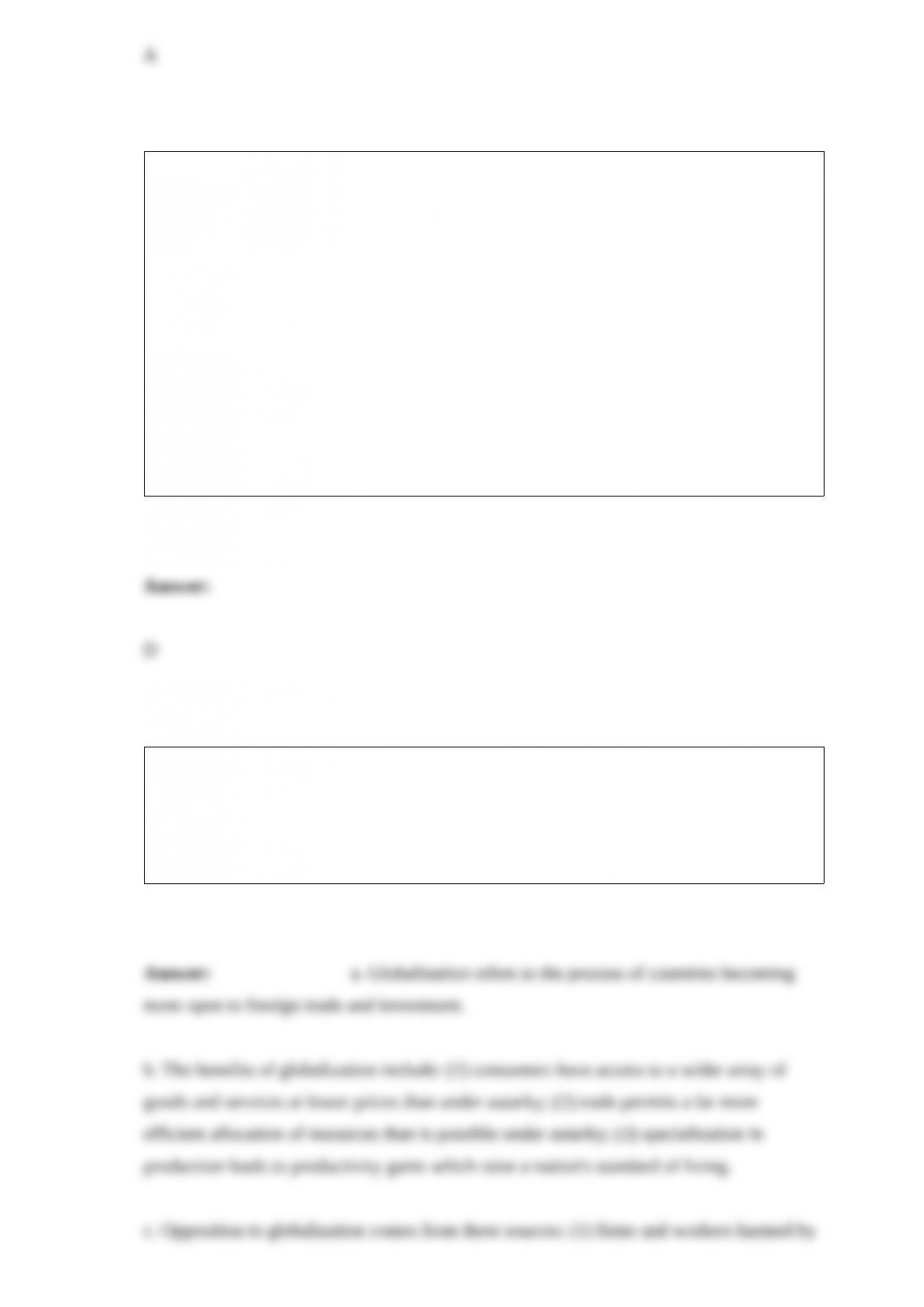
Figure 15-4
Figure 15-4 shows
the demand and cost curves for a monopolist. What is the amount of the monopoly’s
profit?
A) $2,700
B) $4,200
C) $10,400
D) $12,600
Which of the following statements about inflation targeting is true?
A) Inflation targeting by the central banks in other countries has not typically lowered
inflation.
B) Inflation targeting would not reduce the flexibility of monetary policy to address
other policy goals.
C) Inflation targeting would not allow the central bank the flexibility to take action
against a severe recession.
D) Inflation targeting would make it easier for households and firms to form accurate
expectations of future inflation, improving their planning and the efficiency of the
economy.
a. Define the term “globalization.”
b. Describe the benefits of globalization.
c. Who is likely to oppose globalization and why?
If the exchange rate changes from $2.00 = 1 euro to $1.98 = 1 euro then
A) the dollar has depreciated.
B) the dollar has appreciated.
C) the euro has appreciated.
D) the euro has stayed constant in value.
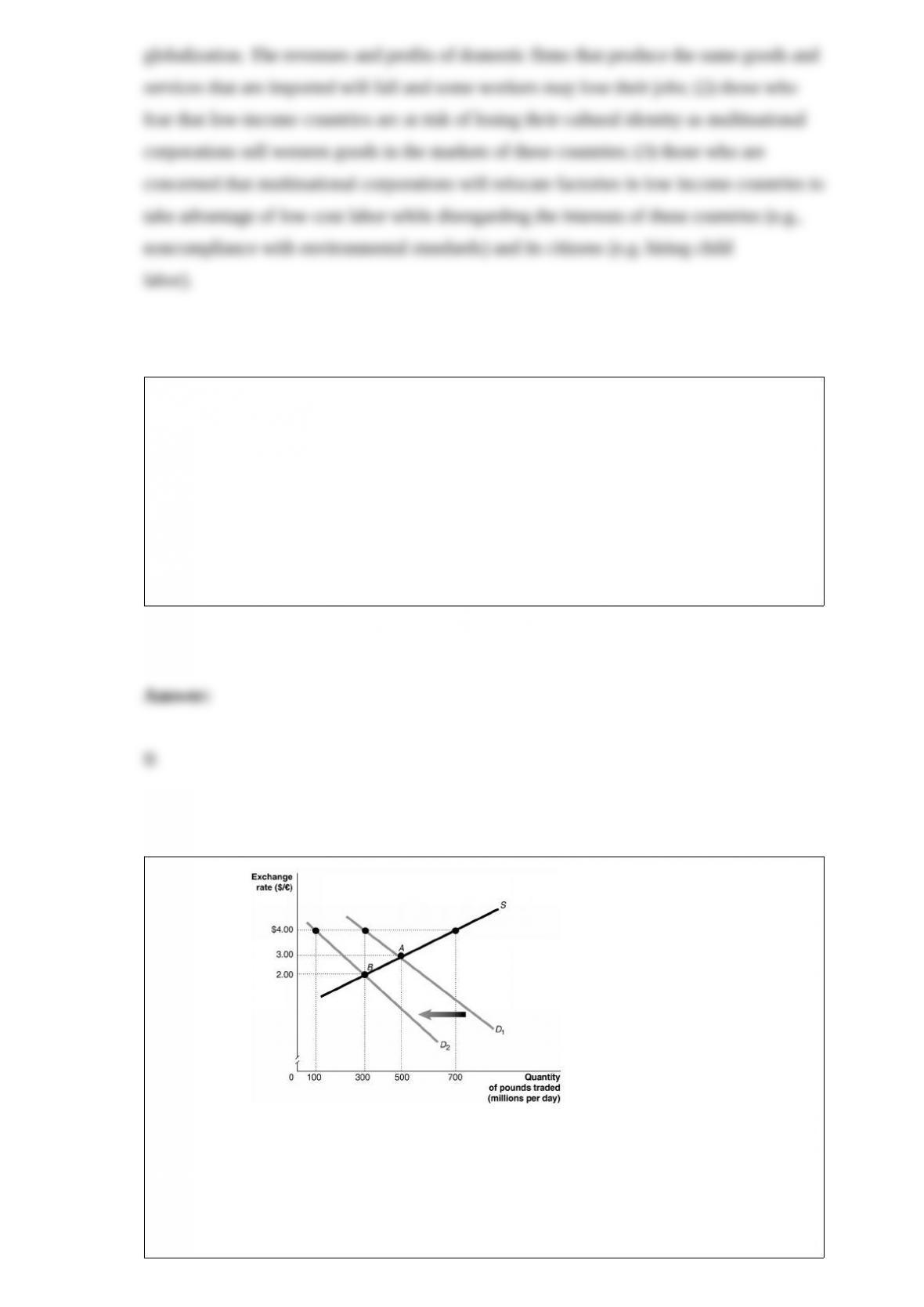
Figure 30-4
The equilibrium exchange rate is at A, $3/pound. Suppose the British government pegs
its currency at $4/pound. At the pegged exchange rate,
A) there is a shortage of pounds equal to 600 million.

B) there is a surplus of pounds equal to 400 million.
C) there is a shortage of pounds equal to 400 million.
D) there is a surplus of pounds equal to 600 million.
E) there is a shortage of pounds equal to 200 million.
Congressman Flack votes for a program that will benefit the constituents of
Congressman Walpole. The public choice model suggests that Flack’s vote is best
explained by which of the following?
A) rational ignorance
B) party loyalty
C) logrolling
D) the voting paradox
A firm that is the only seller of a good or service that does not have a close substitute is
called
A) a monopoly.
B) an oligopolist.
C) a market maker.
D) a price maker.
If a stock’s dividend is expected to grow at a constant rate of 6 percent in the future and
it has just paid a dividend of $3.00 per share, and you have an alternative investment of
equal risk that will earn a 9 percent rate of return, what would you be willing to pay per
share for this stock?
A) $9
B) $20
C) $45
D) $106
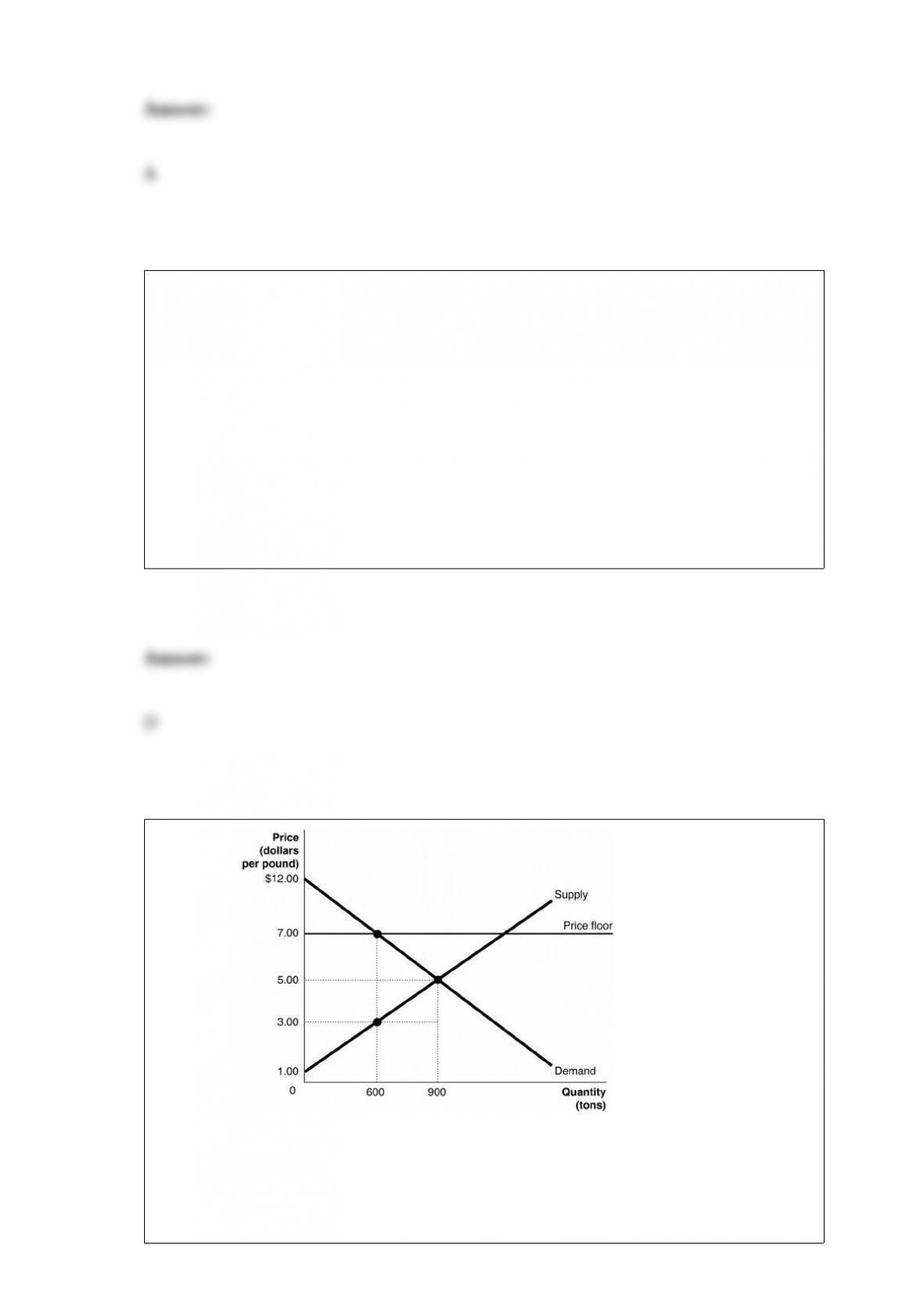
Figure 4-6 Figure 4-6 shows the
demand and supply curves for the coffee market. The government believes that the
equilibrium price is too low and tries to help almond growers by setting a price floor at
$7.00. What is the value of producer surplus after the imposition of the price floor?
A) $3,000
B) $3,600
C) $4,200
D) $4,500
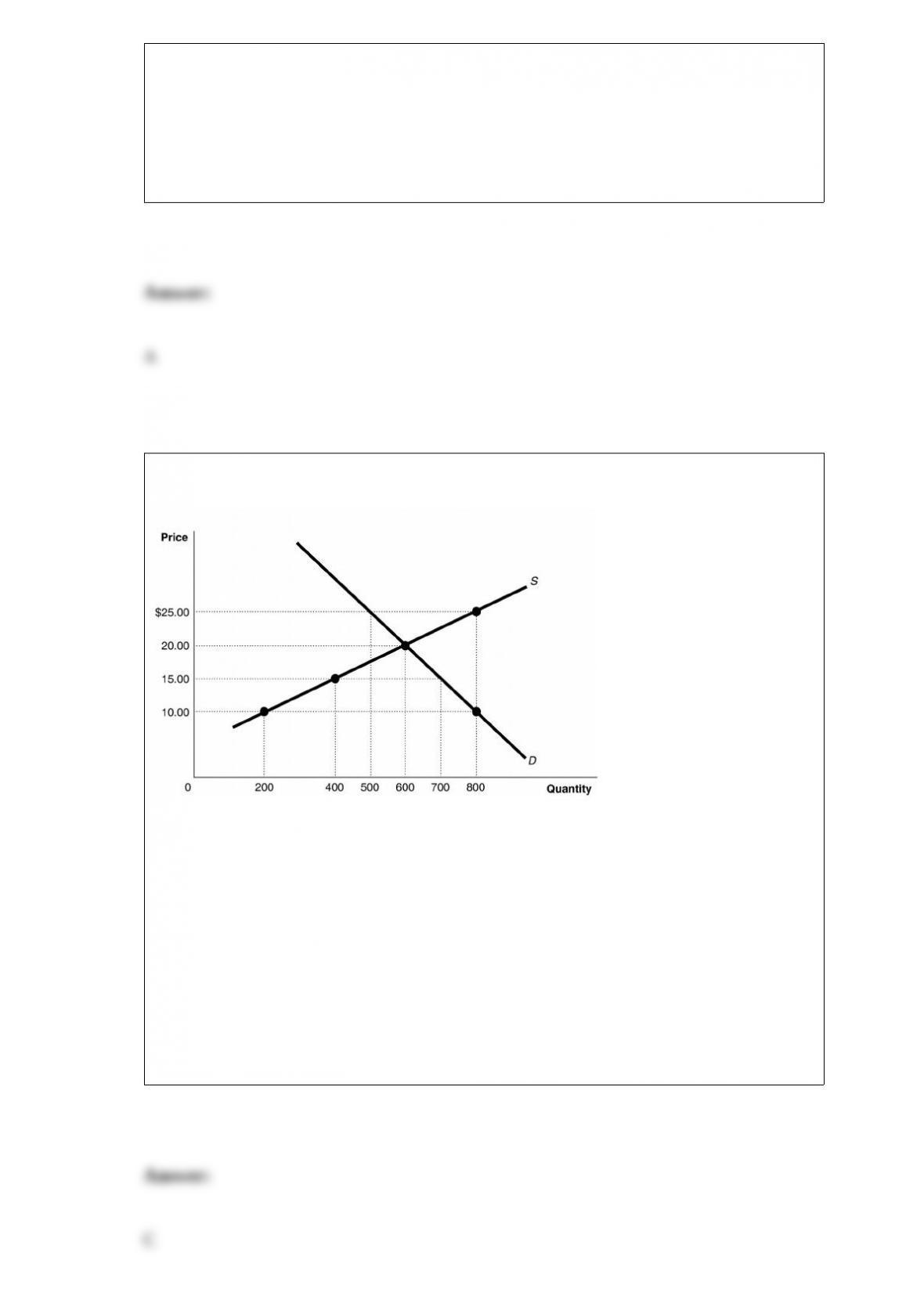
Figure 3-4
If the current market price is $25, the market will achieve equilibrium by
A) a price increase, increasing the supply and decreasing the demand.
B) a price decrease, decreasing the supply and increasing the demand.
C) a price decrease, decreasing the quantity supplied and increasing the quantity
demanded.
D) a price increase, increasing the quantity supplied and decreasing the quantity
demanded.
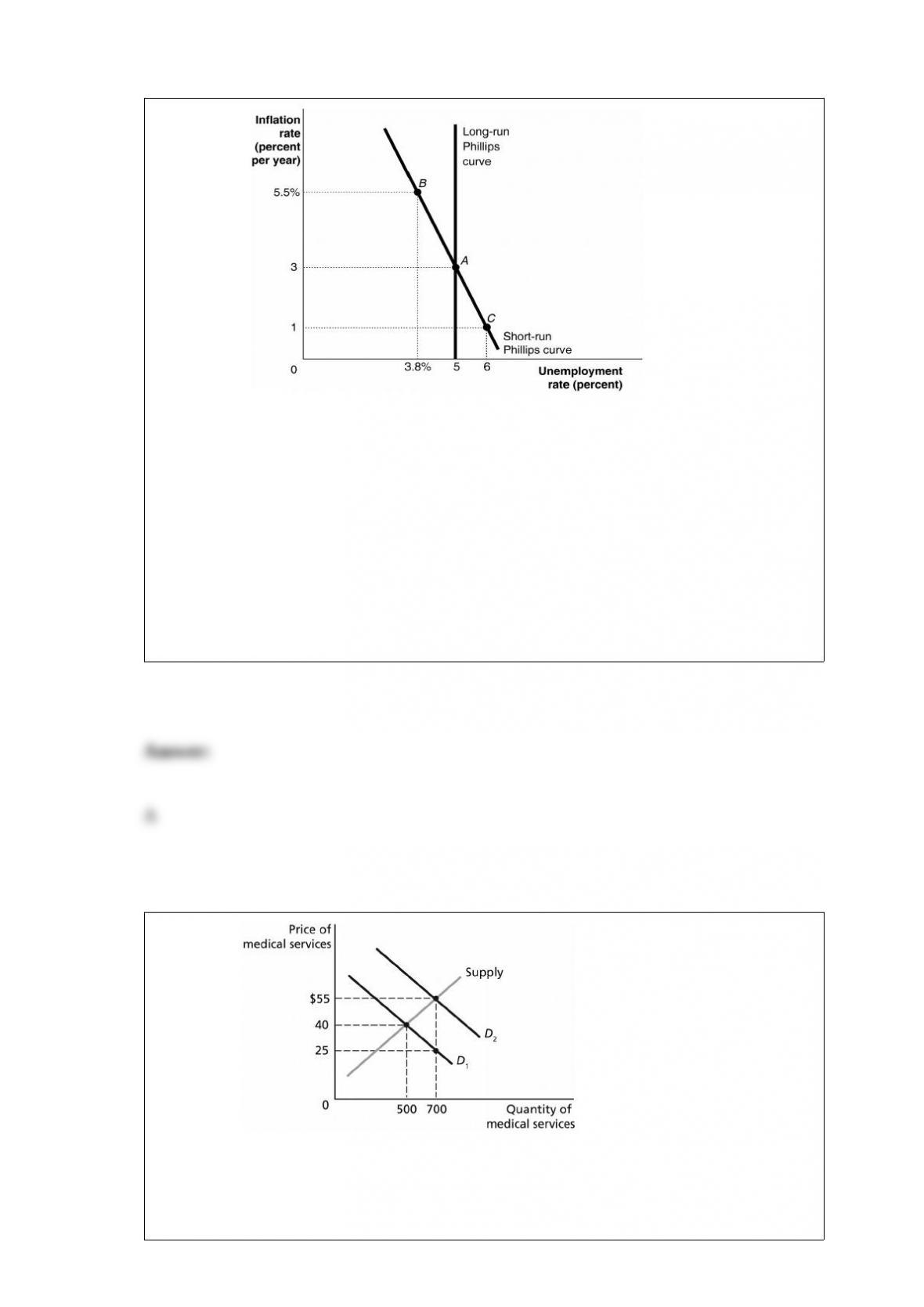
Figure 17-2
The nonaccelerating inflation rate of unemployment, or NAIRU, is associated with
which point rate in the figure above?
A) A
B) B
C) C
D) all of the above
Figure 7-4 Figure 7-4 represents the
market for medical services with and without insurance, and the effect of a third-party
payer system on the demand for medical services.
With insurance and a third-party payer system, what price do consumers pay for
medical services?
A) $25
B) $40
C) $55
D) >$55