The value of cross elasticity of demand between orange soda and grape soda is:
a. negative.
b. positive.
c. 0.
d. between 1 and 0.
e. less than 1.
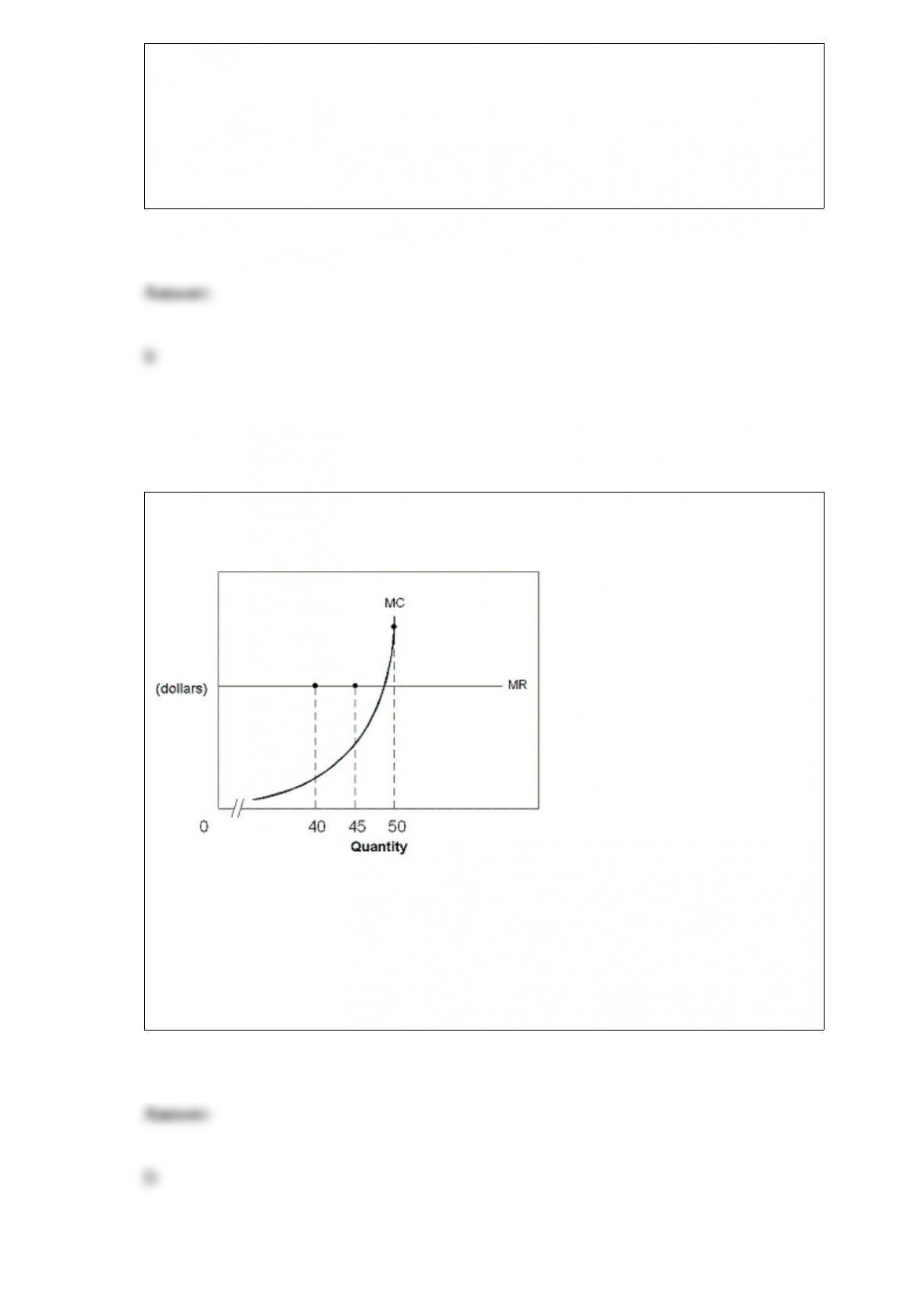
Exhibit 8-5 A firm’s MR and MC curves
In Exhibit 8-5, suppose a firm is currently producing 50 units of output. What would
you advise this firm to do?
a. Shut down.
b. Increase output.
c. Stay at its current output.
d. Decrease output.
e. Decrease price.

In terms of production possibilities curves, the benefits of trade between two nations are
that each nation moves to a higher:
a. standard of living.
b. consumption possibilities combination.
c. both a and b.
d. neither a nor b.
In the context of consumer choice theory, utility means:
a. usefulness.
b. satisfaction.
c. practicality.
d. boring.
e. action.
Negative externalities:
a. are found only in large cities.
b. occur whenever individual health is harmed in the production process.
c. impose most of their costs directly on consumers of polluting processes.
d. impose most of their costs on individuals other than consumers of the polluting
product.

In economic terms, to say that there has been an increase in demand for a product
means that:
a. the demand curve has shifted to the left.
b. the product’s price has fallen and as a result consumers are buying a larger quantity of
the product.
c. the product has become scarce for some reason.
d. consumers are now willing to purchase more of the product at each possible price.
Consumer surplus:
a. does not exist in equilibrium.
b. is illustrated by the area under the demand curve and above the market price.
c. is illustrated by the area under the demand curve and below the market price.
d. is illustrated by the area above the supply curve and under the demand curve.
The balance on the current account ____.
a. d and e
b. c and d
c. will show a trade deficit or surplus, if one exists
d. must always be zero
e. multiplied by 1 becomes the capital account
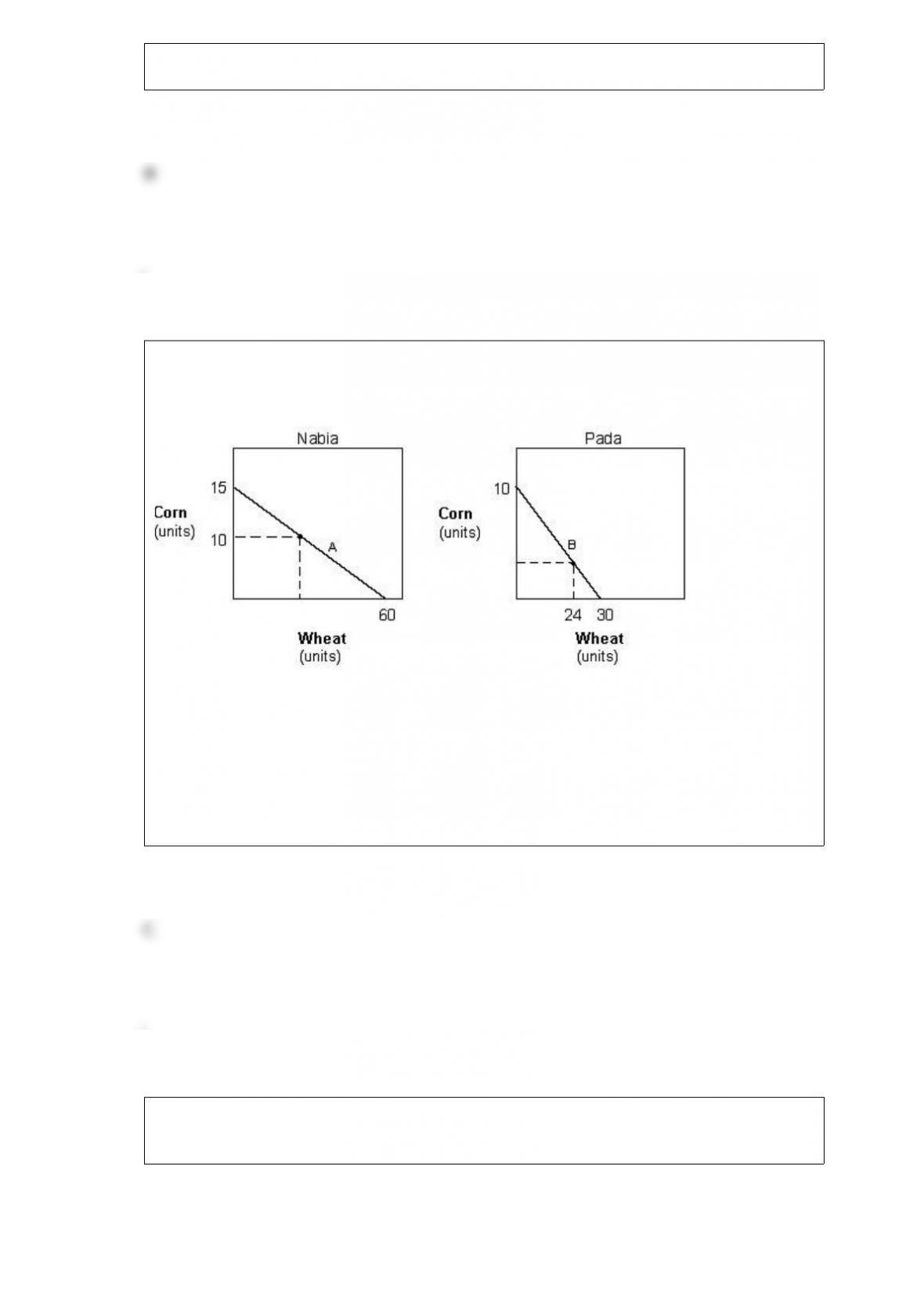
Exhibit 15-1 Production possibilities curves
In Exhibit 15-1, the production possibilities curves of wheat and corn for Nabia and
Pada are presented. In Nabia the cost of producing one more unit of wheat is equal to:
a. 4 units of corn.
b. 4 units of wheat.
c. 1/4 unit of corn.
d. 15 units of corn.
e. 60 units of corn.
Exhibit 4-3 Supply and demand curves
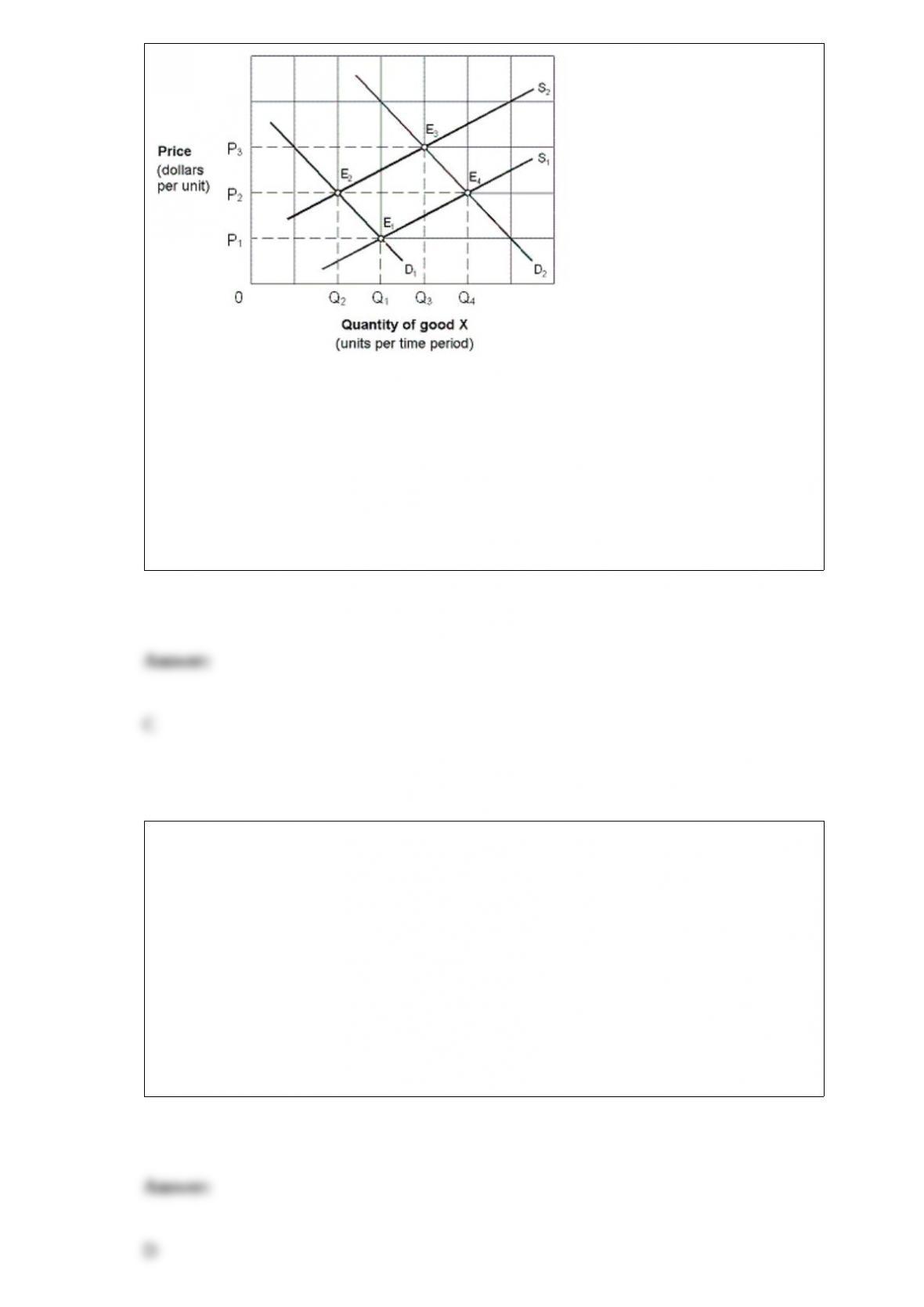
The market shown in Exhibit 4-3 is initially in equilibrium at point E4. Union
negotiations result in a wage increase. Other things being equal, which of the following
is the new equilibrium after this wage increase is in effect?
a. E1. c. E3.
b. E2. d. E4.
Rent controls create distortions in the housing market by:
a. increasing rents received by landlords
b. raising property values.
c. encouraging landlords to overspend for maintenance.
d. discouraging new housing construction.
e. increasing the supply of housing in the long run.

Farmers can produce wheat and/or rice. What will happen in the wheat market if there
is an increase in the price of rice?
a. Wheat supply will increase. c. Wheat demand will increase.
b. Wheat supply will decrease. d. Wheat demand will decrease.
Suppose a consumer is spending his or her entire budget. In order to obtain the most
satisfaction from his or her purchases, all goods should:
a. provide the same marginal utility per dollar.
b. be consumed in equal quantities.
c. have identical marginal utilities.
d. give the consumer matching amounts of total utility.
Assume a consumer purchases a combination of goods X and Y such that MUx / Px =
20 units of utility per dollar and MUy / Py = 10 units of utility per dollar. To maximize
utility, the consumers should buy:
a. neither X nor Y.
b. less of both X and Y.
c. more of both X and Y.
d. more of X and less of Y.
e. less of X and more of Y.

A shortage of product means a(n):
a. excess supply of the product.
b. excess demand of the product.
c. situation where the quantity demanded is less than the quantity supplied.
d. situation where the quantity supplied exceeds the quantity demanded.
e. situation where the current market price is too high.
Which of the following involved deregulation?
a. Airline Deregulation Act of 1978. c. Motor Carrier Act of 1982.
b. Staggers Rail Act of 1980. d. All of these.
One key characteristic that is distinctive of an oligopoly market is that:
a. the demand curve facing each firm is downward sloping, with a marginal revenue
curve that lies below the firm’s demand curve.
b. the decisions of one seller often influences the price of products, the output, and the
profits of rival firms.

c. there is only one firm that produces a product for which there are no good substitutes.
d. there are many sellers in the market and each is small relative to the total market.
A local cable company has its rates set at P = $15 by a regulatory commission. Its
current output is 10,000 households and its costs are as follows: ATC = $17; AVC =
$14; and MC = $15. From this, we can tell that this is:
a. a fair price, and the firm earns a normal profit.
b. a fair price, and the firm earns an economic loss.
c. marginal cost pricing, and the firm earns a normal profit.
d. marginal cost pricing, and the firm earns an economic loss.
e. the same price that an unregulated monopolist would charge.
Dividing the change in total revenue by the change in labor gives:
a. marginal product of labor.
b. marginal revenue product of labor.
c. the price of the output.
d. demand for the output.
e. economic efficiency.
A decrease in the number of dry cleaners in an area is represented by a(n):
a. downward movement along the dry cleaning supply curve.
b. upward movement along the dry cleaning supply curve.
c. leftward shift in the dry cleaning supply curve.
d. rightward shift in the dry cleaning supply curve.
e. vertical dry cleaning supply curve.
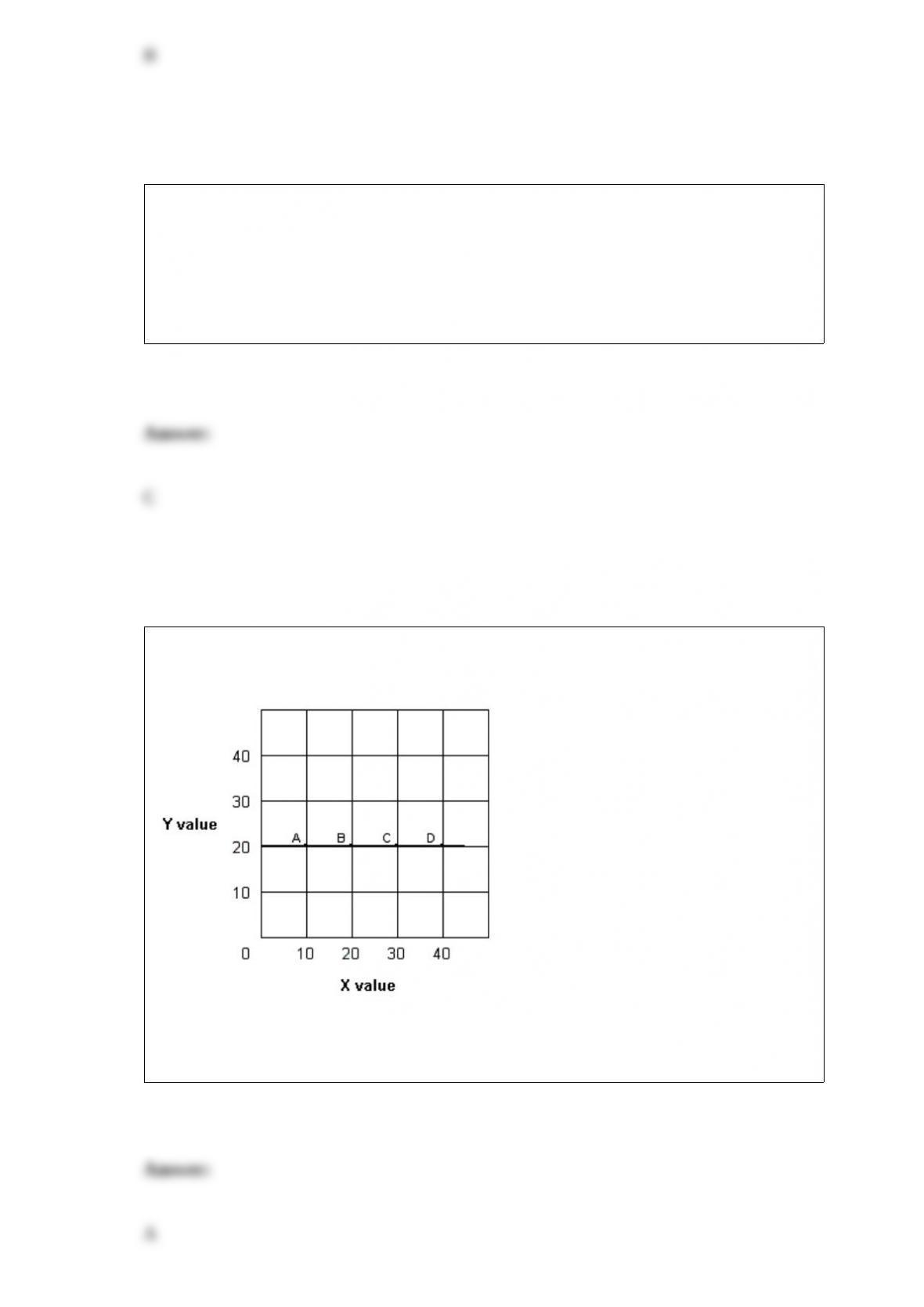
Exhibit 1A-6 Straight line
In Exhibit 1A-6, the slope of the straight line A-D is:
a. 0. c. 1/2.
b. 1. d. 1.

Suppose the value of income elasticity of demand for a private college education is
equal to 1.5. This means that:
a. every $1 increase in income provides an incentive for a $1.50 increase in
expenditures on private college education.
b. every $1.50 increase in income provides an incentive for a $1 increase in
expenditures on private college education.
c. a 10 percent increase in income causes a 15 percent increase in the quantity of private
college education purchased.
d. a 15 percent increase in income causes a 10 percent increase in the quantity of private
college education purchased.
e. a 10 percent decrease in private college tuition will have a large enough income
effect to increase spending on private college education by 15 percent.
A monopsonist’s marginal factor cost (MFC) curve lies above its supply curve because
the firm must:
a. lower the factor price to hire more.
b. increase the price of its product to sell more.
c. increase the factor price to hire more.
d. lower the product price to sell more.
Trade restrictions imposed in the name of national security have been recommended by
protectionists in order to:

a. develop strong defense-related industries.
b. avoid dependence on foreign suppliers during wartime.
c. reduce the necessity of stockpiling strategic supplies.
d. all of these.
Assume Ajax Company employs 100 workers and total revenue is $400,000 per week.
When Ajax Company employs 101 workers, total revenue is $405,000. The marginal
revenue product of the 101st worker is:
a. $40,000.
b. $5,000.
c. $405,000.
d. none of these.