Which of the following leads to an increase in real GDP?
A) a decrease in government spending
B) a decrease in the inflation rate in other countries, relative to the inflation in the
United States
C) a decrease in interest rates
D) Households have increasingly pessimistic expectations about future income.
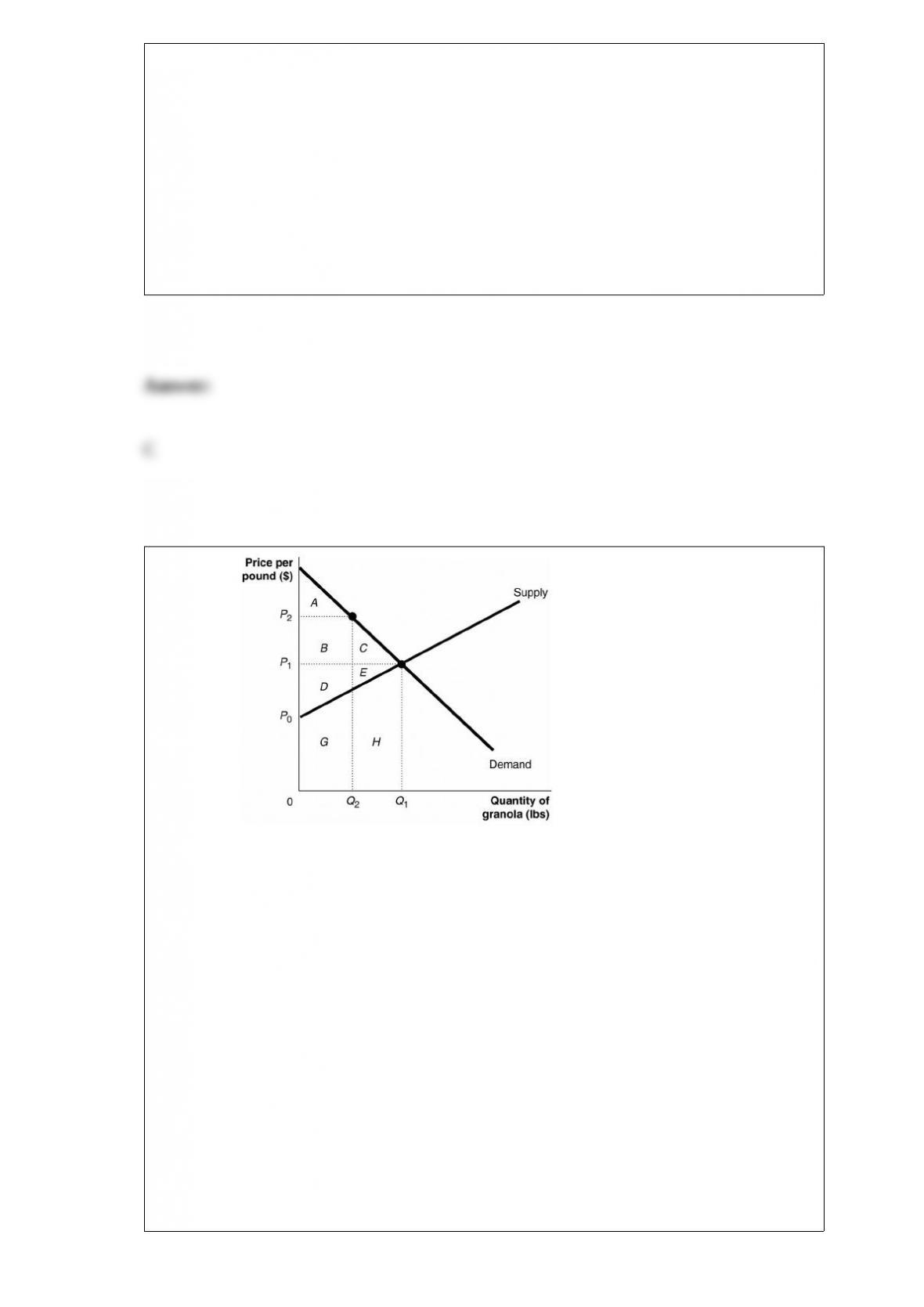
Figure 4-6 Figure 4-6 shows the market for
granola. The market is initially in equilibrium at a price of P1 and a quantity of Q1.
Now suppose producers decide to cut output to Q2 in order to raise the price to P2.
At the price P2, consumers are willing to buy the Q2pounds of granola. Is this an
economically efficient quantity?
A) No, the marginal benefit of the last unit (Q2) exceeds the marginal cost of that last
unit.
B) Yes, otherwise consumers would not buy Q2 units.
C) Yes, because the price P2 shows what consumers are willing to pay for the product.
D) No, the marginal cost of the last unit (Q2) exceeds the marginal benefit of the last
unit.
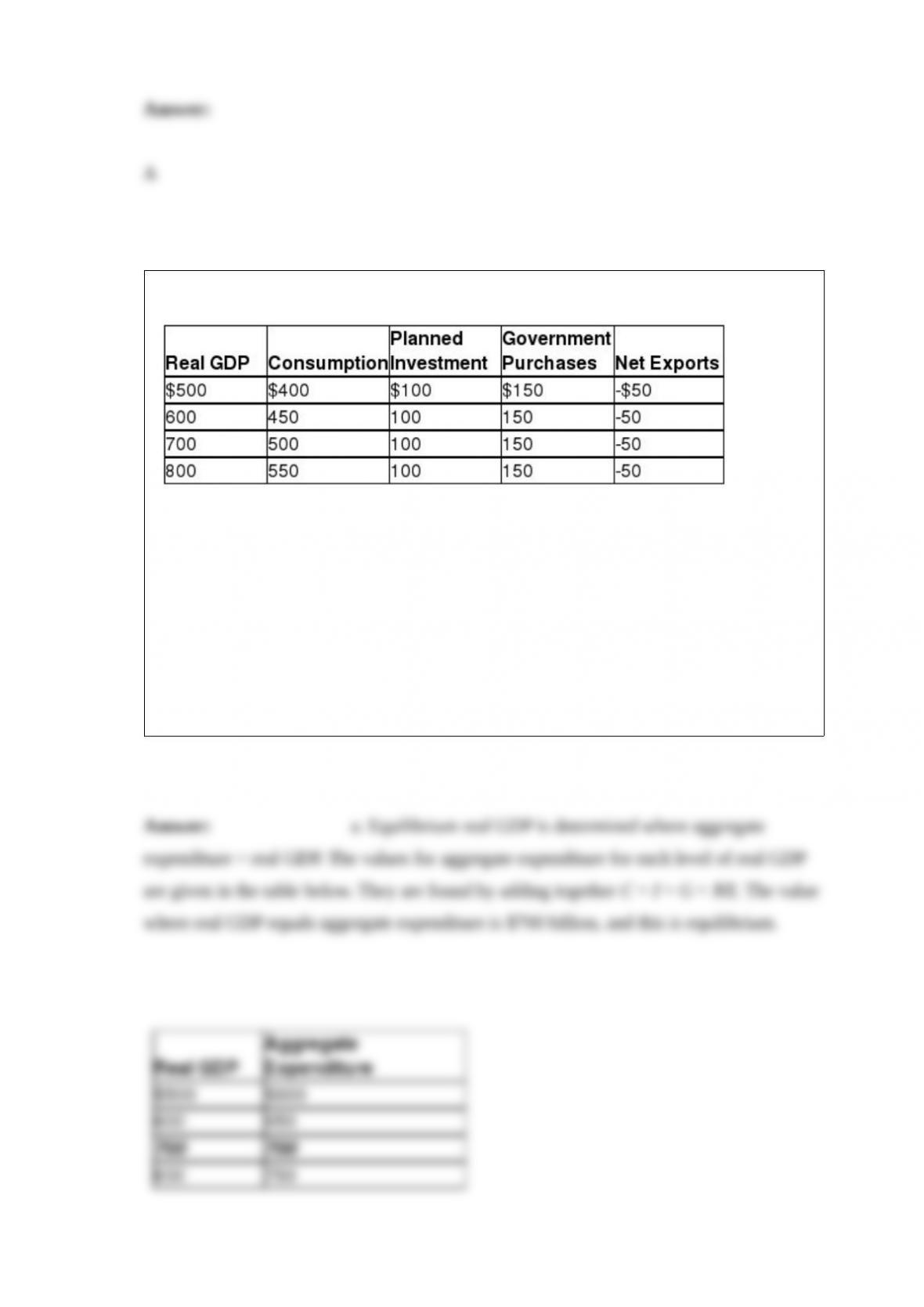
Table 23-13
Using the table above, answer the following questions. The numbers in the table are in
billions of dollars.
a. What is the equilibrium level of real GDP?
b. What is the MPC?
c. If investment spending declines by $50 billion, what will happen to equilibrium
GDP?

What is logrolling?
A) a situation where a policymaker votes to approve a bill in exchange for favorable
votes from his colleagues on other bills
B) a situation where policymakers transfer resources from those voters who are unlikely
to have a huge impact on the political outcome to those who contribute to political
campaigns
C) a situation where a policymaker accepts bribes to prevent proposed legislation from
coming to a vote
D) a situation where a policymaker gets the government to fund a non-essential project
benefiting her family members
Table 10-1
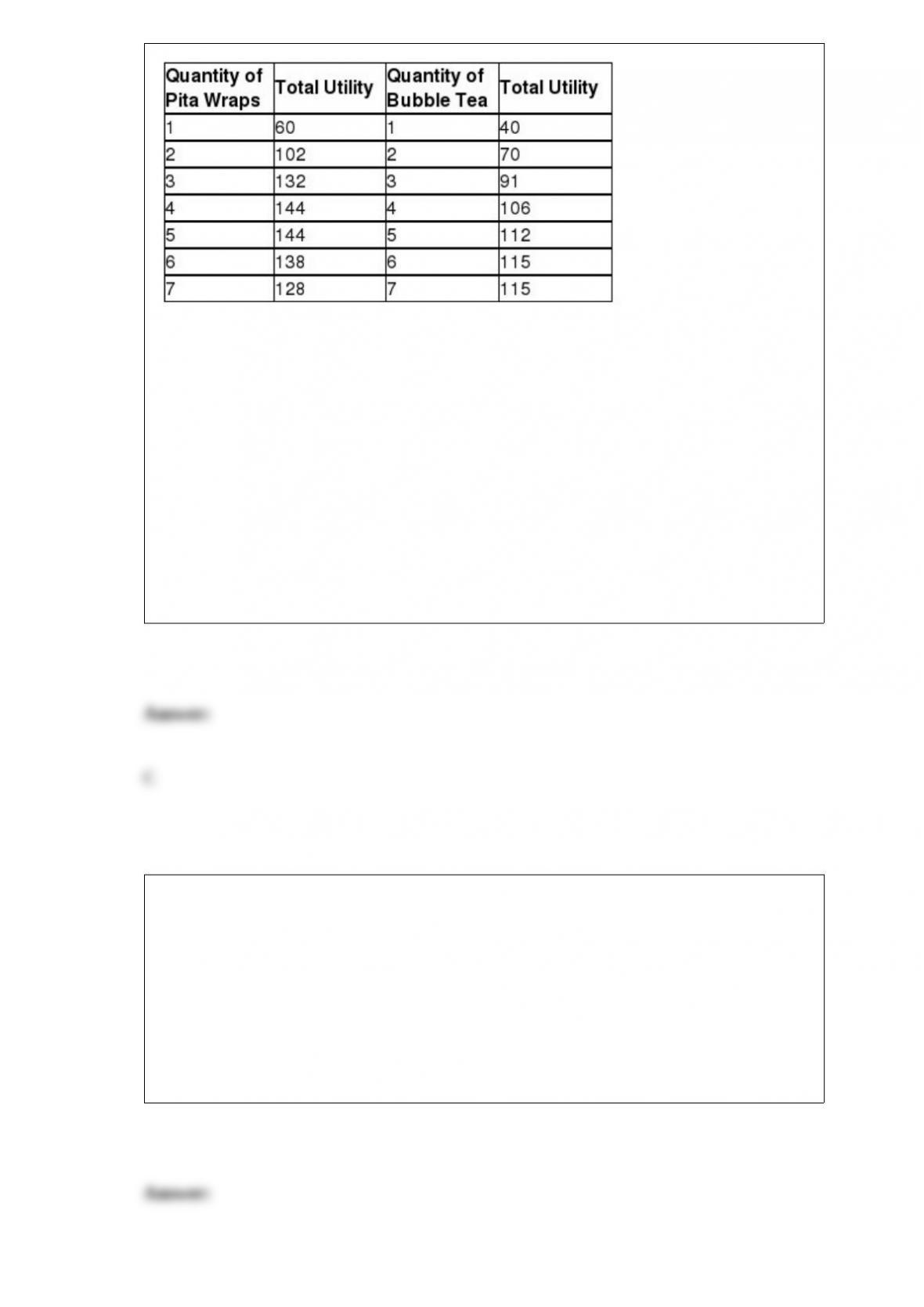
Keegan has $30 to spend on Pita Wraps and Bubble Tea. The price of a Pita Wrap is $6
and the price of a glass of Bubble Tea is $3. Table 10-1 shows his total utility from
different quantities of the two items. If Keegan can drink all the bubble tea he wants for
free, how many glasses will he consume?
A) 4 glasses
B) 5 glasses
C) 6 glasses
D) 7 glasses
If the price of orchids falls, the substitution effect due to the price change will cause
A) an increase in the demand for orchids.
B) an increase in the demand for roses, a substitute for orchids.
C) an increase in the quantity demanded of orchids.
D) an increase in the quantity supplied of orchids.

The Latvian currency, the lat, is pegged to the euro at a rate of 0.71 lats to the euro. At
the pegged exchange rate, how many euros would be exchanged for one lat?
A) 0.29
B) 0.71
C) 1.41
D) 1.71
If a person withdraws $500 from his/her checking account and holds it as currency, then
M1 will ________ and M2 will ________.
A) increase; decrease
B) not change; not change
C) not change; increase
D) decrease; increase
E) decrease: decrease
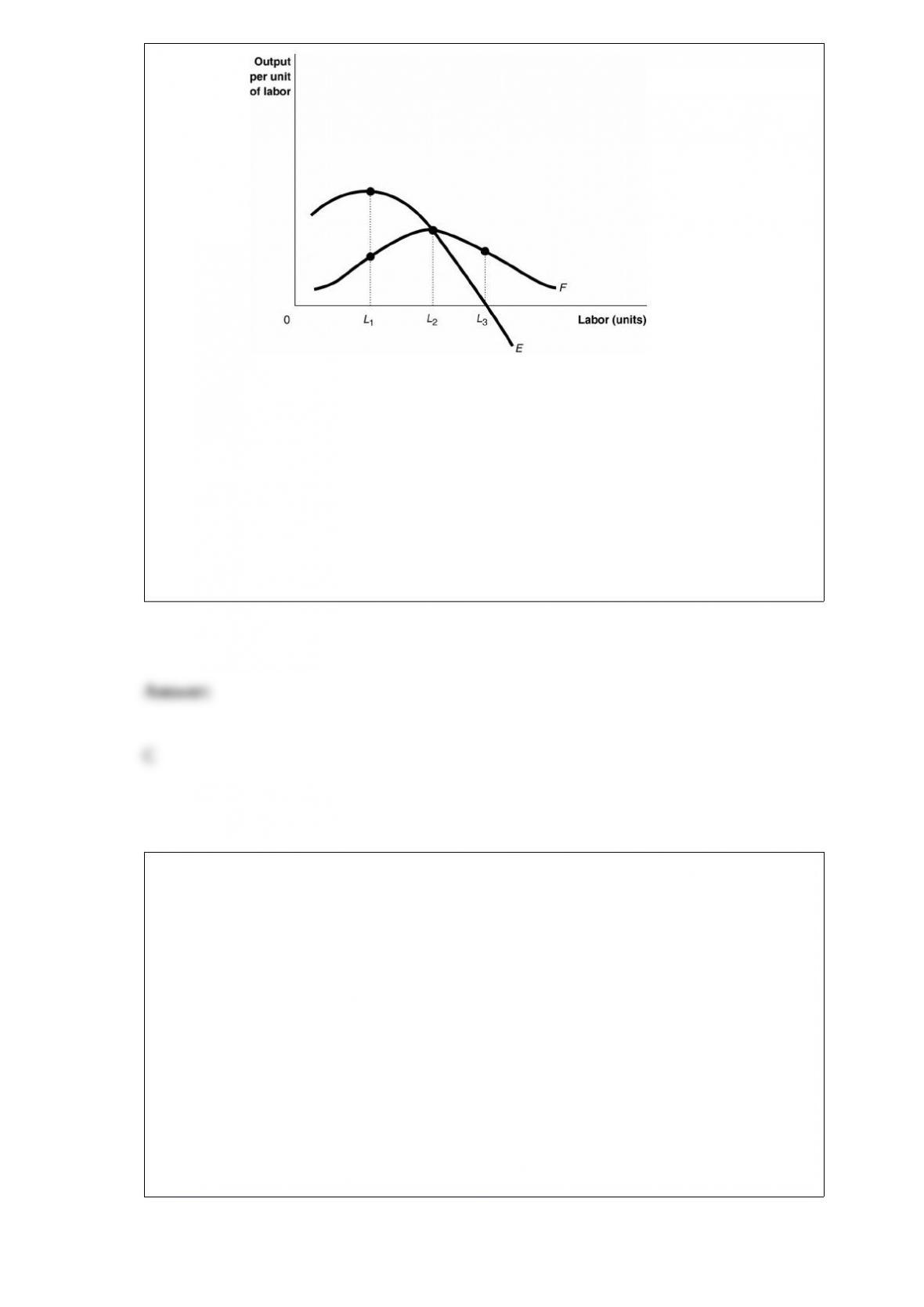
Figure 11-2
The curve labeled “E” is
A) the total product curve.
B) the average product curve.
C) the marginal product curve.
D) the output supply curve.
In discussions of barriers to entry, what is meant by the term “virtuous cycle”?
A) A virtuous cycle refers to successful research and development that leads to
information that is used to develop other new products.
B) A virtuous cycle refers to a firm using the profits from a monopoly in one market to
establish a monopoly in another market.
C) A virtuous cycle refers to the situation where the pursuit of self-interest in
establishing an entry barrier leads to an increase in social welfare (the “invisible hand”).
D) A virtuous cycle refers to a situation where if a firm can attract enough customers
initially, it can attract additional customers because its product’s value has been
increased by other customers using it, which attracts even more customers.
Firms that participate in regular open market transactions with the Federal Reserve are
called
A) secondary market banks.
B) Treasury banks.
C) primary dealers.
D) Federal Reserve partners.
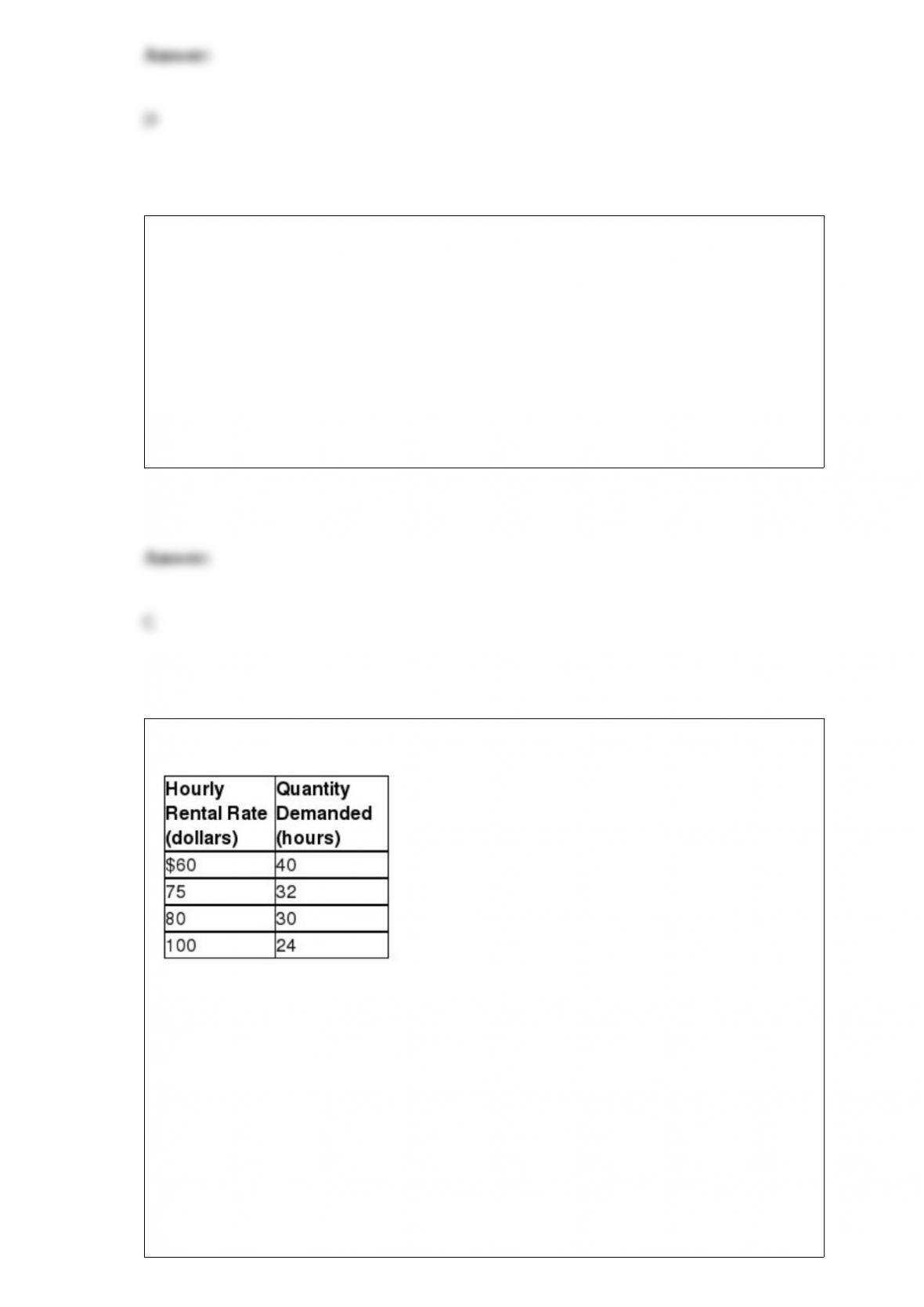
Table 6-5
Katie Graham owns a kayak rental service in Santa Barbara. Table 6.3 below shows her
estimated demand schedule for kayak rentals per week. She would like to increase her
sales revenue by changing the price she charges for rentals. At present she charges $75.
Based on the information in the table, Katie
A) is not able to increase her revenue by changing her price because the demand for
kayak rentals is unit-elastic.
B) should lower her price to $60 to increase her revenue because the demand for kayak
rentals is price elastic.

C) should raise her price to $80 to increase her revenue because the demand for kayak
rentals is price inelastic.
D) should raise her price to earn the most revenue.
If a perfectly competitive firm raises the price it charges to consumers, which of the
following is the most likely outcome?
A) The firm’s revenue will not change because some consumers will refuse to pay the
higher price.
B) The firm will not sell any output.
C) The firm’s total revenue will increase only if the demand for its product is inelastic.
D) The firm’s total revenue will increase only if the demand for its product is elastic.
Which of the following is not a durable good?
A) furniture
B) automobile
C) clothing
D) refrigerator

Stagflation is often a result of
A) a negative supply shock.
B) a decrease in aggregate demand.
C) an increase in aggregate demand.
D) an increase in aggregate supply.