1)
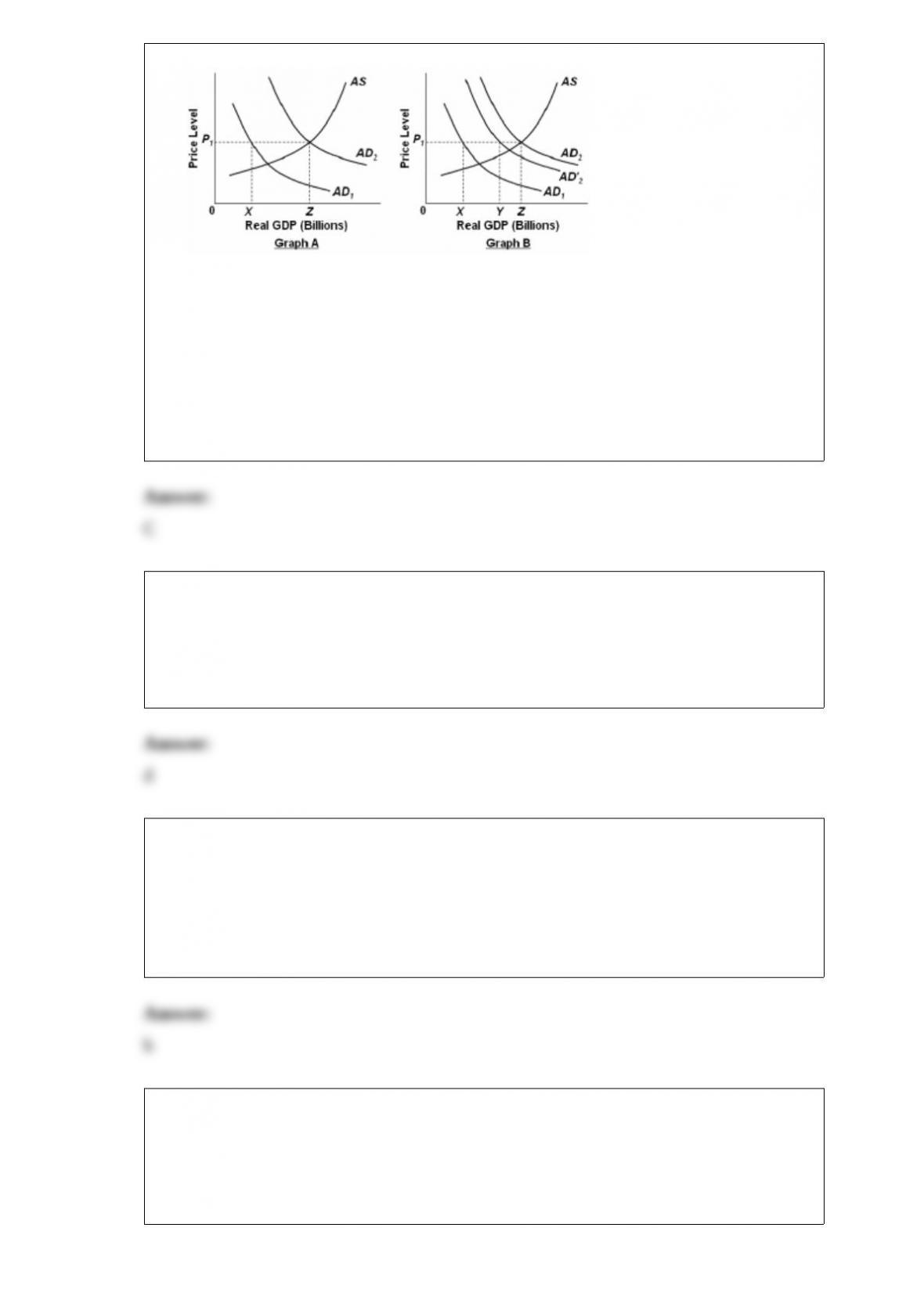
Refer to the above diagrams. Suppose that government undertakes fiscal policy
designed to increase aggregate demand from AD1 to AD2 and thereby to increase GDP
from X to Z. In terms of graph B, which of the following might explain why GDP
increases to Y rather than to Z?
A.inflation
B.an increase in stock prices
C.offsetting state and local finance
D.a ratchet effect
2) which of the following will cause the demand curve for product a to shift to the left?
a.population growth that causes an expansion in the number of persons consuming a.
b.an increase in money income if a is a normal good.
c.a decrease in the price of complementary product c.
d.an increase in money income if a is an inferior good.
3) the demand schedule or curve confronted by the individual purely competitive firm
is:
a.relatively elastic, that is, the elasticity coefficient is greater than unity.
b.perfectly elastic.
c.relatively inelastic, that is, the elasticity coefficient is less than unity.
d.perfectly inelastic.
4) The primary purpose of Social Security is to:
A.subsidize families in need.
B.offset the progressiveness of the personal income tax.
C.provide income for workers who are temporarily unemployed.
D.provide income for retired and disabled workers.
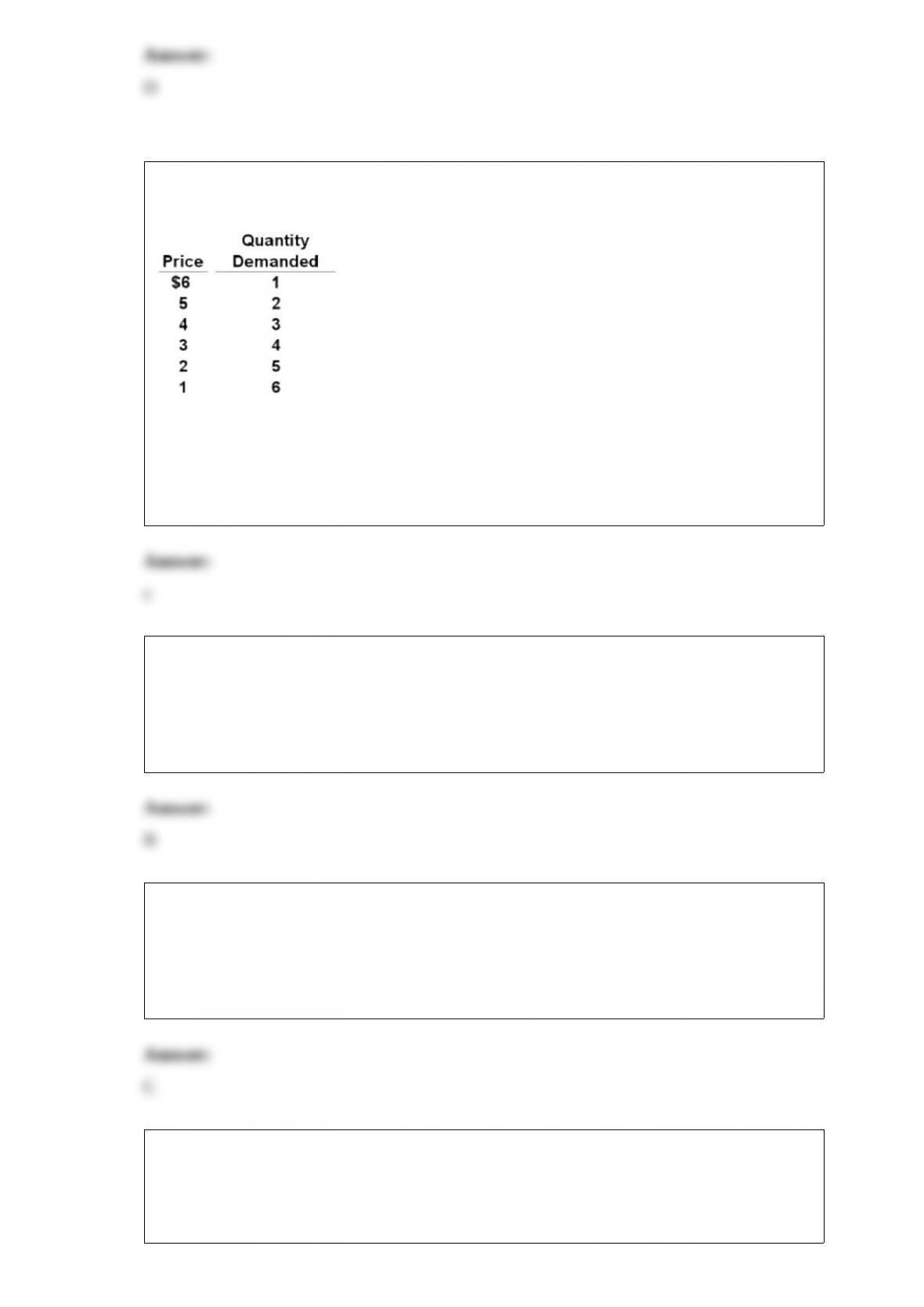
5) the following demand schedule:
refer to the above data. the price elasticity of demand is relatively inelastic:
a.in the $6-$4 price range.
b.over the entire $6-$1 price range.
c.in the $3-$1 price range.
d.in the $6-$5 price range only.
6) Over the past decade, total and per capita trash generated in the United States have:
A.both increased at about the same rate.
B.increased and leveled off, respectively.
C.both fallen.
D.leveled off and fallen, respectively.
7) Which of the following is not inversely related to per capita income?
A.mortality rates for children under 5 years of age
B.adult illiteracy rates
C.per capita energy consumption
D.population growth rates
8) marginal utility can be:
a.positive, but not negative.
b.positive or negative, but not zero.
c.positive, negative, or zero.
d.decreasing, but not negative.
9) the presence of discouraged workers:
a.increases the size of the labor force, but does not affect the unemployment rate.
b.reduces the size of the labor force, but does not affect the unemployment rate.
c.may cause the official unemployment rate to understate the true amount of
unemployment.
d.may cause the official unemployment rate to overstate the true amount of
unemployment.
10) Average per capita water consumption in the U.S. was approximately how many
gallons per day in 2000?
A.440
B.764
C.1,040
D.1,430
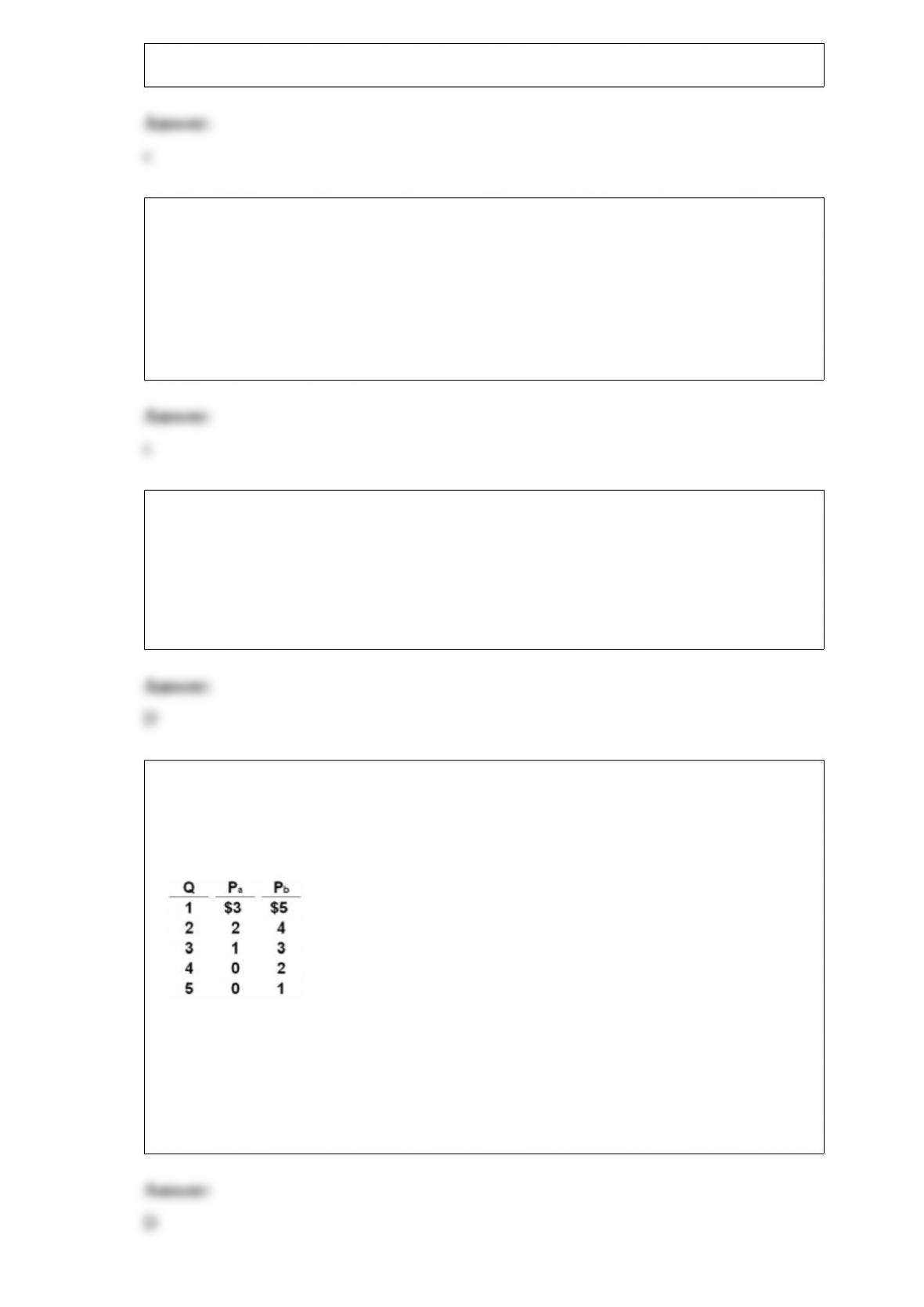
11) Pa and Pb are the prices that individuals A and B are willing to pay for the last unit
of a public good, rather than do without it. These people are the only two members of
society.
Refer to the above data. If this good were a private good instead of a public one, the
total quantity demanded at a $3 market price would be:
A.2 units.
B.3 units.
C.6 units.
D.4 units.
12) Equal increases in government purchases and taxes will:
A.increase the equilibrium GDP and the size of that increase varies directly with the
size of the MPC.
B.increase the equilibrium GDP and the size of that increase is independent of the size
of the MPC.
C.increase the equilibrium GDP and the size of that increase varies inversely with the
size of the MPC.
D.decrease the equilibrium GDP and the size of that decrease is independent of the size
of the MPC.
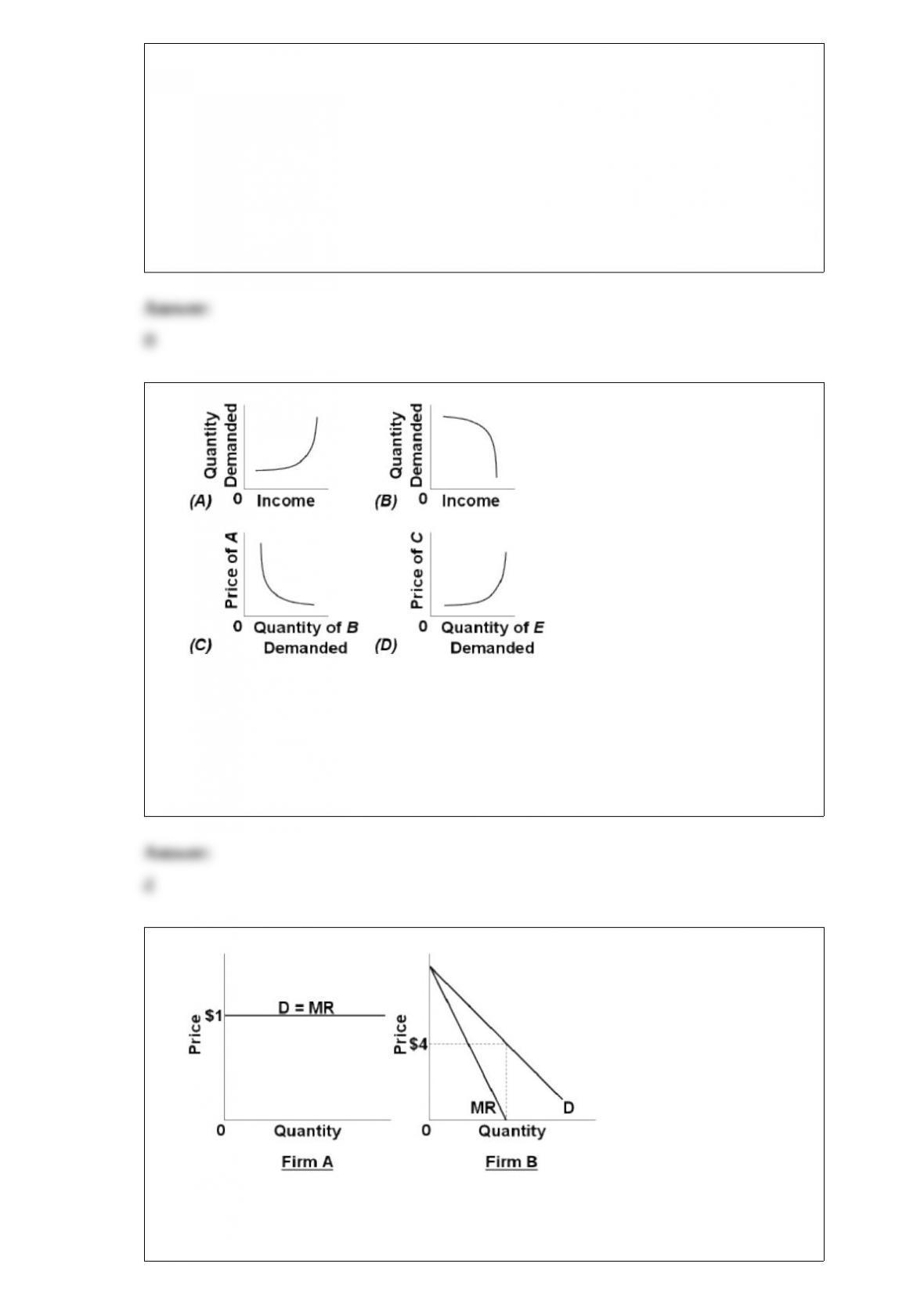
13)
refer to the above diagrams. in which case would the coefficient of cross elasticity of
demand be positive?
a.a
b.b
c.c
d.d
14)
refer to the above diagrams. firm a is a:
a.pure competitor and firm b is a pure monopoly.
b.pure competitor, as is firm b.

c.pure monopoly and firm b is a pure competitor.
d.pure monopoly, as is firm b.