
Poor welfare recipients face higher marginal tax rates than do the richest families.
a. True
b. False
A tax on imports equal to a percentage of the cost of those imports is known as
a. a specific tariff
b. an ad valorem tariff
c. a tax on luxury goods only
d. an effective quota
e. an ad valorem quota
The basic reason that supply curves slope upward is that
a. demand curves slope downward
b. production is characterized by increasing costs
c. profits decline as product prices rise
d. greater output can only result from improved technology

e. price and quantity supplied are inversely related
It is impossible for one person to have a comparative advantage in all tasks.
a. True
b. False
When a consumer spends income so that the ratio of marginal utilities (MUs) of all
goods purchased equals the ratio of their prices, the consumer is
a. maximizing marginal utility
b. spending too much on all goods
c. maximizing total utility
d. beyond the point of diminishing marginal utility
e. behaving in opposition to the principal of rational behavior

In the early 1970s, in an attempt to solve the problem of the overvalued U.S. dollar,
world leaders
a. increased the price of gold in terms of other currencies
b. appreciated the dollar, which made foreign exchange cheaper to U.S. residents
c. appreciated the dollar, which made foreign exchange more expensive to U.S.
residents
d. devalued the dollar, which made foreign exchange cheaper to U.S. residents
e. devalued the dollar, which made foreign exchange more expensive to U.S. residents
Tyrell has $50 per week to spend on good A, which has a price of $5, and good B,
which has a price of $4. He buys six units of A and five of B. The marginal utility of the
sixth unit of A is 25, and the marginal utility of the fifth unit of B is 20. Which of the
following is true?
a. He is maximizing his utility.
b. We cannot tell if he is maximizing his utility unless we know his total utility.
c. He is not maximizing his utility and should buy more of A.
d. He is not maximizing his utility and should buy more of B.
e. He is not maximizing his utility because he is not spending all of his income.

The Criminal Records Corporation is operating at its minimum efficient scale, selling
10,000 records per month via late-night cable TV advertising. It currently buys pressed
records from Hole-in-the-Middle, Inc., which has a minimum efficient scale of 100,000
records per month. Which of the following should Criminal Records do?
a. Continue to buy 10,000 records from Hole-in-the-Middle, which can make the
records more cheaply.
b. Buy 100,000 records from Hole-in-the-Middle, so that company can reach its
minimum efficient scale too.
c. Buy Hole-in-the-Middle and use its facilities to manufacture the 10,000 records it
needs.
d. Buy Hole-in-the-Middle and stop operating as Criminal Records because
Hole-in-the-Middle is the more efficient business.
e. Buy Hole-in-the-Middle and stop operating as Criminal Records because
Hole-in-the-Middle is the larger business.
The present value of receiving $200 one year from now when the prevailing rate of
interest is 8 percent is less than the present value of receiving $200 one year from today
when the prevailing rate of interest is 10%
a. True
b. False
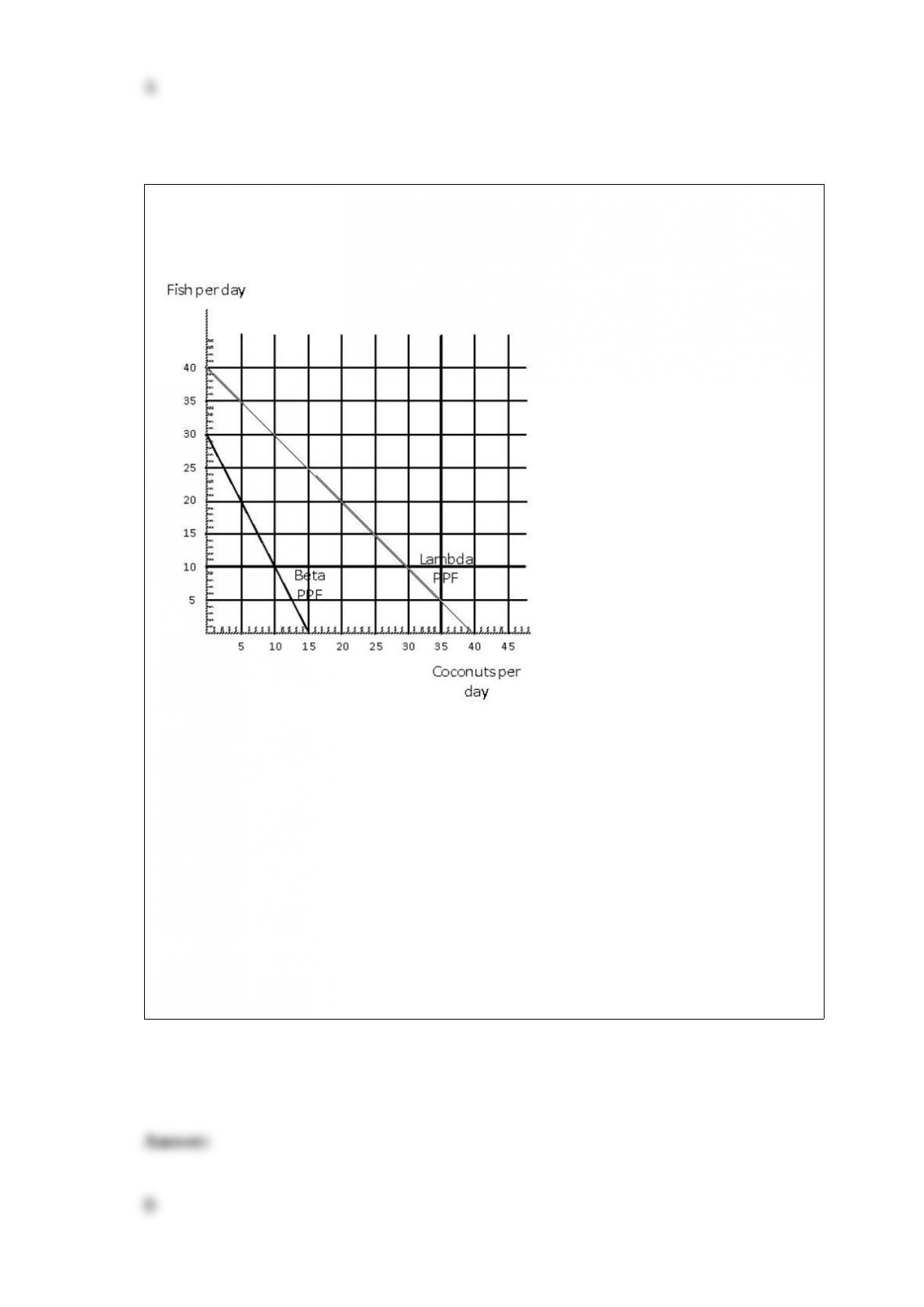
Exhibit 19-1
Exhibit 19-1 shows the production possibilities frontiers for the countries of Lambda
and Beta for fish and coconuts. What is the opportunity cost of a fish in Lambda?
a. 1/2 coconut
b. 1 coconut
c. 2 coconut
d. 21/2 coconut
e. cannot tell from the information provided

The cost of attending college
a. is entirely monetary and consists of expenditures on tuition, books, transportation,
and meals
b. is not monetary, but consists solely of forgone income
c. is the most valued alternative given up to attend college
d. is negligible for most people, because they really have no choice but to attend college
e. is the same whether you attend a public or a private college
A metal-stamping factory moves next to a day care center. Noise from the factory
makes it impossible for the kids to nap. It would cost the factory $5 million to move; it
would cost $1 million for the day care center to move. Sound insulation for the factory
costs $1 million; insulation for the day care center costs $200,000. The court initially
determines that the day care center has the property right and orders the factory to
purchase insulation for the day care. But on appeal the factory is awarded the property
right. How would the optimal solution to this problem change after the appeals court
decision?
a. The insulation would still be bought, but it would be bought by the day care center, a
result consistent with the Coase theorem.
b. Insulation for the factory would be bought instead of insulation for the day care
center, a result consistent with the Coase theorem.
c. Insulation for the day care center would still be bought, but it would be bought by the
factory, a result consistent with the Coase theorem.
d. Insulation for the factory would be bought instead of insulation for the day care
center, a result inconsistent with the Coase theorem.
e. The day care center would move instead of buying insulation, a result consistent with
the Coase theorem.

A monopolist’s demand curve
a. is horizontal at the market price
b. lies above its marginal revenue curve
c. is the same as its marginal cost curve
d. indicates that the firm must raise price to sell additional units
e. lies above the marginal cost curve at all levels of output
The term allocative efficiency refers to
a. the level of output where MC = AVC
b. the equality between MR and MC
c. the production of those goods and services most valued by consumers
d. the point where marginal revenue equals average total cost
e. the production of a good up to the point where AFC = 0
The reason for calling the current exchange rate system a “managed float” is
a. it is managed by the IMF
b. it is basically a misnomer because it is impossible to “manage” exchange rates
c. it recognizes that there will be some intervention by central banks
d. only the forces of supply and demand determine the exchange rates
e. Congress passed a law declaring that the exchange rate system be legally termed
“managed float”
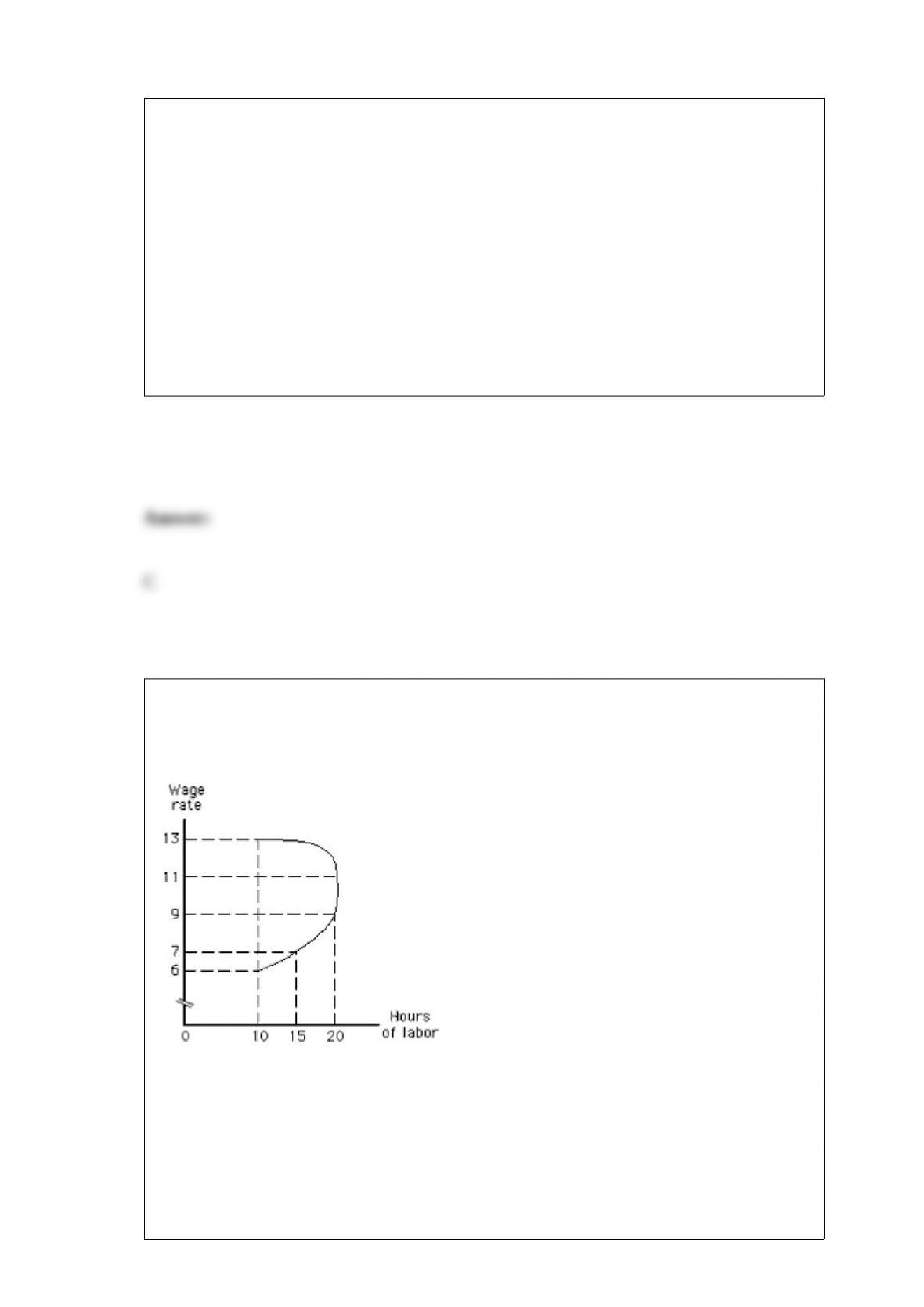
Exhibit 12-3
In Exhibit 12-3, which of the following is true at a wage rate of $7?
a. The income effect dominates the substitution effect.
b. The substitution effect dominates the income effect.
c. The income effect exactly offsets the substitution effect.

d. No labor is supplied.
e. The individual will supply 30 hours of labor.
Which of the following accounts for approximately three-fourths of all welfare
spending?
a. the school lunch program
b. the earned income tax credit
c. unemployment compensation and workers’ compensation combined
d. “in-kind” transfers
e. cash transfers
The demand curve facing a perfectly competitive firm is
a. almost vertical at the market quantity
b. perfectly inelastic
c. perfectly elastic
d. horizontal at the price the firm wishes to charge
e. downward sloping
Stockholders share in the profits of a corporation
a. in proportion to their years of stock ownership
b. in proportion to their ownership of stock
c. equally regardless of number of shares owned
d. only if they participate in firm management decisions
e. only if they attend stockholders’ meetings
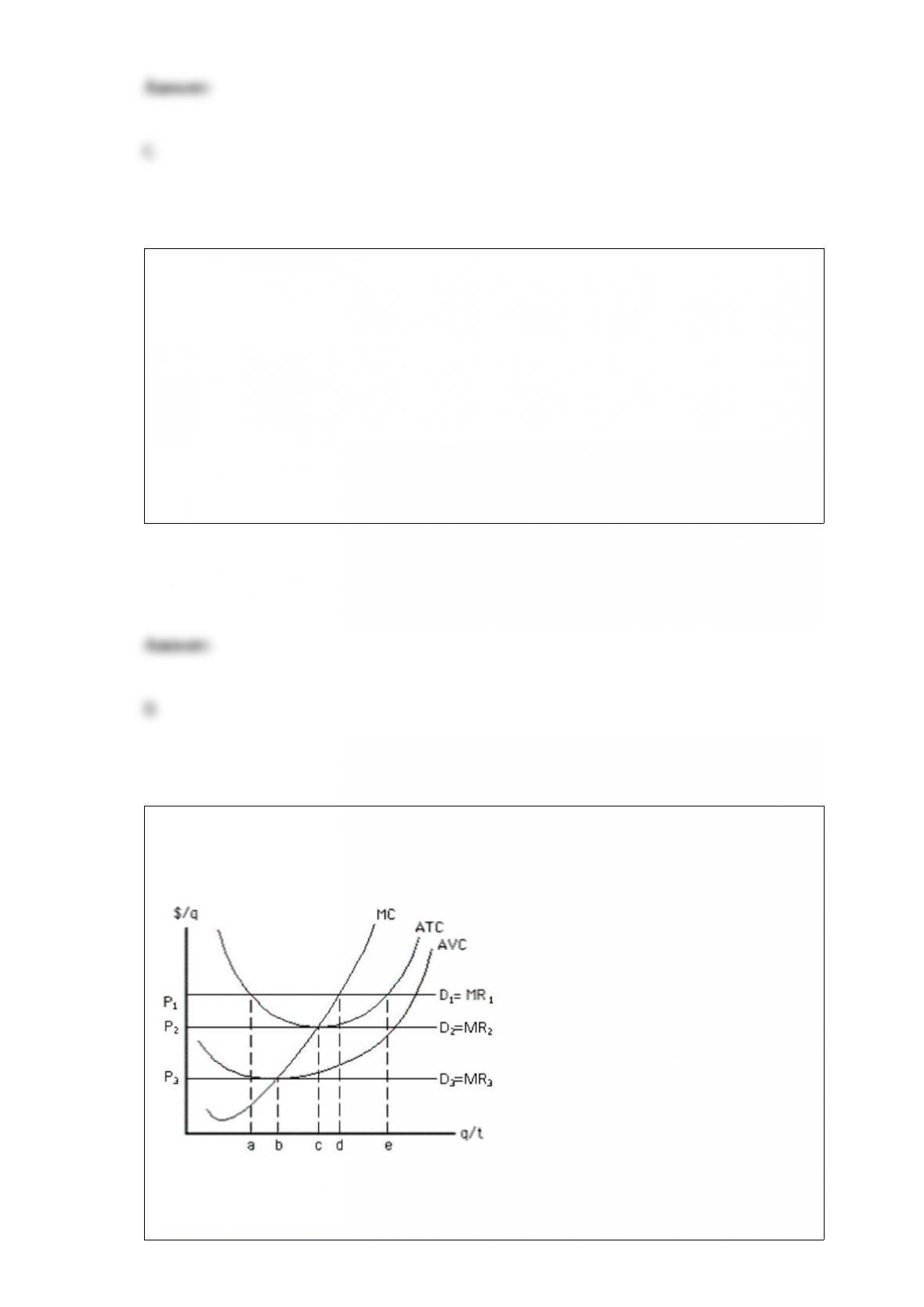
Exhibit 8-6
Consider Exhibit 8-6. At which quantity will this firm maximize profit?
a. point a
b. point b

c. point c
d. point d
e. point e
The value of a country’s exports is listed in its balance of payments account as a(n)
a. credit
b. debit
c. payment
d. investment
e. unilateral transfer
Exhibit 4-2
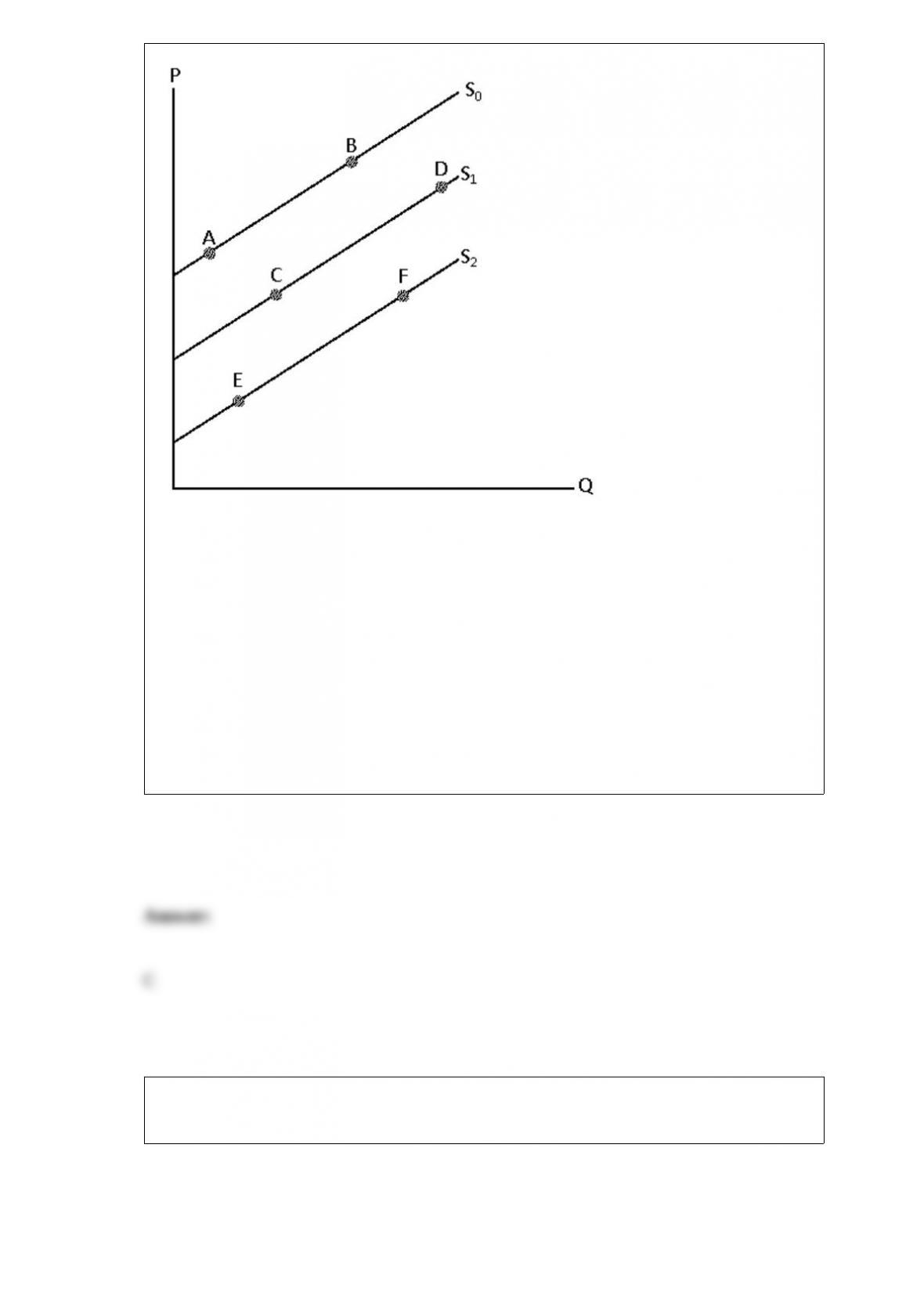
Consider Exhibit 4-2. Which of the following represents a decrease in supply?
a. a movement from C to D
b. a movement from D to B
c. a movement from C to F
d. a movement from F to E
e. none of the above represents an increase in the quantity supplied
Exhibit 4-1
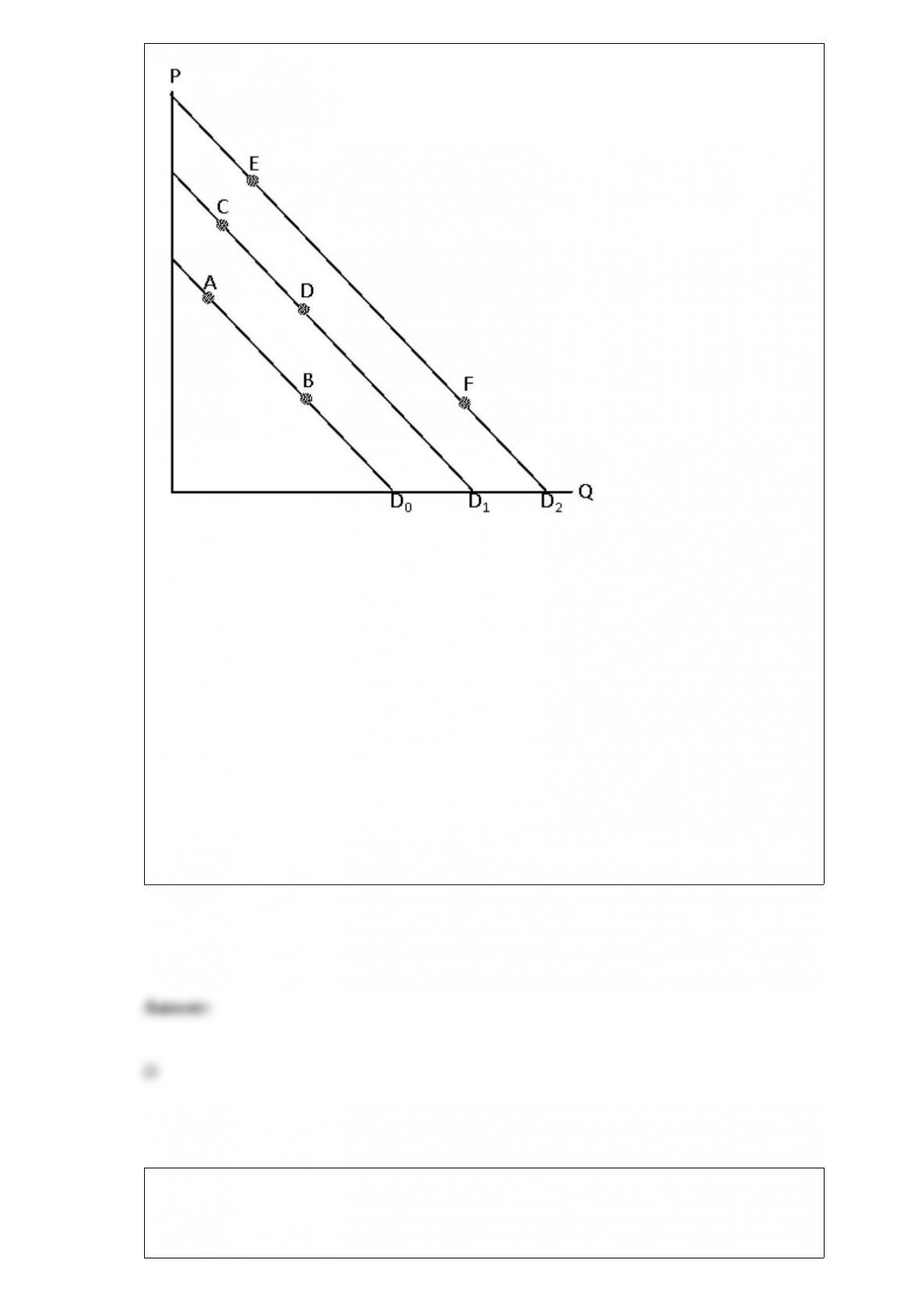
Consider Exhibit 4-1 which shows 3 demand curves for corn flakes. Which of the
following would be most likely to shift the demand curve from D0 to D1?
a. a report that eating corn flakes increases the risk of cancer
b. a decrease in consumer incomes if corn flakes is a normal good
c. a decrease in the price of oatmeal which many consumers consider to be a substitute
for corn flakes
d. a decrease in the price milk which many consumers consider to be complement for
corn flakes
e. a widely anticipated recession
Exhibit 12-7
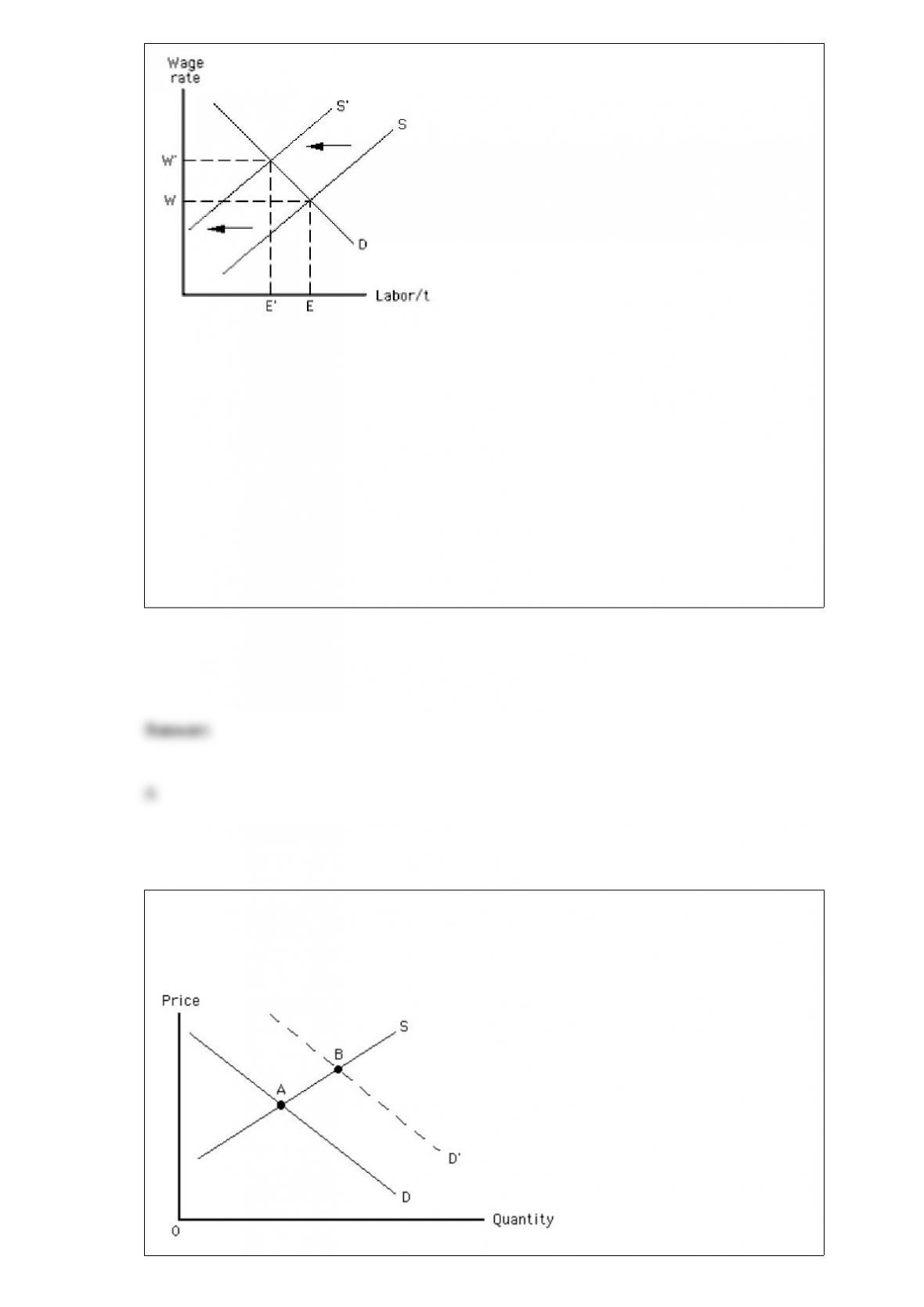
Exhibit 12-7 reflects which of the following?
a. A union that is restricting the supply of labor.
b. A firm that is restricting the number of job openings.
c. The price of the good produced by this labor is rising.
d. The price of the good produced by this labor is falling.
e. The union that is creating an excess supply of labor.
Exhibit 4-4

Refer to Exhibit 4-4. Which of the following would cause a shift of demand from D’ to
D?
a. an increase in the price of a substitute good
b. an increase in the number of consumers
c. a decrease in the price of a complementary good
d. a decline in consumers’ incomes if it is a normal good
e. an increase in consumers’ incomes if it is a normal good
A candy bar sells for 50 cents, video games are 25 cents each, the horizontal (candy)
intercept of Ann’s budget line is 12, and the vertical (video game) intercept of Ann’s
budget line is 24. If Ann’s income increased to $20, the vertical intercept would be
a. $4
b. $2
c. 20
d. 40
e. 80

Which of the following would shift the production possibilities frontier outward?
a. an increase in the size of the labor force
b. more efficient use of existing resources and technology
c. the government prints more money
d. the end of a strike by a labor union
e. society’s desire to produce more of one of the goods
When applying for a loan, a borrower tends to know more about her ability to pay it
back than does the bank. This is an example of
a. perfect information
b. moral hazard
c. a low marginal benefit of information for the bank
d. asymmetric information
e. optimal search
A brand name may contribute to oligopolists’ economic profit by

a. shifting the demand curve leftward
b. shifting the supply curve leftward
c. overcoming economies of scale
d. acting as a barrier to entry
e. reducing advertising costs
Which of the following groups has the lowest life expectancy at birth?
a. middle-income economies
b. low-income economies
c. high-income economies
d. sub-Saharan African economies
e. all the world’s economies
Exhibit 2-12 Maria and Hans Production Possibilities for Laundry and Typing
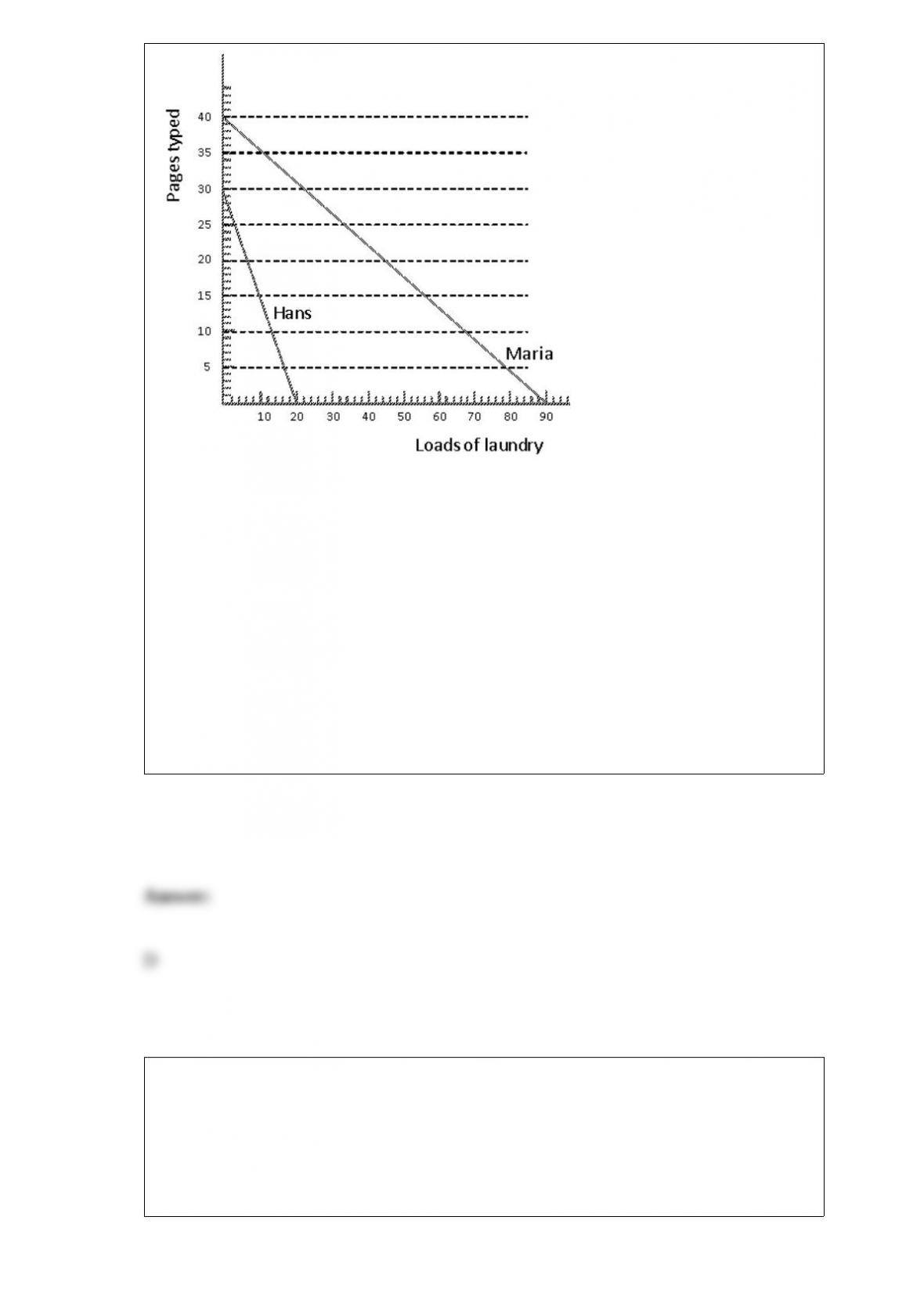
According to Exhibit 2-12, if Hans types one fewer page, how many loads of laundry
can he do in the time saved on typing?
a. 12 loads
b. 8 loads
c. 3/2 of a load
d. 2/3 of a load
e. it cannot be determined
It is possible for one country to have a comparative advantage in the production of all
products.
a. True
b. False
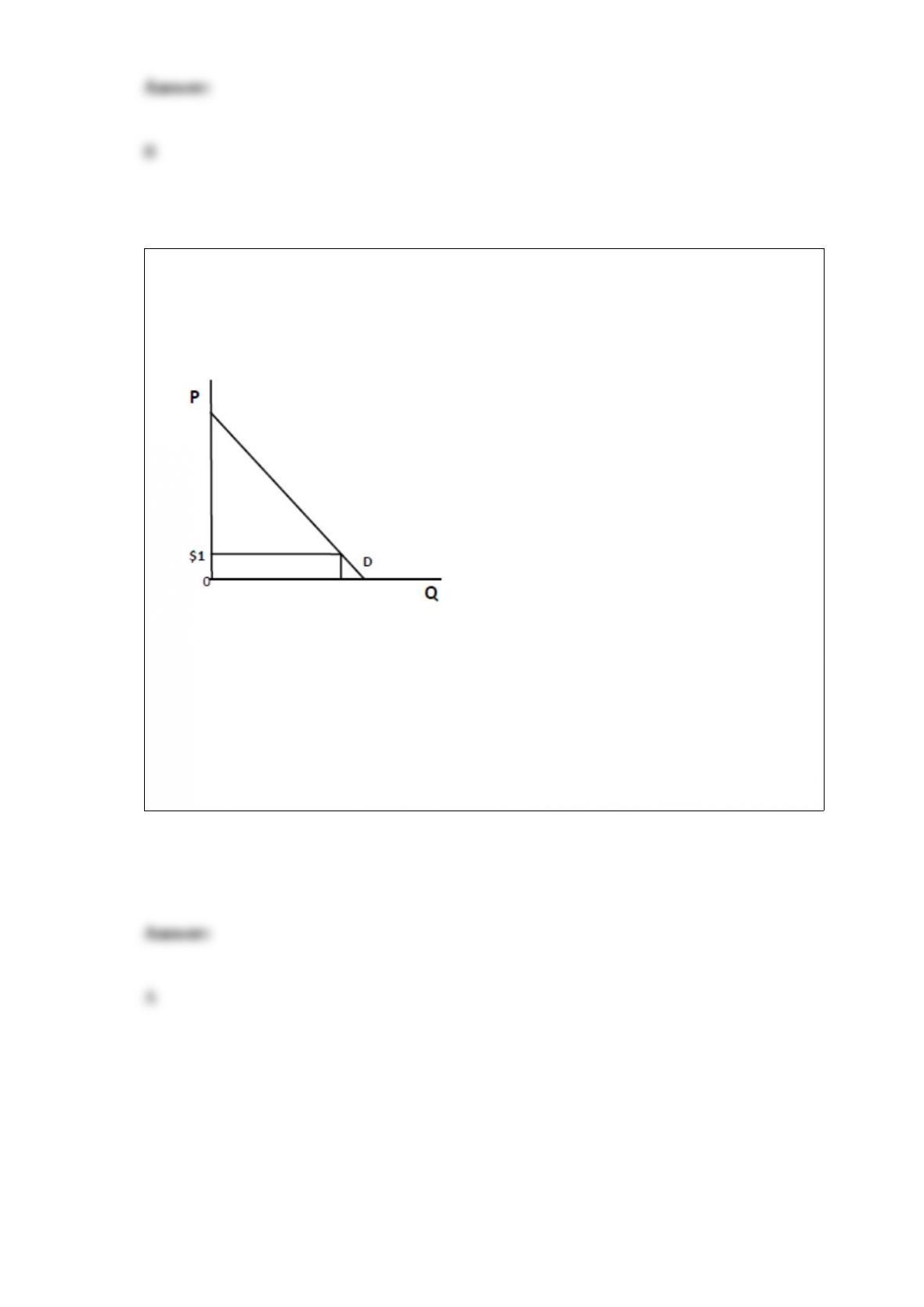
Exhibit 6-19
Refer to Exhibit 6-19, which is a demand curve for Medicare benefits. A $1 payment for
services would reduce utilization, yet would still leave beneficiaries with a substantial
consumer surplus.
a. True
b. False