
The summation of all individual firm marginal cost curves above the minimum of the
average variable cost curve:
A) forms a curve that is usually downward sloping.
B) defines the relationship between price and demand.
C) defines the relationship between price and capacity output.
D) is the market supply curve.
Jessica, aged three, decides to dress up like Sleeping Beauty for Halloween. What is her
opportunity cost of this decision?
A) the cost of the costume
B) the fact that she can’t dress up like Barbie, her second choice
C) zero, because three-year-olds do not have opportunity costs
D) impossible to say, because Jessica does not understand what an opportunity cost is
Recall the Application. Prior to enactment of the federal government’s order:
A) grocers were willing to pay less for any California kiwifruit than for any New
Zealand kiwifruit.

B) grocers were willing to pay more for any California kiwifruit than for any New
Zealand kiwifruit.
C) grocers were willing to pay more for California kiwifruit that had been harvested at
maturity than for any New Zealand kiwifruit.
D) California and New Zealand kiwifruit sold for the same price.
A perfectly competitive market is one in which:
A) firms do not attempt to maximize profit.
B) all firms produce the same level of output.
C) all firms sell an homogeneous product.
D) there are only a few firms in the industry.
Production costs are likely to rise after an average-cost pricing policy is mandated
because the monopolist will:
A) increase output.
B) decrease output.
C) engage in new and inventive production methods.

D) have no incentive to control costs.
An example of people acting in their own self-interest would include:
A) individuals joining a car pool to work when tolls are imposed on congested
highways.
B) an adult, returning to college to pursue a degree to qualify for a promotion at work.
C) a teenager earns an A grade average in school in order to use his or her parent’s car.
D) All of the above are examples of people acting in their own self-interest.
Recall the Application about who benefits from the immigration of low-skilled
workers to the United States to answer the following question(s).
Recall the Application. If the majority of new immigrants are low-skill workers:
A) it will increase wages for the low-skill native workers.
B) it will decrease wages for the high-skill native workers.
C) high-skill native workers benefit from low product prices.
D) all of the above

Suppose that the percentage change in demand is 20%, the price elasticity of supply is
2, and the percentage change in the equilibrium price is 4%. What is the price elasticity
of demand?
A) 0
B) 1
C) 2
D) 3
Which of the following is a topic NOT directly under macroeconomics?
A) inflation
B) recessions
C) why the price of crude oil is high
D) All of the above are topics in macroeconomics.
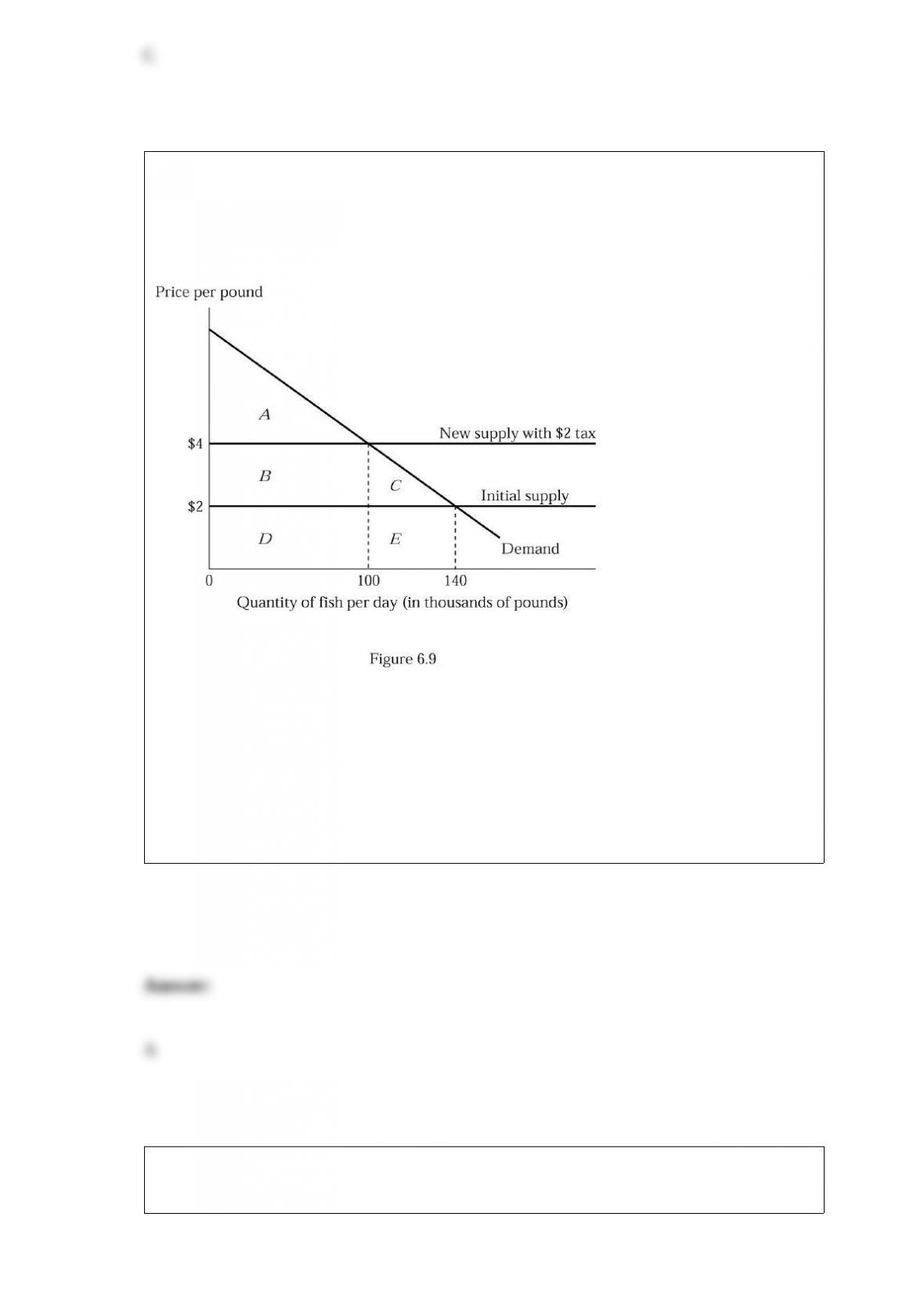
Figure 6.9 depicts a hypothetical fish market with a horizontal supply curve. Suppose
the government imposes a tax of $2 per pound of fish, and the tax is paid in legal terms
by producers. Which of the following shows the loss of consumer surplus on the fish
that are NOT consumed because of the tax?
A) Triangle C
B) Rectangle B + Triangle C
C) Triangle C + Rectangle E
D) Rectangle B + Rectangle D
Refer to Table 2.3. The principle of diminishing returns sets in with the addition of the
________ worker.
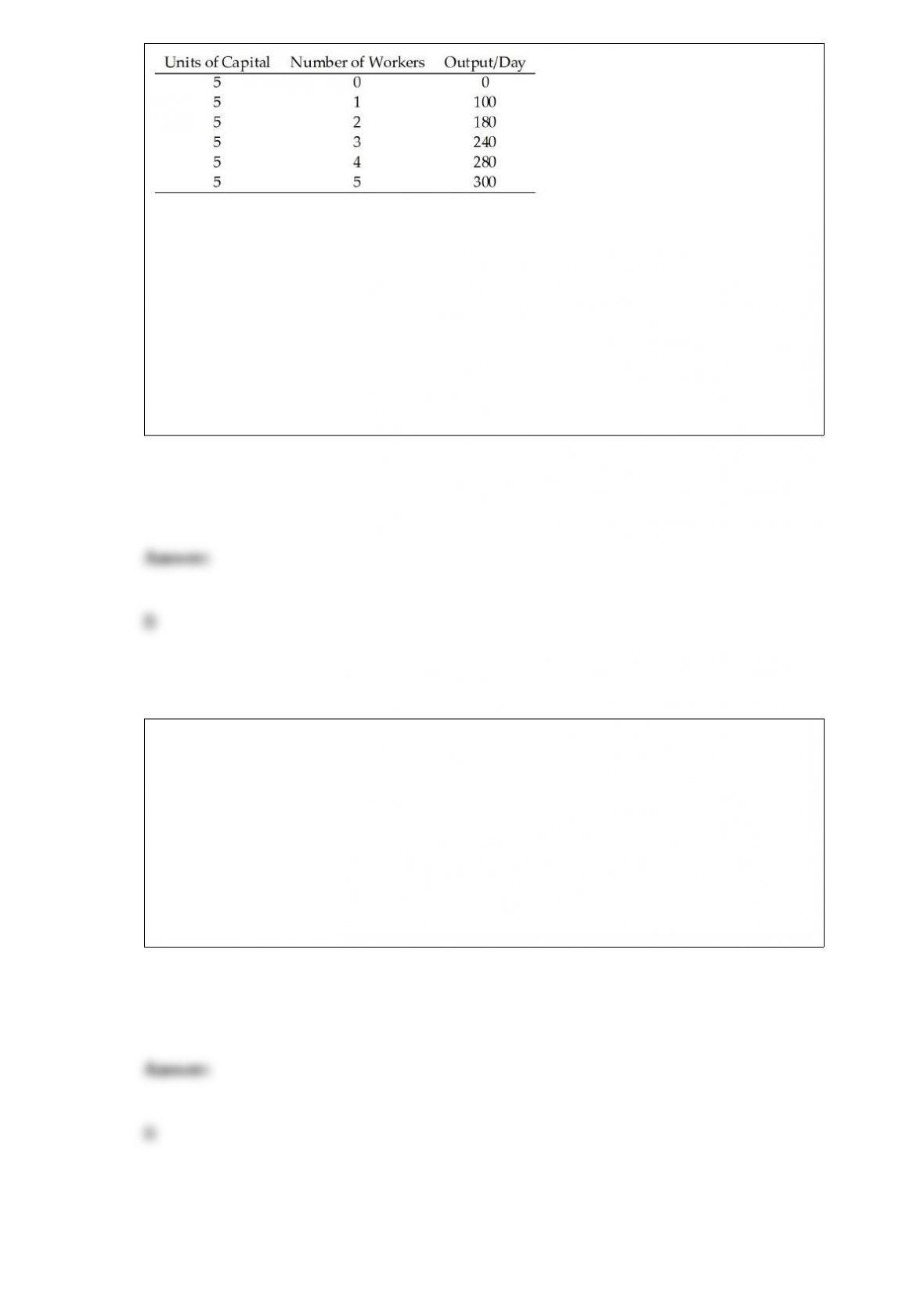
Table 2.3
A) 1st
B) 2nd
C) 3rd
D) 4th
Average variable cost equals:
A) total fixed cost plus total variable cost.
B) average total cost minus average fixed cost.
C) average total cost plus average fixed cost.
D) total cost minus average cost.

Suppose buyers in the used car market are willing to pay $3,500 for a plum
(high-quality) used car and $1,500 for a lemon (low-quality) used car. If buyers believe
that 30% of the used cars on the market are lemons (low quality), what would they be
willing to pay for a used car?
A) $2,000
B) $2,500
C) $2,900
D) $3,500
Suppose that the current price in a market for Pizza is $9. At that price, the quantity
demanded is 519 and the quantity supplied is 400. In this market, we would expect that:
A) the price of pizzas would increase.
B) the price of pizzas would decrease.
C) buyers would want to buy more pizza in the future.
D) sellers would want to sell fewer pizzas in the future.
Refer to Figure 12.3. The decision tree shows the payoffs for two firms based on the
strategies they choose. If they agree to collude and hold prices at $10, and both stand by
the agreement, each will earn profits of $5 million. If one firm cheats and the other does
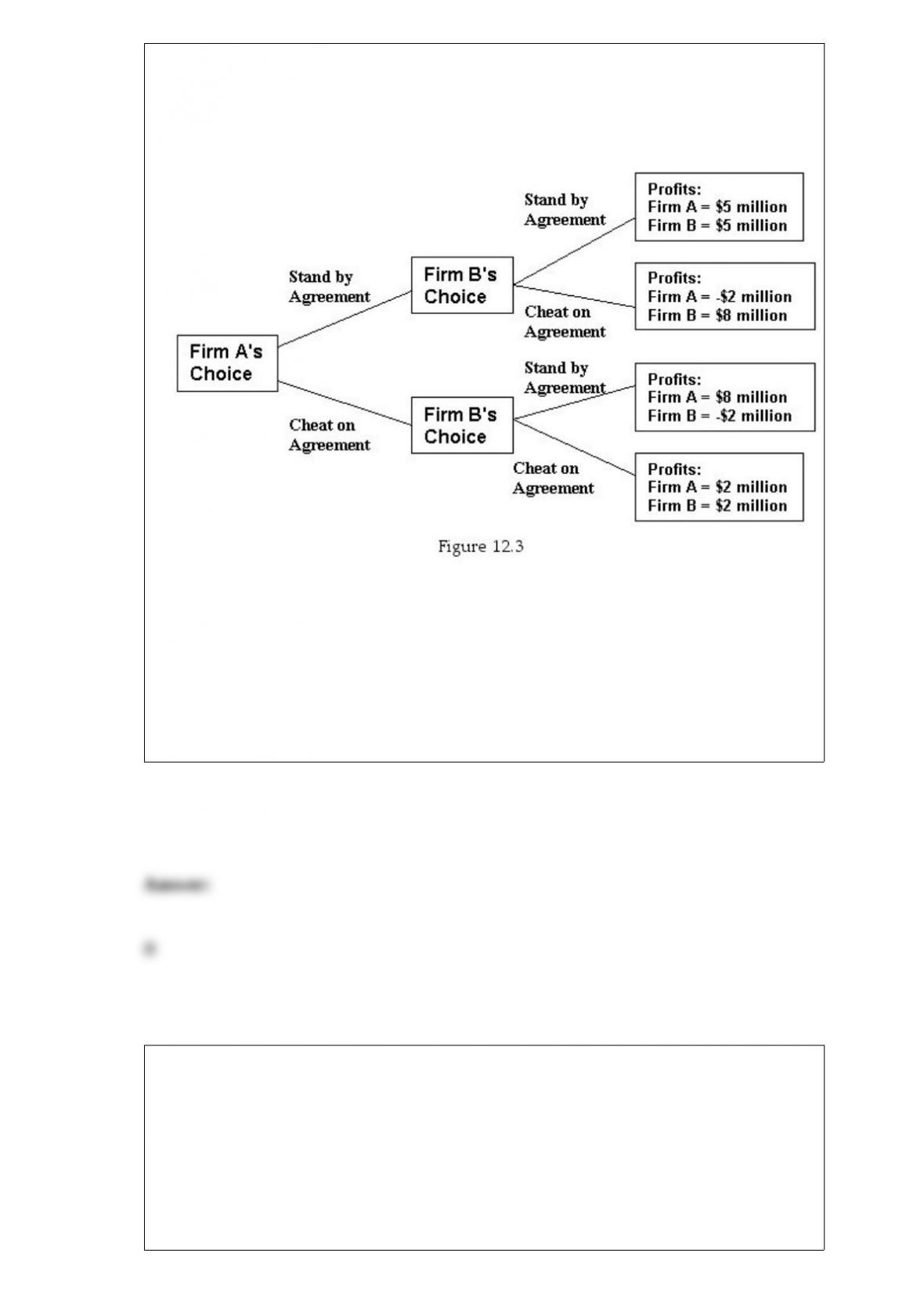
not, the firm that cheats will earn profits of $8 million and the other firm will have
losses of $2 million. If they both cheat and cut prices, they will each earn profits of only
$2 million. If both firms follow their dominant strategies, Firm B’s profits will be:
A) -$2 million.
B) $ 2 million.
C) $5 million.
D) $ 8 million.
If a variable is 100 and then decreases to 60, then using the initial value approach its
percentage decline is:
A) -40 percent.
B) 160 percent.
C) 40 percent.

D) 50 percent.
Compare a direct pollution tax on automobile travel with a tax on gasoline. The
gasoline tax is:
A) less effective than a direct pollution tax.
B) more effective than a direct pollution tax.
C) just as effective as a direct pollution tax.
D) either more or less effective than a direct pollution tax depending on enforcement
levels.
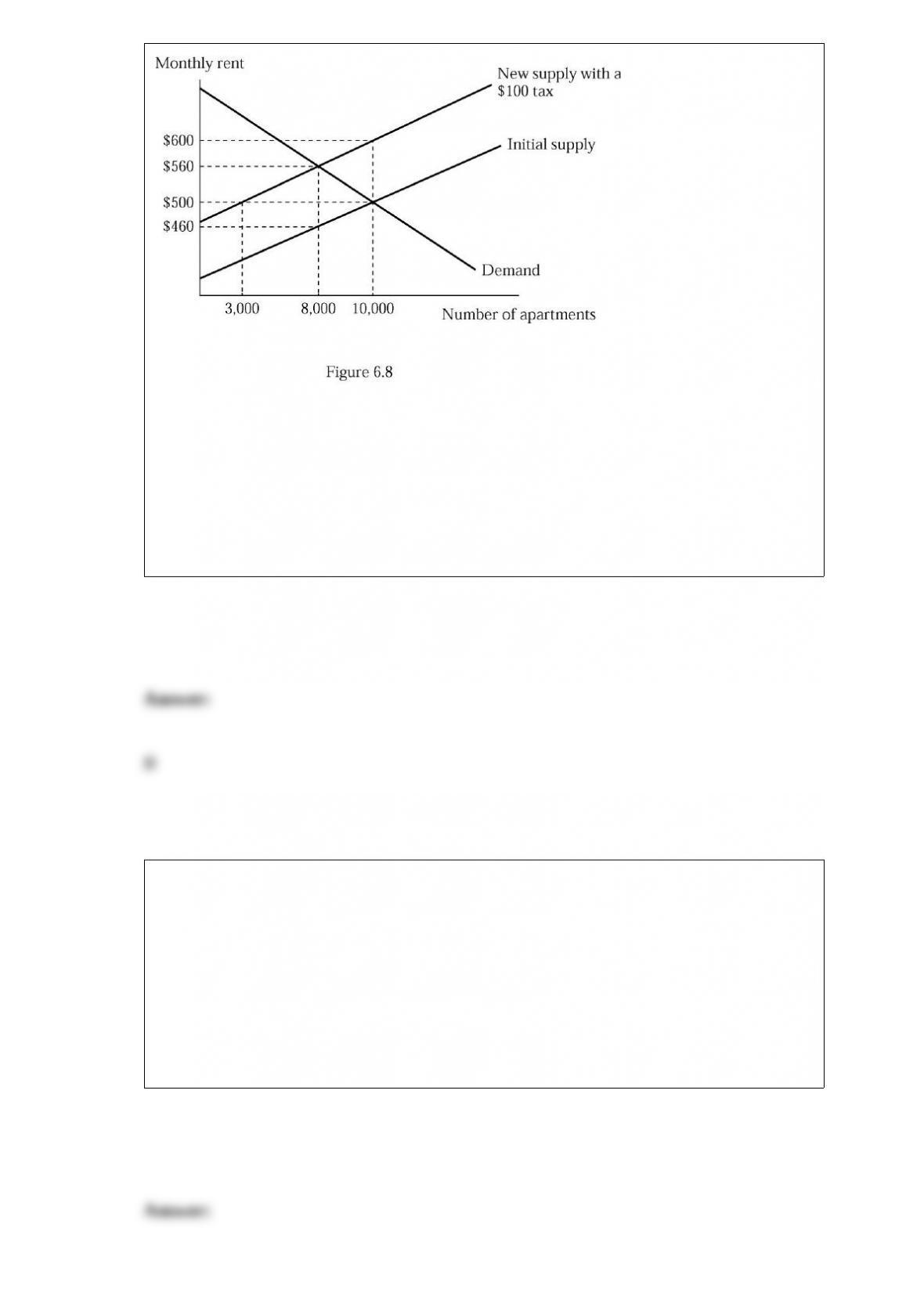
Refer to Figure 6.8. If your city imposes a tax of $100 per apartment, the tax would
incur the deadweight loss of:
A) $48,000.
B) $100,000.
C) $520,000.
D) $560,000.
An example of an implicit cost is:
A) the wages paid to workers.
B) the interest on business loans.
C) the imputed rent on a store owned by the firm.
D) the materials used to produce the product.

If the price elasticity of demand is infinite, demand is:
A) upward sloping.
B) inelastic.
C) elastic.
D) perfectly elastic.
An example of a good that is nonrival in consumption is:
A) a campsite at Yellowstone National Park.
B) a ticket to an Omnimax movie at the Smithsonian.
C) the Lincoln Memorial in Washington, D.C.
D) All of the above are nonrival in consumption.
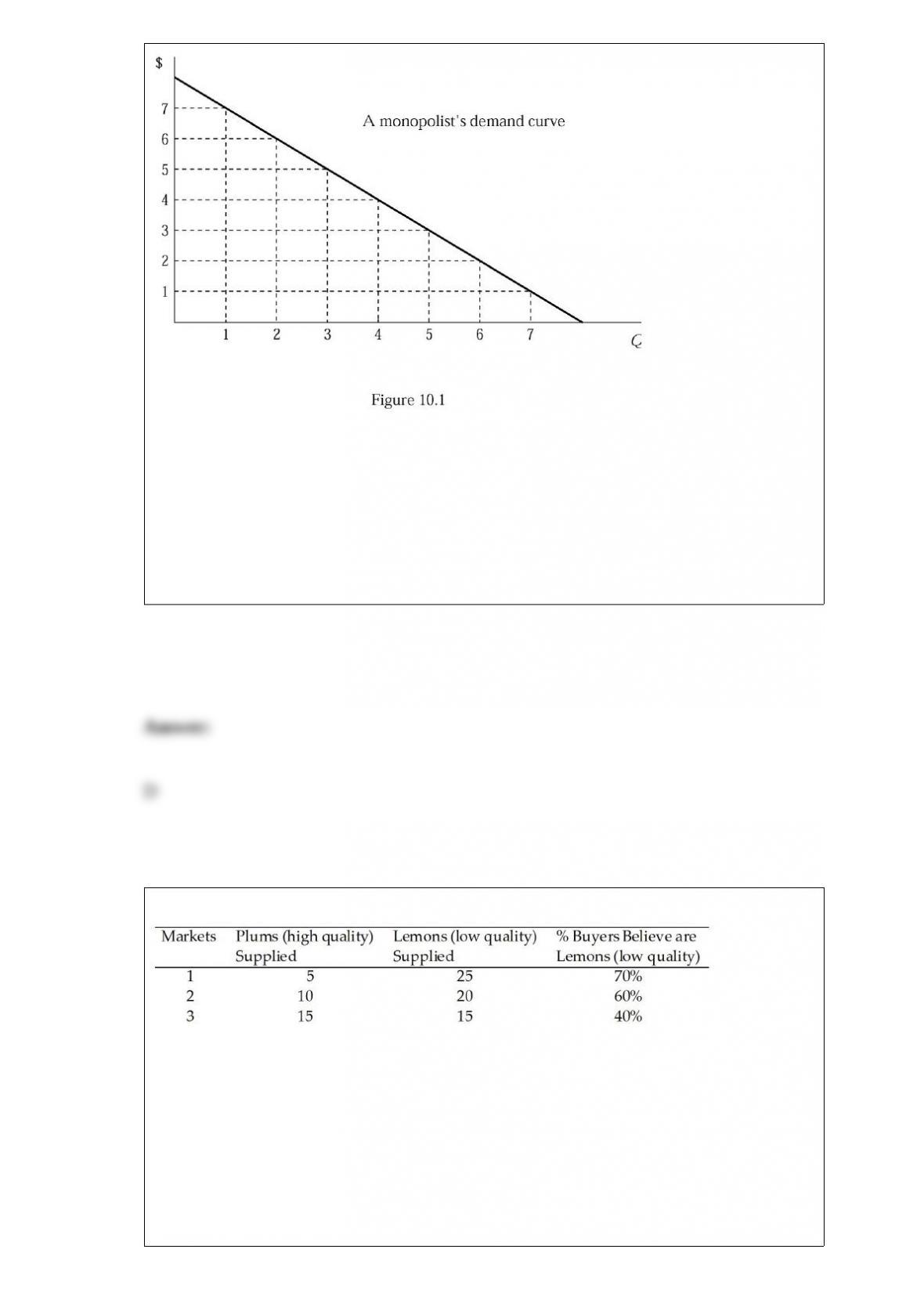
Figure 10.1 shows a monopolist’s demand curve. If the monopolist increases output
from four to five units, what is its marginal revenue?
A) $16
B) $15
C) $3
D) -$1
In Table 14.3, Market 2 would be in equilibrium if buyers believed plums account for:
Table 14.3
A) about 16.67% of the market.
B) about 33.33% of the market.
C) about 66.67% of the market.
D) about 88.89% of the market.
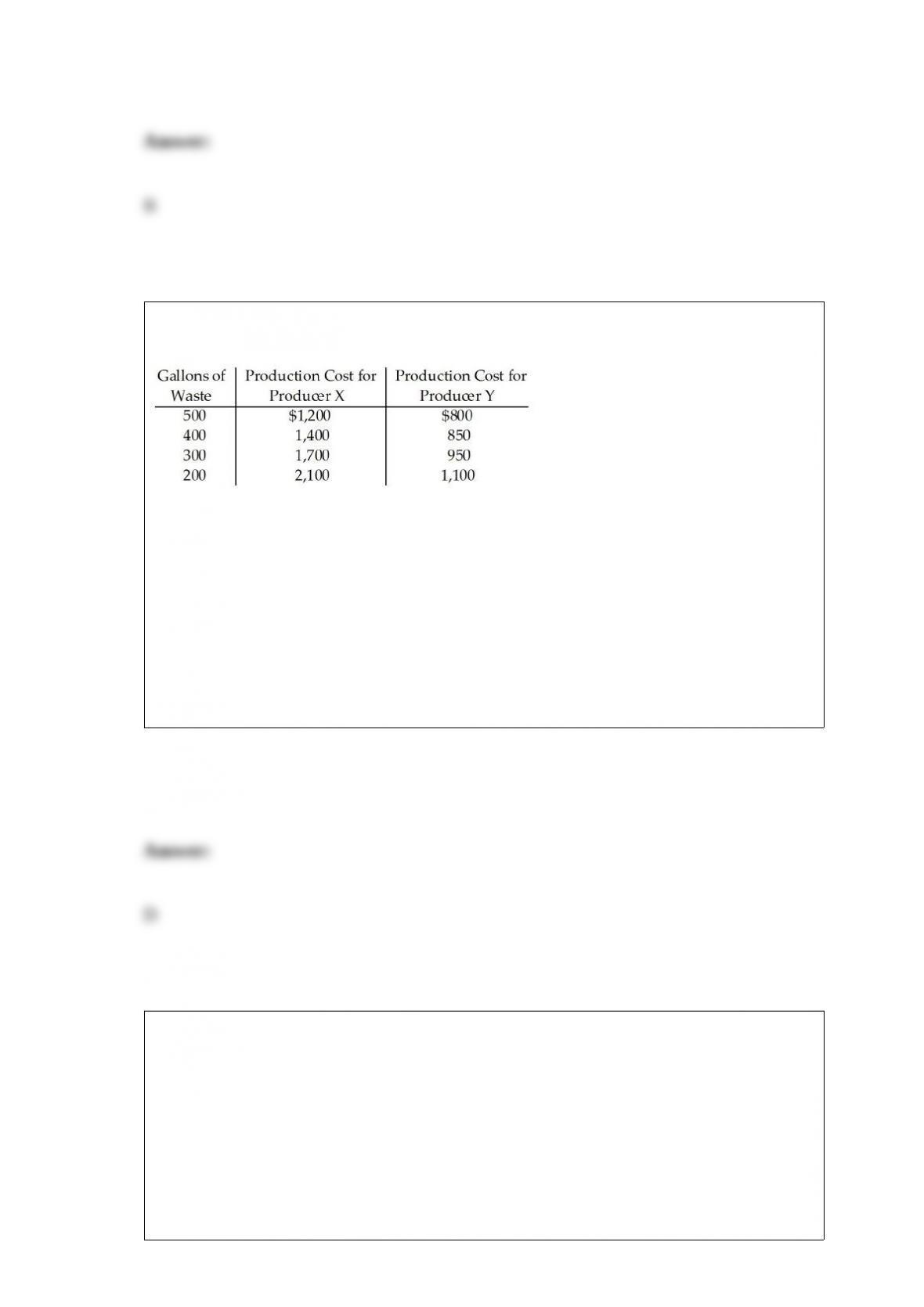
Producers X and Y dump waste into a local river. Table 16.1 shows the production costs
each firm faces at different levels of waste. The marginal cost of reducing waste:
Table 16.1
A) is equal for both producers.
B) is higher for Producer Y.
C) falls as the level of waste dumped falls.
D) is higher for Producer X.
Assume that there is a single firm producing toilet paper and the firm specific demand
curve is the same as the market demand curve. If a second firm that also produces toilet
paper enters the market what will happen to the firm-specific demand curve of the
original firm?
A) There is a movement up along the demand curve.
B) There is a movement down along the demand curve.

C) shifts to the right
D) shifts to the left
One difference between the short run and the long run is that perfectly competitive
firms:
A) always earn positive economic profit in the short run, but never in the long run.
B) can earn positive, negative, or zero economic profit in the short run, but will earn
zero economic profit in the long run.
C) earn zero economic profit in the short run, but will earn positive economic profit in
the long run.
D) always earn more economic profit in the long run.
In all four types of markets a firm’ s main objective is to:
A) maximize revenue.
B) maximize output.
C) maximize economic profit.
D) minimize fixed cost.
A public good is a good that:
A) is excludable.
B) is rival.
C) is free.
D) is available regardless of willingness to pay.
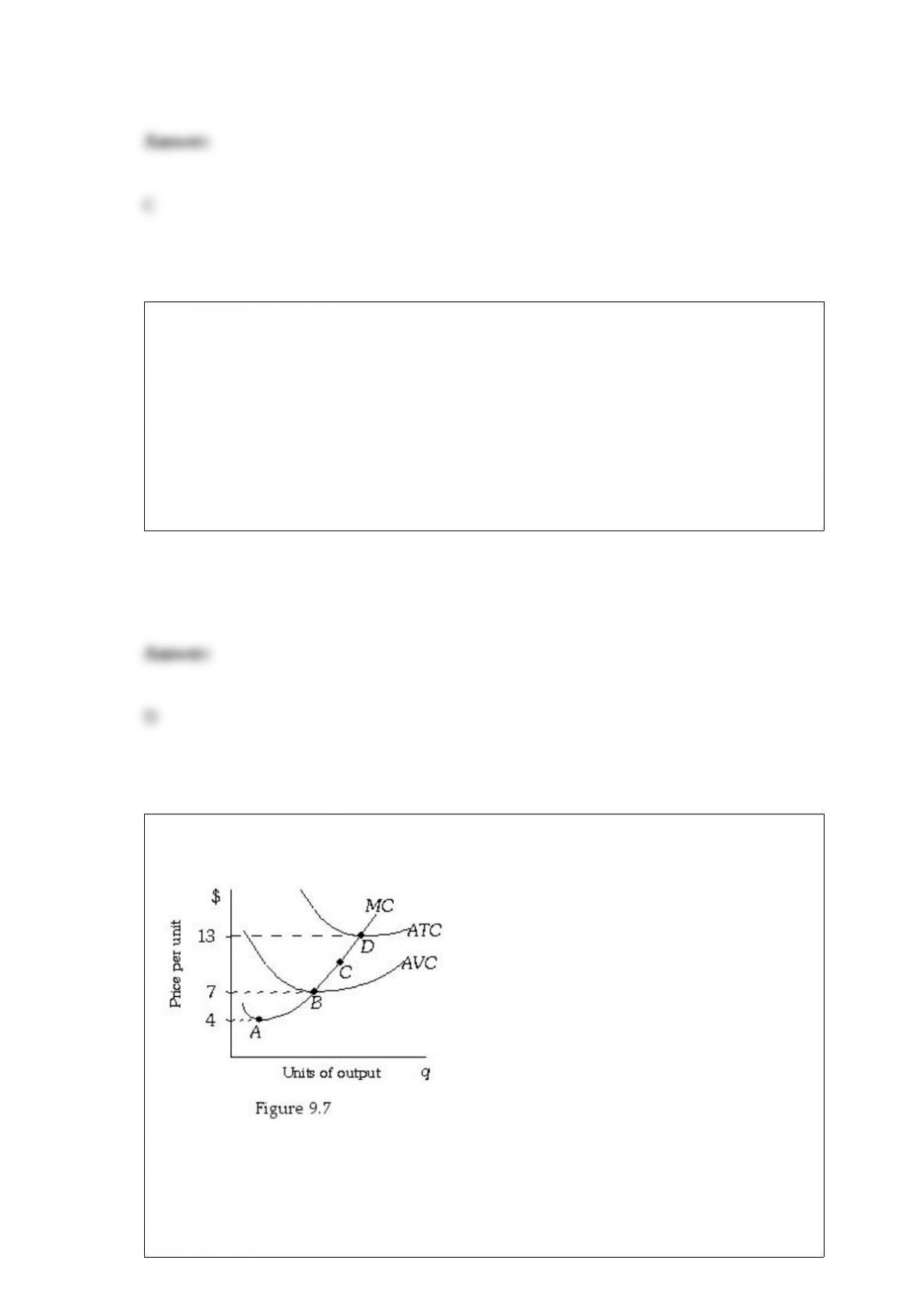
Refer to Figure 9.7. This firm will earn an economic profit of zero if the price is:
A) $0.
B) $4.

C) $7.
D) $13.
Activities that provide external benefits:
A) should be taxed so that the recipients of the benefits pay for them; otherwise
inefficiency will result.
B) may be subsidized by the government to give decision makers an incentive to
consider increasing their consumption.
C) will not result in inefficiency if those benefits are not considered.
D) all of the above
The social cost of production is:
A) the private cost of production plus the external cost generated by production.
B) the external cost generated by production.
C) the private cost of production that is greater than the benefit of production.
D) the external cost of production that is greater than the benefit of production.

Which of the following is NOT an example of moral hazard?
A) People take poor care of their health because they have health insurance.
B) People drive recklessly because they have medical insurance.
C) People don’t lock their doors because they have theft insurance.
D) All of the above are examples of moral hazard.
The ability of one person or nation to produce a good at a lower absolute cost than
another is called a(n):
A) market advantage.
B) comparative advantage.
C) absolute advantage.
D) specialization advantage.
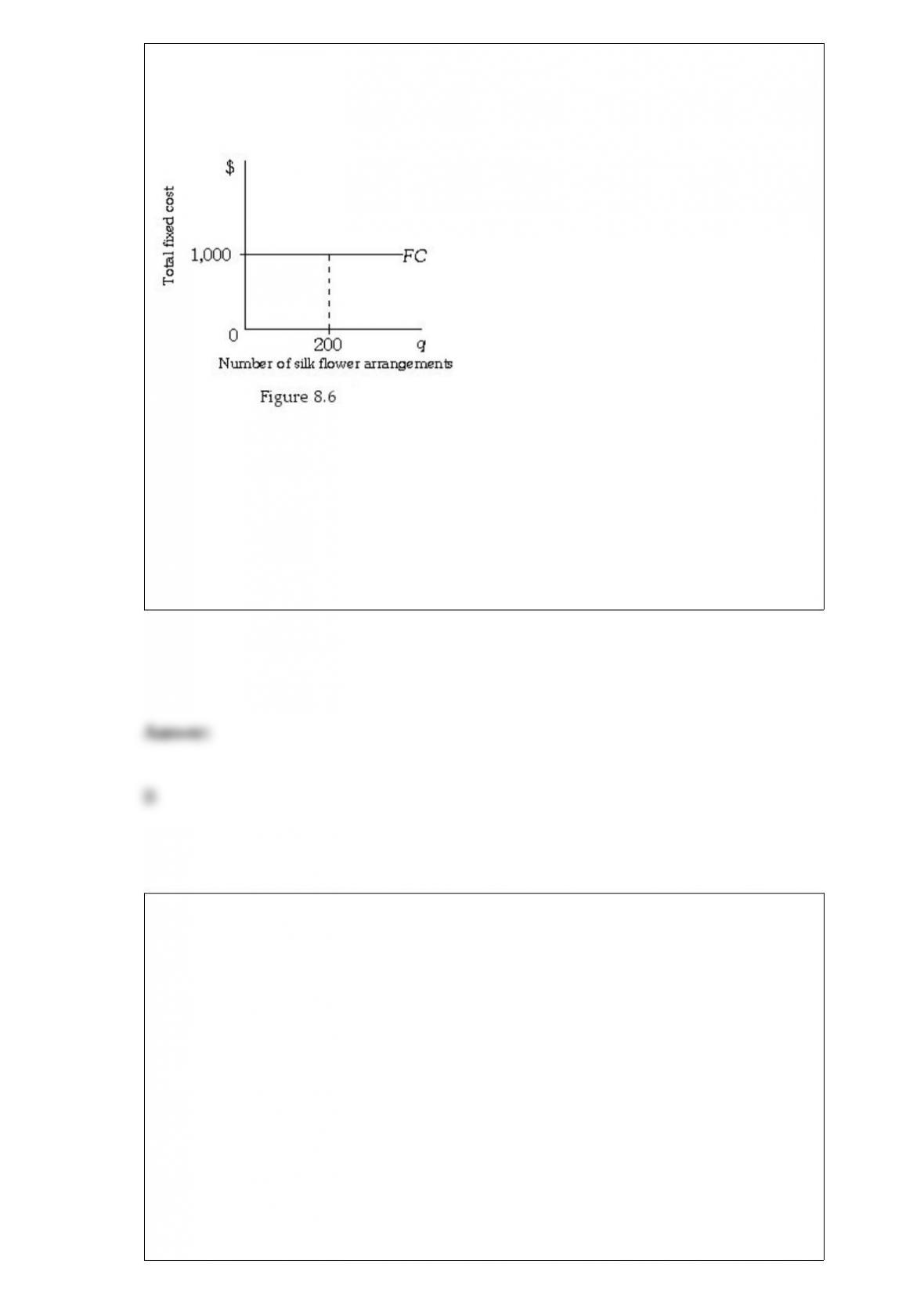
Refer to Figure 8.6. The total fixed costs for Cyndy’s Floral Arrangements are $1,000. If
Cyndy’s Floral Arrangements produces 200 silk flower arrangements, the average fixed
costs are:
A) $.20.
B) $5.
C) $20.
D) $200.
Additional Application
Do implicit costs affect decision-making in the real world? For the first time nationwide
the number of golf courses closing in a year will exceed the number that is opening.
This can be explained by a number of reasons. One is the cost of insuring golf courses,
which has increased in many areas. Also the number of rounds played has decreased 4%
in the last six years. But another explanation is the opportunity cost of owning a golf
course. As property prices have increased, the land that golf courses are on is worth a
great deal more as housing developments. The owners must continually decide whether
the return from operating a golf course is greater than, or at least equal to, the return the
owners could get if the land was developed for another use. Furthermore, one
explanation for the decline in rounds being played is attributed to the time it takes to
play golf. As the opportunity cost of a golfer’s time increases, the fewer hours he/she is
willing to spend on the golf course. Implicit costs are real and play a role in

decision-making of both supply and demand.
“Blues on the Green: Why Golf is in Decline,” The Economist, October 14, 2006, p. 70.
If the owners of a golf course only include their explicit costs when they calculate their
annual profit:
A) their economic profit will be greater than their accounting profit.
B) their economic profit will be equal to their accounting profit.
C) their economic profit will be less than their accounting profit.
D) none of the above will be true.