1)
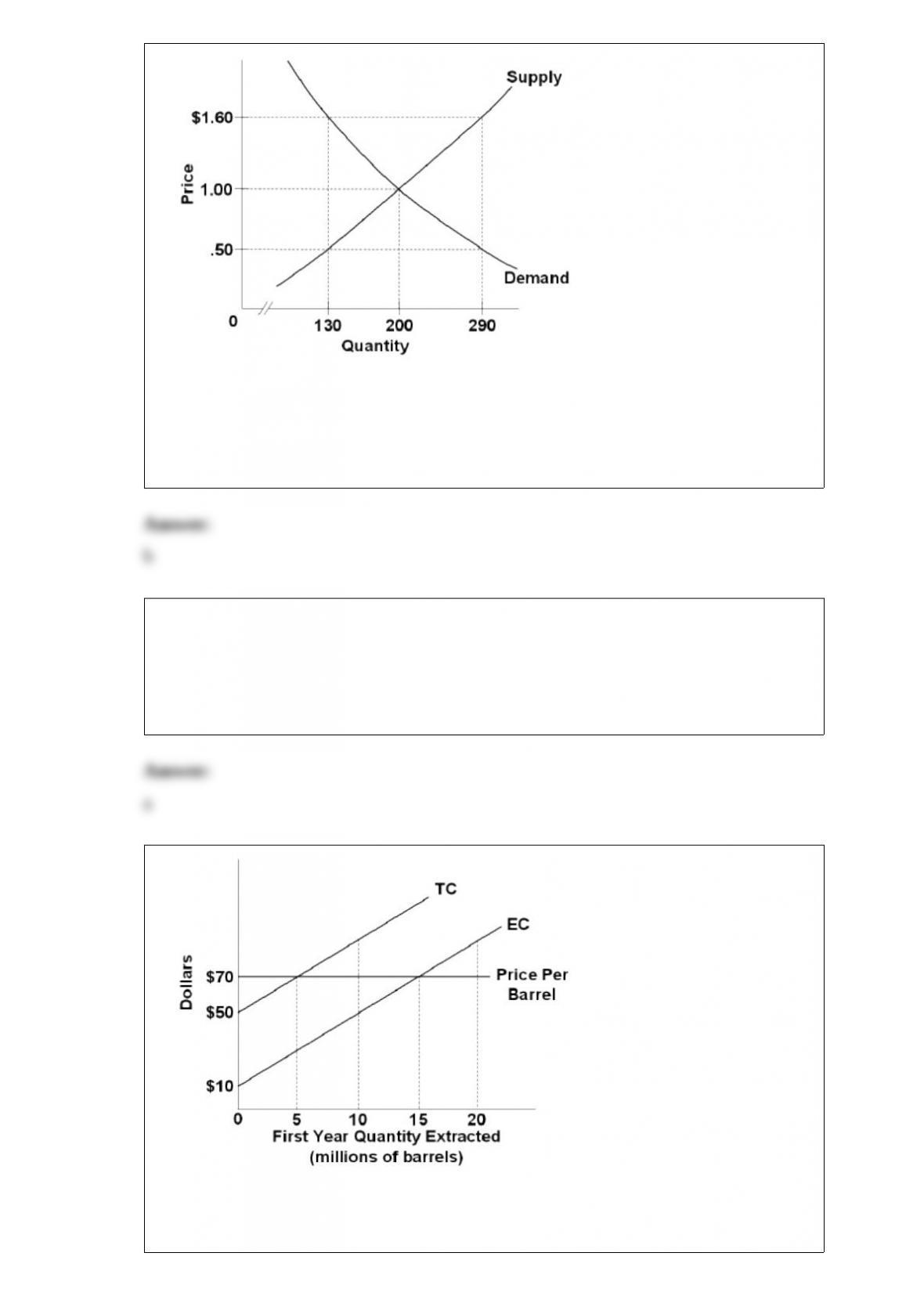
refer to the above diagram. a surplus of 160 units would be encountered if price was:
a.$1.10, that is, $1.60 minus $.50.
b.$1.60.
c.$1.00.
d.$.50.
2) (last word) the immigration acts of 1921 and 1924:
a.set annual quotas that favored immigrants from western and northern europe.
b.encouraged greater immigration from asia.
c.encouraged greater immigration from south and central america.
d.effectively blocked all immigration until 1965.
3)
Refer to the diagram above, representing Slippery Slope Oil Company. What price of
oil would make 15 million barrels the optimal quantity to extract and sell this year?
A.$50.
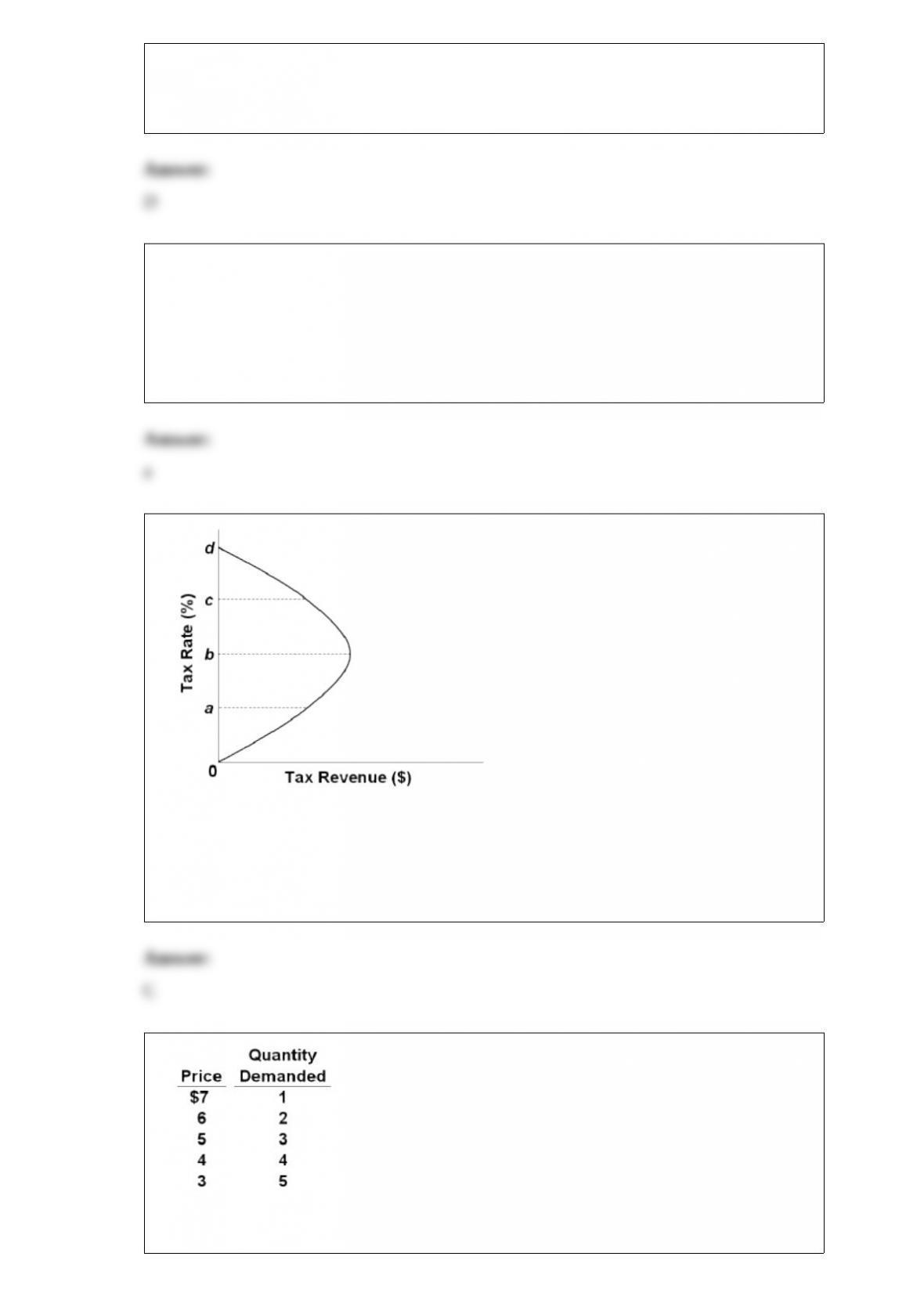
B.$70.
C.$90.
D.$110.
4) under which of the following circumstances would we observe the greatest increase
in real income?
a.nominal income falls by 2 percent, and the price level falls by 10 percent.
b.nominal income rises by 8 percent, and the price level rises by 4 percent.
c.nominal income rises by 12 percent, and the price level rises by 15 percent.
d.nominal income falls by 4 percent, and the price level rises by 6 percent.
5)
Refer to the above diagram. Supply-side economists believe that tax rates are:
A.such that an increase in tax rates will increase tax revenues.
B.at some level below b
C.at some level above b
D.at d
6)
refer to the above data. the marginal revenue obtained from selling the third unit of
output is:
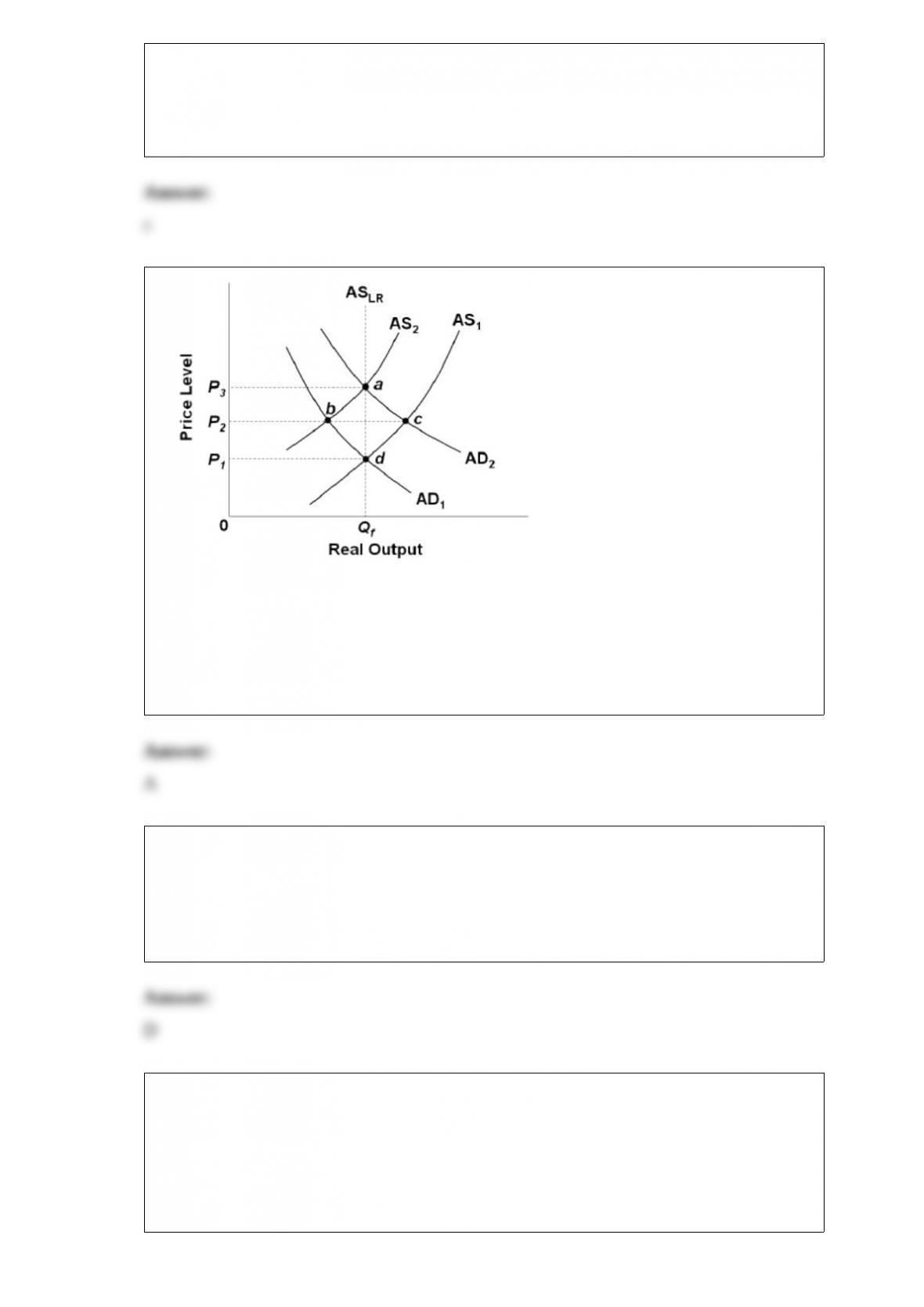
a.$6.
b.$1.
c.$3.
d.$5.
7)
Refer to the above diagram. The initial aggregate demand curve is AD1 and the initial
aggregate supply curve is AS1. Demand-pull inflation in the short run is best shown as:
A.a shift of the aggregate demand curve from AD1 to AD2.
B.a move from d to b to a.
C.a move directly from d to a.
D.a shift of the aggregate supply curve from AS1 to AS2.
8) Studies show that:
A.it is impossible to estimate the benefits of trade barriers.
B.costs and benefits of trade barriers are about equal.
C.benefits of trade barriers exceed their costs in developing nations.
D.costs of trade barriers exceed their benefits, creating an efficiency loss for society.
9) To be classified as a low-income developing country, annual per capita income in
2006 needed to be:
A.$905 or less.
B.$649 or less.
C.$3,056 or less.
D.$510 or less.
10) A $1 increase in government spending on goods and services will have a greater
impact on the equilibrium GDP than will a $1 decline in taxes because:
A.government spending is more employment-intensive than is either consumption or
investment spending.
B.government spending increases the money supply and a tax reduction does not.
C.a portion of a tax cut will be saved.
D. taxes vary directly with income.
11) The greater the elasticity of supply of and demand for a good the:
A.smaller will be the efficiency loss of an excise tax on the good.
B.more likely the good will be a public good rather than a private good.
C.larger will be the efficiency loss of an excise tax on the good.
12) The incentive function of prices:
A.indicates that price increases bring forth more of a resource.
B.is the idea that competitive markets will always clear.
C.applies to all resources.
D.only applies to land.