
Holding everything else constant, a decrease in the price of GPS systems will result in
A) an decrease in the quantity of GPS systems demanded.
B) an increase in the demand for GPS systems.
C) a decrease in the supply of GPS systems.
D) an increase in the quantity of GPS systems demanded.
An example of a transfer payment is
A) a teacher’s paycheck.
B) a paycheck for a member of the National Guard.
C) a welfare payment.
D) a purchase of a new bridge in Alaska.
An example of an intermediate good would be
A) a new car.
B) a used car.
C) the rims on a new car.
D) new rims to replace old rims on a used car.
Without technological advancement, how can a nation achieve economic growth?
A) by producing more high-value goods and fewer low-value goods
B) through an increase in supplies of factors of production
C) by producing more low-value goods and fewer high-value goods
D) by decreasing the size of the labor force
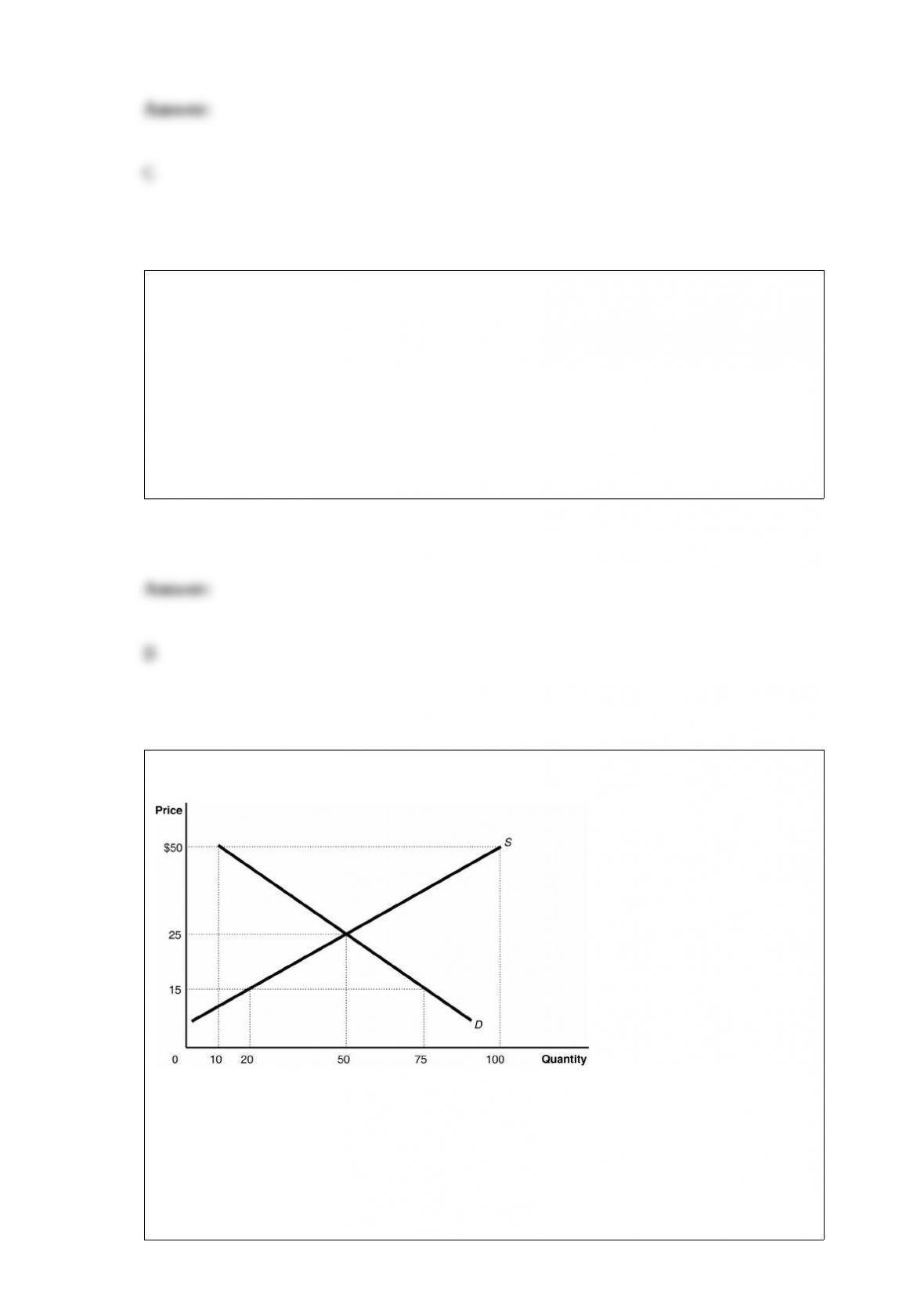
Figure 3-6
Refer to Figure 3-6. The figure above represents the market for coffee grinders.
Assume that the price of coffee grinders is $50. At this price:
A) the quantity supplied exceeds the quantity supplied by 100. The price will eventually
fall to $25 where quantity demanded will equal quantity supplied.
B) the supply exceeds the demand by 90. Some producers will have an incentive to
offer to sell coffee grinders at a lower price.
C) there is a surplus equal to 90 coffee grinders that will be eliminated when the price
falls to $25.
D) there is a surplus equal to 90 coffee grinders and the price of coffee grinders will fall
until demand is equal to supply.
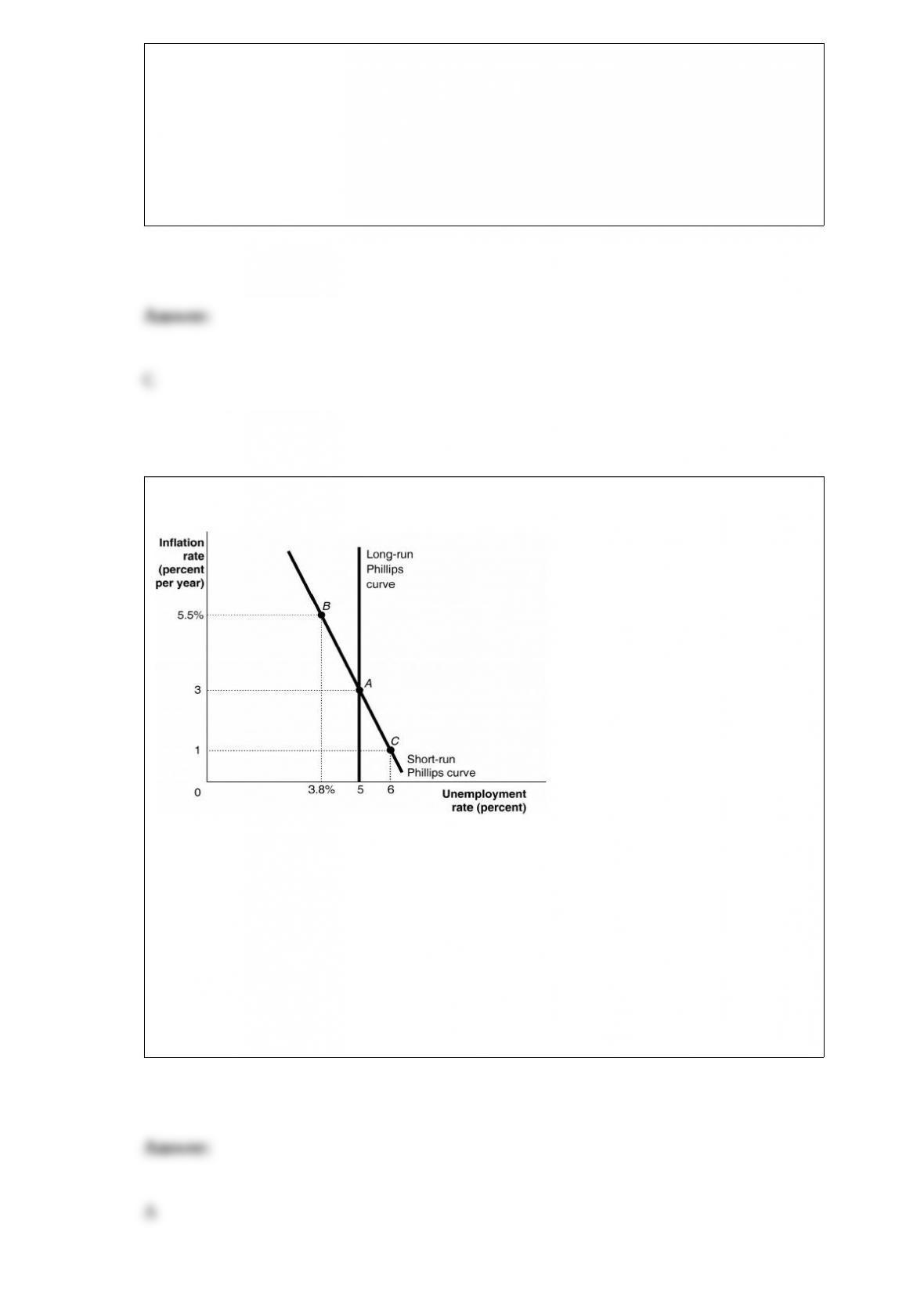
Figure 17-2
Refer to Figure 17-2. The nonaccelerating inflation rate of unemployment, or NAIRU,
is associated with which point rate in the figure above?
A) A
B) B
C) C
D) all of the above

Foreign direct investment occurs when a Chinese corporation
A) purchases stock issued in China.
B) opens a new Chinese factory.
C) purchases 1,000 shares of stock issued by an American company.
D) opens a new factory in France.
The base period for CPI calculations is generally 1982-84. In 2005, 50% of households
accessed the Internet through a broadband connection that would not have existed in the
1980s. This potential for bias in the CPI is referred to as ________ bias and results in
________.
A) outlet; the CPI underestimating the true change in the cost of living
B) new product; the CPI overestimating the true change in the cost of living
C) outlet; the CPI overestimating the true change in the cost of living
D) net product; the CPI underestimating the true change in the cost of living
Figure 2-13
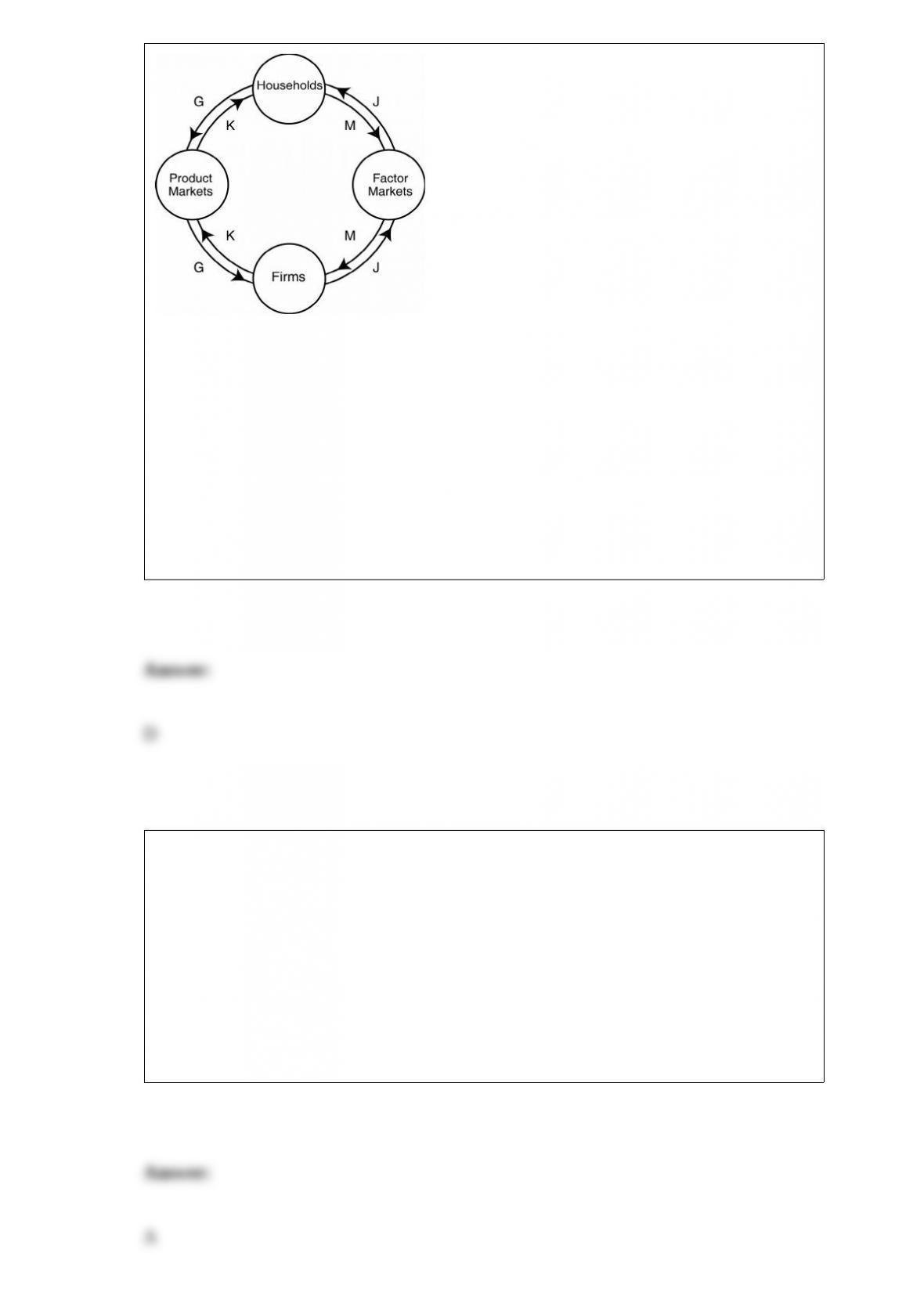
Refer to Figure 2-13. Which two arrows in the diagram depict the following
transaction: Stanley purchases the novel, “Night of Sorrows” for his summer reading
pleasure.
A) J and M
B) J and G
C) K and M
D) K and G
Mrs. Lovejoy decides to invest in companies which she believes can produce its goods
at the lowest possible cost. Mrs. Lovejoy is investing in companies that are
A) productively efficient.
B) allocatively efficient.
C) both productively and allocatively efficient.
D) always going to be profitable.

If you want to earn a real interest rate of 3% on money you lend, and you expect that
inflation will be 2%, what nominal rate of interest will you charge?
A) 1%
B) 5%
C) 6%
D) 9%
Suppose there are two cities that have rent controlled apartments. In one city (Albany)
all apartments are subject to rent control; in the other city (Halftrack) one-half of the
apartments are rent controlled. Which of the following is most likely to be true?
A) It will be difficult to find a rent-controlled apartment in Albany or Halftrack; rents
for the Halftrack apartments not subject to controls will be higher than they would be
without rent control.
B) It will be easier to find an affordable apartment in Albany since rents will be low
across the board.
C) It will be easier to find an affordable apartment in Halftrack, either a rent-controlled
apartment or another apartment, at a reasonable price.
D) It will be impossible to rent an apartment in either city at any price.
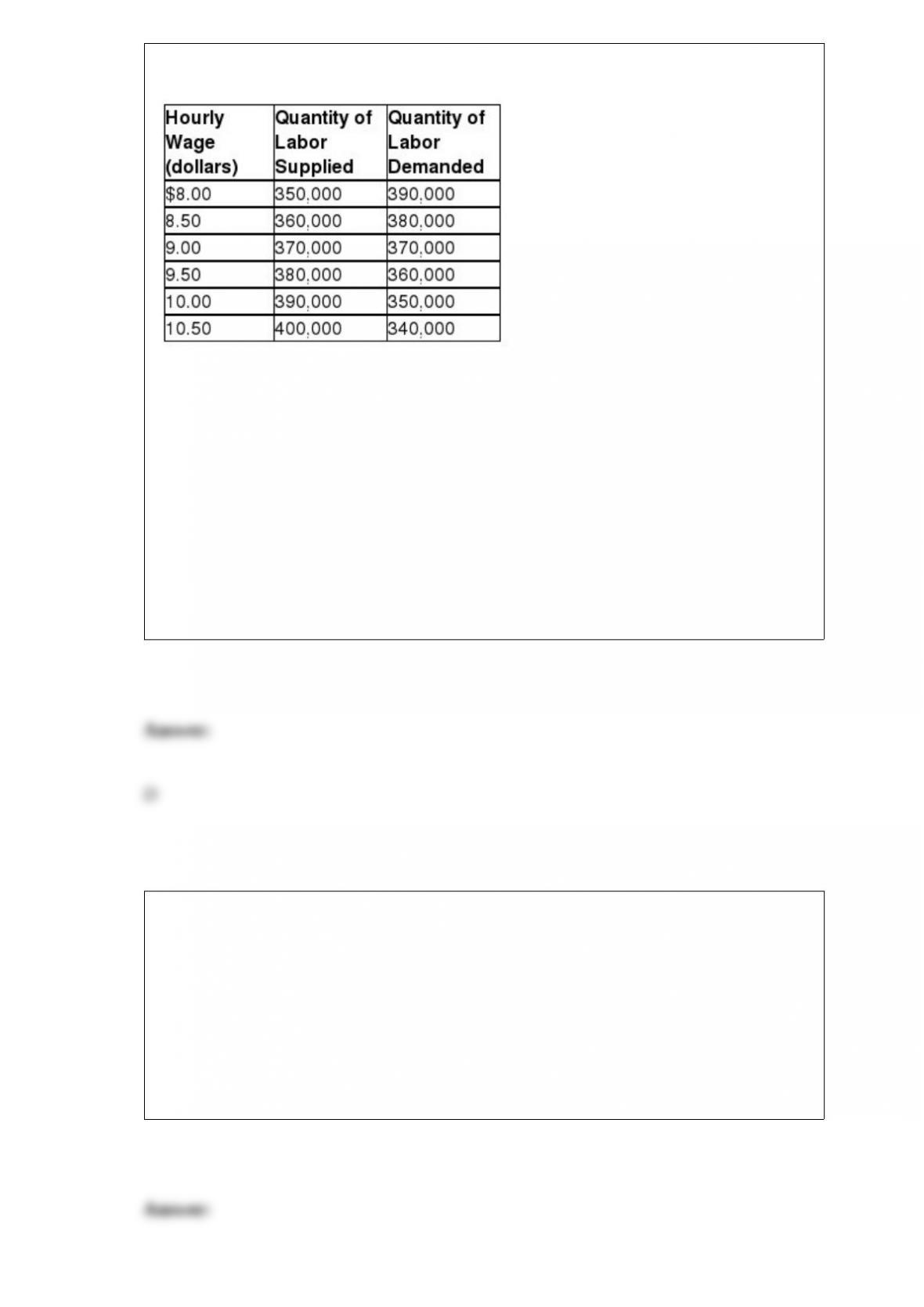
Table 4-4
Table 4-4 shows the demand and supply schedules for the low-skilled labor market in
the city of Westover.
Refer to Table 4-4. If a minimum wage of $9.50 is mandated there will be a
A) shortage of 10,000 units of labor.
B) surplus of 10,000 units of labor.
C) shortage of 20,000 units of labor.
D) surplus of 20,000 units of labor.
Which of the following would increase public saving?
A) an increase in taxes
B) an increase in transfers
C) an increase in government purchases
D) All of the above would increase public saving.

In April, market analysts predict that the price of titanium will fall in May. What
happens in the titanium market in April, holding everything else constant?
A) The supply curve shifts to the right.
B) The supply curve shifts to the left.
C) The quantity demanded and the quantity supplied of titanium increase.
D) The demand curve shifts to the right.
Article Summary
Concerned about slow economic growth, the Fed announced in September 2013 that it
would postpone winding down its $85 billion a month bond purchasing program which
has been a key component of its monetary stimulus package. Fed Chairman Ben
Bernanke would not commit to a timeline for reducing the bond purchases, stating that
the program was “not on a preset course.” The Fed’s forecasts of economic growth have
been lowered for 2013 and 2014, and the Fed does not expect to raise interest rates until
2015. Since late 2008, the Fed has held its benchmark interest rate near zero, while its
balance sheet has tripled to more than $3.6 trillion. The Fed also stated that so long as
inflation did not become a threat, it would not raise interest rates until the
unemployment rate dropped to 6.5 percent. At the time of the announcement, the
unemployment rate was 7.3 percent.
Source: Pedro da Costa and Alister Bull, “Fed Surprises, sticks to stimulus as it cuts
growth outlook,” Reuters, September 18, 2013.
Refer to the Article Summary. When the Fed announced it did not expect to raise its
benchmark interest rate until 2015, it was referring to the
A) prime rate.
B) federal funds rate.
C) long-term real rate of interest.

D) required reserve rate.
According to Joseph Schumpeter, the theory of creative destruction describes a process
by which
A) some new products unleash a gale of destruction that drive other new products out of
the market.
B) new products unleash a gale of destruction that drives old products out of the
market.
C) new products are created by the destruction of capital.
D) the creation of new products never involves the destruction of old products.
Marco goes to the pet store to buy a dozen Koi fish for his new Koi pond. He is willing
to pay $200 for the dozen fish, but buys them for a total of $140. Marco’s consumer
surplus from the purchase is
A) $5.
B) $60.
C) $140.
D) $200.
The central role of ________ in a market economy is bringing together savers and
borrowers.
A) corporations
B) sole proprietors
C) financial intermediaries
D) stock exchanges
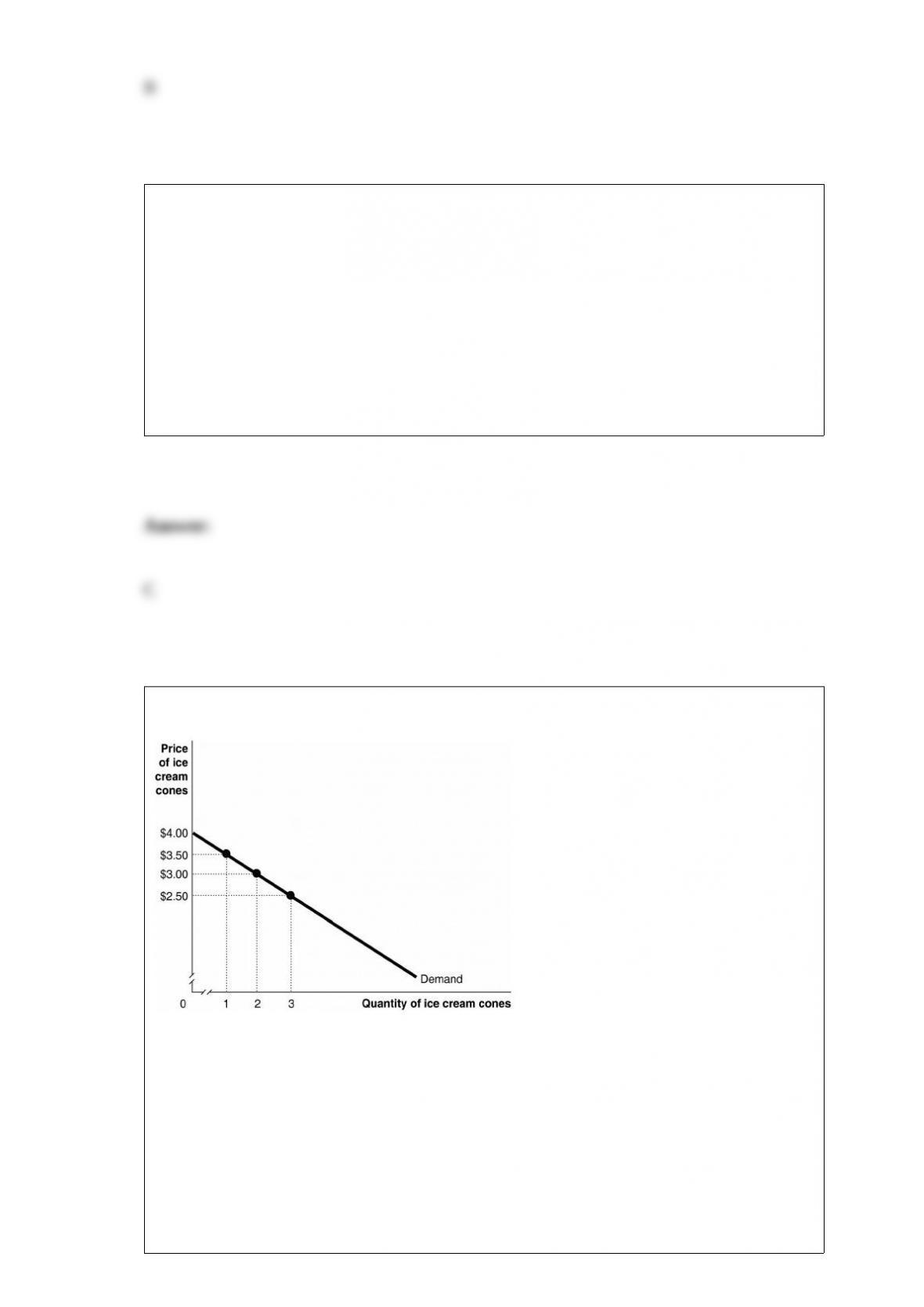
Figure 4-1
Figure 4-1 shows Kendra’s demand curve for ice-cream cones.
Refer to Figure 4-1. Kendra’s marginal benefit from consuming the second ice cream
cone is
A) $6.50
B) $6.00
C) $3.00

D) $2.25