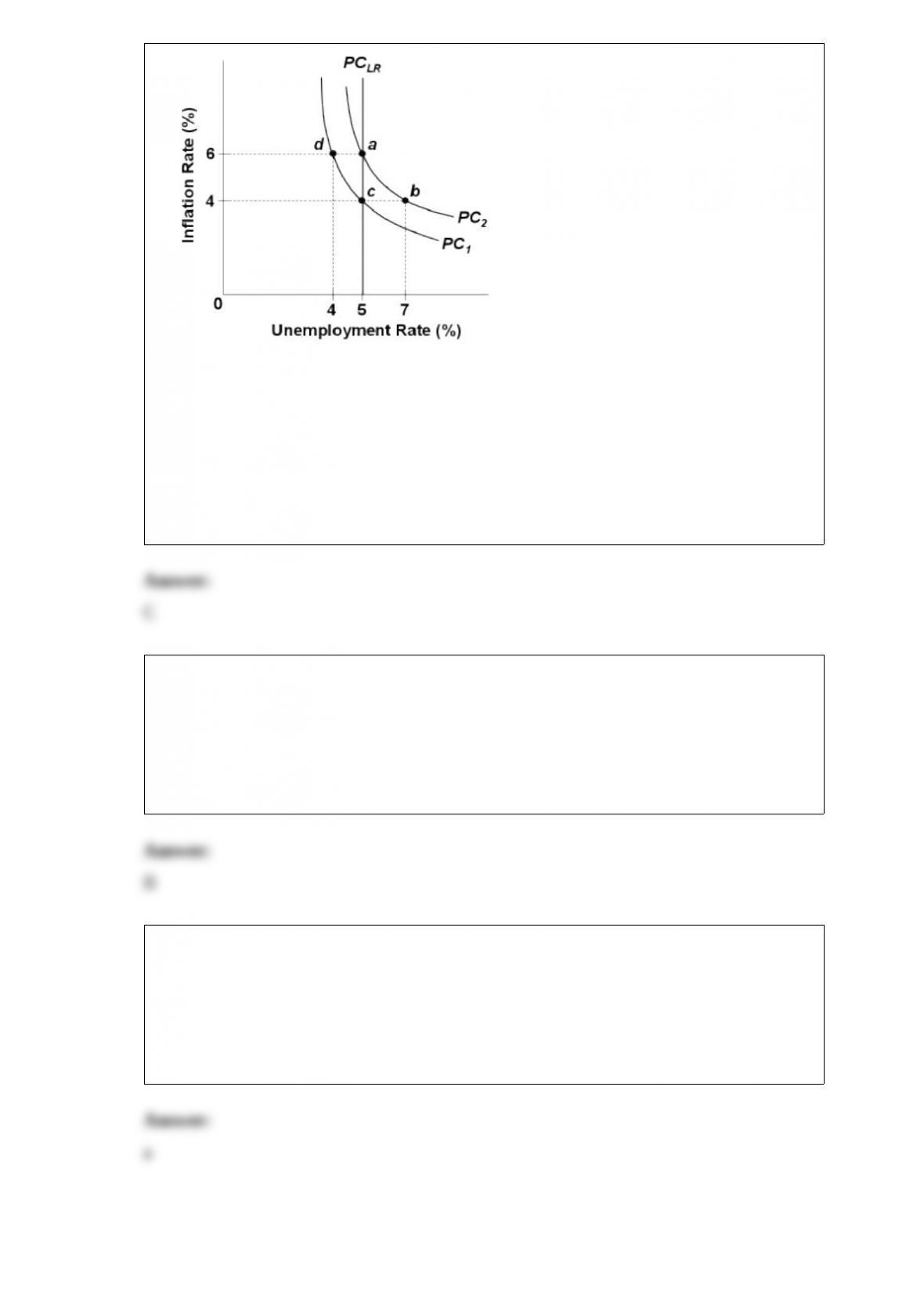
1)
Refer to the above diagram. Assume that the natural rate of unemployment is 5 percent
and that the economy is initially operating at point a where the expected and actual rates
of inflation are each 6 percent. If the actual rate of inflation unexpectedly falls from 6
percent to 4 percent, then the unemployment rate will:
A.temporarily fall from 5 percent to 4 percent.
B.permanently fall from 5 percent to 4 percent.
C.temporarily rise from 5 percent to 7 percent.
D.permanently rise from 5 percent to 7 percent.
2) The greater the area between the Lorenz curve and the diagonal in the Lorenz Curve
diagram, the:
A.smaller is the Gini ratio and the greater is the degree of income inequality.
B.larger is the Gini ratio and the greater is the degree of income inequality.
C.smaller is the Gini ratio and the greater is the percentage of the population in poverty.
D.larger is the Gini ratio and the greater is the percentage of the population in poverty.
3) under what circumstances do rates of economic growth understate the growth of
economic well-being?
a.economic growth has occurred because of increased length of the workweek
b.product quality has improved
c.air quality has declined as real gdp has increased
d.population has grown faster than real output.
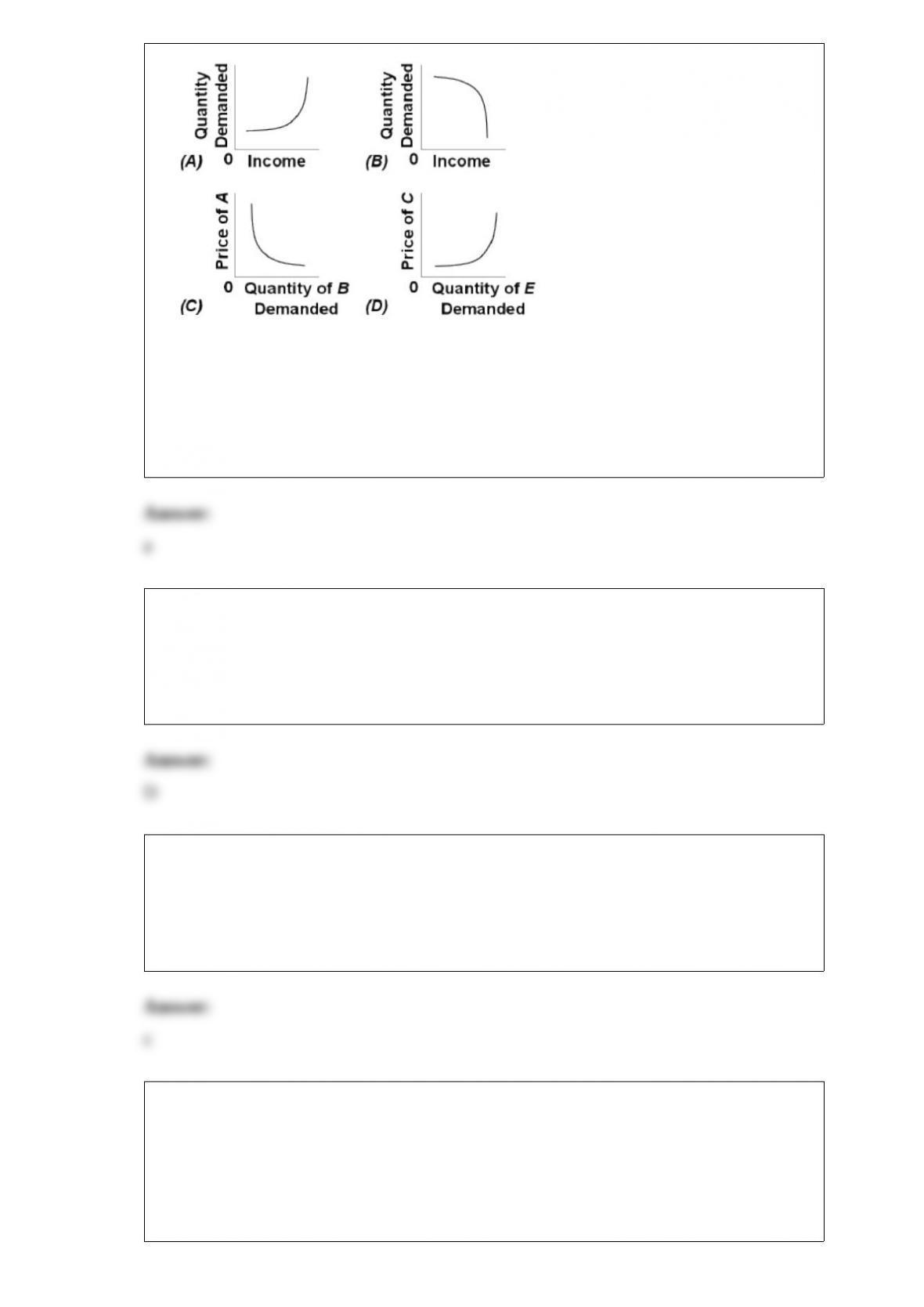
4)
refer to the above diagrams. in which case would the coefficient of income elasticity be
positive?
a.a
b.b
c.c
d.d
5) A firm will find it profitable to hire workers up to the point at which their:
A.marginal resource cost equals their wage rate.
B.wage rate equals product price.
C.MP is equal to their MRP.
D.marginal resource cost is equal to their MRP.
6) which of the following is a microeconomic statement?
a.the real domestic output increased by 2.5 percent last year.
b.unemployment was 6.8 percent of the labor force last year.
c.the price of personal computers declined last year.
d.the general price level increased by 4 percent last year.
7) nonexcludability is the idea that:
a.government actions cannot remedy market failure.
b.the presence of external costs and benefits produces a misallocation of resources.
c.individuals cannot receive benefits from a good without paying for it.
d.individuals who are unable or unwilling to pay for a good cannot be excluded from
the benefits provided by that product.

8) appreciation of the mexican peso will:
a.make mexico’s exports and imports both more expensive.
b.make mexico’s exports more expensive and its imports less expensive.
c.make mexico’s exports less expensive and its imports more expensive.
d.increase mexican exports.
9) the invisible hand promotes society’s interests because:
a.individuals pursuing their self-interest will try to produce goods and services that
people in society want and are willing to purchase.
b.individuals will produce goods for others out of concern for their fellow human
beings.
c.it makes sure that everyone wins from competition in the market.
d.government regulation pushes business into producing the right mix of goods and
services.
10) Commercial banks and thrifts usually hold only small amounts of excess reserves
because:
A.the presence of such reserves tends to boost interest rates and reduce investment.
B.the Fed constantly uses open market operations to eliminate excess reserves.
C.the Fed does not pay interest on reserves.
D.the Fed does not want commercial banks and thrifts to be too liquid.
11) Which of the following combinations is plausible, as it relates to a nation’s balance
of payments?
A.current account = $+40 billion; capital account = $+20 billion; financial account =
$-50 billion.
B.current account = $-50 billion; capital account = $+20 billion; financial account = $
+30 billion.
C.current account = $+10 billion; capital account = $+40 billion; financial account = $
+50 billion.
D.current account = $+30 billion; capital account = $-20 billion; financial account =
$-50 billion.
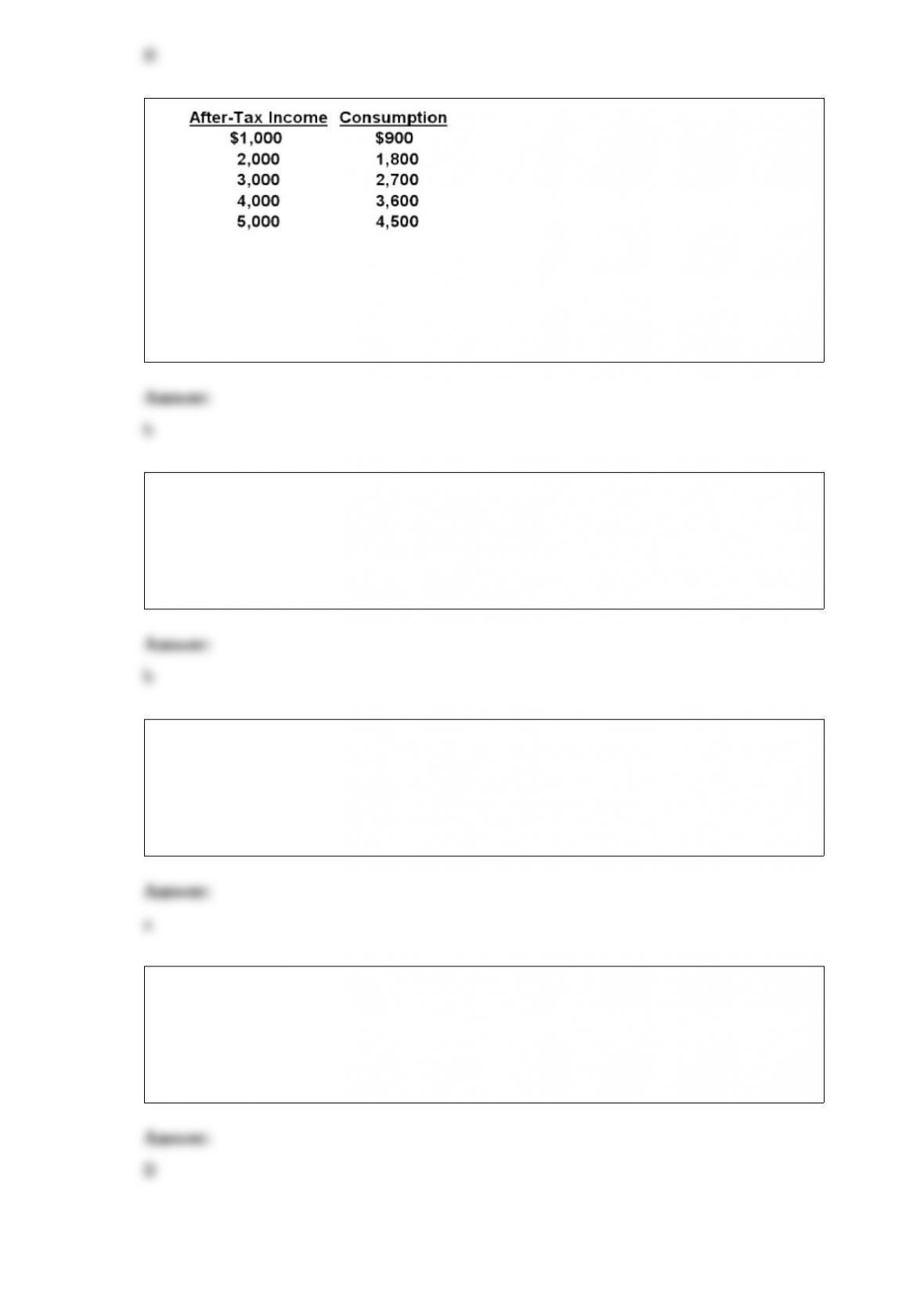
12)
the above data indicate that:
a.consumers spend 80 percent of their after-tax incomes.
b.consumers spend 90 percent of their after-tax incomes.
c.a tax reduction will reduce consumption.
d.the relationship between consumption and after-tax income is random.
13) competition means that:
a.sellers can manipulate market price by causing product scarcities.
b.there are independently-acting buyers and sellers in each market.
c.a product can be purchased at a number of different prices.
d.there is more than one seller in a market.
14) the slope of a line parallel to the horizontal axis is:
a.zero.
b.one.
c.infinite.
d.one-half.
15) One consequence of the long-run problem faced by farms has been a:
A.rapid increase in the price of farm output.
B.massive exit of workers from agriculture to other sectors of the economy.
C.smaller average farm size.
D.reduction in U.S. exports of farm products.
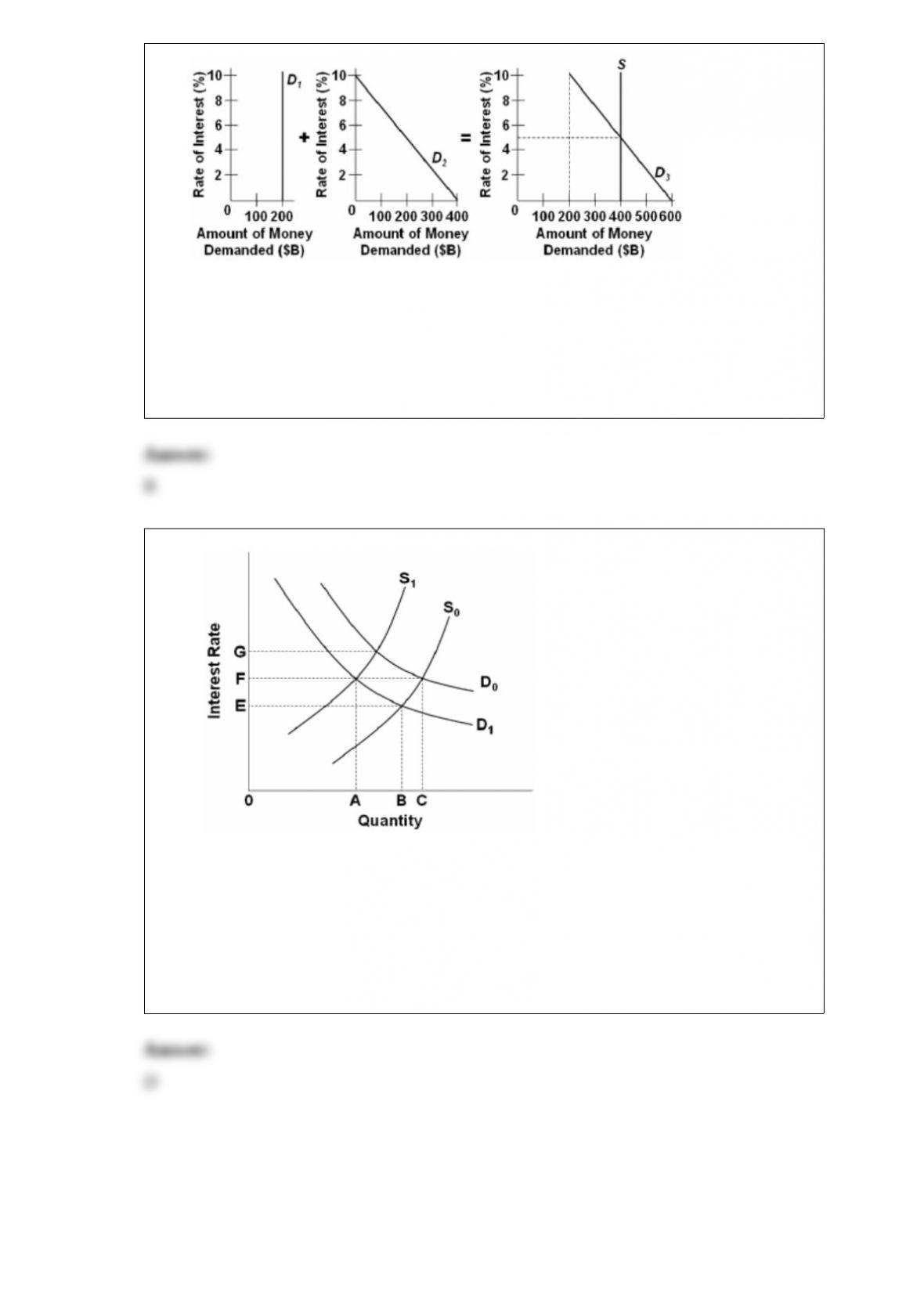
16)
Refer to the above market for money diagrams. The asset demand for money is shown
by:
A.D1.
B.D2.
C.D3.
D.S.
17)
Refer to the above diagram. Suppose that the demand for loanable funds is D0 and the
supply of loanable funds initially is S0. If the supply of loanable funds declines to S1,
the equilibrium interest rate will:
A.decline from G to F.
B.increase from E to F.
C.decline from F to E.
D.increase from F to G.
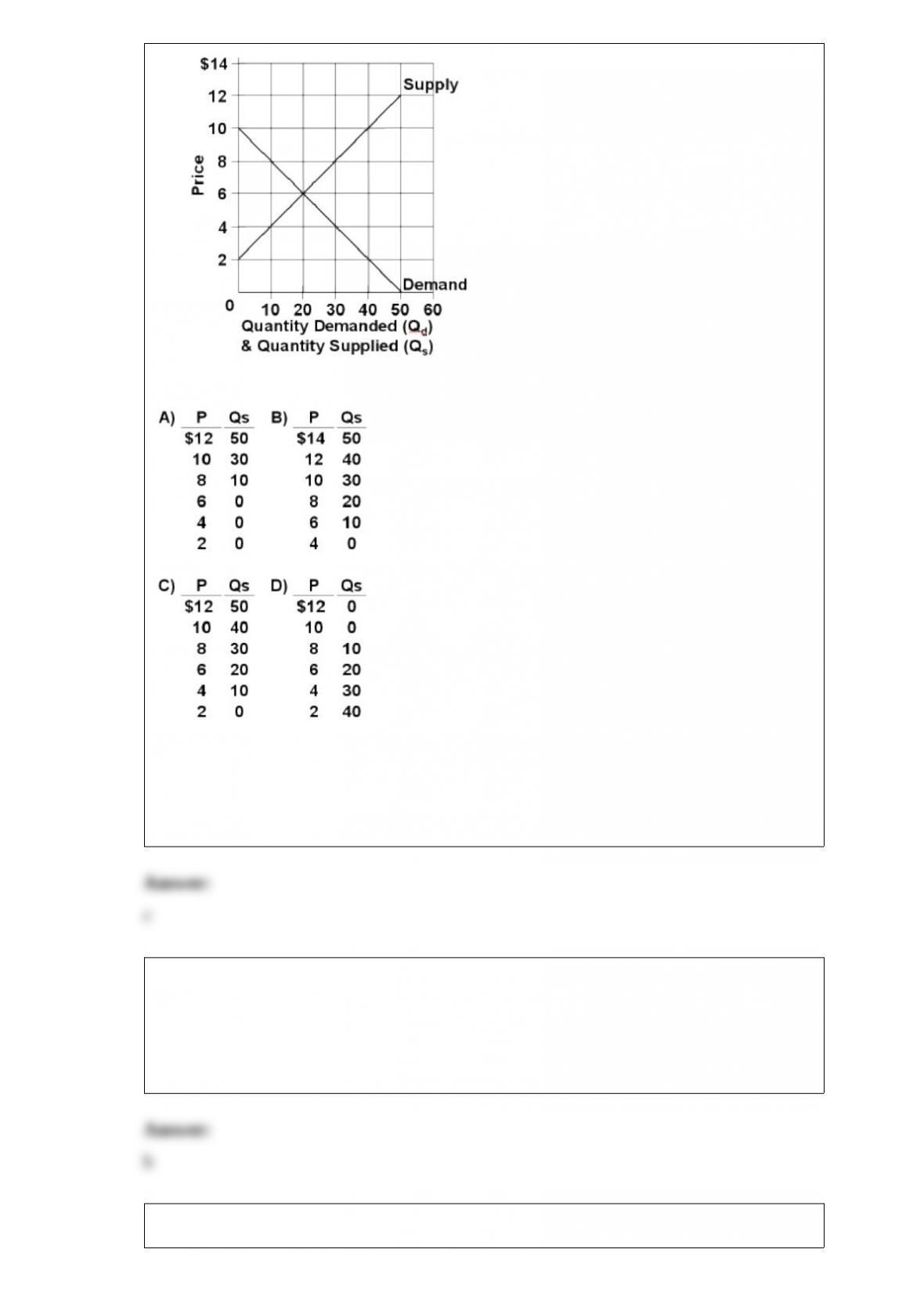
18)
refer to the above graph. which of the following schedules correctly reflects ‘supply”?
a.choice a
b.choice b
c.choice c
d.choice d
19) broadly defined, competition involves:
a.private property and freedom of expression.
b.independently acting buyers and sellers and freedom to enter or leave markets.
c.increasing opportunity costs and diminishing marginal utility.
d.capital goods and division of labor.
20) Social regulation differs from industrial regulation in that:

A.social regulation applies to virtually all industries, while industrial regulation applies
to a restricted number.
B.industrial regulation is involved in the details of the production process, while social
regulation is not.
C.social regulation has expanded less rapidly in recent years than has industrial
regulation.
D.industrial regulation regulates products whereas social regulation regulates prices.