
Productive efficiency does not hold for a profit-maximizing, monopolistically
competitive firm in the long-run equilibrium because the firm operates along the
diseconomies-of-scale region of its average total cost curve.
Answer:
Increases in capital per hour worked cannot sustain high rates of economic growth
unless accompanied by technological change.
Answer:
Inflation targeting has been adopted by the central banks of several countries including
the European Central Bank.
Answer:
The median voter theorem states that the outcome of a majority vote is likely to
represent the preferences of the voter who is in the political middle.
Answer:

Life expectancy at birth in the United States has more than doubled since 1850.
Answer:
In the short run, if a firm shuts down it avoids its variable cost but not its fixed cost.
Answer:
Accumulating a greater number of inputs will ensure that an economy will experience
economic growth.
Answer:
Competitive market equilibrium is a market equilibrium with many buyers and sellers.
Answer:

There are no costs to inflation if it is fully anticipated.
Answer:
Higher interest rates increase both consumption and investment spending.
Answer:
U.S. dollars can currently be exchanged for gold by foreign central banks, but not by
U.S. citizens.
Answer:
Table 19-28

Based on the table above, what is national income for this economy?
A) $1,950 billion
B) $2,250 billion
C) $2,950 billion
D) $3,550 billion
Answer:
Growth in real GDP per hour worked in the United States was slowest during what
period of time?
A) 1900-1949
B) 1950-1973
C) 1974-1995
D) 1996-2012
Answer:
Macroeconomics seeks to understand
A) economic growth, business cycles, and inflation.
B) industry sales, marketing strategies and corporate growth.
C) product demand, product cost, and profit maximization.
D) public choices, private choices, and consumer maximization.
Answer:
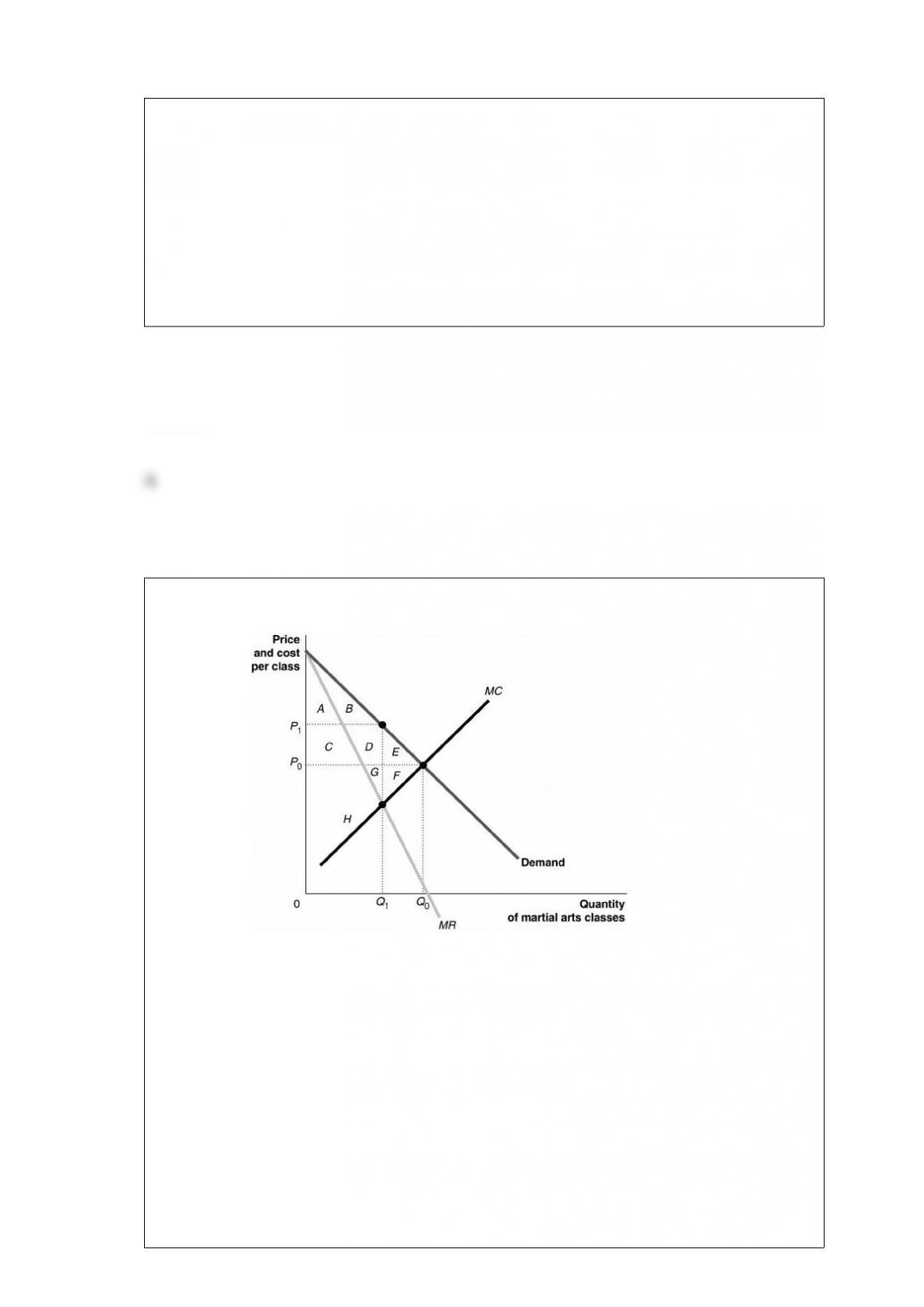
Figure 16-6 Watanabe Sensei
operates the only martial arts school in Hartfield. For simplicity, assume that consumers
have identical demand curves and that Sensei knows what this demand curve is. Figure
16-6 shows this demand curve.
If Sensei charges the competitive price for his classes, what is the maximum amount of
admission fee that he can collect from his customers?
A) the area A + B
B) the area A + B + C + D
C) the area A + B + C + D + E

D) the area A + C + D + G + H
Answer:
________ save a ________ of their income. This ________ capital in their economy
and raises economic growth.
A) Developing countries; large proportion; decreases
B) Developing countries; small proportion; increases
C) High-income countries; large proportion; increases
D) High-income countries; small proportion; increases
Answer:
Which of the following are goals of monetary policy?
A) maximizing the value of the dollar relative to other currencies, economic growth,
and high employment
B) price stability, maximizing the value of the dollar relative to other currencies, and
high employment
C) price stability, economic growth, and high employment
D) price stability, economic growth, and maximizing the value of the dollar relative to
other currencies
Answer:

An efficient tax is
A) a tax that imposes an equal tax burden on buyers and sellers.
B) a tax that raises a maximum amount of revenue.
C) a tax that imposes a small excess burden relative to the tax revenue that it raises.
D) a tax that is used to fund research and development of new technology.
Answer:
In cities with rent controls, the actual rents paid can be higher than the legal maximum.
One explanation for this is
A) rent control laws are so complicated that landlords and tenants may not be aware of
what the legal price is.
B) landlords are allowed to charge more than the legal maximum on some apartments
so long as they charge less on others.
C) because there is a shortage of apartments, tenants often are willing to pay rents
higher than the law allows.
D) the legal penalty landlords face for charging more than the legal maximum rent is
less than the revenue earned by charging their tenants more than the maximum rent.
Answer:
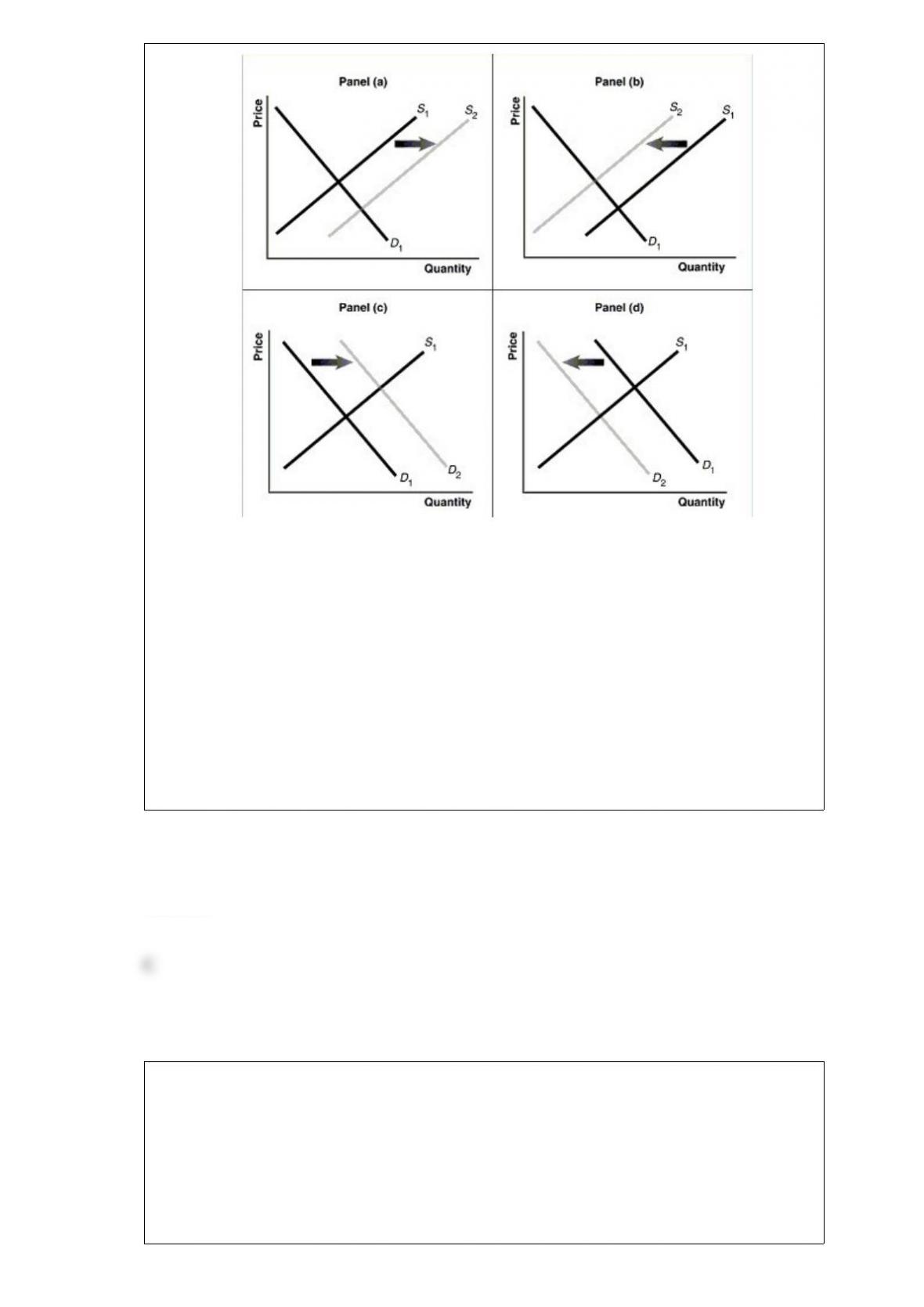
Figure 3-7
Assume that the graphs in this figure represent the demand and supply curves for
Blu-ray discs. Which panel best describes what happens in this market if there is a
substantial increase in the price of Blu-ray players?
A) Panel (a)
B) Panel (b)
C) Panel (c)
D) Panel (d)
Answer:
The first economist to systematically analyze market failure was
A) Adam Smith.
B) Ronald Coase.
C) A. C. Pigou.

D) J. E. Meade.
Answer:
Scenario 17-1
In academia, professors in some disciplines receive higher salaries than others. For
example, professors teaching in business schools receive higher salaries than professors
in the English department. Suppose at Unity College, assistant professors in the
business school earn $80,000 while assistant professors in the English department earn
$50,000. Now suppose the government passes comparable worth legislation that
requires academic institutions to pay all faculty the same salaries.
Following the passage of comparable worth legislation, Unity College responds by
placing salaries for all assistant professors at $80,000. Which of the following is the
result of the legislation?
A) The supply of English professors increases; the market for business professors is not
affected.
B) The demand for English professors decreases; the market for business professors is
not affected.
C) There will be a surplus in the market for English professors and a shortage in the
market for business professors.
D) There will be a surplus in the market for English professors and the market for
business professors will not be affected.
Answer:
Table 18-12
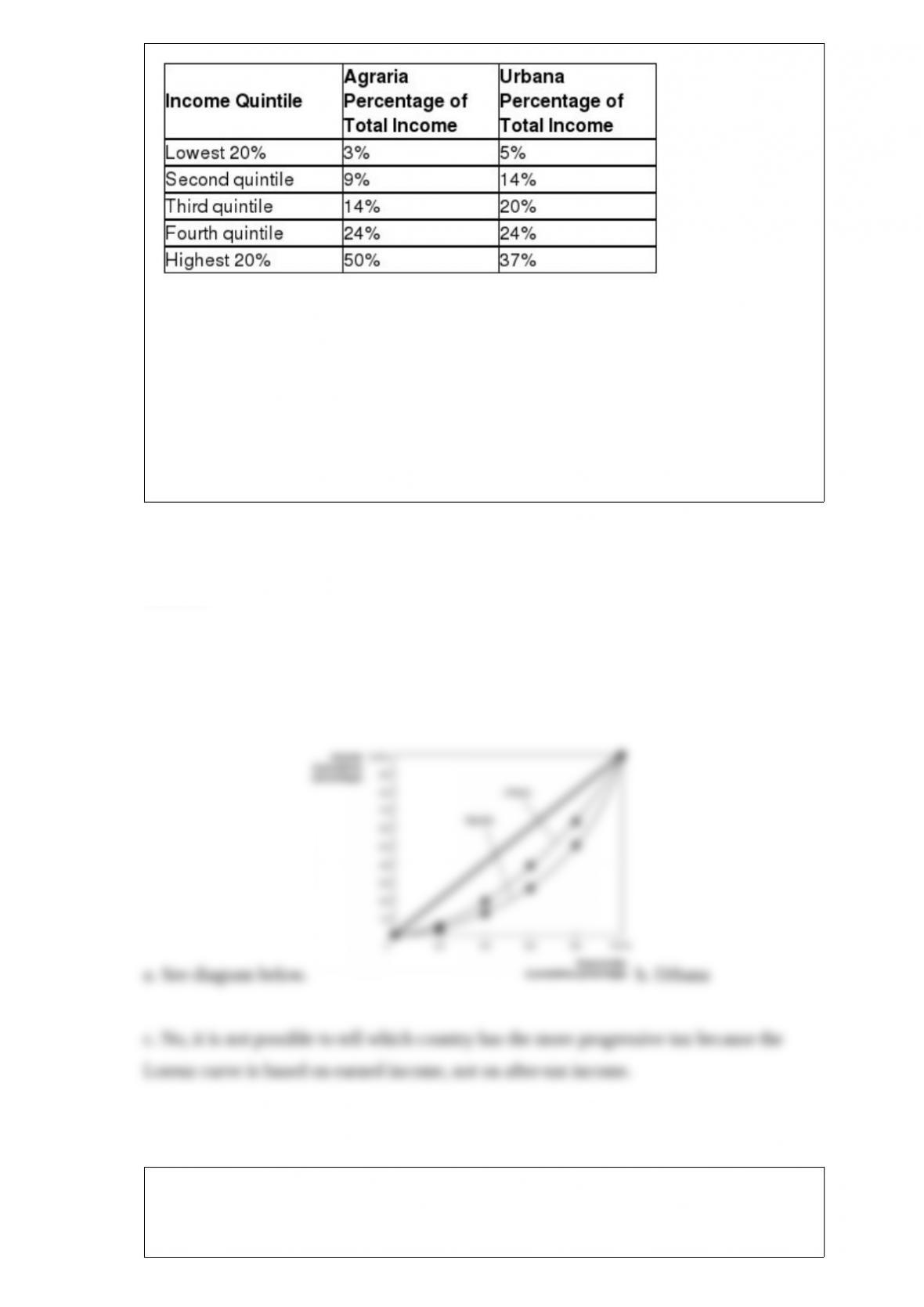
Table 18-12 shows income distribution data for two countries. Use this data to answer
the following questions.
a. Draw a Lorenz curve for each country.
b. Which country has the more equal distribution of income?
c. Based on the Lorenz curve for the two countries, can you determine which country
has the more progressive tax system? Explain your answer.
Answer:
In 2011, ________ of the uninsured were younger than age 34.
A) 10%

B) 27%
C) 54%
D) 83%
Answer:
On a two-dimensional graph, ________ allows for the effects of additional variables.
A) moving along a curve
B) shifting curves
C) eliminating a curve
D) adding an additional curve
Answer:
During the 1990s positive technological change in the production of chicken caused the
price of chicken to fall. Holding everything else constant, how would this affect the
market for pork (a substitute for chicken)?
A) The supply of pork would increase and the equilibrium price of pork would
decrease.
B) The demand for pork would decrease and the equilibrium price of pork would
decrease.
C) The demand for pork would increase because consumers could afford to buy more
chicken and pork.

D) The demand for pork would decrease and the equilibrium price of pork would
increase.
Answer:
Describe briefly how the final value of an iPhone must be equal to the sum of incomes
generated by the production of the iPhone.
Answer:
What is opportunity cost?
Answer:

Using aggregate demand and aggregate supply, explain what happens in the short run if
the Federal Reserve raises interest rates in the economy. Be sure to detail what happens
to aggregate demand, the price level, the level of GDP, and unemployment. Assume that
the economy is at full employment before the interest rate increase.
Answer:
In much of Europe, the legal age to obtain a driver’s license is 18. If the legal driving
age in the United States was changed to 18, how would this affect the market for new
automobiles? The market for automobile insurance?
Answer:
What is expansionary fiscal policy? What is contractionary fiscal policy?
Answer:

Article Summary. In a letter to Congress, Treasury Secretary Jacob Lew stated that
the United States will run out of borrowed money by Thursday, October 17 unless
the $16.7 trillion debt ceiling was raised. Every Thursday, the Treasury typically
rolls over $100 billion in debt as bonds mature and investors use the proceeds to
buy new bonds, and Lew was concerned that without an increase in the debt
ceiling, a crisis could emerge from a massive bond sell-off. Since the government
had reached its current debt limit, it would only be able to use daily on-hand
revenue to pay its bills without the increase in the ceiling. The Treasury expected
the government to have only $30 billion per day in cash on hand by October 17,
while its typical daily expenses were $60 billion. “If we have insufficient cash on
hand, it would be impossible for the United States of America to meet all of its
obligations for the first time in our history,” Lew said.
Source: Gregory Korte, “Treasury will run out of borrowed money by Oct. 17,”
USA Today, September 25, 2013.
When does the Treasury Department borrow? Why would the Treasury have to borrow
more than it estimated, as was indicated by its letter to Congress to raise the debt
ceiling? When would the Treasury repay what it borrowed, and who is it repaying?
Answer:
Calculate the value of the government purchases multiplier if the marginal propensity to
consume equals 0.8, the tax rate equals 0.2, and the marginal propensity to import
equals 0.05.
Answer:
Define the term “property rights.” Explain why the lack of well defined and enforceable
property rights is detrimental to the smooth functioning of a market system.
Answer:
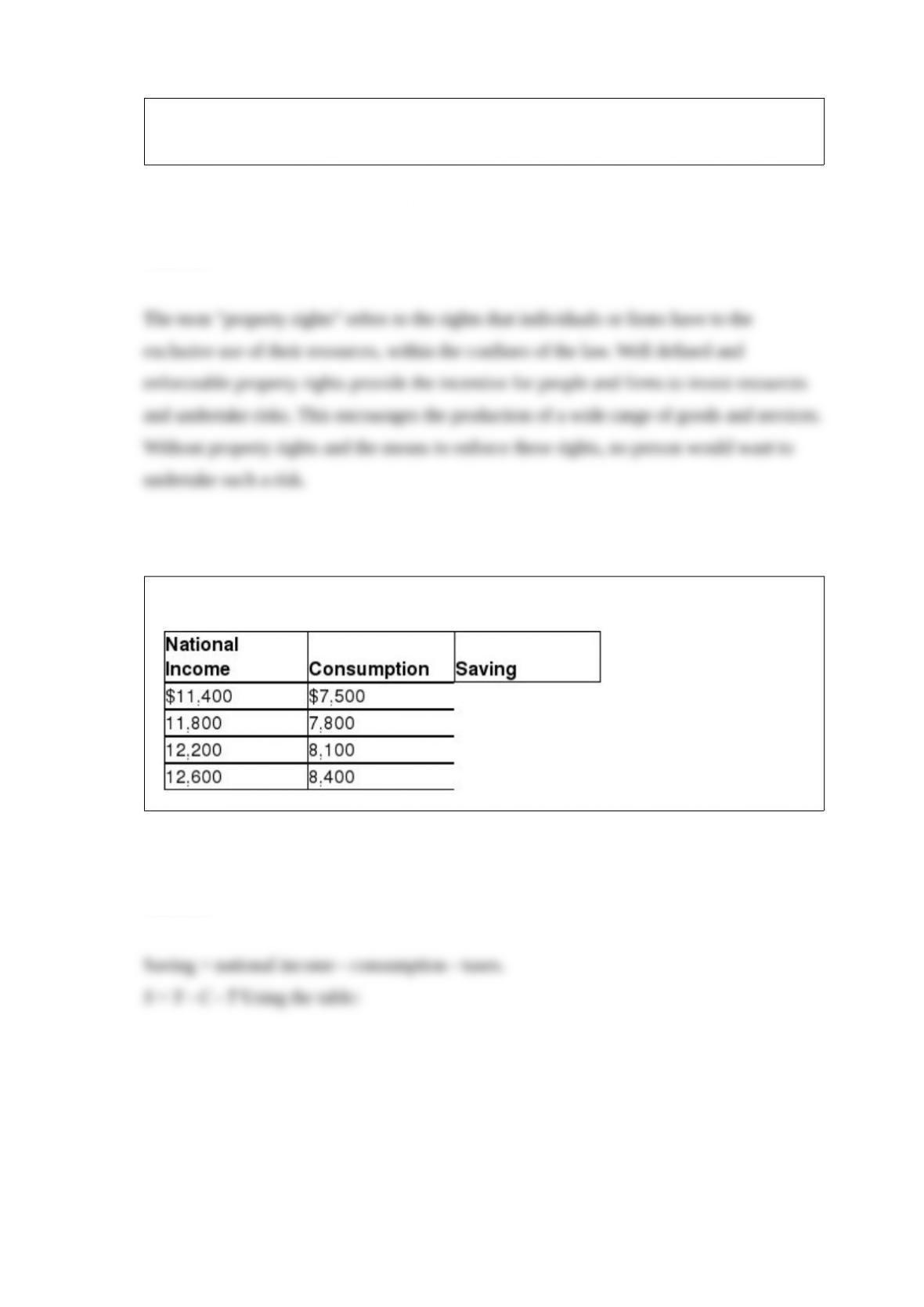
Given Table 12-6 below, fill in the values for saving. Assume taxes = $800. Table 12-6
Answer:
What’s the difference between the nominal exchange rate and the real exchange rate?
Answer: