1) a main purpose of the international monetary fund is to make loans of foreign
currencies to member countries which are experiencing current-account surpluses.
a.true
b.false
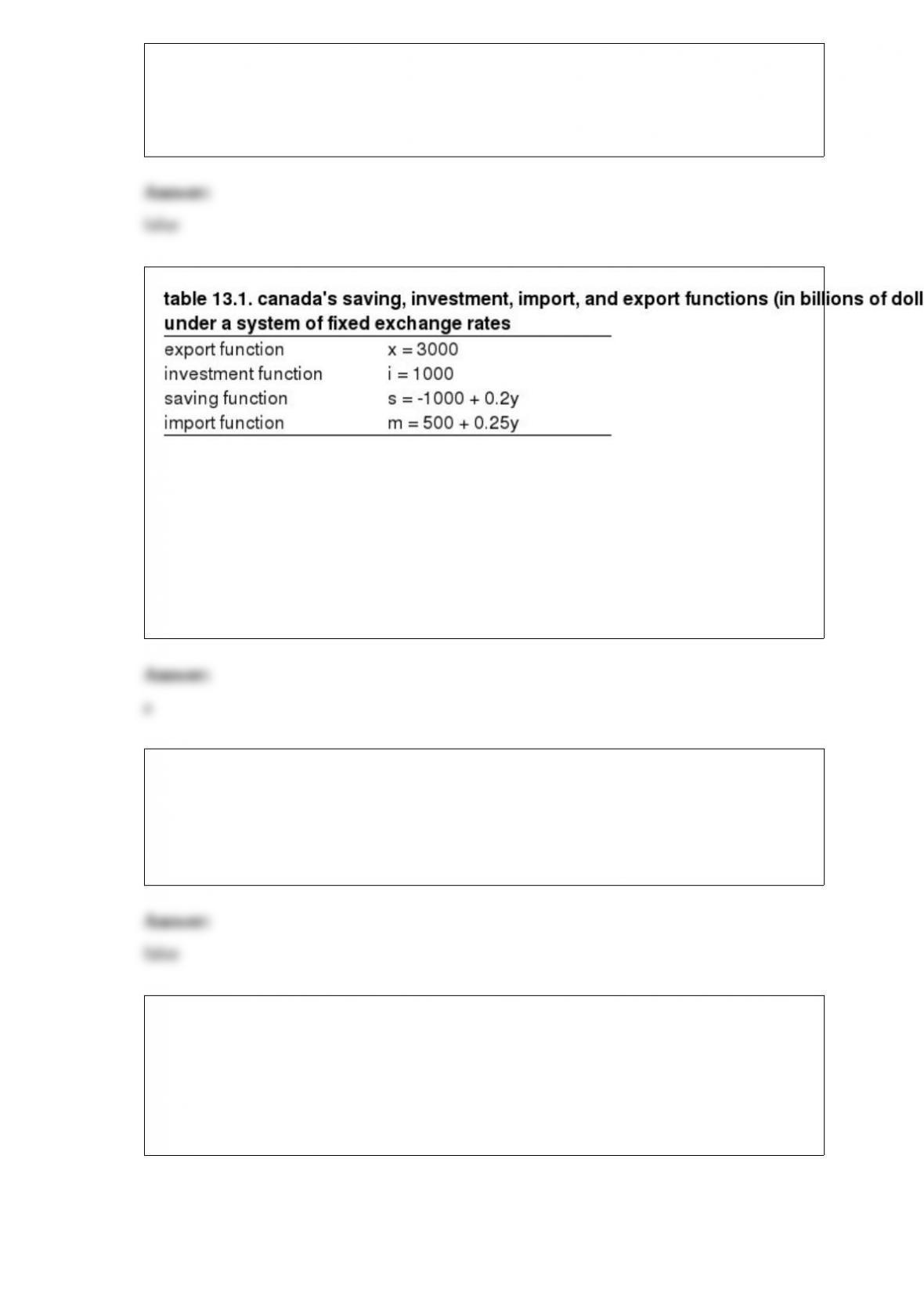
2) referring to table 13.1, if canada’s income rises by $200 billion, imports would rise
by:
a.$50 billion
b.$75 billion
c.$100 billion
d.$125 billion
3) assume that the united states and canada engage in trade. if the international terms of
trade coincides with the u.s. cost ratio, the united states realizes all of the gains from
trade with canada.
a.true
b.false
4) figure 6.2 illustrates the calculator market for mexico, assumed to be a small nation
that is unable influence the south korean (world) price. assume the south korean price to
be $60 per calculator.
figure 6.2. effects of an export subsidy
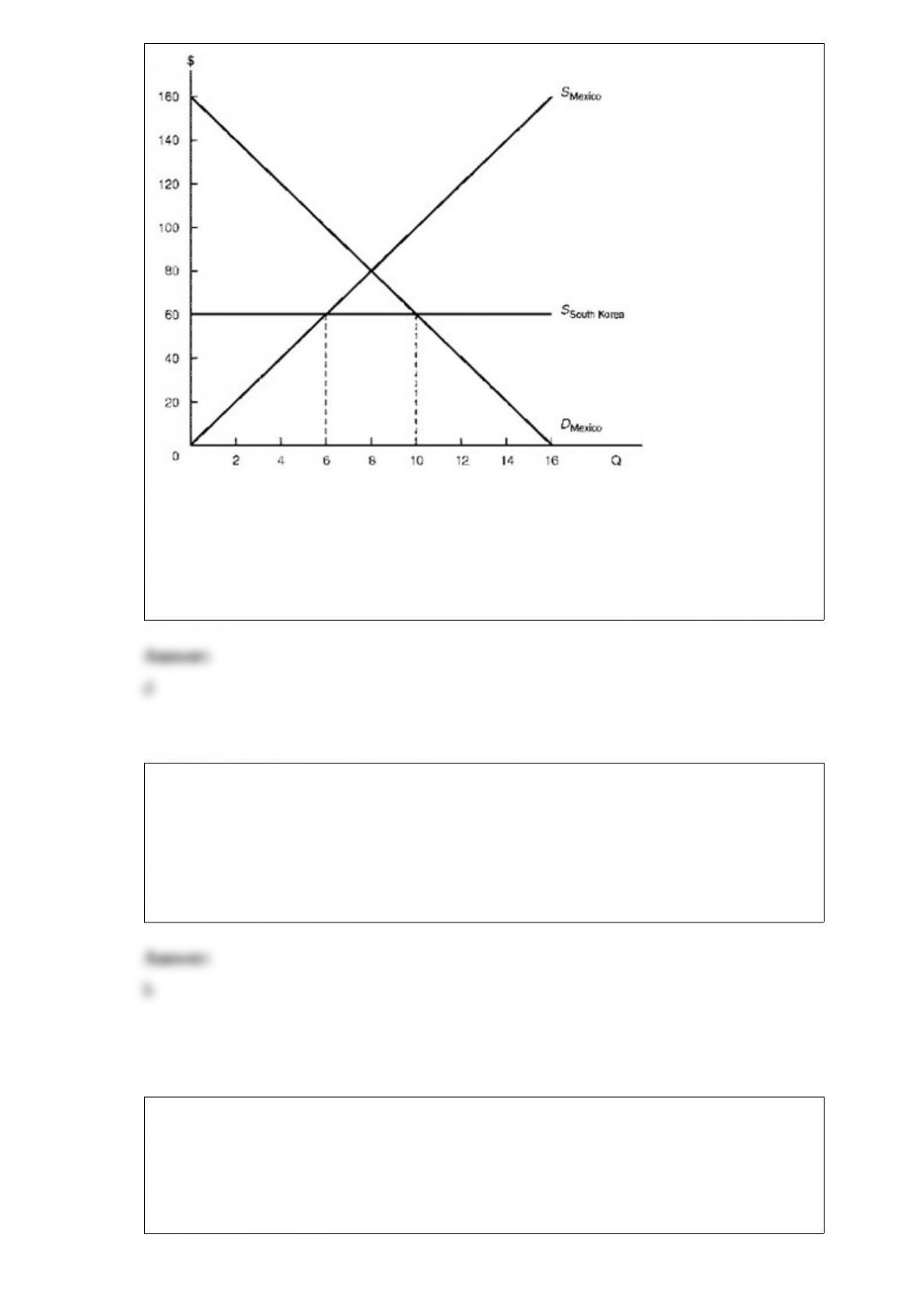
consider figure 6.2. the south korean subsidy helps/hurts mexican manufacturers, since
their producer surplus rises/falls by $____.
a.helps, rises, $60
b.helps, rises, $100
c.hurts, falls, $60
d.hurts, falls, $100
5) hong kong and south korea are examples of developing nations that have recently
pursued industrialization policies.
a.import substitution
b.export promotion
c.commercial dumping
d.multilateral contract
6) assume the initial yen/dollar exchange rate to be 100 yen per dollar. if the u.s.
inflation rate is 2 percent and the japanese inflation rate is 7 percent, the exchange rate
should move to 105 yen per dollar according to the purchasing-power-parity theory.
a.true
b.false
7) if foreign manufacturers cut manufacturing costs and profit margins in response to a
depreciation in the u.s. dollar, the effect of these actions is to:
a.shorten the amount of time in which the depreciation leads to a smaller trade deficit
b.shorten the amount of time in which the depreciation leads to a smaller trade surplus
c.lengthen the amount of time in which the depreciation leads to a smaller trade deficit
d.lengthen the amount of time in which the depreciation leads to a smaller trade surplus
8) the general agreement on tariffs and trade was founded in 1995 as a successor to the
world trade organization.
a.true
b.false
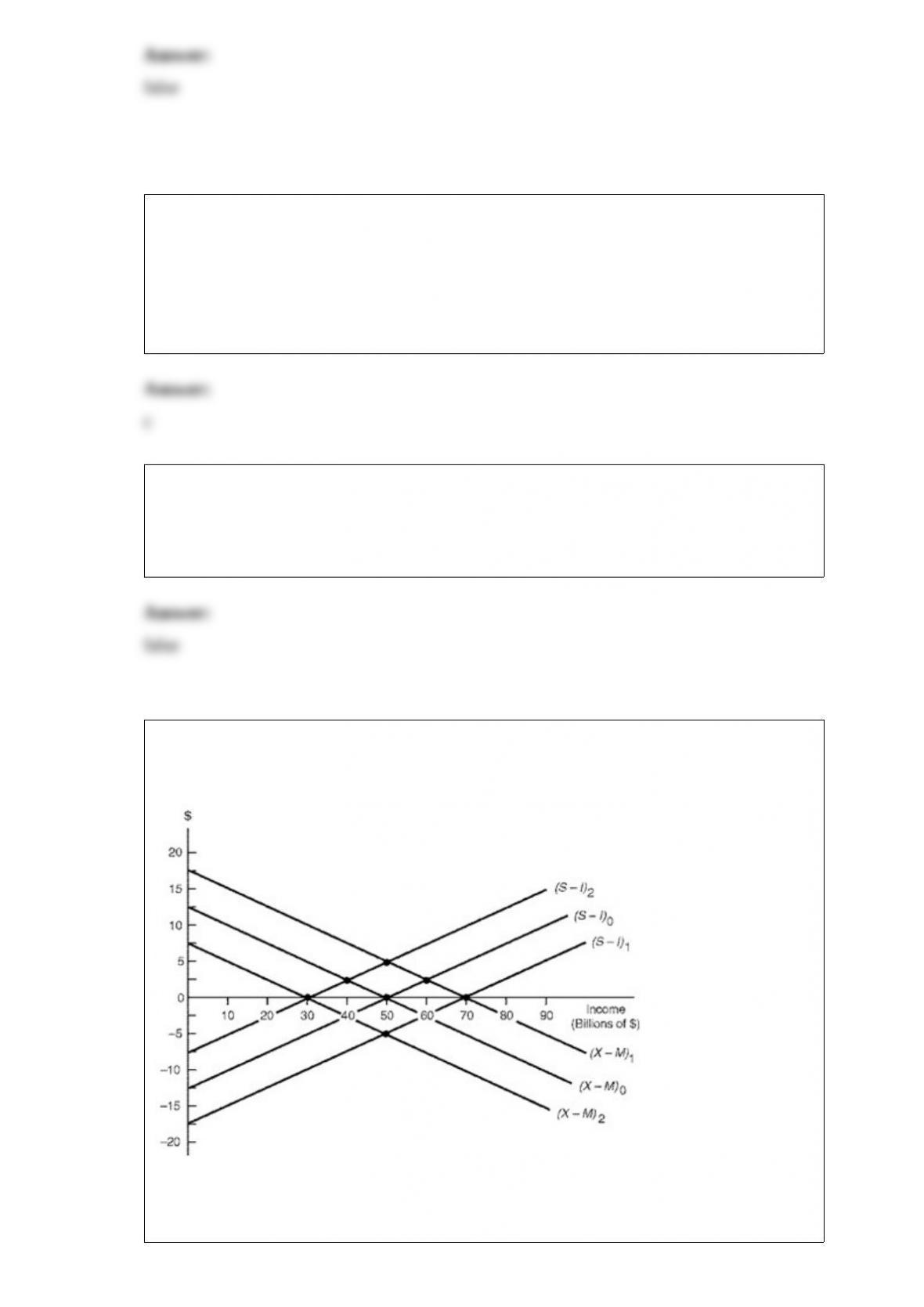
9) figure 13.2. australian economy under a fixed exchange rate system
refer to figure 13.2. starting at equilibrium income $50 billion, where (s-i)0 intersects
(x-m)0, suppose that dwindling thriftiness leads to an autonomous decrease in
australian saving to $5 billion. australian income thus ____ which leads to australia’s
trade account moving to a ____.
a.rises to $60 billion, deficit of $2.5 billion
b.rises to $60 billion, deficit of $5 billion
c.falls to $40 billion, surplus of $2.5 billion
d.falls to $40 billion, surplus of $5 billion
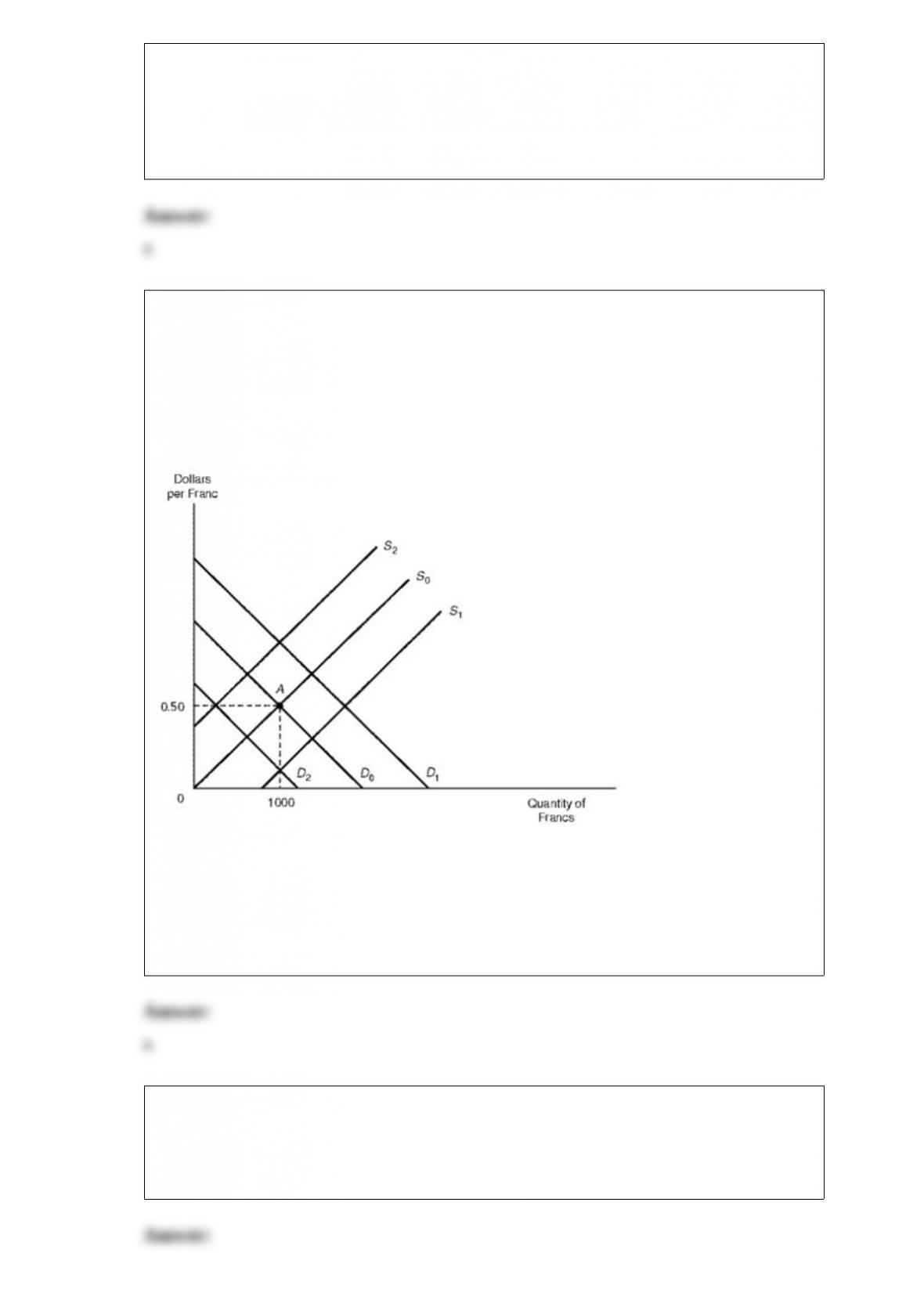
10) the figure below illustrates the market for swiss francs in a world of
market-determined exchange rates. assume the equilibrium exchange rate is $0.5 per
franc, given by the intersection of schedules s0 and d0.
figure 11.2. market for francs
refer to figure 11.2. a shift in the demand for francs from d0 to d1 or a shift in the
supply of francs from s0 to s2, would result in a (an):
a.depreciation in the dollar against the franc
b.appreciation in the dollar against the franc
c.unchanged dollar/franc exchange rate
d.none of the above
11) the strategic-trade-policy hypothesis assumes that domestic firms operate under
increasing cost conditions as well as in perfectly competitive markets.
a.true
b.false
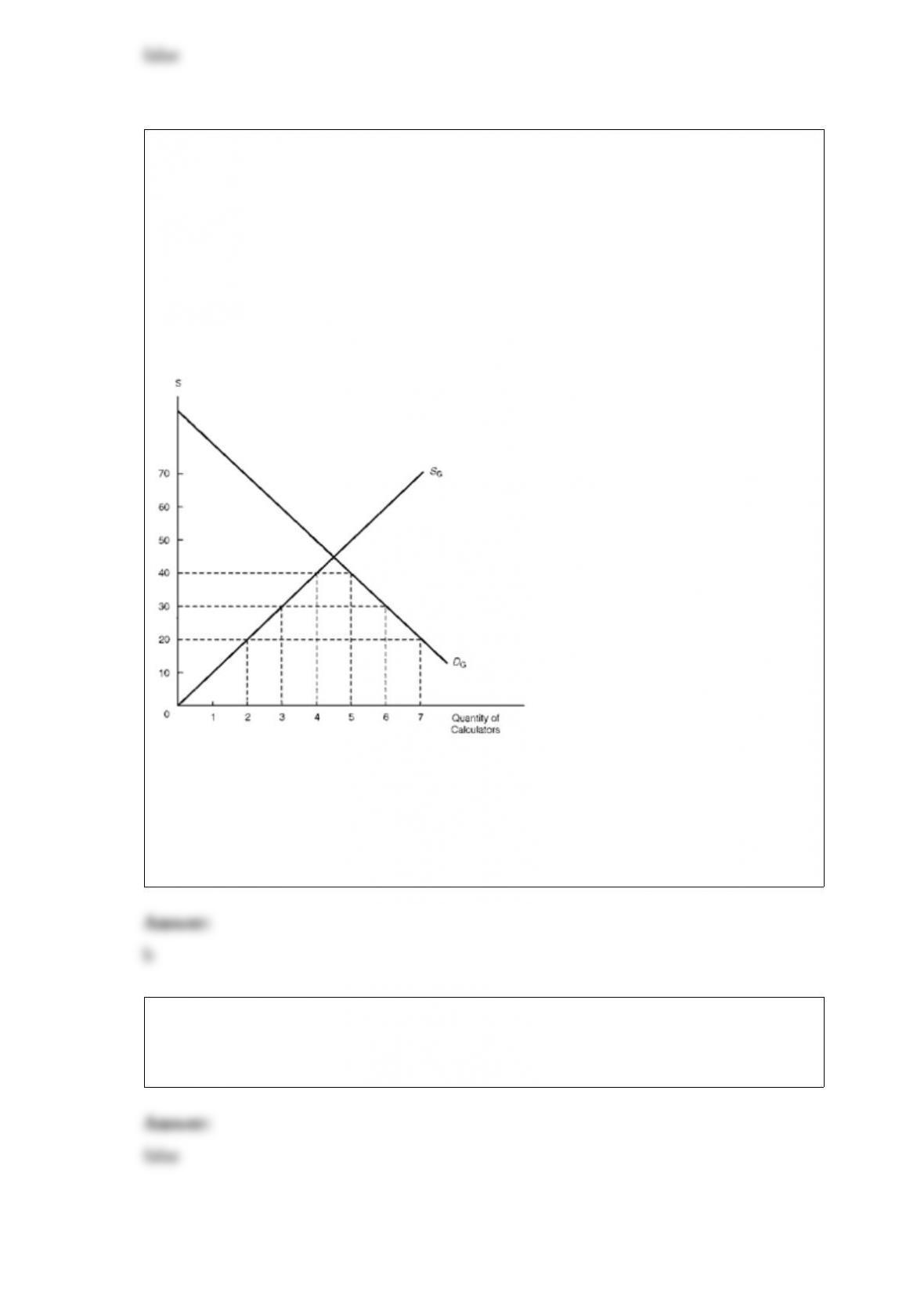
12) figure 8.1 depicts the supply and demand schedules of calculators for greece, a
‘small” country that is unable to affect the world price. greece’s supply and demand
schedules of calculators are respectively depicted by sg and dg. assume that greece
imports calculators from either germany or france. suppose germany is the world’s
low-cost producer who can supply calculators to greece at $20 per unit, while france
can supply calculators at $30 per unit.
figure 8.1. effects of a customs union
consider figure 8.1. the value of the trade creation effect, resulting from the
greece/france customs union, equals:
a.$5
b.$10
c.$15
d.$20
13) a tariff quota is a combination of a specific tariff and an ad valorem tariff.
a.true
b.false
14) to reduce losses on developing country loans, commercial banks sometimes sell
their loans, at a discount, to a developing country government for local currency which
is then used to finance purchases of ownership shares in developing country industries.
this practice is known as:
a.debt forgiveness
b.debt buyback
c.debt-for-debt swap
d.debt/equity swap
15) in the past two decades, the u.s. services balance has generally registered surplus.
a.true
b.false
16) the united states exports a larger percentage of its gross domestic product than
japan, germany, and canada.
a.true
b.false