
1) concerning industrial policy, the united states has nationalized its major industries in
an attempt to promote global champions.
a.true
b.false
2) a nation that gains from trade will find its consumption point being located:
a.inside its production possibilities curve
b.along its production possibilities curve
c.outside its production possibilities curve
d.none of the above
3) with the passage of the smoot-hawley act in 1930, u.s. average tariffs were raised to
over 50 percent on protected imports.
a.true
b.false
4) the benefits of international trade accrue in the forms of lower domestic prices,
development of more efficient methods and new products, and a greater range of
consumption choices.
a.true
b.false
5) when a government allows raw materials and other intermediate products to enter a
country duty free, its tariff policy generally results in a:
a.effective tariff rate less than the nominal tariff rate
b.nominal tariff rate less than the effective tariff rate
c.rise in both nominal and effective tariff rates
d.fall in both nominal and effective tariff rates
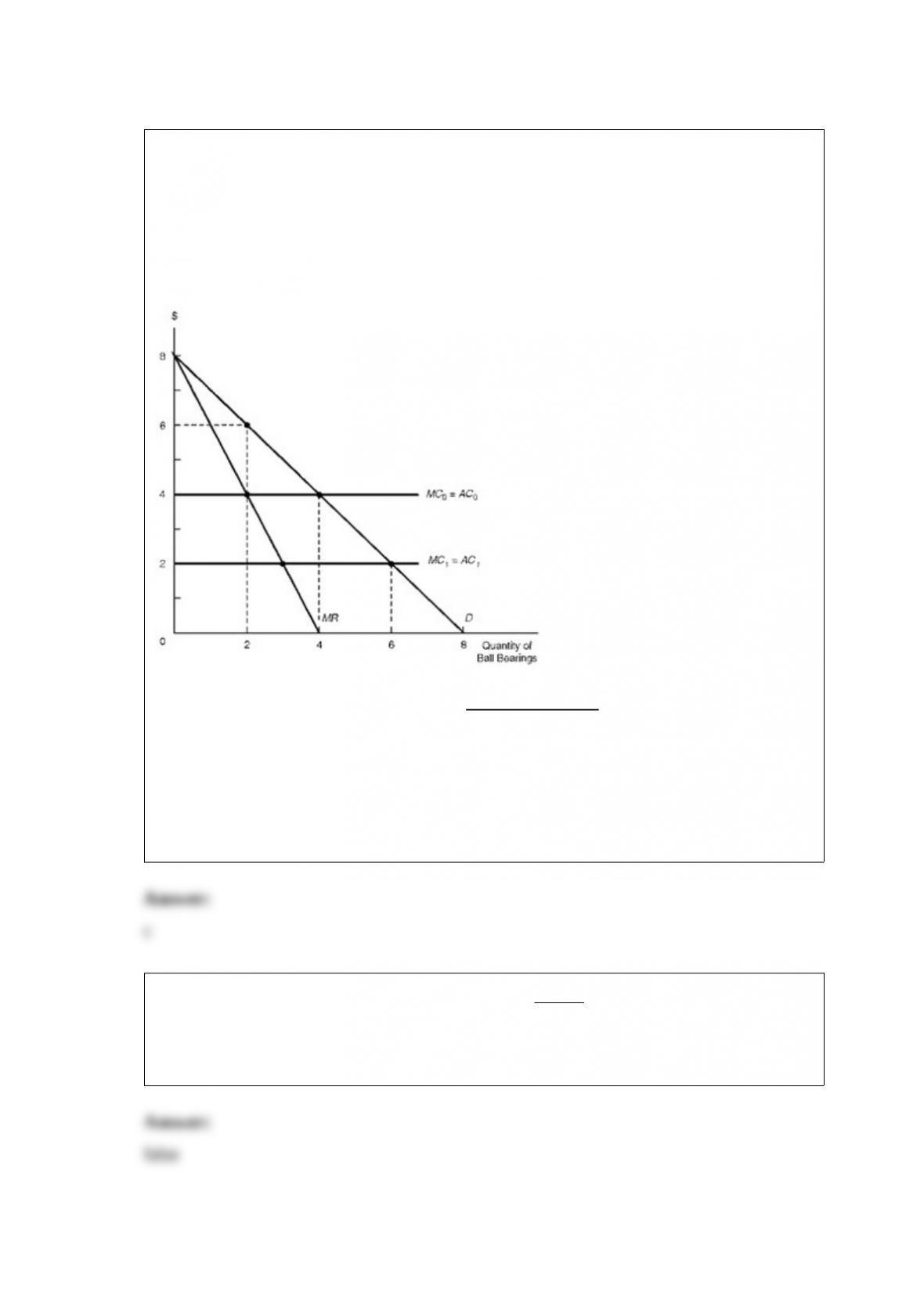
6) figure 9.1 illustrates the market conditions facing sony company and american
company initially operating as competitors in the domestic ball bearing market. each
firm realizes constant long-run costs, mc0=ac0.
figure 9.1. international joint venture
consider figure 9.1. assume venture company’s formation yields new cost reductions,
indicated by mc1=ac1, which result from wage concessions accepted by venture
company employees. the net effect of venture company’s formation on the welfare of
the domestic economy is:
a.no change
b.gain of $2
c.loss of $2
d.loss of $4
7) a “large” country, that levies a tariff on imports, cannot improve the terms at which it
trades with other countries.
a.true
b.false
8) under the variable levy system of the european union, eu farmers are protected
against import competition by tariffs that vary inversely with the world price.
a.true
b.false
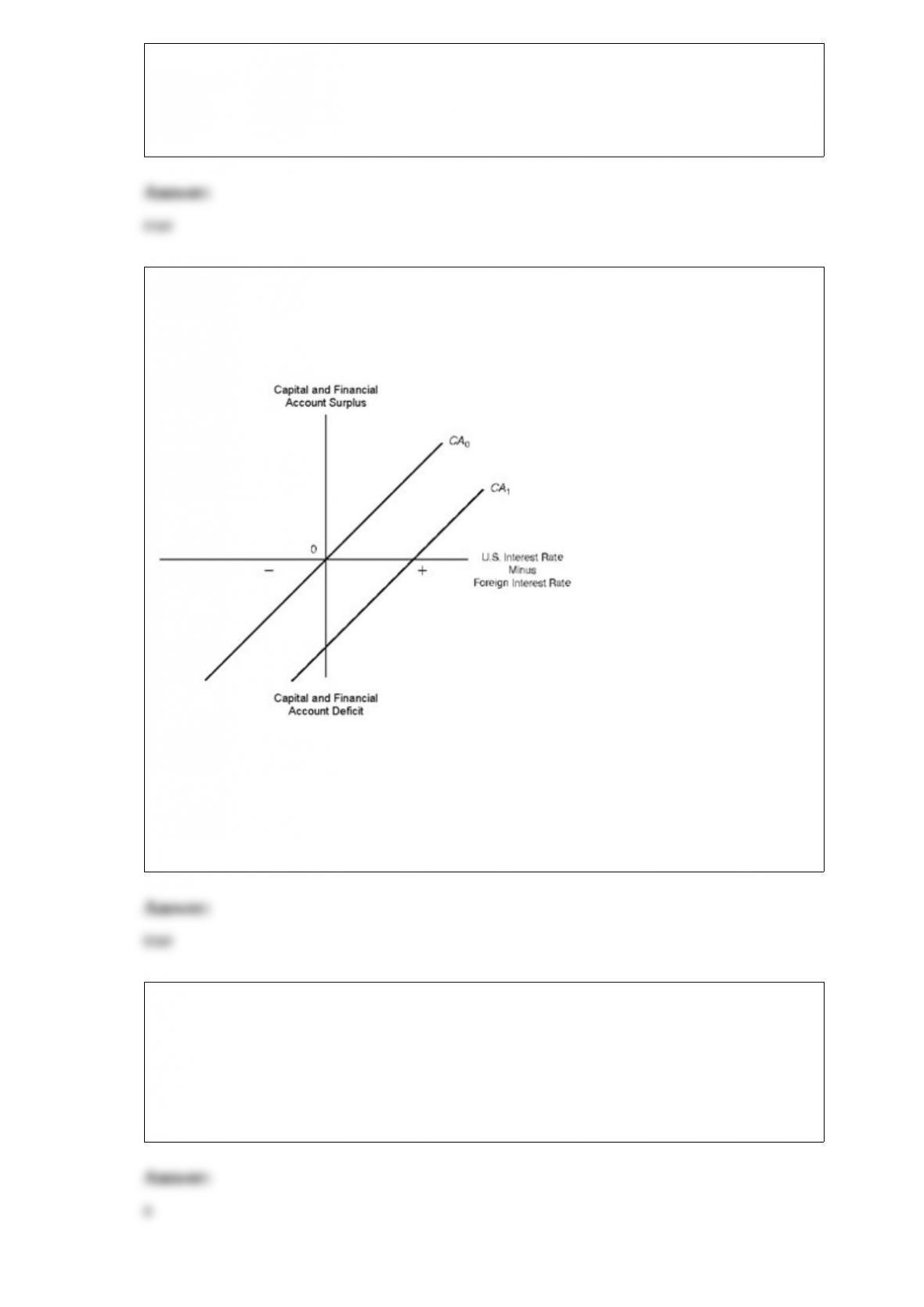
9) figure 13.3. u.s. capital and financial account under a fixed exchange rate
system
refer to figure 13.3. falling investment profitability in the united states, relative to
investment profitability abroad, would shift the u.s. capital and financial account
schedule downward from ca0 to ca1, resulting in net financial outflows from the united
states.
a.true
b.false
10) the shorter the currency pass-through period, the ____ required for currency
depreciation to have the intended effect on the trade balance.
a.shorter the time period
b.longer the time period
c.larger the spending cut
d.smaller the spending cut
11) the official reserve assets of the united states consist of holdings of gold and foreign
corporate securities.
a.true
b.false
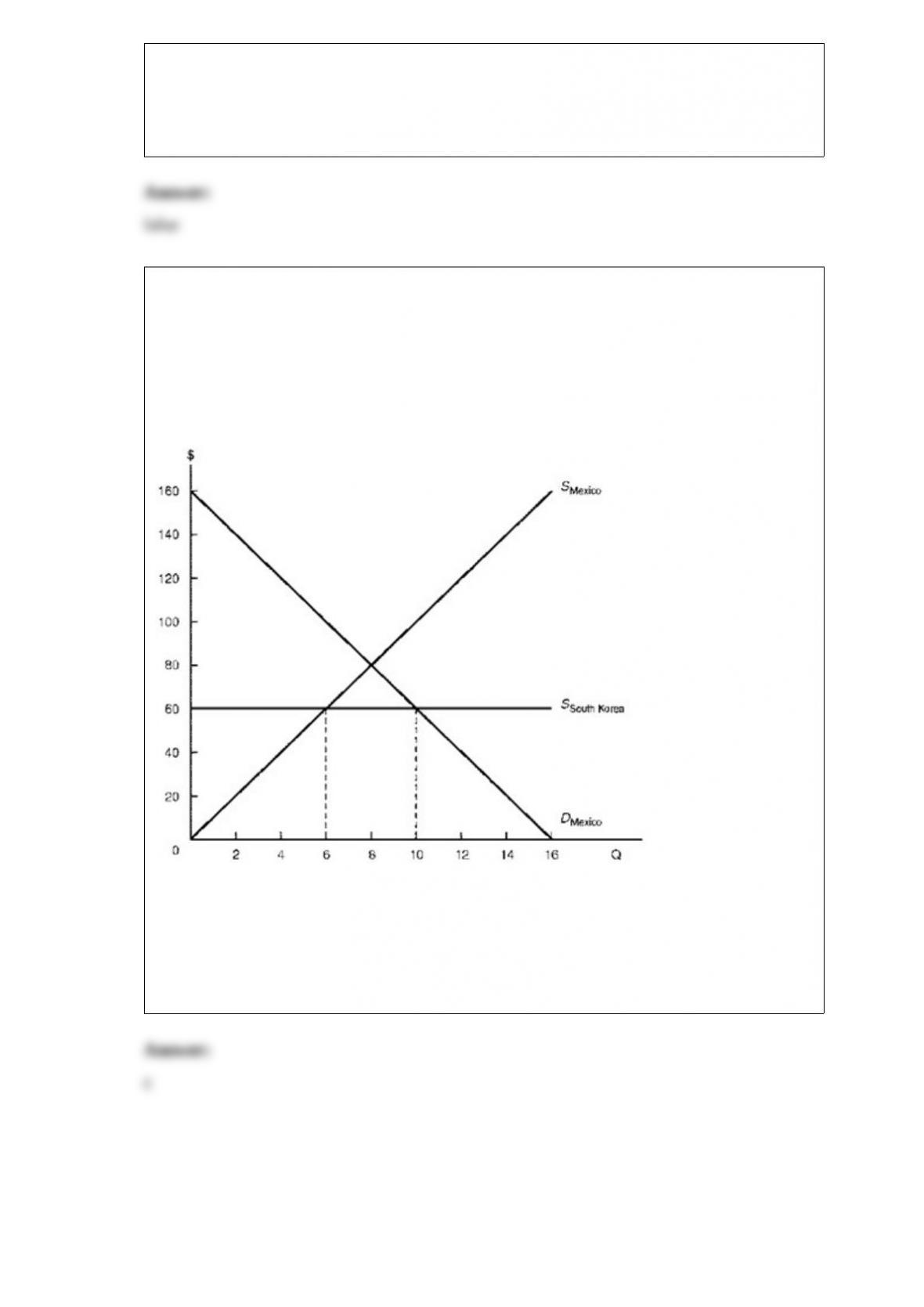
12) figure 6.2 illustrates the calculator market for mexico, assumed to be a small nation
that is unable influence the south korean (world) price. assume the south korean price to
be $60 per calculator.
figure 6.2. effects of an export subsidy
consider figure 6.2. with free trade, mexicans attain $____ of consumer surplus from
the availability of calculators, while mexican producer surplus equals $____.
a.$400, $200
b.$200, $400
c.$500, $180
d.$500, $240