1) Statistical discrimination:
A.is malicious.
B.is profitable, but not malicious.
C.cannot persist because of competition.
D.explains all occupational discrimination.
2) Firm X develops a new product and gets a head start in its production. Other firms
try to produce a similar product but discover they have higher average total costs than
the existing firm. This situation illustrates:
A.diseconomies of scale.
B.diminishing marginal returns.
C.learning-by-doing.
D.spillover costs.
3)
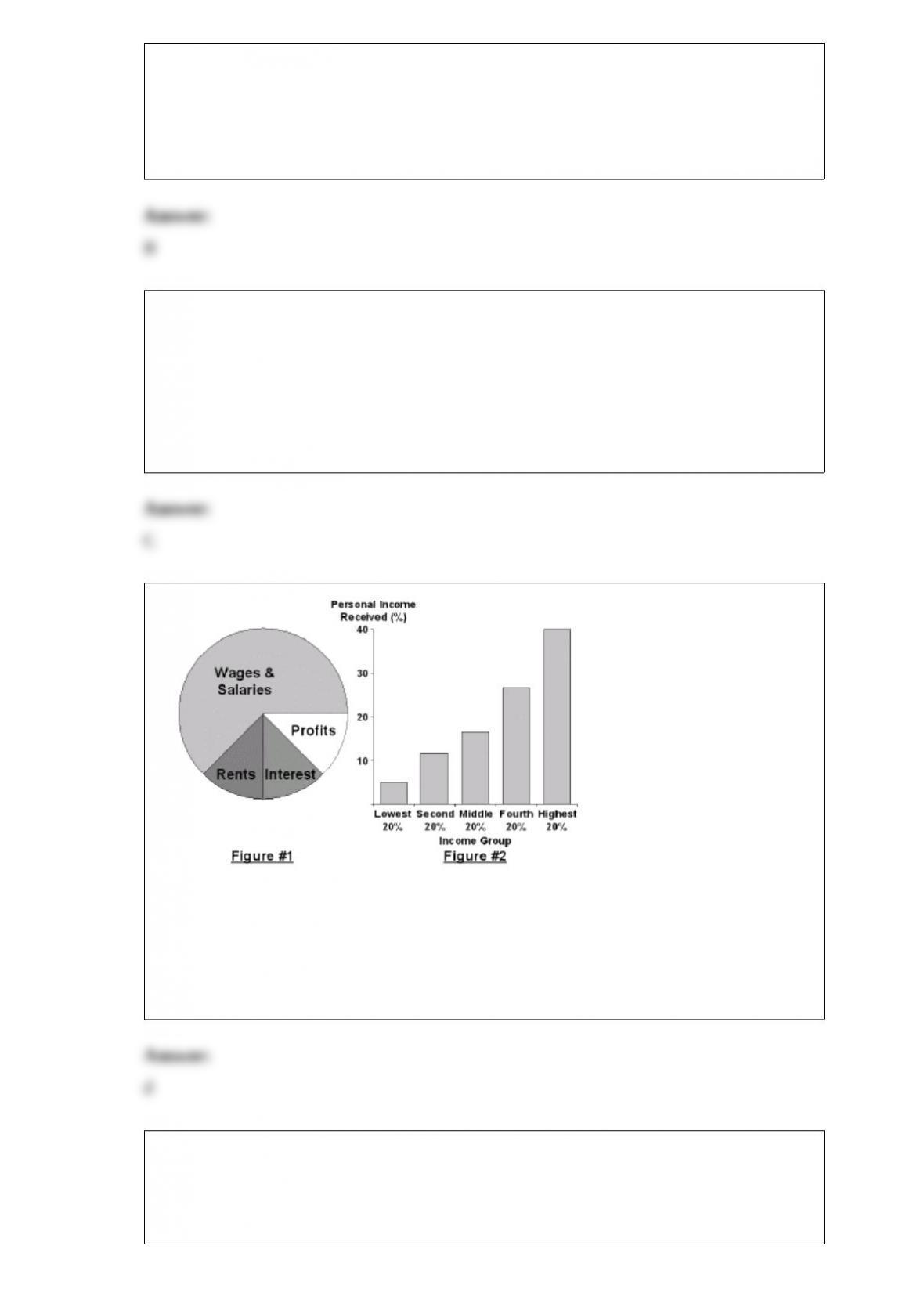
in the above diagrams for a hypothetical economy, from figure 2 we can conclude that:
a.income is quite equally distributed.
b.wages are the main source of income.
c.the distribution of income has become more unequal over time.
d.the top one-fifth of all income receivers get about eight times as much income as the
lowest one-fifth.
4) the world trade organization:
a.is also known as the international monetary fund (imf).
b.is also known as nafta.
c.was established to resolve disputes arising under world trade rules.
d.enhances world trade by providing interest rate subsidies to foreign borrowers who
buy exports on credit.
5)
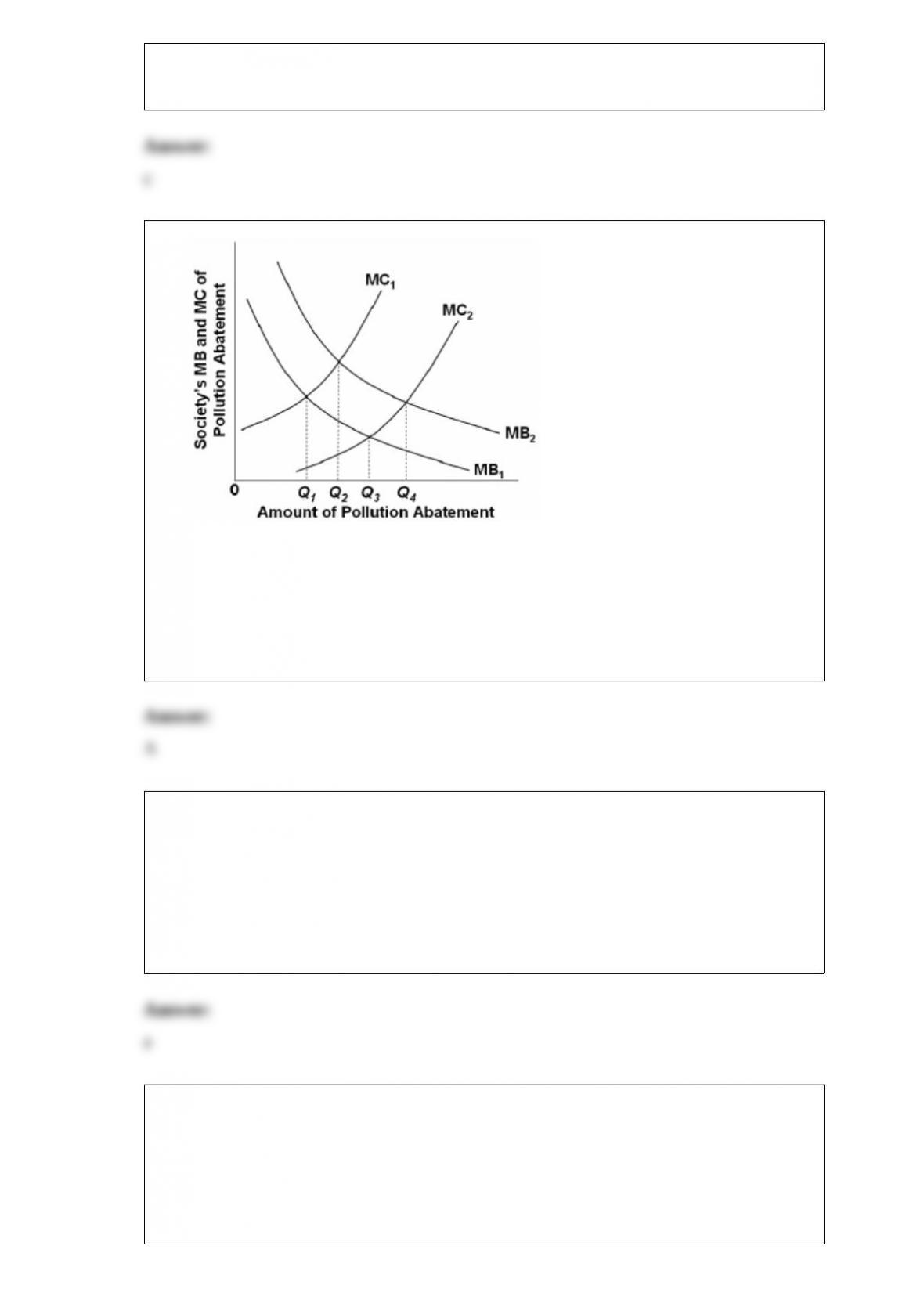
Refer to the above diagram. With MB1 and MC1, society’s optimal amount of pollution
abatement is:
A.Q1.
B.Q2.
C.Q3.
D.Q4.
6) if you would have to pay $5000 in taxes on a $25,000 taxable income and $7000 on a
$30,000 taxable income, then the marginal tax rate on the additional $5000 of income
is:
a.40 percent and the average tax rate is about 23 percent at the $30,000 income level.
b.50 percent and the average tax rate is 40 percent at the $30,000 income level.
c.40 percent and the average tax rate is 25 percent at the $25,000 income level.
d.30 percent but average tax rates cannot be determined from the information given.
7) Suppose the aggregate demand and supply schedules for a hypothetical economy are
as shown below:
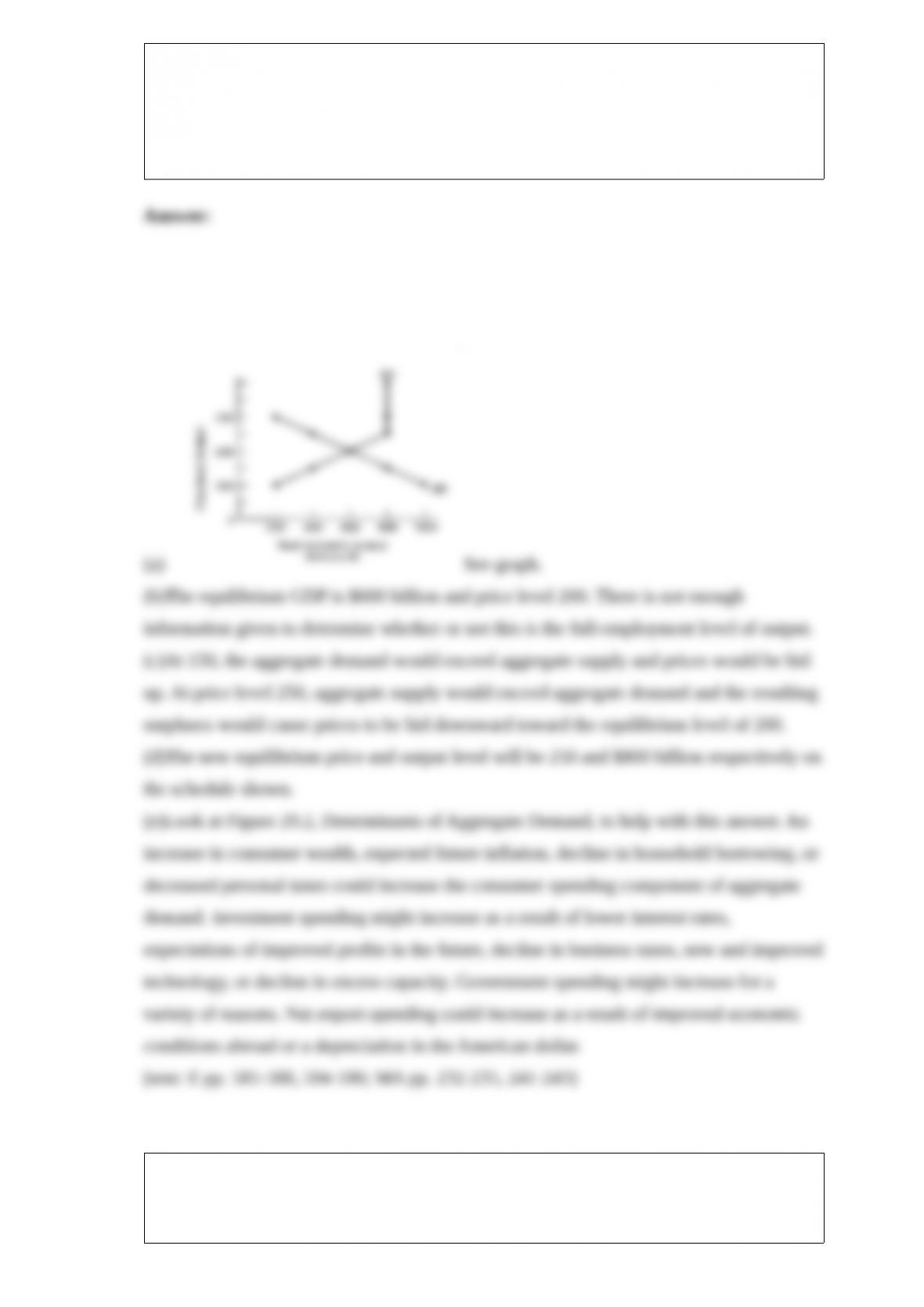
(a)Use these sets of data to graph the aggregate demand and supply curves on the below
graph.
(b)What will be the equilibrium price and output level in this hypothetical economy? Is
it also the full-employment level of output? Explain.
(c)Why wont the 150 index be the equilibrium price level? Why wont the 250 index be
the equilibrium price level?
(d)Suppose demand increases by $400 billion at each price level. What will be the new
equilibrium price and output levels?
(e)What factors might cause a change in aggregate demand?
8) which of the following is not a basic characteristic of pure competition?
a.considerable nonprice competition
b.no barriers to the entry or exodus of firms
c.a standardized or homogeneous product
d.a large number of buyers and sellers
9) growth is advantageous to a nation because it:
a.promotes faster population growth.
b.lessens the burden of scarcity.
c.eliminates the economizing problem.
d.slows the growth of wants.
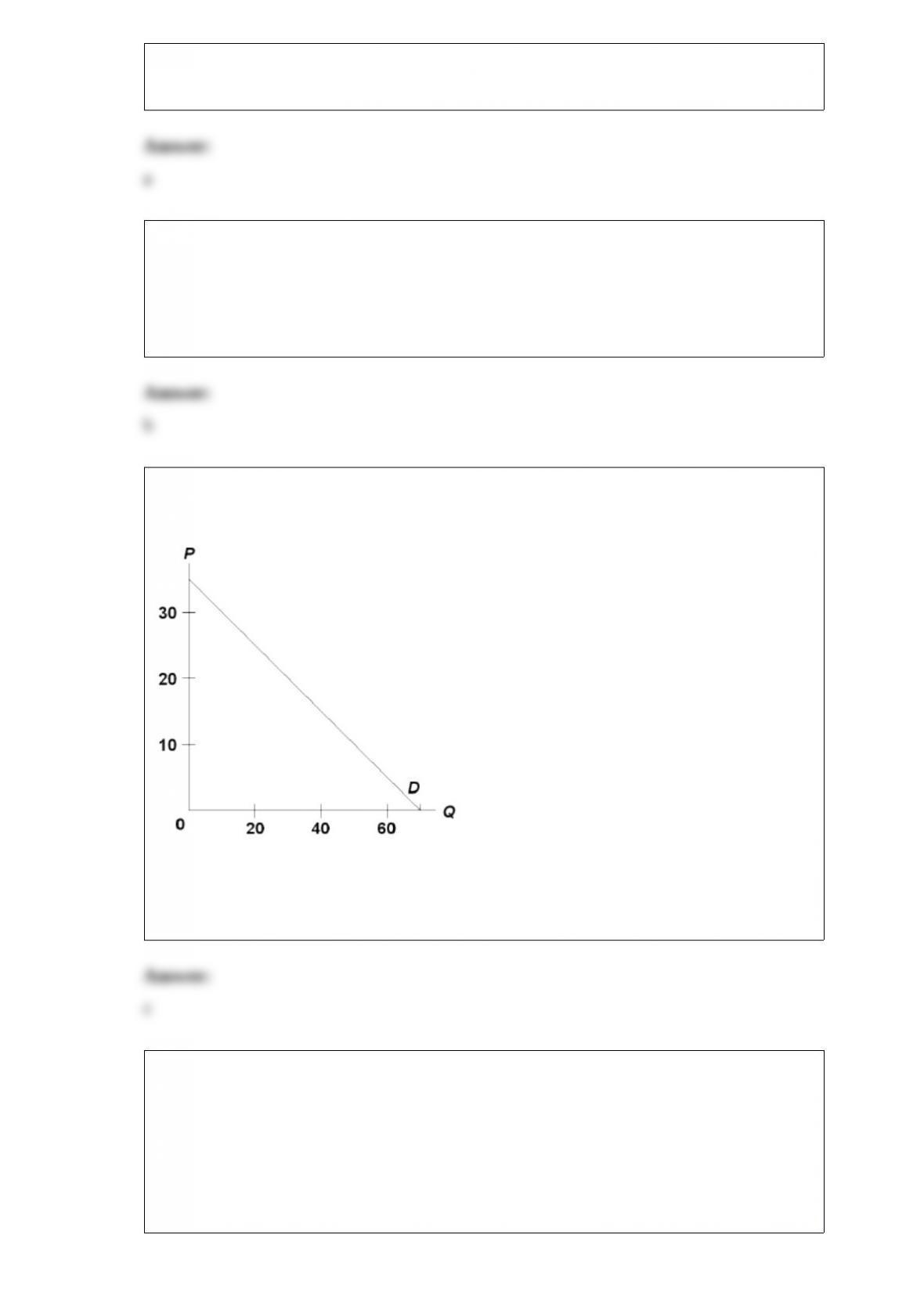
10) (advanced analysis) the equation for the demand curve in the below diagram:
a.is p = 70 – q.
b.is p = 35 – 2q.
c.is p = 35 – .5q.
d.cannot be determined from the information given.
11) suppose that ms. thomson is currently exhausting her money income by purchasing
10 units of a and 8 units of b at prices of $2 and $4 respectively. the marginal utility of
the last units of a and b are 16 and 24 respectively. these data suggest that ms. thomson:
a.has preferences that are at odds with the principle of diminishing marginal utility.
b.considers a and b to be complementary goods.
c.should buy less a and more b
d.should buy less b and more a
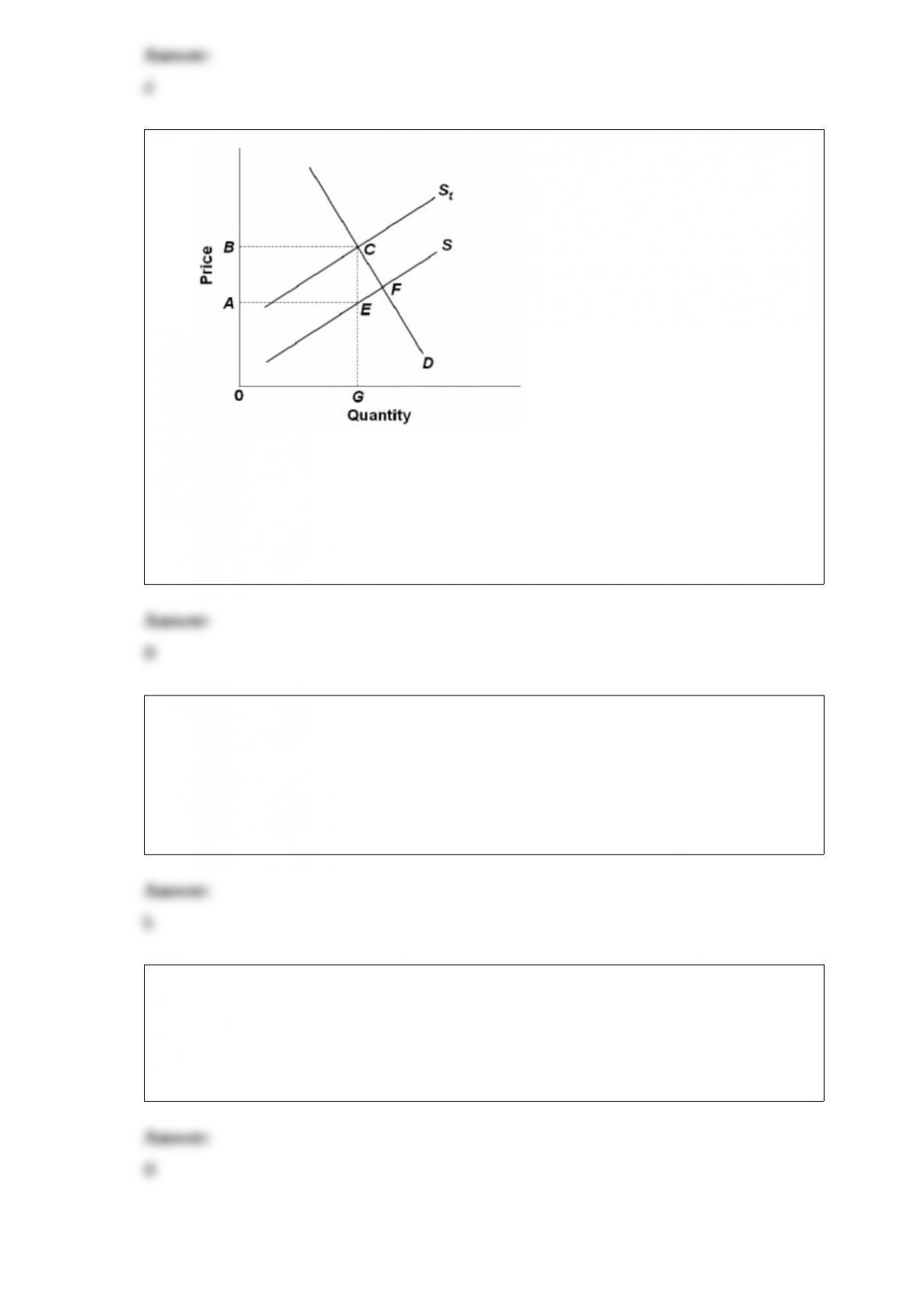
12)
Refer to the above figure in which S is the before-tax supply curve and St is the supply
curve after an excise tax is imposed. The burden of this tax is borne:
A.equally by consumers and producers.
B.most heavily by consumers.
C.most heavily by producers.
D.only by consumers.
13) in comparing the changes in tvc and tc associated with an additional unit of output,
we find that:
a.no generalization about the changes in tc and tvc can be made.
b.the changes in tc and tvc are equal.
c.the change in tc is greater than the change in tvc.
d.the change in tvc is greater than the change in tc.
14) In which of the following U.S. industries is the rate of unionization the highest?
A.construction
B.government
C.retail trade
D.agriculture
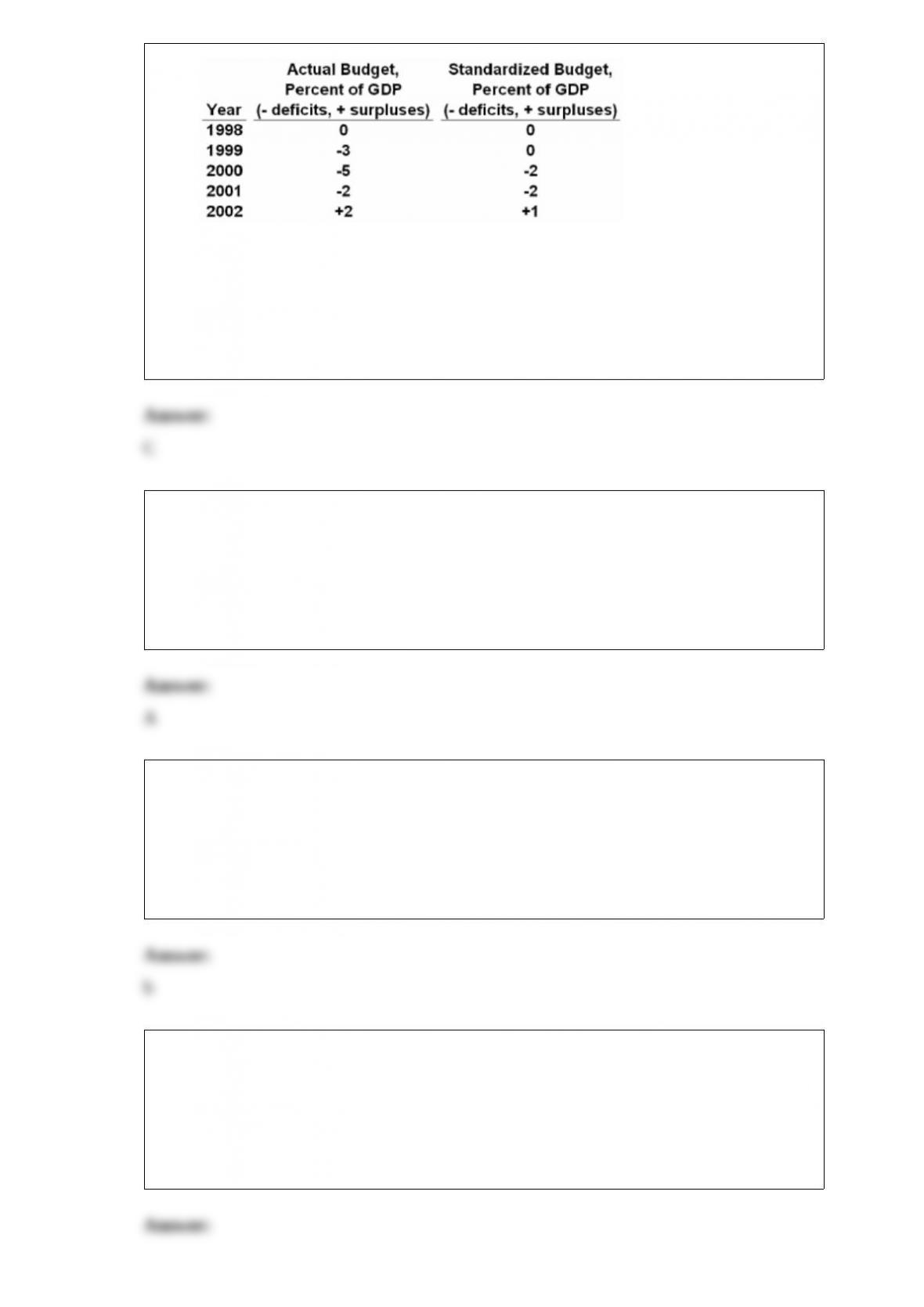
15)
Refer to the above table for a fictional economy. The changes in the budget conditions
between 2000 and 2001 best reflect:
A.demand-pull inflation.
B.cost-push inflation.
C.an expansion of real GDP and an automatic increase in tax revenues.
D.a contractionary fiscal policy.
16) One of the strengths of monetary policy relative to fiscal policy is that monetary
policy:
A.can be implemented more quickly.
B.is subject to closer political scrutiny.
C.does not produce a net export effect.
D.entails a larger spending income multiplier effect on real GDP.
17) if a profit-seeking competitive firm is producing its profit-maximizing output and
its total fixed costs fall by 25 percent, the firm should:
a.use more labor and less capital to produce a larger output.
b.not change its output.
c.reduce its output.
d.increase its output.
18) One implication of efficiency wages is that:
A.labor turnover is reduced as wages are reduced.
B.the market-clearing wage always exceeds the efficiency wage.
C.worker productivity falls as wage rates rise beyond the equilibrium wage.
D.if the efficiency wage exceeds the market-clearing wage, permanent unemployment
may result.
19) which of the following is a recently passed law relating to health care?
a.establishment of health maintenance organizations to reduce health care costs
b.establishment of deductibles and copayments in health insurance policies
c.establishment of health savings accounts (hsas) to promote saving for routine medical
expenses
d.establishment of fixed medicare payment to hospitals based on one of several hundred
diagnostic categories
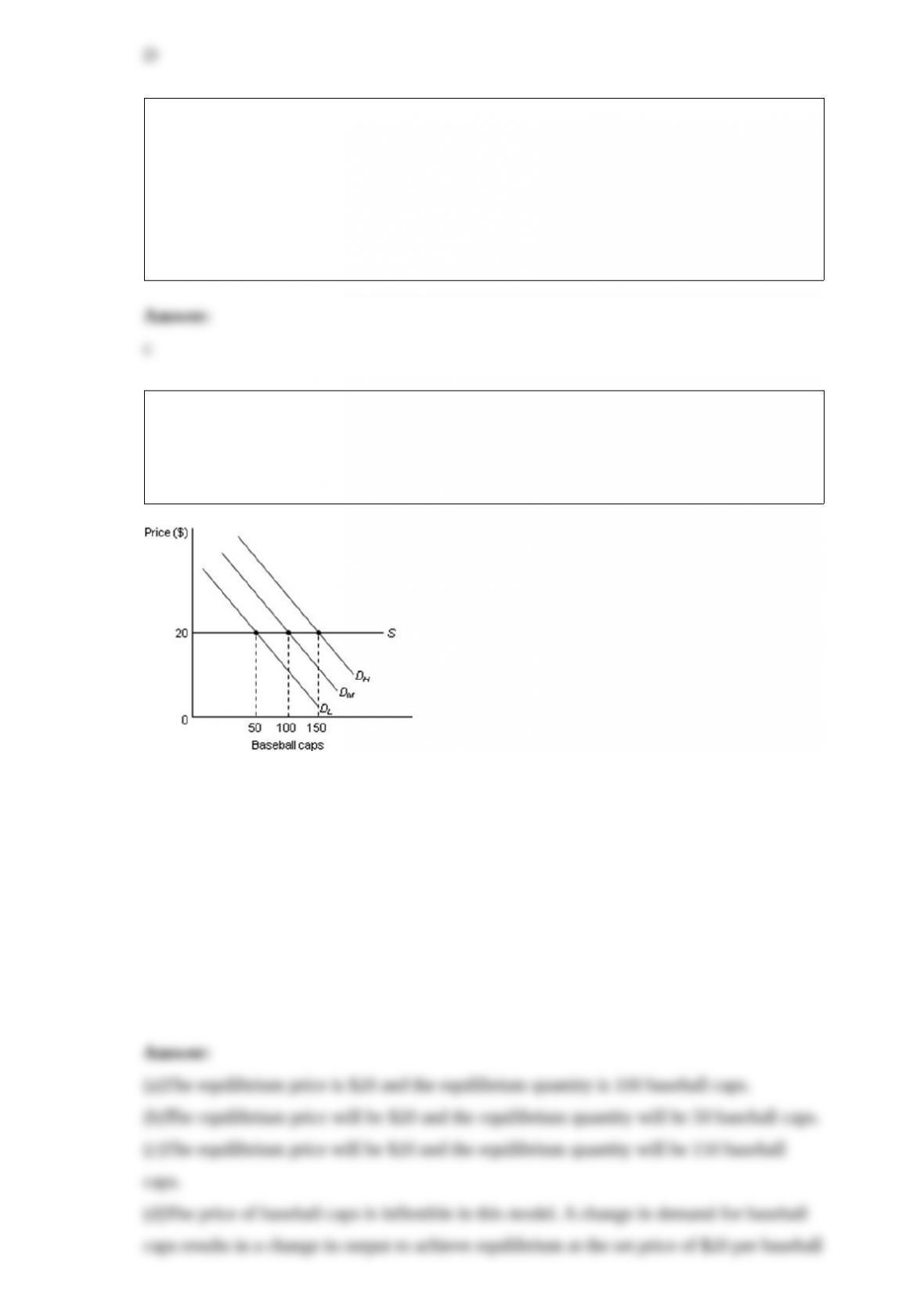
20) The following is a demand and supply model for a business firm producing baseball
caps. Assume that 100 baseball caps is the optimal ad most profitable level of
production for the firm. Answer the next four questions assuming that the price of
baseball caps is inflexible.
(a)What are the equilibrium price and quantity at the medium level of demand (DM)?
(b)What will be the equilibrium price and quantity if there is a demand shock that
unexpectedly lowers demand (DL)?
(c)What will be the equilibrium price and quantity if there is a demand shock that
unexpectedly increases demand (DH)?
(d)What can you conclude will happen to prices and output when this model is shocked by
changes in demand?