A monopolistically competitive market is described as one in which there are
A) a few firms producing an identical product.
B) a large number of firms selling similar, but not identical, products.
C) a few firms producing differentiated products.
D) one large firm and many small firms producing identical products.
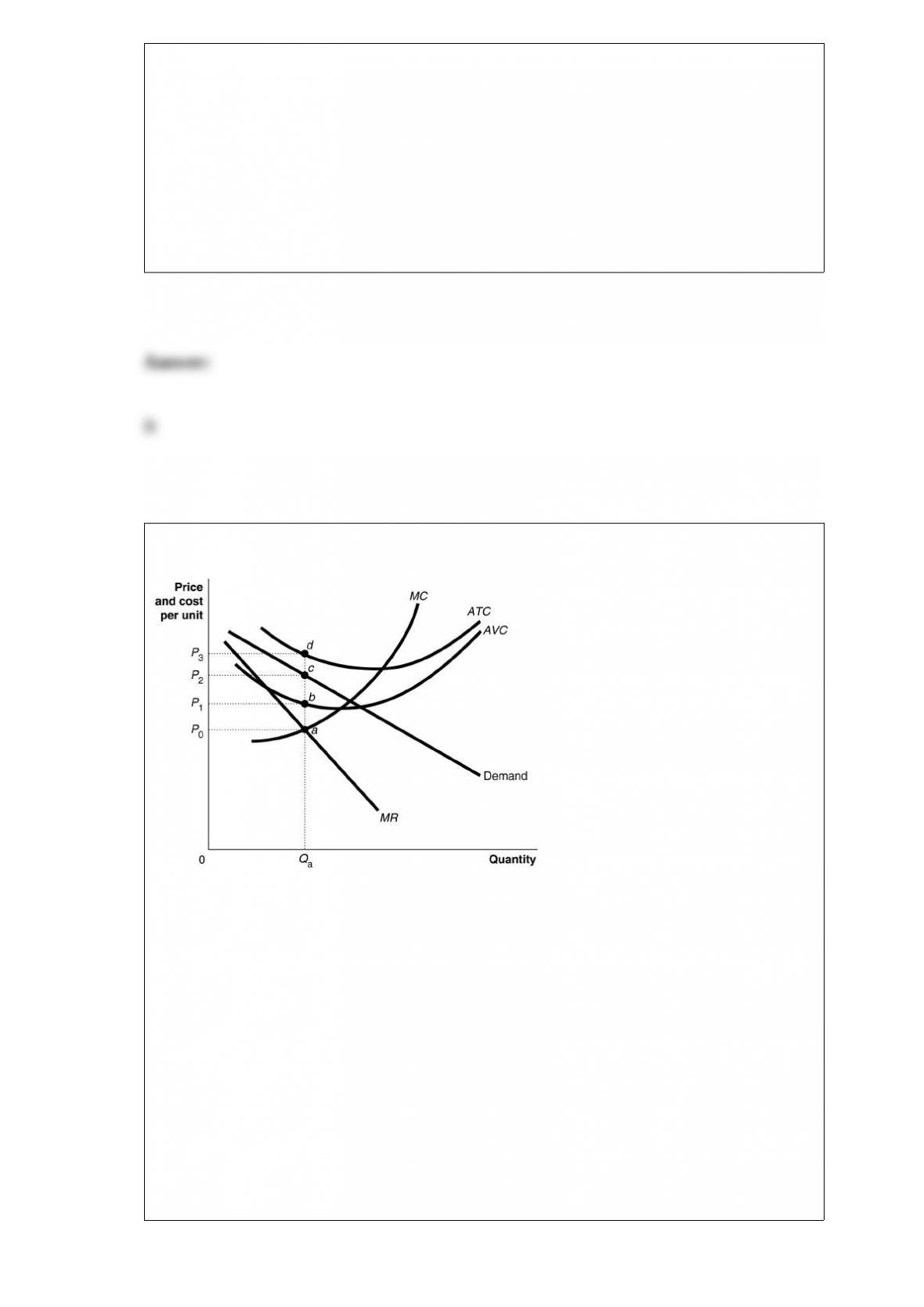
Figure 13-4
Figure 13-4 shows short-run cost
and demand curves for a monopolistically competitive firm in the market for designer
watches.
If the firm represented in the diagram is currently producing and selling Qa units, what
is the price charged?
A) P0
B) P1
C) P2
D) P3

Which of the following transactions would be included in Germany’s current account?
A) A German citizen purchases 100 shares of Texas Instruments stock.
B) An American citizen purchases 100 shares of BMW stock.
C) A German citizen purchases a new Volkswagen made in Germany.
D) An American citizen purchases a new Volkswagen made in Germany.
Two consequences of asymmetric information are adverse selection and moral hazard.
An important distinction between the two is
A) adverse selection exists prior to the completion of a transaction while moral hazard
occurs after the transaction is completed.
B) moral hazard exists prior to the completion of a transaction while adverse selection
occurs after the transaction is completed.
C) adverse selection leads to an inefficient quantity while moral hazard leads to an
efficient quantity.
D) moral hazard leads to an inefficient quantity while adverse selection leads to an
efficient quantity.
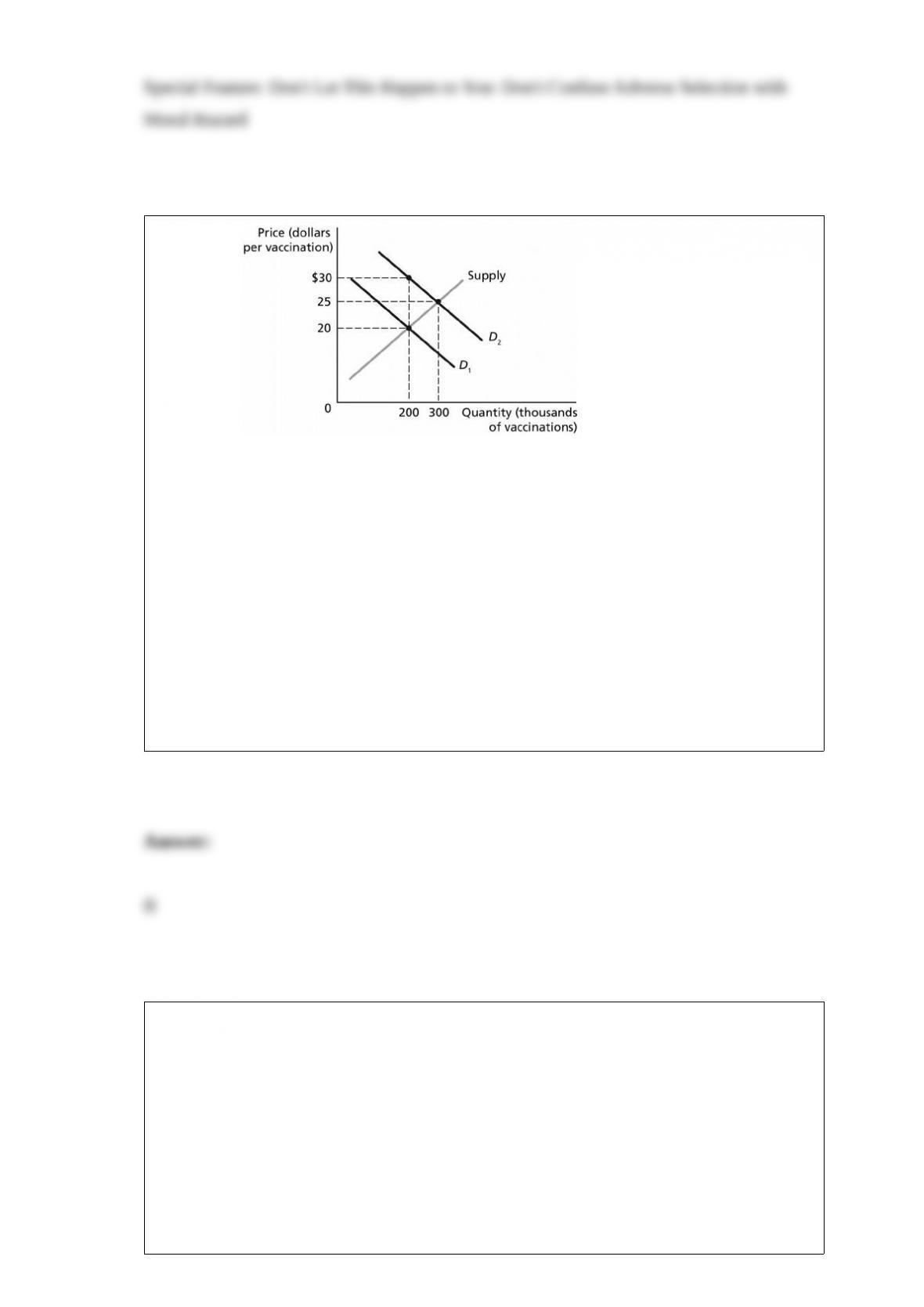
Figure 7-1 Figure 7-1 represents the
market for vaccinations. Vaccinations are considered a benefit to society, and the figure
shows both the marginal private benefit and the marginal social benefit from
vaccinations.
The efficient equilibrium price is
A) $30.
B) $25.
C) $20.
D) < $20.
The gold standard is an example of
A) a floating exchange rate system.
B) a managed float exchange rate system.
C) a fixed exchange rate system.
D) a flexible exchange rate system.
E) the Bretton Woods System.
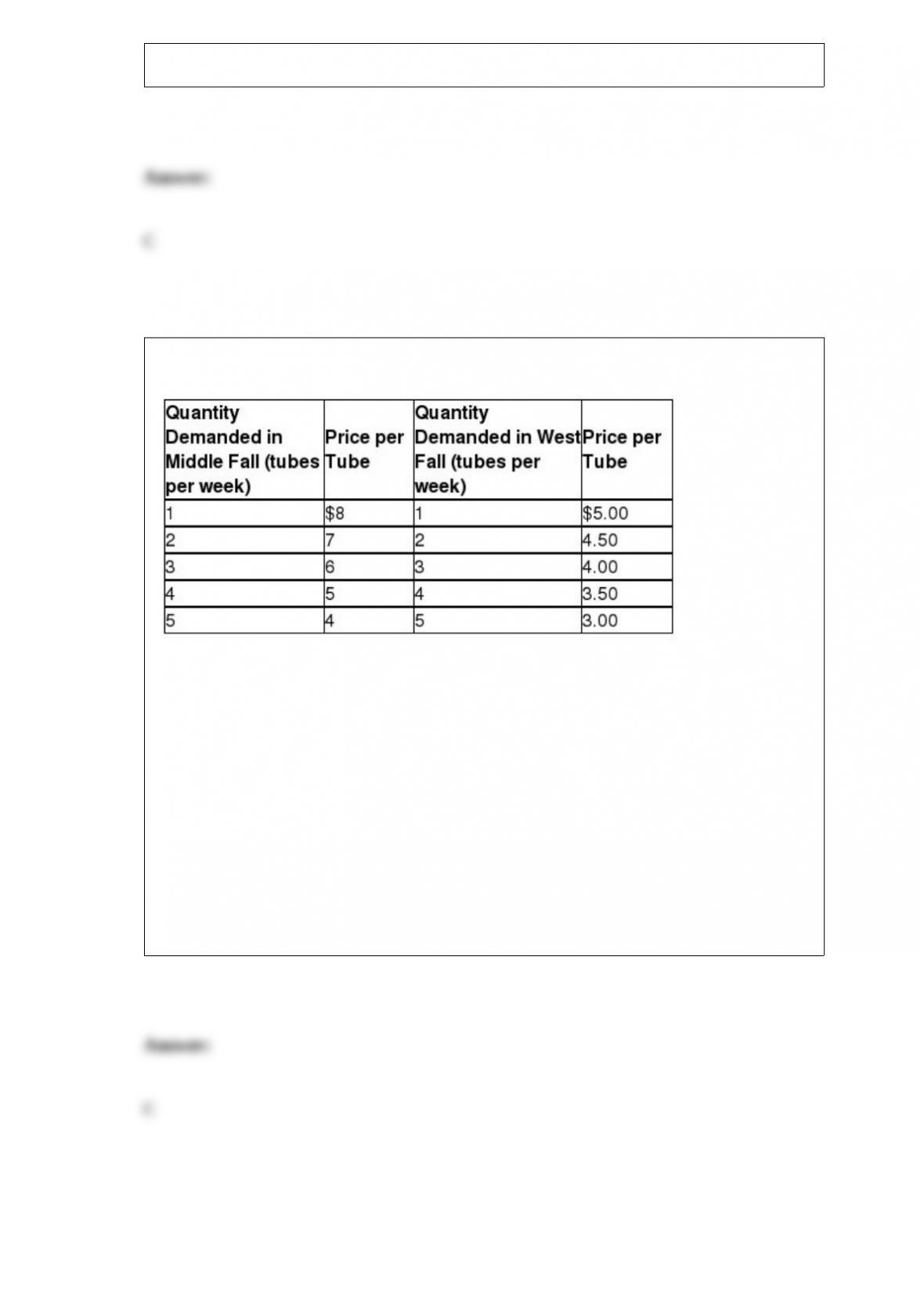
Table 16-2
Neem Products sells its Ayurvedic Neem toothpaste in two completely isolated markets
with demand schedules as shown in Table 16-2. The average cost of production is
constant at $2 per tube.
How many tubes of toothpaste will Neem sell in Middle Fall and at what price?
A) Q = 2 units; P = $7
B) Q = 3 units; P = $6
C) Q = 4 units; P = $5
D) Q = 5 units; P = $4
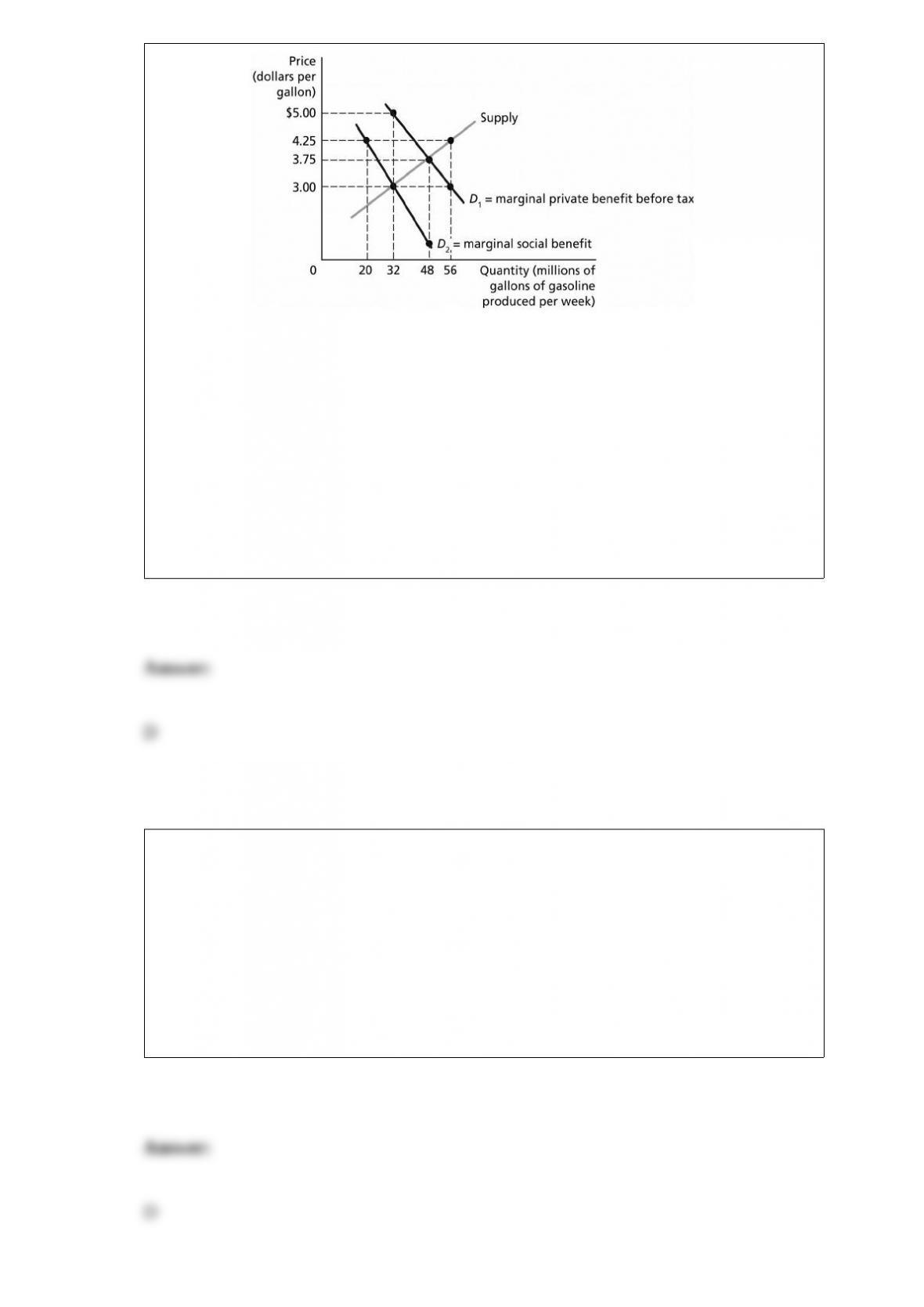
Figure 5-13 Figure 5-13
illustrates the market for gasoline before and after the government imposes a tax to
bring about the efficient level of gasoline production. The actual price of gasoline paid
by consumers after the tax is implemented is ________ per gallon.
A) $3.00
B) $3.75
C) $4.25
D) $5.00
The satisfaction a person receives from consuming goods and services is called
A) contentment.
B) psychic income.
C) wealth.
D) utility.

Assume the average annual CPI values for 2012 and 2013 were 207.3 and 215.3,
respectively. What was the percent increase in the CPI between these two years?
A) 0.96
B) 1.04
C) 3.86
D) 8.0