A bank has a 5 percent reserve requirement, $5,000 in deposits, and has loaned out all it
can given the reserve requirement.
a. It has $25 in reserves and $4,975 in loans.
b. It has $250 in reserves and $4,750 in loans.
c. It has $1,000 in reserves and $4,000 in loans.
d. None of the above is correct.
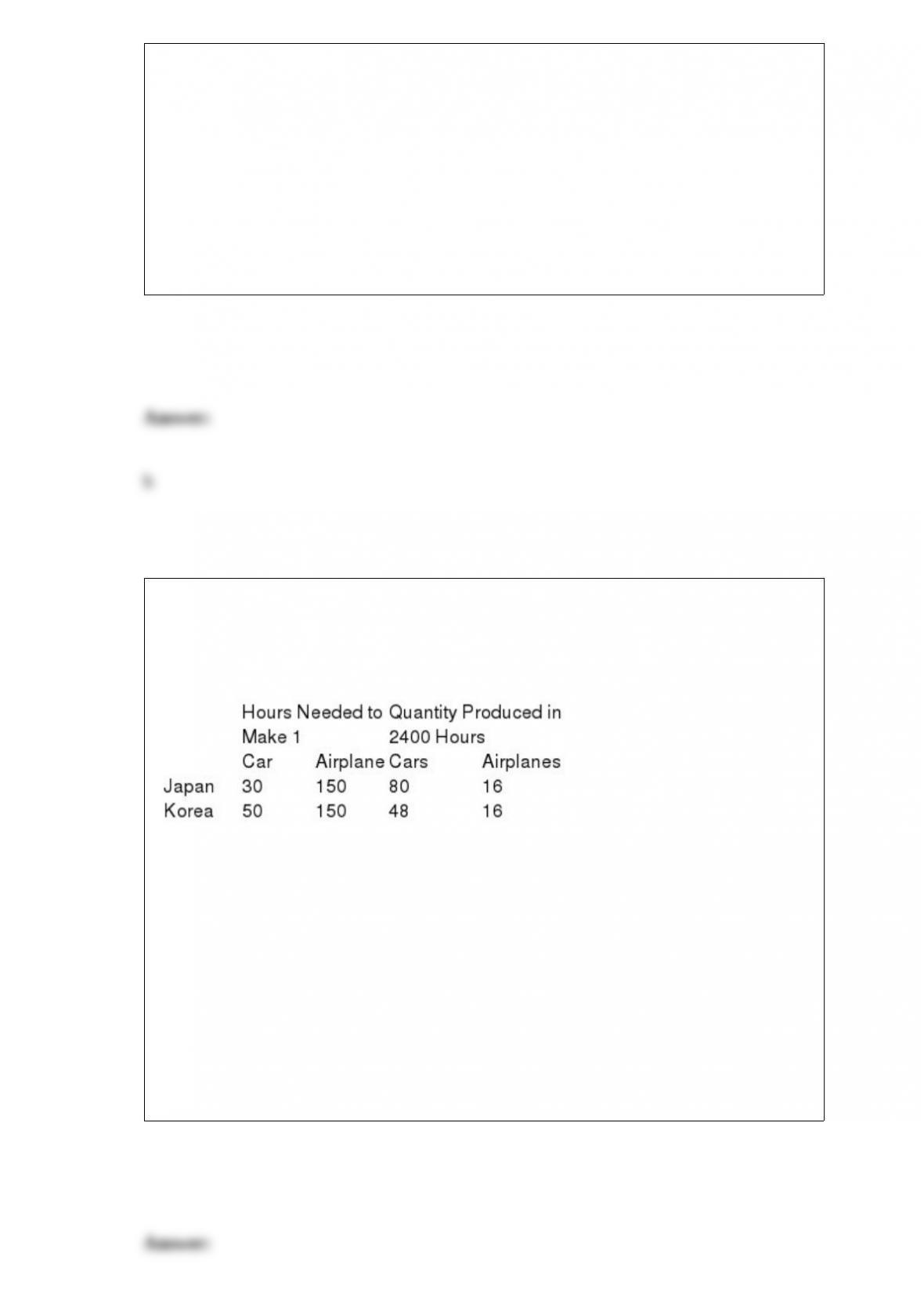
Table 3-26
Assume that Japan and Korea can switch between producing cars and producing
airplanes at a constant rate.
Refer to Table3-26. Assume that Japan and Korea each has 2400 hours available.
Originally, each country divided its time equally between the production of cars and
airplanes. Now, each country spends all its time producing the good in which it has a
comparative advantage. As a result, the total output of cars increased by
a. 16.
b. 40.
c. 64.
d. 80.

U.S. GDP
a. includes production of foreigners working in the U.S. and production by U.S.
residents working in foreign countries.
b. includes production of foreigners working in the U.S. but excludes production by
U.S. residents working in foreign countries.
c. excludes production of foreigners working in the U.S. but includes production by
U.S. residents working in foreign countries.
d. excludes production of foreigners working in the U.S. and production by U.S.
residents working in foreign countries.
Deflation
a. increases incomes and enhances the ability of debtors to pay off their debts.
b. increases incomes and reduces the ability of debtors to pay off their debts.
c. decreases incomes and enhances the ability of debtors to pay off their debts.
d. decreases incomes and reduces the ability of debtors to pay off their debts.

A country has domestic investment of $200 billion. Its citizens purchase $600 of
foreign assets and foreign citizens purchase $300 of its assets. What is national saving?
a. $400 billion
b. $500 billion
c. $600 billion
d. $800 billion
At the equilibrium real interest rate in the open-economy macroeconomic model, the
amount that people want to save equals the desired quantity of
a. net capital outflow.
b. domestic investment.
c. net capital outflow plus domestic investment.
d. foreign currency supplied.
It is not possible for demand and supply to shift at the same time.
a. True

b. False
If a country has the comparative advantage in producing a product, then that country
must also have the absolute advantage in producing that product.
a. True
b. False
Which of the following is notcorrect?
a. The unemployment rate is an imperfect measure of a nation’s overall level of
economic wellbeing.
b. Most job search in the U.S. economy takes place without intervention by the
government.
c. Most economists agree that eliminating unemployment insurance would increase the
nation’s overall level of well-being.
d. Other things the same, countries that offer more generous and longer-lasting
unemployment insurance benefits are likely to have higher unemployment rates.

If you put $1,000 in the bank today at an interest rate of 6% what is its value in two
years?
a. $2,000(1.06)
b. $1,000 + $(1.06)2
c. $1,000(1.06)2
d. None of the above are correct.
Given a nominal interest rate of 6 percent, in which of the following cases would you
earn the highest after-tax real rate of interest?
a. Inflation is 3 percent; the tax rate is 25 percent.
b. Inflation is 1 percent; the tax rate is 50 percent.
c. Inflation is 1 percent; the tax rate is 55 percent.
d. Inflation is 4 percent; the tax rate is 10 percent.

Figure 3-17
Refer to Figure3-17. At which of the following prices would both Maxine and Daisy
gain from trade with each other?
a. 4 tarts for 2 pies
b. 8 tarts for 12 pies
c. 12 tarts for 28 pies
d. Maxine and Daisy could not both gain from trade with each other at any price.
In answering which of the following questions would you find it necessary to calculate
a futurevalue?
a. If Jill puts $5,000 today into a bank account that pays 3 percent interest, then how
much will she have in the account after 2 years?
b. Should ABC Corporation buy a factory today for $2 million, knowing that the factory
will yield the corporation $3 million after 5 years?
c. As the winner of a lottery, should Michael choose an immediate payment of $250,000
or should he choose annual payments of $30,000 for each of the next 10 years?
d. You would find it necessary to calculate a future value in order to answer all of these
questions.

According to 2012 data on the U.S. population, which of the following groups of
teenagers (ages 16-19) had the lowest unemployment rate?
a. white males
b. white females
c. black males
d. black females
In June 2009 the Bureau of Labor Statistics reported an adult population of 234.9
million, unemployment of 12.4 million, and employment of 141.6 million. Based on
these numbers the labor-force participation rate was
a. 154/234.9.
b. 141.6/234.9.
c. 141.6/154.
d. None of the above is correct.
Which of the following statements is notcorrect?
a. If GDP is rising faster than debt, the government is, in some sense, living within its
means.

b. The ratio of debt to GDP in the United States has always been less than one.
c. Debts during wars may distribute the burden of fighting the war more evenly across
generations.
d. During times of peace in the United States, the ratio of debt to GDP sometimes rose.
Micah buys a used car for $10,000 and spends $200 on a new radio that is made in the
U.S. The end result of these two transactions is
a. U.S. consumption purchases increase by $200 and U.S. GDP increases by $200.
b. U.S. consumption purchases increase by $200 and U.S. GDP increases by $10,000.
c. U.S. consumption purchases increase by $10,000 and U.S. GDP increases by
$10,200.
d. U.S. consumption purchases increase by $10,200 and U.S. GDP increases by
$10,200.
A bond buyer is a
a. saver. Long term bonds have less risk than short term bonds.
b. saver. Long term bonds have more risk than short term bonds.

c. borrower. Long term bonds have less risk than short term bonds.
d. borrower. Long term bonds have more risk than short term bonds.
When constructing the consumer price index, the Bureau of Labor Statistics does notdo
which of the following?
a. Try to include all the goods and services that the typical consumer buys.
b. Try to weight the goods and services that the typical consumer buys according to
how much consumers buy of each item.
c. Survey consumers to determine what the typical consumer buys.
d. Survey sellers to determine what the typical consumer buys.
Which of the following is an example of physical capital?
a. the available knowledge on how to make semiconductors
b. a taxicab driver’s knowledge of the fastest routes to take
c. bulldozers, backhoes and other construction equipment
d. All of the above are correct.

Financial Crisis
Suppose that banks are less able to raise funds and so lend less. Consequently, because
people and households are less able to borrow, they spend less at any given price level
than they would otherwise. The crisis is persistent so lending should remain depressed
for some time.
RefertoFinancialCrisis.In the long run, if the Fed does not respond, the change in
price expectations created by the crisis shifts
a. aggregate demand right.
b. aggregate demand left.
c. short-run aggregate supply right.
d. short-run aggregate supply left.
An increase in the money supply decreases the interest rate in the short run.
a. True
b. False

Suppose your uncle offers you $100 today or $150 in 10 years. You would prefer to take
the $100 today if the interest rate is
a. 3 percent.
b. 4 percent.
c. 5 percent.
d. None of the above is correct.
Which of the following likely occurs when households and firms become more
pessimistic?
a. increased spending
b. increased aggregate demand
c. increased real GDP
d. an increase in the unemployment rate
A COLA automatically raises the wage when

a. GDP increases.
b. taxes increase.
c. the consumer price index increases.
d. the producer price index increases.
Some, but not all, government economists are employed within the administrative
branch of government. Which of the following government agencies employs
economists outside of the administrative branch?
a. the Department of Labor
b. the Department of the Treasury
c. the Congressional Budget Office
d. the Council of Economic Advisers
Figure 3-15
RefertoFigure3-15. The opportunity cost of 1 novel for Jordan is
a. 1/3 poem.
b. 3 poems.
c. 4 poems.
d. 12 poems.
Which of the following best illustrates the medium of exchange function of money?
a. You keep some money hidden in your shoe.
b. You keep track of the value of your assets in terms of currency.
c. You pay for your oil change using currency.
d. None of the above is correct.
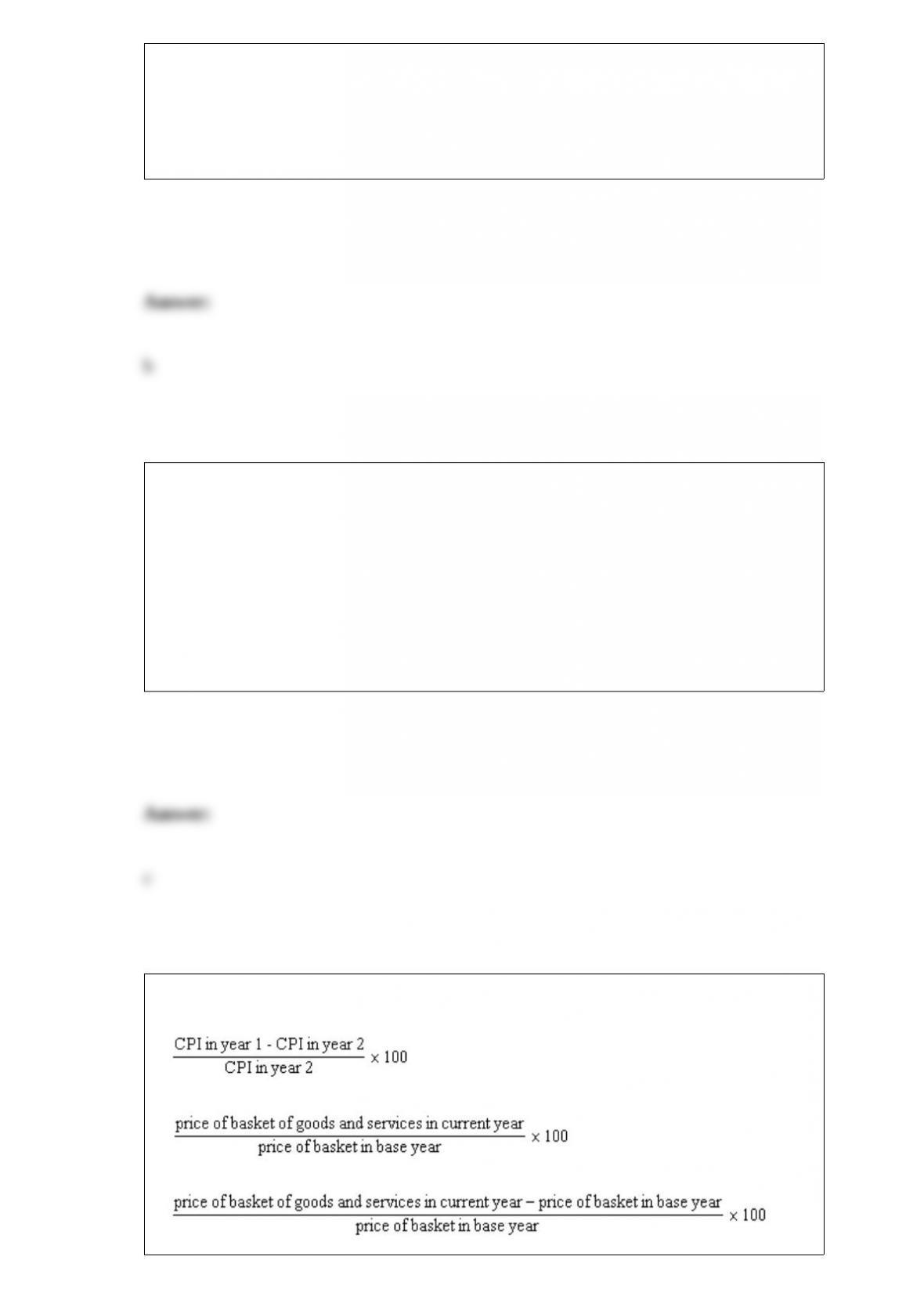
Which of the following is the correct formula for calculating the consumer price index?
a.
b.
c.
d.
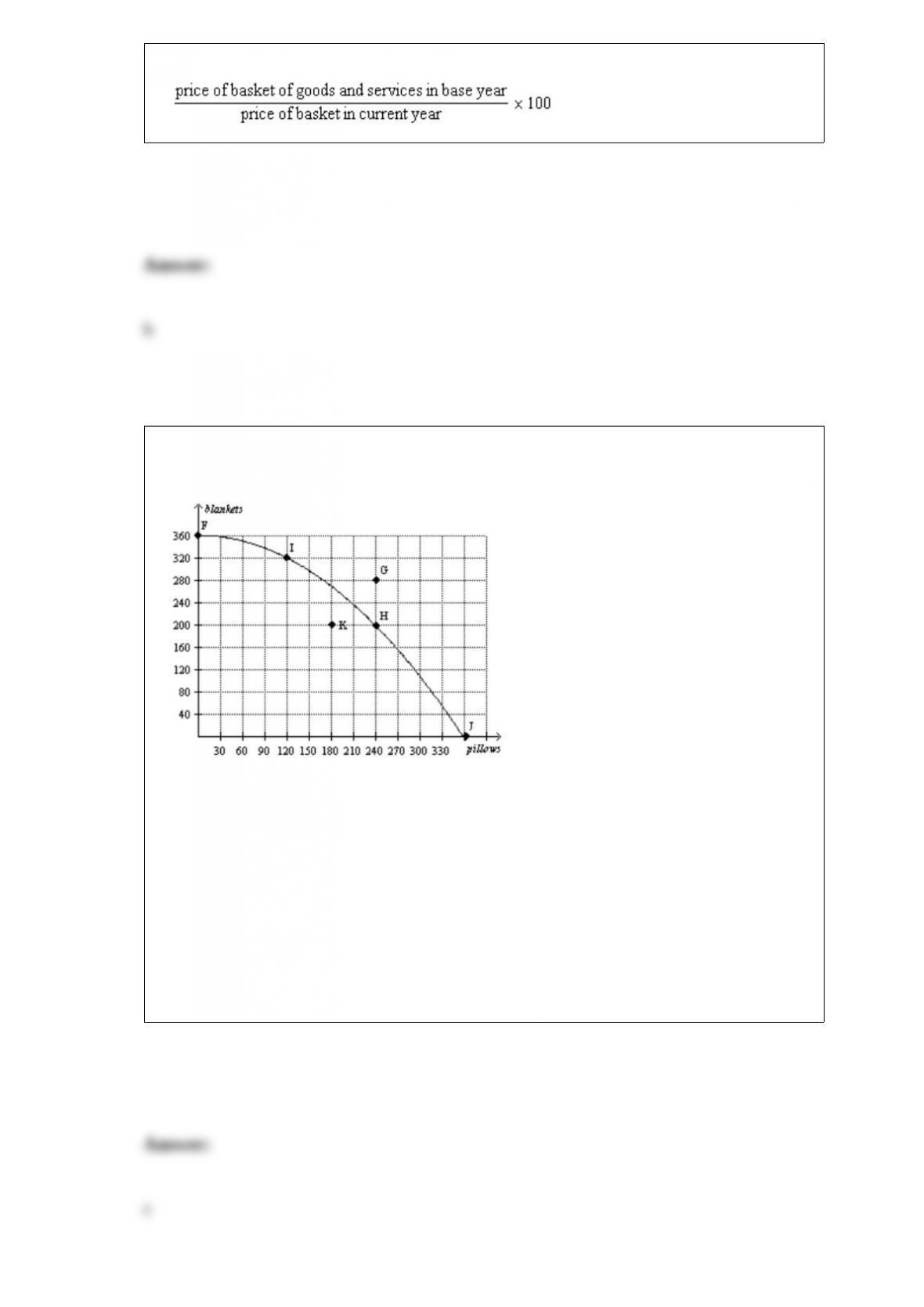
Figure 2-6
RefertoFigure2-6. The opportunity cost of this economy moving from point I to point
F is
a. zero.
b. 40 blankets.
c. 120 pillows.
d. 360 blankets.

What would happen to the equilibrium price and quantity of latts if the cost to produce
steamed milk, which is used to make latts, increased, and scientists discovered that latts
cause heart attacks?
a. Both the equilibrium price and quantity would increase.
b. Both the equilibrium price and quantity would decrease.
c. The equilibrium price would decrease, and the effect on equilibrium quantity would
be ambiguous.
d. The equilibrium quantity would decrease, and the effect on equilibrium price would
be ambiguous.
Last year the imaginary nation of Panglossia had real GDP of 400 billion. This year it
had real GDP of 472.5 billion. Which of the following changes in population is
consistent with a 5 percent growth rate of real GDP per person over the last year?
a. The population decreased from 75 million to 72 million.
b. The population decreased from 60 million to 50 million.
c. The population increased from 70 million to 80 million.
d. The population increased from 80 million to 90 million.