
If the amount you owe on your house is less than the price of the house, you have
A) positive equity in your house.
B) an adjustable-rate mortgage on your house.
C) negative equity in your house.
D) a reverse mortgage on your house.
________ would be the source of a “real” business cycle.
A) Technology shocks
B) Anticipated changes in monetary policy
C) Unanticipated changes in monetary policy
D) all of the above
Corruption
A) curtails economic growth.
B) raises the rate of growth as bribes enhance income.
C) is eliminated by foreign direct investment.
D) acts as a magnet for foreign direct investment.

What is accounting profit?
A) gross revenue minus explicit costs
B) gross revenue minus implicit costs
C) gross revenue minus explicit and implicit costs
D) the same as economic profit
You lend $5,000 to a friend for one year at a nominal interest rate of 10%. Inflation
during that year is 5%. As a result, you will receive ________ at the end of the year, but
that money has a purchasing power of ________.
A) $5,050; $5,025
B) $5,100; $5,050
C) $5,500; $5,250
D) $6,000; $5,500

Refer to Figure 19-4. The equilibrium exchange rate is at A, $3/pound. Suppose the
British government pegs its currency at $4/pound. At the pegged exchange rate,
A) there is a shortage of pounds equal to 600 million.
B) there is a surplus of pounds equal to 400 million.
C) there is a shortage of pounds equal to 400 million.
D) there is a surplus of pounds equal to 600 million.
E) there is a shortage of pounds equal to 200 million.
The branch of economics which studies how households and firms make choices,
interact in markets and how government attempts to influence their choices is called
A) macroeconomics.
B) microeconomics.
C) positive economics.
D) normative economics.
If a dollar a year from now will likely have less purchasing power because of inflation,
then a dollar today ________ a dollar a year from now.
A) is more valuable than
B) is less valuable than

C) has the same value as
D) may be more valuable or less valuable than
As recently as 2000, ________ percent of doctors were in private practice and by 2013,
________ percent of doctors were in private practice.
A) only 20; more than 70
B) nearly 60; less than 40
C) about 50; about 50
D) over 80; less than 15
What is the natural rate of unemployment?
A) the unemployment rate that exists when the economy is at potential GDP
B) the unemployment rate that exists when the economy is at a trough in a business
cycle
C) an unemployment rate of 0%
D) any unemployment rate that is above the inflation rate

Federal and state governments in the United States pay for ________ of health care
spending.
A) less than 10 percent
B) approximately 34 percent
C) just over half
D) more than 80 percent
If the government finances an increase in government purchases with an increase in
taxes, which of the following would you not expect to see?
A) an increase in the exchange rate
B) a decrease in the interest rate
C) an increase in aggregate demand
D) a decrease in net exports
If an increase in income leads to an decrease in the demand for salami, then salami is
A) an inferior good.
B) a neutral good.
C) a necessity.
D) a normal good.
The body that is responsible for dating the beginning and ending dates for a recession is
A) the Fed.
B) the Congress.
C) the National Bureau of Economic Research.
D) the Bureau of Economic Analysis.
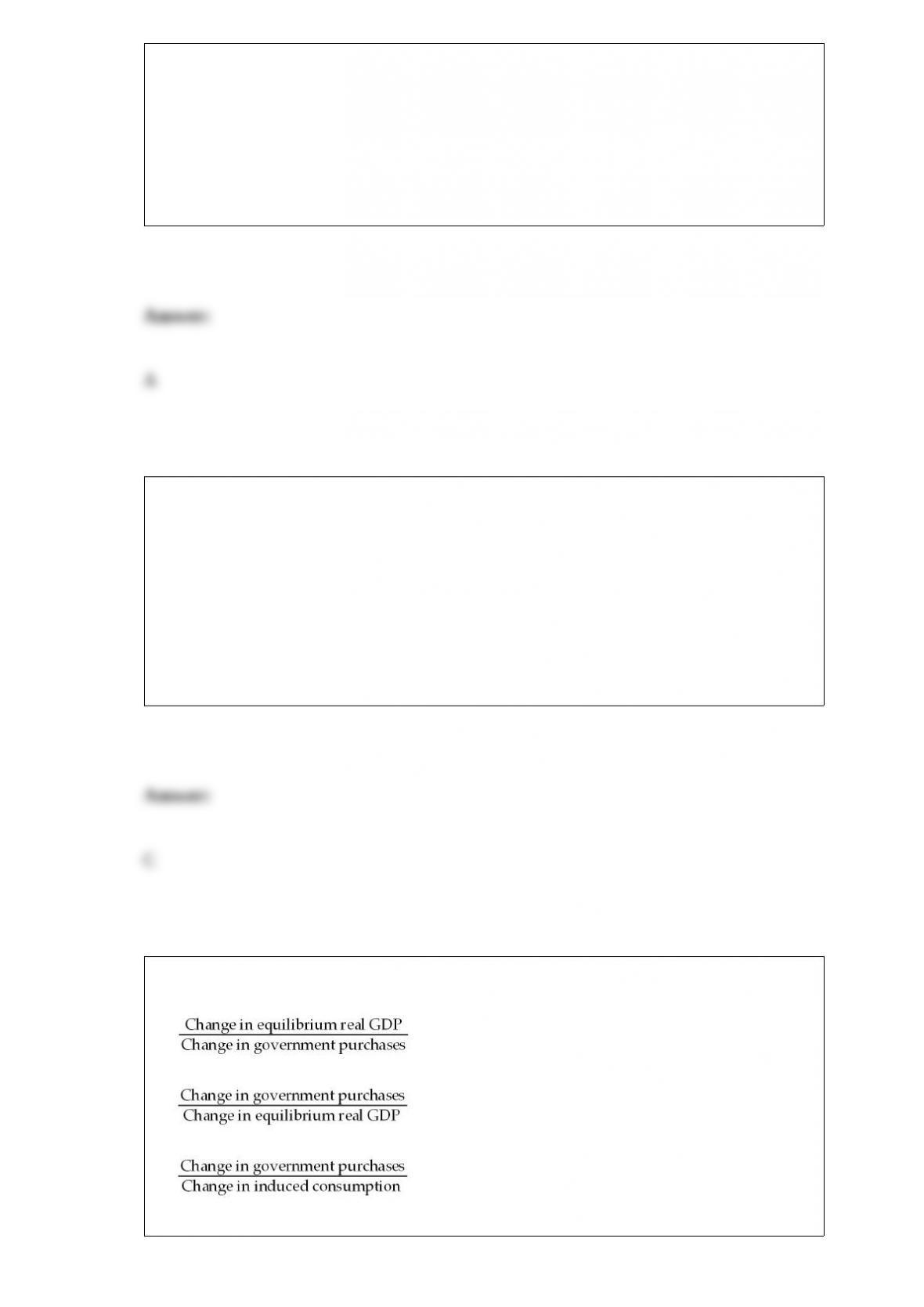
The government purchases multiplier is defined as
A) .
B) .
C) .
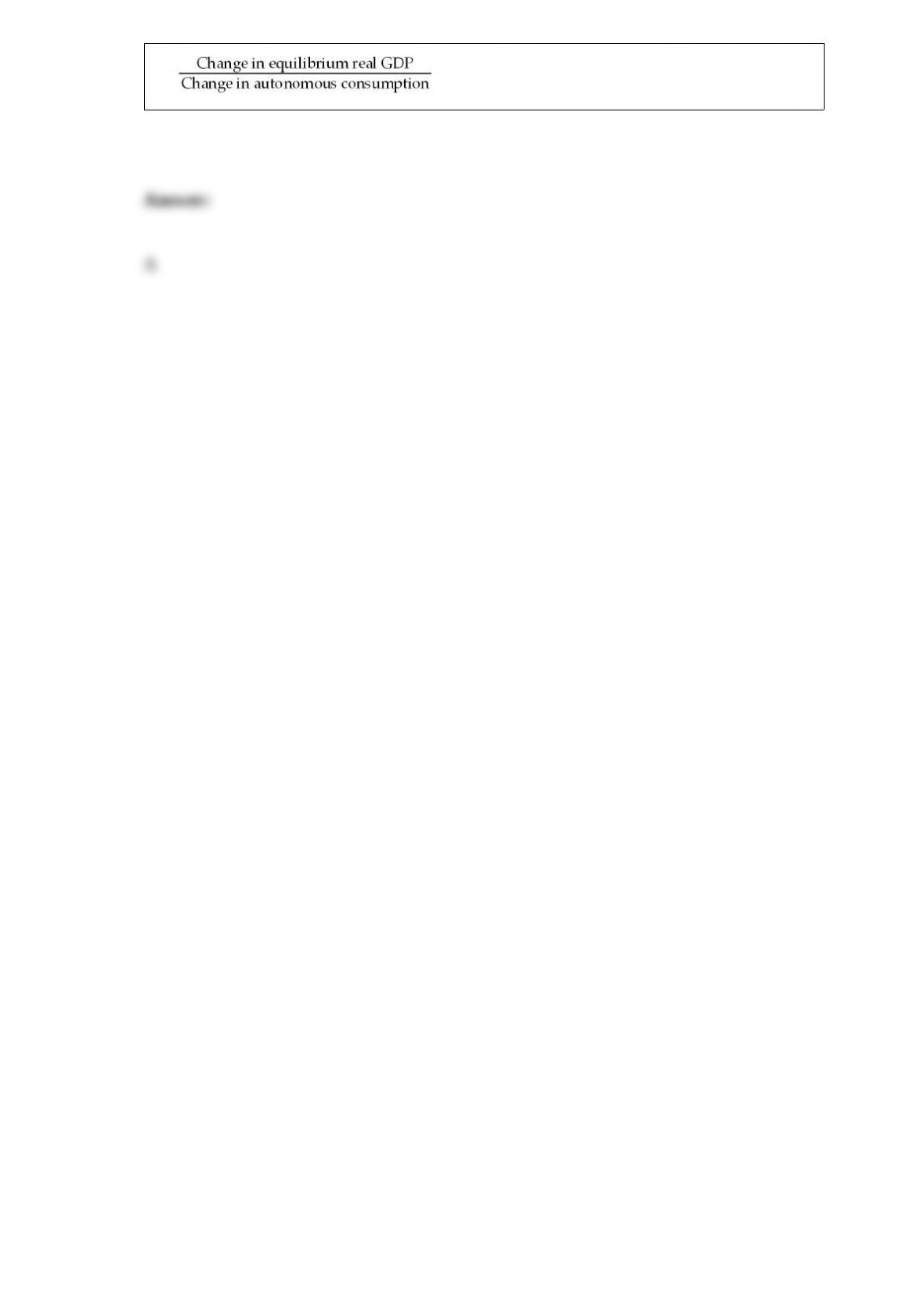
D) .